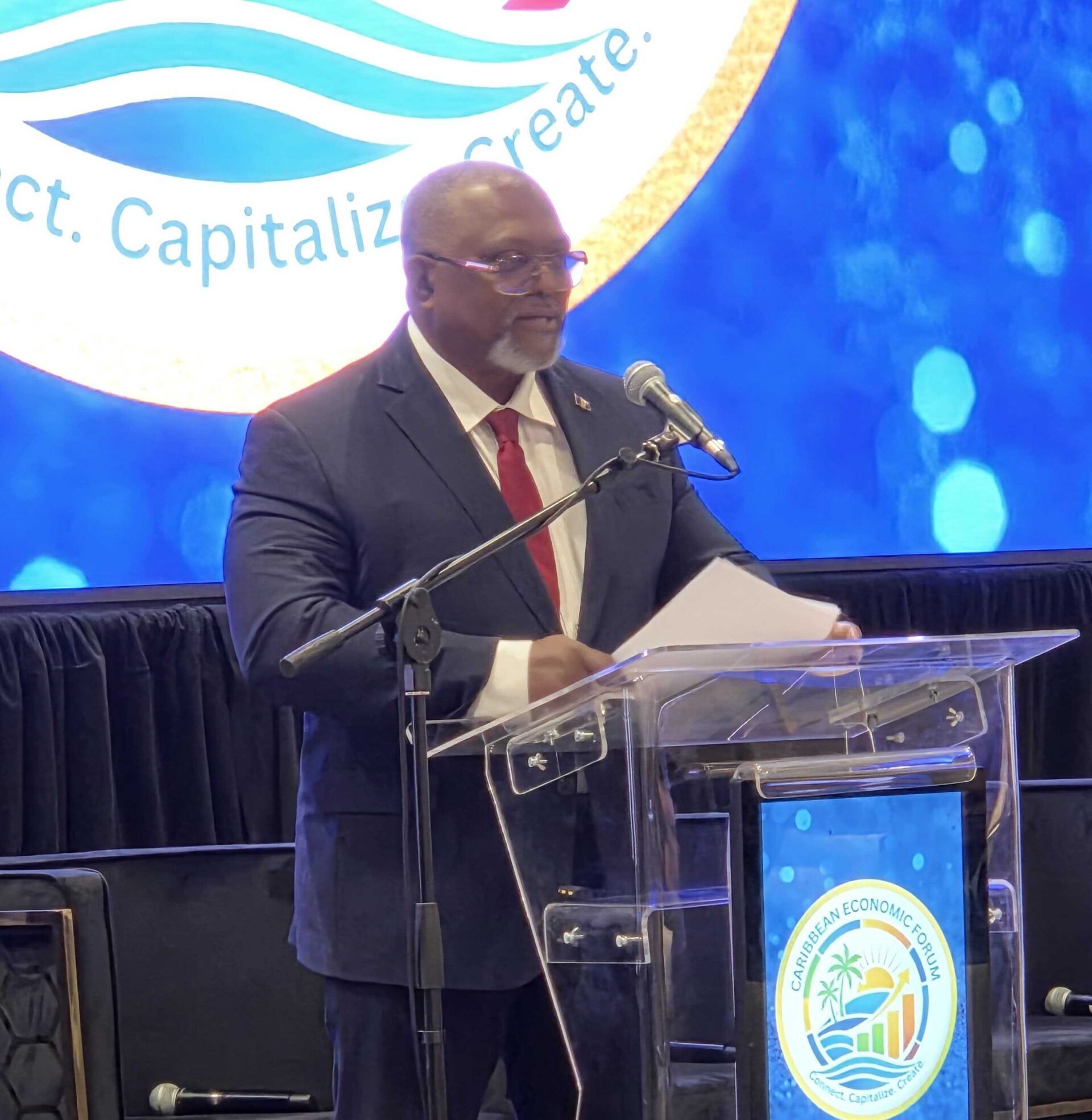
Against a backdrop of growing global economic fragmentation and escalating geopolitical tensions, small island nation Barbados is executing an ambitious strategy to cement its status as the leading entry point for international capital seeking access to the broader Caribbean market. Speaking at the inaugural Caribbean Economic Forum, which brought together hundreds of international financiers, startup founders, and regional policy leaders to explore cross-sector transformation in renewable energy, digital infrastructure, and the blue economy, Public and Private Investment Minister Indar Weir laid out the government’s comprehensive plan to capitalize on the country’s longstanding reputation for stability. Weir emphasized that shifting global conditions have fundamentally rewired investor priorities: in an era defined by systemic uncertainty, businesses no longer chase just low costs — they prioritize jurisdictions that can deliver consistent, predictable operating environments. For decades, Barbados has built its foundations on exactly those attributes, he argued, making it uniquely positioned to meet the new demands of global capital. “When investors across the world are asking where they can find stability, security, and certainty in an uncertain landscape, Barbados has been answering that question for generations,” Weir told attendees. While international audiences often associate Barbados solely with its world-class leisure tourism sector, the minister pointed out that the country’s most valuable competitive asset is an intangible ecosystem of trust, strong institutions, consistent policy, rule of law, and accountable governance forged over 60 years of sovereign independence. This track record, he noted, gives multinational firms the confidence to anchor their regional headquarters on the island, using it as a stable base to expand across the Caribbean. Unlike many small economies that frame their limited geographic size as a disadvantage, the Barbadian government is repositioning its small footprint as a unique strategic advantage. Weir explained that the government’s ability to coordinate and roll out unified cross-ministerial policies allows the country to adapt to shifting global market trends far faster than much larger, more bureaucratic economies can manage. “Our size is not a limitation — it is a strategic asset,” Weir stressed. “As a small island developing state, we can implement a whole-of-government response to new challenges and opportunities far quicker than larger nations, all while upholding our commitment to supporting the international business and investment community.” As a concrete example of this adaptive agility, Weir pointed to the landmark Barbados Welcome Stamp Programme launched at the height of the COVID-19 pandemic. Recognizing the coming shift to global remote work before peer competitors, Barbados pioneered a purpose-built remote work visa that attracted thousands of global professionals to the island, keeping international business connectivity intact even when global travel ground to a halt. That early, proactive move cemented Barbados’ reputation as a forward-thinking, reliable base for global workers and businesses. The push to position the country as a regional investment hub comes as Barbados is already seeing a significant surge in commercial activity. The country was recently named the fastest-growing travel destination in the Americas and Caribbean for 2026, driving a sharp uptick in foreign direct investment across sectors. “Barbados is currently in one of the most intense periods of tourism investment in our entire history,” Weir shared. “In just the last 12 months, we have an unprecedented number of hotel developments under construction at the same time, representing well over $1 billion in total investment — and we’re ready to unlock even more capital from that momentum.” To support this growth and maintain the country’s competitive edge as a global gateway, the Mia Mottley administration has prioritized sweeping modernization of Barbados’ fiscal and regulatory infrastructure. Just one week before the forum, the government launched the Caribbean’s first standalone national payment system, a major reform that will speed up cross-border financial transactions and sharply reduce operational costs for both domestic and international businesses operating on the island. Understanding that international investors require streamlined, predictable regulatory processes to commit capital, the government also established the dedicated Ministry of Public and Private Investment earlier this year. The new ministry acts as a centralized one-stop facilitation body, working in lockstep with the national investment promotion agency Invest Barbados to cut through bureaucratic red tape and accelerate the approval and delivery of high-value regional projects. “The ministry was created with a clear mandate: strengthen investment facilitation, deepen productive public-private partnerships, and ensure investors have a seamless journey from initial inquiry to full project implementation,” Weir said. The new body is also designed to act as a bridge between global capital providers and project developers across the wider Caribbean, turning exploratory interest into tangible, job-creating infrastructure across the region. In closing remarks to forum delegates, Weir called on attendees to leverage Barbados’ unique strategic position to unlock inclusive, long-term growth across the Caribbean, urging collaborative investments that will deliver benefits for multiple generations. “This forum is about bringing stakeholders together to unlock new opportunities, build durable partnerships, and generate investment returns that lift communities across our region for decades to come,” Weir said. “But above all, this is about doing good business together. I welcome all of you to partner with Barbados, and let’s capitalize on every opportunity we have to grow together.”
标签: Barbados
巴巴多斯
-
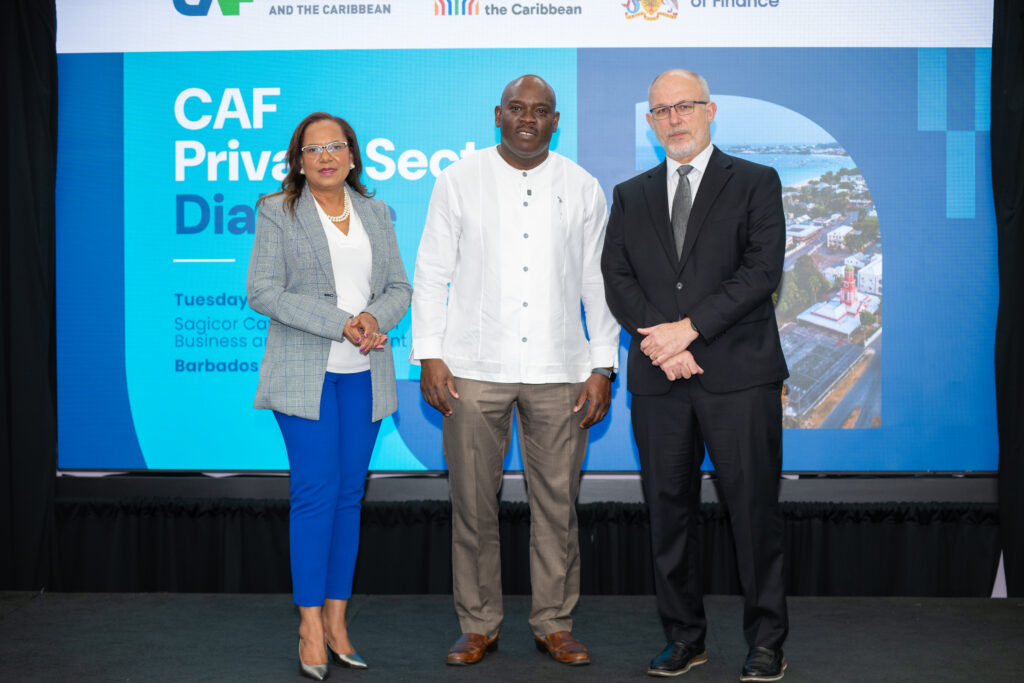
Firms eye expanded CAF financing as government pushes export-led growth
Barbados is stepping into a pivotal economic transition, with government officials and regional development leaders partnering to position the private sector at the heart of a new export-focused growth strategy. CAF – Development Bank of Latin America and the Caribbean has announced it will expand its support for private sector expansion and public-private partnerships (PPPs), opening the door for Barbadian firms to access expanded financing options and break into untapped regional markets.
The collaborative agenda was the centerpiece of a high-level private sector dialogue co-hosted by CAF and Barbados’ Ministry of Finance, which brought together C-suite business leaders, senior financial institution executives and top government officials. Attendees explored how innovative financing mechanisms can help local companies scale production capabilities, enter new cross-border markets and accelerate broad-based national economic growth.
The talks come just weeks after Prime Minister Mia Mottley framed Barbados’ current moment as a “critical historical crossroads”, stressing that an urgent shift to an export-led economic model is non-negotiable for long-term prosperity. Mottley emphasized that for sustainable growth to be achieved, local businesses must look beyond the small domestic market and pursue international opportunities.
Minister of Finance Ryan Straughn doubled down on this vision, making clear that the private sector will not play a supporting role in this transition – it will lead it. “Export-led growth is not a government project with the private sector as cheerleaders on the sideline. It requires investment, risk and the kind of bold commercial decision-making that only you in this room can make,” Straughn told attendees. He added that after eight years of fiscal consolidation that put Barbados on a stable financial footing, the next phase of national development hinges on the private sector driving the country to new economic strength. “What we are asking now is for the private sector to help make Barbados economically formidable,” he said.
Straughn also outlined the multifaceted value CAF brings to the table beyond direct capital. The bank’s extensive regional network across Latin America and the Caribbean, he noted, can connect Barbadian enterprises to new export markets, attract cross-border investment and forge strategic partnerships that would otherwise be out of reach for many local firms. This regional connectivity, he added, is critical to helping Barbados earn more foreign exchange, compete more aggressively in global markets, and build homegrown businesses capable of generating wealth across the Caribbean region.
Dr Stacy Richards-Kennedy, CAF’s regional manager for the Caribbean and country representative for Barbados, explained that the high-level dialogue was intentionally structured to tackle practical, actionable solutions to unlocking private sector potential. “If we are serious about economic growth, jobs, exports and resilience, then the private sector cannot be on the margins of development. It has to be at the centre,” she said. “The question before us is how do we work together to unlock more of its potential.”
Richards-Kennedy highlighted that Barbados’ current economic landscape offers significant untapped opportunities across three high-impact sectors: infrastructure development, renewable energy deployment, and tourism-related investment. These segments, she noted, are primed to create new jobs and expand the country’s overall productive capacity. She also emphasized that PPPs are uniquely valuable for small island developing states like Barbados, as these collaborative models align public development priorities with private sector capital to accelerate project delivery in sectors critical to national growth.
Antonio Silveira, CAF vice-president for private sector, detailed the full suite of financing tools the bank has available to support private companies and PPP projects across the country. These instruments include non-sovereign guaranteed loans, dedicated lines of credit, structured finance arrangements, risk mitigation guarantees, equity investments, and hands-on technical assistance to help businesses bring projects to completion.
Silveira noted that CAF’s private sector-focused strategy aligns directly with the government of Barbados’ BERT 3.0 economic framework, which positions the private sector as the lead driver of national development. “We are keen to engage with Barbados on initiatives that can be developed in a sustainable way,” he said.
CAF data shows its private sector division approved $10.3 billion in total operations across the region in 2025, accounting for 55% of the bank’s total project approvals for the year. The institution confirmed it is already ramping up support for small and medium-sized and large enterprises across the Caribbean, and is working closely with regional partners to develop additional tailored financing tools to help companies expand their export footprint and compete effectively in new markets.
-
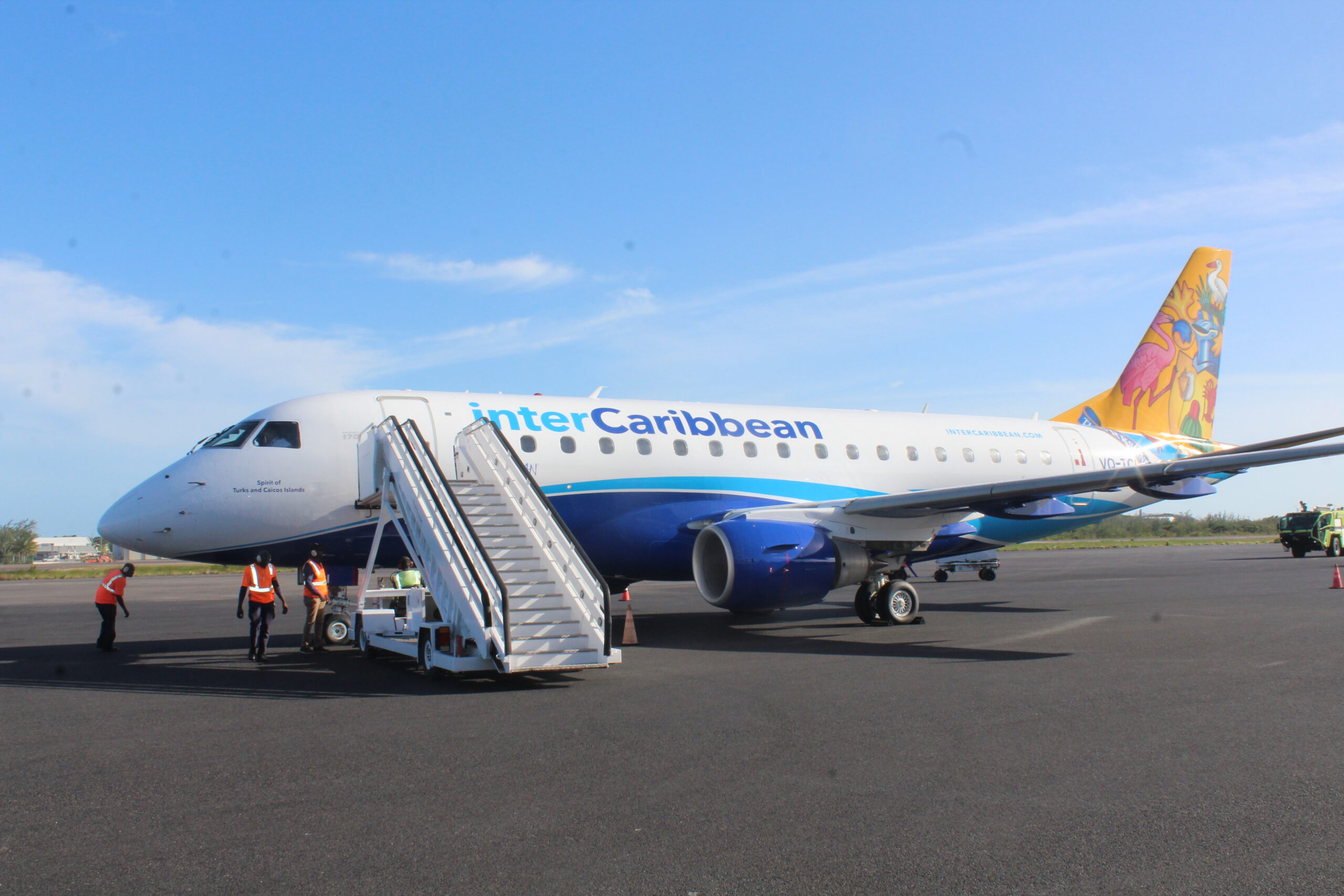
interCaribbean Airways dedicates aircraft Spirit of Turks and Caicos Islands
In a landmark celebration of local heritage and corporate growth, interCaribbean Airways has debuted its uniquely customized Embraer E170 jet, registered as VQ-TCI, at the airline’s primary base in Providenciales, Turks and Caicos Islands. The aircraft bears the official name “Spirit of Turks and Caicos Islands” emblazoned across its nose, while the iconic coat of arms of the island nation adorns its tail, turning the commercial jet into a flying symbol of national identity for the carrier that calls the archipelago its founding home.
The special dedication ceremony drew key senior leadership from both the public and private sectors. Attendees included Turks and Caicos Islands Premier Charles Washington Misick, the full cabinet of the local government, interCaribbean Chairman Lyndon Gardiner, and Chief Executive Officer Trevor Sadler. In a traditional warm welcome for new aircraft, the Turks and Caicos Airport Authority (TCIAA) greeted the jet with a ceremonial water cannon salute as it taxied into position in front of the gathered crowd of government officials, tourism industry leaders, and aviation stakeholders.
For Chairman Gardiner, the rollout of the airline’s first ERJ170 marked a deeply meaningful milestone in the company’s ongoing fleet expansion. “We have named aircraft for individual destinations across our entire network for years, but this one carries the flag of the islands where interCaribbean was born and still calls home,” Gardiner explained during the ceremony. “Every time it takes off, it will carry the pride of these islands and our promise to connect the Turks and Caicos to the wider Caribbean through its culture, community and cuisine.”
The event doubled as a tribute to interCaribbean’s decades-long roots in the Turks and Caicos, highlighting the airline’s central role in linking the archipelago to neighboring Caribbean markets and communities. The newly unveiled jet will operate across interCaribbean’s full route network, serving as a roaming ambassador for the Turks and Caicos Islands and its residents. This aircraft is the latest addition to the airline’s collection of custom “Spirit of” branded jets, which already honor other Caribbean nations including Grenada, St Kitts and Nevis, Guyana, and Barbados, each representing the airline’s deep ties to communities across the region.
Founded and headquartered in the Turks and Caicos Islands, interCaribbean is a privately owned and operated regional carrier registered under the United Kingdom flag. Its modern mixed fleet includes Embraer E170 jets, 50-seat Embraer ERJ145 regional jets, 70-seat Bombardier CRJ700 aircraft, and a range of turboprop planes: 68-seat ATR72s, 48-seat ATR42s, 30-seat EMB120s, and 19-seat Twin Otters. Today, the airline’s network spans 28 cities across 17 Caribbean nations, reaching from Georgetown, Guyana in the south to Barbados in the east, Havana, Cuba in the west, and Nassau, Bahamas in the north. Travelers can find more information or book flights directly through the airline’s official website, interCaribbean.com.
-

Neil Corbin leads BRC Driver’s Championship after mid-season shake-up
The Barbados Rally Club’s 202X Driver’s Championship has seen a dramatic reshuffling of the leaderboard following the completion of rounds four through six of its nine-round series, catapulting two-time former champion Neil Corbin into the sole top spot. The two back-to-back May events – the First Citizens King of the Hill on May 24 and the three-day BCIC RB26 rally held May 29 to 31 – proved to be a turning point for the season, where mechanical unreliability and sudden component failures altered the competitive landscape more than any driver could have predicted.
Heading into this critical stretch of the racing calendar, Neil Corbin was locked in a three-way tie for first place, sharing the summit with fellow Barbadian driver Edward Corbin and Antiguan contender Stewart Gordon. What looked set to be a tight three-way battle for the lead quickly unraveled for his co-leaders, however. Edward Corbin was sidelined by a catastrophic engine blow partway through the BCIC RB26, while Gordon saw his title challenge fall apart after a string of unrelated mechanical and on-track setbacks. Both former top contenders, along with multiple other high-ranking drivers, slipped completely out of the overall top 10 in the updated standings.
Now, Corbin holds a comfortable 13-point advantage over his nearest challenger, having notched a perfect 101 points from six rounds. The driver has secured a clean sweep of Modified 2 class victories in his Toyota GT86 CS-R3, holding a 100% win rate in the class so far this season. Climbing from ninth place to second overall after strong performances across the two May events is Kyle Gill. Gill has also secured a perfect record of wins in the Clubman 1 class driving his Mitsubishi Colt, though his point total has been constrained by the fact that only two drivers have entered the class in each round, resulting in reduced championship points for victories.
The tight competition for positions below Corbin underscores the defending champion’s strong lead: only 15 points separate second-place Gill from the 10th-place driver, setting the stage for intense battles through the final three rounds of the series. Sitting just one point behind Gill in third place is rising young talent David-Anthony Balgobin, who climbed five spots from eighth place after strong results. Competing in his first full season of four-wheel-drive racing, Balgobin currently leads the Modified 4 class in his Mitsubishi Lancer Evo IX, marking his third turn leading the class standings this season.
The only driver to retain their position in the top 10 through the recent reshuffle is Josh Read, who holds steady in fourth place overall. Piloting his Ford Fiesta Rally2, Read is currently the highest-scoring competitor in the FIA R5 class this season, with 73 total points. He holds a three-point lead over SuperModified 2 class leader Barry Mayers, who drives a Fiesta and is the highest-ranked of five new entrants to the overall top 10. Jamaican driver Kyle Gregg, who also pilots a Fiesta Rally2, dropped one position from fifth to sixth with 69 points.
Rounding out the new top 10 are four drivers who climbed into the top ranking after the May rounds: Sean Corbin sits seventh with 68 points in his BMW 318ti Compact, currently second in the Modified 2 class behind Neil Corbin. Rally2 competitors Adam Mallalieu (Fiesta) and Stuart Maloney (Skoda Fabia RS) are tied for eighth place on 64 points each, while Jermin Pope completes the top 10 in 10th with 62 points, driving his Modified 2-class Honda Civic. With just three rounds remaining in the series, all eyes are on Corbin as he looks to defend his lead and secure a third championship title.
-

Cayman Islands defeat Barbados in hard fought match
On June 13, the Truman Bodden Stadium played host to a physically demanding Rugby XV showdown that ended with the Cayman Islands securing an emphatic 46–21 win over regional rival Barbados.
Barbados arrived at the match brimming with confidence, riding a wave of dominant form from their recent regional campaign. Just two weeks prior, on May 30, the side steamrolled St Vincent and the Grenadines with a lopsided 68–0 victory, and followed that up with a tightly controlled 21–3 win over Guyana on June 6 at the iconic Historic Garrison Savannah. A major setback hit the side ahead of kickoff, however, as long-time captain Enrique Oxley was forced to miss the encounter due to an unexpected injury.
The host nation got off to a flying start, crossing the try line within the opening minutes through winger Bryce Dean. Fly-half Harry Clark successfully converted the score, putting the Cayman Islands on the board early and setting the tone for a fast-paced contest. The first half was packed with end-to-end action, with both sides throwing everything into attacking play. When the referee blew the halftime whistle, the Cayman Islands held a narrow six-point lead, 27–21.
The second half opened with a flurry of substitution changes from both coaching staff, as managers looked to inject fresh energy into their fatigued lineups. For the opening 12 minutes of the half, aggressive defense from both sides kept the scoreboard unchanged. It was not until the 57th minute that the Cayman Islands broke through the Barbados defensive line again, extending their advantage to 39–21.
Over the remaining 23 minutes of play, Barbados threw everything they had at the Cayman Islands defense, launching repeated attacking waves in an attempt to close the gap. Despite relentless pressure and constant physical contact across the pitch, the side was unable to add any points to their tally in the final period. On the opposite side of the ball, Justin May, Bryce Doran and Harry Clark all added late scores for the Cayman Islands, padding the final margin to 25 points.
Heading into the match, World Rugby rankings reflected the close parity between the two sides: Barbados sat 68th in the global rankings, while the Cayman Islands entered the contest five spots higher at 62nd, a gap that the final result on the scoreboard reflected.
-
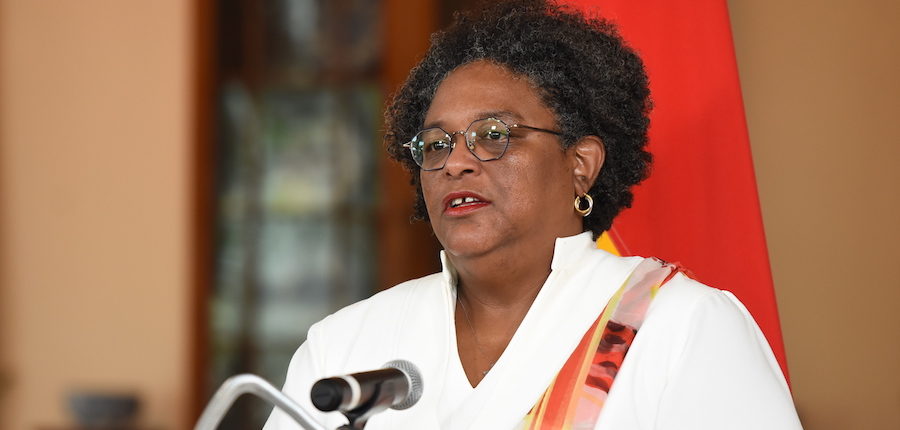
PM renews CARICOM reparations call at Accra conference
On Thursday, at the NEXT STEPS 2026 High-Level Consultative Conference held in Accra, the capital of Ghana, Barbados Prime Minister Mia Mottley, speaking on behalf of the Caribbean Community (CARICOM), delivered a forceful address that renewed the regional bloc’s longstanding demand for reparatory justice for the transatlantic slave trade. Mottley challenged global leaders to move beyond symbolic acknowledgement of the atrocities of centuries of slavery and address the persistent, intergenerational harm the system left behind, stressing that advocates will accept “no retreat on repair”.
The Accra gathering, which builds on years of CARICOM advocacy and landmark United Nations General Assembly resolutions condemning the trafficking of enslaved Africans, brought together a cross-segment group of stakeholders: African and Caribbean policymakers, academic researchers, civil society representatives, and international partners. Attendees gathered to outline concrete steps to implement the UN resolution, turning global recognition of historical harm into tangible action.
In her speech, Mottley pointed to a striking global double standard: while the international community broadly and unanimously condemns a wide range of crimes against humanity in the modern era, it has failed to reach the same unified consensus around the historic crime of chattel slavery. “We have not found the moral courage to state unanimously across humanity that this grave crime against humanity that persisted for centuries ought to be declared so by all,” she said, adding that “That others choose to remain silent is a reflection of them, not of us.”
Mottley traced CARICOM’s advocacy for reparations back nearly a decade, framing the Accra conference as a turning point in the global movement. Reflecting on Barbados’ unflinching confrontation with its own role in the history of slavery, she noted that the island’s 1661 Slave Code predated France’s well-documented Code Noir by 20 years, and went on to serve as a template for slave laws across other Caribbean colonies and parts of what became the United States. This legal framework stripped generations of enslaved Africans of their most fundamental rights by classifying them as subhuman property, a dehumanization that inflicted harm that echoes through communities to this day. “It is the categorisation of us as subhuman. It is the categorisation of us as chattel, as property, that stripped us of our dignity first and foremost, but equally removed from us the choices that are necessary in life to truly express freedom,” Mottley explained.
Crucially, the prime minister emphasized that the global push for reparations is not rooted in animosity or a desire to deepen divisions. Instead, it is a necessary step toward collective healing for all humanity. “The language used from this platform this morning is not one of aggression, is not one of violence, but it is one of the necessities for healing for humanity,” she said, repeating the core mantra of the movement: “There should be no retreat on repair.”
Mottley also highlighted CARICOM’s updated 10-point reparatory justice plan, which was distributed to all conference attendees. The framework outlines clear, actionable demands including a formal public apology from formerly slave-trading and colonial powers, the restitution of stolen cultural artifacts, investment in public health and education initiatives targeted at affected communities, widespread debt relief for former colonial states, and direct compensation for the enduring socioeconomic impacts of slavery and colonialism.
Closing her address, Mottley urged unified action from African and Caribbean nations, warning that deliberate external divisions have long undermined progress for marginalized nations in global justice movements. “These committees, however, will only mean something if we can stay together united and not allow division yet again to be the anchor for those who want to win against us,” she said. She added that reparations must be understood not as a charitable gesture toward formerly colonized nations, but as a fundamental requirement of global justice: “Once that process is started, then it becomes easier for us to engage, not as an act of charity, as you have heard from these platforms, but as an act of justice.” Reaffirming the movement’s commitment, Mottley concluded that just as repair is always required after harm is done in any area of life, it is non-negotiable for the centuries-long crime of chattel slavery: “Our role is to ensure that there is no retreat from our requests and that we recognise that repair comes after recognition.”
-

St Andrew man remanded on attempted murder charge
A young man from St Andrew has been placed in pre-trial custody at Dodds Prison following his arraignment on a serious charge of attempted murder.
25-year-old Zaire Keshon Goodman, who resides at Radcliff Way in the Belleplaine Housing Area, made his first court appearance on Thursday before Chief Magistrate Douglas Frederick at the District ‘A’ Criminal Court. The charge stems from an alleged violent incident that took place on June 8, according to court records.
As the offense against Goodman is indictable — meaning it will proceed to a higher trial court if the case proceeds — the defendant was not required to enter a formal plea during this initial hearing. Court officials have scheduled Goodman’s next appearance in the criminal court for July 16, when the case will be revisited as the legal process moves forward. No further details about the alleged incident or the alleged victim have been released alongside the court announcement.
-
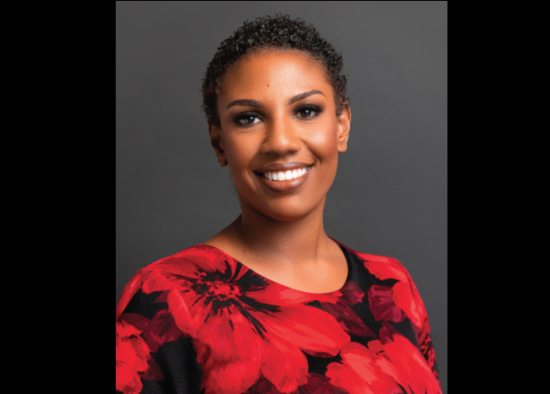
FAO Sub-regional Office of the Cbean pays tribute to the late Dr Shelly-Ann Cox
The United Nations Food and Agriculture Organization (FAO) is honoring the legacy of Dr. Shelly-Ann Cox, Barbados’ late Chief Fisheries Officer, following her unexpected death, hailing her as a transformative trailblazer who redefined sustainable fisheries management across the Caribbean island nation and left an indelible mark on the entire region.
In an official tribute released after her passing, the FAO described Dr. Cox as an irreplaceable strategic collaborator whose work drove critical progress in sustainable fishing and aquaculture through forward-thinking policy design, strengthened institutional governance, and an unwavering dedication to the long-term growth of the global blue economy. The entire FAO team covering Barbados and the wider Caribbean expressed deep sorrow over the loss of the leader, who reshaped the sector in just three years in her role as chief officer.
From the start of her tenure, Dr. Cox worked hand-in-hand with FAO as an ally to advance sustainable fisheries development across Barbados and the Caribbean, aligning local efforts with the UN body’s Blue Transformation vision for ocean sustainability. In her short time in the top role, she delivered outsized impact, drawing on deep technical expertise, a collaborative leadership style, and a persistent focus on empowering the next generation of fisheries professionals. Her vision, drive, and devotion to fishing communities stood out as unmatched among regional peers, FAO noted.
One of Dr. Cox’s most landmark achievements was guiding Barbados’ 2023–2033 National Fisheries Policy through its final development and approval stages, an initiative backed by FAO funding and technical support. Under her leadership, the policy broke new ground by introducing innovative frameworks to add value to fish by-products, turning what was long categorized as discarded waste into new opportunities for economic growth and reduced environmental impact. Her success in turning policy text into actionable, on-the-ground change has already become a model for other Caribbean nations working to advance their own sustainable fisheries transitions.
Planning to update and modernize Barbados’ outdated fisheries legislation began before the COVID-19 pandemic, and when public health priorities shifted short-term focus to developing the national fisheries policy through the FAO-supported StewardFish Project, Dr. Cox never abandoned her broader goal of reforming the entire legal framework for aquatic food system sustainability. Building on the foundation laid during the policy development process, she took a central role in steering the drafting and adoption of Barbados’ 2025 Sustainable Fisheries Management and Development Act, a flagship initiative of the island’s government.
Her technical knowledge and leadership shaped this ground-breaking legislation, which strengthens fisheries governance, boosts environmental protection standards, expands social safety nets for fishing communities, and ensures Barbados maintains access to key international markets by meeting the compliance requirements of the U.S. Marine Mammal Protection Act. Through these systemic reforms, Dr. Cox secured a lasting legacy that will benefit Barbados’ fisheries resources and the thousands of families that depend on the sector for generations, FAO emphasized.
In a May 2026 meeting with FAO leadership, just shortly before her passing, Dr. Cox laid out her bold long-term vision: that Barbados could reach the milestone of zero fish waste by 2028. That ambitious target reflected both her relentless drive for progress and her confidence in the gains the country had already made toward building a sustainable, circular bioeconomy for aquatic food systems.
Dr. Cox’s final professional projects with FAO underscored her enduring commitment to advancing regional fisheries development. These included wrapping up work on a new guide to anchored Fish Aggregating Devices (aFADs), a common fishing practice across the Caribbean, and launching a regional study on dolphinfish maturity. Barbados was selected as the pilot nation for this initiative by the Western Central Atlantic Fishery Commission (WECAFC), a choice that reflected the widespread regional confidence in Dr. Cox’s leadership and Barbados’ technical capacity under her direction.
Tributes continue to flow in from colleagues, project partners, and industry stakeholders who worked alongside Dr. Cox on FAO-backed initiatives, all of whom highlight that beyond her far-reaching professional achievements, she will be remembered for her warm personality, contagious passion for her work, and unwavering commitment to lifting up others. Her collaborative approach united diverse stakeholders around shared goals, her leadership inspired confidence and urgent action, and her genuine kindness left a lasting impact on every person she worked with.
While her sudden passing has left a deep gap across the regional fisheries community, FAO notes that the impact of her life’s work and the legacy she leaves behind will continue to shape progress across Barbados, the Caribbean, and all the communities and institutions she served with such passion. “Rest well, Dr. Cox. We will miss you,” the tribute concludes.
-
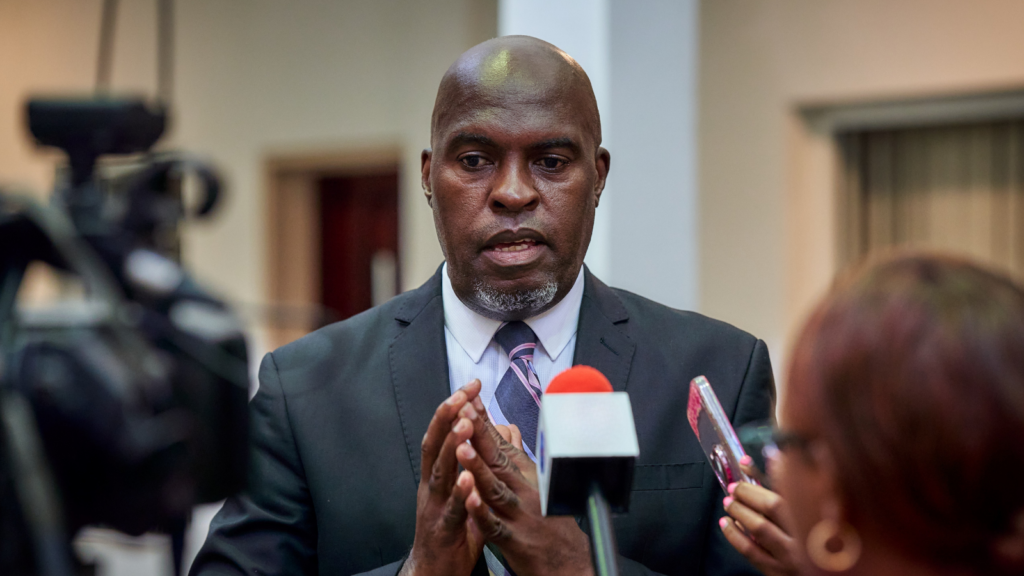
Lashley insists gun courts will be fully staffed, ready despite concerns
Barbados’ Minister of Legal Affairs and Criminal Justice Michael Lashley has moved to ease mounting anxiety among local legal practitioners over the administration’s plan to launch two dedicated gun courts, confirming that all staffing and operational frameworks for the initiative have already been finalized.
Speaking on the floor of the Senate Wednesday while introducing the Supreme Court of Judicature Amendment Bill, Lashley emphasized that the new specialized tribunals will be fully resourced from their opening day, with all personnel hired from outside the country’s existing overstretched criminal justice system. “I have heard concerns from some practitioners about how we will deliver fast-tracked rulings, but this is a specialized court built for speed,” Lashley stated. “We have already secured approval to appoint two external judges who have dedicated availability to handle these cases exclusively. Beyond the bench, we will also bring on two additional legal assistants, four court marshals, and four probation officers, all from outside the current system. Four prosecuting attorneys are already on standby and ready to begin work as soon as the courts launch.”
Lashley explained that procedural adjustments have also been made to cut down on unnecessary delays, with pre-sentence reports prepared as soon as an accused person enters a guilty plea, eliminating the need for repeated case adjournments.
A prominent criminal defence attorney before joining the government in February, Lashley also pushed back against criticism from fellow lawyers, arguing that many opponents of the plan have failed to put forward actionable solutions to the country’s decades-long problem of sprawling case backlogs. He challenged legal practitioners to propose concrete adjustments, such as shifting lower-level non-violent offences to magistrate courts to free up High Court capacity. For example, he noted, indecent assault cases that do not involve minor victims and common law escape from custody charges could easily be handled at the lower court level, while the most serious offences would remain in the High Court. He also pointed out that no practitioner had proposed the early guilty plea system that the new gun courts are set to implement.
Lashley underscored the urgent need for the specialized courts by pointing to the country’s worsening firearm crime crisis. He revealed that 23 of the 27 murders recorded in Barbados so far this year have been linked to illegal guns, and police have already seized 51 unregistered firearms since January. Last year alone, law enforcement seized more than 80 illegal weapons and 3,309 rounds of ammunition, generating hundreds of new pending cases that will add to existing court loads. “This means that there are cases to be done, cases to be fast-tracked, cases to be tried,” Lashley said.
Thanks to a recent collaborative effort between an independent consultant and the Barbados Police Service’s prosecution department, hundreds of backlogged case files from 2022 to 2024 have already been processed and prepared for trial: 672 files have been completed and submitted to prosecuting officers, Lashley confirmed. Ready cases are already lined up to fill the dockets of the new courts from launch: four cases from the start of the year are trial-ready, three more from March, and 11 from April, he said, dispelling claims the new courts would sit idle without a pipeline of cases.
Drawing on successful regional precedent, Lashley noted that Jamaica’s specialized gun court achieved significant reductions in case backlogs, and Barbados will adapt that proven model to fit local needs. Under the Barbados plan, one of the two new courts will focus exclusively on clearing the existing backlog of gun crime cases, while the second will handle all new firearm offences filed from 2026 onward.
The minister’s goal is to ensure all gun-related cases go to trial within six months of being filed, a timeline he argues will both cut gun crime in the country and protect the rights of defendants. “A man who is on bail for firearm possession or a related gun offence will not be able to reoffend freely if his case is heard within four or five months,” Lashley explained. “Speedy trials lead to reduced criminal activity because we get dangerous offenders off the streets faster. At the same time, this approach upholds a defendant’s right to a trial within a reasonable time without unnecessary delay, and it also protects the rights of victims who have been waiting for justice.”
Lashley added that the Barbados Police Service will receive additional resources to strengthen evidence gathering and case management in the prosecution department. New criminal procedural rules will also be rolled out in the near future to require both prosecution and defence teams to be fully prepared before a trial begins, eliminating the last-minute delays that have bogged down existing court proceedings. “All the speculation from some lawyers about new delays and backlogs is unfounded, because the procedural rules that will prevent these issues are already coming,” he said.
To address additional concerns about witness safety, Lashley confirmed that the Criminal Proceedings Act will soon be officially proclaimed, bringing into force new protections for witnesses that include the option to safeguard their identities during proceedings, a change that addresses longstanding concerns about intimidation in the High Court.
-
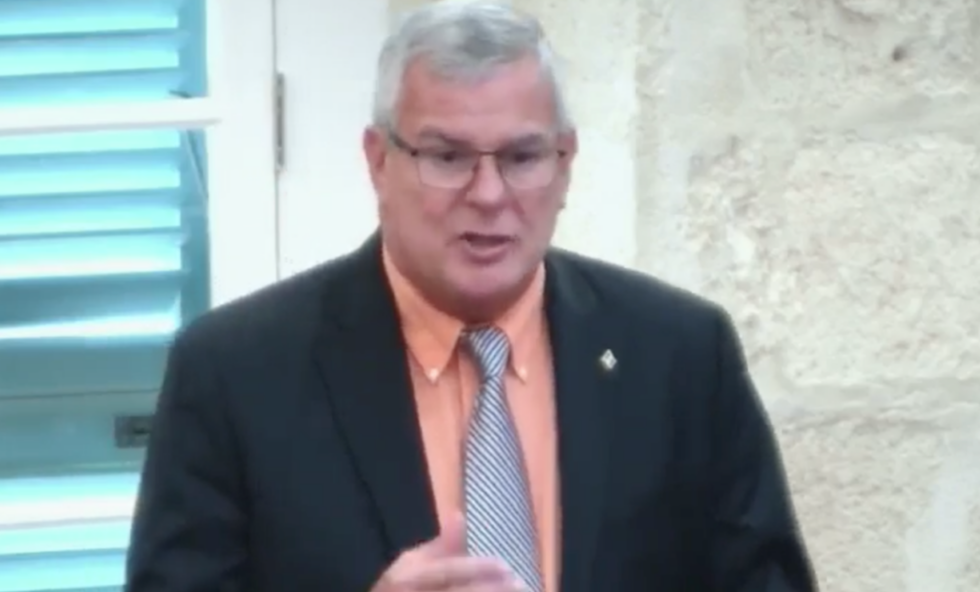
‘Mandatory minimums’ for gun crimes, says senator
As firearm-related violence continues to climb across Barbados, independent legislator and real estate executive Andrew Mallalieu is amplifying public calls for sweeping criminal justice reform centered on harsher penalties for gun-involved offenses. Mallalieu has thrown his support behind the Supreme Court of Judicature (Amendment) Bill, a piece of legislation that would establish dedicated firearms courts to streamline the processing of gun-related cases. But in a stark acknowledgment of the current public safety climate, he says even this structural reform is incomplete without a core policy shift: mandatory minimum prison sentences for anyone convicted of committing a crime with a firearm.
In remarks delivered on the floor, Mallalieu reaffirmed his long-held stance that the island’s current sentencing framework fails to match the scale of public anxiety around rising gun crime. “If you asked Barbadians today, the vast majority would tell you that the sentences for crimes committed with firearms need to be much harsher than they are,” he argued. While Mallalieu acknowledged that existing rulings from the Caribbean Court of Justice and other judicial frameworks may present procedural hurdles to implementing mandatory minimum sentences, he said the overwhelming will of the public justifies moving the proposal forward. He added that he personally regrets the need for such harsh penalties under normal circumstances, but the current public safety crisis leaves no other viable option.
Mallalieu also outlined two additional critical requirements to make the new judicial framework outlined in the amendment bill functional. The legislation includes a provision to expand the High Court by up to 15 new judge positions, but the independent senator emphasized that this change will only deliver practical improvements to court efficiency if the government actually follows through on appointing those new judges. Beyond judicial appointments, he noted, the reform will require a robust, transparent case routing system to direct firearms cases to the new dedicated courts without delays. Most importantly, Mallalieu stressed that passing the legislation itself will not improve public safety. “Passing this bill will do nothing if we don’t put the resources behind it to do it,” he said, warning that adequate funding and infrastructure support are non-negotiable for the reform to succeed.
In a surprising addition to his remarks, Mallalieu also opened a new national debate on gun control by asking whether Barbados should hold a public referendum on a near-total national ban on civilian firearms. Under the proposal he floated, only three groups would be exempt from the ban: active police officers, members of the national army, and firearms stored legally at regulated gun-sporting facilities. The question has opened a new front in the ongoing national conversation about how to curb rising gun violence across the island.