标签: Barbados

巴巴多斯

  • Wins for Ellerton and Wotton in BFA Premiership

    Wins for Ellerton and Wotton in BFA Premiership

    The Barbados Football Association (BFA) Premier League resumed this week at the association’s Technical Centre in Wildey, delivering two contrasting results that shifted the dynamics of both the title race and the relegation battle across the league table.

    In the early 7 p.m. kickoff, mid-table side Ellerton secured a vital 3-1 victory over bottom-of-the-table St Andrew Lions, a result that pushes the promoted side ever closer to an immediate drop back to Division One. Last season’s Division One champions have struggled drastically since stepping up to the top flight, and this latest defeat has left their top-flight status hanging by a thread. It was a dominant opening half for Ellerton: captain Shakille Belle broke the deadlock in the 26th minute, and forward Rickneco Marshall stretched the lead to two goals just seven minutes later, putting Ellerton firmly in control. St Andrew Lions mounted a second-half comeback attempt, with Jemari Henry cutting the deficit in half in the 58th minute to give the side a glimmer of hope. But Belle put the result beyond doubt 10 minutes before full time, notching his second of the match to lock in three full points for Ellerton.

    The win keeps Ellerton firmly in the hunt for a third-place finish in the league, locked in a tight battle with Brittons Hill United. Ellerton currently sits fourth in the table with 28 points, just one point behind third-placed Brittons Hill, and holds a game in hand over their rivals. That extra match comes after a uncontrolled bush fire near the original match venue forced the abandonment of their fixture against Paradise at halftime on Sunday. For St Andrew Lions, however, the defeat leaves them mired in one of the two automatic relegation spots, with only two regular rounds of matches left to play. The side sits on just seven points, staying only above last-placed Wotton on goal difference.

    That lowly placing for Wotton did not stop the side from pulling off one of the biggest upsets of the league campaign in the night’s second fixture, a 2-1 come-from-behind win over local rivals Gall Hill that marks only Wotton’s second victory of the entire season. Gall Hill got off to a fast start, with Shaquon Jones putting the side ahead in the 18th minute to take an early lead. Wotton responded just before the halftime break, earning a penalty that Keon Harding converted to level the score. The match remained tied through most of the second half until Wotton winger Logan Carrington found the back of the net in the 79th minute to score the game-winner, handing his side a much-needed, morale-boosting three points.

    Heading into the final stretch of the season, the title race remains wide open. Reigning champions Weymouth Wales hold a narrow one-point lead at the top of the table with 34 points, followed closely by second-placed Paradise on 33 points. Both title contenders still have rescheduled matches to make up, leaving the door open for either side to claim the crown. Weymouth Wales can secure back-to-back titles if they win all three of their remaining matches, but the side is currently navigating a significant injury crisis that has forced manager to repeatedly reshuffle their matchday squads.

    The next round of BFA Premier League fixtures is set to kick off Sunday with a 6 p.m. matchup between Kickstart Rush and relegation-battling St Andrew Lions. Kickstart Rush will be looking for a win to close the gap on the top four and secure a spot in the upper half of the table. Following that opener, Brittons Hill will face a tricky test against an unshackled Wotton side, which has nothing left to lose after dropping to the foot of the table. The final late fixture will see league leaders Weymouth Wales take on UWI Blackbirds, who come into the match fresh off a hard-fought win in their most recent outing.

  • Young children to benefit from Micro Games

    Young children to benefit from Micro Games

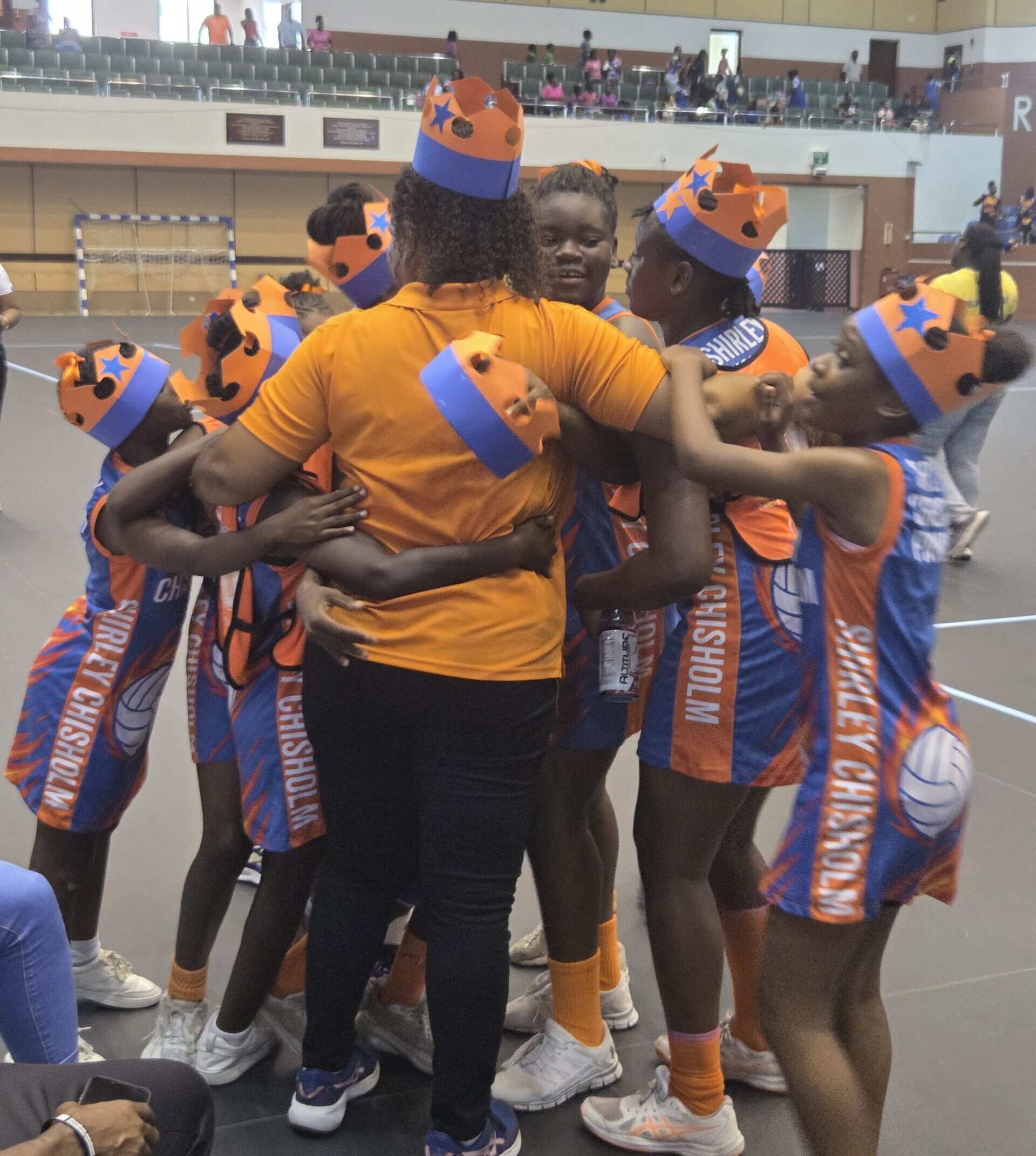
    The first-ever Micro Games 2026 has officially gotten underway at Queen’s Park, bringing together nearly 700 young learners from seven government-run nursery schools across the region for three days of age-appropriate athletic competition and skill-building. Designed to introduce foundational values of teamwork, resilience, and healthy competition to children at the earliest stages of development, the event opened its doors on Wednesday with a ceremonial opening that drew government officials, education leaders, proud parents, and excited participating students.

    The opening ceremony was marked by a symbolic moment when two students from Maria Holder Nursery School (Sharon), Zuri Doyle and Tai Parris, led the assembled athletes in reciting the official athletes’ oath, formally declaring the games open. On the first day of competition, three schools took to the fields: Maria Holder Nursery School (Sharon), Social Empowerment Agency Nursery, and Maria Holder Nursery School (Oldbury), with the remaining four schools competing across the following two days of the event.

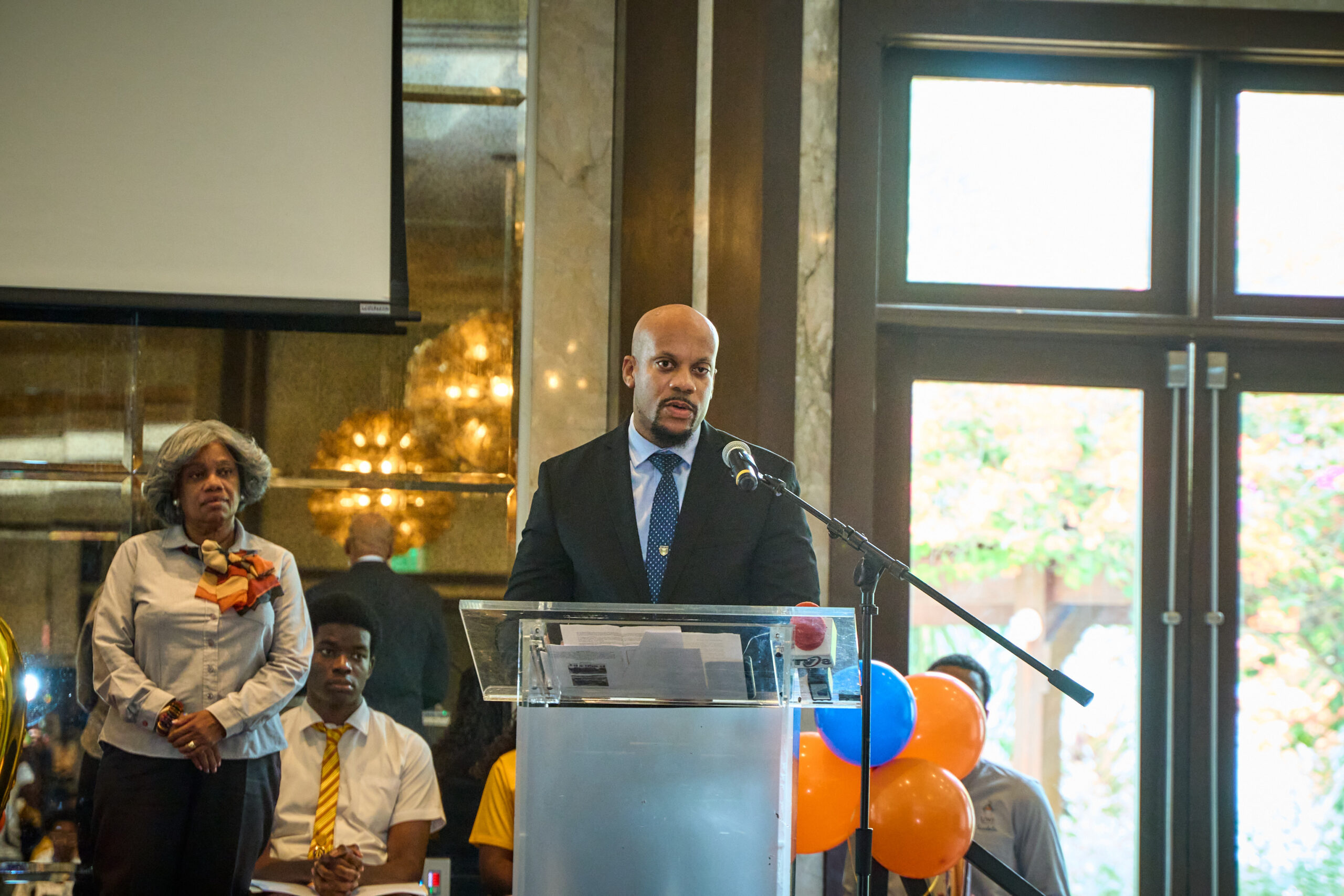
    Speaking at the opening ceremony, Minister of Education Chad Blackman framed the Micro Games as far more than a casual children’s sporting event, positioning it as the critical first step in a national pipeline that cultivates athletic talent from early childhood all the way to elite international competition. Blackman explained that the games act as the precursor to a sequential development pathway: leading first to the National Primary Schools Athletic Championships (NAPSAC), then to the Barbados Secondary Schools Athletic Championships (BSAC), and eventually to the Caribbean Free Trade Association Games (CARIFTA), the region’s premier youth athletic competition.

    “For a country looking to build a long-term strategy of sporting success, these children are the future of global competition,” Blackman said. “These are the young people who will one day go on to compete at the Olympic Games, represent the nation at the FIFA World Cup, and earn spots on the West Indies men’s and women’s national cricket teams.” Beyond athletic achievement, Blackman emphasized that the games were intentionally designed to foster transferable life skills that benefit children far beyond the sports field. “Today is about young people coming together to have fun, compete fairly, and build the core skills and values that our whole nation relies on to thrive,” he noted.

    Against the backdrop of two key national milestones – the country’s 60th anniversary of independence and five years as a republic – Blackman tied the event to the nation’s broader development goals. “These milestones are catalysts that push us to invest in our young people, who will carry our country forward through the next 60 years of growth,” he said. The minister also issued a heartfelt call to parents, urging them to prioritize positive reinforcement as they support their children’s growth. Citing a principle he lives by, Blackman said: “The best way to predict the future is to create it. Parents, continue to give your children nurturing, encouraging support, help them understand they can be the best version of themselves, that they have the potential to excel anywhere in the world.” He added: “Words hold incredible power – what you speak over your children’s lives will manifest in their futures, for better or worse. If you want positive outcomes for your kids, speaking encouragement and goodness into their lives is not just helpful, it is essential.”

    Dr. Ramona Archer-Bradshaw, the nation’s Chief Education Officer, shared her excitement at seeing the years-long vision for the Micro Games come to life, coming on the heels of successful national celebrations for NAPSAC and BSAC competitors earlier this year. “Earlier this year, we cheered on our primary school competitors at NAPSAC and our secondary school athletes at BSAC, and now it is our turn to celebrate our youngest learners as they take the field for the first Micro Games,” she said. Archer-Bradshaw stressed that the event fills a critical gap in early childhood education by teaching children the value of mutual support and sportsmanship from their earliest years. “We live in a world today where far too many adults focus on tearing each other down, on social media and in public spaces. We have to teach children from the earliest age how good it feels to lift each other up and celebrate one another’s success,” she explained. “Beyond the lessons they learn in their pre-primary classrooms, this event will teach them what it means to win with humility, lose with grace, and stand with each other through every challenge.”

    As the title sponsor of the inaugural event, Republic Bank’s Retail and Operations Manager Sharon Zephirin praised the Ministry of Education for developing a creative, accessible platform that lets young children build critical life skills – including teamwork, discipline, and confidence – through play and friendly competition. “Through this collaborative effort, we are laying the foundational building blocks for these children to succeed throughout their entire lives,” Zephirin said. “At Republic Bank, we firmly believe every child deserves a strong, supportive right start in life. That is why we are so proud to support the Micro Games through our Right Start initiative, a program designed specifically to nurture the needs of young people across the country.” Like Minister Blackman, Zephirin encouraged parents to remain consistent pillars of support for their children’s evolving dreams. “Continue to stand by your kids in every new thing they try. Cheer them on, nurture their goals, and remind them that even the smallest step forward is a victory worth celebrating,” she said. “When we work together as a community, we can help every child grow up with the confidence, curiosity, and courage to reach their full potential.”

  • Barbados Tridents to return for 2026 CPL

    Barbados Tridents to return for 2026 CPL

    After five years competing under the Barbados Royals moniker, one of the Caribbean Premier League’s (CPL) most storied franchises is heading home to its roots. The Government of Barbados and global multi-team sports ownership leader Royals Sports Group (RSG) have jointly announced the relaunch of the Barbados Tridents, a move anchored by a transformative three-year public-private partnership billed as the first of its kind in elite international franchise cricket.

    Framed as the centerpiece of the broader national “One Barbados” initiative, the partnership coincides with the island nation’s 60th anniversary of independence, tying the franchise’s rebrand to a moment of national reflection and forward-looking ambition. Under the terms of the agreement, the Government of Barbados will take a minority co-investment stake in the franchise, pending final regulatory approvals. Majority ownership and day-to-day operational control will remain with RSG, preserving the group’s proven expertise in professional sports management while aligning the team’s activities with national public goals.

    Barbadian Prime Minister Mia Amor Mottley emphasized the deep cultural and national significance of the move during the official announcement. She noted that cricket has long stood as a core pillar of Barbadian national identity and self-determination, making the return of the Tridents name and original national color scheme a fitting tribute to the nation’s six decades of independent progress. “The return to the Barbados Tridents reflects our confidence, our pride and our ambition as a nation, as we begin to chart the path towards our next 60 years,” Mottley said. “We want to make sure that the Barbados Tridents is at the heart of our national story – inspiring our young people, strengthening our global presence, and demonstrating how sport can serve the wider national interest.”

    Manoj Badale, lead owner of Royals Sports Group, reaffirmed the organization’s long-term commitment to Barbados beyond the annual CPL playing window. The partnership includes a multi-year investment plan designed to deliver year-round economic and social impact across the island, extending well beyond match days. Badale framed the collaboration as a landmark model for public-private cooperation in elite sport, highlighting RSG’s enduring confidence in Barbados both as a global cricket powerhouse and a dynamic leader across tourism, investment and innovation. “Relaunching the franchise as the Barbados Tridents, playing in the national colours, is a powerful statement of pride and intent,” Badale said. “We remain fully committed to Barbados, to the CPL, and to one clear ambition: sustained success, with both the men’s and women’s CPL titles brought home to the island.”

    For long-time cricket fans, the return of the Tridents name carries strong nostalgic and competitive weight. The franchise claimed two CPL titles under the Tridents branding in 2014 and 2019, before rebranding to Barbados Royals ahead of the 2020 season. Most recently, the team finished at the bottom of the league standings in the 2025 CPL edition, making the relaunch a fresh start for the franchise as it targets renewed on-field success.

    Officials on both sides of the partnership stressed that the One Barbados initiative is designed to position the Tridents as a permanent year-round national asset, rather than just a seasonal sporting side. The innovative partnership model is expected to serve as a test case for future collaborations between national governments and private sports ownership groups across the globe, proving that aligning public national pride with private sector expertise can deliver shared benefits for all stakeholders.

  • Police renew appeal for three wanted men

    Police renew appeal for three wanted men

    Law enforcement authorities in Barbados have stepped up their efforts to locate three men wanted for questioning linked to severe criminal activity, reissuing public appeals for community assistance this week.

    On Wednesday, the Barbados Police Service published updated wanted alerts for Ricardo Cortez Browne, who also goes by the alias “Ricky”, Jevon Obrien Richardson, and Akeem Deshawn Carter. Each suspect has been provided with clear instructions on how to surrender to authorities legally, with permission to be accompanied by a personal legal representative.

    Authorities have released detailed physical descriptions and last known residential locations to help members of the public identify the three men. Browne, whose last confirmed address is in Coral Land, Haggatt Hall, St. Michael, is described as a 5-foot-10-inch man of medium build with brown complexion and a prominent bulbous nose. Police have directed Browne to turn himself in at the Black Rock Police Station alongside his chosen attorney.

    The second suspect, Richardson, last resided at Walmer Lodge in Black Rock, St. Michael. He stands approximately 6 feet tall, has a slim build, dark complexion, and short, messy black hair. Law enforcement has requested that Richardson surrender to the Criminal Investigations Department (CID) based at the District ‘A’ Police Station on Station Hill, St. Michael, again with legal counsel present.

    The third wanted man, Carter, lists Bartlett Tenantry in Sargeant Village, Christ Church as his last known address. Officials describe Carter as a 5-foot-9-inch man of stocky build with dark complexion, and note he has two distinguishing tattoos: the word “Loyalty” inked on his left hand, and the initials “QTF” marked on his right hand. Carter has been instructed to report to the CID unit at Oistins Police Station with his attorney.

    In addition to asking the three suspects to surrender voluntarily, police are calling on any member of the public with information about the current whereabouts of Browne, Richardson or Carter to come forward immediately. Tips can be submitted to multiple contact points: the Black Rock Police Station at 417-7500 or 417-7505, District ‘A’ CID at 430-7242 or 430-7270, Oistins CID at 418-2608 or 418-2612, the national 24/7 police emergency line at 211, anonymous Crime Stoppers at 1-800-8477, or any local neighborhood police station.

    Officials have also issued a clear reminder to the public that concealing the location of a wanted person or providing any form of assistance to help them avoid arrest constitutes a serious criminal offense under Barbados law, and anyone found guilty of this action can face prosecution.

  • Thirteen-year-old girl missing

    Thirteen-year-old girl missing

    Law enforcement authorities in Barbados are turning to the public for help in their search for a missing teenage girl from the parish of St Michael. 13-year-old Kemera Murray, who resides at Block 1B, Meadow Road in the Wildey neighborhood, has not been seen since Tuesday, May 12, and investigators are asking community members to come forward with any details that could help locate her.

    Police have released a detailed physical description to aid public recognition. Murray stands approximately 5 feet 6 inches tall, has a slender build, and a dark complexion. Her hair is styled in short cornrow plaits. When she was last observed, she was wearing a blue cropped dress paired with black form-fitting leggings. Investigators also noted that the teen is known to regularly visit the Oistins area located in Christ Church, a southern parish of the island nation.

    Multiple contact channels have been set up for members of the public to share any information they may have about Murray’s current location. Those with tips can reach out directly to District ‘A’ Police Station via phone at 430-7242 or 430-7246, contact the national police emergency line at 211, submit anonymous information through Crime Stoppers at 1-800-8477, or visit any local police station to share details in person. Police emphasize that even small pieces of information could prove critical to bringing the missing teenager back to her family safely.

  • Man charged with 10 burglaries

    Man charged with 10 burglaries

    A 61-year-old transient individual has been ordered to remain in custody after facing a string of burglary charges connected to break-ins across two popular Barbadian districts over an eight-month period. Derick Rudolph Crawford, who lists no permanent residential address, made his initial court appearance on Tuesday before Magistrate Cuffy Sargeant at the Holetown Magistrates’ Court, where he was formally arraigned on 10 separate burglary counts.

    Law enforcement officials have confirmed that nine of the charges tie back to break-in incidents that occurred within the Holetown area between September 2025 and May 2026. The 10th and final charge stems from an alleged burglary in the neighboring Hastings/Worthing region, which took place on March 26 of this year.

    Crawford entered a formal not guilty plea to all nine charges linked to the Holetown incidents. Following the plea proceeding, Magistrate Sargeant granted a remand order that sends Crawford to the custody of the Barbados Prison Service at Dodds prison while the case moves through the legal system.

    Court schedules have been set for next steps in both sets of allegations. The Holetown-based matters are scheduled to next be called in the Holetown Magistrates’ Court on June 9. By contrast, the single charge connected to the Hastings/Worthing incident has been transferred to the District ‘A’ Traffic Court, with a preliminary hearing scheduled for May 15, nearly a month earlier than the next appearance in Holetown.

    The string of alleged burglaries across two high-traffic coastal districts has drawn local court attention, as the areas are popular with both residents and tourists, making property security a key community concern.

  • UN pushes regional crime action plan

    UN pushes regional crime action plan

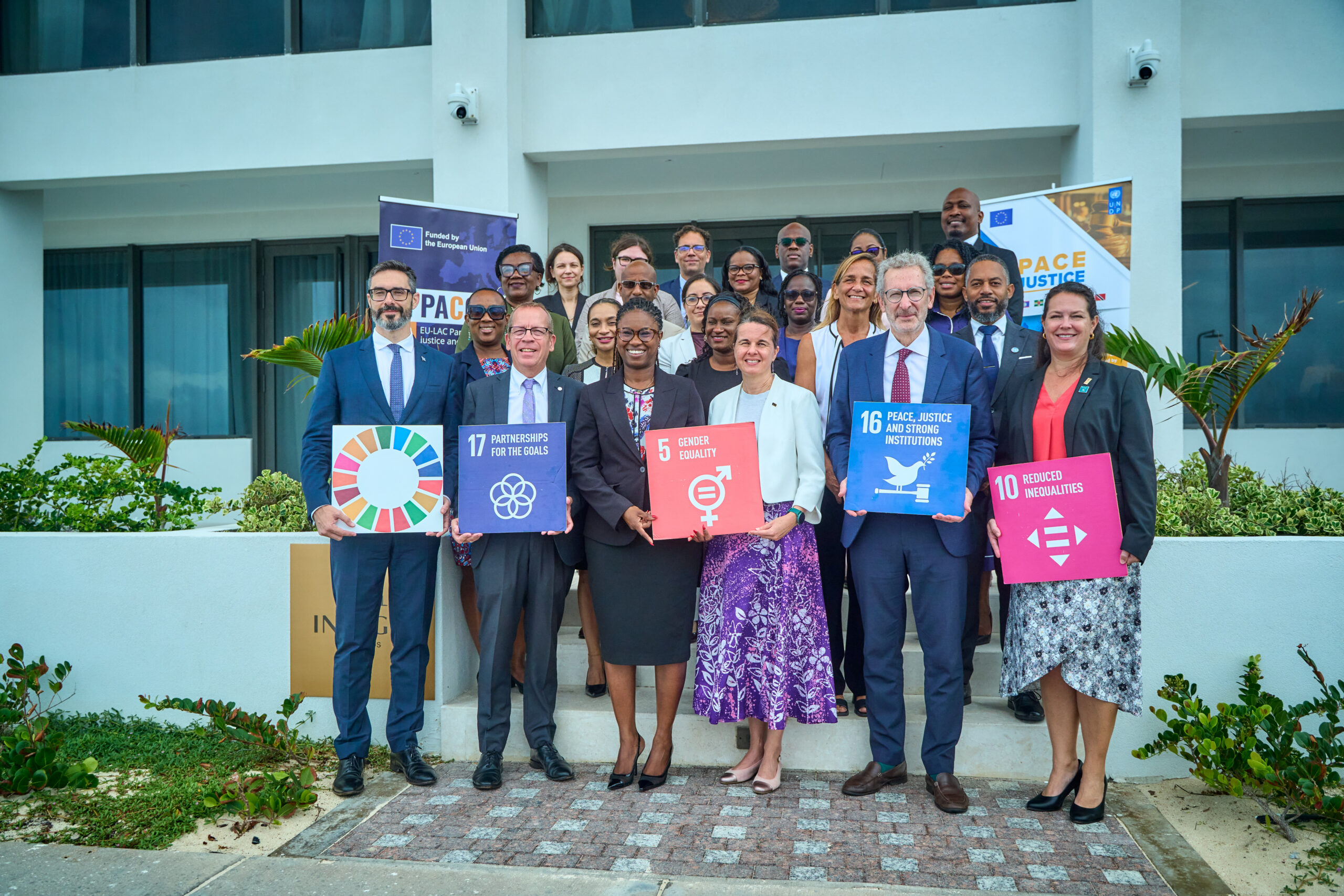
    Across multiple Caribbean island states, surging violent crime has emerged as a pressing cross-border systemic threat, and a joint United Nations and regional bloc initiative is now moving forward to address the crisis, a senior United Nations Development Programme (UNDP) official has confirmed.

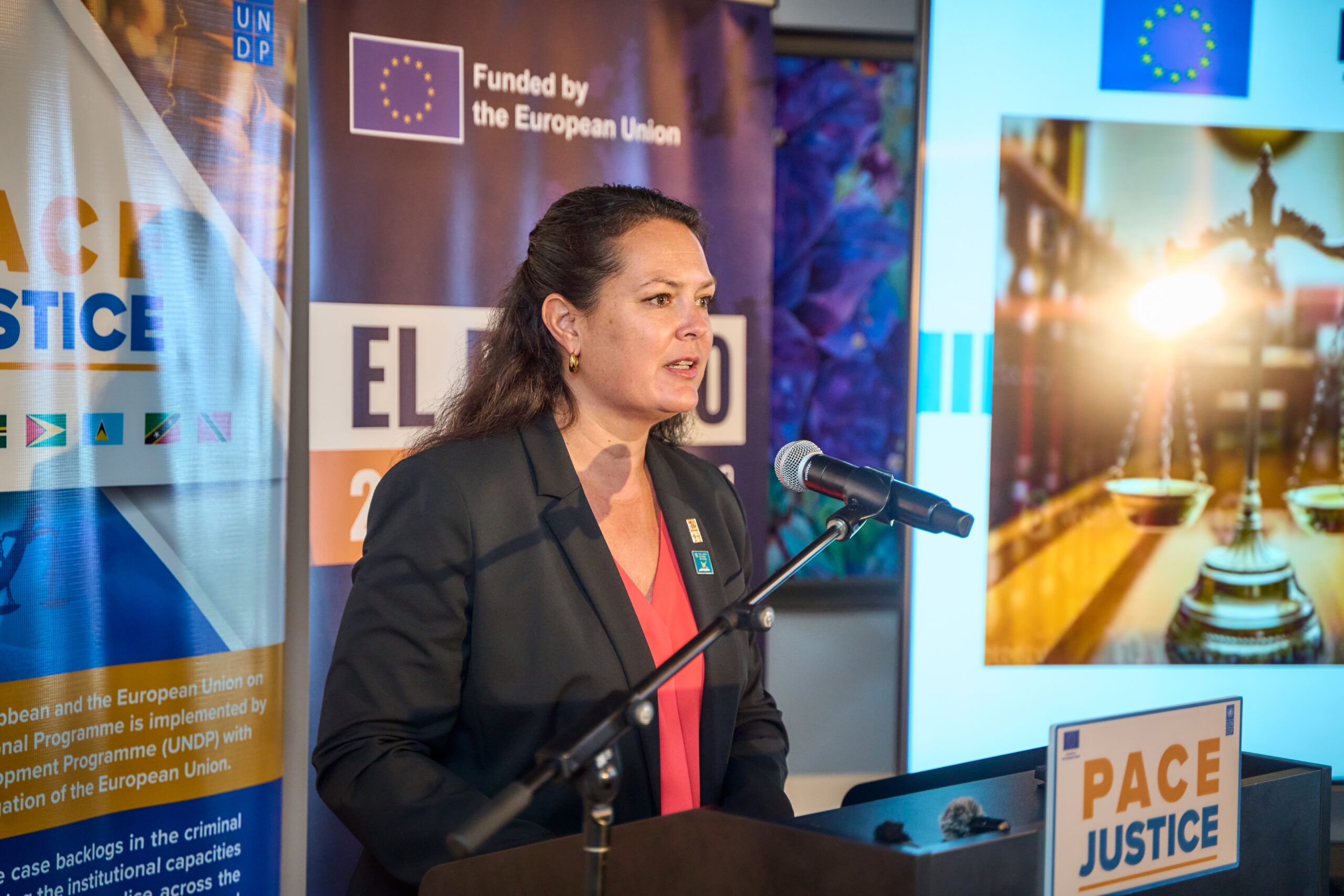
    Speaking at this week’s official launch of the UN Eastern Caribbean 2025 Annual Results Report in Bridgetown, Barbados, Stephanie Ziebell, Deputy Resident Representative for UNDP Barbados and the Eastern Caribbean, outlined that regional heads of government will gather later this month in St. Kitts, hosted by Prime Minister Dr. Terrance Drew, for a high-level UN-CARICOM dialogue to finalize next steps and set core priorities for the new anti-crime framework.

    This collaborative effort builds on high-level strategic talks held earlier in 2025, and marks the first evidence-based, region-wide assessment of transnational crime and violence in the Caribbean, framing the issue as a shared systemic challenge rather than an isolated national problem. Currently, two core products are in development: a joint diagnostic report that maps the scope of the crisis, and a formal CARICOM-UN Action Plan to guide coordinated response.

    Ziebell explained that the diagnostic phase is focused on unpacking the deep-rooted drivers of crime, identifying structural weaknesses in regional and national security and justice systems, and pinpointing the most urgent reforms needed to reverse upward violence trends. The subsequent action plan will translate these findings into a unified regional framework, outlining clear practical priorities, shared accountability standards, and defined roles for CARICOM institutions, individual member states, and UN implementing partners.

    The broader UN strategy for advancing peace, public safety and access to justice across the Eastern Caribbean centers on two foundational pillars: strengthening institutional capacity and building more resilient, safer communities. Ziebell emphasized that all work is rooted in data-driven analysis, cross-stakeholder partnership, and a deliberate commitment to conflict-sensitive and gender-responsive policy design. “Justice and safety must be accessible for everyone, especially women and girls, persons with disabilities, and people at the margins, so that no one is left behind,” she said.

    Beyond addressing violent crime broadly, the UN has already been active in supporting regional efforts to counter gender-based violence, shore up human rights protections, and improve cross-border law enforcement coordination. Ziebell outlined that the UN has helped national governments strengthen prevention and response frameworks for gender-based violence, reinforce national human rights institutions, advance regional agreements targeting domestic abuse and transnational organized crime, upgrade border management protocols, build forensic science capacity, and deepen cooperative work between national law enforcement agencies.

    She also highlighted the Canada-funded PACE Justice Programme, a multi-country initiative currently being rolled out across eight Caribbean nations including Barbados, Antigua and Barbuda, Dominica, St. Lucia, and St. Kitts and Nevis. The program is focused on modernizing outdated criminal justice systems and cutting crippling case backlogs that erode public confidence. To date, support provided through PACE Justice has included new court equipment, technical assistance for digital case management systems, specialized training for crime scene investigators, capacity-building workshops for justice sector personnel, tools to expand restorative justice practices, coordination support for national attorneys general, work to harmonize standard operating procedures across jurisdictions, planning for AI integration in justice systems, and facilitated dialogues focused on reducing case backlogs.

    These targeted reforms are designed to improve the quality of criminal investigations, uphold consistent due process standards, and rebuild public trust in national justice systems. Ziebell added that robust, functional institutions are a critical buffer for Caribbean societies, which face overlapping threats from climate disasters, economic volatility, and growing insecurity. “These systems help societies withstand shocks, whether those shocks come from disasters, economic stress, or rising forms of violence and insecurity,” she noted.

    Closing her remarks at the report launch, Ziebell reaffirmed the UNDP and United Nations’ long-term commitment to partnering with Caribbean national governments, civil society organizations, and global development partners to expand evidence-based crime prevention and expand equitable access to justice for all people across the region.

  • Loss-and-damage fund may come to fishing industry’s aid

    Loss-and-damage fund may come to fishing industry’s aid

    As the Caribbean fishing sector slowly rebuilds from the catastrophic damage wrought by Hurricane Beryl two years ago, a landmark United Nations climate fund is preparing to deliver targeted new grant funding to support recovery efforts across the region.

    The Fund for Responding to Loss and Damage (FRLD), created under the UN Framework Convention on Climate Change, was designed specifically to support climate-vulnerable nations grappling with the irreversible impacts of climate-driven extreme weather. Now, the fund’s executive director Ibrahima Cheikh Diong is on the ground in Barbados, the small island nation that led global advocacy to establish the financing mechanism, to collect government funding requests ahead of the 2026 Atlantic hurricane season, which kicks off next month.

    Barbados has emerged as a global leader in pushing for equitable climate finance, with Prime Minister Mia Mottley becoming one of the most prominent voices in international climate negotiations and a key architect of the fund’s operational framework, the Barbados Implementation Modalities (BIM). On Tuesday, Diong held talks with Deputy Prime Minister Santia Bradshaw to outline the fund’s planned support, a day before he revisited the Bridgetown Fisheries Complex – the facility that bore the worst of Hurricane Beryl’s damage, losing dozens of fishing vessels and sustaining major structural harm.

    Earlier this year, the FRLD rolled out a $250 million early intervention grant package under the BIM framework, a milestone for developing nations that bear the brunt of climate change despite contributing the least to global emissions. For Diong, the return trip to Barbados carries deep personal and symbolic meaning: he was on the island in the thick of Hurricane Beryl in 2024, and witnessed firsthand the storm’s destruction and the Barbadian people’s resilience during the initial rebuilding phase.

    “I was in Barbados in the middle of Hurricane Beryl. I had a chance to go on the ground and see the damage caused by the hurricane, the resilience of the people of Barbados and the work the government has been doing in rebuilding. So, coming back here, I would like to go back and visit on the ground and see what has happened since the last time I was here,” Diong said.

    He added that the visit is also an opportunity to update the Barbadian government on the fund’s progress, acknowledging that Mottley has been the mechanism’s most vocal global champion. “It was here in Barbados a year ago that we launched the Barbados Implementation Modalities (BIM). It is very symbolic to come back and brief the government on progress we have made so far. The whole purpose of the meeting is really to update [Deputy Prime Minister Bradshaw] on the progress we made; and looking ahead, where do we stand on the fund, and hopefully get some support from the government in continuing to advocate for this fund.”

    To date, the FRLD has secured $820 million in converted pledges from donor nations around the world, with $440 million already transferred and ready for disbursement. A year ago, the fund’s board approved the $250 million early intervention program, which provides 100% grant funding rather than loans to avoid adding to indebted developing nations’ debt burdens – a response to repeated calls from vulnerable countries that cannot afford to take on new borrowing to recover from climate disasters.

    Per the BIM agreement reached in Barbados, at least 50% of all early intervention funding is earmarked for Small Island Developing States (SIDS) and Least Developed Countries (LDCs) – a group that includes Barbados. Initial allocations to eligible countries will range from $5 million to $20 million, with individual nations setting their own funding priorities based on their specific recovery and resilience needs.

    Diong is currently facilitating a two-day workshop for CARICOM member states to help governments prepare their funding requests, and reminded regional representatives that June 15 is the firm deadline for submission, with no extensions planned unless the FRLD board votes to approve one. After requests are submitted, the FRLD board will meet in late July to finalize allocations before forwarding recommendations to the fund’s trustee, the World Bank, for disbursement.

    “It’s up to the countries, based on their needs, how much they would like to come to FRLD for funding, or other funds as well; ultimately, knowing that when you put that US$5m to US$20m it will be enough to meet their demands. So, we are looking at the gaps we are filling in, and making sure that what we provide can be put to use very quickly, so we can respond,” Diong explained.

    Hurricane Beryl made history as the earliest-forming Category 5 hurricane ever recorded in the Atlantic, hitting Barbados as a Category 3 storm in 2024 when it passed roughly 150 kilometers south of the island. While the storm only caused moderate damage to general public infrastructure and did not spark a full-scale humanitarian crisis, it completely destroyed most of Barbados’ fishing fleet, which is only now slowly recovering. Total economic losses from the storm reached $193 million, equal to 0.15% of Barbados’ total GDP. 58% of that total came from physical damage, 36% from ongoing economic losses, and 5% from unplanned recovery costs. Four key sectors – tourism, fisheries, agriculture, and environmental infrastructure – accounted for 84% of all storm-related impacts. Beryl’s unprecedented early formation and disproportionate impact on Barbados underscores the growing volatility of global climate patterns, which continues to amplify the climate vulnerability of Caribbean SIDS that face existential risk from rising seas and intensifying extreme weather.

  • New BTMI board appointed amid tourism growth push

    New BTMI board appointed amid tourism growth push

    The Caribbean island nation of Barbados has announced a major leadership reshuffle at its national tourism authority, tapping seasoned business executive Peter Harris to take the helm of Barbados Tourism Marketing Inc. (BTMI) as the country works to bolster its competitive position in the fast-shifting global travel landscape. Harris will succeed outgoing chair Shelly Williams, with industry veteran Gayle Talma stepping into the newly vacant role of deputy chair for the two-year appointment term.

    The changes were made public Tuesday in an official statement released by Barbados’ Minister of Tourism and International Transport, Ian Gooding-Edghill, who framed the board restructuring as a strategic move to assemble a cross-functional team with the diverse skill set required to navigate modern tourism industry challenges. In addition to the top two leadership appointments, the refreshed 13-member board includes a roster of seasoned professionals from across the sector: Sheldene Matthews-Mottley, Andrea Brome, Carol Roberts-Reifer, Ronnie Carrington, Jo-ann Roett, Patricia Affonso-Dass, Kevyn Yearwood, Nicholas Parker, Paul Collymore, Senator Ryan Forde, Cicely Callender, and Francine Blackman, who serves as Permanent Secretary in the Ministry of Tourism and International Transport.

    Gooding-Edghill emphasized that the new board’s core mandate centers on rolling out Barbados’ updated tourism marketing framework, building consistent global brand recognition for the island as a top travel destination, and delivering steady year-over-year growth in international visitor arrivals. The minister stressed that urgent, focused work is needed to speed up the implementation of the island’s long-term tourism growth strategy, particularly against a backdrop of ongoing global geopolitical volatility that creates uncertainty for international travel flows.

    Barbados’ tourism sector has posted solid, resilient performance in recent years, but Gooding-Edghill noted that ongoing proactive planning is critical to prepare for unforeseen external shifts that could disrupt the industry. As the backbone of the country’s economy and social fabric, tourism revenue drives critical public services and livelihoods across the island, making sustained growth a top national priority, he added. Beyond brand building and visitor growth, the board will oversee two key strategic pillars that are central to the government’s expansion plans: the continued expansion of the island’s airlift access initiative, and targeted efforts to grow visitor numbers from high-potential emerging markets, alongside the island’s established traditional source markets.

    “Our successful airlift strategy will continue to be one of the key pillars central to our tourism growth strategy, along with our further stimulation of emerging markets to add to our existing source markets, to generate increased arrivals to Barbados,” Gooding-Edghill said in the statement. He closed by extending official gratitude to outgoing chair Shelly Williams, recognizing her contributions to Barbados’ tourism development during her tenure leading the BTMI board.

  • Fishing disrupted as ice shortage cripples City complex

    Fishing disrupted as ice shortage cripples City complex

    At the Bridgetown Fisheries Complex, one of Barbados’ core hubs for the local fishing industry, a deepening crisis has brought daily operations to a near-standstill. Rows of idle fishing vessels line the docks, their crews trapped on shore by a persistent and worsening shortage of ice caused by breakdowns in the facility’s decades-old cooling infrastructure. As of Tuesday, the entire flotilla remained moored, with fishermen saying the ongoing malfunction has devastated their incomes, restricted fishing trips, and pushed some operators to travel hundreds of miles overseas just to secure the critical supply.

    For months, recurring failures of the complex’s ice machines have left fishing crews increasingly frustrated, with dozens gathering along the waterfront this week to air their grievances to local media. Veteran fisherman Wade Gittens, who has worked in Barbados’ fishing industry for more than 30 years, called the current crisis an existential blow to a sector that was already struggling to stay afloat.

    “Right now, there are roughly 70 to 75 boats tied up here, not going anywhere because there is no ice,” Gittens explained during an urgent on-site press briefing. “If a boat is lucky enough to get ice one week and spends two weeks at sea, once that trip is over, it has to stay back here for at least a month and a half, unless they can source ice all the way in St George.”

    Gittens added that a growing number of local fishing vessels are now forced to make long, costly trips to neighboring islands like Grenada just to stock up on ice before returning to Barbadian waters to fish. He called for immediate infrastructure changes, saying, “It is past time we had at least two or three working machines to keep the boats supplied.”

    Wayne Rose, another experienced longline captain, echoed Gittens’ concerns, noting the ice shortage problem has plagued the complex for years but has reached a breaking point in recent weeks. “Now boats have to leave here, go all the way to Grenada for ice, then come back to fish. That adds extra cost and extra travel time that most of us can’t absorb,” Rose said, adding the shortage has directly cut the number of fishing trips local operators can complete each month. He also linked the slowdown to the rising cost of fish across Barbados, explaining, “That’s why fish prices are so high right now. Not enough boats are going out, supply is low, so prices go up.”

    Other fishermen described the situation as untenable. Roger Cox pointed to a publicly posted ice delivery schedule hanging at the complex, noting the document is now effectively useless, since most of the vessels listed are either stuck at the dock or overseas searching for ice. He called the ongoing chaos “more than ridiculous.”

    Desperation has even pushed some crews to reuse old ice that has already been in contact with stored fish. Near one dock, a group of fishermen were seen shoveling through chunks of used ice, discarding pieces heavily soaked with fish blood while setting aside cleaner chunks to be washed and repurposed. One angler acknowledged the unsafe practice is far from ideal, but has become a necessary evil amid the shortage. “It’s not really recommended… that’s what the ice machines are for, to give us fresh ice for the catch,” he said, looking despondent. “There’s not much we can do. We have to do what we have to do to get by.”

    The impact of the crisis extends beyond fishermen to local fish vendors, who are already feeling the strain of limited supply and rising costs. Ikema Sobers, a vendor scaling flying fish at the complex, said the problem has dragged on through multiple changes in government leadership, and everyone in the supply chain is suffering. “Ministers come and ministers go… all of us are feeling this,” she said, echoing the calls for urgent action and answers from authorities.

    Growing public frustration prompted Barbados’ Deputy Prime Minister and Fisheries Minister Santia Bradshaw to visit the complex this week to address the crisis. Bradshaw acknowledged that aging equipment and repeated compressor failures are the root cause of the ongoing shortage. “It is quite unfortunate that these machines were allowed to deteriorate to this point,” she said, adding that the long-term solution requires both upgrading the existing ice machine compressors and completing broader infrastructure renovations across the entire facility.

    Bradshaw explained that one compressor has already been sent for repairs, but a second machine—more than 30 years old—developed new problems after workers detected unusual noises and oil leakage earlier this month. While the government has laid out long-term plans to upgrade the entire fisheries complex, Bradshaw said immediate temporary measures have been put in place to address the ice shortage: starting Tuesday afternoon, private firm Wolverine Company began delivering emergency ice supplies to local fishermen, and the government will offer targeted rebates to affected operators, consistent with past support for the industry. Additional ice will also be sourced from the Millie Ifill market in Weston, St James, to boost overall supply.

    Even with these emergency measures in place, local fishermen say they continue to bear the brunt of the crisis, with mounting daily costs pushing many to the breaking point. “Every day you leave home to come here, you have costs—bus fare, gas for your car—and then you get here and have to turn around and go home with nothing,” Gittens told reporters. “I honestly think this industry is dying, because we are getting no meaningful help at all.”