标签: Barbados

巴巴多斯

  • Barbados celebrates two winners in regional Sustainable Energy Awards

    Barbados celebrates two winners in regional Sustainable Energy Awards

    In a significant recognition of female leadership in renewable energy, two Barbadian professionals have been distinguished as regional champions at the CARICOM Women in Sustainable Energy (WISE) Awards. The ceremony, held on November 28 in Georgetown, Guyana, formed a cornerstone of CARICOM Energy Month 2025 celebrations.

    Gabrielle Gay, renowned entrepreneur and founder of The Erline Bradshaw Foundation, received the 2024 Social Impact, Community and Advocacy award. Her foundation’s pioneering work in sustainable energy education has empowered numerous communities across the Caribbean through knowledge dissemination and capacity building initiatives.

    Charmaine Gill-Evans, a sustainable energy specialist at the Caribbean Development Bank, was honored in the Business, Entrepreneurship and Finance category. Her strategic approach to innovation and investment mechanisms has substantially strengthened the region’s energy resilience and advanced renewable infrastructure development.

    The awards ceremony highlighted eight exceptional women recipients spanning both 2024 and 2025, alongside the Sustainable Energy Youth Awards which recognize emerging innovators in the sector.

    Ambassador David Prendergast, Director of Sectoral Programmes at the CARICOM Secretariat, praised the awardees for their transformative leadership in advancing the region’s equitable energy transition. He emphasized that meaningful progress in clean energy must actively incorporate the contributions of women and youth, whose participation fundamentally enhances innovation and project sustainability.

    Dr. Neibert Blair, representing the German Agency for International Cooperation (GIZ, underscored the human-centered nature of energy transformation. She noted that women and youth continue to play pivotal roles across climate action spheres—from community adaptation and research advancement to policy influence and mentoring future energy leaders.

  • Lady Tridents ready for clash against Soca Warriors at Kensington Oval

    Lady Tridents ready for clash against Soca Warriors at Kensington Oval

    A wave of palpable anticipation sweeps across Kensington Oval as Barbados’ Lady Tridents mark their monumental return to international football, poised to confront the formidable Trinidad and Tobago Socca Warriors. This electrifying CONCACAF W Qualifiers Group F opener, scheduled for a 4 p.m. kickoff, signifies more than just a match—it represents a national resurgence for Barbadian football.

    At a pre-match press conference held at the Barbados Football Association Technical Centre in Wildey, both squads articulated their readiness and strategic outlook. Group F, a challenging bracket, also includes Central American contenders El Salvador and Honduras.

    Barbados Head Coach Kerry Trotman conveyed immense confidence in his squad’s preparation. “The team is in high spirits following intensive training regimens,” Trotman stated. He highlighted the significance of their recent victorious campaign in the Windward Islands Football Association tournament and subsequent international friendlies in St. Vincent and the Grenadines last September. Acknowledging initial challenges with team cohesion, Trotman emphasized that dedicated on-and-off-pitch work has successfully forged a unified squad blending seasoned veterans and promising young talent. “Our objective is to synergize experience with youthful vigor, aiming to deliver a performance worthy of our Independence weekend celebrations,” he elaborated.

    Echoing this sentiment, team captain and midfield stalwart Shanice Stevenson infused the occasion with profound national pride. “Competing on the eve of our 59th Independence anniversary amplifies our desire to secure a victory for every Barbadian,” Stevenson declared. She framed the match as an opportunity to embody the national motto of ‘Pride and Industry’ and passionately called for robust home support at the Oval.

    The Trinidadian contingent, under the guidance of Head Coach Damian Briggs, arrived with equal determination. Briggs reported excellent acclimatization and focused preparations, noting his strategy to insulate the team from external pressures. “Our squad of 23 is buzzing with excitement and is fully prepared for the challenge,” Briggs announced. He outlined an aggressive tactical philosophy centered on high-intensity pressing without possession and dynamic, attacking football when in control of the ball. “A positive start with a win is our target, as success fosters further confidence,” Briggs concluded.

    Soca Warriors captain Kennya Cordner corroborated her coach’s optimistic assessment, confirming the squad’s positive energy and unwavering focus ahead of the pivotal clash against the Lady Tridents.

  • Crowds pack parade route as Barbados celebrates 59th Independence and installs new President

    Crowds pack parade route as Barbados celebrates 59th Independence and installs new President

    The streets of Bridgetown transformed into a vibrant sea of blue, gold, and black on Sunday as Barbados celebrated a historic trifecta: its Independence Day, Republic Day, and the inauguration of its second president. The capital city buzzed with an electric atmosphere as citizens and returning nationals secured vantage points along the parade route, creating a tapestry of national pride and communal joy.

    From early morning, families adorned in national colors perched on sidewalks and walls, sharing stories across generations while eagerly awaiting the procession. The event held profound significance for many, including Jared Daniel, who expressed his elation at returning home after two years abroad. ‘It feels good to be back home to watch the Independence parade,’ he remarked, his gaze fixed down the road in anticipation.

    The celebration represented more than just ceremonial pageantry—it marked a deepening of Barbados’s republican journey following its transition from a constitutional monarchy. For attendees like Ryan ‘Dunksman’ Best, whose broad grin became a familiar sight along the route, the day embodied national identity. ‘Everyone who knows me knows I love Independence,’ he declared. ‘It gets even better when you see the parade coming out and the people lining the streets in all their colours.’

    The convergence of constitutional milestone and cultural celebration created an extraordinary experience for spectators. Nathaniel Kinch captured the collective sentiment: ‘The parade was very nice, and the installation of the president was just another thing added on to it. Very enjoyable.’

    Community organizations formed the backbone of the celebrations, with church groups and uniformed organizations filling the sidewalks. Jillian Tull hurried to secure a viewing spot, explaining her dual motivation: ‘I was really excited for Jeffrey Bostic being our president. And I’m here to support the Seventh Day Adventist Pathfinder Band… but not just them, all the young people who’re marching.’

    Youth participation proved particularly noteworthy, with young spectators like Azariah Best expressing excitement for the 59th anniversary celebrations. The parade itself featured an impressive display of national institutions, including the Barbados Coast Guard, Police Service, Cadet Corps, Defence Force, and various youth organizations, all marching in precise formation.

    As the procession reached its climax at National Heroes Square, spectators elevated children onto shoulders and raised phones to capture the historic moment. The Barbados Landship’s arrival triggered a final wave of cheers, rolling proudly into formation before the Prime Minister and dignitaries, symbolizing the nation’s enduring spirit and progressive journey.

  • President Bostic launches Chapman Challenge as Barbados celebrates milestones of nationhood

    President Bostic launches Chapman Challenge as Barbados celebrates milestones of nationhood

    In a powerful inaugural address marking Barbados’ 59th Independence Day, newly installed President Lieutenant Colonel Jeffrey Bostic unveiled a transformative national initiative aimed at uplifting the nation’s youth. The ceremony at Kensington Oval witnessed the formal transition of power from former President Dame Sandra Mason to President Bostic, who immediately set forth his vision for national development through youth empowerment.

    President Bostic introduced the Chapman Challenge—named after the community where he was raised—as a dual call to action. The initiative challenges every adult Barbadian to actively guide a child while simultaneously urging young citizens to transcend their circumstances through ambition and determination. Drawing from his personal mantra ‘no retreat, no surrender’ that guided his leadership during the COVID-19 pandemic as Health Minister, Bostic redirected this battle cry toward youth development.

    The program will be community-centered, operating within local parishes where support is most critically needed. President Bostic emphasized that parish councillors, village leaders, and community institutions will identify and support ‘challengers’—young people ready to rise above their limitations. The President called for an ‘army of anchors’ comprising experienced citizens, faith-based organizations, and cultural groups to provide essential mentorship.

    Reflecting on his humble beginnings in Chapman Lane, Bostic stated, ‘It showed me that we are stronger together, that we rise and fall as one.’ His personal narrative underscored the program’s foundation in community solidarity and collective advancement.

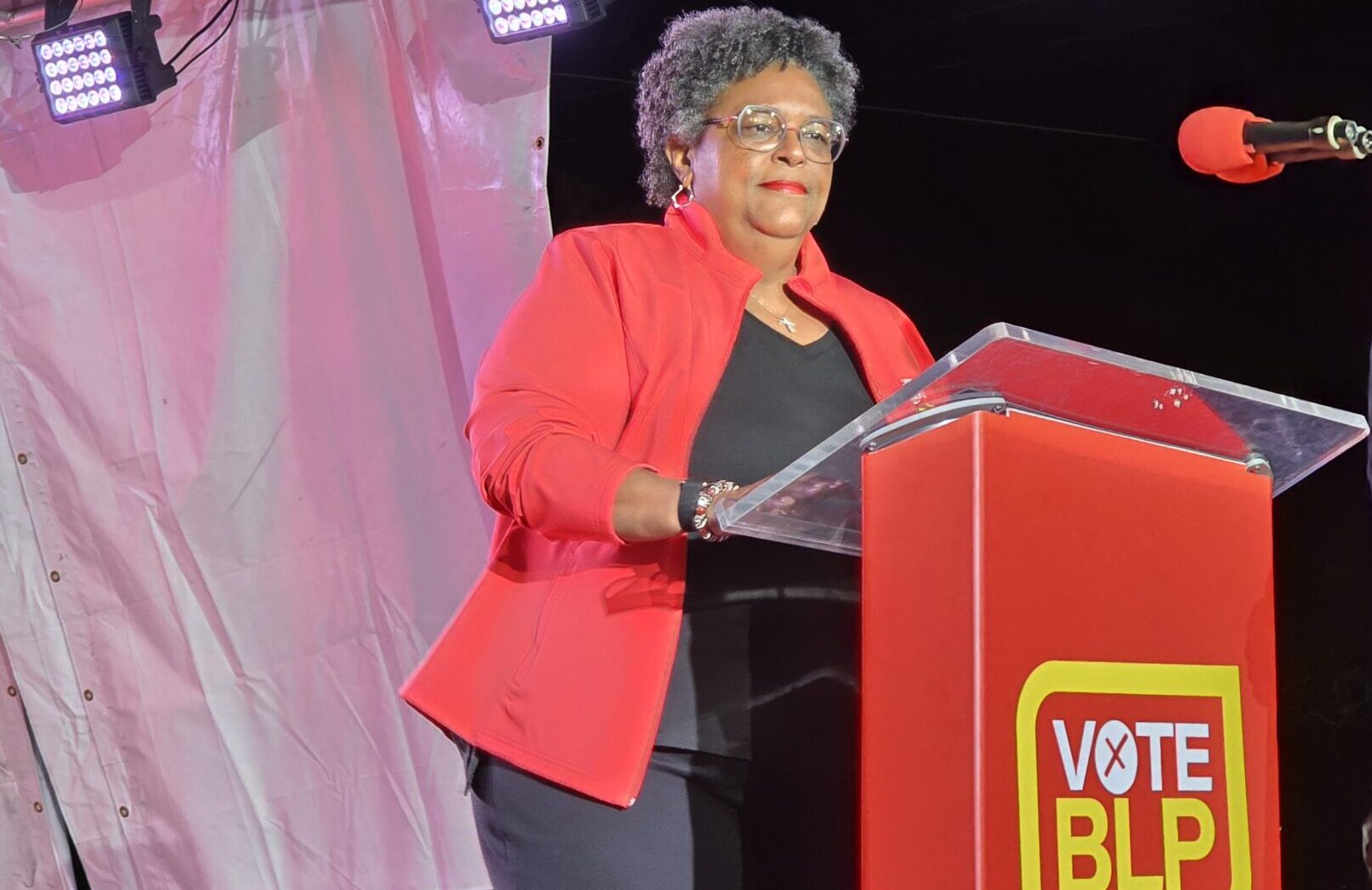
    Prime Minister Mia Mottley, who also addressed the gathering, endorsed the initiative while urging Barbadians to reconnect with their patriotic spirit. She described President Bostic as ‘the embodiment of national duty and resilience’ and expressed confidence that this renewed community focus could make Barbados ‘truly world-class by 2030.’

    The ceremony, attended by international dignitaries including King Abdullah II of Jordan and several Caribbean leaders, blended military precision with cultural performances, symbolizing both Barbados’ independence and its continued evolution as a republic.

  • West Indies great Joel Garner, Central Bank Governor among Independence Day honourees

    West Indies great Joel Garner, Central Bank Governor among Independence Day honourees

    In a grand ceremony marking the 2025 Independence and Republic celebrations, Barbados has recognized over sixty exceptional citizens and international collaborators for their transformative contributions to national development and global standing. The awards represent the nation’s highest honors across diverse sectors including economic reform, healthcare advancement, national security, and acts of extraordinary bravery.

    Three distinguished Barbadians received the Order of Freedom of Barbados, the country’s most prestigious honor. Cricket legend and administrator Joel Garner was celebrated for his unparalleled sporting legacy and administrative leadership in national cricket development. Central Bank Governor Dr. Kevin Greenidge earned recognition for his people-centered economic leadership and transformative achievements through the Barbados Economic Recovery and Transformation (BERT) programs. Healthcare and business pioneer Dr. Kurt Lambert was honored for his exemplary leadership across multiple sectors and unwavering commitment to philanthropic initiatives.

    International recognition was extended to Professor Benedict Oramah, President of the African Export-Import Bank, who received an honorary Order of Freedom for strengthening trade and investment bridges between Barbados and the African continent.

    The Order of the Republic was bestowed upon three national figures: maritime and tourism expert George Fergusson, child protection advocate Faith Marshall-Harris, and leading ENT specialist Dr. Christopher Maynard. Non-national Yvonne Brewer received an honorary Order of the Republic for her decades of service in improving long-term care and welfare support systems.

    In one of the largest collective citations in Barbados’ history, thirty-three members of the Financial Action Task Force (FATF) Core Implementation Team and the International Business Unit Economic Substance Team received the Gold Award of Achievement. Their coordinated efforts successfully guided Barbados off the FATF Grey List and EU Blacklist, ensuring compliance with international financial regulations and restoring the nation’s financial reputation.

    Additional honors included the Gold Trident of Excellence awarded to five individuals for exceptional leadership in religion, culture, and business, and the Silver Trident of Excellence presented to five recipients for significant contributions to creative industries and social advocacy.

    Seven Barbadians received the Barbados Service Star for outstanding work in community and protective services, while another seven were awarded the Barbados Service Medal for dedicated national service across various sectors.

    The most courageous honors, the Barbados Bravery Medal, were presented to seven individuals who risked their lives to save others. Four recipients—Jelani Griffith, Reshelle Griffith, Rashad Jules, and Malique Springer—saved 104-year-old Beryl Whitney from a devastating building fire. Jeremy Payne and Roger Springer rescued four people in distress at sea off Queen Street, St. Peter, while Shawn Green saved his cousin Petra Wilson from a brutal attack by ten dogs.

  • A race not made for individualists

    A race not made for individualists

    As Barbados commemorates its 59th year of independence, the nation reflects on its remarkable journey of collective achievement rather than individual accomplishments. Beyond its global recognition as the birthplace of rum and creator of iconic cocktails, Barbados has consistently produced extraordinary talent across diverse fields—from global entertainment superstars and climate change activists advocating for Small Island Developing States (SIDS) to world champion athletes and technological innovators responsible for the first search engine.

    The past year has presented significant challenges, with climate change manifesting through devastating hurricanes like Beryl and Category 5 Melissa, causing millions in damages and economic disruption. Geopolitical tensions escalating into full-scale wars and rising global tariffs have further complicated the nation’s progress. Despite these obstacles, Barbados has demonstrated remarkable resilience, achieving 17 consecutive quarters of economic growth and multiple credit rating upgrades according to Central Bank reports.

    The tourism sector exemplifies Barbados’ collaborative success, with over one billion dollars in investments planned over the next five years. Visitor numbers have consistently grown from 2023 through 2025, generating a domino effect of employment opportunities, cross-sector business connections, and economic development. This industry’s linkages remain unparalleled in their contribution to national prosperity.

    Critical infrastructure developments underscore the nation’s progress: new hotels, cultural facilities, museums, an upcoming geriatric hospital, expanding airlift capacity, enhanced dining experiences, education transformation initiatives, road network improvements, and water infrastructure advancements. Yet challenges persist regarding cost of living, crime reduction, business facilitation, and service standards.

    The digital era introduces new complexities, with mental slavery emerging through technology manipulation, fake news dissemination, and sophisticated marketing tactics centered on economic motives. This necessitates a collective mindset to navigate evolution beneficially for all citizens.

    As Barbados approaches its monumental 60th independence anniversary, the nation must transform inspirational phrases like “I Have a Dream” into tangible realities. Creating pathways from internship to ownership within industries like tourism will empower younger generations to become directors, CEOs, and general managers. Education, training, and development opportunities must form the core of this thrust forward.

    Guided by Maya Angelou’s wisdom—”We may encounter many defeats, but we must not be defeated”—Barbados continues its journey with steadfast unity. The nation’s success stems not from individual laurels but from shared dedication, embracing both challenges and triumphs as one people moving upward and onward in strength and unity.

  • Iran to miss World Cup draw amid travel restrictions

    Iran to miss World Cup draw amid travel restrictions

    Iran’s national soccer federation has announced it will boycott the official draw ceremony for the 2026 FIFA World Cup in Washington following the United States’ refusal to grant visas to members of its delegation. The decision, reported by Iran’s state-run IRNA news agency, represents a significant diplomatic incident at the intersection of international sports and politics.

    According to federation spokesman Amir-Mahdi Alavi, Iranian officials encountered “visa obstacles that transcend purely sporting considerations,” suggesting geopolitical tensions underlie the administrative decision. The delegation was expected to include Mehdi Taj, president of Iran’s soccer federation and one of Asia’s most influential football administrators who serves on two key FIFA committees overseeing World Cup operations.

    The development occurs against the backdrop of the Trump administration’s travel ban affecting citizens from twelve nations, including Iran, though exemptions were explicitly promised for athletes and sports officials participating in major international competitions. FIFA has been approached to mediate the situation, though world soccer’s governing body has not yet issued an official response.

    The White House maintained silence regarding the specific visa denials. This incident marks the latest chapter in the strained relations between the two nations, now impacting the global sports arena. The 2026 World Cup, jointly hosted by the United States, Canada, and Mexico, will feature a record 48 teams competing from June 11 to July 19.

  • West Terrace and Eden Lodge advance to semis

    West Terrace and Eden Lodge advance to semis

    The National Sports Council City of Bridgetown Co-operative Credit Union Limited Herman Griffith Cricket Competition witnessed dramatic quarterfinal clashes on Thursday, with defending champions Williams Industries West Terrace Tigers and Gordon Greenidge Primary securing their places in the semifinal round.

    At Dash Valley playing field, West Terrace Tigers posted a formidable total of 163-9 in their 25-over allocation against Jordans Supermarket Good Shepherd. The Tigers’ innings was anchored by talented all-rounder Kailen Corbin’s impressive 45 runs, complemented by Neymar Forde’s contribution of 28. Damani Haynes emerged as the standout bowler for Good Shepherd, claiming 4 wickets for 23 runs.

    In response, Good Shepherd’s batting lineup collapsed under pressure, being dismissed for 98 runs and conceding victory by a margin of 68 runs. Corbin delivered a remarkable bowling performance, securing 4 wickets for just 18 runs with his pace attack to complete his man-of-the-match display.

    Meanwhile, at Lears playing field, Gordon Greenidge Primary staged a spectacular comeback to defeat Eden Lodge in a nail-biting encounter. After suffering an early collapse at 18-6, Gordon Greenidge remarkably recovered to post 68 all out, largely due to Jaheem King’s devastating bowling figures of 6-7 for Eden Lodge.

    The Gordon Greenidge bowlers responded with equal ferocity, with Shomir Worrel leading the charge by taking 5-27 to skittle Eden Lodge for 62 runs, securing a dramatic 7-run victory and advancement to the semifinals.

    The semifinal matchups are now set for Wednesday, December 3 at Blenheim playing fields, where St Cyprians Boys will face Williams Industries West Terrace Tigers, and St Gabriels will take on Gordon Greenidge Primary, with both contests commencing at 10 a.m.

  • Bridgemohan makes T&T sailing history

    Bridgemohan makes T&T sailing history

    In an unprecedented development for Caribbean athletics, Trinidad and Tobago will mark its inaugural participation in the World Sailing Inclusion Championships following an official invitation from the global governing body. Twenty-three-year-old sailor Justin Bridgemohan and coach Kristof Stüven will represent the nation at the December 2025 event in Oman’s Barceló Mussanah Resort, signaling a transformative moment for inclusive sports in the region.

    Bridgemohan’s ascent to international competition embodies extraordinary determination. His parasport journey commenced merely last year at a badminton workshop in Mexico, where he encountered Stüven, then training as a classifier. Their shared vision of competitive sailing materialized through the Andrew Lewis Sailing Foundation’s Academy, which launched its inaugural summer program this year. Despite joining during the final phase, Bridgemohan demonstrated immediate aptitude among 200 trainees and now trains intensively multiple times weekly, progressing from novice to competing alongside able-bodied sailors.

    Stüven, serving as Head Coach at the Foundation and national classifier with the Trinidad and Tobago Paralympic Committee (TTPC), emphasized the broader significance: “This transcends competition—it represents a movement demonstrating sailing’s accessibility regardless of race, gender, or ability. Trinidad and Tobago possesses the talent and determination for global impact.”

    The championship carries dual importance: Bridgemohan will compete in the Hansa 303 class—a premier adaptive sailing vessel—to receive formal international classification, while Stüven will shadow world sailing classifiers, potentially becoming the Caribbean’s first para sailing classification expert. This milestone reflects growing institutional support from TTPC and the Andrew Lewis Foundation, highlighting regional advancements in parasport infrastructure.

    TTPC President Sudhir Ramessar celebrated the achievement: “Young leaders like Stüven and athletes like Bridgemohan exemplify excellence that will inspire Caribbean youth to recognize their potential.” The participation not only breaks competitive barriers but establishes a framework for future inclusive athletic development throughout the Caribbean basin.

  • The independence of trade unions

    The independence of trade unions

    Independent trade unions represent worker-led organizations operating free from external control by employers, government entities, or political parties. These autonomous bodies primarily function to protect and advance members’ rights through collective bargaining processes, negotiating improved compensation packages and workplace conditions while providing essential support on employment-related matters.

    Despite potential financial support through government subventions or employer grants, genuine independence requires operational autonomy without external influence. Members benefit from negotiated agreements, professional representation during meetings, and access to legal and financial advisory services that would otherwise be unavailable to individual workers.

    Registration provides trade unions with legal corporate status, formalizing their operational structure. The registration certificate serves as definitive evidence of independence in legal contexts and grants specific statutory rights. This legal standing enables unions to initiate protective legal actions against member exploitation and unfair treatment.

    However, independence from employer and government interference does not equate to immunity from national legislation. Legal registration alone cannot guarantee substantive autonomy, as unions must still operate within established legal frameworks while maintaining internal self-governance.

    International Labor Organization (ILO) standards reinforce trade union independence, emphasizing workers’ rights to autonomous operation free from state or employer intervention as fundamental to freedom of association. Historical precedents, such as Margaret Thatcher’s Conservative government in 1979, demonstrate how repressive labor legislation can threaten union effectiveness, highlighting the perpetual importance of safeguarding autonomy.

    Maintaining genuine independence requires strategic relationship management with government and employers, avoiding rubber-stamp approval of predetermined decisions. Financial self-sufficiency remains preferable to dependence on external funding sources. Strong internal structures demonstrating good governance, democratic principles, ethical standards, and transparent decision-making processes ultimately define an organization’s authentic independent character.