标签: Barbados

巴巴多斯

  • Tools, guidance for children with learning difficulties

    Tools, guidance for children with learning difficulties

    On Saturday, a community-focused workshop titled “Your Difference is Your Superpower” opened its doors at the Derrick Smith School and Vocational Centre in Barbados, offering parents, educators and frontline caregivers actionable, real-world tools and expert guidance to better uplift children navigating learning challenges. The event was organized by the Kiwanis Club of Pride of Barbados, in collaboration with the host vocational center and the Educational and Psychological Assessment Unit of The University of the West Indies.

    The one-day gathering united child development specialists, K-12 educators, and family members across a packed schedule of interactive sessions. These sessions were crafted to help attendees spot early signs of learning difficulties in children, while also walking them through the full network of local support resources that are accessible to families.

    According to Requell Griffith, who serves both as secretary of the Kiwanis Club of Pride of Barbados and lead of the organization’s Youth Services Committee, the workshop was developed directly in response to rising concerns from parents across Barbados. Many families have reached out to the club in recent years seeking structured guidance, as they struggle to find appropriate support for their children who face barriers within the national school system.

    Griffith emphasized that the programming was intentionally inclusive, designed not just for children who struggle to keep pace with traditional academic expectations, but also for gifted learners who encounter unique challenges in standard classroom environments. Event organizers centered their planning around a clear core goal: to send every attendee home not just with new knowledge, but with concrete, step-by-step pathways to access ongoing support services for children.

    “We wanted to make sure that in addition to having the information, that persons also have the resources and know where they can go once they’ve gotten the information to assist them and assist their children on their educational journey,” Griffith explained in an interview on the sidelines of the workshop.

    Trained facilitators from The University of the West Indies led the majority of the day’s sessions, sharing evidence-based practical strategies, actionable care tips, and detailed breakdowns of local and national agencies that offer specialized support for children with learning difficulties.

    For Griffith, the initiative is a deeply personal project, which she described as her “baby.” The idea first took root last year, after repeated conversations with parents who shared that they felt lost navigating the support system, unsure of where to turn for reliable help. “It came up with just conversations with parents and hearing the challenges that some parents experience with their children having learning difficulties and not knowing where to go, who to talk to, what information is out there,” she said.

    At its core, the workshop was built to advance a broader mission: to deliver evidence-based, accessible high-quality information to families, and to bridge the gap between households and the specialized organizations and institutions that can help children thrive both in the classroom and in social settings. The event marks a key step forward in addressing unmet needs for caregiver support in Barbados, and organizers have signaled potential interest in expanding the initiative to reach more communities in coming months.

  • Cricket set to return to Kensington Oval in 2026

    Cricket set to return to Kensington Oval in 2026

    For months, a fierce public debate has raged over the future of international cricket at one of the Caribbean’s most iconic sporting venues, Kensington Oval. The historic ground, widely known by its affectionate nickname ‘The Mecca’ among cricket fans, found itself at the center of controversy earlier this year when it was initially excluded from the calendar for both regional and international cricket matches. The debate grew so intense that it drew comment from the highest levels of Barbados’ government, with Prime Minister Mia Mottley and Minister of Sport Charles Griffith both adding their voices to the discussion. They were joined by key cricket governance leaders: Cricket West Indies President Dr Kishore Shallow and Barbados Cricket Association President Calvin Hope, all of whom weighed in on the future of the venue.

    Now, multiple reliable sources have confirmed to Barbados TODAY that a new agreement is close to being finalized that will bring international cricket back to Kensington Oval in 2026. Under the emerging deal, the legendary Barbados ground will play host to two One Day Internationals during New Zealand’s upcoming tour of the West Indies. Advanced discussions are already underway to schedule the matches for July 18 and 21, 2026, on the grounds of Bridgetown.

    Originally, the entire five-match ODI series was slated to be held exclusively at Guyana’s Providence Stadium. However, diplomatic and administrative talks between the governments of Barbados and Guyana have led to a proposed restructuring of the hosting arrangement. Under the new framework, the two nations will split the financial costs associated with hosting the five games, allowing two matches to be moved to Kensington Oval. Sources indicate that the revised plan is on track to receive formal approval from Cricket West Indies and both national governments in the very near future, with a public official announcement expected to follow shortly after sign-off.

  • Cave Hill Campus hopeful of strong showing at UWI Games in Trinidad

    Cave Hill Campus hopeful of strong showing at UWI Games in Trinidad

    After a four-year hiatus forced by the global COVID-19 pandemic, one of the Caribbean’s most anticipated inter-campus collegiate sporting competitions is making a triumphant return this month, and the Cave Hill Campus of the University of the West Indies (UWI) has entered the 2024 iteration ready to compete for the top podium spot.

    A 150-strong delegation of student-athletes from the Cave Hill Campus departed Barbados last week for the 2024 UWI Games, which will be hosted across 10 days from May 21 to 29, primarily on the grounds of UWI’s St Augustine Campus in Trinidad and Tobago. This year’s tournament marks the first time the games have been held since 2019, after repeated pandemic-related postponements left the beloved competition on pause for years.

    More than 575 competitors are set to take part in this year’s event, drawn from all five of UWI’s regional campuses. For the first time in the tournament’s history, the Five Islands Campus will field a team, joining long-standing participants Cave Hill, Mona, St Augustine, and UWI Global.

    Across the 10-day competition, athletes will compete for medals in 96 events spanning 11 popular sporting disciplines: track and field, swimming, basketball, netball, volleyball, lawn tennis, table tennis, football, cricket, and hockey. Competition gets underway early on Saturday morning, with the first wave of Cave Hill Campus athletes already in position to compete in opening day matches.

    Speaking ahead of the team’s departure from Grantley Adams International Airport on Thursday night, Barbados’ Minister of Sport Charles Griffith expressed confidence in the Cave Hill squad’s ability to deliver strong results. Griffith noted that the team appeared visibly excited for the opportunity to compete, and drew a parallel to Barbados’ recently successful CARIFTA Games delegation, predicting Cave Hill would finish atop the overall standings. “The coaches are all in place and they have been prepared very well, so I can only expect the very best from Cave Hill,” Griffith said.

    Reached by Barbados TODAY after arriving in Trinidad, Cave Hill team manager Aundrea Wharton outlined the squad’s opening day schedule, confirming that table tennis kicks off the action at 8 a.m., followed by opening fixtures in netball, football, hockey, and cricket on the first day of competition.

    Wharton explained that the Cave Hill delegation enters the tournament with a clear goal: to improve on their second-place overall finish at the 2019 UWI Games, the last edition held before the pandemic shutdown. He framed the 2024 games as a new beginning for the entire UWI collegiate sporting community, aligned with this year’s official theme: “Reunited, Reignited, Ready.”

    Nearly all of Cave Hill’s 150 athletes will be competing in the UWI Games for the first time, Wharton said. Many of the young competitors were still completing primary school when the tournament was last held in 2019, meaning the event will bring a notable cultural shift and new experience for the first-time participants. Even with this new cohort, Wharton said he remains optimistic about the team’s chances of taking the overall title, pointing to a roster stacked with elite junior and senior national-level players across multiple key disciplines.

    “Naturally we have a very strong cricketing core and our female volleyball unit is very strong as well. This also the case with our male hockey unit which is again, very strong. We are looking to get key performances, especially out of those units,” Wharton said. He added that Cave Hill’s netball squad also features a large contingent of junior and senior national team players, leaving the campus well-represented across every competitive discipline in the tournament.

  • Who cares for the carers? BCD wellness event may give answer

    Who cares for the carers? BCD wellness event may give answer

    Caregiving for a dependent family member, loved one, or ward is far from a simple undertaking. The constant physical, emotional, and mental demands of the role often leave caregivers struggling under the weight of their responsibilities, even as public focus almost always remains on the people receiving care rather than the people providing it. On Friday, a small but impactful event at a Christ Church garden centre sought to change that narrative, carving out dedicated space to honor, listen to, and support caregivers whose tireless work often goes unrecognized.

    Barbados TODAY reporters on site at Nature Care in Lowlands documented the event, a Mental Wellness Day hosted by staff from the Barbados Council for the Disabled (BCD) and led by counselling psychologist Janelle Skinner, who herself lives as a paraplegic. Drawing on both her professional expertise and personal experience as a disabled person relying on care from her mother, Skinner opened with a frank discussion of the little-discussed crisis of caregiver burnout.

    “Caregiving drains you in every way – emotionally, physically, mentally – and burnout is a very real experience that far too many caregivers go through,” she explained. Skinner emphasized that caregivers cannot sustain their work without intentional breaks, even short ones, that let them step away from their role and recharge. “Too many caregivers operate in constant survival mode. They pour every bit of energy into the person they care for and completely ignore their own needs. They never stop to ask, ‘What will happen to the person I care for if something happens to me?’ That’s why creating spaces where caregivers can receive care themselves is so critical.”

    Speaking from her own experience, Skinner noted that she has learned to spot early signs of burnout in her mother, Joan Skinner-Graham, who has served as her primary caregiver for 26 years. “I do everything I can do independently to reduce her load, but there are some things I cannot do on my own. The key is being attentive to those subtle signs that fatigue is building, both for the disabled person and the caregiver themselves.”

    Skinner also pointed to the importance of professional support and strong personal networks, sharing that she sees a therapist herself to manage the emotional weight of her work and personal circumstances. “There is no shame in therapy – it helps. Having a support network means you always have people you can turn to, people who can step into the caregiving role temporarily so you can step back, reset, and refocus,” she said.

    For Joan Skinner-Graham, the journey of caregiving began with a devastating phone call 26 years ago, when her daughter was on holiday in New York. “My niece called and said she had bad news. Janelle was in the hospital, paralyzed. I got on a flight the very next day and stayed with her until she could come home,” she recalled. Through decades of care, she has held fast to a core principle: never let the person you care for feel like a burden.

    “When you care for a person with a disability, you must never let them see your frustration or anger,” she said. “They will internalize that, think they are a burden, and that sets back their own progress. If you feel overwhelmed, step away for a few minutes, take a breath, and come back when you are grounded. That small break makes all the difference.”

    Now retired, Skinner-Graham admitted that the long-term weight of caregiving brings quiet worries, especially as she ages. “Many nights I pray for strength to be here for my daughter. What I’ve seen over the years is that unaddressed stress kills caregivers. Too many people bottle up their feelings instead of reaching out, and that stress makes them sick, and then there is no one left to care for them. That’s why we need more accessible counselling and support for caregivers – we need spaces to talk through what we’re feeling instead of holding it all in.”

    When it comes to balancing daily care with other life responsibilities, Skinner-Graham relies on intentional planning and unapologetic self-care. “I plan out my days, and I stick to my plan. I get Janelle set up for her work day, handle household tasks, and when I need a break, I tell her straight: this is mommy’s time. I sit down, play my game, and recharge before I come back. There’s no shame in taking that time for yourself.”

    BCD President Patricia Padmore-Blackman, who is blind and cares for a disabled son, echoed that call for intentional self-care for caregivers. “My son has been with me since birth, so it can feel like I never get a break. There are definitely days when I need to step away,” she said, crediting her own support network of family, friends, and professionals for helping her sustain her role over decades. “That support is non-negotiable. We can’t do this alone.”

    BCD Operations Manager Roseanna Tudor explained that Friday’s gathering was designed specifically to prioritize the mental and emotional wellbeing of BCD’s own frontline staff, who navigate high-stress, emotionally demanding work supporting disabled people and their families every day. “This event was about reducing emotional fatigue, building stronger connections among staff, and creating a culture of psychological safety,” Tudor said. “When we invest in our staff’s wellbeing, that directly improves the quality of the services we deliver. We need workplaces that prioritize care for the people who care for others, and I encourage every organization to host similar events for their teams.”

  • EDITORIAL: Hope, hard choices for sugar

    EDITORIAL: Hope, hard choices for sugar

    For Barbados, the sugar cane sector is far more than just an agricultural commodity — it is woven into the very fabric of the nation’s identity, economy, history and natural landscape. Tied inextricably to the island’s painful legacy of slavery and plantocracy, while also shaping its financial systems, cultural traditions and ecological health, the industry cannot be sidelined even as the country develops new alternative revenue streams. Though sugar contributes far less to national GDP today than it did at its historic peak, it remains a critical source of livelihood for thousands of farmers, workers and small businesses across the island. It is for this reason that the recent announcement of a new round of industry restructuring has drawn close public and policy attention.

    This week, Minister of Agriculture Dr. Shantal Munro-Knight outlined the core priorities of the latest restructuring push: boosting crop yields, elevating sugar quality, and securing the long-term viability of the sector. She framed the effort as a strategic “right-sizing” of Barbados’ sugar cane production that aligns with modern economic realities. Notably, this marks the second major restructuring attempt in just two years, a fact that underscores the deep, persistent challenges facing the industry and the difficulty of forging a lasting, sustainable solution.

    The current 2024 crop season has already been thrown off course by repeated shutdowns at the Portvale sugar factory, triggered by unresolved mechanical failures and ongoing labour disputes. Cane farmers have voiced loud frustration over extended delays in the factory accepting harvested crops, while factory workers have raised urgent concerns around union recognition and unsafe, inadequate working conditions. These ongoing disruptions have eroded stakeholder confidence in the industry and laid bare long-standing weaknesses in operational and management practices.

    Beyond Barbados’ borders, global shifts have fundamentally reshaped the international sugar market, creating significant headwinds for small island producers. World sugar prices are plagued by constant volatility, driven largely by production and policy changes in major exporting nations including Brazil, India and Thailand, which enjoy massive economies of scale and far lower labour and production costs. International trade policy has also dramatically altered the playing field for Barbados: for decades, local sugar producers benefited from protected preferential access to European Union markets, which delivered stable prices and guaranteed demand. But sweeping reforms to the EU sugar regime and updates to global trade rules have eroded nearly all of those historic advantages, leaving most Caribbean sugar industries grappling with declining competitiveness over the past two decades.

    Domestic challenges compound these global pressures. Barbados faces inherently high production costs for sugar, and climate change has introduced new layers of uncertainty, with erratic rainfall and more frequent extreme weather events disrupting planting and harvesting cycles. Combined, these factors make it impossible for Barbados to compete globally in bulk sugar production on cost alone. Against this backdrop, the government’s decision to revisit restructuring is widely viewed as a necessary step. Dr. Munro-Knight’s focus on boosting productivity and product quality is strategically sound: for the industry to survive, it must become far more efficient and deliver higher-value output to stand out in crowded global markets.

    Even so, policy makers and stakeholders must confront hard realities. Beyond productivity gains, there needs to be an open, honest conversation about the realistic scale of sugar production moving forward. Fewer young farmers are interested in entering the cane sector, and growing demand for residential housing has steadily encroached on prime agricultural land, reducing the total area available for cane cultivation. It is also critical to acknowledge that restructuring alone will not fix the industry’s problems. Barbados has overhauled the sugar sector multiple times in recent decades, yet many of the same operational, labour and financial challenges have reemerged repeatedly. Unsurprisingly, stakeholders are questioning whether this latest effort will deliver different outcomes. Key open questions remain: how will the restructured industry be financed, what is the long-term role of government in supporting the sector, and how will changes impact the livelihoods of the workers and small farmers who form the backbone of the industry. For many dependent on sugar, the term “right-sizing” carries deep fears of job losses, reduced growing acreage, and disruptive changes to ownership and management structures that threaten their livelihoods.

    Looking ahead, Barbados must expand its vision for what the sugar cane industry can contribute to the national economy. The sector’s future likely does not rest primarily on bulk sugar exports. Instead, stakeholders must integrate opportunities from sugar cane by-products, bio-renewable energy production, high-value specialty sugars, and value-added rum production into a new, diversified industry model.

    None of these changes will be easy to implement, but abandoning the sugar cane industry entirely is not a viable option for the nation. Beyond its economic contributions, sugar cane continues to play a central role in maintaining Barbados’ iconic landscape and preserving a critical (if complicated) part of the country’s history and cultural heritage. The core challenge facing policy makers and stakeholders today is striking a sustainable balance between the nation’s historic ties to sugar cane and the unforgiving economic realities of the 21st century global market.

    To build buy-in and deliver tangible results, the latest restructuring process must be fully transparent and inclusive, centering the voices of all farmers, workers, businesses and community stakeholders who have a stake in the industry’s future.

  • Wanted: Shane Anthony Greene

    Wanted: Shane Anthony Greene

    Law enforcement authorities in Barbados are calling on community members to help track down a wanted individual suspected of involvement in serious criminal activity. The Barbados Police Service has issued an official appeal for public assistance locating Shane Anthony Greene, who is also known by the street aliases “Thuggy” and “Shaney Poo”, as investigators work to move forward with questioning in an ongoing criminal probe.

    Authorities have released detailed identifying information to help members of the public recognize Greene. His last confirmed address was in Ashby Land, along Lodge Road in the parish of Christ Church. According to police descriptions, Greene stands roughly 5 feet 10 inches tall, has a dark complexion, and a slim physical build. He also has two distinct identifying tattoos: the word “Thug” is inked on his right hand, while his left hand features the word “Faith” paired with a tattoo of several birds.

    In a formal notification to the suspect, police have stated that Greene may voluntarily surrender to investigators at the Criminal Investigations Department housed within the Oistins Police Station. Authorities have added that he is permitted to bring a legal representative with him when turning himself in.

    Police are urging anyone with current information about Greene’s location to contact law enforcement immediately. Tip lines available for leads include the Oistins CID office at 418-2609 or 418-2612, the national 24/7 police emergency line at 211, the anonymous Crime Stoppers hotline at 1 800-8477, or any local police station closest to the member of the public.

    The Barbados Police Service has also issued a critical reminder to the public: harboring or intentionally providing aid to a wanted person is classified as a serious criminal offense under Barbadian law. Anyone found to have helped Greene avoid arrest will face prosecution, authorities confirmed.

  • OPINION: The People’s Power

    OPINION: The People’s Power

    At the core of democratic governance lies a widely invoked but often poorly defined concept: people’s power. What does this phrase actually entail, and what role do established working-class organizing bodies like trade unions play in translating this abstract idea into tangible action?

    At its simplest, people’s power refers to the collective ability of ordinary citizens to shape policy and decisions that directly impact their daily lives, rather than leaving all governance authority exclusively in the hands of elected representatives or established power structures. Broader comparative frameworks frame it as a populist political rallying cry that centers the authority of grassroots public will, typically standing in opposition to the agendas of entrenched corporate or institutional political power. Both definitions align with the core premise of democracy itself: that governing authority should be rooted in the will of the people, a collective will that emerges not from isolated individual action, but from coordinated group organizing.

    This connection between collective organizing and people’s power makes the concept particularly relevant to trade unions, whose core mission revolves around protecting workers’ shared interests, expanding workplace rights, and lifting community living standards. For trade unions to deliver on these foundational goals, solidarity is not just a rhetorical value—it is a functional necessity. When unions cultivate solidarity, they unify disparate workers into a single cohesive bloc capable of advancing shared demands. This unified structure creates the foundation for collective bargaining, the cornerstone of effective trade union action.

    The collective solidarity built through intentional union organizing creates far more than just a louder voice for workers. A unified movement gives representatives far greater leverage when advocating, agitating, and lobbying for worker-centric policy, and sheer numerical strength makes the movement a far more impactful actor when engaging with governing authorities on key decisions. For workers, this collective structure creates a tangible sense of empowerment when pushing for social justice and equal treatment: when formal negotiation processes break down, an organized movement has the capacity to launch targeted industrial action to win recognition of their demands.

    Crucially, this dynamic upends the traditional narrative that all political and economic power flows exclusively from the top down—from governments, corporate boards, and employers to ordinary workers. When workers are organized, they generate bottom-up pressure that can reshape outcomes and hold power-holders accountable. This principle lies at the heart of healthy democratic governance. The will of the people is the very bedrock of democratic society, serving as the primary source of all legitimate political authority. Governments only hold their power through the consent of the governed, and people’s power, exercised through collective action, is the mechanism that keeps this system functional: it holds leaders accountable, drives progressive social and political change, and blocks the rise of authoritarian dictatorship.

    At the end of the day, people’s power is fundamentally about ordinary citizens, united by a shared vision, who come together to shape their nation’s future. And in this process, trade unions fill an irreplaceable role: they are the organized voice of the working class, working to align economic, social, and government policy with the collective will of ordinary people. This analysis is shared by Dennis De Peiza, a Labour Relations and Employment Relations Consultant with Regional Management Services Inc.

  • Man fined after pleading guilty to assault charges

    Man fined after pleading guilty to assault charges

    A 27-year-old man from St James, Barbados, has been ordered to pay a $5,000 fine after entering guilty pleas to three violent offenses, including wounding and two counts of assault. Justin Jamar Maynard, who lives in the Block 7C neighbourhood of Haynesville, faced his sentencing at the Holetown Magistrates’ Court on Friday, where the details of his May 19 offences were formally processed before Magistrate Cuffy Sargeant.

    Alongside the steep financial penalty, the court issued a strict timeline for payment: Maynard must settle the full $5,000 fine within the next 30 days to avoid additional legal penalties. In an unusual procedural step, the court has also scheduled a follow-up court date for June 18, 2026, requiring Maynard to return to the Holetown courthouse nearly two years from now for official check-in on his sentence compliance.

  • 100 days: Mixed views as Bajans assess govt

    100 days: Mixed views as Bajans assess govt

    Three months after Barbados held its general election, the island nation finds itself grappling with deep public divisions over the current administration’s policy trajectory, with widespread concerns over violent crime, soaring living costs, and a lack of economic opportunities for youth dominating public discourse gathered in the capital Bridgetown this Friday.

    For many first-time eligible voters, the disconnect between young people and the country’s political establishment runs so deep that they opted to sit out the historic poll entirely. Chadavia Edwards, one such young voter, explained her choice to abstain from the election, noting that the political process had failed to deliver tangible benefits for her and her generation. “Everybody kept pushing me to vote for their preferred candidate, but nothing in any platform actually addressed the needs of people my age,” Edwards told local outlet Barbados TODAY. She added that political campaigns overwhelmingly centered on courting middle-aged and older millennial voters, leaving younger demographics like herself completely overlooked. Despite facing sustained pressure from family members to back a specific party, Edwards said she stood by her choice to skip voting, as she saw no meaningful outcome from participating.

    Across different segments of the population, violent crime has emerged as the most widely cited urgent issue demanding immediate government intervention. Andrea Parris, a local resident, emphasized that coordinated, top-down action is required to rein in rising violence, calling for collaboration between national leaders and the judicial system to get the security situation under control. Pointing to a recent string of deadly violent incidents across the island, Parris argued that all Barbadian citizens are owed a fundamental sense of safety in their own homeland. “This is our home, we build our lives here,” she said. “The government has a core responsibility to deliver calm and peace, so that no one has to live in constant fear of gun violence.”

    Street vendor Nikki, who sells snowcones to local customers, echoed these concerns, noting that even when violence is framed as gang-related, innocent bystanders remain constantly at risk. “A bullet doesn’t have a name,” she warned. “No matter who the conflict is between, ordinary people can get caught in the crossfire, and that’s completely unacceptable.” Nikki called for far harsher legal penalties for violent offenders to deter further attacks.

    Allan Cadogan, a shoe and bag repair technician working in Bridgetown, joined the call for tougher punishments for weapon-related crime, adding that early intervention in school systems is also critical to curb youth involvement in violence. “Violent crime is the single biggest problem hurting Barbadians right now, and it is disproportionately young people who are perpetrating these acts,” Cadogan said. He stressed that authorities need to take aggressive, decisive action, including implementing stricter consequences for anyone caught carrying or using illegal weapons.

    Despite the widespread anxiety over security and economic conditions, a number of Barbadians argued that the new administration deserves more time to deliver on its campaign promises. Donville Mayers, a supporter of the current government, said that he believes the leadership has already done excellent work in its first 100 days, noting that large-scale systemic change cannot happen overnight. “You can’t fix years of challenges in just three months,” Mayers said. “We have to give the government time to implement its plans and see results.”

    Mark King shared this measured, optimistic take, arguing that even amid ongoing economic headwinds, the current government has made clear progress that outpaces previous administrations. “A lot of people say they haven’t seen big changes yet, but from what I can see, the government is doing its best with the resources it has,” King explained. “This administration is showing more forward momentum than any we’ve had in recent years, and they’re putting in the work.”

    The split public opinion 100 days into the new government’s term underscores the deep set of challenges facing Barbados’ leadership as it works to address long-simmering public concerns across the country.

  • First 100 days: St Michael folk ‘see change’

    First 100 days: St Michael folk ‘see change’

    Three months after Barbados’ February 11 general election, constituents in two St Michael constituencies are already witnessing tangible progress on key campaign pledges, from long-overdue road repairs to new skills-training initiatives aimed at empowering young people. During a 100-day checkpoint visit to communities across St Michael Central and St Michael West, Barbados TODAY spoke to dozens of residents who shared mixed but mostly positive reactions to the new administration’s early delivery.

    In St Michael Central, one of the most visible changes is the full resurfacing of Powder Road, a thoroughfare that had sat in dangerous, disrepair for years. Today, motorists and pedestrians move along the smooth pavement without navigating gaping potholes or uneven terrain that made travel difficult for decades. Longtime resident Trey told reporters he never thought he would see the road fixed in his lifetime. “A couple years we’ve been dealing with this mess, but I’m so glad they got it done—it looks real good,” he said. “We couldn’t even walk along the side of the road properly before. This is the first promise we’ve seen delivered, but we’re willing to wait for the rest. What we really need now is more opportunities for idle young people, to keep them occupied and off the streets.”

    Elderly resident Mrs Mayers echoed that gratitude for the resurfacing, but flagged a new safety concern that has emerged since the project was completed. Speeding vehicles turning from the main road onto the minor side road now pose a major risk to pedestrians, she explained, pointing to the sharp corner that leaves walkers with little warning of oncoming traffic. “They will have to put some kind of speed control or signage at the corner there, because somebody is going to get knocked down,” she warned. “But otherwise, I love the new road. It’s a world of difference.”

    Fellow resident Sherlock King called the road work a long-awaited win for the whole community. “Great, splendid, marvellous—we were waiting for them to do this for years, because this was the most dangerous road out here,” he said. “We thank the Lord for that. Everything takes time, and we understand that, but this is a great start.”

    Beyond infrastructure, St Michael Central’s Member of Parliament Tyra Trotman has already launched two people-focused programs aimed at reducing unemployment and empowering local residents. The first, Faces of the Future, is a six-week makeup artistry training course for young women in the constituency. Trinisha Farrell, parliamentary liaison officer, told Barbados TODAY the inaugural cohort wrapped up training last month with 17 graduates, all of whom are now certified to work professionally in the field.

    The program far exceeded expectations, with demand spilling over from neighbouring constituencies. “We actually had an influx of persons calling the office from other areas asking to be a part of the program as well,” Farrell said. “It was a hit across Barbados, and definitely a hit with our constituents because we had an overflow of people wanting to join even after the course had already started. Many of our graduates have already gone on to launch their own small makeup businesses. If any of them need help registering their businesses through Business Barbados, Trotman has committed to walking them through that process step by step.”

    A second cohort of 15 participants is set to begin training next week, just a short delay after the first round wrapped up. Organizers originally planned to cap each cohort at 16 participants, but adjusted to accommodate extra interest in the first round. Moving forward, the program’s continuation depends on securing additional funding to cover training costs and materials. “Funding is the main barrier we have to work through right now,” Farrell explained. “We’re actively seeking funding to keep the program running because it’s clearly filling a need. The whole goal is to help more people in the constituency become self-sufficient entrepreneurs, and that’s something we want to keep building on.”

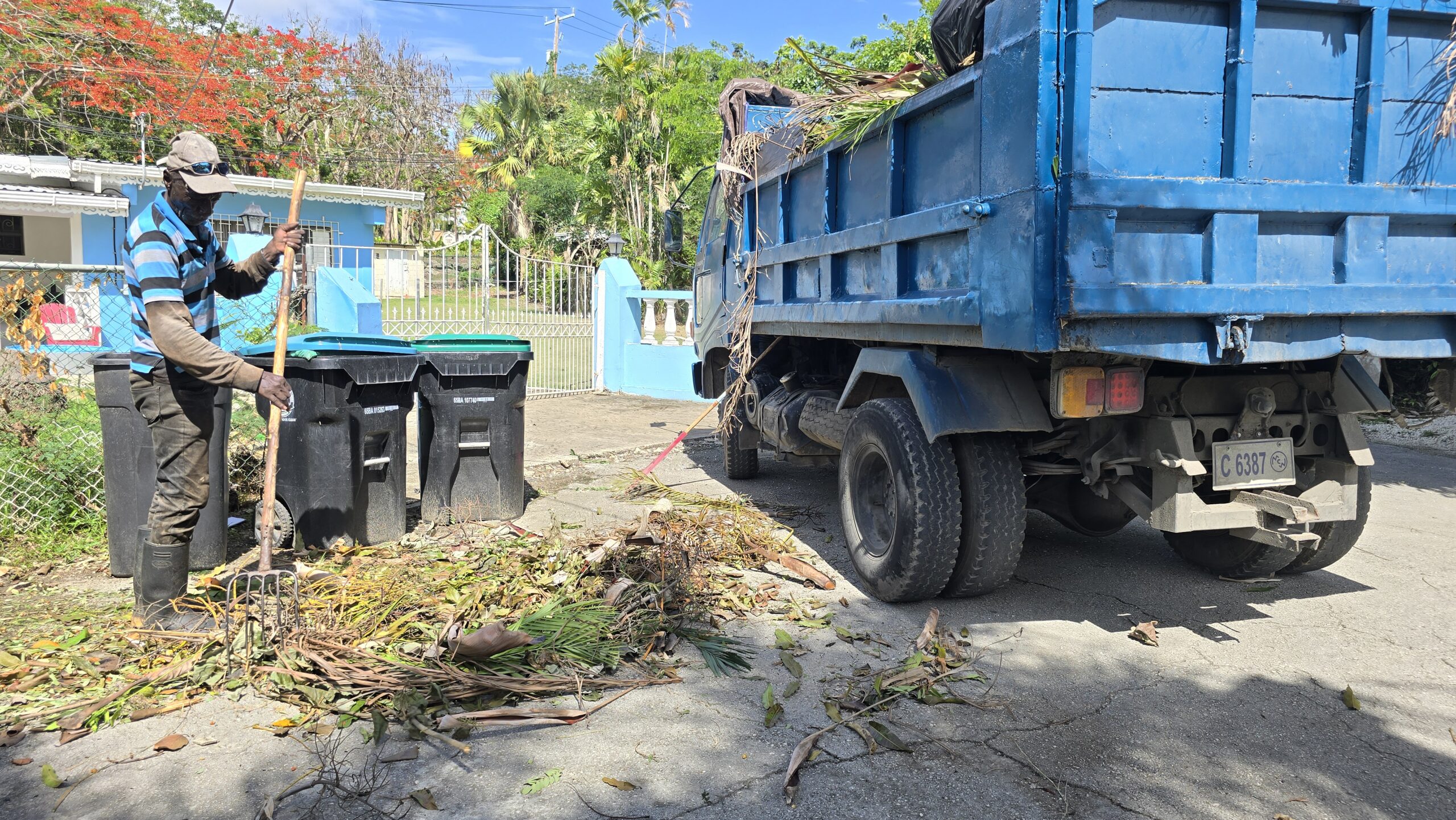
    Trotman’s second new initiative, the Walk the Bush program, was launched to connect unemployed men in the constituency with paid, flexible work assisting vulnerable households. The pilot started with 11 participants, who work three days a week completing property maintenance and yard work for elderly, disabled, disenfranchised residents and single-parent families that cannot afford or complete the work themselves. The program has already been expanded to accept requests from any local resident who wants to hire the participants for small jobs, with payments going into a centralized fund that keeps the program running and guarantees participants steady pay. The next phase of the initiative will focus on helping participants build the skills and connections needed to launch their own independent service businesses, with the goal of having graduates go on to mentor other unemployed young men in the constituency.

    Over in St Michael West, residents of Greaves Land are equally enthusiastic about long-awaited road repairs to a thoroughfare that had been neglected for more than 30 years. The project hit a minor snag earlier this month when a water main burst damaged a section of the newly patched road, but workers have already made quick progress repairing the damage. One local business owner, whose shop sits directly along the road, said she doesn’t mind the temporary dust and construction disruptions, because the end result will be life-changing for the whole community.

    “Once it’s done I can wear high heel shoes again, instead of sticking to sneakers and slippers just to get to my door,” she said. “My feet won’t get covered in dust and mud every time I step out anymore. I’m so glad the government got this patching machine to fix all these potholes that have been here for decades. Now the kids can run and play on the road, as long as the ZR route vans don’t come speeding through cutting people off.”

    She added that while she is grateful for the work, residents are waiting to see how the road holds up during the upcoming rainy season, since low-lying sections of the road have historically flooded and pooled water after heavy storms due to the natural slope of the land. “I got to wait til the rainy season to see how it goes now, you can see the land slopes down that way,” she said, pointing to the low side of the road. “But I’m thankful, that’s the truth. The workers have been working hard, and this is more progress than we’ve seen in 30 years.”