标签: Barbados

巴巴多斯

  • Sealy strikes more squash gold in Canada

    Sealy strikes more squash gold in Canada

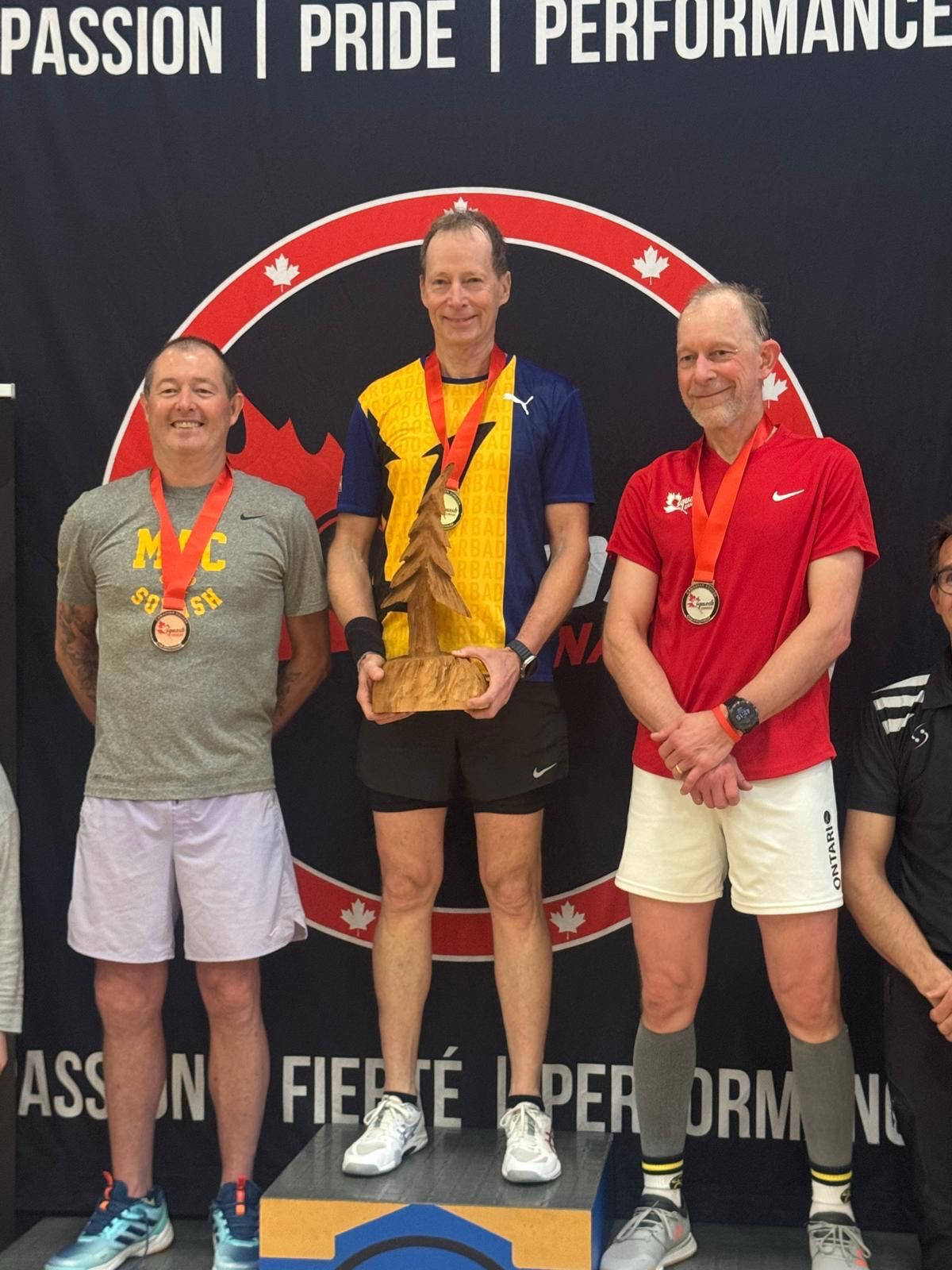
    Just one month after lifting the trophy at the USA Masters in New York, veteran squash star Mark Sealy extended his incredible winning streak to claim another major regional title, taking top honors in the 60+ division at the Canadian Masters over the weekend. The tournament, hosted at Vancouver’s iconic Arbutus Club, saw the world-ranked number one seed enter the competition with a first-round bye in the round of 16, setting up an early showdown with Quebec’s Yves Tremblay that Sealy dominated in straight sets with final scores of 13-11, 11-7, 11-3.

    Moving into the semi-final round, Sealy faced another tough competitor from Quebec: fourth-seeded hard-hitting left-handed player Marion Gagnon. The Barbadian-born athlete once again showcased his polished form, dismissing Gagnon in another straight-set victory with scores of 11-6, 11-4, 11-5 to earn a spot in the championship match. The final was a highly anticipated rematch of the 2025 title game, pitting Sealy against Ontario’s second-seeded fan favorite Trent Hasse.

    Sealy came out swinging in the opening two games, catching Hasse off-balance with precise placement that exploited gaps in his opponent’s court movement. He took both games comfortably with 11-6 and 11-5 scores, putting him one game away from the title. But Hasse refused to surrender, adjusting his own footwork and mounting a comeback in the third game. An off-kilter Sealy struggled to find his usual rhythm, allowing Hasse to take the third set 11-4 and force an extended match.

    Regrouping during the break between games, Sealy reset his strategy and reclaimed his control of the court in the fourth set. He dominated every rally from the opening point, closing out the match 11-4 to secure his fifth career Canadian Masters title. Post-match, Sealy reflected on the momentum shift of the game: “I played really well in the first two but lost my length in the third, tried to attack too early and he took advantage. So in the break, I told myself I have to hit higher to the back and then attack to the front. I was pleased to take an early lead and close it out in four games.”

    This victory marks a historic milestone for Sealy: it is the first time he has claimed both the USA Masters and Canadian Masters titles in a single competitive season. Reflecting on the achievement, Sealy shared his excitement: “I’m really happy to have won both. Been putting in a lot of movement training and improved my racket work so really pleased to get the results.” He also extended gratitude to his entire support team, including coaches Peter Nicol, Nicol Bunyan, Karen Meakins, Shawn Simpson, and wellness partners Red Zen Pilates and Surfside Wellness, who backed him throughout the season. Sealy is scheduled to return to his home island on Tuesday.
  • NCSA ex-manager Tessa Chadderton-Shaw dies

    NCSA ex-manager Tessa Chadderton-Shaw dies

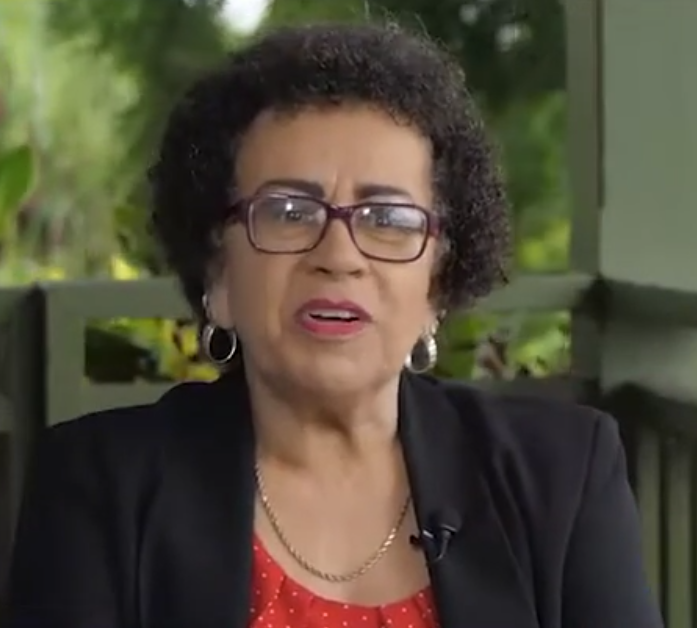
    The Caribbean public health and advocacy community is mourning the loss of one of its most influential leaders, Tessa Chadderton-Shaw, a long-serving mental health and substance abuse educator who died Sunday at Queen Elizabeth Hospital following a short, unexpected illness.

    Chadderton-Shaw leaves behind an unmatched legacy of public service spanning more than three decades, across roles in non-profit leadership, academia, and regional governance. Most notably, she helmed Barbados’ National Council on Substance Abuse (NCSA) for 14 years, serving as the organization’s manager from August 1996 through March 2010, guiding the body through critical expansion of its public education and prevention mandates.

    Beyond her transformative work at NCSA, Chadderton-Shaw built a reputation as a dedicated educator and skilled project leader across multiple regional institutions. For over 13 years, she held a lectureship at the University of the West Indies’ Cave Hill campus, where she taught courses spanning business administration, project management, and language arts, shaping the careers of hundreds of emerging Caribbean professionals. Her resume also includes senior roles such as special projects coordinator at Barbados Conference Services Limited, project manager for the CARICOM Secretariat, and executive director of the Caribbean Regional Anti-Doping Organization (RADO), demonstrating her versatile ability to drive progress across diverse public sectors.

    Current NCSA manager Betty Hunte, who began her career working under Chadderton-Shaw’s leadership, paid heartfelt tribute to her former mentor this week, highlighting her unyielding commitment to public service. Hunte described Chadderton-Shaw’s leadership style as defined by relentless tenacity and unshakable determination, noting that once the trailblazing leader set a goal, no obstacle could stop her from delivering results.

    “When something was decided, we knew it would be done come hell or high water,” Hunte recalled, emphasizing that Chadderton-Shaw was the office’s go-to problem-solver, capable of steering even the most complex, high-stakes initiatives to success. One of her most enduring contributions to Barbados public health, Hunte shared, was a 1990s/2000s fundraising campaign to launch a groundbreaking school-based drug education program. Chadderton-Shaw led the drive to raise $250,000 for the initiative, which created a mobile drug education classroom housed in a converted bus that traveled to every primary school across Barbados. The program remains the only one of its kind in the country decades later, reaching generations of young Barbadians with life-saving prevention information.

    Hunte also recalled Chadderton-Shaw’s relentless work ethic, noting that staff often received calls from her at all hours of the day and night as she clarified details, refined project documents, and pushed to advance the NCSA’s core mandate to reduce substance abuse across Barbados. Even after her retirement from the council, Chadderton-Shaw remained connected to the organization she built: when NCSA celebrated its 21st anniversary, she joined the festivities to be honored for her foundational contributions, an occasion current staff still cherish.

    Chadderton-Shaw is survived by her husband Anthony Shaw and their two daughters, Miah and Haylee. Tributes continue to pour in from across the Caribbean public health and academic communities, honoring a leader whose work transformed substance abuse prevention and education across the region.

  • FM Four Pillars dominate BFA Youth Awards

    FM Four Pillars dominate BFA Youth Awards

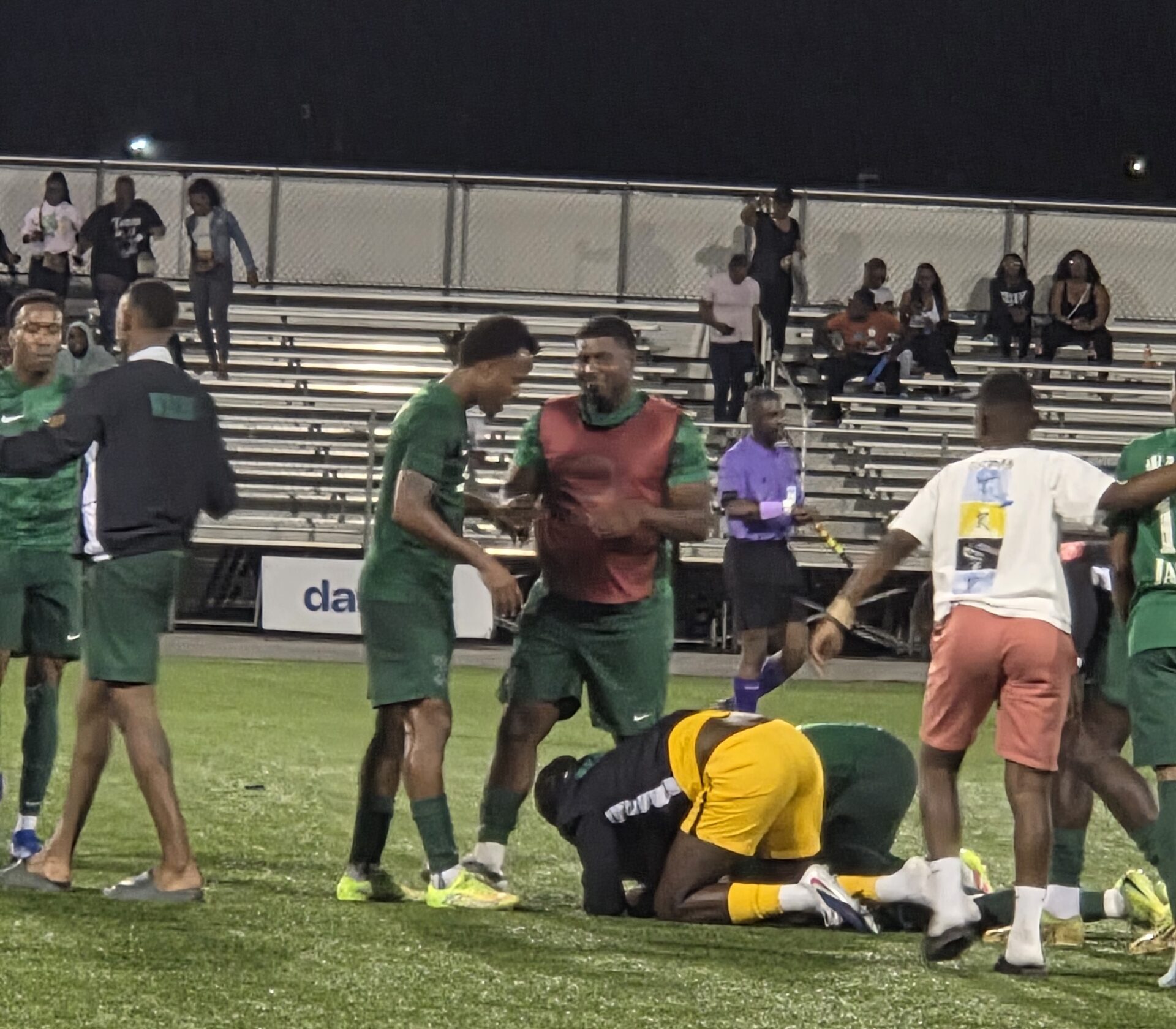
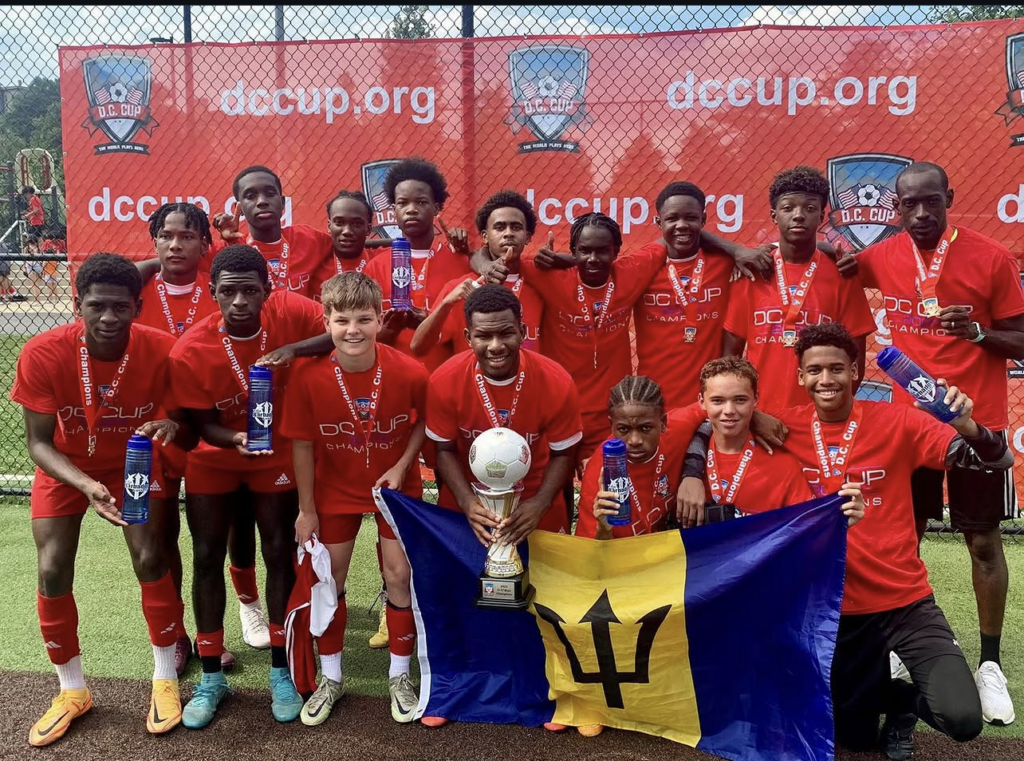
    The Barbados Football Association’s annual Youth Awards ceremony, held this past weekend, saw one academy emerge as the undisputed standout of youth football across the country: FM Four Pillars. The program claimed top honors in two of the three age-group divisions, sweeping a majority of individual accolades alongside its team titles.

    In the Under-15 division, FM Four Pillars took home the overall championship title, and dominated the individual awards category for the age bracket. Nikolai Mapp earned the distinction of Best Goalkeeper, while Leemar Murray claimed Best Defender. Azario Stoute of the academy secured two of the night’s most coveted honors: the award for Most Goals and the overall Most Valuable Player (MVP) title. The only individual Under-15 award to go to another club was Best Midfielder, which went to Dimiko Jordan of Kickstart Premier.

    FM Four Pillars repeated its winning streak in the Under-17 division, earning the crown of league champions. Mavericks Heat took second place in the division, while Technique rounded out the top three. Once again, FM Four Pillars players claimed nearly all individual awards for the age group. Jarrell Prescod was named Best Goalkeeper, with teammate Kiron Padmore taking home Best Defender. Fellow academy member Ashaun Grecia earned two honors: Best Midfielder and MVP. The only non-Four Pillars award went to Jamarco Johnson of Kickstart Rush, who claimed the Most Goals title.

    The Under-13 division saw a different club take the top spot, with Whitehall claiming the overall age-group title. Kickstart Premier finished in second place, while the National Sports Council team secured third. Whitehall also dominated the individual awards for the division: Jelani Sealy was named Best Goalkeeper, Andre Spencer claimed Best Defender, and Zion Green took home both Best Midfielder and MVP. The Most Goals award went to Tabarry Chandler of United Stars Alliance.

    In an interview with Barbados TODAY following the awards sweep, FM Four Pillars Academy head coach Fabian Massiah attributed the program’s successful year to collective effort across the entire organization. “I was happy with this success, but kudos to all the coaches, the players and the management teams,” Massiah said. Looking ahead to 2026, the coach noted that the academy’s core priority remains long-term player development rather than trophy collection. “We just plan to continue developing. I always tell the boys that if they continue to do the right things, the success will come and it’s not always matched by trophies; we set our eyes on getting to a particular level,” he explained.

    Massiah also shared that the academy has adjusted its traditional summer programming for this year, canceling its planned summer tour. The trip, which was scheduled to go through the United States, was scrapped due to overlapping with the FIFA World Cup and spiking travel costs. “There is no summer tour this year because of the football World Cup and ticket prices to the US were pretty high. We have postponed everything till either later in the year, probably December and if not December, then next summer,” he added.

  • For My Children

    For My Children

    As thousands of Barbadian students prepare to sit for a range of critical national and regional exit examinations this assessment cycle, the Group of Concerned Parents of Barbados has extended its solidarity and well-wishes to young test-takers and their families, while pressing for long-overdue reforms to address deep-rooted systemic inequities in the country’s education sector.

    The group’s spokesperson and coordinator Paula-Anne Moore extended targeted encouragement to the youngest cohort of examinees, who are currently undertaking the 11-Plus Barbados Secondary Schools’ Entrance Examination, alongside students completing vocational qualifications, Caribbean Examinations Council (CXC) Caribbean Secondary Education Certificate (CSEC) and Caribbean Advanced Proficiency Examination (CAPE) assessments, and students at the Barbados Community College (BCC).

    To 11-Plus candidates, Moore extended a message of comfort, urging young people to approach their exams with calm focus and steady confidence. She also acknowledged the intense stress felt by parents and guardians across the country, advising caregivers to avoid transferring their own anxiety to their children during this high-stakes period. Reminding students that their worth extends far beyond a single test score, she emphasized that these assessments represent just one milestone in a lifelong journey, not a final judgment of their potential. “Your success does not depend on these results alone,” Moore said in her message. “Trust that your best effort is enough, and that the best chapter of your story is still ahead of you.”

    Beyond extending well-wishes, Moore used the moment of national exam season to shine a light on structural failures that have created unfair barriers for low-income students across Barbados. As the government moves forward with national education transformation initiatives, she argued that resolving systemic inequities must be at the top of the policy agenda. Most notably, she called out the widespread expectation that families must pay for private tutoring — whether for 11-Plus preparation or CXC assessments — to secure strong exam results. This norm, Moore argued, is inherently unjust: it places disproportionate, crippling financial burdens on low-income households and deepens the disadvantages that marginalized students already face. “Privileged families take access to extra support for granted, but our education system should not compound the unfairness that already shapes life for children born into poverty,” she said.

    Moore also addressed the proposed transition to digital and hybrid CXC exam formats, noting that the shift to e-testing for multiple-choice Paper 1 sections and hybrid testing for Paper 2 must be paused until full infrastructure readiness is achieved across all Barbadian schools. She said it is unreasonable to push forward with digital testing until every school has sufficient WiFi connectivity, functional devices, and robust IT capacity, and until all students and teachers have completed adequate training to use the new systems. Any rushed transition, she warned, would only create new barriers for under-resourced schools and deepen existing inequities.

    Finally, Moore highlighted a key demographic shift that could create an opportunity for targeted education improvement: this year’s 11-Plus cohort is nearly 300 students smaller than the 2024 cohort, a decline that the group attributes to Barbados’ falling national birth rate. If this downward trend continues, Moore said, it will free up unused school capacity that can be reallocated to provide targeted learning support for students who require extra assistance, a shift that would help advance equity across the system.

    Closing her statement, Moore reiterated the group’s prayer for all Barbadian students, urging them to approach their exams with confidence and reminding them that the entire community is rooting for their success.

  • Jules scores late winner for defending champs

    Jules scores late winner for defending champs

    The Barbados Football Association Premier League delivered another riveting weekend of action Sunday, as defending champions Weymouth Wales pulled off a last-gasp 2-1 victory over their long-time rivals Ellerton, courtesy of a stoppage-time winner from former national captain Rashad Jules. The dramatic result came after title challenger Paradise had earlier rocketed to the top of the table with a lopsided 11-2 destruction of bottom-side Wotton, putting immediate pressure on Wales to respond at the BFA Technical Centre ground.

    Wales got off to a flying start inside the opening 10 minutes, when Ellerton’s Javon Austin was called for a foul on Jules just inside the 18-yard box. Midfielder Ackeel Applewhaite stepped up to take the spot kick, slotting a low shot into the left corner beyond the reach of Ellerton goalkeeper Kerry Holder to put his side ahead 1-0. For the next hour, Wales dominated possession and territorial control, but neither side managed to carve out a clear-cut goalscoring chance until the 66th minute. That was when Ellerton captain Shakille Belle latched onto a precision through ball, shrugged off a challenge from defender Rashad Smith, and rounded Wales goalkeeper Kishmar Primus to slot home the equalizer, setting up a frantic final stanza.

    The closing 25 minutes saw both teams throw bodies forward in search of a winning goal, and Ellerton came agonizingly close to snatching the win in the 90th minute. Belle delivered a pinpoint cross from the right wing that beat Primus, leaving substitute Anson Barrow with a simple tap-in from just five yards out. In a moment that would ultimately cost Ellerton all three points, Barrow failed to make any contact with the ball, wasting the golden opportunity. Just three minutes into stoppage time, Jules made no mistake for the second match running. The former captain powered his way through Ellerton’s defensive line, turned quickly outside the penalty area, and fired a thunderous left-footed strike that flew into the back of the net, sparking wild celebrations among the Wales squad and supporters. Remarkably, this was the second consecutive match that Jules netted a 93rd-minute winning goal, having also hit a late winner against Brittons Hill in the previous round of fixtures.

    Speaking to reporters from Barbados TODAY after the final whistle, Jules credited his teammates and coaching staff for the result, noting that he had endured a challenging season by his own high standards. “It was a relatively productive night. Like you guys would have seen for the whole season, we just need to do a little better in the final third, but for the most part the guys have been keeping the ball, and at least trying to play a Wales style of football, regardless of the results that we’ve been getting,” he said. “I feel as though coming to Wales the staff put a lot of confidence and support in me. They know I’ve been struggling all season, but they kept me on and I just think that I had to prove them right.”

    The opening match of the matchday brought its own decisive result, as Eyre’s Meatshop Pride of Gall Hill secured a critical 1-0 win over UWI Blackbirds to move further clear of the relegation zone. Shakarie Mottley scored the game’s only goal in the 86th minute, lifting Gall Hill to sixth place in the table on 15 points, while UWI Blackbirds stayed in seventh position three points behind.

    In the headline early match, Paradise put on a goalscoring masterclass against Wotton, who were forced to play the entire 90 minutes with club president Rasheed Belgrave standing in as goalkeeper. Paradise ran riot in the first half, taking a 7-0 lead into halftime before making a raft of substitutions that disrupted their attacking rhythm in the second half. Despite the one-sided scoreline, Wotton refused to let their heads drop and grabbed two late consolation goals from Tre Byer and Jayden Benjamin, marking the most lopsided result of the 2024 season so far. Tyrel Rayside Demendonca and Shamari Harewood both scored hat tricks for Paradise, while Sheran Hoyte and Kamol Griffith added two goals each, and Christian Gill rounded out the scoring with one goal.

    The 11-2 win put Paradise temporarily top of the league on 33 points, boosting their goal difference considerably and piling the pressure on Weymouth Wales to respond later in the day. Paradise head coach Mario Harte expressed satisfaction with the three points and the goals, but conceded he was disappointed to concede two soft goals. “Yeah great result, always good to get some goals on the board, but conceding two rubbed me a little on the wrong side, but yeah grateful for the three points most of all,” Harte said. “While I would rather we held onto the top spot, I can’t complain about where we are right now in the table.” Jules’ late winner ultimately saw Wales retake the top position by a single point, keeping the title race finely poised as the BFA Premier League approaches its business end.

  • The significance of the observance of Labour Day

    The significance of the observance of Labour Day

    International Workers’ Day, widely known as Labour Day or May Day, serves as more than just a public holiday—it is a global moment of reflection, recognition, and collective solidarity for working people everywhere. Rooted in the historic fight for fair working conditions, the annual observance honors the sacrifices of past generations of organizers, celebrates hard-won progress for workers, and keeps the urgent push for expanded labor rights at the center of public conversation. This year, as the world marks the occasion, the Caribbean nation of Barbados stands out for its decades of incremental, transformative progress in protecting and expanding worker protections.

    Over the past century, organized labor in Barbados has secured foundational rights that many workers now consider standard. Early 20th-century struggles delivered the 40-hour workweek and 8-hour workday, landmark gains that reshaped the balance of power between workers and employers. In the decades that followed, the labor movement expanded these wins to include guaranteed minimum wage, paid sick leave, annual vacation leave, maternity leave, and paid study leave. More recently, the nation has added new protections: paternity leave for new parents and unemployment benefits to support workers navigating job loss.

    This progress has been codified in a wave of progressive, worker-centered legislation passed over the last 13 years. Key reforms include the 2012 Safety and Health at Work Act and the 2012 Employment Rights Act, which laid out basic protections for all workers. The 2017–2021 Sexual Harassment (Prevention) Act created clear safeguards against workplace abuse, while the 2020 Employment (Prevention of Discrimination) Act banned unfair bias in hiring, promotion, and firing. Most recently, the nation passed the 2025 Family Leave Bill to further expand caregiving protections for workers.

    Complementing these legal reforms is the establishment of the Employment Rights Tribunal (ERT) in 2013, a specialized tripartite arbitration body designed to resolve employment disputes—most notably unfair dismissal claims—outside of the overburdened traditional court system. Operating under the voluntary framework that guides modern industrial relations practice, the ERT offers workers and employers a faster, more accessible path to conflict resolution, a win for all parties in the employment relationship.

    Barbados has also aligned its national labor standards with global best practices through its commitment to the International Labour Organization (ILO). As of June 2025, the Barbadian government has ratified all 10 of the ILO’s fundamental core conventions. These include the 1930 Forced Labour Convention (No. 29), the 1957 Abolition of Forced Labour Convention (No. 105), the 1948 Freedom of Association and Protection of the Right to Organise Convention (No. 87), and the 1949 Right to Organize and Collective Bargaining Convention (No. 98). Most recently, Barbados ratified the 1981 Occupational Safety and Health Convention (No. 155) on June 5, 2025, during the 113th International Labour Conference, alongside the 2006 Promotional Framework for Occupational Safety and Health Convention (No. 187).

    A groundbreaking new development for Barbadian workers came with the 2025 passage of the Caribbean Community (Free Movement of Nationals) Bill. The legislation unlocks new opportunities for labor mobility across all CARICOM member states, a fitting step forward given May Day’s deep roots in the Caribbean labor movement of the 1930s and 1940s. From its earliest days, the regional movement centered worker contributions to national development, and today’s milestone serves as a powerful reminder that every right currently enjoyed by Barbadian workers—from the 8-hour workday to anti-discrimination protections—was won through decades of organizing, protest, and collective action by early labor leaders.

    Despite these significant gains, shifting global labor market dynamics are creating new, urgent challenges that Barbados’s labor movement and trade unions must address moving forward. Experts emphasize that organizing and engaging younger generations of workers is a top priority to sustain the movement into the future. Trade unions also face growing structural pressures, including declining membership density, prolonged battles over union recognition, the rise of outsourcing and precarious contract work, and the disruptive impact of automation and artificial intelligence on traditional employment. The rapid growth of the gig economy has created a large cohort of workers without access to the basic protections won over the last century, while rising workplace mental health concerns and growing political pushback against collective bargaining have further stretched the labor movement’s capacity.

    This analysis comes from Dennis De Peiza, Labour Relations & Employment Relations Consultant at Regional Management Services Inc.

  • Barbados to participate in 2nd International Migration Review Forum

    Barbados to participate in 2nd International Migration Review Forum

    A high-level Barbadian delegation, headed by Minister of Home Affairs and Information Gregory Nicholls, is set to travel to the United States to take part in the second iteration of the International Migration Review Forum, a major UN-backed global gathering running from May 5 to 8. The forum stands as the leading intergovernmental global space where United Nations member states can convene to exchange updates and perspectives on the progress they have made in advancing the full implementation of the Global Compact for Safe, Orderly and Regular Migration (GCM), as well as the migration-related targets embedded within the 2030 Agenda for Sustainable Development.

    Over the course of the four-day event, participants will engage in a structured lineup of activities designed to drive collaborative dialogue. These include four interactive round table sessions that bring together stakeholders from multiple sectors, a formal policy debate, and a closing plenary session. Core discussion topics will center on the GCM’s 23 interconnected objectives, ongoing barriers and challenges that nations face in putting these objectives into practice, cross-border capacity-building frameworks, and both long-standing and newly emerging issues shaping global migration patterns in the 21st century.

    Beyond on-the-ground dialogue, the forum will also deliberate on potential guidance to strengthen the entire UN system’s efforts to boost cross-agency effectiveness, improve policy coherence, and better support national governments as they work to meet their GCM commitments.

    As the official representative of Barbados, Minister Nicholls is scheduled to deliver a three-minute national statement to the forum’s General Assembly segment during the policy debate, outlining the Caribbean island nation’s approach to domestic and international migration policy. Ahead of the official opening of the forum, an additional pre-event informal interactive hearing will be held on May 4, gathering input from a wide range of non-state stakeholders across civil society, the private sector, and academia. A civil society representative will present a full summary of the hearing’s key takeaways during the plenary’s opening session to ensure grassroots and multi-stakeholder perspectives are integrated into official forum discussions. The report was sourced via the Barbados Government Information Service (BGIS) and SFC.

  • Four remanded on drug and firearms charges

    Four remanded on drug and firearms charges

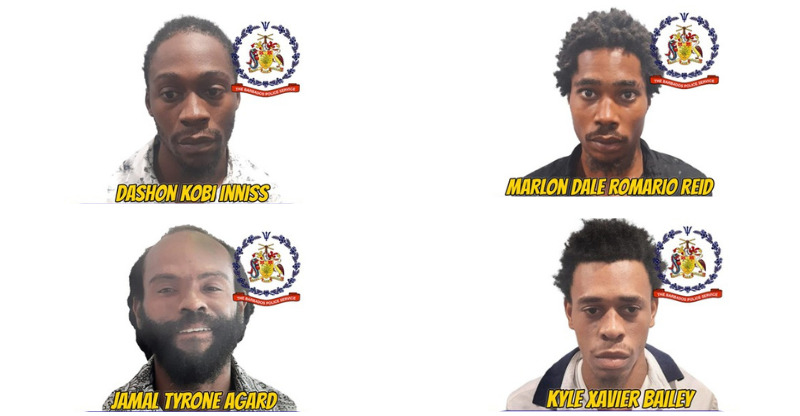
    A major cross-district drug and arms trafficking crackdown has led four suspects to make their first court appearance in Barbados following one of the more significant narcotics seizures in recent local memory. On Saturday, the four accused — identified as 23-year-old Kyle Xavier Bailey from Claybury, St John; 34-year-old Jamal Tyrone Agard from Philips Road, Cleavers Hill, St Joseph; 26-year-old Marlon Dale Romario Reid, also of Claybury, St John; and 23-year-old Dashon Kobi Inniss from Branchbury, St Joseph — appeared before Magistrate Alison Burke at the District ‘A’ Traffic Court.

    All charges stem from alleged criminal activity that took place on April 25. The four men face a joint slate of offences: possession of cannabis, possession of cannabis with intent to supply, trafficking of cannabis, illegal possession of three firearms, and possession of 12 rounds of ammunition. Reid faces an additional two separate charges, carrying one more unregistered firearm and 17 extra rounds of ammunition that were not included in the joint count.

    Law enforcement officials confirmed that the total weight of the seized suspected cannabis clocks in at 499.15 kilogrammes, just under the half-tonne mark. When calculated at current street prices, the haul is estimated to be worth approximately $3,494,050 Barbadian dollars.

    Under Barbados’ criminal procedure rules, the accused were not required to enter a plea at this initial hearing because the offences are indictable, meaning they will proceed to a higher court for trial following preliminary hearings. All four men have been remanded into the custody of the Barbados Prison Service at Dodds Prison. The case has been transferred to the District ‘F’/Belleplaine Court, with the next procedural hearing scheduled for May 18, 2026.

  • Spirit Airlines goes out of business after 34 years, ending operations immediately

    Spirit Airlines goes out of business after 34 years, ending operations immediately

    West Palm Beach, Florida (AP) – After three decades of disrupting the U.S. aviation sector with cheeky, unconventional advertising and industry-shaking rock-bottom ticket prices, iconic ultralow-cost carrier Spirit Airlines has announced its immediate permanent closure. The 34-year-old airline, recognizable for its signature bright yellow fleet that once operated hundreds of daily domestic flights and employed roughly 17,000 workers, confirmed Saturday that it has commenced an orderly wind-down of all business operations, effective immediately.

    All scheduled Spirit flights have been canceled, and the airline has suspended all customer support services effective immediately, the company confirmed in an official post on its website. The sudden shutdown caught countless travelers and workers off guard: passengers arriving at airports across the country Saturday morning for planned trips were shocked to find their flights eliminated, while Spirit employees learned overnight that they had lost their jobs without warning.

    In its official closure announcement, Spirit leadership reflected on the carrier’s decades-long legacy: “We are proud of the impact of our ultra-low-cost model on the industry over the last 34 years and had hoped to serve our guests for many years to come.”

    U.S. Transportation Secretary Sean Duffy released a public statement Saturday addressing the aftermath of the shutdown. He confirmed that Spirit had maintained a dedicated reserve fund to issue refunds to customers who purchased tickets directly through the airline, while passengers who booked via third-party sellers such as travel agencies will need to pursue reimbursement from those vendors. Duffy also issued a clear warning to Spirit ticket holders to avoid unnecessary travel to airports.

    “If you have a flight scheduled with Spirit Airlines, don’t show up at the airport. There will be no one here to assist you,” Duffy emphasized.

    To accommodate displaced passengers, Duffy announced that four major U.S. carriers – United Airlines, Delta Air Lines, JetBlue and Southwest Airlines – are offering limited-time $200 one-way tickets to travelers with valid Spirit confirmation numbers and proof of purchase. The major airlines have also pledged support for out-of-work Spirit employees, including opening expedited, preferential hiring pathways for affected workers and assisting crew members who are stranded far from their home bases.

    Spirit added in its statement that it is currently coordinating to repatriate more than 1,300 crew members to their home locations. The carrier’s final operational flight touched down at Dallas Fort Worth International Airport Saturday, arriving from Detroit Metropolitan Airport, marking the end of more than three decades of service. The company also clarified that while eligible customers can expect to receive refunds, Spirit will not provide assistance rebooking travel on other competing carriers.

    The shutdown comes after failed efforts to secure a federal government bailout to keep the cash-strapped airline afloat. The Trump administration had explored the possibility of a rescue package, but no agreement was ever finalized. Addressing the collapsed bailout talks, Duffy noted that federal resources did not allow for the rescue: “We often times don’t have half a billion dollars laying around.”

    President Donald Trump first publicly floated the possibility of a government bailout last week, after Spirit entered its second bankruptcy restructuring in less than two years. The carrier’s final financial crisis was exacerbated by skyrocketing jet fuel prices, which were driven upward by the ongoing Iran war.

  • Regrading, wage talks ahead for public sector

    Regrading, wage talks ahead for public sector

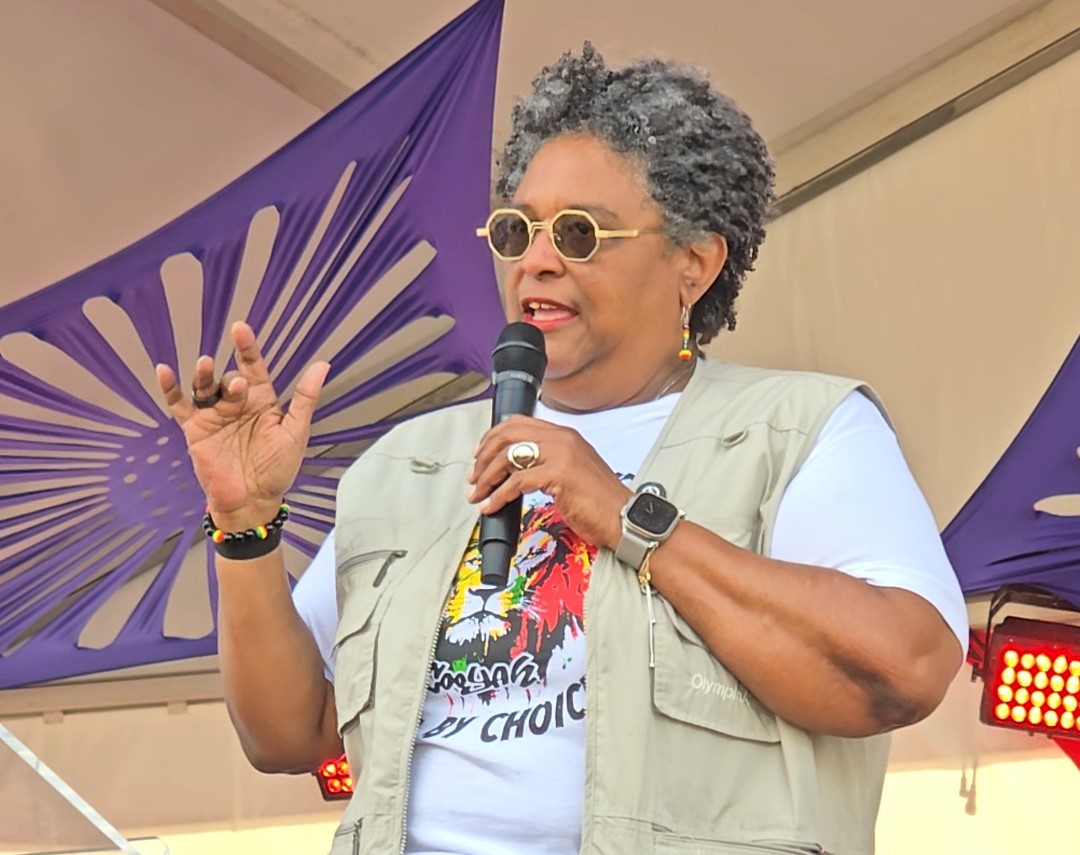
    In a public address delivered Friday at the Barbados Workers’ Union Family and Picnic Affair held at the Bridgetown Botanical Gardens, Prime Minister Mia Mottley has laid out two landmark policy initiatives that will shape the island nation’s governance and economic trajectory over the coming years. The first, a long-awaited public sector job regrading initiative, is set to launch in the coming weeks, with multi-year wage negotiations for public employees to commence immediately after the regrading process concludes.

    Mottley emphasized that the regrading exercise is designed to bring long-overdue organizational clarity and collective consensus across the entirety of Barbados’s public sector, standardizing role expectations and compensation frameworks to reduce disparities and improve service delivery. Beyond administrative restructuring, however, the Prime Minister used the gathering as a platform to unveil a paradigm shift in the country’s economic policy: a new framework focused on expanding asset ownership and accessible investment opportunities for ordinary working Barbadians, known locally as Bajans.

    For the current administration, Mottley argued, governance goes far beyond incremental wage increases for workers. “This term must be about making Bajans owners,” she told the assembled crowd, framing the policy as a fundamental reorientation of how the government approaches shared national prosperity. While acknowledging that steady wage growth remains a core priority for her administration, she noted that the government is actively building new pathways to allow everyday workers to take stakes in large-scale national development projects spanning critical infrastructure sectors.

    Key sectors identified for broad public participation include mass transit, potable water systems, utility-scale renewable energy projects, and national digital data infrastructure. Mottley pointed out that the total capital required for this pipeline of projects exceeds one billion U.S. dollars — an investment scale too large for the government to fund independently. Rather than turning exclusively to foreign investors or large domestic institutions, the government aims to open these projects to individual workers, creating structured participation frameworks to demystify the investment process for those who may feel inexperienced in large-scale asset ownership.

    “Each of the individual workers may feel intimidated in understanding this can work or this ain’t gonna work, we can create systems to help show that nobody should put all their eggs in one basket,” Mottley explained. The core goal of the initiative, she stressed, is to expand wealth creation beyond monthly paychecks, encouraging Bajans to build long-term wealth through diversified participatory investment instead of relying exclusively on low-yield traditional savings accounts.

    She highlighted the growing erosion of purchasing power for savers holding money in domestic bank savings products, noting that current savings accounts yield only 0.1 percent annual interest, while national inflation hit 1 percent this year. If inflation rises to 2 or 3 percent, the gap between earnings and rising prices will widen dramatically, leaving passive savers vulnerable to losing purchasing power over time. “For you not to be a victim of that, the process of enfranchisement and ownership of shares matters,” she added.

    Mottley was careful to clarify that the government is not mandating individual investment choices for workers. Instead, the administration will build the regulatory and structural frameworks to enable broad participation, leaning on public-private collaboration between domestic financial institutions including pension funds, credit unions, and insurance companies to bring the initiative to fruition. This partnership model, she said, will align private institutional capacity with national development goals, opening the benefits of large-scale infrastructure growth to all segments of Barbadian society rather than a small group of wealthy or institutional investors.