标签: Barbados

巴巴多斯

  • Govt lab named regional superbug watchdog

    Govt lab named regional superbug watchdog

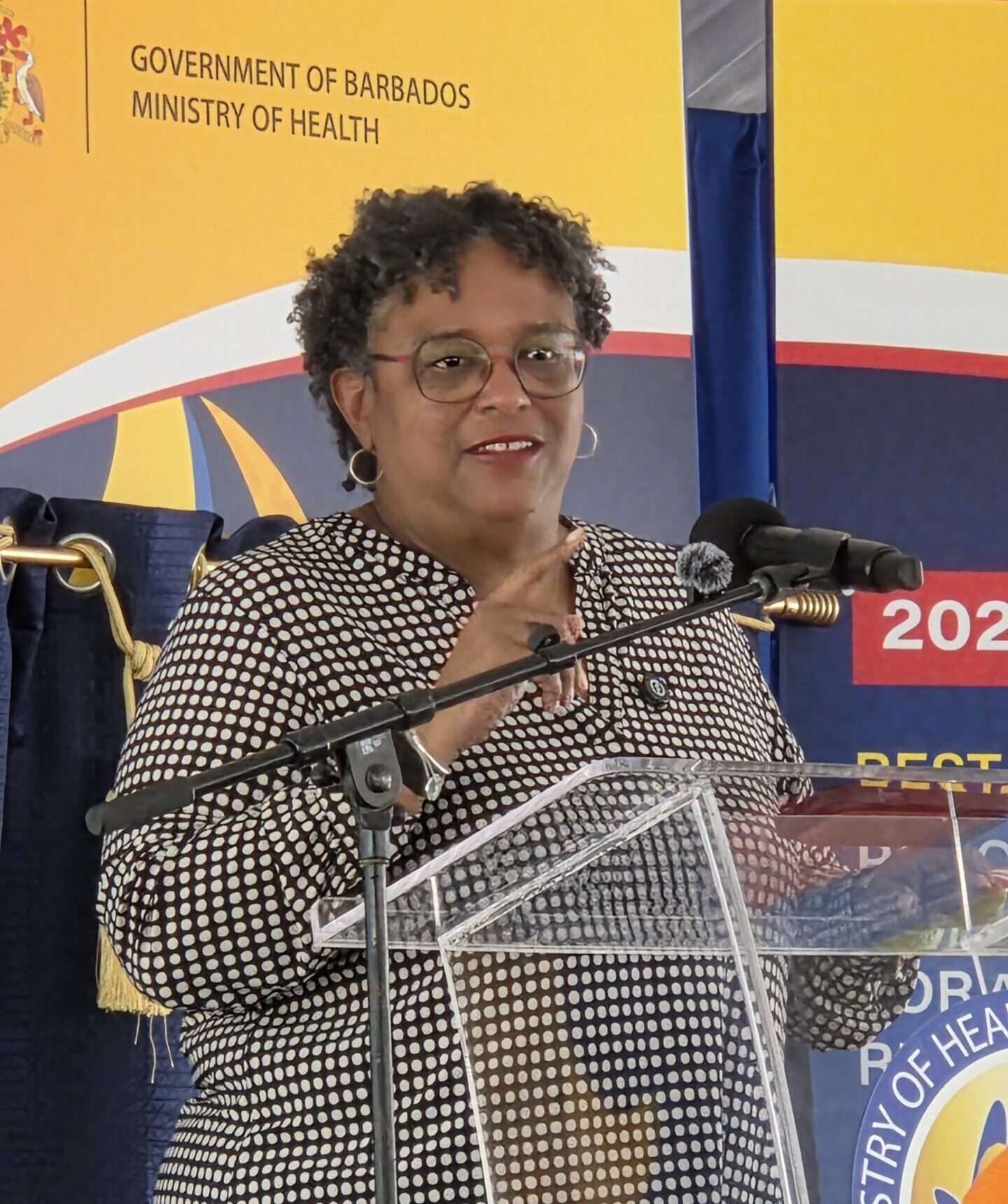
    The Caribbean island nation of Barbados has marked a major milestone in global public health, as its Best dos Santos Public Health Laboratory (BDSPHL) has been officially designated a Pan American Health Organization/World Health Organization Collaborating Centre, positioning the country as a regional leader in the urgent battle against antimicrobial resistance (AMR).

    Addressing the designation ceremony, Prime Minister Mia Mottley — who also chairs the Global Leaders Group on Antimicrobial Resistance — emphasized that the new status will drastically strengthen Barbados’ capacity to identify drug-resistant infection threats early, before they can spread across communities. This enhanced early warning capability comes at a critical time for the island, where an aging, shrinking population already faces high rates of non-communicable diseases, making residents particularly vulnerable to the risks of drug-resistant superbugs.

    Mottley centered her remarks on the non-negotiable role of cross-sector and international collaboration in advancing public health outcomes. “Collaboration is the sine qua non for progress in public health,” she said. “Without collaboration and without partnership, we are not able to contain the spread of diseases. Without collaboration and without partnership, we are not able to expand the body of science and knowledge that we have. Without collaboration and without partnership, we are literally in a position of being a victim of circumstances.” Beyond laboratory diagnostics, Mottley noted that sustained progress requires targeted workforce training, investment in cutting-edge equipment, and coordinated action that integrates on-the-ground contact tracing and detection into a cohesive regional and global response.

    As a designated collaborating centre, BDSPHL will not only lead regional surveillance efforts but also advance critical research into AMR, a public health crisis already ranked as the third leading cause of death globally. Mottley warned that AMR, often described as a “silent slow-motion pandemic,” is on track to become the world’s top cause of human mortality by 2050 if current trends go unaddressed. For decades, she explained, societies have taken the life-saving power of antibiotics for granted, even as overuse and misuse have eroded their effectiveness. Even with the development of new antimicrobial medications, the window of effectiveness these drugs offer is far shorter than that of earlier generations of antibiotics, creating an urgent need for proactive action.

    Last year, world leaders gathered at the United Nations General Assembly adopted a landmark commitment to cut deaths from drug-resistant bacterial infections by 10% — a step Mottley called a meaningful turning point in reversing the AMR trend. Echoing a traditional Barbadian proverb, “one blow does not kill an old cow,” Mottley framed the lab’s new designation as part of incremental, sustained action that will deliver global progress over time. She added that Barbados will continue expanding its scientific public health capacity through initiatives including the Barbados Living Lab, noting that investments in diagnostic infrastructure are ultimately investments in protecting lives. The core mission of the new collaborating centre, she explained, is to deliver fast, accurate diagnostic data to clinicians, enabling them to prescribe targeted, effective treatments when every moment counts in fighting resistant infections.

    BDSPHL director Songee Beckles called the PAHO/WHO designation a formal recognition of the facility’s years of hard work and growing impact, opening doors for the lab to contribute meaningfully to global AMR action. Since 2016, Beckles explained, the facility has evolved dramatically from a basic national diagnostic lab to a respected regional hub for AMR surveillance. Through intentional investment in strategic partnerships, workforce upskilling, technological upgrades, molecular diagnostics, and genomic sequencing, the lab has become a foundational pillar of AMR detection and response for both Barbados and the broader Caribbean region.

    The 2026 designation as a PAHO/WHO Collaborating Centre for Antimicrobial Resistance Surveillance represents the culmination of years of consistent investment and incremental progress. As AMR continues to grow into one of the most pressing global health threats of the 21st century, BDSPHL is now fully positioned to support national, regional, and international efforts to preserve the effectiveness of antimicrobial medications and safeguard public health for generations to come.

  • Primary Schools Chess Championship set for Wildey Gym

    Primary Schools Chess Championship set for Wildey Gym

    The island nation of Barbados is preparing to host one of its most anticipated youth academic sporting events of the year: the 2024 Primary Interschool Team Chess Championship, scheduled to run across two consecutive days, June 18 and 19, at the well-equipped Wildey Gymnasium. This year’s tournament will bring together school squads from every corner of the country, competing under the widely respected Swiss-system tournament format designed to reward consistent performance without eliminating participants early.

    Organized around a five-round Swiss team structure, this year’s championship sets clear roster rules: each competing team fields five active players per matchup, with up to two alternate reserves allowed to cover absences or rotation. The competition is open to all primary education institutions across Barbados, both public and private, with a cap of three entries per school to ensure broad participation across different campuses.

    Following standard international chess scoring rules, each individual player earns one full point for a win, half a point for a drawn game, and no points for a loss. Final cumulative points from all individual games across rounds will be tallied to determine the overall tournament champion.

    Heading into the competition, all eyes are on defending champions Charles F. Broome Primary School, who are gearing up to defend their crown and chase an unprecedented third consecutive title. The school has dominated primary school chess competitions across Barbados in recent years under the guidance of dedicated head coach Corie Elcock. In last year’s tournament, Charles F. Broome’s A-team secured a nail-biting victory, edging out second-place finishers St Winifreds by just half a cumulative point to claim the top spot.

    This year, however, the tournament field will see two notable absences. A scheduling conflict with end-of-term academic exams has forced St Winifreds to withdraw from the 2024 championship, ending their shot at redemption for last year’s narrow loss. 2023’s third-place team, St Giles, has also confirmed they will not participate in this year’s event. Despite these departures, last year’s fourth-place finishers St Gabriels have formally confirmed their entry, with the squad already targeting an improved ranking after their solid performance in 2023.

    Organizers report healthy growth in youth participation across the board: last year’s championship drew 20 competing teams from 14 different primary schools, and insiders expect that total number of entries to rise this year, reflecting growing interest in chess among young Bajans.

    The event is overseen by the Barbados Chess Federation, which has long prioritized expanding access to and participation in chess within the country’s national school system. Moving forward, the federation announced it is gearing up for deeper collaboration with the Ministry of Education’s upcoming Chess in Education programme, which is scheduled for full implementation in the near future to embed chess into regular school curricula.

  • Girls’ Futsal event sees rising interest

    Girls’ Futsal event sees rising interest

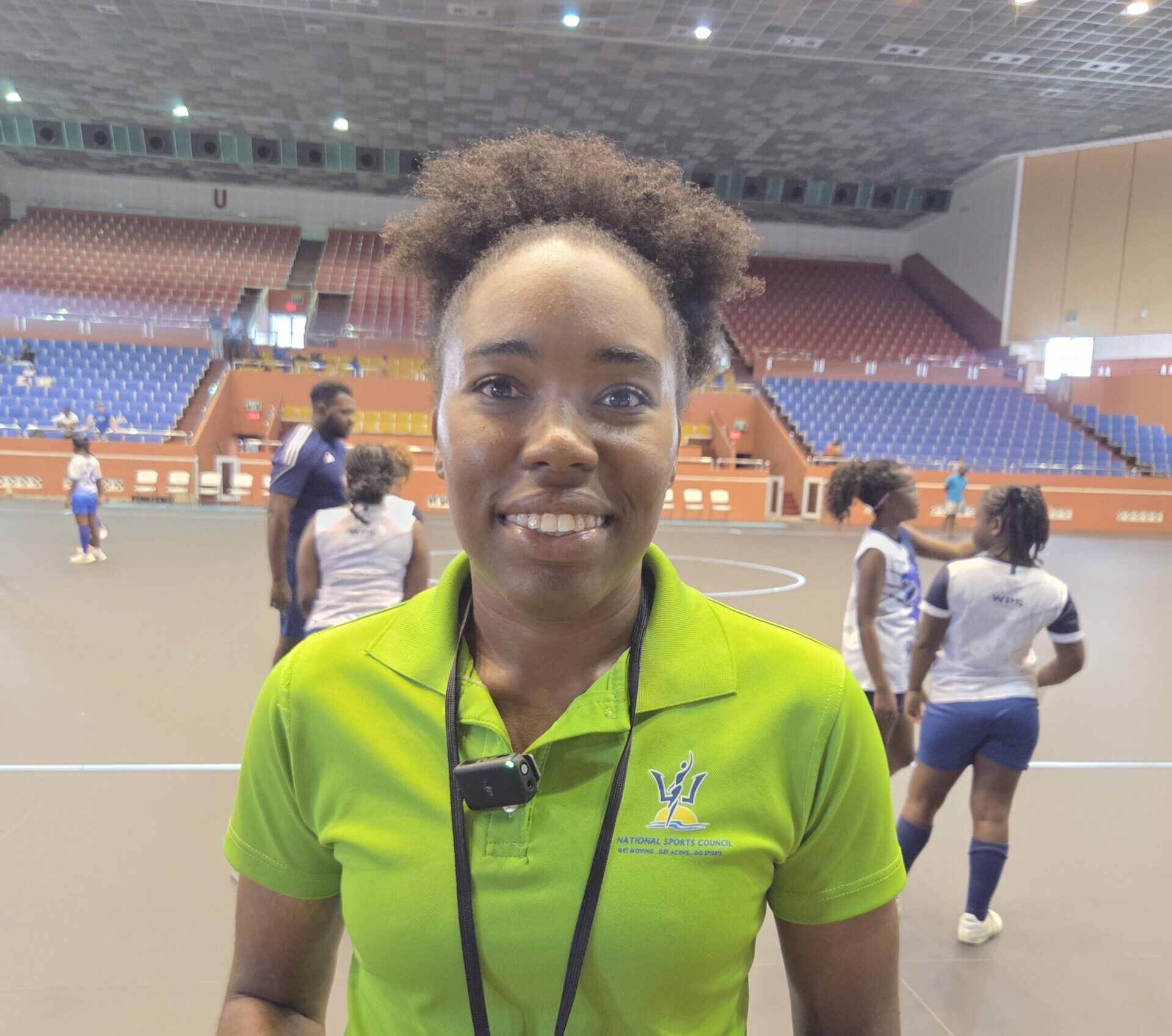
    The Garfield Sobers Gymnasium played host to the second day of the National Sports Council Girls’ Primary School Futsal Championship on Wednesday, drawing robust enthusiasm and participation from eight competing primary school teams across the region.

    As event coordinator Soraya Toppin-Herbert, a former senior national women’s football player and ex-Director of Women’s Football for the Bahamas Football Association, shared, early assessments of the tournament paint an overwhelmingly positive picture of community and institutional buy-in. “So far it’s been going really good. The girls have been enjoying the game, there’s been a lot of excitement and most of the schools have had a full squad,” Toppin-Herbert told reporters.

    The championship did not emerge out of nowhere: it grew organically from a seven-a-side youth football rally hosted at the close of the first school term last year, when organizers first noticed the unmet demand for girls’ competitive futsal opportunities. That early grassroots interest aligned with a core strategic goal of the National Sports Council (NSC): expanding female access to organized sports and keeping young girls engaged in athletic activity year-round, rather than limiting participation to one-off annual events.

    Toppin-Herbert noted that for years, boys have had a steady, high-profile outlet for competitive football through the NSC/BICO Football Competition, commonly known as BICO. While a small number of female players have joined that tournament, the vast majority of girl athletes have been locked out of consistent organized play, a gap this new championship is designed to fill. Already, the response has been strong enough that organizers have received multiple requests to expand roster sizes to accommodate more girls who want to compete.

    Despite the widespread enthusiasm, Toppin-Herbert acknowledged that the tournament has revealed a wide gap in experience and performance across teams, a reality that signals room for growth in the nascent program. Some girls already play regularly in mixed leagues alongside boys, bringing tighter ball control and more physical toughness to the court. For many other participants, this marks the first organized competitive football event they have ever joined, leading to a broad range of skill levels across matches.

    Even with that disparity, Toppin-Herbert framed the mixed skill levels as a win for organizers. The high level of interest from participants and schools alike proves that there is a solid foundation to build on as the NSC works to grow girls’ futsal in the years ahead. The tournament remains on track to complete its schedule in the coming days, with organizers already planning adjustments to meet the unanticipated demand for participation.

  • ‘No room for complacency,” says coach ahead of Scotland clash

    ‘No room for complacency,” says coach ahead of Scotland clash

    As anticipation builds for Thursday’s high-stakes Group B clash at the ICC Women’s T20 World Cup 2026 at Headingley, West Indies head coach Shane Deitz has delivered a firm wake-up call to his squad, emphasizing that overconfidence will have no place in their game plan.

    Both sides enter the match riding a wave of momentum from unforgettable opening-round wins, turning the under lights encounter into one of the most compelling matches of the tournament so far. The Windies pulled off a dramatic final-over upset to knock defending champions New Zealand off their throne, while Scotland notched a historic milestone, securing their first-ever victory at a Women’s T20 World Cup with a clinical performance against Ireland.

    Despite a comfortable six-wicket win over Scotland at the 2024 tournament, where Deandra Dottin’s aggressive late innings sealed the result and boosted the side’s net run rate, Deitz is quick to stress that today’s Scottish side is a vastly different and far more dangerous opponent.

    Since that 2024 meeting, Scotland has added several talented new players to their roster, and a growing number of their core squad now compete regularly in England’s competitive domestic cricket circuit, raising their overall level of play dramatically. The coach also noted that Scotland’s landmark opening win over Ireland has injected the side with massive confidence, a factor that makes them even more of a threat.

    “They had a great win, so they’ll be flying high and full of confidence,” Deitz said. “They’ve got some good players all around, a good mix, they hit different areas. We’re going to have to be at our absolute best to beat them. We definitely can’t be complacent, and we won’t be.”

    The Windies’ opening match against New Zealand was a true rollercoaster of emotions, with veteran Shemaine Campbelle delivering a career-defining performance: her first T20I half-century across 155 appearances, which guided the side across the line in the final over. Even so, Deitz warns his team cannot count on repeated mistakes from their opponents, nor can they rely on their higher world ranking – West Indies sits 6th, five places above Scotland – to carry them to victory.

    Reflecting on the transformation of women’s cricket since he first joined the sport in 2014, Deitz noted that the gap between top-tier sides and emerging nations has shrunk dramatically. “Back then, it was clear those three or four sides were miles ahead of everyone else. But now, you have to bring your best every single day, and it’s just a great spectacle. The girls work hard and have got as much passion and energy for the game as anyone you’ll ever see.”

    Deitz did not hold back when praising Scotland’s standout players, calling dynamic sibling duo Kathryn and Sarah Bryce true world-class talents, while adding that his own side boasts elite match-winners ready to rise to the challenge.

    For Scotland, however, the team is approaching the match with calm confidence rather than intimidation, despite facing a side that has claimed multiple World Cup titles in the past. Opening batter Darcey Carter, who set a solid foundation for Scotland’s win over Ireland before being dismissed for 14, spent the eve of the match studying West Indies’ win over New Zealand and says her side is unfazed by their opponent’s reputation.

    “They’re a really good side. They’ve got some great players in their team as well, but I think we just have to play the team on the day,” Carter explained. “Personally, I don’t try to look at the names too much because then you just get caught up in that. If we can just take the game as it comes and adapt to how the opposition plays, then I think we will be in good stead.”

    Scotland also has a recent upset over the Windies to draw confidence from: the side claimed an 11-run win over West Indies in the 2025 ICC Women’s Cricket World Cup Qualifier, a result that ultimately eliminated the Caribbean side from contention for the tournament. That history only adds another layer of intrigue to Thursday’s must-win clash, leaving cricket fans around the world waiting to see which side will carry their opening momentum forward.

  • Small Craft Advisory remains in effect amid strong winds

    Small Craft Advisory remains in effect amid strong winds

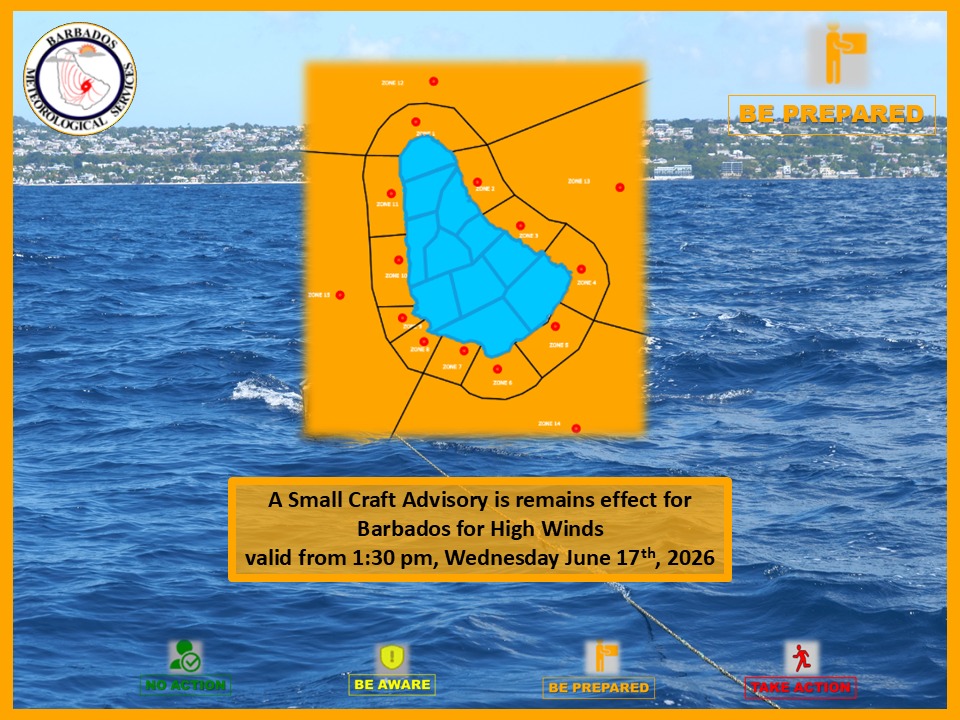
    Barbados Meteorological Services (BMS) has confirmed that a Small Craft Advisory will remain active across the island nation over the coming two days, as forecasted strong winds are set to create dangerous sea conditions that pose significant risks to small vessels and marine users. According to official weather projections, sustained wind speeds between 15 and 25 knots — equivalent to 30 to 45 kilometers per hour — will push open-water swells to heights ranging from 1.5 to 2.5 meters, creating a challenging and unpredictable environment for anyone operating on the water.

    The combination of rough surf, unexpected wave patterns and heavy sea spray will make navigation far more difficult than usual, BMS warned, with small crafts facing an elevated risk of capsizing in these unstable conditions. Beyond the initial hazardous period on Thursday and Friday, the island’s weather forecast includes additional shifts scheduled for the weekend and the start of next week. A tropical wave is on track to reach Barbados on Saturday, which is expected to bring outbreaks of showers and sudden gusty winds that could further disrupt coastal and marine activity.

    Forecasters note that sea conditions are projected to moderate slightly across the latter half of the weekend, providing a brief window of calmer conditions before winds and rough seas are set to strengthen once again early next week. In response to the ongoing and forecasted hazards, Barbados Meteorological Services has issued a urgent public appeal to all mariners, fishermen, recreational boaters and other marine users to stay updated on official weather announcements from the service, and to prioritize safety by exercising extreme caution when planning any activity on the water through the coming days.

  • Returning nationals should pay for polyclinic drugs, GP – MP says

    Returning nationals should pay for polyclinic drugs, GP – MP says

    During Tuesday’s debate on the landmark Barbados Medical Products Bill in the country’s House of Assembly, sitting Member of Parliament and practicing general practitioner Dr. Sonia Browne St Philip put forward a controversial proposal to ease mounting financial pressure on the island nation’s state-funded healthcare system. Her core call: require a subset of returning Barbadian nationals who have not contributed to the country’s national insurance system during their time living abroad to cover partial or full costs of prescription medication received at public polyclinics.

    Dr. Browne argued that the current policy of free medication for all arrivals places an unnecessary, unfair strain on public budgets that could be redirected to other pressing healthcare needs. “It is only fair that those who have never given back to our system contribute a little when they access its services,” she stated, noting that hundreds of patients pass through public polyclinics daily, with a notable share being returning expats who collect overseas pensions and have never paid local national insurance contributions. Many of these individuals, she added, wait for hours to access free medication subsidized by local taxpayers who have spent decades contributing to the national healthcare fund. She emphasized the proposal would include exceptions for vulnerable groups, but said a broad review of the current policy is long overdue.

    Beyond the cost-sharing proposal, Dr. Browne used the debate to highlight two critical unregulated drug issues that she said demand urgent action under the new legislation. First, she called out a thriving illegal trade where unscrupulous individuals purchase low-cost regulated medication in Barbados, then smuggle it to other countries to sell for marked-up profits. She expressed clear expectation that the new bill would grant authorities the power to crack down on this illicit activity, which she said further drains local pharmaceutical supplies and drives up public costs. Second, she raised alarms about unregulated health products sold in Barbados with incomplete or missing packaging labeling, pointing to a recent case that nearly ended in tragedy. A patient she treated presented with severe palpitations and symptoms consistent with an impending heart attack after consuming an unlabeled “energy capsule” — a risk that could have been avoided with proper regulatory oversight. Dr. Browne urged the new Barbados Medical Products Regulatory Authority, which will be established under the bill, to prioritize tightening oversight of these underregulated products to protect public safety.

    Closing her remarks, Dr. Browne paused to pay heartfelt tribute to Janette Jan Lynton, the revered founder of Barbados’ Cancer Support Services, who passed away on Monday night. She remembered Lynton as a transformative figure in local cancer care, who played a pivotal role in supporting the island’s main public care facility, Queen Elizabeth Hospital, by donating critical supplies and funding a dedicated treatment room for thyroid patients undergoing radiotherapy. Lynton, Dr. Browne said, pioneered a holistic approach to cancer care that addressed not just the medical needs of patients, but their psychological and financial needs as well, stepping in to cover medication costs for low-income families and supporting patients through their final days. She also noted Lynton’s work educating both medical professionals and the broader public through annual cancer treatment seminars, which had improved care standards across the island. “There are countless families who have benefited from her compassion and support,” Dr. Browne said, adding that she hoped Lynton’s legacy of service would continue to shape cancer care in Barbados for generations to come.

  • Deputy PM flags hospital pharmacy delays in backing pharma bill

    Deputy PM flags hospital pharmacy delays in backing pharma bill

    As Barbados advances an ambitious plan to build out a homegrown pharmaceutical industry through landmark legislation, a critical crisis in patient access to basic care at the island’s leading public hospital cannot be ignored, Deputy Prime Minister Santia Bradshaw has told the country’s House of Assembly.

    While speaking in support of the Barbados Medical Products Bill — legislation framed as a transformative tool to drive industrial development and create new career pathways for young Barbadians interested in science and pharmaceutical innovation — Bradshaw pushed policymakers to confront what she called the “elephant in the room”: hours-long wait times for prescription pickup at the Queen Elizabeth Hospital (QEH) pharmacy that have left vulnerable patients frustrated and suffering.

    A prominent breast cancer survivor, Bradshaw shared first-hand observations of patients, most notably elderly residents, who sit for hours waiting for their prescriptions to be filled, with barely any movement in the dispensing queue during extended visits. “When I go upstairs to meet with constituents, people have already taken their queue number,” she explained. “By the time I come back downstairs, only one or two numbers have been called. That’s how slow the process is.” She added that ongoing understaffing at the pharmacy has turned a routine trip for basic medication into an exhausting ordeal for many patients who have no other option for accessing their necessary drugs.

    Bradshaw emphasized that while developing a regulated local pharmaceutical industry is a “very noble exercise” that will open long-term opportunities for the country, she had a duty to amplify the concerns of her constituents who face daily hardship accessing the care they need right now. Drawing on lessons from the COVID-19 pandemic, she noted that public health systems successfully adapted dispensing and delivery protocols to get critical medications to patients quickly and efficiently during the public health emergency, including home delivery services that eliminated wait times entirely for many. She questioned why those successful emergency adaptations cannot be revived or expanded to address current gaps, particularly for elderly patients who often arrive before the pharmacy opens only to face multi-hour waits once inside.

    Beyond wait times, Bradshaw also raised urgent concerns about access to brand-name medications for cancer patients, highlighting recent constituent reports about the prostate cancer drug Androcur being pulled from the public health system and replaced with the generic alternative cyproterone. While she acknowledged that generic medications are effective for most patients, she shared that constituents have reported troubling side effects from the substitution. She called on health authorities to explore additional options to secure brand-name drugs when clinically necessary, and to ensure all patients are fully informed about alternative medications and their potential side effects before any substitution is made.

    Responding to Bradshaw’s remarks during her first cross-chamber appearance under new constitutional arrangements, Minister of Health and Wellness Senator Lisa Cummins confirmed that the government is already moving forward with targeted reforms to improve medication access for QEH patients.

    Cummins explained that for years, QEH has operated independently of the broader public pharmacy network, a structural disconnect that has contributed to bottlenecks in prescription filling for discharged patients. Currently, senior health officials from QEH and the national Drug Service are holding active discussions to integrate services across the system. Under the proposed plan, patients discharged from QEH will be able to fill their hospital prescriptions at the polyclinic closest to their home, eliminating the need to wait for extended periods at the hospital’s on-site pharmacy before leaving.

    The debate highlights the balance the Barbadian government is seeking to strike between long-term industrial development ambition and the urgent, day-to-day public health needs of the island’s population, with policymakers signaling a commitment to addressing access gaps even as they advance plans to grow the domestic pharmaceutical sector.

  • Pharma industry ‘step towards self-reliance’

    Pharma industry ‘step towards self-reliance’

    Barbados is charting a bold new course in healthcare and economic sovereignty with landmark legislation aimed at building a homegrown pharmaceutical industry from the ground up. As the country’s House of Assembly held the second reading of the Barbados Medical Products Bill, Minister of Technological and Vocational Training Sandra Husbands laid out the transformative potential of the initiative: reducing crippling dependence on imported medications, advancing medical research tailored explicitly to Caribbean populations, and generating high-skill jobs that retain local talent.

    Beyond its practical economic and healthcare benefits, Husbands framed the bill as a defining step toward decolonizing collective psychology in the Caribbean and dismantling deep-seated complexes of economic and intellectual inferiority that have lingered for generations. She argued that centuries of colonial rule left an enduring psychological imprint, leading many Barbadians to undervalue their own capabilities, intellectual potential, and the abundant natural resources native to the island. “The development of this Barbados pharmaceutical bill is an expression that Barbadians are breaking out from those inferiority complexes, are beginning to understand that they have value and worth, and that yes they can step up to the plate and do something bold, do something different that previous generations have never done,” Husbands said. “To chart your own destiny, you have to believe in yourself, you have to value yourself, and you have to value what is around you.”

    This historic lack of self-reliance has translated into heavy economic dependence on foreign suppliers, with local communities long prioritizing imported pharmaceutical goods over exploring the untapped medicinal properties of native Barbadian flora including bay leaf, wonder world, and clammy cherry. A core goal of the new domestic regulatory framework is to allow Barbados to lead its own medical research agenda, rather than waiting for foreign nations to prioritize regional healthcare needs that are often overlooked, the St James South MP explained.

    Husbands emphasized that a central driver of the legislation is the urgent need for medical research designed specifically for people of African and Latin American descent. The vast majority of pharmaceutical products currently on the global market are developed by Western countries, with little consideration for the genetic differences that shape how different population groups respond to medications. “The absolute need for research for better health for our people is an important part of what we have to do, but we cannot sit and wait as we have done over many, many centuries, waiting for somebody else to do it for us, waiting for the colonial powers to recognise that we have a need,” she noted. “What we are doing is getting up and taking charge of our own destiny and taking responsibility for our own future and doing this groundwork here to be able to ensure that we start this pharmaceutical industry and support it with the research that is going to be necessary.”

    The economic advantages of the initiative are equally compelling, according to Husbands, who recalled her time as foreign trade minister where she witnessed millions of dollars flow out of the country annually to import medications that Barbados has the natural and human capacity to produce domestically. The government positions the bill as a catalyst to diversify Barbados’ economy, strengthen national resilience to global supply chain shocks, and ease persistent pressure on the country’s foreign exchange reserves.

    The plan also targets the Caribbean’s ongoing brain drain crisis, by creating well-compensated, specialized roles for local science and agriculture graduates who would otherwise migrate to Canada and other high-income countries in search of opportunity. The initiative will bring multiple government stakeholders into partnership, linking the proposed University College of Barbados, the Hope Agricultural Training Institute, and the U.S.-based Duke University to assess workforce skill gaps, intellectual property protection frameworks, and digital training requirements.

    “My team was absolutely excited,” Husbands said, adding that the initiative would provide highly educated young Barbadians with “opportunities for interesting, good paying jobs that they can get excited about and become a part of this pharmaceutical industry”. She also called for the establishment of a dedicated specialized training academy to ensure young people have the technical skills needed to build and grow the new industry. With adequate investment to protect intellectual property and manage patents, Husbands said, “Barbados has a very, very bright future.”

  • Bajan pharma ‘could reduce imports, bring in forex’

    Bajan pharma ‘could reduce imports, bring in forex’

    Against a backdrop of long-standing economic vulnerability stemming from heavy reliance on imported goods and limited domestic manufacturing, Barbados is taking a landmark step toward building a homegrown pharmaceutical sector through new legislative framework. Minister of Energy, Business Development and Commerce Kerrie Symmonds outlined the ambitious plan while presenting the Barbados Medical Products Bill to the country’s House of Assembly, framing the legislation as a critical pillar of the island nation’s broader strategy to diversify its economy and strengthen supply chain resilience.

    For small island developing states like Barbados, over-dependence on imported medicines and medical supplies has created persistent systemic fragility, a risk laid bare by global supply chain disruptions during recent public health and geopolitical crises, Symmonds explained. The new bill seeks to address this gap by laying the regulatory groundwork to nurture pharmaceutical development and attract investment in the life sciences sector, building on a century of small-scale compounding experience at local industry pioneer Carlisle Laboratories.

    Successive Barbadian administrations have long recognized the responsibility to reduce the country’s economic vulnerabilities by expanding domestic production and advancing greater self-sufficiency, Symmonds noted. The legacy of limited manufacturing capacity has long put the small island at a competitive disadvantage relative to larger economies, making the development of a national pharmaceutical industry a core priority for long-term economic transformation. Beyond building regulatory infrastructure, the minister emphasized that growing the sector will require a deliberate cultural shift toward upholding the strict international quality standards that govern global pharmaceuticals.

    The immediate benefits of a domestic pharmaceutical industry extend beyond stabilizing supply chains, Symmonds argued. By producing needed medicines locally, Barbados will cut the significant outflow of foreign exchange spent on imported medical products, freeing up critical capital for other national development priorities. Looking further ahead, the government’s long-term vision positions the emerging sector as an export-led engine of economic growth. If developed successfully, the industry will not only meet domestic demand but also serve regional markets across the Caribbean and larger consumer markets in Latin America, generating a valuable new stream of foreign exchange earnings for the island.

    “This initiative represents a transformative shift for our economy,” Symmonds told lawmakers. “It lays the foundation for an economic engine that will earn foreign exchange for Barbados while serving the health needs of populations across the Caribbean and Latin America.” In line with the government’s commitment to economic independence, the bill marks the most significant step Barbados has taken to turn this long-held strategic goal into tangible action.

  • Caddle warns on unsafe imports, misleading medical claims

    Caddle warns on unsafe imports, misleading medical claims

    Barbados is moving forward with landmark new legislation aimed at closing long-standing gaps in medical product oversight, responding to growing public alarm over the circulation of banned, untested goods and misleading cure-all advertising that targets vulnerable consumers.

    The Barbados Medical Products Bill, which was introduced for debate in the country’s House of Assembly this Tuesday, will bring sweeping new checks to all medical and health-related goods imported into the island nation, Economic Affairs and Planning Minister Marsha Caddle told lawmakers. Caddle outlined a long-running pattern of unsafe trade that has put Barbadians at risk: items that have been pulled from shelves and banned in major global markets for health and safety reasons often remain widely available in Barbados for years after their prohibition elsewhere.

    In one particularly egregious example, Caddle noted that some products explicitly marked “for export only” by their manufacturing countries end up on Barbadian retail shelves. This practice, she explained, reveals a cynical dynamic where producers offload goods deemed too dangerous for domestic use in their home jurisdictions to smaller markets like Barbados, treating local consumers as disposable.

    Beyond unsafe imported products, the bill also targets rampant unsubstantiated health advertising that has exploited Barbadians seeking affordable care for serious medical conditions. Caddle told the House that unregulated vendors across the capital Bridgetown openly advertise untested products as cures for terminal illnesses like cancer and a wide range of other ailments, preying on people who may delay or forgo conventional medical treatment due to cost, long wait times for appointments, or longstanding cultural trust in home remedies.

    Minister Caddle emphasized that this practice, where vendors sell cheap untested goods to desperate consumers under false promises of healing, borders on criminal activity. Current law does not give regulators the power to crack down on these false claims, whether they are posted on storefront signs, broadcast on radio or television, or spread by word of mouth, leaving a critical regulatory gap that endangers public health. The new legislation will require all health benefit claims for medical products to be independently tested and verified before they can be marketed to the public.

    In addition to cracking down on fraud, the bill will also align Barbados’ over-the-counter medication rules with global regulatory standards. Caddle noted that many medications available without a prescription in Barbados are restricted to prescription-only access in other high-regulation jurisdictions, for well-documented safety reasons. The new law will also initiate a broader public conversation about safe consumption of medical and health products among Barbadians, Caddle added.

    Calling the long unaddressed gap in regulation a critical threat to public welfare, Caddle urged vendors currently engaging in false advertising to voluntarily end the practice before the bill becomes law, appealing to their conscience to stop exploiting vulnerable Barbadian consumers.