标签: Barbados

巴巴多斯

  • Berger Shutdown: Workers exit as union flags ‘irregularities’

    Berger Shutdown: Workers exit as union flags ‘irregularities’

    The permanent shutdown of Berger Paints’ Barbados manufacturing facility on Friday April 24 has pushed 44 longtime employees into sudden unemployment, with the Barbados Workers’ Union (BWU) now escalating demands to block full corporate dissolution of the firm until all outstanding worker entitlements are resolved.

    For workers like Rodney Wilkinson, the closure brings an abrupt end to a decades-long career that shaped much of his adult life. Wilkinson joined the company straight out of high school and spent 33 years on the job, building deep personal bonds with colleagues while relying on his steady income to support his four children — two of whom are still young enough to attend nursery and primary school. He first learned of the permanent closure while out on medical leave, a surprise announcement that many workers received for the first time when the company publicized the shutdown plan back in February.

    Wilkinson recalled that his team of co-workers had grown into a tight-knit extended family over the years, watching each other’s children grow up and build their own lives. Losing that workplace community has left him heartbroken, he said, even with the one-time severance payout he received upon exit. “Many people assume a severance check provides long-term security, but that money disappears almost immediately once you cover utility bills, school costs, and everyday family expenses,” he explained. Despite the upheaval, Wilkinson remains optimistic, framing the job loss as a major life change rather than an endpoint: “Life goes on, and we have to keep moving forward.”

    Beyond the personal disruption of mass unemployment, multiple labor disputes remain unresolved between the company, the union, and the affected workers. BWU General Secretary Toni Moore told reporters on Friday that three key cases are already pending before the national Employment Rights Tribunal, centered on stalled wage negotiations and unequal incentive payments. Moore confirmed that non-union employees at the facility received full incentive payouts, while union-member workers were denied these funds — a disparity that has not been corrected in the final severance payments workers received last week.

    Union representatives also identified widespread calculation irregularities in the final payment documentation provided to exiting workers, leaving many undercompensated for owed entitlements. None of the funds distributed to date address the outstanding wage negotiation claims or the unequal incentive payment dispute, Moore added.

    Following a Friday meeting with Barbados’ Minister of Labour Colin Jordan, the BWU received an official update on the conciliation process outlined in the country’s Employment Act, a structured dispute resolution framework that uses a neutral third-party conciliator to help negotiating parties reach a mutually acceptable agreement. Over the past two weeks, union leaders have held multiple direct talks with company representatives to push for resolution of the outstanding claims, but no agreement has been reached.

    To pressure the company to address worker grievances, the BWU is calling on government agencies to halt the full corporate dissolution of Berger Barbados until all disputes are resolved fairly. The union has formally requested that the Ministry of Labour issue official notices to all relevant government bodies, including the Corporate Affairs and Intellectual Property Office (CAIPO), to block the dissolution process until the workers receive the justice and fair compensation they are owed.

  • Final four to battle for T10 title

    Final four to battle for T10 title

    The TCB Fusionz Boutique T10 Tapeball Tournament is approaching its decisive stage, with four top teams gearing up to battle it out this weekend for a coveted spot in the tournament’s championship final. The semifinal showdowns will all take place at the iconic Glebe Playing Field, kicking off this Saturday evening.

    The first clash of the night will pit Emmerton United against Blazers, with the first ball scheduled to be bowled at 8:00 p.m. Following the conclusion of that opening semifinal, the evening will close out with a second high-stakes match between Youth & Experience and A&A Strikers, as both squads look to secure their place in the final.

    The path to the semifinals was finalized earlier this week with the last round of preliminary round matches, which delivered two entertaining and lopsided results. In the first preliminary fixture, Inch Marlow secured a comfortable 32-run victory over A&S Stars. Batting first at the Glebe, Inch Marlow posted a competitive total of 101 runs for the loss of eight wickets. Jamar Phillips anchored the innings with a blistering knock of 33 runs off just 16 deliveries, while Kofie Hurdle contributed an unbeaten 19 runs off 13 balls to push the total past the 100-run mark. Shaquille Alleyne was the standout performer for A&S Stars with the ball, finishing with impressive figures of three wickets for just 17 runs.

    In response, A&S Stars struggled to keep up with the required run rate, folding for 69 runs for nine wickets. Kirsten Odane top-scored for the losing side with just 20 runs, while Renaldo Bourne delivered a devastating bowling performance for Inch Marlow, taking three wickets for only five runs.

    The second preliminary match, held this past Wednesday also at the Glebe Playing Field, saw A&A Strikers dominate Renegades to secure a massive 90-run win that booked their place in the semifinal lineup. A&A Strikers took the tactic of batting first and set an imposing target of 156 runs for five wickets, thanks to a destructive batting display from their top order. Joshua Morris smashed 39 runs off only 13 deliveries, while Wasim Vankad chipped in with a quickfire 28 runs off 10 balls to accelerate the scoring past 150. Even with the lopsided batting performance, Devaunte Brathwaite put in a valiant effort with the ball for Renegades, claiming three wickets for just 10 runs.

    Chasing a mammoth 157 runs to win, Renegades collapsed quickly against A&A Strikers’ bowling attack, being bowled all out for only 66 runs. Opener Renaldo Gibbons was the top scorer for Renegades with just 11 runs, capping off a disappointing batting performance. Joshua Morris, who starred with the bat earlier, proved equally damaging with the ball, finishing with three wickets for nine runs. Davien Branker and Sajid Hafejee supported the bowling effort by picking up two wickets apiece to seal the dominant victory.

  • Students urged to rise above 11-plus stereotypes

    Students urged to rise above 11-plus stereotypes

    With just three weeks remaining until thousands of Barbadian students sit the high-stakes Common Entrance Examination, two veteran education experts are challenging deep-rooted generational stereotypes that tie future success exclusively to admission at one of the island’s historic, elite high schools. Their message ahead of the test is clear: individual effort, mindset and ambition—not school placement—shape long-term achievement.

    Dr. Shantelle Armstrong, an accomplished academic and entrepreneur who earned her PhD in management with a concentration in corporate governance via a CIBC scholarship in 2023, is speaking from personal experience to encourage this year’s cohort of test-takers. Speaking exclusively to Barbados TODAY, Armstrong emphasized that students should never allow projected school placement to define their potential. “You can achieve or try to achieve or seek to go to whatever school you choose… don’t let that define you… always do your best,” she said.

    For decades, 11-plus exam school placement has created a rigid social and academic hierarchy in Barbados that shapes how students, parents and even community members perceive ability—a bias that lingers long after students enter secondary school. Armstrong, who now runs her own consulting firm Strategic Governance Advisory Limited and serves as a director at her husband’s company KASA Maintenance Services Inc., has built a career that defies this long-held narrative. Her own academic record, which includes a first-class honors bachelor’s degree and a master’s degree with distinction, alongside peer-reviewed published research, serves as proof that institutional labels do not dictate outcomes.

    “Control over any form of success ultimately lies with the individual, not the institution,” she argued. “We all end up… at the same university, so all control is within… no other person’s hands. It’s really you that has control over your destiny. You define yourself… the school doesn’t define you. It really is not where you go, it’s what you do out there.”

    Armstrong acknowledged that harmful stereotypes still persist, and can erode the confidence of students placed at less celebrated institutions. “People still make them feel uncomfortable and make them feel as if a school defines you,” she said. “But you… have the control over you.” She added that her appeal extends beyond just students concerned about placement: even those who earn a spot at the country’s most prestigious secondary schools must prioritize consistent effort to succeed. “Even if you pass… You still have to do work,” she noted.

    Marcia Best, a retired primary school principal with 12 years of leadership experience at Eagle Hall Primary and Luther Thorne Memorial Primary, echoed Armstrong’s remarks, calling the pervasive ranking of Barbadian schools a “faulty mindset” passed down through generations. Best argued that the quality of education has no connection to a school’s location, physical campus or reputation. “Education has its value, and I don’t think the geographical location, the size, nor the actual building of the school has anything to do with the delivery of education,” she said.

    Drawing on her decades of experience nurturing young learners, Best stressed that every primary school across Barbados equips students with the tools they need to grow into productive, successful citizens, regardless of the institution’s reputation. “Our boys and girls… are nurtured… to be productive citizens of our country. So we see ourselves as mission builders,” she explained.

    She warned that the artificial divide between “prominent” and “ordinary” schools damages student self-perception and reinforces unfair social stratification. “Everyone is equal… but unfortunately this mindset has been fed to parents and the children themselves become a part of a faulty perception.”

    Addressing students who may already feel discouraged about potential placement outcomes, Best emphasized that daily effort and personal responsibility are the true drivers of success. She pointed to a long track record of inconsistent outcomes to back up her claim: some students at elite schools underperform, while many students at less well-known institutions outperform expectations and go on to thrive in higher education and careers. “There are children who will go to what we consider prominent schools and will come out equally qualified with those who would have attended the so-called less prominent schools,” she added.

    The conversation comes as Barbados engages in ongoing national discussions about comprehensive education reform, including proposals to eliminate the 11-plus Common Entrance Examination entirely. Best noted that shifting deep-rooted cultural perceptions will require more than just policy change; broad public outreach and sustained dialogue will be necessary to undo decades of intergenerational bias. “It’s going to be an uphill task… this whole idea has been passed from generation to generation,” she said.

    For the 2024 cohort sitting the exam in just three weeks, however, both Armstrong and Best are calling on students across the island to approach the test with confidence, set aside the pressure of stereotypes, and focus on their own individual potential.

  • Forde stresses public’s child protection role as laws takes effect

    Forde stresses public’s child protection role as laws takes effect

    In a public briefing this week following the passage of new elder abuse legislation in Barbados’ Parliament, Social Services Minister Adrian Forde has issued a urgent, nationwide call for all Barbadians to serve as the frontline “eyes and ears” for child protection, clarifying that mandatory abuse reporting requirements have long been codified in the nation’s laws, and are not a new provision limited to the recently passed elder protection act.

    Speaking exclusively to Barbados TODAY, Forde outlined that the government is currently rolling out three landmark pieces of protection legislation covering vulnerable groups across the island – children, elder adults, and domestic abuse survivors. In the wake of public confusion sparked by the passage of the new elder abuse law this week, the minister took the opportunity to clear up widespread misinformation: similar mandatory reporting obligations already exist in existing child protection and domestic violence statutes, and the responsibility to safeguard at-risk community members does not fall solely on professional caregivers.

    Forde explained that while current law already requires designated professionals, particularly those working in healthcare and child services, to report suspected cases of abuse – with legal penalties for non-compliance – the government is now launching a broad public sensitization campaign to expand awareness of existing obligations among the general population.

    Under Barbados’ current child protection legislation, legal accountability is clearly established for any adult with custody, charge or ongoing care of a child. The law covers both intentional harm and failure to provide the basic care a child needs to thrive, and criminalizes a wide spectrum of abusive or neglectful actions. This includes direct physical or emotional abuse, exposing children to dangerous or harmful environments, failing to shield children from external threats, abandonment, desertion, chronic neglect, and any pattern of mistreatment. In essence, any action or inaction that leaves a child in need of formal state protection qualifies as a criminal offense under the law.

    Legal penalties for violations are intentionally steep to reflect the gravity of child cruelty. Offenders convicted through summary proceedings face a fine of up to $100,000, a 10-year prison sentence, or both. Crucially, the law imposes a proactive duty on caregivers to prioritize child safety, meaning that inaction when a child is in danger carries the same legal consequences as committing an intentional act of abuse.

    To address public concerns about wrongful reports, Forde emphasized that good-faith reports made by community members carry no legal risk. “If you make a report and it turns out your observation was incorrect, there are no repercussions. You will not face legal action,” he confirmed.

    When asked about unaddressed gaps or perceived “grey areas” in the current legal framework for child and vulnerable person protection, Forde acknowledged that no legislation is perfect from its rollout, and committed that the government will remain agile to adjust rules as implementation progresses. After the three landmark protection acts are fully enacted and rolled out, the government will collect on-the-ground data and feedback to identify areas for revision.

    “If additional protections are needed to address unforeseen edge cases or gaps, regulatory adjustments will be made to address those idiosyncrasies,” Forde said. “We are a listening government. We do not claim to be perfect. We will not get everything 100 percent right on the first attempt, but once we identify areas for review after rolling out the legislation, that is exactly what this government will do.”

    Closing his remarks, the minister struck a somber but resolute tone on the necessity of these strengthened protection measures. He acknowledged that the government would prefer to operate in a world where such strict protective legislation is completely unnecessary, but current societal realities require a firm legal foundation to safeguard vulnerable groups.

    “The journey of a thousand miles begins with a single step,” Forde noted. “As a government, we would far prefer not to bring Barbadians to court for violating legislation designed to protect the basic human rights of children. We would welcome a day when we no longer need this legislation at all – because that would be a day when there is no abuse. But we do not live in a perfect world.”

    Once all three protection laws are fully implemented, the government will conduct a full review of the framework based on real-world data and community feedback, and commit to taking targeted action to close any gaps that emerge.

  • Football clubs to receive financial tips

    Football clubs to receive financial tips

    In an innovative, first-of-its-kind initiative led by the Barbados Football Association (BFA), amateur football clubs across the Caribbean island are on the cusp of sweeping improvements to their long-troubled financial and administrative operations. BFA General Secretary Nicholas Branker shared details of the groundbreaking project in an interview with local outlet Barbados TODAY, just days ahead of the association’s much-anticipated Club Development Clinic, scheduled to take place this Saturday at the BFA’s Technical Centre.

    Unlike traditional one-off informational workshops that often leave clubs without actionable follow-through, this clinic is the product of a collaborative partnership between the BFA and key private sector stakeholders, including the business development agency Business Barbados, as well as multiple commercial banks and credit unions across the country. Branker explained that the move directly addresses repeated pleas for help from local clubs, which have long struggled to meet the legal requirements for formal operation and stable financial management.

    The core goal of the initiative is to guide participating clubs through two critical foundational steps: formal registration as non-profit entities, and the successful establishment of dedicated club bank accounts. What sets this program apart from past outreach efforts is its hands-on, on-site completion model. Rather than leaving clubs to navigate complicated bureaucratic processes on their own after a general presentation, organizers are bringing all necessary resources directly to the clinic. Business Barbados will deploy mobile registration servers to the venue, allowing clubs to complete their entire registration process during the event itself, cutting through red tape and eliminating the common problem of unfinished applications that get lost in bureaucratic backlogs.

    Branker noted that local clubs have already responded with overwhelming enthusiasm to the initiative, with many reaching out ahead of the event to ask which representatives they should send to get the most out of the workshop. To clear up common confusion, Branker clarified that rather than sending coaching staff, clubs should dispatch the individuals who will act as official bank signatories and hold the documentation required for non-profit registration. These are the decision-makers that can complete the process on-site and carry forward the new governance framework after the clinic.

    Branker extended public gratitude to all participating partners for their commitment to the project, noting that the representatives from Business Barbados, financial institutions, and the Prime Minister’s Cup are volunteering their time on a weekend, when they would otherwise be focused on their regular operations. This cross-sector collaboration marks a significant turning point for local football governance, with the potential to create a more transparent, sustainable foundation for club growth across Barbados.

  • Taylor promoted to ICC panel

    Taylor promoted to ICC panel

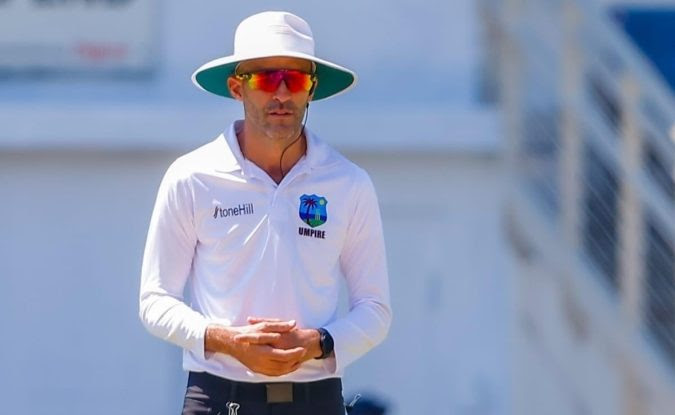
    A new milestone for West Indies cricket officiating has been announced, as Jamaican umpire Christopher Taylor will step onto the global stage with his appointment to the International Cricket Council’s (ICC) International Panel of Umpires. The appointment is set to take effect on April 1, 2026, capping off decades of dedicated service and rigorous training for the 45-year-old official.

    Taylor earned his promotion after becoming the latest Cricket West Indies (CWI) representative to successfully complete the ICC’s stringent umpire accreditation process. His path to the international panel received a major boost earlier this year, when he gained high-stakes international match experience through the ICC Umpire Exchange Programme. During that placement, he officiated matches in Pakistan’s prestigious President’s Trophy Grade 1 competition, where match officials and organizers graded his on-field performance as outstanding.

    In reflecting on his decades-long journey to the international panel, Taylor shared that he feels both humbled and honored by the achievement. His officiating career first began in 2006, when he took his initial local umpiring certification alongside Jacqueline Williams, who has since become one of the most respected international women’s cricket umpires globally. Back when he started, Taylor was still working full-time in the corporate sector, and was introduced to officiating by former first-class umpire Maurice Chung. What started as a side interest quickly grew into a passion.

    “It’s been a long and tough journey,” Taylor noted, pointing out that he has served on the West Indies regional second-tier umpiring panel since 2011. “Those tough times prepare you for what’s to come. So, I’m excited about it and looking forward to experiencing new things and putting all the work into practice.”

    Beyond celebrating his own achievement, Taylor used the moment to shine a light on a career path that is often overlooked by young cricket enthusiasts. Most people who grow up around cricket only consider careers as players, leaving officiating underpromoted as a viable professional option. “Umpiring might not be seen as a glorious position because when persons are exposed to a sport it’s usually in the capacity of a player and not an official. In any sport officiating is always tough… but that builds character,” he explained.

    Taylor emphasized that modern umpiring offers a full, sustainable career path for young people, and he is encouraging aspiring officials across the Caribbean to consider the profession far earlier than he did. “There is opportunity in umpiring. It’s now a full career that you can dedicate yourself to, and I’d love to see younger persons getting into it, not only when they get into their 30s and 40s but even thinking of it as an option when they’re 18 or 20 years old or coming out of university,” he said.

    CWI Chief Executive Officer Chris Dehring also offered his praise for Taylor’s achievement, calling the appointment a point of national and regional pride. “Chris’ appointment reflects not only his personal commitment and professionalism, but also the strength of our officiating pathway,” Dehring said. “His recent international exposure and consistent performances have prepared him well for this step, and we are confident he will represent West Indies cricket with distinction.”

    Taylor will kick off the next chapter of his officiating career during the upcoming West Indies international home season, where he will make his first on-field appearance as an ICC international panel umpire.

  • Saturday showdown in BFA Premier League

    Saturday showdown in BFA Premier League

    The tightest title race in recent memory of the Barbados Football Association Premier League is set to reach a new climax this Saturday, when a pivotal doubleheader at the Wildey Technical Centre could reshape the league standings and install a new table-topper ahead of the season’s final stretch.

    Going into the two back-to-back matches, which get underway at 7 p.m. local time, the current hierarchy has defending champions Weymouth Wales holding a narrow one-point advantage at the top of the table with 28 total points. Just one point adrift in second place sits Paradise, while last season’s league runners-up Brittons Hill has climbed to third place with 26 points. That upward shift came on the back of a convincing 2-0 clean sheet win over Bagatelle earlier this week.

    Fourth place belongs to Kickstart Rush with 24 points, while Ellerton rounds out the top five with 23 points. All standings point to a conclusion that will go down to the wire: league officials do not expect a champion to be confirmed before the final matchday of the campaign, leaving multiple teams still in contention for the top prize.

    The first match of Saturday’s night of action pits second-place Paradise against sixth-ranked Bagatelle, a fixture that could see Paradise immediately overtake Weymouth Wales to retake the top spot if they secure all three points. Coached by Mario Harte, the Dover-based Paradise side has turned in one of its most consistent campaigns in years this season, putting them as the clear favorite heading into the matchup against Bagatelle. The current sixth-place side, which finished as runners-up in Division One last season after earning promotion, enters the clash with 14 points to its name.

    The nightcap, kicking off at 9 p.m., will bring one of the most high-stakes matches of the entire season: table-leading Weymouth Wales will go head-to-head with third-ranked Brittons Hill in a clash that carries massive implications for the title race. For Weymouth Wales, a win guarantees they will hold onto their position atop the standings as the league enters its final few rounds. If Brittons Hill claims victory and Paradise drops points against Bagatelle, the side will jump straight into first place. Even if Paradise wins their opening fixture, a Brittons Hill victory over the current leaders would still lift them into second place, keeping their title hopes very much alive.

  • Coaches laud move by CWI to establish High-Performance Campus

    Coaches laud move by CWI to establish High-Performance Campus

    West Indies cricket is set to receive a transformative boost to its grassroots and elite development pipelines, after top regional coaches threw their unanimous backing behind Cricket West Indies’ (CWI) landmark plan to build a state-of-the-art High-Performance Campus at Antigua’s Coolidge Cricket Ground. The green light for the multi-million dollar project was recently given by the government of Antigua and Barbuda, clearing the way for phased construction and redevelopment that will run from 2026 through 2030 across the 20-acre site.

    When complete, the campus will function as a fully integrated hub that unites elite player development, cutting-edge sports science research, specialized athletic education, and commercial operations all in one centralized location — a resource that regional cricket leaders have identified as a long-missing pillar for competitive success at the international level.

    The plan has won widespread acclaim from senior coaches currently leading teams in the ongoing West Indies Championship, who argue the facility is non-negotiable for securing a strong future for the region’s cricket. Robert Haynes, former West Indies national selector and current head coach of the Jamaica Scorpions, emphasized that the project has been a decades-long priority for cricket development leaders. “I think it’s a magnificent idea. When I was a selector, it was always spoken about in terms of having something dedicated for the youngsters. I think it’s a magnificent effort by the Antiguan government and Cricket West Indies to get this going because we desperately need it,” Haynes explained. “With the limited number of first-class games our young players get, you need a consistent development system you can depend on. In international cricket today, every top competing nation already has a High-Performance Centre.”

    Keon Peters, head coach of the Windward Volcanoes, echoed Haynes’ assessment, noting that the Caribbean’s longstanding challenge in international cricket has never been a lack of natural talent — rather, it has been the absence of structured infrastructure to help that talent reach its full potential. “With the amount of talent that we have, for us to compete against the other elite international teams we must have this in place. We know resources have been difficult for us historically, and I think it’s a fantastic initiative by Cricket West Indies. It’s never too late to start,” Peters said.

    Rayad Emrit, head coach of the Trinidad and Tobago Red Force, expanded on that point, highlighting a critical gap in the region’s current development pathway that the new campus will address. “I honestly think there’s a lot of incredible talent coming through from the Under-19 level across the Caribbean, but after Under-19, a lot of them fade away, and we don’t get those core senior players coming through the system consistently,” Emrit said. “We have no shortage of players with natural talent, and one of the main reasons we haven’t produced the volume of elite players we expect is the lack of high-quality facilities.”

    Steve Liburd, head coach of the Leeward Islands Hurricanes, added that immersive access to a specialized high-performance environment will be transformative for emerging players. “All around the world, top cricketing nations operate these High Performance Centres, and they deliver long-term benefits for developing young players over time,” Liburd noted. “Having such a centre will be beneficial for West Indies cricket as a whole. Players will get exposure to modern training technology, access to dedicated spaces for professional development like media training, and a permanent home to hone their skills.”

    Ryan Hercules, head coach of the Guyana Harpy Eagles, described the initiative as a long-overdue step that will mark a turning point for West Indies cricket. “This is something that’s been overdue for a long time, but whenever it arrives, it’s a welcome change,” Hercules said. “Once this gets off the ground, we will almost certainly start seeing a positive shift in the trajectory of West Indies cricket.”

    Even with widespread praise for the campus project, some coaches called for broader investment across the region to build a truly robust development ecosystem. Vasbert Drakes, former West Indies fast bowler and current head coach of Barbados Pride, argued that while the Antigua campus is a major step forward, the ultimate goal should be to upgrade infrastructure and development systems across all Caribbean territories. “I think it would be great if all the franchises in the Caribbean would be in a position where they can have their own high-performance systems, because we have tremendous talent and we want a better, more connected pathway system for them,” Drakes said. “It is good to see that the West Indies is moving in that direction, but I would also encourage all of the territorial boards to find a way, through government support and local sponsorship, to make expanded development infrastructure work across the region.”

  • Blood donation urged amid trauma cases

    Blood donation urged amid trauma cases

    Facing growing strain on the national blood reserve triggered by a recent surge in severe trauma cases, the Queen Elizabeth Hospital (QEH) has issued an urgent public appeal for voluntary blood donations to shore up its critical supply.

    Even as hospital administrators implement careful, strategic stock management to avoid shortages, senior health officials emphasize that ongoing, consistent voluntary donations remain the only reliable foundation for guaranteeing life-saving blood products are accessible for patients needing emergency interventions, complex surgical procedures, and long-term routine medical care.

    Dr. TMH Corey Forde, QEH’s Director of Clinical and Diagnostic Services, highlighted that community blood donation represents one of the most immediate and impactful ways ordinary members of the public can contribute to advancing local patient care. “Every single day, people across our country rely on safe, prompt access to blood — whether they are recovering from a sudden accident, managing a chronic medical condition, or undergoing unforeseen emergency procedures,” Forde explained in a statement. “A single 10-minute donation has the power to save up to three separate lives, delivering critical hope and critical healing to patients and their families when they need it most.”

    Forde’s appeal extends to both returning donors who have given blood previously, and first-time donors who have never participated in the program. He confirmed that the hospital has recorded a notable recent decline in voluntary donation volumes, making the current call especially urgent.

    “We are asking people who have donated in the past to step forward again to help us replenish our stocks, and we also want to invite anyone who has been considering their first donation to reach out to our team to learn more about donor eligibility,” Forde added. “Giving blood ultimately saves a life — that life may belong to someone you have never met, but there is always the chance that one day, it could be you or a loved one who needs this same generosity.”

    Members of the public who wish to donate are advised to schedule an appointment in advance before visiting QEH’s Blood Collection Centre, located at Lady Meade Gardens in St Michael, adjacent to the Winston Scott Polyclinic. Appointments can be booked directly by calling the hospital’s dedicated line at 536-3792.

    In closing, the QEH extended sincere gratitude to all regular voluntary donors whose consistent support has helped maintain the nation’s blood supply and protect patient care access for vulnerable communities across the country.

  • PM: Govt moving ahead with police restructuring in crime response

    PM: Govt moving ahead with police restructuring in crime response

    Against a backdrop of growing public unease over surging violent crime, the government of Barbados has commenced a comprehensive restructuring of the Barbados Police Service, Prime Minister Mia Mottley has confirmed. While announcing urgent institutional changes, the prime minister has emphasized that law enforcement reform alone cannot reverse the island’s worsening crime trends.

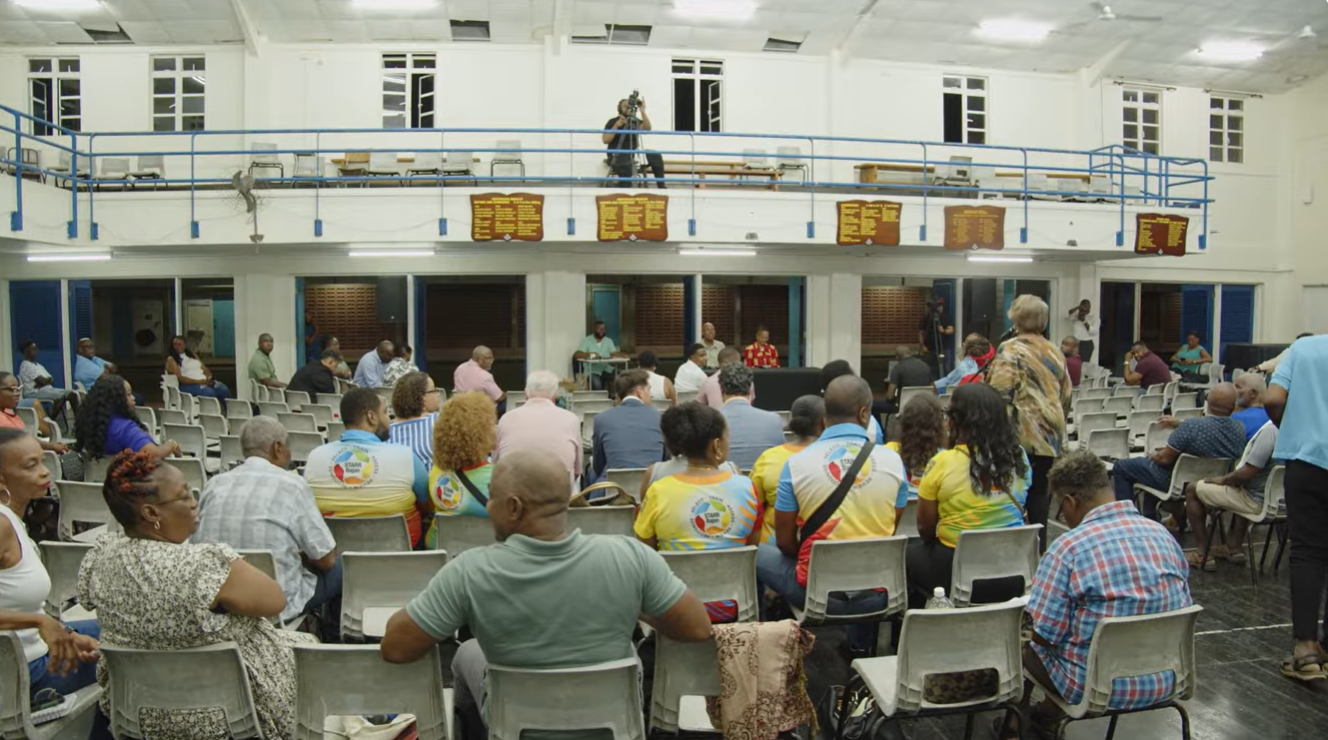
    Mottley’s public address on the issue came during Wednesday’s Ideas Forum, where a resident with professional law enforcement experience drew attention to deep-seated flaws in the existing police structure. The speaker argued that the current force is ill-prepared to tackle Barbados’ rapidly shifting security landscape and the increasingly bold criminal activity taking hold across the island. He warned that patterns of crime that have plagued other Caribbean nations are now emerging locally, and called for a long-term, fundamental reinvention of the national police service.

    “The Barbados Police Service as it is currently structured is not equipped to manage the state of crime on this island,” the resident stated, noting that meaningful reform would require adopting new investigative techniques, increasing institutional support, and raising officer compensation to successfully attract and keep skilled personnel.

    In her response, Mottley confirmed that the modernization process is already well underway, stressing that the institution must be updated to meet 21st-century security demands. “We are very much in the process of the restructuring of The Barbados Police Service,” she said, adding that every core system and operational practice must be aligned with modern realities. The prime minister outlined that government has spent months working to address longstanding challenges around staffing, officer retention, and internal institutional capacity.

    She pointed to earlier policy moves to regrade the pay scales of detectives and Special Branch officers as a key step to fix long-standing pay disparities, a change designed to stop the outflow of experienced law enforcement personnel. A broader public sector pay reclassification exercise is also in the works, with policing marked as one of several critical sectors prioritized for adjustment.

    Beyond compensation, the reforms target deep structural gaps within the organization, including the absence of key senior administrative roles. Mottley questioned how a force of more than 1,300 sworn officers, plus additional non-police support staff, could operate effectively without a dedicated human resources director. She similarly noted that an agency with an annual budget of roughly $200 million cannot function properly without a qualified director of financial services leading budget management.

    The prime minister also outlined plans to redraw decades-old policing district boundaries that no longer reflect current population distribution across Barbados, alongside plans to expand and upgrade police infrastructure. Several communities are set to receive new or renovated police stations, and widespread technology upgrades are being rolled out to improve coordination between police and other emergency response services.

    Even as she laid out the ambitious reform agenda, Mottley stressed that institutional change on its own will not solve the island’s crime crisis. “The major lifting that has to be done if we are to be successful in this country is us,” she said, urging all Barbadians to take greater responsibility for security within their own households and local communities.

    She explained that widespread access to illegal firearms, combined with a culture of silence where community members choose not to report suspicious activity, are key contributing factors to the current security environment, and called for far greater public cooperation with law enforcement. “What cannot happen is people seeing things and doing nothing, saying nothing and then being surprised at the outcome,” she noted. While Mottley acknowledged that fear of retaliation stops many residents from coming forward with information, she emphasized that anonymous and protected reporting channels are already available to support those who wish to share details about criminal activity.

    Mottley also placed Barbados’ current challenges in a broader regional context, noting that multiple Caribbean nations have faced similar surges in violent crime in recent months, framing the issue as a shared systemic challenge across the region.

    Despite rising public anxiety, the prime minister maintained that the situation remains controllable, as long as the country pursues sustained, coordinated action. “This is not yet bad enough that we can’t pull it back,” she said. She added that long-term success will depend on a combination of robust law enforcement, adaptive policy making, adequate resourcing, and active participation from ordinary citizens.

    Mottley reaffirmed that her administration is continuing to invest heavily in strengthening the police service, from expanded recruitment and better retention support to improved training and operational upgrades. Still, she warned that meaningful cultural and institutional change cannot happen overnight. “A cruise ship can’t just turn like a speedboat… it takes space and time,” she explained, adding that rebuilding public confidence and restoring widespread security will require both systemic police reform and a fundamental shift in public behavior. “If we are to be successful in pulling it back, it is not dependent on the police alone… it is dependent on the people in this country,” she reiterated.