标签: Bahamas

巴哈马

  • Family island leaders decry lack of power and delayed pay

    Family island leaders decry lack of power and delayed pay

    When The Bahamas’ Progressive Liberal Party (PLP) took office under the Davis administration, it laid out an ambitious “Blueprint for Change” centered on revamping local governance and unlocking long-delayed development across the country’s smaller Family Islands. Three years into the current term, senior local government leaders say the initiative has delivered uneven results at best, with many core pledges still unmet despite legislative progress and scattered infrastructure wins.

    A cornerstone of the administration’s reform agenda was the 2024 Local Government Bill, designed to devolve greater power over community projects, planning, and revenue generation from the national capital in Nassau to locally elected island councils. Government officials argue the legislation successfully expanded councils’ financial autonomy and created new avenues for public participation, marking a meaningful step toward the PLP’s campaign goals. But top local councillors across multiple islands told The Tribune that central control remains entrenched, leaving elected local leaders with too little authority to address pressing community needs.

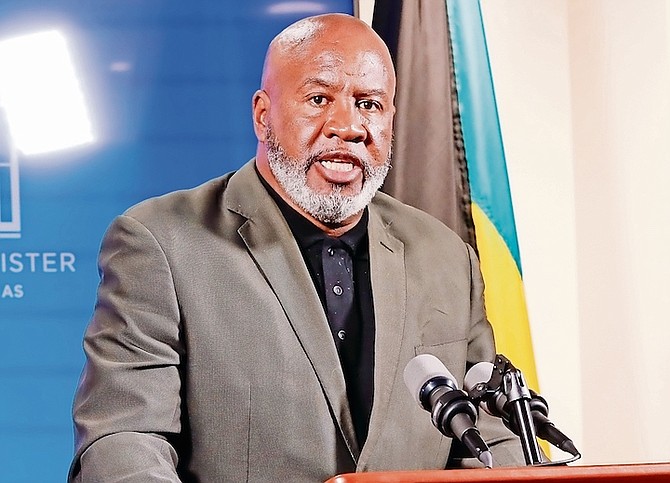
    Marvin Campbell, chief councillor for Acklins, pointed to outdated approval rules that require all municipal contracts worth $5,000 or more to be signed off by national officials in Nassau. “We know the contractors on this island. We know what projects our community needs,” Campbell argued. “If the people elected us to serve, we should be competent enough to manage a $5,000 contract. If we can’t do that, there’s no reason for us to hold these positions.”

    Clay Sweeting, the national Minister of Local Government, defended the central approval requirement, noting that both national and local bodies are bound by the Public Procurement Act to uphold mandatory standards of accountability and transparency for public spending.

    Concerns over limited local autonomy are not isolated to Acklins. In Central Abaco, councillor Roscoe Thompson said local leaders are often expected to respond to urgent community emergencies—including wildfires—yet lack the independent authority to take immediate action. “When there’s a fire, we have to call the Disaster Risk Management authority or our members of parliament just to get help clearing fire breaks,” Thompson explained. “As for the empowerment this new act was supposed to bring local government? To us, it’s just hogwash.”

    Beyond decision-making authority, the PLP also failed to deliver on a key fiscal promise: a planned 10% annual increase in local government budgets phased in over five years. To date, only one incremental increase has been implemented since the administration took office—a fact that has left many local councils struggling to cover basic operational costs.

    In Mayaguana, Deputy Chief Councillor Cleveland Brown says local elected officials and community workers are still waiting for back pay owed since January, with payments consistently delayed. “They haven’t been here since December, and when they do come to pay, they only cover one month. They owe a lot of people a lot of money,” Brown said, describing the ongoing fiscal situation as “terrible.” Minister Sweeting attributed the delays to a recent break-in at a Mayaguana government facility that required security upgrades, including the installation of a new safe. He also noted that the single budget increase already implemented marks the first raise for local government budgets in more than 20 years.

    Broader structural reforms also remain unfinished. The administration’s plan to establish a formal local government system for New Providence, the country’s most populous island, has yet to be realized. Infrastructure investment across the Family Islands has also progressed unevenly: while key clinic upgrades in Abaco and drainage improvement projects in Acklins broke ground, many projects have stalled mid-construction, and critical needs from road repair to healthcare access remain unaddressed across multiple districts.

    Campbell confirmed that work on two critical clinics in Acklins’ Salina Point and Spring Point started but has been idle for months. “I can’t say for sure why it stopped—whether it’s a funding shortfall, a dispute with the contractor, or something else entirely,” he said. “All I know for sure is that money was spent, and work was underway before it stopped.”

    The administration also pledged to improve air and ferry connectivity to the Family Islands to boost tourism and local business. While increased airline capacity has been rolled out for popular destinations including Eleuthera, Exuma, and Abaco, smaller less tourist-heavy islands have seen no improvement. Inagua still only receives twice-weekly service from national carrier Bahamasair, a limitation Campbell says has devastated local businesses. “A lot of businesses are losing money. Lodges are losing money. Ordinary people are losing money all because of this terrible airlift service,” he added.

    Brown went further in his criticism of the administration, accusing it of outright neglecting Mayaguana and calling for the island to be designated an official port of entry to unlock new tourism opportunities and job growth for local residents.

    For its part, the Davis administration maintains that its Family Island development program represents the largest investment in local island infrastructure in decades, with hundreds of millions of dollars already allocated and spent. The government’s own public “Blueprint for Change” progress tracker lists most local government commitments as fulfilled, with only the full series of budget increases and the New Providence local government system still marked as outstanding. Healthcare, transport, and public service upgrades across the Family Islands are noted as ongoing works in progress.

  • Davis: Lottery would benefit private operators rather than public

    Davis: Lottery would benefit private operators rather than public

    Thousands of energized Progressive Liberal Party (PLP) supporters packed the Bahamas Beach Soccer Stadium on Wednesday evening for a raucous pre-general election rally, where Prime Minister Philip “Brave” Davis launched a scathing attack on the opposition Free National Movement (FNM), questioning its policy agenda and leadership credibility amid mounting domestic and global uncertainty.

    Opening his address to the crowd, which filled the venue’s bleachers with supporters clad in the party’s signature blue and yellow “Choose Progress” apparel, Davis framed the upcoming election as a critical juncture for the island nation. He emphasized that The Bahamas is navigating a complex web of interconnected challenges, from the ongoing conflict in the Middle East and accelerating climate change risks to volatile shifts in the global economy, all of which demand steady, experienced governance that only the incumbent PLP can deliver.

    Davis reserved his sharpest criticism for the FNM’s flagship proposal to introduce a national lottery, arguing the plan is structured to prioritize private profit over public good. “They want the government to underwrite their numbers game, but all the profits go to their connected private operators,” Davis told the cheering crowd. He went on to accuse the opposition of plotting to roll back landmark social programs introduced by his administration, including the widely popular National School Breakfast Programme and the National Youth Guard, while suppressing wage growth for working Bahamians.

    Turning his attention to Opposition Leader Michael Pintard, Davis mocked Pintard’s grip on his own party, claiming the FNM leader is pushed in whichever direction political winds blow. “Poor Pintard. I actually feel a little sorry for him,” Davis said. “He doesn’t lead his party. His party leads him, and that wind is kicking up some very big waves.” Multiple other PLP candidates and sitting Members of Parliament echoed this criticism throughout the event, questioning Pintard’s ability to unify his fractured party and lead the country, dismissing him as inexperienced, petty, and prone to what speakers called deceptive “politricks.”

    The rally drew a massive show of support from across the country’s constituencies: colorful motorcades stretched for blocks along the roads leading to the stadium, with supporters riding on open trucks, waving PLP flags, and chanting for their local candidates. Motorcyclists weaved through nearby traffic, party emblems flying behind them. Along with speeches from a slate of PLP candidates including Mount Moriah hopeful McKell Bonaby, Freetown candidate Wayne Munroe, and Fort Charlotte newcomer Sebastian Bastian, the event featured lively musical performances to rile up the crowd. Bishop Lawrence Rolle delivered a moving rendition of “It Is Well,” while Geno D performed an upbeat rake n’ scrape track encouraging voter turnout. Former Prime Minister Perry Christie, a towering figure in PLP history, received a roaring welcome when his iconic campaign anthem “Sound of a Victory” played over the stadium speakers.

    Davis also took a moment to target FNM’s St James candidate Rick Fox, a former PLP ambassador who switched party affiliation to run for the opposition. Jabbing at Fox’s conduct on nomination day, Davis joked: “People were asking me what kind of Junkanoo dancing that was, if he had some kind of issue. I didn’t know what to say. But don’t be too hard on him. He’s still got a lot to learn. He’s just a First Time Voter.” Davis added that Fox and other FNM candidates frequently launch aggressive personal attacks against him and the PLP, but cry foul when their own weaknesses are pointed out, falsely claiming bullying.

    Deputy Prime Minister Chester Cooper closed the formal policy remarks by urging voters to return the PLP to office to allow the current administration to continue delivering on its development agenda. In his closing remarks, Davis framed the upcoming election as a clear binary choice for Bahamian voters: either continue on a path of consistent progress under the PLP, or reverse course and return to the old pattern of halting critical infrastructure and social projects every time a new administration takes office. “This election isn’t just about changing personalities. It’s about choosing whether we move forward together, or fall backward into the same old cycles that have held our country back,” Davis said.

  • Henfield slams civil servants for wearing PLP campaign gear

    Henfield slams civil servants for wearing PLP campaign gear

    A political firestorm has erupted in The Bahamas after a former cabinet minister exposed apparent violations of longstanding political neutrality rules by senior public servants, throwing the integrity of the upcoming electoral process into question. Darren Henfield, who previously led the Ministry of Foreign Affairs, is raising urgent concerns after photos circulated last week showing two of the country’s top public officials wearing branded gear from the ruling Progressive Liberal Party (PLP).

    At the center of the controversy is Melvin Seymour, the permanent secretary at the Ministry of Foreign Affairs—the most senior non-partisan civil servant in the department. Consul General to Toronto Clayton Fernander, a former police commissioner, also appeared in photos in a PLP-branded shirt. When contacted by reporters this week, Seymour declined to address questions about his public display of partisan affiliation. Current Foreign Affairs Minister Fred Mitchell also declined to comment on the record about the allegations.

    Henfield’s concern extends far beyond the public display of party apparel, rooted in the critical role foreign service officers play in managing the country’s overseas voting process. Ahead of upcoming elections, the government has stationed foreign affairs staff in overseas missions to oversee ballot security and ensure all balloting procedures are carried out fairly. If the most senior leader of the department is openly aligned with the ruling party, Henfield argues, that creates an unacceptable appearance of bias that erodes public confidence in the integrity of overseas voting.

    “That’s a very grave concern for me,” Henfield told reporters. “I read some memorandum recently that said that officials will be put in place in overseas offices to ensure that the voting is done properly, but with the permanent secretary wearing PLP paraphernalia, we don’t know what that means.”

    The former minister added that the main opposition Free National Movement cannot trust the electoral process if public officials tasked with its oversight are openly displaying partisan loyalty. He went further to allege that members of the Royal Bahamas Defence Force have also been spotted campaigning alongside National Security Minister Wayne Munroe while wearing his campaign merchandise, though he had not shared supporting evidence by the time of this report.

    Under Bahamian regulations, all senior public servants are bound by strict rules that limit partisan political activity to protect the neutrality of the civil service. General Order 94 categorizes senior foreign affairs and other public officers as members of the “Politically Restricted Group”, which bars them from canvassing voters or distributing political materials on behalf of any party or candidate. While the rules do allow public servants to hold private membership in a political party, they require all public officers to maintain a strict code of reserve when it comes to public political expression, noting that open partisan displays can undermine the public expectation of impartial service.

    Henfield, who recalled his own experience discreetly engaging in political activity earlier in his public service career, said the open violation of these norms by senior leaders signals a worrying shift for the country. “I used to tie my hair down in one scarf, and go incognito and participate in the rallies,” he said. “It is forbidden. But to see a PS, a permanent secretary in the government, wearing political paraphernalia openly, is disturbing. What have we come to in this country? Permanent secretaries in the government wearing PLP paraphernalia? That’s unacceptable.”

  • Pintard tells PM to ‘take a look’ at Cooper’s $13m wealth jump

    Pintard tells PM to ‘take a look’ at Cooper’s $13m wealth jump

    A recently published round of mandatory financial disclosure filings for Bahamian politicians has sparked heated political friction, with Opposition Leader Michael Pintard calling out a striking surge in Deputy Prime Minister Chester Cooper’s declared net worth and pressing the prime minister to review the assets of senior ruling party officials.

    According to the newly released documents, Cooper’s reported personal net worth now sits at $28 million — a nearly 90 percent jump from his 2021 declaration of $14.8 million, and a more than threefold increase from the $7.9 million he reported in 2017. Pintard highlighted this dramatic growth in comments to reporters on Wednesday, arguing that the size of the increase, when paired with what he calls inconsistent disclosure practices among the ruling Progressive Liberal Party (PLP), demands internal scrutiny from the country’s top executive.

    “One cabinet minister saw his net worth double in a single term? That’s an extraordinary gain,” Pintard told reporters. “I truly believe that if a government chooses to, it can investigate these disclosure filings. I would recommend the prime minister take a closer look at a few of his colleagues. If someone can double their wealth in one term, they should have been the minister of finance!”

    Pintard also drew a direct contrast between the opposition Free National Movement (FNM) and the ruling PLP, claiming FNM members have always fulfilled their annual disclosure requirements on time, submitting complete details of the prior year’s assets and liabilities without delay. He accused the PLP of operating under a persistent “pattern of darkness” when it comes to financial transparency for its elected officials.

    Notably, Pintard’s critique included a false claim that no PLP parliamentarian had ever submitted their required disclosures. Local newspaper The Tribune, which first reported on the disclosure filings, has previously confirmed that multiple members of Prime Minister Philip Davis’ administration have submitted the required financial documents in past years.

  • Candidates defend net worth increase

    Candidates defend net worth increase

    Multiple political candidates from the Bahamas’ ruling Progressive Liberal Party (PLP) have pushed back against growing scrutiny over sharp jumps in their declared net worth this week, offering a range of explanations tied to personal finance, business gains, and life events even as several others declined to address questions about their wealth increases.

    The debate over candidate financial disclosures emerged after new filings revealed substantial growth in the net assets of dozens of PLP candidates since the last disclosure round in 2021, with some seeing their total net worth multiply by as much as three or five times over the three-year period.

    Leslia Miller-Brice, the PLP’s candidate for the Seabreeze constituency, told reporters her current $8.7 million net worth – up from $3.1 million in 2021 – reflects jointly held assets with her husband, accumulated through the couple’s shared private business ventures. Her disclosure filings show the vast majority of her assets are tied up in residential and commercial real estate and market securities, with no reported outstanding liabilities, $81,000 in savings, and $187,000 held in a checking account.

    Keith Bell, the party’s candidate for Carmichael, saw his net worth jump from just over $1 million in 2021 to $3.9 million in the latest filing. Bell attributed the sharp gain to proceeds from a life insurance policy held by his late wife, who passed away recently, as well as natural appreciation in the value of long-held family real estate holdings. He noted that his experience underscores the critical role of long-term financial planning and life insurance in protecting family financial stability during unplanned life events.

    For Kirk Cornish, the PLP’s North Abaco candidate, net worth grew from just under $145,000 in 2021 to more than $819,000 this year. Cornish forcefully rejected any insinuations that his wealth increase was obtained through improper or unethical means tied to his public office, explaining that the 2021 disclosure reflected an artificially low net worth after he was forced to draw down his savings when placed on unpaid leave by the Water and Sewerage Corporation board that year.

    Since his election to Parliament, Cornish said, he retired from the Water and Sewerage Corporation and received his full retirement payout, which he saved in full. He added that he has continued to save a portion of his parliamentary salary and has built up additional value through personal real estate investments. “I worked for that,” Cornish said. “I didn’t steal it. It didn’t come about suddenly. I earned that.”

    Other candidates saw equally large jumps that have not been explained publicly. Clay Sweeting, candidate for Central and South Eleuthera, saw his net worth rise from $1.5 million in 2021 to $4.5 million, but declined to comment on the gain when reached by reporters. Two other PLP candidates, Leon Lundy of Central and South Andros and Leonardo Lightbourne of North Andros, also reported double-digit percentage increases in their net worth but had not responded to requests for comment as of press time.

    Deputy Prime Minister Chester Cooper recorded the largest overall increase among PLP candidates, with his net worth doubling from $14.8 million in 2021 to $28 million in the latest filing. Cooper also declined to comment on the growth of his assets. Dozens of other sitting PLP officials and candidates, including Myles Laroda, Pia Glover-Rolle, Glenys Hanna-Martin, McKell Bonaby, Wayne Munroe, and Jobeth Coleby-Davis, also reported higher net worth in their latest disclosures.

    The sudden, unexplained jumps in candidate wealth have prompted renewed calls for stronger regulation and oversight of public official financial disclosures from governance advocacy groups. Matt Aubry, executive director of the Organisation for Responsible Governance, said the current disclosure framework fails to deliver the transparency that Bahamian voters deserve, and candidates running for public office must be held accountable for their financial interests to prevent conflicts of interest and misuse of public contracts and funds.

    Aubry explained that advocacy groups have long pushed for revisions to the existing public disclosure law to expand public oversight, mandate regular, detailed reporting, and add clear context to asset declarations. The current law, he argued, relies on an overly opaque process for collecting information, with minimal public access to full details, no requirement to reconcile changes in net worth over time, and no meaningful penalties for non-compliance or inaccurate reporting.

    Without clear, verifiable information about candidates’ financial interests, Aubry warned, the public risks losing trust in elected institutions and civic engagement in the democratic process will erode over time.

  • Island grid pulls out of $130m power grid contract

    Island grid pulls out of $130m power grid contract

    The future of New Providence’s $130 million electricity transmission and distribution (T&D) overhaul has been thrown into uncertainty after the project’s lead management firm, Island Grid, formally exited its contract two years into what was originally planned as a 25-year partnership. The sudden departure has prompted Opposition Leader Michael Pintard to call on the Davis administration to deliver immediate clarity and full transparency to the Bahamian public over the project’s trajectory.

    Island Grid, an infrastructure firm founded by principal Eric Pike to pursue utility projects across small island nations, confirmed its withdrawal from the management agreement with Bahamas Grid Company (BGC) — the special purpose vehicle created to own and upgrade New Providence’s energy grid — took effect yesterday. Alongside the firm’s exit, Pike and fellow Island Grid executive Mei Shibata stepped down from their BGC board positions. Anthony Ferguson, chief executive of Bahamas-based investment firm CFAL, has been named BGC’s new chairman, replacing Pike.

    BGC is structured as a public-private partnership, with Bahamas Power & Light (BPL) holding a 40% minority stake and a consortium of private investors controlling the remaining 60% stake. The firm announced the appointment of two new Bahamian senior leaders alongside the leadership transition: Dareo McKenzie, a 30-year energy sector veteran with stints at GE Vernova and Consolidated Edison of New York, as chief executive, and Gladys Fernander, a former Commonwealth Bank CFO and certified public accountant with 20-plus years of regulated finance experience, as chief financial officer.

    In a statement responding to media inquiries, the Bahamian government sought to reassure the public that Island Grid’s exit would not disrupt ongoing infrastructure work. “The management agreement has come to an end. The investment is ongoing and continues to progress as planned,” said Latrae Rahming, communications director for Prime Minister Philip Davis. “The company is now Bahamian-led, and we have full faith and confidence in its leadership, capacity and ability to deliver on its commitments.”

    Ferguson echoed that sentiment in BGC’s official release, framing the transition as a milestone shift to a fully independent, all-Bahamian-led operating model. “Together, Dareo and Gladys bring the operational and financial leadership required to grow a resilient, high-performing utility,” Ferguson said. “Just as importantly, this transition reflects the strength and capability of Bahamian leadership at every level of the organisation. On behalf of the Board, I want to thank Eric, Mei and the entire Island Grid Solutions team for their leadership and expertise in building Bahamas Grid Company into a fully operational utility and strengthening New Providence’s transmission and distribution system. We now move forward as a fully Bahamian-led organisation, focused on delivering long-term performance for our country.”

    Pike also released a brief statement praising the project’s progress to date. “We are honoured to have had the opportunity to set up Bahamas Grid Company and conduct the biggest grid upgrade project for New Providence over the past two years,” he said. “I would like to recognise the dedicated employees of Island Grid, Pike and Bahamas Grid Company, whose hard work and commitment were instrumental to this achievement, and extend our best wishes for Bahamas Grid Company’ continued success.”

    However, the sudden exit of Island Grid, which was contracted to manage the project for an initial 25-year term with an option to extend for an additional 10 years, has left dozens of unanswered questions that remained unaddressed as of press time. Multiple industry observers and political leaders have raised pointed concerns over the implications of the exit for the project, for energy consumers, and for the government’s broader clean energy goals.

    Tribune Business had reported unconfirmed rumors of growing tensions and potential withdrawal for several weeks prior to yesterday’s announcement. Officials emphasized that Island Grid’s exit is unconnected to last month’s fatal shooting of a Pike Electrical employee, for which a senior Bahamian police superintendent has been charged. Roughly 40 Pike workers left the Bahamas immediately after the shooting to attend the deceased worker’s funeral and support his family, but roughly the same number are expected to return to complete existing contract obligations, meaning Pike Electrical’s on-the-ground work may continue despite Island Grid’s exit. There has been unconfirmed speculation that TPG and La Caisse, the private equity consortium that acquired a majority stake in Pike Electrical in November 2025, may step into Island Grid’s role, but no confirmation of that arrangement has been made public.

    For decades, Pike Electrical — a family-founded firm established in 1945 — has supplied the labor, equipment, technical expertise, and training for the $130m upgrade that has been underway for two years. Original project documents confirm that BGC was structured to rely heavily on Island Grid’s technical and operational capacity: the 2024 Heads of Agreement between the government, BGC, and Island Grid granted Island Grid exclusive rights to develop and manage the entire project, and tasked the firm with assembling a team of global and local experts to oversee all implementation. Financial documents for the project’s $30m equity raise and $111m debt financing show Island Grid was contracted to earn $4.359m in annual management fees for the first five years of the project, with fees sliding gradually as T&D revenues grew.

    One anonymous financial industry insider questioned the logic of Island Grid’s early exit, noting that the entire project was built around a decades-long investment horizon. “To get a return on investment, you aren’t taking over the entire grid for a short period of time. Your investment horizon is decades. They cannot claim this is all done and planned. This wasn’t for the short-term,” the source said. The insider added that BGC will be unlikely to replicate the preferential pricing and supply chain access Island Grid secured through its ties to the Pike network, particularly for large grid equipment that requires months-long lead times. “They [BGC] cannot replicate the Pike partnership. They do not have the reach and expertise, and level of people to pull from,” the source said. The insider also argued that Island Grid’s exit undermines BGC’s core purpose as a special purpose vehicle, noting that the entity already adds an extra layer of costs for taxpayers and energy consumers that could be eliminated by folding BGC’s functions back into BPL.

    The exit also raises concerns for BGC’s investors, who were sold $111m in bonds based on offering materials that promised long-term Island Grid involvement. Bondholders are owed regular interest payments and the eventual return of their principal, and the unplanned transition has created new uncertainty over their returns.

    Opposition Leader Pintard emphasized that the government’s entire energy strategy, including plans to bring 172 megawatts of new utility-scale solar power online via independent power producers (IPPs), hinges on the successful completion of the T&D grid overhaul. Without a fully upgraded grid, IPPs cannot safely connect and deliver their power to New Providence’s 100,000-plus BPL customers, which include both households and businesses.

    “Much of what the Government has forecast depends on the grid,” Pintard told Tribune Business. “If we are talking about solar deals being signed on New Providence, has the grid upgrade work been completed to the extent it can receive power from IPPs? If the T&D system has not been dealt with, how does that impact all the IPPs relying on a stable grid that has the capacity to receive power from them? Everything hinges on this. It’s a fundamental issue.”

    Pintard called on Prime Minister Davis and Energy Minister Jobeth Coleby-Davis to immediately open the process to public scrutiny, noting that Coleby-Davis claimed shortly after the shooting that the project remained on track, a statement that is contradicted by Island Grid’s exit. “Their overall strategic plan relies substantially on what happens with the transmission and distribution system,” Pintard said. “The Government has an obligation to clarify for the public whether or not the grid agreement they put in place, which was supposed to fix deteriorating T&D infrastructure, whether or not they have completed that. If they have not completed that, at what stage are they at in this process, and under what circumstances have Pike and the others transitioned from previous positions they held, and where does that leave Bahamas Grid and the grid contract the Government entered into with them?”

    Pintard added that he had spoken with a senior BPL union leader who confirmed widespread uncertainty among the utility’s 123 T&D staff, the vast majority of whom already opposed plans to transfer or second them to BGC.

    Island Grid’s exit also comes as BGC had previously stated it planned to complete the initial $130m upgrade by late April 2026, reporting that outage frequency had dropped 45% and outage duration had fallen 35% in 2025 compared to 2024. It remains unclear whether the new leadership will be able to hit that completion target.

    The original Heads of Agreement also includes provisions that require parties to negotiate a buyout if the management agreement is terminated early, including granting the Bahamian government a right of first refusal to acquire 100% of BGC’s shares if a termination occurs. As of press time, no requests for comment from Pike, Ferguson, or Coleby-Davis had been returned.

  • New E-class sloop ‘Catherine’ christened for all-girl crew

    New E-class sloop ‘Catherine’ christened for all-girl crew

    In a traditional maritime ceremony steeped in centuries of sailing history, British High Commissioner to The Bahamas Smita Rossetti has officially launched a new E-class sailing sloop, Catherine, at Nassau Yacht Club over the weekend. Following longstanding custom, Rossetti broke a bottle of champagne across the vessel’s bow to mark its entry into service, capping off a public christening event that also brought the top diplomat together with emerging young Bahamian sailors and their coaching staff.

    Catherine is the first of two purpose-built sloops created through a collaborative initiative between the British High Commission and the Bahamas National Sailing School, designed exclusively to expand access to sailing for the country’s youth. The second vessel, named Independence, will join Catherine in serving young Bahamian competitors for years to come.

    The launch of Catherine comes just one day ahead of the start of the much-anticipated annual Exuma regatta, where the new sloop will make its competitive debut under an entirely female crew. The event organizers note the project doubles down on efforts to celebrate and sustain The Bahamas’ deep-rooted maritime and sailing heritage, which relies on passing skills and passion to the next generation of seafarers.

    The sloop draws its name from Catherine, Princess of Wales, an experienced sailor who has maintained a lifelong connection to the sport. Princess Catherine grew up sailing and often integrates the activity into her public and charitable royal engagements. Most notably, she and Prince William went head-to-head in a charity race during the 2022 Bahamas Platinum Jubilee Regatta during their royal tour of the country.

    Sailing holds unique cultural status in The Bahamas, after being formally designated the country’s national sport in 2023. Speaking at Saturday’s ceremony, Rossetti emphasized the shared commitment between the UK and local partners to growing youth participation in the iconic pastime.

    “Through this partnership between the UK and the Bahamas National Sailing School, we want to encourage more young Bahamians to get onto the water and try their hand at sailing,” Rossetti said. “It’s a sport that is about teamwork, resilience and perseverance – skills that are so valuable in life whatever you go onto do.”

    She added that the project team was particularly proud to see an all-girl crew take the helm of Catherine for its first competitive outing at the Exuma Regatta.

    The British High Commission is currently open to inquiries from individuals and organizations interested in supporting the expansion of the youth sailing partnership. Interested parties can reach the initiative’s team via email at ukinthebahamas@fcdo.gov.uk.

  • PLP touts $1.4bn investment during Exuma campaign rally

    PLP touts $1.4bn investment during Exuma campaign rally

    As the Bahamas’ general election draws near, the two leading national political parties held simultaneous campaign rallies across different islands this week, reinforcing their core messaging and clashing over their competing visions for the country’s future. The Progressive Liberal Party (PLP), the current governing party, hosted a well-attended rally in Exuma, where top party officials doubled down on their pitch to voters for a renewed term, framing the PLP as the only force capable of delivering sustained, inclusive progress across the archipelago.

    PLP leader and incumbent Prime Minister Philip Davis told assembled Exuma and Ragged Island residents that the upcoming election is far more than a routine vote – it is a decision that will shape the entire trajectory of the nation for years to come. Davis emphasized that only his party has the track record and plan to push the country forward, pointing to the strong local leadership delivered by Deputy Prime Minister Chester Cooper, who serves as the Member of Parliament for Exuma and Ragged Island. “There is still much work left to do,” Davis noted, highlighting ongoing priorities to lower the cost of living for Bahamian families and ensure that economic growth and development reach every community across the islands.

    Davis spotlighted a slate of ongoing infrastructure and development projects across Exuma and Ragged Island that the PLP administration has advanced, including the construction of a new airport, a new hotel development, and the successful completion of a hurricane-resistant solar microgrid on Ragged Island – a project designed to protect the island’s power supply from the extreme weather that threatens the Caribbean regularly. “We are not just investing in concrete and roads; we are investing in the Bahamian people,” Davis added, noting that the administration’s work has gone far beyond just recovering from the economic shock of the COVID-19 pandemic, which devastated the country’s tourism-dependent economy.

    For his part, Deputy Prime Minister Cooper laid out the governing party’s full track record and future agenda for his constituents, noting that the PLP has attracted more than $1.4 billion in new investment to Exuma, delivered value-added tax reductions to ease consumer costs, and upgraded critical public infrastructure across the district. Cooper outlined upcoming projects, including additional road repairs on Little Exuma, completion of airport upgrades at Black Point, new affordable housing developments in the Exuma Keys, and strengthened local immigration enforcement. He also laid out plans for further expansion of affordable housing, construction of a new primary school, a new centralized government administrative complex, and a multipurpose youth facility, adding that expanding access to high-quality healthcare remains the administration’s top unwavering priority.

    Turning to Ragged Island, which was nearly destroyed by Hurricane Irma in 2017, Cooper said the PLP has restored hope to a community that he claimed the Free National Movement (FNM), the main opposition party, abandoned after the storm. “After Irma, the FNM wrote you off,” he said, outlining the PLP’s ongoing investments in the island, including construction of a new medical clinic, expansion of sustainable eco-tourism, and development of heritage tourism centered on the HMBS Flamingo monument. “You are never an afterthought to this government,” Cooper told Ragged Island residents, “I work for you every single day.”

    Cooper repeatedly attacked the FNM, arguing that the opposition party has little more than empty rhetoric and no substantive policy plan to move Exuma and the country forward. Prime Minister Davis doubled down on that criticism, framing the FNM as a divisive political force that would halt, stall and roll back all the economic and social progress the PLP has delivered over its term. Davis claimed the FNM would “break up progress” the same way the party fractured its own internal unity in recent years, adding: “That is the core difference between our two parties. We build opportunities for the many, they are focused on taking from the many to benefit the few.”

    The PLP rally in Exuma featured additional campaign speeches from other prominent party figures, including Fred Mitchell, Glenys Hanna-Martin, Clay Sweeting, and Robyn Lynes, who all echoed the party’s core messaging to voters ahead of the election. The event took place at the exact same time the opposition FNM held its own campaign rally in North Abaco, where FNM candidates stuck to the party’s long-held campaign message that the FNM works for all Bahamians, not just a small, privileged elite. This election cycle has followed familiar partisan framing: the PLP campaigns as the party of steady progress and inclusive development, while the FNM has positioned itself as a populist alternative focused on delivering for working and middle-class Bahamian families.

  • Fox, Bastian and Cooper top list of multi-millionaire candidates

    Fox, Bastian and Cooper top list of multi-millionaire candidates

    Ahead of the 2026 general election in The Bahamas, newly published mandatory financial disclosures from the Tribune have pulled back the curtain on the extreme wealth of candidates vying for public office, counting more than 50 millionaires among the field of contenders. Leading the pack of ultra-wealthy hopefuls are three high-profile figures: former NBA star turned actor Rick Fox, business leader Sebas Bastian, and Deputy Prime Minister Chester Cooper.

    Notably, these disclosures carry an important caveat: Bahamian law does not require candidates’ financial declarations to be audited or certified by an independent accounting professional, so no government body verifies the accuracy of the reported figures before they are published.

    Fox, who is running as a Free National Movement (FNM) candidate, tops the overall rankings with a declared net worth of $469 million – a figure that puts him hundreds of millions of dollars ahead of every other candidate in the race.

    Trailing Fox is Sebas Bastian, a candidate from the ruling Progressive Liberal Party (PLP), who reported a personal net worth of $28.9 million. Bastian, however, confirmed that an additional $160 million in family and business assets are held in undisclosed trusts that predate his entry into politics. He argued that because he holds only discretionary beneficiary status rather than sole legal ownership of the trust assets, including those assets in his personal declaration would be both improper and inaccurate.

    Third place goes to Deputy Prime Minister Chester Cooper, who serves as Minister of Tourism, Investment and Aviation. Cooper declared $28.6 million in total assets, $324,000 in annual income, and $560,000 in outstanding liabilities, bringing his net worth to approximately $28 million. Cooper’s declared wealth has grown steadily during his time in public office: it nearly doubled between the 2017 and 2021 elections, rising from $7.9 million to $14.8 million, and has almost doubled again since 2021.

    Former Prime Minister Dr. Hubert Minnis, now running as an independent candidate in the Killarney constituency, comes next with a declared net worth of $19 million. Dr. Minnis reported $20 million in total assets, most held in securities, alongside $1 million in annual income and $1.7 million in liabilities. Like Cooper, his net worth has grown consistently over the past decade of public service, rising from $10.9 million in 2012 to $12.6 million in 2017 and $14 million in 2021.

    Incumbent Prime Minister Philip “Brave” Davis saw little change to his overall asset base, which remains around $4.3 million, primarily invested in real estate and securities. Davis filed a declaration listing $685,162 in savings, $239,665 in a current checking account, and $219,767 in total debt. While he reported a net worth of $4.1 million in the 2021 election cycle, the prime minister did not include a calculated net worth on his 2026 filing submitted to the Parliamentary Registration Department. A spokesperson later clarified that Davis intends to report a net worth of $4.5 million, though the figure did not appear in the official published gazette document.

    Among PLP incumbents, multiple candidates saw double or triple-digit growth in their declared net worth since 2021. Sea Breeze MP Leslia Miller-Brice’s net worth jumped from $3.1 million to $8.7 million, with most of her assets held in real estate and securities, and no outstanding liabilities reported. Central and South Eleuthera MP Clay Sweeting’s net worth rose from $1.5 million to $4.5 million, and Carmichael MP Keith Bell’s grew from just over $1 million to $3.9 million. Smaller but consistent growth was recorded for most other PLP incumbents, with only a handful seeing no major change to their overall wealth. A small number of sitting PLP members, including Elizabeth MP JoBeth Coleby-Davis, remain below the $1 million net worth threshold.

    On the FNM side of the race, party leader Michael Pintard declared a net worth of $3.97 million, up from $2.9 million in 2021, while senior party figure Dr. Duane Sands reported a net worth of $8.1 million, up from $6.9 million in the last election cycle. Multiple first-time FNM candidates also posted substantial net worths, including Nicholas Fox, who is running in Fox Hill and declared $5.47 million. Like the PLP, not all FNM candidates are millionaires: deputy party leader Shanendon Cartwright, for example, reported a net worth of just under $940,000, while East Grand Bahama incumbent James Kwasi Thompson declared a net worth of $538,500. At the lowest end of the wealth spectrum for FNM contenders, Fort Charlotte candidate Travis Robinson – who reported just $7,300 in net worth when he first ran as a student candidate in 2017, and $147,000 in 2021 – now has a declared net worth of $598,000.

    Independent and third-party candidates also span a huge range of wealth. Veronica McIver, the Coalition of Independents candidate challenging Dr. Minnis in Killarney, declared a net worth of $12 million, making her one of the wealthiest candidates in the entire race. At the opposite end of the spectrum, fitness professional Jillian Bartlett, running as an independent in Marco City, reported just $6,600 in total assets and an annual income of $18,000, while missionary Deidre Ann-Taylor, an independent candidate in Exuma and Ragged Island, listed just $4,030 in total assets. A small number of candidates across all parties declined to report a calculated net worth on their filings.

  • Rolle defends his eligibility after Bain questions WSC job

    Rolle defends his eligibility after Bain questions WSC job

    A public dispute over candidate eligibility has erupted on Bahamas’ Nomination Day, as Free National Movement’s Pinewood constituency hopeful Denarii Rolle pushed back against formal questions about his compliance with electoral law raised by Coalition of Independents leader Lincoln Bain. Bain’s challenge centered on Rolle’s ongoing ties to the Water and Sewerage Corporation, a quasi-public national agency. Under Bahamian electoral rules, any person holding public or quasi-public office is required to resign their position before standing for election, and Bain argued that even contracted employees must disclose their employment status publicly no later than one month prior to the nomination period. “We have to make sure we do things by the book,” Bain stated during the Nomination Day proceedings, emphasizing the need for full adherence to electoral regulations to preserve the integrity of the race. In a direct response to the allegations, Rolle firmly rejected Bain’s claims, clarifying his current employment status meets all legal requirements for candidacy. Rolle confirmed he did previously hold a position at the Water and Sewerage Corporation, but confirmed he is currently on unpaid administrative political leave, and has not drawn a salary from the agency since the start of the campaign period. He pointed to the existing industrial agreement covering Water and Sewerage Corporation employees to back up his status, noting that the contract explicitly allows for unpaid leave for employees running for public office. The agreement also lays out clear post-election terms: if Rolle fails to win the Pinewood seat, he will have 30 days after election results are finalized to decide whether he will return to his former position at the agency. “I’ve already spoken to this on the record,” Rolle told reporters. “He can check our industrial agreement that speaks to the political leave that I’m off, I’m unpaid, so I’m not getting a salary from Water and Sewerage.” The incumbent Pinewood seat, held by the ruling Progressive Liberal Party, has drawn three candidates in the upcoming election, but sitting representative and PLP candidate Myles Laroda has declined to enter the fray over Rolle’s eligibility. Laroda told reporters his sole focus remains on building out his own campaign and connecting with constituents, rather than engaging in inter-candidate disputes over eligibility rules. “Mr Bain raised the issue,” Laroda said. “I have no comment on the other side, I’m just here to worry about the Progressive Liberal Party.” The eligibility challenge comes as Bahamian political parties finalize their slates of candidates ahead of the general election, with transparency around candidate qualifications emerging as a key talking point for smaller opposition groups seeking to shake up the country’s two-party dominated political landscape.