标签: Bahamas

巴哈马

  • Customs flags six fraud cases a month as 103 recruits join

    Customs flags six fraud cases a month as 103 recruits join

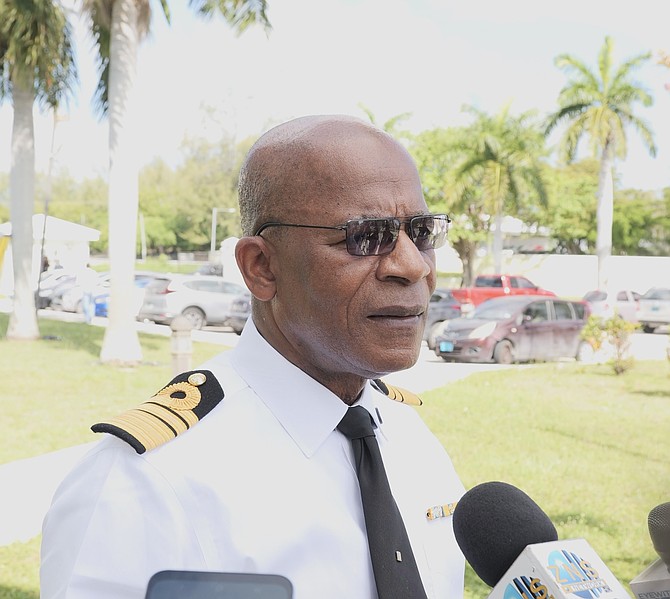
    Customs agencies in the Caribbean archipelago of the Bahamas are detecting as many as six fraudulent import cases every single month, with the vast majority involving importers deliberately misstating the value or volume of incoming goods to cut down on required duty payments, Comptroller Ralph Munroe confirmed publicly this week. The announcement coincided with a formal induction ceremony for 103 newly hired officers, a key step in the department’s multi-phase push to tighten enforcement of trade and tax regulations across the country’s sprawling network of ports.

    During an interview with local outlet the Tribune, Munroe detailed the most common forms of fraud the agency encounters on a regular basis. “The most widespread issue we see is fraudulent invoicing: an importer knows they paid $1,000 for a shipment, but they declare just $500 or $600 on their official paperwork,” Munroe explained. “When our officers cross-reference the stated prices against supplier records and current online market rates, the discrepancy is immediately obvious.”

    To identify these irregularities, the department has invested heavily in specialized training for frontline personnel, teaching officers how to spot inconsistencies by cross-checking declared invoice values against supplier documentation and prevailing industry price benchmarks. Munroe added that the agency also benefits significantly from informal intelligence sharing within the local business community, where competing companies often tip off authorities to suspicious low declarations from their rivals.

    “Competing businesses have the clearest insight into what market rates actually are, so when one competitor is bringing in goods at a declared value far below what everyone else pays, that’s a red flag that they’re very quick to report to us,” Munroe noted. “That community partnership has become one of our most effective tools for rooting out fraud.”

    Unlike many regulatory violations that require lengthy court proceedings, the vast majority of confirmed customs fraud cases are resolved through administrative channels, a process that the comptroller says cuts down on delays and reduces backlogs for the country’s court system. Under existing Bahamian law, the Comptroller of Customs is granted explicit authority to issue financial penalties or seize undervalued goods directly, eliminating the need to go through the judicial system for most cases.

    “In many instances, the comptroller’s office brings far more specialized expertise to these trade fraud cases than a generalist magistrate, which means we can resolve them faster and more accurately,” Munroe argued. “This administrative framework keeps our system efficient and keeps unnecessary pressure off of the overstretched court system.”

    The addition of 103 new frontline officers comes as the department works to address longstanding staffing challenges across its 28 operating ports spread across the Bahamas’ 100,000 square mile maritime territory. Many of these remote ports require 24/7 monitoring to combat smuggling and fraud, stretching existing personnel thin. Munroe emphasized that while the new recruits will ease workload strain for current officers, gaps in staffing still remain a persistent priority for the department.

    As the largest single contributor to the Bahamas’ national revenue, Customs collects approximately 40 percent of the country’s total government income – equal to around $1.5 billion annually – through duties, taxes, and user fees levied on goods entering the country through its ports of entry. Munroe added that the department has also adapted to shifting global trade patterns, increasing monitoring of small-parcel imports through international courier systems, and has not experienced major operational issues beyond temporary volume surges during peak shipping periods.

    Throughout his remarks, Munroe stressed that institutional integrity remains the core foundation of the department’s work, noting that sustained public trust is a non-negotiable requirement for effective enforcement of customs regulations. “We cannot do our job of protecting legitimate businesses and collecting critical revenue for the government if the public does not trust that we are acting fairly and transparently,” he said. “That focus on integrity will guide every expansion of our operations moving forward.”

  • Minister defends privacy amid controversy over public officer’s political clothing

    Minister defends privacy amid controversy over public officer’s political clothing

    A growing political controversy over a top Bahamian public official’s visible partisan activity has put the country’s public service neutrality rules under the spotlight, with top cabinet officials passing responsibility for addressing the situation between government departments.

    Bahamas Foreign Affairs Minister Fred Mitchell said Tuesday he would not offer any public comment on the controversy surrounding Melvin Seymour, his ministry’s Permanent Secretary, who was photographed wearing branded gear of the ruling Progressive Liberal Party (PLP) during Nomination Day at a political rally on Cat Island, an event attended by Prime Minister Philip Davis.

    The incident drew sharp criticism last week from Brensil Rolle, the country’s former Public Service Minister. Rolle argued that Seymour’s public display of partisan affiliation directly violates the government’s General Orders, which mandate political neutrality for civil servants. He warned that failure to take disciplinary action would erode public trust in the independence and integrity of the public service, ultimately rendering the regulations governing public officials’ political activity unenforceable.

    Mitchell pushed back against repeated requests for comment during a press briefing, insisting that personal conduct falls to the individual and internal personnel matters should remain confidential. “I really don’t have any comment to make on any of that, except to say that one’s personal conduct is one’s personal conduct,” Mitchell said. “There are people who are responsible for the matters which you’ve raised, but that’s as far as I can go at this point.”

    When asked whether public servants across the country are treated equally regardless of their political alignment, Mitchell declined to answer, noting that it would be inappropriate for him to address the question. He emphasized that privacy should be the default standard for handling internal personnel issues, pushing back against growing demands for public transparency around the case.

    “I understand in this dispensation that privacy means nothing to anyone anymore, but my view is privacy is an important issue, and personnel matters are private and personal, unless that person wants to disclose what those issues are,” Mitchell said. He added that under his leadership of the Foreign Ministry, no public servant affiliated with the opposition Free National Movement (FNM) has faced dismissal or professional retaliation for their political membership.

    Mitchell repeatedly rejected further calls for public comment, reaffirming that internal personnel matters should not be debated in public and that the issue falls under the purview of other government bodies. “Again, I said personnel matters are private. I have no wish to delve into someone’s personal personnel issues in public, and I don’t think it’s appropriate to do so. I think that’s a question which ought to be left to others,” he said.

    Labour and Public Service Minister Pia Glover-Rolle clarified Sunday that the Seymour case falls under the jurisdiction of the Office of the Prime Minister. “The Office of the Prime Minister will, in that regard, handle any communications regarding that matter,” she said, adding that her department has already issued clear, repeated guidance on the General Orders that restrict public servants’ partisan political engagement.

    Latrae Rahming, communications director for the Prime Minister’s Office, confirmed Tuesday that Prime Minister Davis will address questions about Seymour directly to the press, though he could not provide a specific timeline for the briefing.

    At its core, the controversy hinges on whether Seymour’s public partisan display violated the General Orders that require all civil servants to remain politically neutral. Seymour, a retired public servant who was rehired into his current role, earns a total annual compensation package of $221,316, combining his salary, existing pension, and job-related allowances.

  • Alleged gang leader killed in Cable Beach ambush

    Alleged gang leader killed in Cable Beach ambush

    On a Thursday night, a brazen targeted attack in the crowded, tourism-focused Cable Beach area of New Providence left a high-profile alleged gang leader wanted for murder dead, sparking a massive immediate response from law enforcement. Fifty-five-year-old Mario Deveaux, also known by the alias “Mario Fox”, was discovered motionless with multiple gunshot wounds just after 10 p.m. near a Ford Taurus parked outside a gated residential property off Coral Road, a short distance from West Bay Street. First responders from Emergency Medical Services confirmed his death at the scene, with no signs of life detected.

    According to initial law enforcement briefings, the entrance gate of the property was non-functional and left open at the time of the incident. Assistant Commissioner of Police Anton Rahming told reporters that Deveaux had arrived at the location, which authorities believe is his residence, alone before he was ambushed. “Once he came to that area, unknown persons exited what we believe to be an SUV vehicle and fired upon him, subsequently wounding him fatally,” Rahming stated in a press update. He added that the suspect vehicle fled the area heading east, and preliminary witness accounts place a dark-colored SUV speeding away from the crime scene moments after the gunfire stopped. Investigators suspect the people inside that vehicle are directly linked to the killing.

    Law enforcement estimates three armed assailants carried out the attack, firing more than 40 rounds total. Both Deveaux’s body and his vehicle were left riddled with bullet holes, and investigators made a surprising observation at the scene: thousands of dollars in cash that Deveaux had on his person was left completely untouched, leading to early speculation that robbery was not a motive for the killing.

    The shooting unfolded just steps from multiple commercial establishments along the popular Cable Beach tourist strip, including the major Sandals Royal Bahamian resort and the local favorite Curly’s Restaurant and Bar. In the wake of the attack, dozens of heavily armed police officers locked down the area, forcing temporary business closures, diverting foot and vehicle traffic, and allowing crime scene investigators to process evidence at the white residential property inside the gated community.

    Deveaux was no stranger to law enforcement: he had been identified as an alleged gang leader years prior, and was named one of eight men featured on a 2017 police wanted poster for an outstanding murder charge. He was also publicly linked to the fatal shooting of another well-known alleged gang leader, Duran Neely, who went by the alias “Monster”, in August of the previous year. Investigators are currently exploring whether this killing is connected to Deveaux’s outstanding warrants or his suspected involvement in Neely’s death, though no official motive has been confirmed publicly as of the latest updates.

    The killing has reignited longstanding public conversations about gang violence in the country. Years earlier, then-Police Commissioner Ellison Greenslade highlighted that most recent homicides in the nation could be traced back to ongoing feuds over drug trade and personal disputes. At the time, he emphasized that “prolific serial offenders” cannot be allowed to remain “free in our communities to continue to create fear” and potentially commit more violent crimes, and called on family members, friends and associates of known repeat offenders to “turn them into police before you become targets”.

    For advocacy groups that support families affected by homicide, the brazen public attack is another devastating example of the endless cycle of violence plaguing communities. Khandi Gibson, president of Families of All Murder Victims (FOAM), expressed renewed concern over the killing, warning of the unbroken cycle of retaliatory violence and its lasting harm on innocent family members. “I’ve been doing FOAM for many years, and I’ve seen the hunter become the hunted,” Gibson noted. She added that while violence often cycles between perpetrators and victims, the deepest, longest-lasting damage is inflicted on the loved ones left behind, particularly children and extended relatives who struggle with unresolved grief for years after funerals end.

    Gibson also issued a call for careful handling of information during the active investigation, warning that premature release of suspect details can spark additional retaliatory attacks and put innocent bystanders at unnecessary risk.

  • Over 200 children sought help for sexual abuse last year

    Over 200 children sought help for sexual abuse last year

    On Friday, at a public awareness exhibit hosted by the Bahamas Crisis Centre at Marathon Mall, senior officials and advocacy leaders sounded the alarm on a persisting public safety crisis in the island nation: widespread child sexual abuse and a fragmented system that continues to fail vulnerable young victims.

    Centre director Sandra Dean-Patterson told attendees that in 2025 alone, more than 200 children between the ages of 3 and 17 reached out to the organization for support after surviving sexual violation, exploitation or assault. She noted that the victims included both boys and girls, and that in most cases, the abuse was perpetrated by someone the victims already knew, a common dynamic that complicates reporting and intervention.

    The exhibit, focused on raising public consciousness around child sexual abuse and domestic violence, also served as a memorial to those who have lost their lives to gender-based violence. In her remarks, Dean-Patterson acknowledged one key area of progress: domestic violence-related fatalities have dropped steadily since 2000, when such violence accounted for 45 percent of all deaths in the country. Still, she emphasized that non-fatal abuse remains pervasive across the Bahamas – and, crucially, that most incidents are entirely preventable with intentional, coordinated action.

    Dean-Patterson pushed back against popular, surface-level policy proposals that focus solely on harsher punishments for offenders, framing the approach as a hollow “easy fix” that avoids addressing core systemic failures. Instead, she argued, the priority must shift to improving investigations, building strong cases against perpetrators, and increasing the likelihood that offenders will be caught and held accountable. One of the most glaring gaps she highlighted is the nation’s continued lack of in-house capacity to process DNA evidence from rape kits, even as the country enters 2026. Decades of public discussion on the issue have not translated to change, she said, forcing Bahamian authorities to ship a limited number of kits to Florida for analysis – a bottleneck that derails countless investigations and lets abusers avoid justice.

    Calling for broader systemic change, Dean-Patterson urged stronger public education campaigns, coordinated collective action across civil society and government, and expanded support from local media outlets to shift public norms and reduce abuse rates. She also noted that the centre invited all candidates running in the upcoming national election to attend the exhibit, saying she hopes elected leaders will prioritize this crisis after taking office and understand the long-term damage intergenerational violence inflicts on Bahamian children and communities.

    Khandi Gibson, founder of the advocacy group Families of All Murder Victims, echoed Dean-Patterson’s calls for investment in education and early intervention. Gibson argued that every school-aged child in the Bahamas should receive age-appropriate education on personal boundaries, including how to distinguish safe, consensual “friendly touches” from inappropriate, harmful contact. Like Dean-Patterson, she highlighted chronic under-resourcing of victim support systems, calling for a dedicated national budget line to ensure consistent, reliable assistance for survivors of abuse and violence.

  • Junior Achievement group serves breakfast to Grand Bahama police

    Junior Achievement group serves breakfast to Grand Bahama police

    On March 21, a youth-led entrepreneurship group from Grand Bahama turned a simple idea into a meaningful bridge-building event, bringing community members and law enforcement closer together. The group, GB Shipyard N.A.V.Y. Achievers, is a student company affiliated with Junior Achievement Bahamas, and it launched its initiative “Serving Breakfast to Those Who Serve Us” at the Royal Bahamas Police Force Canteen located in Back of Town.

    Operating from 8 a.m. to 10 a.m., the young organizers served 100 hot meals to active police officers from across the island. Many officers attended the event in person, while others picked up pre-prepared breakfasts to bring back to their remote posts, extending the reach of the gratitude initiative to law enforcement personnel stationed across Grand Bahama. Beyond serving officers, the group also opened the event to residents of the surrounding neighborhood, extending the day of appreciation to the wider local community.

    As they served meals, the student achievers had the chance to hold casual conversations with both police officers and community members, breaking down barriers and fostering personal connections between groups that rarely get to interact in informal, positive settings. All meals for the event were prepared by the Royal Bahamas Police Force’s own in-house canteen culinary team, led by the force’s only dedicated culinary arts chef, whose behind-the-scenes work was critical to the event’s smooth running and widespread success.

    To add an extra layer of support for the officers who dedicate their careers to public safety, the event also included a voluntary wellness component: qualified local nurses were on site throughout the morning to provide no-cost basic health screenings and general checkups for any attending officer, prioritizing the physical wellbeing of the people who prioritize community safety every day.

    For the organizers, the breakfast initiative was far more than a one-day meal service: it was framed as a chance for emerging young leaders to tangibly express the gratitude that many community members feel for local law enforcement, while strengthening often fragile social ties between youth, police and the general public. Andreaz Burrows, president of GB Shipyard N.A.V.Y. Achievers, publicly thanked every partner and attendee that contributed to the effort, and highlighted the consistent, vital work that officers do to keep Bahamian neighborhoods safe.

    “The event was a great success,” Burrows affirmed, reiterating that the initiative successfully deepened the connection between emerging young leaders, law enforcement and the broader community.

    This youth-driven event is just one example of the impact Junior Achievement Bahamas has cultivated across the archipelago over four decades. As the nation’s leading youth development organization, Junior Achievement Bahamas focuses on equipping young people with critical life and career skills, including entrepreneurship, innovation, financial literacy, college preparation and workforce readiness. For 40 years, the organization has run its proven programs across multiple Bahamian islands, from Abaco and Andros to Eleuthera, the Berry Islands, Cat Island, Grand Bahama, New Providence and Mayaguana, helping generations of students understand how foundational skills like financial literacy shape the health and prosperity of every local community.

  • Lend A Hand sees sharp rise in vulnerable children seeking help

    Lend A Hand sees sharp rise in vulnerable children seeking help

    As Caribbean communities across The Bahamas grapple with deepening socioeconomic instability, a prominent local nonprofit supporting vulnerable youth is reporting a dramatic spike in demand for its services – driven almost entirely by word-of-mouth referrals from at-risk children themselves.

    Lend A Hand Bahamas, a grassroots organization focused on lifting up vulnerable families and children, has recorded what co-founder Shelagh Farrington calls a “great increase” in young people seeking support over recent months. What makes this trend particularly striking is the complete lack of formal marketing or advertising for the group’s programs: existing participants are actively recruiting other children in crisis to join, a phenomenon Farrington describes simply as “our kids recruit for us.”

    In an interview Friday on the sidelines of the soft pre-launch for the organization’s new Culinary Centre in Nassau, Farrington explained that out-of-school periods have seen an especially sharp flow of new referrals, with many adolescents bringing peers and family members to the program out of urgent fear for their safety. She recalled one particularly harrowing case from the previous year, where a teen pleaded for Lend A Hand to accept their friend, warning the child might not survive another two weeks without the organization’s support.

    Farrington pulled back the curtain on the devastating living conditions many of these families face, shedding light on a hidden housing crisis that has yet to become a central issue in the country’s upcoming general election. Stories of systemic instability abound: Farrington described mothers sleeping in parked cars outside public laundromats while guarding their young children and infants through the night, forcing exhausted parents to try to catch up on rest while working during the day, with nowhere safe to leave children under five years old. She highlighted the case of a 14-year-old competitive athlete who spent more than a year living out of a vehicle alongside his mother and siblings, noting that housing instability has sparked cascading mental health crises across communities, from rising household stress and anger to unaddressed psychological challenges.

    With a national general election approaching, Farrington is calling on all political candidates to confront the growing unmet need for affordable housing and social support for low-income Bahamian families. “There are some huge challenges we’re not really talking about in this country because once you start talking about them you have to address them,” she said. “My question is, we got an upcoming election. What is the plan for the little people that live in these communities, whether it’s the grandmothers, the mothers, the aunties, the fathers, because they have nowhere to live.”

    Amid this growing demand, Lend A Hand is moving forward with a key expansion of its services: the new Culinary Centre on Hay Street, a project designed to expand economic and educational opportunities for vulnerable families. Developed over three and a half years in a donated building, the facility has raised roughly $100,000 in funding from corporate and private donors, and is set to open its doors in June to host a summer camp program for at-risk youth.

    The new centre will house the organization’s first fully operational commercial kitchen for its culinary arts training program, complementing existing offerings at its Lewis Street location that include STEM education, electrical trades training, and adult literacy classes. The project has drawn significant support from international partners, including US-based education technology firm Edmentum, which contributed $30,000 in funding and deployed roughly 60 company employees to assist with construction and setup of the new space.

    Edmentum CEO Jamie Candee emphasized that the company’s investment reflects a core commitment to reciprocal giving for communities that host corporate gatherings. “Like many companies in the United States, we fly around the world. We go to these beautiful properties, like sandals and all the other properties that you have here on the island. We have margaritas. We enjoy the beautiful food here,” Candee said. “But most US companies don’t do what this team did today. They enjoy your land, your food, your drinks, and then they leave and they go back to the United States, not Edmentum. What this team, these high performers, who could have chosen to spend all of the days on the beach, they chose to come here and give back to this community.”

    Another major partner, the Sandals Foundation, has also backed Lend A Hand’s expanding community work: the foundation has invested $95,000 in a hydroponics agriculture training program for local families and contributed an additional $50,000 to general community development initiatives. US Ambassador to The Bahamas Herschel Walker attended the pre-launch event, highlighting the power of cross-sector collaboration to address persistent social challenges. “The reason I say that is because I stand before you and tell you that it takes a village,” Walker said. “Edmentum is doing a village. You’re bringing people together that can solve the problems we need solved.”

  • Out Island hotels urged to adapt after double-digit Q1 decline

    Out Island hotels urged to adapt after double-digit Q1 decline

    The Bahamas’ popular Family Island resort sector is teetering but still fighting for recovery, after reporting steep double-digit drops in both room revenue and nights sold during the first quarter of 2026. That warning comes from Kerry Fountain, executive director of the Bahama Out Island Promotion Board, who is calling on the entire Bahamian tourism industry to urgently modernize its operations to fend off mounting competition from the expanding global cruise sector.

    Fountain shared new data with Tribune Business showing that member properties recorded a collective 11% drop in room revenue and an 11% decline in room nights sold over the first three months of 2026. While the June 2025 collapse of Silver Airways eliminated 135,000 annual air seats to the islands, Fountain says that single factor cannot explain the full extent of the decline. A deeper analysis of arrival figures revealed broader, more troubling trends that have been building for decades.

    Earlier, at the Bahamas Hotel and Tourism Association’s (BHTA) quarterly meeting, Fountain presented figures showing that visitor declines to Marsh Harbour—one of the Family Islands’ most popular destinations—from Florida’s Fort Lauderdale and West Palm Beach outpaced the drop in available airline seats after Silver Airways exited the market. For example, 2025 saw a 37.3% year-over-year drop in available seats from Fort Lauderdale to Marsh Harbour, but actual visitor numbers fell an even steeper 37.7%, a gap of almost 8,000 lost arrivals. On the West Palm Beach route, seat capacity dropped 15.3% while visitor numbers fell 22.8%, an even wider discrepancy that points to systemic issues beyond lost airlift.

    Most strikingly, Fountain’s research shows that the average annual occupancy rate for all Family Island hotels, not just BOIPB members, has stagnated at roughly 41% for 28 years—remaining virtually unchanged from the rate recorded back in 1997. Even in 2024, when the islands saw the highest number of available air seats in a decade, average occupancy across all Out Island hotels hit just 37.6%. When airlift was at its peak, occupancy still hovered around 40%, confirming that structural issues, not just lost flight capacity, are holding the sector back.

    To turn the tide, Fountain argues that Bahamian hoteliers must address multiple gaps at once. First, the industry needs to replace the lost Silver Airways capacity connecting Florida to key Family Island destinations including Abaco, Eleuthera, Bimini and Exuma. Beyond that, he says most small, independently owned “mom-and-pop” resorts have failed to update their sales and distribution strategies for the digital age. With artificial intelligence reshaping travel booking and marketing, Fountain warns that properties that do not modernize their digital presence and social media outreach will be left behind, and may be forced to close.

    The most critical change, he adds, must be a major upgrade to the overall guest experience to deliver tangible value for money. While The Bahamas positions itself as a luxury destination, it is also one of the most high-priced travel markets in the Caribbean. Fountain notes that modern travelers expect clear value for the premium prices they pay, and the islands cannot compete on price with large cruise lines. Instead, land-based resorts must differentiate themselves by delivering superior service, personalized care and one-of-a-kind on-island experiences that cruise ships cannot match.

    The threat of cruise industry expansion is not overstated, Fountain warns. Industry forecasts project that global cruise lines will grow their total fleet capacity by 10% between now and 2028, with many carriers repositioning ships out of the conflict-near Mediterranean to safer Caribbean routes, including the Bahamas. This increase in capacity will drive down cruise prices, making all-inclusive floating cruise vacations—many with private island destinations like MSC’s Ocean Cay off Bimini—even more attractive to price-sensitive travelers. Cruise vessels now offer amenities comparable to large land-based mega-resorts such as Atlantis and Baha Mar, eroding a key competitive advantage of Bahamian land-based properties.

    Compounding these concerns, new traffic data underscores the growing dominance of cruise tourism in the Bahamian market already. Nassau Cruise Port reported that first quarter 2026 passenger volumes hit 1.8 million, a 200,000 year-over-year increase from 1.6 million in 2025, with ship calls rising 5.5%. For the first two months of 2026, the Ministry of Tourism confirmed that cruise passengers made up 86% of all arrivals to The Bahamas, totaling 2.13 million of the 2.43 million total visitors, while air arrivals hit just under 300,000. Most importantly, Fountain points out that stopover land-based visitors spend an average of 29 times more per person than cruise passengers—losing even a small share of these high-value travelers to cruises creates a major hit to industry revenue.

    After taking a personal four-night familiarization cruise from Miami to see the modern cruise product first-hand, Fountain emphasized that today’s cruise passengers are far more affluent than in decades past, making the competition for high-spending travelers even more intense. “If we don’t get our act together as far as our product is concerned on-island, we’re going to chase more and more of our visitors on these cruise ships,” he said. “If we continue to under-deliver, we are going to lose more and more of our valuable $2,500 per stay stopover visitor spending to cruise visitors that are spending $84 a day.”

    BHTA president Jackson Weech acknowledged the severity of the challenge, confirming that reversing the Family Island sector’s decline is one of the association’s top priorities moving forward. He noted that Nassau and Paradise Island saw a robust first quarter in 2026 with healthy occupancy and room rate growth, but many Family Island destinations have not shared in that recovery, with some continuing to report double-digit occupancy declines. Weech pledged that the industry will conduct a deep, targeted review of all barriers to competitiveness to ensure the Bahamian land-based tourism sector can hold its own against expanding cruise operations and their private island and beach club offerings.

    Despite the steep challenges, Fountain struck a defiant tone, reaffirming: “While our numbers are down, we’re on the ropes but we’re not out.”

  • NBA rookie helps fund vital special needs testing in Bimini

    NBA rookie helps fund vital special needs testing in Bimini

    For families raising children with developmental disabilities and special needs across Bimini, access to critical professional diagnostic testing has long been an unmet need, blocked by cost barriers, geographic isolation and limited public resources. This week, however, a collaborative community initiative broke down those barriers, bringing a team of nine specialists to the island to assess more than 40 children in need of formal care.

    The project, a partnership between the local James Pinder Bimini Special Needs Art Projects and the VJ Foundation founded by Bimini-born NBA rookie VJ Edgecombe, filled a gap left by strained government budgets. After the Bahamas Ministry of Education confirmed it lacked the immediate funding to cover travel and operational costs for specialist visits to the remote island, community organizers stepped forward to raise the necessary capital, with additional backing from Edgecombe’s family through his foundation.

    Ursula Roker, president and co-founder of the James Pinder Bimini Special Needs Art Projects, explained that the effort grew out of grassroots community work launched four years ago. What began as an informal art programme for children with disabilities who were excluded from local schooling eventually evolved into a push for formal diagnostic care, after parents raised repeated concerns about undiagnosed conditions ranging from autism spectrum disorder to other developmental delays.

    Organizers initially scheduled assessments for 44 children enrolled in local primary and secondary schools, plus seven out-of-school children with suspected special needs. By the time the team wrapped up testing this week ahead of their return to New Providence, five additional families had requested evaluations after seeing the programme bring much-needed resources to the island. Roker emphasized that diagnostic testing is only the first step of the work, with organizers now shifting to building structured, long-term support systems for participating children.

    Systemic barriers have long left Family Island residents without reliable access to specialized care. Private diagnostic testing alone can start at $1,500, before adding the steep costs of round-trip airfare, accommodation and ground transportation for families forced to travel to Nassau to access care. Even when the Ministry of Education provides free assessments, families still face insurmountable travel-related costs that put testing out of reach. The initiative also exposed deep accessibility gaps in Bimini’s education system, where dozens of children cannot attend school at all because facilities lack accommodations for disabilities. Roker highlighted the case of one bright young student with cerebral palsy who uses a wheelchair, and has been locked out of schooling entirely because the island’s schools are not wheelchair-accessible.

    Many parents initially held hesitation about pursuing formal assessments, concerned that a diagnosis would not lead to any tangible change or support for their children. That hesitation shifted quickly after the large team of specialists arrived, signaling a real commitment to long-term support. For families like that of Ellsworth Robins Jr, the initiative has already delivered life-changing access to care that has never been available locally. Robins’ 11-year-old son, who experiences seizures but is able to communicate, has been unable to attend school due to the lack of appropriate accommodations on the island. While Robins has worked to provide at-home educational activities, he said his son has already reacted with excitement to the programme, repeatedly asking when he can return to work with the specialists.

    “Kids like them, they need love and support. That is one of the biggest things you could ever put into a special needs child,” Robins said, adding that on-island testing has eliminated the overwhelming burden of traveling off-island for every appointment. “You do not really have those things here. You have to take a child away or move to where you can be closer to a doctor or school.”

    Moving forward, programme officials plan to maintain ongoing connections with local teachers and families, and are exploring telehealth and remote intervention options to deliver sustained support after the on-island assessment phase. Roker noted that the high turnout for testing underscores the urgent need for consistent, long-term investment in special needs services across Bimini and other remote Family Islands, adding that parents play a critical role in supporting their children’s progress outside of formal programming.

    “It is hard, but you just got to keep at it,” Robins said, echoing the community’s hope that this initial assessment initiative will pave the way for expanded, permanent access to specialized care on the island.

  • Coleby-Davis dodges questions over collapsed energy deal

    Coleby-Davis dodges questions over collapsed energy deal

    A flagship energy reform initiative meant to modernize New Providence’s power grid has collapsed less than two years into a 25-year public-private partnership, leaving behind swirling questions about millions in investment, looming legal risks, and shifting government control that Bahamian officials have declined to address publicly.

    At the center of the unraveling is the exit of Island Grid, a firm led by U.S. energy executive Eric Pike, from the grid management partnership with Bahamas Grid Company. The project was long billed as a cornerstone of the Bahamas government’s agenda to upgrade the country’s aging energy infrastructure and boost grid reliability for consumers across New Providence.

    When pressed by reporters this week to explain why the partnership fell apart, Energy and Transport Minister JoBeth Coleby-Davis refused to offer any additional detail beyond a vague reference to a previously released government statement. “We spoke to it and a statement went out,” she told reporters, cutting off all further questions on the matter.

    In its official statement released Wednesday, the Bahamian government attempted to frame the sudden shakeup as a planned transition rather than a collapsed deal, emphasizing that the partnership’s foundational phase had been completed ahead of a shift to full local leadership. Officials moved quickly to reassure the public that the ownership of critical transmission and distribution assets has not changed, and that the transition to a Bahamian-led management team is a welcome development.

    The government announced the appointment of Dareo McKenzie as Bahamas Grid Company’s new chief executive officer, with Gladys Fernander stepping into the role of chief financial officer. Officials confirmed that Pike remains involved only as a contractor to wrap up ongoing foundational works, including major transmission line and substation upgrades scheduled for completion at the end of May. The statement also noted that the project has already delivered tangible progress, with fewer power outages and improved overall system reliability for end users.

    Despite these official assurances, concerns across the political and financial sectors have continued to grow. Opposition chairman Dr. Duane Sands warned that the messy breakdown of the public-private arrangement will almost certainly lead to a wave of litigation, pointing to unresolved questions around outstanding payments, corporate governance structures, and the unclear operational relationship between Bahamas Power & Light and Bahamas Grid Company.

    Financial stakeholders tied to the project’s $111 million bond structure and $30 million in equity backing have also raised alarms, as investors still lack clear information about repayment guarantees and the long-term stability of the initiative. The collapse has already triggered a major reshuffle of Bahamas Grid Company’s board of directors: Pike and his associate Mei Shibata have stepped down, replaced by attorney Nikolai Sawyer and Super Value president Debra Symonette, joining one remaining incumbent director. Multiple other previously listed directors are no longer serving in their roles, according to industry sources.

    The original 25-year agreement established a shared governance framework between the Bahamian government and private sector investors. The recent changes to leadership and board composition have only intensified ongoing scrutiny over who now holds oversight and control of the critical national energy project, with no clear answers from government officials to date.

  • Bonaby defends parks spending but offers no public audit

    Bonaby defends parks spending but offers no public audit

    A growing political and accountability controversy has emerged in the Bahamas surrounding McKell Bonaby, chairman of the national Beaches and Parks Authority, who is facing intense public pressure over the agency’s persistent lack of transparent spending disclosures and a years-long absence of independent public audits. As the Progressive Liberal Party’s candidate for the Mount Moriah constituency ahead of upcoming political contests, Bonaby released a formal public statement pushing back against growing criticism, asserting that every cent of taxpayer funding allocated to the authority has been properly documented and accounted for. To date, however, no detailed spending breakdowns, project-level financial reports, or independent audit documents have been released to the general public to back up these claims.

    In his defensive statement, Bonaby framed the authority’s spending as a direct investment in Bahamian livelihoods, noting that more than 1,200 local contractors receive work and compensation from the agency on an ongoing monthly basis. He argued that every expenditure translates directly to tangible jobs, economic opportunity, and critical support for communities spread across the country’s island chain. He also highlighted the agency’s expanding operational scope, pointing out that it now oversees more than 250 public parks nationwide — a major increase that has required expanded staffing, upgraded equipment, and new operational infrastructure, including a modernized fleet management system to maintain the authority’s assets.

    Bonaby further claimed that robust internal financial controls are already in place to prevent mismanagement. He explained that all vendor payments are tied to formal, valid contracts, require active business licences and up-to-date tax compliance certificates, and are backed by full supporting documentation and photographic evidence to confirm contracted work was completed as agreed. Even with these assertions, the statement failed to include any concrete financial figures, specific project details, or verifiable documentation to substantiate the claims of proper oversight.

    The call for public transparency comes after repeated instances in recent years where the Beaches and Parks Authority’s spending has exceeded official budgeted allocations, even as the poor upkeep and deteriorating condition of multiple public parks drew sharp criticism from residents and public officials. Bonaby countered that his administration has made unprecedented progress on accountability: he confirmed that audited financial statements covering all agency activity back to 2014 have now been completed for the first time since the authority was founded, framing this milestone as a major breakthrough for fiscal responsibility in the agency. He also sought to draw a clear political contrast with the previous Free National Movement (FNM) administration, alleging that under the previous leadership, the authority routinely approved payments without formal contracts, accepted incomplete work from contractors, and allowed vendors to operate without required business licences or tax compliance clearance.

    When reached for comment on Bonaby’s allegations, Shanendon Cartwright — the FNM’s candidate for St James and the former head of the Beaches and Parks Authority — declined to issue any formal response to the claims. The controversy continues to simmer as observers and opposition figures press for the immediate release of the completed audits to allow for public verification of the authority’s spending practices.