标签: Bahamas

巴哈马

  • Henfield questions cost of London worker

    Henfield questions cost of London worker

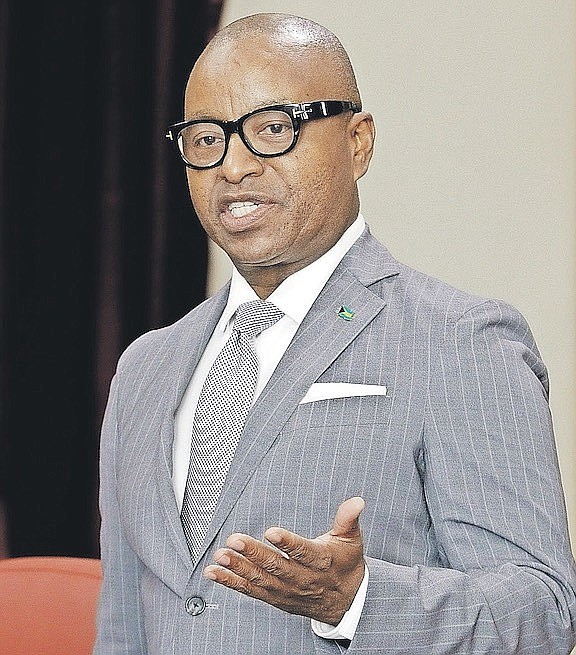
    A sharp political dispute has erupted in the Bahamas over proposed foreign service reforms, with former Foreign Affairs Minister Darron Henfield publicly questioning the fiscal responsibility and policy logic of the Davis administration’s provisions, centered on a controversial high-cost junior posting in London.

    At the core of Henfield’s critique is a young male government employee assigned to the Bahamian mission in London, who he says drains more than $200,000 annually from public taxpayer funds. The former minister’s attack comes in direct response to current Foreign Affairs Minister Fred Mitchell’s push for the 2025 Foreign Service Act, legislation that would convert most contract-based diplomatic positions into permanent, pension-eligible roles and implement new protections to bar political dismissals of non-partisan staff.

    Mitchell has positioned the reforms as a critical modernization step for the Bahamas’ diplomatic corps, designed to end the decades-long pattern of mass job cuts for junior contract officers that followed the 2017 transition of government. But Henfield argues Mitchell’s framing is deliberately misleading, dismissing the narrative that incoming administrations recklessly purge foreign service staff as disingenuous. He insists that reviewing existing overseas staffing contracts and recalling unnecessary personnel is a standard, routine governance function, and that the current government’s rhetoric is stoking unneeded anxiety among both permanent public servants and contract workers across the foreign ministry.

    While Henfield says he supports job security for public employees in principle and rejects the “cannibalization” of staff rolls purely for political gain when new administrations take power, he accuses the current Progressive Liberal Party government of blatant hypocrisy. He points out that when the PLP returned to office, the administration itself dismissed dozens of workers—including young women and single mothers who were the primary earners for their households—despite now campaigning for sweeping job protection laws for diplomatic staff.

    Defending the staffing cuts his own administration implemented, Henfield explained that a comprehensive review of Bahamian overseas missions when he took office revealed severe budget pressures caused by bloated staffing levels left by the previous government. He said his team immediately found that most overseas posts were facing major budget shortfalls directly tied to unnecessary over-hiring, which was costing Bahamian taxpayers more than $1 million annually in wasteful spending.

    Among the most egregious examples, Henfield cited so-called liaison officer positions that paid over $150,000 per person annually for little more than greeting visiting Bahamian officials at airports and arranging basic travel logistics. He also raised longstanding concerns about the qualifications of many contracted overseas staff, noting multiple cases where diplomatic officers lacked even basic academic credentials required for their roles. In response, his administration recalled roughly seven employees that were deemed either unqualified or unnecessary, and redirected resources toward recruiting and training a new cohort of professional, qualified foreign service officers.

    Notably, despite his pointed criticism of the current government’s approach, Henfield stopped short of rejecting foreign service reform entirely. He acknowledged that his own administration had worked to advance similar structural updates to the diplomatic corps, and agreed that formalized foreign service regulations bring valuable benefits—including creating clear frameworks for disciplinary action and establishing formal systems to recognize outstanding service with awards and honors. His core objection remains to the permanent entrenchment of costly, unneeded postings that he says represent an unfair burden on Bahamian taxpayers, leaving open the question of whether future administrations will be forced to carry the financial weight of such politically connected contracts if the reforms pass.

  • NCL fined for environmental violations at Great Stirrup Cay

    NCL fined for environmental violations at Great Stirrup Cay

    Bahamian regulators have issued financial penalties against Norwegian Cruise Line over multiple environmental infractions at Great Stirrup Cay, the private Caribbean island the company owns and operates. At the same time, a high-stakes labour dispute stemming from a whistleblower’s termination is moving toward a conciliation process, with both investigations remaining in progress with no firm completion dates.

    Bahamas Environment Minister Zane Lightbourne confirmed that enforcement action followed a full regulatory probe into activity on the island. The penalty structure includes a $20,000 base fine plus additional undisclosed financial penalties. While the company has been granted a legal grace period to submit payment, no funds have been processed by regulators as of the latest update. Lightbourne added that investigators uncovered more violations than had previously been reported publicly, and full details will be released in an upcoming official government assessment. He declined to share unconfirmed specifics ahead of the report’s publication, noting that official findings would be published once the review wraps. “We’ll put an official report on that, but we would not like to, at this time, indicate any specifics outside of the official report,” he said in a statement to local media.

    The case is tied to allegations from Daylland Moxey, a former assistant safety manager at the Great Stirrup Cay facility, who claims he was wrongfully fired from his role in early March. Moxey has alleged his termination was retaliation for raising formal concerns about unaddressed environmental and safety risks at the site, including an unsanctioned fire at a waste disposal location and improper management of hazardous materials. He also claims the company still owes him unpaid wages from his tenure. Howard Thompson, Director of the Bahamas Department of Labour, confirmed that the unfair termination claim filed by Moxey will be referred to an independent conciliator for negotiation, though no hearing date has been scheduled due to limited staffing for such cases.

    Thompson explained that the labour department has delayed launching its own full investigation to allow the environmental review to conclude first, as findings from the environmental probe will provide critical context for the labour team’s work. “Once environmental do what they need to do, they will let me know, and then my team will move in,” Thompson said. Once the environmental assessment is complete, the labour department will conduct a two-phase investigation: first reviewing overall occupational health and working conditions on the island, and second investigating Moxey’s claims of unfair treatment and retaliatory discharge.

    Thompson characterized the case as unusually complex due to the broad scope of Moxey’s allegations, noting that environmental investigators’ confirmation of unaddressed violations would heavily support Moxey’s claim that his dismissal was retaliatory. While the labour department does not hold the authority to order a shutdown of operations at Great Stirrup Cay, Thompson noted the agency can issue mandatory correction notices for workplace violations and impose its own fines if issues are not remediated. To date, neither officials from Norwegian Cruise Line nor representatives for Moxey have issued additional public comment on the cases, and no firm timeline has been set for either the release of the full environmental violation report or the scheduling of the conciliation hearing.

  • Pastor Mario Moxey elected new Christian Council president

    Pastor Mario Moxey elected new Christian Council president

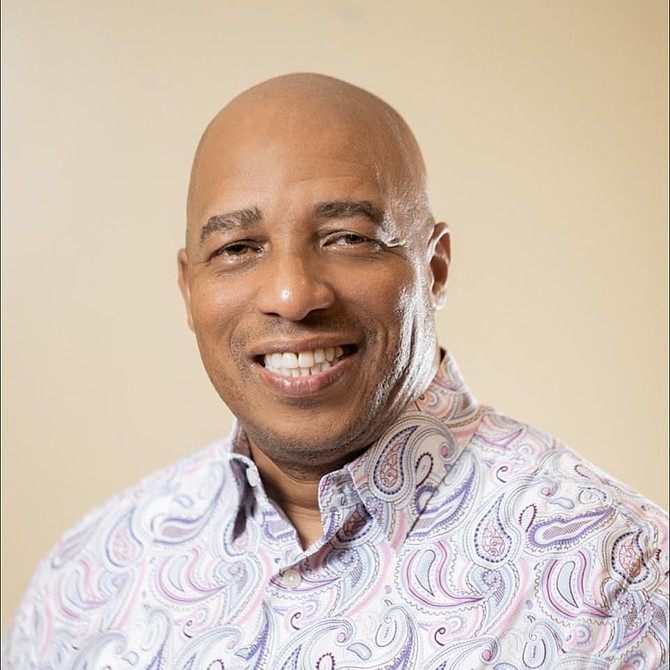
    In a decisive electoral outcome for one of the Bahamas’ most influential faith-based organizations, Pastor Mario Moxey has been voted in as the new president of the Bahamas Christian Council, wrapping up a competitive selection process with a clear mandate to lead the group through the next three years.

    Final vote counts released to local media confirm Moxey earned 169 votes, while his challenger Apostle Raymond Wells garnered just 58, delivering a landslide victory that solidifies broad support across the council’s membership. Moxey will succeed outgoing president Bishop Delton Fernander, who has steered the interdenominational body since 2017, and will hold the presidency for the 2026 to 2029 term.

    In his first public address following the announcement of the results, Moxey made unifying the nation’s diverse Christian communities and strengthening collective national collaboration the cornerstone of his upcoming leadership.

    “Our first and foremost priority is securing unity in the body of Christ across all denominations,” he said. “Beyond the church, we also aim to build unity across civic, religious and governmental spheres, so that all groups can work together toward the common good of the Bahamian people. This vision is summed up in our leadership theme: One Voice. One Church. One Nation.”

    Moxey noted that he will first convene his newly elected executive team to map out concrete policy priorities aligned with available organizational resources, before rolling out new initiatives. In an official statement confirming the election results, the Bahamas Christian Council formally endorsed Moxey’s appointment and the unity-centered mandate that will guide the body’s work over the next three years.

    “It is both a privilege and a calling to serve God by serving the people of The Bahamas, and in particular the Christian Churches that span our nation,” the council’s statement read. “The Church represents the largest block of citizenry across every sector of society, with approximately 90 percent of our population identifying as Christian. This is not merely a statistic — it is a profound responsibility.”

    Expanding on the council’s strategic direction under his leadership, Moxey emphasized that the Church is positioned to act as a core unifying force in Bahamian public life, rather than a marginal interest group.

    “The Church is not a minority voice trying to be heard. We are the majority voice that must choose to be the unifier,” he said. “As we unify the Church, we position ourselves to help unify the nation, offering spiritual leadership, moral clarity, and a renewed sense of purpose for our people.”

    A 16-year veteran of the Bahamas Christian Council, Moxey most recently served as the body’s vice president prior to his election. He said his decades of involvement with the organization have been rooted in a longstanding commitment to public service for his home country.

    “I’ve always had a desire to serve my country. That’s the reason why I was in the Christian Council, because I felt as though I needed to serve, I needed to contribute,” he explained. “Just as a result of tenure and being there, it’s time for natural elevation to take place, to serve at a higher level. It’s my privilege to represent the Christian community at this season.”

    Alongside Moxey’s appointment, the council announced the full slate of its new executive leadership team, which includes representatives from a wide cross-section of Christian denominations across the Bahamas, reflecting the body’s commitment to inclusive representation of the nation’s diverse faith community.

  • Grand Cay BPL bills wiped ahead of vote

    Grand Cay BPL bills wiped ahead of vote

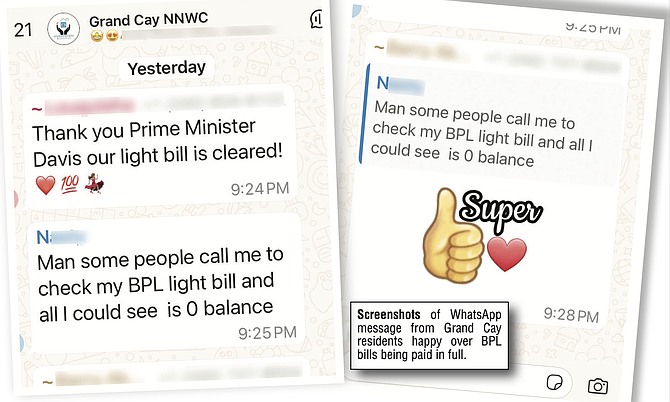
    Weeks before the Bahamas’ upcoming general election, hundreds of residents on Grand Cay in Abaco have woken up to a life-changing change: their long-accumulated electricity debt balances have been cleared entirely to zero. The sweeping debt relief comes days after Prime Minister Philip Davis made a campaign-focused visit to the hurricane-ravaged island, where he promised residents he would address their crippling billing crisis that has lingered for years.

    For long-time resident Jeremy Albury, the relief wiped out $13,500 in accumulated debt that had hung over his head since Hurricane Dorian hit the region in 2019. Fellow resident Barry Albury summed up the overwhelming joy of many in the community, saying “I felt like it was Christmas in April.” Screenshots of local community group chats shared across the island show widespread celebration, with dozens of residents joking that the holiday season had arrived months early alongside the unexpected debt cancellation.

    But the sudden, last-minute intervention has immediately drawn sharp questions from critics and residents alike, who question whether the policy is a pre-election tactic to sway voter turnout rather than a long-overdue fix for a systemic problem. Under the Bahamas’ Parliamentary Elections Act, providing gifts, cash or other benefits to voters with the goal of influencing their ballot choice is a criminal offense, a regulation that is expected to draw increased scrutiny in the wake of this announcement.

    In an official statement defending the move, the Davis administration framed the debt cancellation as a resolution to a decades-old billing crisis sparked by overlapping disasters. The government explained that normal billing and collection operations were completely upended after Hurricane Dorian tore through Abaco, and subsequent disruptions from the COVID-19 pandemic compounded the problem. During that period, residents faced widespread financial hardship, limited access to in-person banking services, and strict travel and business restrictions that made paying bills nearly impossible for many. The administration also noted that under the previous government, residents were explicitly told they would not be required to pay their accumulated balances during the emergency period, but system administrators continued to add the charges to resident accounts anyway.

    After reviewing the issue, the government determined that the ballooning balances were entirely the result of circumstances outside of consumers’ control. To resolve the crisis, the state will absorb all eligible outstanding balances through an offsetting agreement with national utility provider Bahamas Power and Light, placing no financial burden on affected residents. Officials described the move as part of a broader pledge to fix unfinished problems inherited from the previous administration, rather than an election-year stunt.

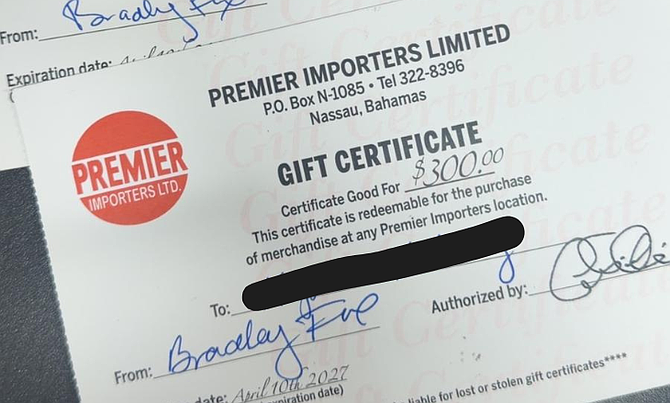
    This debt relief effort comes on the heels of a separate recent report from The Tribune that revealed the Bahamian government, not the ruling Progressive Liberal Party, funded more than $200,000 in gift certificates distributed to Abaco residents via local distributor Premier Importers, according to the company’s chief executive. To date, the Davis administration has not issued any formal response to those claims, with Communications Director Latrae Rahming only confirming that the prime minister would address reporters at a future, unannounced date.

    Local residents confirm that the massive electricity bills first began accumulating after Hurricane Dorian destroyed much of Abaco’s infrastructure, when routine billing stopped entirely and unpaid charges compounded over the years. Some residents reported seeing total balances exceed $60,000, a sum far out of reach for most low-income households on the island. During a town hall meeting with Grand Cay residents last week, Davis acknowledged the crippling burden the debt placed on the community, promised to clear the balances and committed to delivering additional housing renovation supplies to the area.

    Jeremy Albury, who has helped distribute the new housing supplies to residents, confirmed the prime minister kept his promise ahead of schedule. “So said, so done,” he said, adding that “The supplies are stuff to renovate a lot of people’s homes. More stuff coming on Wednesday.” Residents estimate the total cost of clearing all outstanding electricity bills across Grand Cay and nearby Moore’s Island exceeds $500,000.

    While hundreds of eligible residents have welcomed the relief, not everyone is convinced of the policy’s good intentions. Grand Cay resident Steven Russell called the move an obvious election tactic designed to shore up support for ruling party candidates in a competitive constituency. “Everybody knows it’s a tactic because they know Cornish did not represent his constituency well,” he explained, referring to incumbent Member of Parliament Kirk Cornish. “They know that and they know which areas they are in trouble. That’s why they up in Abaco, they sharing like $200 gift certificates.”

    Another local resident, Maxwell, said the last-minute relief does little to make up for years of neglect from the national government. “That can’t really do nothing after five or six years,” he said.

    Grand Cay, a small island community that is home to just over 500 permanent residents, has struggled for years with substandard core infrastructure, including unreliable electricity, clean water access and telecommunications service. The constituency is widely seen as a competitive race in the upcoming general election, making any last-minute voter outreach particularly high-stakes for both major political parties.

  • Pintard calls for arrests over $200k gift certificates

    Pintard calls for arrests over $200k gift certificates

    A brewing political scandal in the Bahamas has put the ruling Progressive Liberal Party (PLP) administration under intense scrutiny, after opposition Free National Movement leader Michael Pintard launched a scathing accusation that the Davis government broke national law by diverting public funds to distribute Hurricane Dorian relief gift certificates branded with PLP election candidates’ names. Pintard has labeled the action “egregious” and is calling for formal criminal charges to be filed against those responsible.

    The controversy stems from an earlier Tribune report that confirmed the Ministry of Finance covered the cost of gift certificates distributed to residents of Abaco, designated as post-Hurricane Dorian disaster relief, which bore the signatures of sitting PLP candidates and party officials. Chris Lleida, chief executive officer of Premier Importers – the entity that issued the vouchers – confirmed the distribution was carried out at the explicit request of the Ministry of Finance. Records show the total value of the distributed vouchers exceeds $200,000, with individual certificates issued in denominations of $200, $300 and $500.

    As of press time, Office of the Prime Minister representatives have not issued an official public response to the allegations. When contacted for comment, Communications Director Latrae Rahming confirmed that Prime Minister Philip Davis will address the matter with reporters at a future, unspecified date.

    Pintard argued that the misuse of taxpayer funds for this purpose constitutes a clear criminal offence under Bahamian law. “It is a crime because you’re using government funds for a narrow political perspective,” he stated, adding that “somebody to pay the price” for the violation. He drew a direct parallel between the current controversy and the so-called “Bermuda scandal”, a previous incident where a PLP delegation trip was initially funded through the Public Treasury before the party reimbursed the cost.

    The opposition leader further claimed that the scale of the $200,000 expenditure far exceeds the spending authority granted to the financial secretary, meaning the final approval for the spending would have required sign-off from Prime Minister Davis himself. He added that the situation becomes “even more egregious” with the involvement of Bradley Fox Jr, the PLP’s candidate for Central and South Abaco, who participated in distributing the vouchers despite holding no official government position.

    Voucher copies obtained by The Tribune show the e-vouchers distributed to local residents were signed by both Fox and Preston Roberts, the PLP’s national campaign coordinator who also serves as a board member of the government’s Disaster Reconstruction Authority. “You’re talking about somebody who has no standing in government at all and so on multiple levels, this is wrong,” Pintard said. “Somebody should be held to account, and charges should be brought against them or the sanctions, whatever the sanctions are, as outlined in the law, those sanctions should be carried out.”

    Under the Bahamas’ Parliamentary Elections Act, offering or distributing money, gifts or other benefits to voters to influence their ballot choice, reward specific voting behavior, or secure a candidate’s election is classified as a criminal offence. The law also penalizes anyone who funds or knowingly facilitates these activities, including the provision of funds intended for electoral bribery.

    Critics point out that the incident highlights a longstanding gap in Bahamian election regulation: the country still lacks a comprehensive, enforceable campaign finance framework. There are no binding, clear rules requiring full public disclosure of political campaign spending, nor formal regulations governing the use of public resources during election cycles. Both of the Bahamas’ major political parties have repeatedly pledged to implement a robust campaign finance system over the years, but none have followed through on that promise to date.

  • FNM warns of chaos over missing advance voters

    FNM warns of chaos over missing advance voters

    Just days ahead of the Bahamas’ scheduled advance polling on April 30, a growing electoral dispute has erupted after opposition Free National Movement (FNM) figures revealed dozens of approved voters have been wrongly omitted from the official advance poll register, with election officials dismissing complaints with shrugs that have further enraged the party.

    Travis Robinson, an FNM candidate running in the upcoming general election, told local media that nine eligible voters who met all requirements for early voting were left off the finalized certified list, despite having applied for and received formal authorization to cast advance ballots. Among those impacted are three voters who will be out of the country on the main election day, May 12, meaning they will be completely unable to vote if the error is not corrected before advance polling opens.

    Robinson explained he submitted all advance voting applications on April 23 on behalf of three groups of eligible early voters: senior citizens, registered poll workers who would be working on main election day, and voters traveling abroad. When he returned to collect documentation two days later, he only received required L-form certificates for the senior citizens and traveling voters. To date, he says he has not received any L-form certificates for his poll worker applicants, leaving all of them locked out of the advance poll.

    The full scope of the error only became clear once the official certified advance register was published. Robinson confirmed all nine applicants met every eligibility requirement set out by election authorities, but their names were still excluded from the final list. When he escalated the issue to senior election officials, including Parliamentary Commissioner Harrison Thompson, he was told there was no way to fix the error ahead of polling.

    “I subsequently spoke with a senior official at the registry who basically told me, ‘such is life, things happen, we move on,’” Robinson recalled. “I later contacted Mr Thompson, who gave me a similar response, that unfortunately there’s nothing he can do and that it is what it is.”

    Robinson called the dismissive response completely unacceptable, warning that the disenfranchisement of these nine voters could be enough to swing the final election result in his competitive constituency. He pointed to recent Bahamian political history to underscore the stakes, noting that a former prime minister once lost his parliamentary seat by a margin of just four votes. He has issued an urgent call for Thompson to immediately amend the advance register to add the missing voters before polling begins.

    The impacted voters, Robinson added, are “highly upset” by the error, particularly the three overseas travelers who have no path to vote if the issue remains unaddressed.

    The controversy is not isolated to Robinson’s constituency, according to FNM chairman Duane Sands. Sands confirmed that multiple other FNM candidates, including himself and fellow candidate Heather Hunt, have reported identical issues with the advance poll register. He said that beyond omitting eligible voters who completed all required steps, the register also includes the names of voters who never even submitted applications for early voting.

    Worse, Sands added, the register contains glaring, basic errors that raise serious questions about the integrity of the process: some entries list voters with birth dates that have not yet occurred, meaning people who have not even been born are listed as approved advance voters.

    “When you look at the state of the register — people on the register with birthdays that have not yet come, people who according to the data haven’t even been born yet — and then there are persons who are on the advance poll register who did not apply, in some instances willing to swear an affidavit that they did not apply, and yet they are on the advance poll register, you wonder what is going on,” Sands said.

    Sands is now calling for the immediate removal of Parliamentary Commissioner Harrison Thompson, arguing that the chaotic errors undermine the legitimacy of the upcoming election. He said the severity of the mistakes leaves two possible explanations, neither of which justify Thompson keeping his post.

    “When we see the mess, the chaos, we can ask whether this is just incompetence or whether this is a deliberate act by someone who ought to be relieved of his role as Parliamentary Commissioner forthwith,” he said.

    In an official response to the growing controversy, the Parliamentary Registration Department acknowledged the errors, attributing them to limited typographical mistakes and an unexpected technical system glitch. The department downplayed the severity of the issues, arguing that the mistakes will not impact the final outcome of the election.

    “These are not consequential to the outcome of the election, as the voter’s card and counterfoil contain the accurate information that will be relied upon on voting day,” the department said in a statement. It urged political leaders to stop framing the errors as evidence of widespread systemic failure, noting that minor processing issues are a normal part of election administration. “The Department remains committed to protecting the integrity of the electoral process,” the statement added.

    The ruling Progressive Liberal Party (PLP) has pushed back against FNM’s criticism, condemning the opposition’s claims as a “reckless attack on Bahamian democracy.”

    “The Bahamas has earned its reputation as one of the strongest democracies in the region through decades of peaceful elections and independent institutions,” the PLP said in its official statement. “To suggest otherwise, for political convenience, damages that reputation abroad and weakens the confidence of Bahamians at home.”

  • FNM confirms voucher distribution but denies vote buying

    FNM confirms voucher distribution but denies vote buying

    As the Bahamas prepares for its upcoming general election, a growing controversy over political voucher distribution has put both of the country’s major political parties under scrutiny, with questions mounting over whether the practice crosses into illegal vote-buying territory.

    Duane Sands, chairman of the Free National Movement (FNM), and Denalee Penn-Mackey, the party’s parliamentary candidate for the Southern Shores constituency, have publicly confirmed that their party has distributed grocery vouchers to constituents, a move that comes after prior allegations against the incumbent Progressive Liberal Party (PLP) over misuse of public funds for similar voter outreach.

    In an interview with reporters, Sands acknowledged that voucher purchases from local retail chain Super Value have risen across the political spectrum, with both the FNM and PLP accounting for the increased sales. “There’s nothing unique to any particular political organisation here,” he stated, drawing a nuanced but contested line between legal assistance and illegal electoral inducement. Under the country’s Parliamentary Elections Act, any gift or benefit offered to influence a voter’s choice is a criminal offense. Sands argued that the legality of the practice hinges entirely on intent: while providing food support to households facing food insecurity does not violate the law on its face, he admitted the practice is a “slippery slope” that carries significant potential for abuse.

    Sands stressed that even amid the controversy, he would continue assisting constituents facing crisis. “If you come to me today and say that you have no food in your house, I would do the best that I can in order to assist,” he said, noting that he does not have details on the total value or number of vouchers the FNM has acquired overall. He further drew a clear distinction between assistance funded by personal or private political donations and programs backed by public money, arguing that the latter case amounts to a clear violation of electoral law.

    The incumbent Davis administration, led by the PLP, has still not responded to explosive allegations made by Chris Lleida, chief executive officer of Premier Importers. Lleida claims that the Bahamian government, not the PLP as a party, covered the cost of more than $200,000 in gift vouchers distributed and signed by PLP election candidates and party officials. Sands called this a “clear-cut violation of the law” and argued that the entire controversy underscores the urgent need for sweeping national campaign finance reform.

    Penn-Mackey, for her part, confirmed that she began distributing vouchers in her constituency within the past week, but insisted that all costs are covered by her own personal funds, eliminating any comparison to the PLP’s public funds allegations. “That, along with my whole campaign, is run by my own personal money, so I don’t see how what the PLP has done as it relates to the money you’re spending from the public treasury ties into what I’m doing personally,” she said. The vouchers she distributes are valued at approximately $100 each.

    A long-time community philanthropist, Penn-Mackey pushed back against questions about her activities, noting she has provided community support and aid for years independent of her candidacy. “We give out food and vouchers every day. Is that vote buying? The people have a food problem where people come and they said, listen, we need some vouchers. I have no grocery in my house, so when we give them a voucher, is that vote buying?” she asked. Rejecting claims of a double standard between her actions and the allegations against the PLP, she added: “It’s not a double standard because if it’s coming from the public treasury and my vouchers are coming from my personal account, that’s not a double standard at all.”

    FNM leader Michael Pintard echoed the argument that assisting vulnerable constituents is a moral obligation regardless of election season, but warned that using public funds for aid that only intensifies or launches right before an election erodes public trust in the democratic process. “If somebody is in need, I don’t think you take an issue with the government, at least certainly me personally, if somebody is hungry they need food assistance, the government is not providing it, you ordinarily provide it, and this is what you’ve been doing, I think you have an obligation to help people who need help,” Pintard said. “That’s a general rule that certainly I’ve lived by all along in and out of political season. If somebody needs help, you help them.”

    Even so, Pintard acknowledged that introducing new or expanded assistance programs in the middle of an election cycle reasonably invites public suspicion. “It allows others, others who look on, to presume that it’s politically motivated,” he said. “There are a number of constituencies where persons know, beyond the shadow of doubt their people weren’t about doing, running any social assistance programme, have not provided a social safety net, and all of a sudden, they are offering them around election time. That’s what they’re saying about the government right now. All of a sudden, you just realise that my house was leaking, and you have not been involved in the last four and a half years. You came and did an assessment. Nothing happened until just now.”

    To date, the core rules governing electoral conduct in the Bahamas remain clear: offering, giving, or providing any money, gift, or material benefit to a voter with the goal of influencing their ballot selection is classified as a criminal offense under the Parliamentary Elections Act.

  • PLP hands out over $200k in gift cards

    PLP hands out over $200k in gift cards

    A pre-election controversy has erupted in The Bahamas over more than $200,000 in Hurricane Dorian relief gift certificates distributed to Abaco residents, after the head of the issuing company directly linked the funding to the national Ministry of Finance. Chris Lleida, chief executive officer of Premier Importers — the local firm that produced and will honor the vouchers — made the claim publicly this week, opening a fierce debate over whether public funds have been misused to influence voters just two weeks ahead of the country’s general election, more than six years after Dorian devastated Abaco.

    According to Lleida, the finance ministry requested his company issue the gift certificates as part of long-delayed post-hurricane relief, with individual vouchers ranging in value from $200 to $500, for a total sum exceeding $200,000. He confirmed that his firm’s role is limited to producing and honoring the certificates, with all distribution responsibility held by the ministry and the third parties it designated. When pressed on the unusual timing of the rollout, coming years after the disaster and just weeks before voters head to the polls, Lleida acknowledged the obvious question: “Why didn’t this happen two years ago?”

    Physical copies of the certificates obtained by The Tribune show they bear the signatures of two Bahamas Progressive Liberal Party (PLP) figures: Bradley Fox Jr., the PLP candidate for Central and South Abaco, and Preston Roberts, the party’s campaign coordinator and a sitting member of the Disaster Reconstruction Authority board. To date, no clear information has emerged about how many certificates have been distributed, what criteria were used to select recipients, or how the distribution process is being managed.

    Lleida’s explosive claim has been forcefully rejected by senior PLP leadership. Valentine Grimes, a PLP trustee, stated that the party would never misuse public funds for this type of initiative, insisting that all materials distributed by party candidates are covered either by the party’s own budget or the candidate personally. “Anything that candidates give out to people, anything, is paid out by the party or the candidate,” Grimes said. When asked whether the distribution so close to an election constituted vote buying, Grimes acknowledged that similar practices occur across all political groups in the country — a longstanding unaddressed open secret in Bahamian politics. He argued that there is nothing improper about assisting vulnerable residents, even near an election, and that any interpretation of motive is up to individual voters.

    Other PLP figures have offered conflicting accounts of the funding source. Roberts, whose signature appears on the certificates, said he believed the funds came from the party’s own private relief donations, fulfilling a years-old promise to Dorian survivors made after the 2019 storm. He explained that distribution is still ongoing, with plans to expand the program to North Abaco, and that vouchers are targeted to residents still recovering from storm damage — including single mothers and elderly residents, who receive higher-value certificates to cover needs like roofing, cabinetry, and bathroom repairs. Fox, the candidate whose signature also appears on the vouchers, declined to answer direct questions about the funding source or vote buying allegations, only offering a biblical quote in response to reporters.

    Lleida pushed back against claims of partisan favoritism, noting that he has worked for years with cross-party lawmakers who use their constituency budgets to assist residents with home repairs and other needs. He added that while the current request was larger than usual, it was not out of the ordinary for his firm, and that he supports assistance reaching all eligible residents regardless of political affiliation. For local building supply businesses like his, he noted, the initiative also provides welcome economic support at a time when the local construction market remains sluggish.

    Requests for comment from the Office of the Prime Minister went unanswered by press time. The controversy has thrown a sharp spotlight on a longstanding gap in Bahamian election law: the country still lacks a comprehensive, enforceable campaign finance framework, with no clear mandatory disclosure rules for political spending or binding regulations governing the use of public resources during election periods. Both major political parties have repeatedly pledged to implement comprehensive campaign finance reform over the years, but no such policy has been enacted to date, leaving the door open for questions about the intersection of government relief and political campaigning ahead of this month’s vote.

  • Candidate slammed on crown land deeds

    Candidate slammed on crown land deeds

    Weeks before Bahamas’ hotly anticipated general election, a Progressive Liberal Party (PLP) candidate’s explosive claim about holding Crown Land title deeds for distribution has ignited fierce political debate and thrown a spotlight on long-simmering questions about the integrity of public land allocation processes.

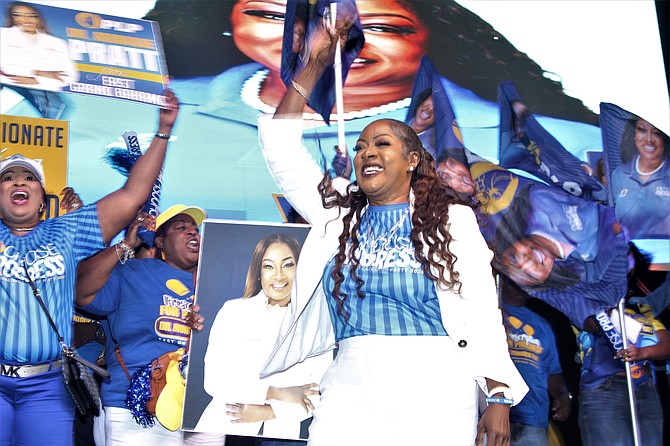
    At a well-attended PLP campaign rally held in West End on April 13, Dr. Monique Pratt, the party’s candidate for East Grand Bahama, made the unorthodox announcement to assembled supporters. In remarks captured on video and later circulated publicly, Pratt pushed back against claims from rival political groups that they would deliver Crown Land to constituents, asserting that she already held the long-awaited deeds in her personal possession.

    “I’m proud to say that I have in my possession your long-awaited deeds to your crown land, and I’ve been given the instructions from our prime minister to release them to you,” Pratt told the crowd. A subsequent social media post from the candidate showed her at a party event calling out the names of East Grand Bahama residents who were purportedly marked as recipients of the allocated public land.

    Pratt’s comments immediately triggered widespread scrutiny, as observers and political opponents questioned why official government title deeds would be transferred to a sitting political candidate rather than being processed through standard, formal government administrative channels.

    When reached for comment by reporters on Monday, Pratt declined to address questions directly, referring all inquiries to PLP party leadership, noting that senior officials were aware of the controversy and would issue a formal response. Latrae Rahming, communications director for both the Office of the Prime Minister and the PLP, later confirmed to local outlet The Tribune that Prime Minister Philip Davis—who holds direct ministerial responsibility for Crown Land management—would address the matter personally during an upcoming press interaction.

    The opposition Free National Movement (FNM) has already seized on the controversy to attack the incumbent government, with FNM chairman Dr. Duane Sands launching sharp criticism over the incident, arguing it raises serious red flags about procedural fairness, governmental transparency, and adherence to the rule of law in Bahamian public land administration.

    “Crown Land is not a political reward, it is a sacred national patrimony, held in trust for all Bahamians,” Sands stated in his response. He questioned how official title deeds ended up in the custody of a political candidate rather than government agencies, and raised explicit concerns that land allocations are being weaponized for political patronage ahead of the election.

    “The issuance of title deeds is a formal governmental function, not a political favour to be dispensed from a campaign platform,” Sands added. He also called for direct answers from Prime Minister Davis, demanding clarification on whether Davis personally issued the instruction to deliver the deeds to Pratt for campaign distribution. Sands emphasized that the incident raises “significant legal and ethical questions” and pushed for full accountability and radical transparency in the ongoing administration of Crown Land.

  • PM warns Pintard to drop ‘crazy antics’ ahead of vote

    PM warns Pintard to drop ‘crazy antics’ ahead of vote

    As the Bahamas approaches its April 30 advanced poll, political tensions between the ruling Progressive Liberal Party (PLP) and the opposition Free National Movement (FNM) have escalated sharply, with Prime Minister Philip Davis publicly calling on Opposition Leader Michael Pintard to abandon disruptive political tactics that threaten the integrity of the upcoming election process.

    Speaking to an energized crowd of PLP supporters at a rally hosted at Thomas A Robinson Stadium, Davis emphasized that the unrest that marred two recent by-elections must not be repeated on election day. He acknowledged that cultural expressions like traditional Junkanoo dancing have their place, but drew a clear line at actions designed to upend democratic voting procedures. “There is no need for constant commotion, physical conflict, and unruly behavior,” Davis told attendees. “We share one Bahamas, and we owe it to our country to conduct ourselves with dignity. At the end of the day, all parties should be prepared to accept the result gracefully.”

    Davis’ remarks come in direct response to the FNM’s recent moves to raise formal concerns over the accuracy of the national voter register and formally request international observers to monitor the election. The prime minister has already criticized Pintard for bypassing established domestic protocols to directly appeal to the United States for observation, labeling that move a breach of standard political procedure.

    To back up his warnings about potential opposition disruption, Davis referenced the 2023 Golden Isles advanced polling, which devolved into chaos after FNM and Coalition of Independents supporters blocked the removal of ballot boxes amid a dispute over transportation protocols for election materials. That incident, he argued, is a preview of what the opposition could bring to the upcoming national vote.

    Beyond warnings over electoral conduct, Davis launched pointed critiques of the FNM’s key campaign pledges, casting the opposition as unprepared to govern and arguing that an FNM election victory would roll back the progress the PLP has made in office and return the country to political instability and partisan conflict.

    The prime minister specifically dismissed the FNM’s promise to construct 5,000 new affordable homes, noting that the party has not delivered on large-scale housing development projects in more than 15 years. He called out an opposition candidate from the Garden Hills constituency who secured Crown land for a planned development of environmentally friendly affordable housing years ago, but has yet to break ground on a single unit.

    Davis also criticized the FNM’s proposal to provide a $200 monthly stipend to single mothers, dismissing the policy as a hollow, surface-level gesture that lacks the comprehensive support single-parent households actually need. He pointed out that the opposition has put forward no parallel plans to expand maternity leave protections, reduce the cost of essentials like diapers and groceries, or improve maternal health services in public hospitals. “It’s just a small monthly check to pretend they’re delivering for people, when they’re ignoring the root challenges these families face,” Davis said.

    The prime minister saved his final sharp rebuke for the FNM’s proposal to launch a national lottery. He argued that the plan would effectively turn the national treasury into a private gambling house, allowing connected private operators to pocket profits while offering little benefit to the general public. Davis questioned what the FNM was not disclosing about the plan, suggesting that unreported insider benefits would flow to the party’s wealthy political backers. “What they don’t tell you is which of their rich friends is actually going to walk away with the biggest jackpot,” he added.