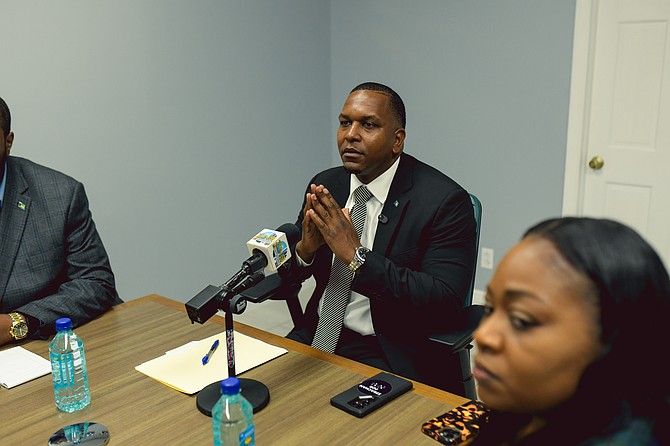
A 63-year-old Bahamian unionist Perry Cox was discovered dead with apparent stab wounds early yesterday following a suspicious blaze that tore through a duplex in Nassau Village, a killing that has drawn widespread condemnation from local political leaders. The incident unfolded just after 2 a.m. on Lee Street, when emergency responders were first notified of the active residential fire. Three fire trucks were immediately deployed to the scene, where crews arrived to find thick smoke pouring out of a single-story stone duplex painted lime green and white. As firefighters worked to contain the spreading flames, they gained forced entry to the apartment where the fire originated and located Cox unresponsive just steps from the unit’s front entrance. Crews carried Cox out of the smoke-damaged building and alerted regional Emergency Medical Services to conduct an on-site evaluation. Upon assessing the victim, EMS personnel officially confirmed he had no remaining signs of life. Though first responders were able to extinguish the fire in a relatively short time frame, the duplex structure suffered severe, widespread damage across its affected areas. Initial post-recovery examinations of Cox’s body revealed clear evidence of apparent stab wounds, leading law enforcement investigators to immediately label the death a potential case of foul play. Officials confirmed a formal autopsy will be carried out in the coming days to pinpoint the exact cause and manner of Cox’s death. Speaking before the House of Assembly later the same day, Jamahl Strachan, the Member of Parliament for Nassau Village, delivered an official statement of condolence to Cox’s family and friends, framing his death as a devastating loss for the entire constituency. “We would have lost not only a community builder but also a strong advocate in the constituency, a father, and an uncle,” Strachan told legislative colleagues. In the wake of the violent killing, Strachan used the moment to call on all Bahamian citizens to reject violence as a means of resolving disagreement, urging communities to prioritize peaceful conflict resolution and practice patience with one another.
标签: Bahamas
巴哈马
-
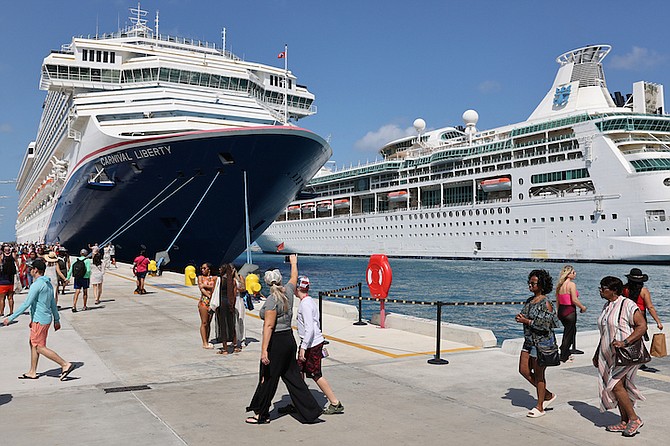
New five mph speed limit set for Nassau Harbour boaters
Starting July 1, all boaters navigating Nassau Harbour will be required to adhere to a new, strict 5-mile-per-hour speed limit, part of a package of far-reaching maritime safety legislation introduced by Bahamas’ Transport Minister Leon Lundy.
The regulatory overhaul comes as the government moves to address longstanding safety and environmental challenges in the island nation’s busiest harbor. Currently, existing navigation rules for the Port of Nassau do not outline a fixed numerical speed cap, only barring vessels from operating at speeds that create wakes capable of damaging other craft or endangering people on the water. The new legislative framework codifies the 5 mph no-wake limit into law for Nassau Harbour, a change that brings clear, enforceable standards to the busy waterway.
Beyond the Nassau Harbour speed rule, the legislation establishes a broad requirement that all vessels operating in any Bahamian port area must maintain a “safe speed” — defined as a speed that allows the operator to take full, effective evasive action to avoid collisions. The 5 mph cap will also apply to commercial recreational watercraft under the separate Commercial Recreational Watercraft (Amendment) Bill 2026, while the Water Skiing and Motor Boat Control (Amendment) Bill 2026 extends identical safety protections to all other motorized boats operating in regulated waters.
A second major pillar of the reform package targets the growing problem of abandoned and derelict vessels, which have plagued Bahamian waterways for years. Under the Boat Registration amendment, vessel owners who leave their craft unmanned for 21 consecutive days or more will face strict legal liability, with financial penalties that can reach as high as $100,000 for violations. Minister Lundy emphasized that abandoned vessels pose a cascade of problems: they block critical navigation channels, cause lasting damage to coastal and marine ecosystems, and impose significant public costs for removal and remediation.
For violations under the Water Skiing and Motor Boat Control amendment, penalties can climb to $50,000 in fines, and the most severe offenses may even result in up to two years of prison time.
The new legislative measures build on ongoing clean-up and removal efforts already underway by the country’s Port Department. In recent months, agency crews have already removed sunken derelict vessels from Montague Dock and Potter’s Cay, and are currently overseeing the removal of three large abandoned craft: the 80-foot steel-hull trawler *Adrianna*, the M/Y Double Shot, and the Transcargo. Minister Lundy confirmed that that removal work is nearly complete, with additional clean-up operations already carried out at Clifton Pier.
Lundy stressed that the new regulatory framework sends an unambiguous message to all water users: Nassau Harbour is a working commercial harbor, and reckless or irresponsible behavior on the water will no longer be tolerated with weak enforcement. “The recklessness that has too long been tolerated on our waters will now meet the firm hand of the law,” he said.
-

Hanna-Martin urges focus on local tourism spending
The Bahamas has continued its post-pandemic tourism rebound, hitting a new milestone in visitor arrivals through the first four months of 2026, according to the nation’s top tourism official. Speaking in the country’s House of Assembly on Wednesday, Tourism Minister Glenys Hanna-Martin unveiled the latest sector data and used the occasion to call for a fundamental reevaluation of how the country defines tourism success, arguing that raw arrival numbers no longer equal broad national prosperity.
Between January and April, the archipelago recorded a total of 4.9 million visitor arrivals via both air and sea across all its islands, Minister Hanna-Martin confirmed. The figure represents a 13.9% increase compared to the same period in 2025, and an 88% jump over pre-pandemic levels recorded in 2019. Foreign air arrivals alone also outpaced prior benchmarks, growing 5.5% against 2018 numbers and 4.3% over 2025’s first four months.
But the minister drew sharp attention to a stark imbalance in visitor spending that has long shaped the country’s tourism sector: the gap between mass cruise tourism and high-value stopover travel. Industry estimates show the average cruise passenger spends just $85 to $150 per visit, while the average overnight stopover visitor spends roughly $2,700 per trip. Even as cruise passengers account for 80% of all annual arrivals to The Bahamas, they contribute only around 20% of total tourism expenditure, figures Hanna-Martin called “stark” and impossible to ignore.
“Many destinations have learned that increasing arrivals does not on its own increase prosperity,” the minister told legislators. “The Bahamas already attracts high-spending visitors, so the work before us is to maximize local capture of that spending.”
Hanna-Martin outlined that the nation’s new tourism strategy will center on shifting focus from raw arrival growth to boosting four core outcomes: higher per-visitor expenditure, longer average length of stay, increased repeat visitation, and a larger share of total tourism revenue retained within local Bahamian economies. The strategy is built on five key pillars, including expanding tourism yield and local economic retention, improving airlift and international connectivity, developing climate-resilient tourism infrastructure, establishing digital tourism leadership, and ramping up investment in local workforce development.
Addressing gaps in workforce participation, the minister emphasized that far too many Bahamian citizens remain locked out of higher-income positions across the tourism sector. Calling the current underrepresentation “insane,” she pledged that the government would prioritize targeted changes to expand access to these roles. “That must change and it will change,” she said.
To address the cruise spending imbalance, Hanna-Martin announced that the government will soon launch formal discussions with major cruise lines and local industry stakeholders to revise current visitor patterns. The government’s goals include encouraging cruise passengers to spend time and money outside of restricted, cruise-controlled port areas, and marketing the nation’s leisure offerings to convert day-tripping cruise visitors into future overnight stopover guests.
“The question we must keep asking is, how much value each visitor generates, and how much of every tourism dollar stays in the local economy,” Hanna-Martin said, framing the new approach as a long-overdue adjustment to build a more equitable and prosperous tourism sector for all Bahamians.
-

Women United blasts lack of funds for violence commission
Bahamian women’s advocacy group Women United has publicly condemned the Davis administration for undermining the landmark Protection Against Violence Act it ushered into law, after revealing the newly seated Protection Against Violence Commission was completely left out of the 2026/27 national budget’s dedicated allocations.
The organization’s president, Lisa Bostwick-Dean, confirmed that after a thorough review of the Draft Estimates of Revenue and Expenditure released by the Ministry of Finance, no line item explicitly earmarks funding for the commission – the central governing body created to bring the 2023 anti-violence law into active practice.
When the Protection Against Violence Bill went through parliamentary debate in 2023, Prime Minister Philip “Brave” Davis positioned the commission as a critical coordinating body: it would unify national support services for violence survivors, oversee the rollout of a national strategic anti-violence plan, and hold direct control over funding for community-focused intervention programs. The law ultimately passed the national legislature in July 2023 and secured Senate approval a month later, but the body’s rollout faced significant delays.
It was only in early 2026 that the commission was formally sworn in, with its appointment taking effect on February 1 and a public announcement made on March 2 – nearly three full years after the legislation was officially gazetted. Commission chair Marisa Mason-Smith told local outlet The Tribune shortly after the announcement that she aimed to have the body fully operational by May. To date, however, the commission still lacks a permanent headquarters, operating temporarily out of space donated by the Ministry of Social Services.
For Women United, the omission of dedicated funding in the first budget released after the commission’s appointment casts serious doubt over the government’s stated commitment to addressing systemic violence. Bostwick-Dean pointed to the suspicious sequence of delays: the law passed in 2023, the core implementing body was seated only on the eve of a national election, and immediately after the vote, it was left without any financial resourcing in the governing administration’s budget.
“This sequence of events suggests a troubling lack of genuine commitment to using the tools in the Act to assist in the fight against violence,” Bostwick-Dean said.
Under the terms of the original law, the commission is tasked with leading a whole-of-nation response to violence by bridging gaps between government ministries, non-profit support service providers, and grassroots community organizations. The legislation was framed as a transformative step to expand protections for violence survivors, build a cohesive framework for support services ranging from emergency shelter to survivor advocacy, implement national data collection and monitoring, and deliver coordinated care to those affected.
Women United warns that without a dedicated budget allocation, Bostwick-Dean’s ability to execute the commission’s legally mandated responsibilities will be severely limited. The body is required to develop a binding national strategic anti-violence plan, coordinate cross-sector support for survivors, verify that sufficient emergency shelter capacity exists across the country, and approve grant funding for local community violence intervention projects. The Protection Against Violence Act explicitly states that the commission’s operating funds must come from parliamentary appropriations, meaning it cannot legally or practically function without official budgetary allocation.
“A Commission without funding is a Commission without capacity,” Bostwick-Dean emphasized. “It cannot appoint advocates for victims. It cannot liaise with shelters. It cannot support service providers. It cannot certify funding for community projects. It is, in effect, a shell.”
The advocacy group stressed that violence against women and children remains an ongoing, unresolved public crisis in The Bahamas, and the commission is the only body mandated to deliver the multi-disciplinary, coordinated response the 2023 Act promised. Women United is calling on the Davis administration to immediately correct the oversight: either identify the existing allocation for the commission in the current budget draft, or reallocate funds from other government line items to ensure the body has the resources it needs to operate.
Bostwick-Dean recalled that the Davis administration’s own 2026 Blueprint for Progress manifesto explicitly pledged to “fully resource and operationalise the Protection Against Violence Act.” “That promise must be kept,” she said. “The women and children of The Bahamas deserve nothing less.”
-
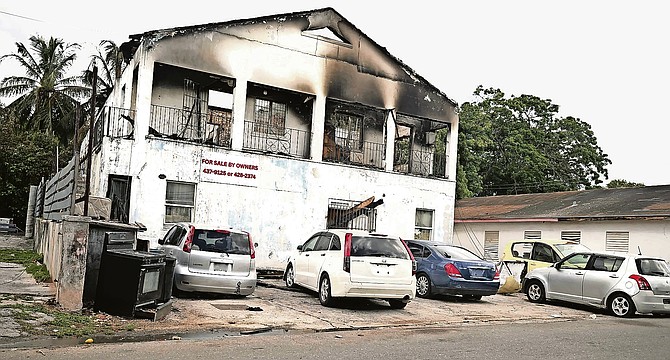
Arson displaces forty residents
On a Monday afternoon, a residential fire traced back to a domestic altercation completely destroyed a seven-unit two-story apartment building on Infant View Road in Nassau, leaving approximately 40 residents homeless and a 39-year-old woman in police custody facing suspicion of starting the blaze.
Emergency response teams received the distress call shortly before 3 p.m., with three fire units deployed immediately to the scene. When firefighters arrived, aggressive flames had already engulfed much of the stone structure. Crews worked rapidly to contain the fire and prevent it from spreading to adjacent properties, eventually extinguishing the blaze before additional structures were threatened. The upper floor of the building was completely gutted by flames, while lower-level units suffered extensive damage from heat, smoke and water used to douse the fire. Remarkably, no physical injuries were reported among residents or first responders.
Preliminary investigations by local law enforcement have outlined a clear timeline of events leading up to the disaster. Prior to the fire breaking out, witnesses recorded a heated argument between a male and female believed to be in a romantic relationship. Multiple witnesses stated they observed the female suspect carrying a plastic bottle filled with an unidentified brown liquid shortly before the blaze. Flames were first spotted originating from the suspect’s second-floor apartment in the southeastern corner of the building, and the suspect was later seen fleeing the area west along Infant View Road before being taken into police custody. Of the seven units in the complex, three were occupied by the suspect’s extended family members.
For many of the displaced residents, the disaster came at a devastatingly pivotal moment. Among those who lost nearly all their possessions is 32-year-old Robin Pierre, a mother of three who had lived in the building for 15 years. Just weeks before she was set to begin a new career as a nurse intern at Nassau’s Princess Margaret Hospital after graduating from the University of The Bahamas nursing program, the fire claimed everything her family owned.
“We lost cash, all our clothing, critical personal identification documents, every essential household item – our stove, refrigerator, living room furniture, mattresses, everything,” Pierre explained in an interview with The Tribune. “We couldn’t get in to save even a single thing.”
Despite the overwhelming loss, Pierre emphasized that she counts her family’s safety as the most important outcome. “My first thought was making sure all three of my kids got out unharmed. Once I confirmed everyone was safe, I was just relieved. No one got hurt, that’s what matters,” she said. “The things we lost are just material. They can be replaced. It will take time, but we can rebuild what we lost. Nothing is more important than all of us being okay.”
Still, the timing of the fire has created significant setbacks for Pierre and her family, who rely on her as their primary breadwinner. Her parents, both senior citizens, live with the family, and her mother lives with a chronic medical condition that requires ongoing care. “All of my nursing scrubs, all of the professional supplies I need for my new job burned. My start date is right around the corner, and I have nothing. This set us back 10 steps, especially for me,” Pierre said. “I’m the one who provides for everyone, so now I have to figure out how we go from nothing to being stable again in just a couple of weeks.”
Pierre noted that she has worked to stay resilient for her family, framing her role as the steady foundation everyone depends on. “I have to stay strong for all of them. If the person everyone looks to falls apart, what happens to the rest of us?” she said.
Currently, Pierre and her family are staying in a cramped one-bedroom home with relatives, while they wait for formal assistance from the country’s Department of Social Services. Local community members have already stepped forward to donate groceries, clothing and basic necessities, and Pierre has launched a public appeal for additional support to help her family get back on their feet. A GoFundMe campaign has been set up with a modest target of $5,500, a goal Pierre says she set to avoid placing an undue burden on others.
“I picked that number because I was being realistic. I just need help covering the first and last month’s rent and security deposit for a new place, and enough to get basic home essentials – a bed, a bedroom set, even secondhand items are fine,” she explained.
The owner of the apartment building, which has been owned by his family since the 1980s, declined to provide further comment on the fire or the future of the property.
-
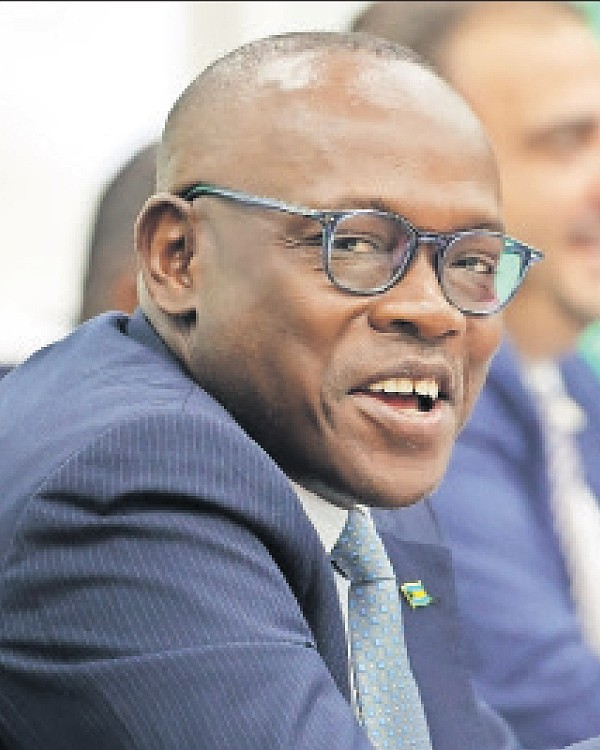
Country about 300 teachers short but too many parents ‘disengaged’
Nassau, Bahamas – Amid growing public discourse over systemic flaws in the country’s education sector, Bahamas Education Minister Chester Cooper has pushed back against the decades-old perception that Bahamian students collectively earn a “D average”, labeling the pervasive stereotype both factually unfounded and deeply damaging to the nation’s youth. During his address to the ongoing budget debate, Cooper also pulled back the curtain on a critical unaddressed challenge: the country currently faces a shortage of roughly 300 teachers across multiple academic and vocational disciplines.
Cooper emphasized that there is no statistically valid method to calculate a uniform national grade average for all Bahamian students, even as he acknowledged the widespread label has become a common shorthand for public frustration with longstanding shortcomings in the education system. Rather than focusing exclusively on student test performance, Cooper outlined that the Davis administration’s core mission extends far beyond boosting exam pass rates. The government’s goal, he explained, is to cultivate engaged citizens who possess strong literacy skills, critical thinking capabilities, and effective communication tools to build successful careers and contribute to national development.
“We have capable young people, many of whom an outdated system has not yet unlocked,” Cooper told lawmakers during his budget contribution. “So, we intend to stop grading only the students, and start grading the system that is meant to serve them, and we will be measured on whether we fix it.”
The sweeping reform agenda Cooper laid out is backed by a $383.6 million recurrent budget allocation to the Ministry of Education, a commitment the government says reflects its priority of addressing deep-rooted weaknesses in the sector. Cooper did not shy away from acknowledging systemic failures: he admitted that too many Bahamian students are not reading at grade level, struggle to master core mathematics concepts, and graduate secondary school without the technical and soft skills that local employers demand. He also pointed to low parental engagement as a persistent barrier to improvement, noting that many caregivers remain disconnected from their children’s educational progress.
Even amid these challenges, Cooper struck a confident tone about the country’s ability to deliver meaningful change. “The Bahamas is capable,” he said. “We are not without talent, ideas or resources. What we must bring now is even more focus, more discipline, more urgency, more accountability, more engagement and more partnership. And a willingness to measure success not by speeches, not by photo ops, but by outcomes.”
A top policy priority for the ministry in the coming year will be building robust systems to track post-graduation outcomes and measure workforce readiness among leaving students. While the ministry will continue its core mandate of issuing academic credentials and preparing young people for the workforce, Cooper stressed that the country must do more to equip graduates to contribute meaningfully to national economic and social life.
One of the most significant long-term reforms under consideration is the introduction of three distinct secondary school diploma pathways, set to launch in the 2027 academic year. The new framework aligns with international best practices, designed to raise the national secondary graduation rate to 85 percent by 2030 while offering students flexible routes to success that uphold rigorous academic standards. Under the plan, students will be able to select a diploma track that matches their individual strengths, interests and career goals: an academic diploma with an honours distinction for high-achieving students, a vocational diploma focused on career and technical skills, and a specialized diploma for students receiving special education support.
Turning to immediate operational challenges, Cooper reaffirmed the government’s commitment to resolving the national teacher shortage ahead of the upcoming school year. He added that the ministry’s top near-term priority is ensuring all schools are fully prepared for reopening, with all necessary campus repairs completed and long-running infrastructure issues resolved. To end the recurring cycle of last-minute emergency repairs every summer, Cooper said the ministry will build out its own in-house maintenance capacity, eliminating the wait for budget allocations that delays critical work ahead of the fall term.
“Schools should not have to wait until June and then July for budget drawdowns to fix what breaks for September; stronger internal maintenance capacity and process is how we end that cycle,” he explained.
In a major announcement for technical education in the country, Cooper revealed plans to construct a new, purpose-built campus for the Bahamas Technical and Vocational Institute (BTVI). The institution has long outgrown its existing facilities, and Cooper noted that it urgently requires a modern, fit-for-purpose campus to meet growing student demand. The government has already identified a 30-acre plot of land adjacent to Government High School as the proposed site for the project, and has secured $10 million in financing to advance initial planning and design work.
“Our long-term vision is to create a world-class technical education campus that will serve thousands of students annually and become the centerpiece of technical and vocational education in The Bahamas,” Cooper said. “The full development of this campus is expected to represent an investment of approximately $250 million over several phases.”
-
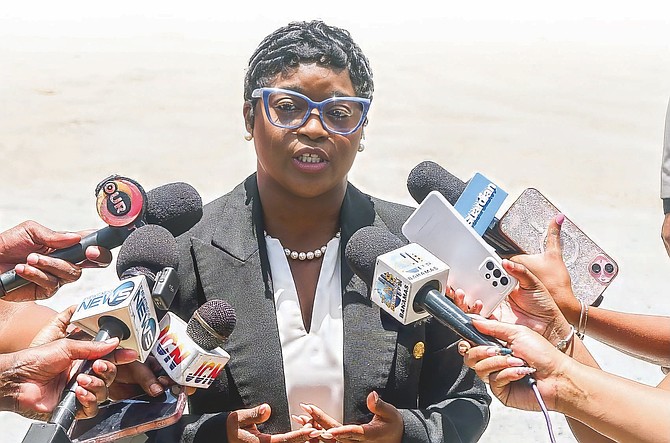
Officials’ underestimated Power Outage Severity
Bahamas Energy Minister JoBeth Coleby-Davis publicly admitted on Wednesday that government regulators significantly underestimated the scope and severity of widespread power outages that have disrupted residential and commercial operations across the country through the early summer months.
Speaking directly to reporters outside the Bahamas Power and Light (BPL) Big Pond substation, Coleby-Davis traced the ongoing disruptions to unforeseen delays to critical transmission and distribution network upgrades. The multi-million dollar modernization project was initially scheduled for full completion by the end of May, but progress was halted for eight weeks following the fatal shooting of Cody Castillo, an employee of construction contractor Pike. This extended pushback forced BPL and the Bahamas Grid Company to continue infrastructure overhauls during the region’s annual extreme heat season, putting unexpected strain on already compromised sections of the national grid while key circuits are taken offline for retrofitting.
“We didn’t expect it to be as bad as it has turned out to be for residents,” Coleby-Davis told reporters. “The record-breaking high temperatures we are seeing right now in June usually do not hit the Bahamas until August or September, a window when all this work would have already been wrapped up. Sometimes, unforeseen events completely upend even the most carefully laid plans.”
Coleby-Davis explained that one of the biggest challenges of the delayed timeline has been rolling, unpredictable outages across different regions of the country. With work spilling into the hot summer season, many communities that normally rely on two parallel power circuits are currently operating on just one to allow crews to complete upgrades. This reduced capacity, paired with earlier-than-usual extreme heat, has created far more disruption than officials initially projected.
Despite the ongoing inconvenience, the minister emphasized that the project is now 95 percent complete, with only a few additional weeks of work required before the upgrades are finalized. She warned the public to prepare for continued intermittent disruptions over that period, but framed the short-term pain as a necessary investment in long-term grid reliability.
“These temporary outages are part of building a far more resilient power system that can better withstand future disruptions from extreme weather and other incidents,” she said.
Coleby-Davis’s comments came just hours after the Ministry of Energy released an official statement acknowledging widespread public frustration with the ongoing outages, particularly during the early summer heat. The ministry clarified in the statement that the national power grid actually has sufficient generation capacity to meet current peak demand, but the reconfiguration of the grid for upgrade work has stretched distribution networks beyond their normal limits.
“It’s much like plugging too many appliances into a single circuit in your home,” the statement explained. “The electricity is there to meet demand, but the pathway delivering it to end users is pushed beyond its normal operating capacity.”
Coleby-Davis echoed this explanation, noting that most unplanned outages stem from system overloads on reduced distribution capacity, not a shortage of power generation. “When we plan outages, we share notice with the public well in advance,” she said. “But when we have an overload, it’s like a tripped circuit breaker in your home: we have to reduce the load manually to bring service back online, and we are working every day to minimize these unplanned events.”
Officials also provided an update on work at the Fire Trail Road substation, where crews have finished installing a new transformer and are on track to complete cable installation and commissioning within four days. Once the new transformer is energized, the substation will operate with two units, boosting overall capacity, improving load distribution, and strengthening reliability for customers in the surrounding area.
BPL Executive Chairman Christina Alston called the newly upgraded Big Pond substation a “historic” and “world-class” facility, part of a $130 million comprehensive grid modernization package. “This is a monumental infrastructure project that will serve this island for decades to come,” Alston said. “All of the most critical transmission lines serving New Providence will route through this substation. If there is an unexpected event — a lightning strike, a tropical weather system, any kind of grid anomaly — the substation’s automated switches will redirect power flow automatically to keep service online. That is exactly what grid reliability looks like, and this project will go a long way toward cutting down on long-term outages across the island.”
-

Atlantis spectacular promises glitz and glamour for entire family
A groundbreaking new live entertainment experience that fuses cirque acrobatics, Broadway theatricality and cinematic digital magic is set to debut this holiday season at the iconic Atlantis Theatre, bringing one-of-a-kind family-friendly fun to Bahamas vacationers. As the flagship attraction for Atlantis Paradise Island’s 2026/27 holiday programming lineup, this limited-engagement run will offer guests a uniquely immersive seasonal experience that blends death-defying stunts, heartfelt storytelling and cutting-edge technical design.
Conceived by Tony-accoladed Broadway director and producer Neil Goldberg, the production marks his first major new project following the sale of his widely successful Cirque Dreams brand to industry giant Cirque du Soleil. Drawing on the existing popularity of the POMP, SNOW and CIRQUEumstance franchise—which already spans best-selling storybooks, animated television specials, merchandise and smaller live events—the new stage show brings the beloved franchise’s story to life on a grand scale.
The narrative follows three inseparable friends—Pomp, Snow, and Cirqueumstance—on a charming, magical journey as they hone their skills in music, illusion and circus performance at an off-the-grid arts university, before setting out to share their gifts and warm holiday messages with audiences across the world. To bring this story to life, the production has assembled a global cast of top-tier cirque performers, distinctive multidisciplinary artists, and theatrical talent, who perform in elaborate, audience-awing costumes that add to the show’s visual spectacle.
What sets the production apart from traditional stage shows is its innovative integration of live performance and digital technology: a custom large-format LED stage environment blends pre-produced PSC animation with on-stage action, erasing the line between the physical and digital worlds to create an interactive, high-adrenaline adventure for all ages. Acts range from gravity-defying cirque stunts and large-scale illusions to lyrical musical storytelling, creating a dynamic experience that caters to both children and adult audience members.
In remarks announcing the residency, Goldberg emphasized that the project aligns with his core creative mission: to deliver accessible, high-quality entertainment content that brings families together across the globe. Partnering with Atlantis Paradise Island, a destination globally recognized for its premium family-focused vacation experiences, offered the perfect platform to scale this new production for a wide audience.
Atlantis’ addition of POMP, SNOW and CIRQUEumstance to its holiday lineup reinforces the resort’s long-standing commitment to bringing world-class exclusive entertainment experiences to guests visiting The Bahamas. Audrey Oswell, a leadership representative for Atlantis Paradise Island, noted that innovative entertainment has always been a core pillar of the Atlantis guest experience, and the resort continues to evolve its offerings to deliver one-of-a-kind memorable moments that cannot be found at any other travel destination. “From immersive once-in-a-lifetime marine encounters to award-winning global dining and exclusive world-class live productions, Atlantis is defined by unique experiences that can’t be replicated anywhere else,” Oswell explained. “POMP, SNOW and CIRQUEumstance continues that legacy, merging the awe of cirque performance, the glitz of Broadway spectacle, and the warm magic of the holiday season into a truly unforgettable experience for guests of all ages.”
Tickets for the production are currently available in two tiers to fit a range of budgets: premium seating is priced at $100 per person, while general admission starts at $35 for children and $70 for adults, not including value-added tax. The show will run for a limited nine-week engagement from November 29 through January 8, timed to align with the peak holiday travel and vacation season at the Bahamas resort.
-

Moxey touts GB rebound but skips resort details
During Monday’s sitting of the Bahamas House of Assembly, Ginger Moxey, the Cabinet minister responsible for Grand Bahama, delivered an optimistic assessment of the island’s post-recession and post-hurricane economic rebound to lawmakers, though she declined to offer new clarity on the two largest and most hotly debated infrastructure projects pending on the island: the stalled Grand Lucayan resort development and the planned redevelopment of Grand Bahama International Airport.
Moxey framed Grand Bahama’s current trajectory as a three-part story of full recovery, widespread reconstruction, and systemic transformation, pointing to a cumulative pipeline of active and completed investments totaling more than $3.5 billion that she says are reshaping the island’s economic foundation.
Despite the upbeat overview, Moxey’s budget address left unaddressed the core questions that opposition lawmakers have repeatedly pressed the ruling Davis administration to answer regarding the two high-stakes unfinished projects. Kwasi Thompson, the Member of Parliament for East Grand Bahama, specifically pressed Moxey to disclose the current status of the Grand Lucayan development and share a timeline for settling outstanding wage payments owed to former workers connected to the project.
In her response, Moxey reaffirmed that the Grand Lucayan property remains a central pillar of the government’s broader tourism redevelopment strategy, critical to expanding Freeport’s available hotel room inventory and supporting the local economy. She offered no concrete details, however, on immediate next steps for the site.
On the topic of Grand Bahama International Airport, Moxey similarly acknowledged that the facility is a linchpin for the island’s tourism, transportation network, and ability to attract outside investment. She confirmed that redevelopment planning remains on schedule, but did not share a formal completion timeline or any specific details about the scope of upcoming work. This lack of transparency comes less than a week after Frazette Gibson, MP for Central Grand Bahama, publicly accused the administration of keeping the Bahamian public in the dark about the future of the Grand Lucayan.
Speaking during her own budget address the previous week, Gibson argued: “The country still does not know what the government intends to do on the Grand Lucayan. The matter is still shrouded in confusion and secrecy.” Gibson also joined opposition calls for clarity on when outstanding wages and benefits will be disbursed to former employees of Lucayan Renewal Holdings, the state-owned entity previously tasked with overseeing the Grand Lucayan project. Additionally, she pushed for updates on the government’s search for a private development partner to lead the airport’s redevelopment and asked when U.S. border preclearance services, a critical draw for international travelers, will be restored at the facility.
Moxey used her address to shine a spotlight on the multiple major development projects that are already advancing across the island. These include the $600 million Celebration Key cruise destination, which has officially opened to visitors and is now moving into its second phase of construction. She also noted that the $450 million MSC Cruise Port development is progressing on schedule, and the $348 million Royal Caribbean resort project at Xanadu Beach continues to move forward.
Beyond tourism, Moxey highlighted ongoing progress across key public and private sector projects: the new Freeport Health Campus is under active construction, and the expanded Doctors Hospital facility is nearing completion. A new dry dock has been delivered to the Grand Bahama Shipyard, with additional units on the way to expand the island’s growing maritime industry. Construction is ongoing for the Innovate 242 business incubator, and energy firm Liwathon has completed its acquisition of the South Riding Point terminal and is pouring new reinvestment into the property.
Visible revitalization efforts are also underway in downtown Freeport, Moxey said, while Island Impressions, a new cultural attraction based at the Grand Bahama Arts and Crafts Centre, is on track for its official launch. Construction on the Fishing Hole Cultural Village is set to begin in the near future, preliminary prep work has started for the rehabilitation and reopening of West Sunrise Highway, and the acquisition of the International Bazaar and Royal Oasis property is in the final stages of completion. The Afro-Caribbean Marketplace and Logistics Centre remains in the pre-construction planning phase.
At the University of The Bahamas North campus, Moxey confirmed that Phase One of the expansion project is fully complete, and Phase Two is on track to be fully operational for the fall 2026 academic semester. In a final exchange during the debate, Gibson questioned Moxey about a reported $60,000 government allocation for a youth club initiative. Moxey had previously told lawmakers that Agritech cadets are halfway through their year-long training program, and the Young Innovators Club will launch an engagement tour of schools and youth organizations across the island this coming September. In response to Gibson’s question, Moxey said she had no knowledge of the specific $60,000 allocation Gibson referenced.
-

Bastian pledges new national ID card to reduce red tape
In his maiden budget address to the House of Assembly, Bahamas’ newly installed Minister of Innovation and National Development Sebas Bastian has outlined an ambitious cross-cutting plan to modernize the country’s public administration, anchored by the introduction of a unified national identity card. The proposal comes as Bahamian citizens currently navigate a fragmented system of multiple identity documents—including passports, voter registration cards, National Insurance (NIB) cards, and driver’s licenses—required to complete transactions across public and private sectors. Each service maintains its own identity verification requirements, creating layers of bureaucratic friction for citizens interacting with government agencies.
Bastian argued that the current fragmented identification framework creates unnecessary red tape that strains the relationship between the state and the public. A single, trusted, secure national credential, he says, would eliminate redundant checks, cut down on time citizens spend waiting in government lines, and deliver stronger protections against identity fraud. The proposed card would act as a universal verification tool, allowing citizens to access government services, sign official documents, and collect entitled benefits seamlessly across all government touchpoints. “One trusted, secure credential that lets a Bahamian access services, sign documents, and receive what they are owed — simply, and safely. Less time in line. Stronger protection against fraud. A government that recognises you wherever you go,” Bastian told the assembly.
The minister did not clarify key details of the proposal, including whether the card would be mandatory for all citizens or if it would replace any of the existing identity documents currently in use. What he did emphasize is that the national ID card will sit at the core of a broader push to break down long-standing technology silos that have left disconnected government ministry systems unable to share data securely. Bastian distinguished between superficial digitization—installing new technology in individual departments—and true systemic transformation, noting that disconnected platforms cannot deliver a streamlined experience for citizens even if they are individually upgraded.
“Interoperability is central to our modernisation strategy,” he said. “Government systems must be designed to communicate securely, share information where appropriate, and support a seamless experience for citizens, businesses, and investors.” Moving forward, all new government systems will be required to adhere to shared interoperability standards, with the national ID framework as the foundation of this connected government model. Bastian also added that the project will prioritize robust privacy and security safeguards, with the Bahamian government retaining full control of the identity system. Where domestic development is not feasible, Bastian pledged that local workers will be trained to operate and maintain the system, ensuring long-term technical capacity remains in Bahamian hands.
The national ID plan is just one component of a far-reaching reform agenda Bastian announced for his ministry, which also includes major regulatory and educational initiatives centered on artificial intelligence, expanded satellite connectivity, and a revitalized national development strategy. Noting that no emerging technology holds greater potential to reshape key sectors including education, business, and healthcare, Bastian said The Bahamas will not cede its place in the global AI revolution—but will not adopt the technology without robust regulatory safeguards to protect citizens.
To advance this balanced approach, Bastian announced the creation of a new National Artificial Intelligence Committee, drawing representatives from the public and private sectors as well as the legal community. The committee will be tasked with drafting The Bahamas’ first national AI legislation, rooted in the country’s core values and principles. The proposed regulatory framework will establish a permanent AI Authority tasked with overseeing the responsible development and deployment of AI, setting clear regulatory guardrails, and strengthening ongoing oversight of the sector. Bastian revealed that preliminary work is already underway, with government officials holding discussions with several of the world’s leading AI technology companies to inform the process.
To ensure all Bahamians can benefit from the AI transition, the minister also proposed a national AI literacy initiative that will deliver both in-person and online training courses in artificial intelligence and software development, accessible to citizens across every island regardless of socioeconomic background. Emphasizing that future readiness starts in education, Bastian pledged full support for the Ministry of Education as it integrates AI training into national classroom curricula.
Beyond digital ID and AI, Bastian’s agenda includes exploring new opportunities in satellite connectivity and the broader global space industry, building the resilient digital infrastructure required to support a competitive modern Bahamian economy. The minister also committed to revitalizing the country’s National Development Plan, previously treated as a static strategic document that was left largely unimplemented. Going forward, Bastian said, the plan will be treated as a “living instrument” updated regularly to reflect changing national priorities, with progress tracking embedded across all government departments.
Starting this August, the plan’s secretariat will conduct a nationwide assessment of planning capacity across all ministries and government departments, establishing a centralized system to track implementation progress. Bastern noted that the plan will be updated to include fast-growing emerging sectors that did not exist when the country’s Vision 2040 was originally drafted, including AI, digital services, fintech, and space technology—areas he identified as core to The Bahamas’ future competitive advantage. All updates to the plan will be developed through broad consultation with stakeholders, business leaders, and community members across every island. Finally, Bastian pledged to modernize the Bahamas National Statistical Institute to improve the quality and timeliness of national data collection and analysis, enabling policymakers to make faster, more informed decisions that serve the public good.