标签: Bahamas

巴哈马

  • Rising living costs pushing more Bahamians to build ‘side hustles’

    Rising living costs pushing more Bahamians to build ‘side hustles’

    Across the Bahamas, skyrocketing living costs have reshaped the nation’s labor landscape, pushing growing numbers of locals to balance multiple roles and launch small side businesses just to cover basic expenses. Workers and industry leaders across the country now agree that a single traditional 9-to-5 income is no longer sufficient to sustain most households.

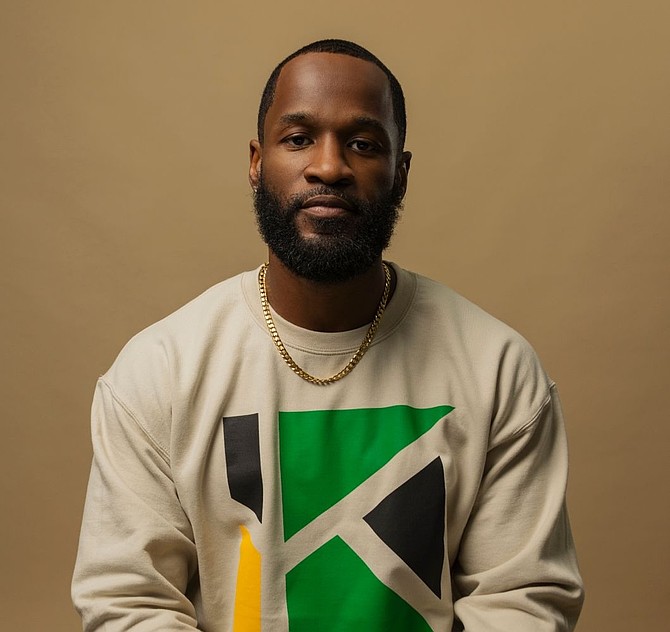
    For some Bahamians, these side ventures have gradually grown into full-time, self-sustaining careers. For others, they remain a critical financial buffer that helps cover monthly utility bills, support extended family members, and bridge gaps between paychecks. Kendenique Deleveaux, founder of communications and project management firm Mommy Hustle, opened her business out of urgent necessity after losing her full-time position at the onset of the COVID-19 pandemic. Despite holding multiple advanced degrees and years of professional industry experience, she spent months struggling to land a new full-time role.

    “In our community, relying on just one income simply does not work anymore,” Deleveaux explained. “Nearly every extra stream of income people build here is born out of the need to survive. This business was born from that need – it came from me having to make sure I could put food on my own table.”
    Deleveaux recounted that potential employers repeatedly turned her away, telling her she was overqualified for the open roles she applied for. At one point, she even debated removing some of her credentials from her resume to appear more appealing to hiring managers. After discussing the dilemma with her late parents, she chose not to downplay her professional accomplishments, even as that choice left her locked out of formal employment opportunities.

    “So many doors were slammed in my face, so many people refused to give me a chance,” she shared. “There were women in high-level positions who could have picked up a phone, made one single call, and gotten me a job – but none of them did.” Her circumstances shifted when a sitting member of parliament, whom she had no pre-existing personal connection to, offered her a short-term consulting role. Today, Deleveaux holds multiple professional roles: she works as a consultant for the Ministry of Labour and Public Service, hosts a popular weekly radio segment called Kenny’s Korner, works as an independent communications strategist, and continues to grow Mommy Hustle through hosted events and client projects. Multiple streams of income have allowed her to build a more stable, higher quality life for her family, she said.

    Deleveaux noted that widespread unfair hiring practices, which prioritize personal connections over formal qualifications, push many Bahamians into entrepreneurship by default. “People get positions because of who they know, not what they can do,” she said. “You can outperform the person in the role by miles, but you’ll never get the opportunity because you don’t have the right connections. It’s not a fair system, but it happens every single day across the country.”

    This reality is particularly disheartening for Bahamians who study abroad and return home eager to contribute to their communities, only to find themselves locked out of formal work due to a lack of connections. Deleveaux says she receives messages every day from employed and unemployed women across the country via social media, asking for advice on launching their own small businesses because their single paychecks are not enough to cover household expenses. She has observed a sharp increase in the number of women turning to entrepreneurship solely to pay bills and support their families.

    “People are just trying to keep their heads above water, and they want to do it the right, legitimate way,” she added. When asked whether the Bahamian government is doing enough to support financially struggling residents, Deleveaux said that while opportunity programs do exist through the government, residents have to take initiative to seek out and access those resources themselves.

    Clement McKinney, owner of Ambition Mobile Barbering, followed a similar path, turning a casual side hustle into a full-time career after realizing his stable banking job offered little room for financial or professional growth. McKinney worked in the banking sector for eight years while cutting hair for clients on the side. He first developed an interest in barbering during high school, and later earned formal certification through the Bahamas Technical and Vocational Institute. Initially, he saw barbering as just a practical skill to cut hair for friends and family, but demand gradually grew into a full business. In 2020, amid the COVID-19 pandemic, he left banking to pursue mobile barbering full-time after discovering his side business earned twice as much as his corporate salary.

    “By offering a mobile, convenient service, I saw that people were really willing to pay for what I was offering,” McKinney explained. “I doubled my income when I made the jump. When I was working at the bank, I hit a ceiling – I couldn’t advance, I couldn’t grow into new areas. My frustration built up until I decided to take a leap of faith and bet on myself.”

    Ambition Mobile Barbering has now been in operation for eight years, and McKinney encourages other Bahamians to turn personal passions into viable businesses, rather than pursuing side hustles solely out of financial need. Even so, he acknowledged that rising living costs have pushed him to explore additional income streams to keep up with rising expenses.

    Don Williams, chairman of the Bahamas Chamber of Commerce and Employers Confederation, confirmed the broader trend this week, noting that both elevated living costs and demand for a better quality of life are driving growing numbers of Bahamians to launch side businesses. Williams said the Chamber has recorded a steady increase in the number of people converting side hustles into full-time formal enterprises, a shift that is helping fill labor gaps across multiple industries.

    He added that for many workers, a traditional 9-to-5 role is increasingly unable to cover basic expenses, while many others choose entrepreneurship because they want to build a future that does not depend on an employer. “The current generation of workers wants far more independence,” Williams explained. “They want more free time, more flexibility, more disposable income, and they don’t want to answer to a boss. Even if people call them the microwave generation for wanting fast results, it’s that drive for independence that is boosting productivity across the country, just like the rise of AI has.”

    Williams noted that younger Bahamians have more opportunities to build their own businesses than previous generations, and many are taking full advantage of those openings. While many people continue to run side ventures while holding full-time traditional roles, most ultimately hope to leave formal employment behind and work for themselves full-time.
  • North Andros plane crash revives memories of mother’s death

    North Andros plane crash revives memories of mother’s death

    For Kermit Adderley Jr., the pain of losing his mother in a 2018 North Andros plane crash never fully faded. Now, a second deadly aviation disaster on the same stretch of the Bahamian island has not only resurrected devastating old memories – it has reinforced a devastating truth: the systemic gaps that turned his family’s grief into an agonizing six-month wait to bury his mother have never been fixed.

    In January 2018, Margaret Adderley was one of six people killed when their Piper Aztec aircraft, en route from North Andros to New Providence, crashed into the ocean. All passengers and crew on board died. More than eight years later, critical questions surrounding the tragedy – including whether the aircraft carried valid insurance – remain unanswered for the Adderley family. To make matters worse, the family was forced to wait nearly six months to lay Margaret to rest, held up by crippling delays in receiving DNA forensic testing results needed to formally identify her remains. Adderley, a 39-year-old licensed customs broker, says even his mother, who was among the first victims to be identified, faced an interminable wait; other families affected by the 2018 crash waited far longer.

    That prolonged uncertainty inflicted lasting damage on his family, Adderley says. As they tried to rebuild a sense of normalcy and return to daily routines, repeated delays kept reopening their emotional wounds. Adderley’s younger brother, a teenager at the time of the crash, withdrew deeply into himself as he struggled to process the loss and the endless wait. Even now, years later, Adderley’s young daughter still asks for answers about what happened to her grandmother.

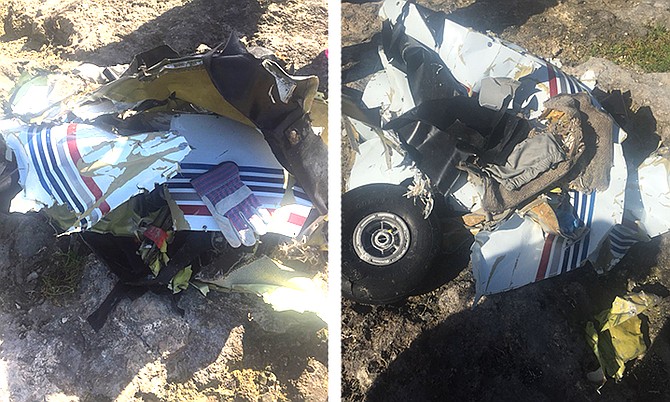
    On July 10, Independence Day in the Bahamas, that nightmare repeated itself: another small plane crashed near San Andros Airport on North Andros, killing all 10 people on board. The lone survivor pulled from the burned wreckage, Macaro Rolle – who is related to Adderley’s wife – later succumbed to his injuries. Adderley says when news of the crash broke during a family gathering, the room fell instantly silent and numb. For his family, who already knew the weight of this kind of tragedy, the impact was immediate. Multiple relatives, including some of his aunts, were so shaken they had to sit down to recover their composure.

    Worse still, the same failure that prolonged Adderley’s grief is already repeating itself for the 10 newly affected families. Relatives of the latest victims have been told they face an eight-week wait for DNA testing results before they can identify and bury their loved ones, whose bodies were severely burned in the crash.

    Adderley says that wait is almost certain to stretch far longer than eight weeks – a timeline he knows from firsthand experience. “I feel for them, but I’ve already lived that. I wouldn’t allow the government to tell me six to eight weeks because I know firsthand it takes longer than that,” he said.

    At the root of the ongoing crisis, Adderley argues, is the Bahamas’ continued reliance on overseas forensic laboratories to conduct critical DNA testing, a policy he calls “kind of crazy.” For years, he says, governments have poured funding into other priorities, while neglecting to invest in a fully functional national forensic lab that could cut down on wait times for grieving families. It is only after major tragedies that policymakers acknowledge the urgent need for reform, Adderley says, and no meaningful change ever comes between disasters. “It’s disappointing to know that you now have ten families who have to go through the same process again. It’s not until tragedies like this happen that there’s a cry or need for better solution to the problems that we face as the people,” he said.

    Air accident investigators ultimately concluded the 2018 crash was caused by pilot error, citing the pilot’s limited qualifications and inexperience, combined with poor weather conditions, as the key contributing factors. But that official finding has not filled the gap of unanswered questions for the Adderley family, who have gotten little closure eight years on. “Nothing came out of the crash other than a death,” Adderley said. “No answers.”

    Beyond pushing for a domestic forensic lab, Adderley is calling on the Bahamian government to introduce emergency financial support for families left bereaved by sudden disasters like plane crashes. Funeral costs impose a heavy, unexpected burden on families already reeling from grief, he notes, and even small targeted assistance would make a major difference. Adderley says his own family was able to absorb the costs, but if his mother had been the sole breadwinner, their situation would have been far direr. Even modest compensation to help offset end-of-life expenses, he argues, would offer a small measure of support to families at their most vulnerable.

    Adderley’s message to the newly affected families is one of solidarity, but he holds out little hope for a quick resolution to their ordeal. “You hear all kind of things when you find yourselves in that situation but I just ask that those families, they just stick together and try to get some type of clarity and resolution but it’s not going to come now. The release is not going to come now.”

  • Crime consultant says “somebody dropped the ball” in witness murder

    Crime consultant says “somebody dropped the ball” in witness murder

    A high-profile murder case in the Bahamas has sparked urgent demands for systemic oversight and institutional accountability after a man accused of killing a prospective prosecution witness violated his bail conditions 81 times over six months without consequence. The killing, which occurred in mid-July on Carmichael Road, has left criminal justice experts questioning critical gaps in the country’s bail monitoring protocols.

    The 39-year-old suspect was formally charged on Monday with the murder of James McPhee, a 39-year-old man who was set to testify against the same accused in an upcoming armed robbery trial. Prosecutors have documented that between January 3 and July 8 – just four days before McPhee was killed – the defendant failed to check in at his required local police station 81 separate times in violation of his court-ordered bail terms. When the case moved to address the bail breaches, the suspect attempted to plead guilty to the violations before reversing his position, prompting the court to enter a not guilty plea on his behalf.

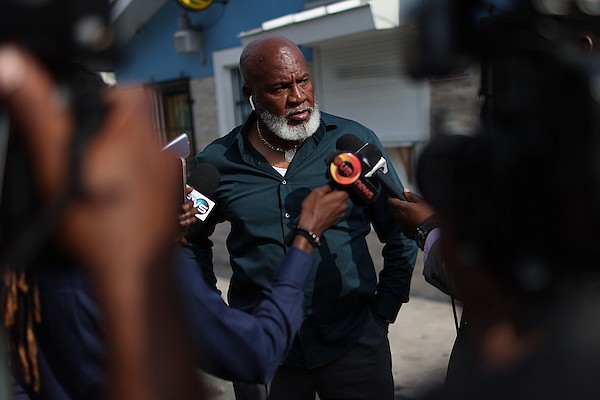
    Carlos Reid, a prominent crime consultant who has long called for criminal justice reform in the country, has emerged as the most vocal critic of the systemic failure that preceded the killing. Reid told local outlet The Tribune that repeated, unaddressed bail breaches represent an unacceptable failure of oversight, arguing that “somebody dropped the ball” that allowed a dangerous defendant to remain free and target the witness. “I think somebody should be accountable. Somebody should be made to bear,” Reid stated. “No, we can’t wait until like somebody die before we sound that alarm.”

    Reid noted that despite the repeated missed check-ins, the suspect remained active on the court-ordered electronic monitoring program, never cutting off his tracking device. That means law enforcement authorities could have located the defendant immediately at any point after he missed his first required check-in, he argued. “If the court sanctions that you sign it, then you sign in. If you miss signing in, then you’re in breach of a court order. You should be taken back to court and if there’s any time that they wanted to find that person, that person was being monitored. They could have found him in a heartbeat,” Reid said.

    The crime consultant is calling for a full investigation into how the repeated violations went unnoticed or unaddressed for more than six months. He has also pushed for a review of official protocols to clarify what steps authorities must take when a defendant repeatedly violates bail reporting requirements, and has asked whether McPhee should have been warned about the defendant’s ongoing breaches. Reid added that he has already raised the issue with the Minister of National Security, who has committed to preventing similar failures in the future.

    However, Attorney General Wayne Munroe has pushed back on criticisms of the current system, downplaying the public safety risk tied to the missed check-ins. Munroe argued that the primary purpose of required police station check-ins is not to monitor daily public safety risk, but to ensure defendants do not flee before their trial. “The more positive way that we have to protect the public with people on bail if they’re considered dangerous is to electronically monitor them,” he said. “That way you know where they are 24 hours a day, as opposed to the one moment you walk in a police station and sign a book or do the biometric thing so the condition of signing into a police station is about preventing from you absconding.”

    Munroe also questioned the need for dual reporting and electronic monitoring requirements, noting that continuous location tracking eliminates any need for periodic in-person check-ins. “If he’s being electronically monitored, I don’t understand why somebody who’s being electronically monitored needs to sign in at a police station. You know where to find him 24 hours a day,” he said. The attorney general added that any individual who feels threatened by a defendant released on bail can contact police to request an investigation, and officers have the authority to relocate at-risk witnesses if deemed necessary.

  • Family devastated after father-of-five electrocuted to death

    Family devastated after father-of-five electrocuted to death

    A sudden workplace tragedy has plunged a Bahamian family into profound grief, just hours after the patriarch shared his love with his eldest child. John Walkes, a 68-year-old painter and contractor from Exuma who had traveled to Bimini to find steady work, was killed by electrocution while on the job at the Bimini Blue Water Marina on Saturday. The fatal incident has left his wife of many years and five children grappling with the unanticipated loss of a man who dedicated his life to providing for his family.

    Local law enforcement officials confirmed they were first notified of the industrial accident at approximately 2:45 p.m. The marina is located along Kings Highway in Alice Town, a busy commercial district on the island. Initial investigation findings show Walkes was completing painting work alongside a second contracted employee when he accidentally made contact with an exposed transformer positioned between a marina building and the ground. The electrical contact immediately sparked an intense fire that engulfed Walkes.

    His shocked co-worker rushed to retrieve a fire extinguisher to put out the blaze, but when he returned to the scene, Walkes was already unresponsive. Emergency medical personnel were called to the site quickly, and a local doctor pronounced Walkes dead moments after arriving. Police have launched a formal investigation into the circumstances of the accident to determine what safety lapses or factors led to the fatal incident.

    Elizabeth Walkes, the victim’s daughter, spoke publicly to local media this week, explaining the family first learned of her father’s death from a mutual family friend. She described the news as utterly devastating, particularly for her mother Mavis, who has been left reeling from the loss of her partner. “We’re still processing it,” Ms. Walkes told The Nassau Tribune in an interview on Monday. “We’re grieving, and it’s going to take a while to really get over it.”

    Ms. Walkes painted a portrait of her father as a tireless, committed worker who traveled across the Bahamas’ Family Islands for years to take contracting and painting jobs to support his wife and children. After completing stints of work on Abaco and Grand Bahama, Walkes recently made the move to Bimini after securing a new painting contract. He had told family he was enjoying his time on the island and had already made plans to have two of his three sons join him to work on upcoming projects.

    “He was a very hard worker, a dedicated person and a go-getter,” Ms. Walkes said of her father. “He was always trying to provide for his family.”

    Tragically, the final conversation Walkes had with his family came just a few hours before the accident, when he spoke by phone with his eldest son, John Walkes Jr., about his religious faith. “My brother told him, ‘Daddy, I love you. I’ll talk to you later.’ Then a few hours later we heard the tragic news,” Ms. Walkes recalled.

    A deeply devout man, Walkes raised his children to prioritize faith, encouraging regular prayer and fasting and often reminding his family that “Only what you do in Christ will last.” He was also deeply family-oriented, regularly calling his children to check in even when he was working hundreds of miles away from home. That constant closeness has made his sudden death even harder for the family to process, Ms. Walkes explained.

    As of earlier this week, the family had met with investigating officers to share what they know about Walkes’ work at the marina, but no representatives from Bimini Blue Water Marina had reached out to offer condolences or discuss the accident. Cyril Walkes, the victim’s nephew, said his uncle was an inspiration to everyone in the extended family, particularly after he transformed his life through faith and became a reliable pillar of strength for his loved ones.

    “He never gave up. He found God and turned his life around,” Cyril Walkes said. “He was a giver, a jack of all trades and someone who always wanted to do something positive.”

    Walkes is survived by his wife Mavis, three sons, two daughters, and an extended network of loved ones across the Bahamas. He was just weeks away from celebrating his 69th birthday, which is scheduled for November 27. Bimini’s Member of Parliament Randy Rolle issued a formal statement of condolence to the Walkes family on Sunday, noting that local authorities are continuing work to identify the exact cause of the electrical incident. The investigation aims to clarify the source of the dangerous electrical current to help implement stronger safety safeguards that will prevent similar tragedies in the future.

  • Roadside memorial for Shirley Street crash victims removed

    Roadside memorial for Shirley Street crash victims removed

    Five teenagers lost their lives in a tragic car crash on Shirley Street, and their families have been left reeling from a second devastating blow: the unannounced, complete removal of the roadside memorial they created to honor their children. The makeshift site held irreplaceable personal mementos, including photographs of the victims, and had become a quiet space for grieving parents to process their overwhelming loss. As of press time, local newspaper The Tribune has not been able to identify who ordered or executed the memorial’s clearance, leaving families without answers or a party to hold accountable.

    Damian Stubbs, father of 17-year-old victim Diamond Stubbs, was the first family member to discover the removal during a visit this Monday. It had taken Stubbs weeks to gather the emotional courage to return to the crash site, and he initially mistook the construction activity for routine water infrastructure work. He told reporters he was so stunned by the sight of workers burying the memorial that he left the site immediately, too overcome with anger and grief to confront the crew.

    Urged by his wife to return the following morning to retrieve Diamond’s portrait — which he had planned to bring with him to Cat Island to hang above his bed — Stubbs arrived to find the entire memorial gone. He immediately began reaching out to the families of the other four victims: 19-year-old Keno Gordon Jr, 18-year-old Betrica Brown, 19-year-old Evalena “Lilly” Johnson, and 19-year-old Stania Webb. None of the families had received prior warning of the removal. When Stubbs traveled to Cat Island to share the news with Stania Webb’s father, he too was completely caught off guard.

    Stubbs emphasized that the oversight was an unnecessary cruelty to families already deep in mourning. All the families asked for was the chance to collect the personal items that mattered most, before any removal took place. “If they had approached us, we would have moved what we wanted and if they wanted to get rid of whatever at least they could have given us the opportunity to say what we had to move, if only the girls’ pictures,” Stubbs said. Many of the photos were intended to be moved to the teenagers’ gravesites once burials were complete, a process that is still ongoing for the families.

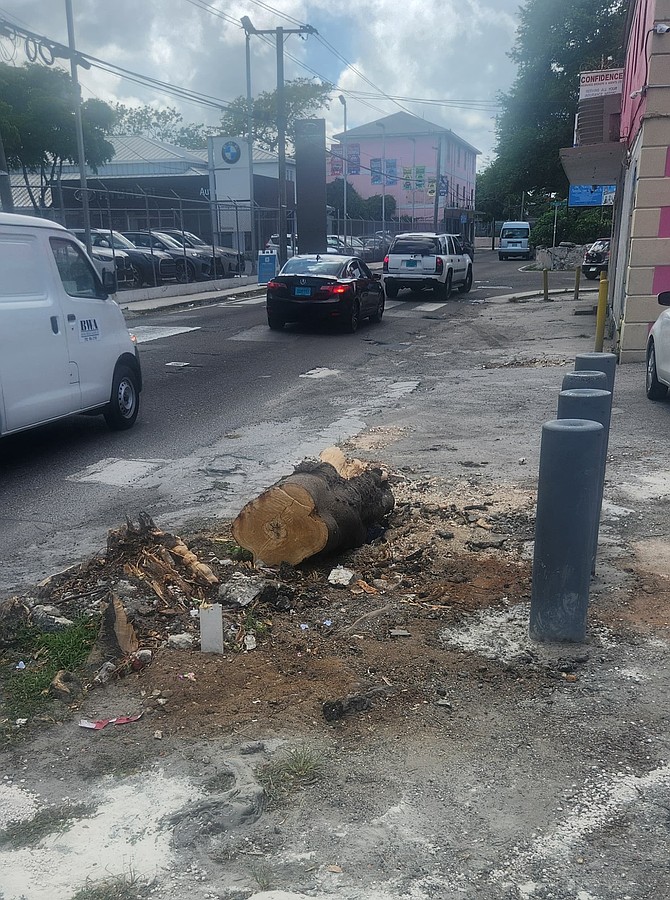
    In a bewildering detail that has added to the families’ frustration, the large tree stump at the crash site was left untouched even as the entire memorial was cleared away. Addressing the unknown parties responsible for the removal, Stubbs issued a direct plea: “Tell those people Mr Stubbs say find his daughter picture because I’m coming for it.”

    Shantika Williams-McQueen, mother of victim Keno Gordon Jr, told reporters she had no idea the memorial had been cleared, and had not yet found the emotional strength to visit the crash site herself. She explained that the removal came at an especially raw moment: none of the five victims have had their funerals or completed burial arrangements, and families are still in the acute phase of grieving.

    “I can’t speak for everybody, but especially at this time, you know that there’s still a lot of grieving and stuff going on,” she said. “There hasn’t even been, like, the funerals or anything like that for the complete burial of them as yet. I don’t think it should have been removed at this time.” Williams-McQueen added that many of Keno’s friends had left personal items at the memorial for him, and she had been looking forward to the chance to collect those mementos to place at his gravesite once the service was held.

  • Hope for housebound mother after public appeal

    Hope for housebound mother after public appeal

    For nearly a decade, 47-year-old Philippa Armbister has watched her health and independence slowly erode, trapped in her Nassau home by a severe, progressive case of lymphedema compounded by hypertension and heart failure. After years of isolation and unmet medical need, a public appeal aired on local Eyewitness News has opened the door to the first meaningful intervention she has received in years, bringing newfound hope that she may one day regain her mobility, reunite with her two young daughters, and rebuild the independent life she lost.

    Armbister’s health struggles began long before her total confinement to home. She was already diagnosed with lymphedema, a chronic condition marked by painful fluid buildup that causes extreme tissue swelling, before welcoming her first child. Two closely spaced pregnancies accelerated the disease dramatically, she says, with her second pregnancy in 2019 pushing her condition over the edge. By December of that year, she was unable to leave her home at all. The severe swelling has left both of her legs enormously enlarged, leaving her dependent on a walker for limited movement and confining her to her house for more than six years.

    Weighing nearly 500 pounds, Armbister pushes back against common misconceptions that her size stems from poor lifestyle choices. She clarifies that the majority of her excess weight comes directly from lymphedema-related swelling, noting she eats modest portions of home-cooked meals and has never regularly consumed fast food. Though she has always carried extra weight, she says the combination of her chronic condition and consecutive pregnancies permanently altered her body and robbed her of the ability to move freely.

    Unemployed since 2017, Armbister has struggled to adapt to a life of dependence after decades of supporting herself. Currently, she relies on her elderly father and limited government assistance to cover her daily needs — a reality that has been difficult to accept for a woman who values self-sufficiency above all else. The hardest blow of her declining health, however, has been separation from her 8-year-old and 11-year-old daughters. When Armbister’s health worsened, one of the girls became seriously ill and required extended hospital care, and child welfare authorities placed the girls in the care of their godmother. The pain of that separation was amplified when Armbister could not even visit her hospitalized daughter, only able to connect via video call. That devastating experience, she says, is what finally pushed her to agree to a public appeal for help.

    In the weeks since her story was broadcast, the outpouring of support has exceeded Armbister’s wildest expectations. Top on the list of critical support is an intervention from Dr. Tornette Hanna, director of the country’s National Health Insurance Authority (NHI), who reached out directly to coordinate care. Armbister is now scheduled to undergo a full comprehensive medical evaluation on July 29, which will map out the specialized treatment and care she needs to manage her conditions and begin to reverse her mobility loss. Beyond NHI’s support, two local fitness professionals have also stepped forward voluntarily, already preparing customized, gentle exercise plans that will help Armbister gradually build strength and mobility once she receives medical clearance to begin physical activity.

    For the first time in years, Armbister feels optimistic about her future, though she admits to small moments of anxiety ahead of her upcoming evaluation — including a well-known fear of needles that makes the required blood work daunting. When asked about her goals for the next year, her answer is simple and heartfelt: she wants to regain enough health to bring her daughters home, return to work, and once again earn her own income. Even facing hurtful comments from some relatives who blame her second pregnancy for her condition, Armbister remains unshaken, calling her younger daughter a blessing and refusing to dwell on negativity. For now, her focus is fixed firmly on the path ahead, as the upcoming evaluation marks the first critical step toward the recovery she has waited so many years for.

  • Pilot accused of LPIA sentenced to six months for marijuana possession

    Pilot accused of LPIA sentenced to six months for marijuana possession

    A 28-year-old pilot already held on remand for a high-profile murder and a multi-million dollar international drug smuggling case has been handed additional prison time after authorities discovered marijuana in his jail cell. Donald Ferguson II, who is set to go on trial for the fatal shooting of Giovanni Rolle and involvement in a $15.3 million cocaine seizure, entered a guilty plea to a reduced charge of simple possession of marijuana on Thursday, receiving a six-month custodial sentence from Senior Magistrate Raquel Whyms.

    The contraband, a one-ounce package of marijuana, was located during a search of Ferguson’s housing unit at the Bahamas Department of Correctional Services on June 9 of this year. Ferguson was already in pretrial detention at the facility facing two sets of extremely serious charges.

    First, he is accused of gunning down 38-year-old Giovanni Rolle, a father of two, in Rolle’s vehicle on Coral Harbour Road, directly outside Rolle’s place of work at Jet Aviation, during the morning hours of June 16, 2024. Beyond the homicide allegation, Ferguson is also facing charges related to one of the largest recent drug seizures in Bahamian history. Prosecutors claim Ferguson and a group of co-conspirators plotted to smuggle 1,982 pounds of cocaine and 50 pounds of hydroponic marijuana into The Bahamas between the start of October and early December 2024.

    The smuggling operation was disrupted after law enforcement recovered the entire drug shipment, packaged into 24 multi-colored bundles, from the wreckage of a blue-and-white plane that crashed near Acklins on December 6, 2024. The street value of the seized cocaine alone is estimated at $15.3 million, with the hydroponic marijuana adding an additional $50,000 to the total value of the bust.

    Ferguson’s legal troubles extend beyond The Bahamas as well. He is one of 13 individuals who have been indicted in the United States in connection with an alleged transnational cocaine trafficking ring. Prosecutors on both sides of the border claim the network exploited weak security at Bahamian airports and even included high-ranking members of the Royal Bahamas Police Force and Royal Bahamas Defence Force in its operations.

    Just last week, Ferguson’s legal team saw their latest bid for pretrial release rejected by Supreme Court Justice Dale Fitzpatrick, who ruled that releasing the defendant would carry unacceptable public safety and flight risk. In the current jail contraband case, prosecutors initially pursued a more severe charge of possession with intent to supply, but the count was downgraded to simple possession ahead of Ferguson’s plea. Alongside the six-month sentence for the marijuana possession, Magistrate Whyms added a three-month prison term for Ferguson violating the terms of probation from a prior offense. Both sentences will run concurrently with one another. Inspector 2257 Wilkinson served as the prosecuting officer for the case.

  • Disabled dialysis patient accuses PMH of victimisation

    Disabled dialysis patient accuses PMH of victimisation

    A decades-long disabled dialysis patient in Nassau has locked horns with public health officials over a forced transfer that he says puts his life at grave risk, in a dispute that lays bare gaps in support for vulnerable patients navigating the country’s public health system.

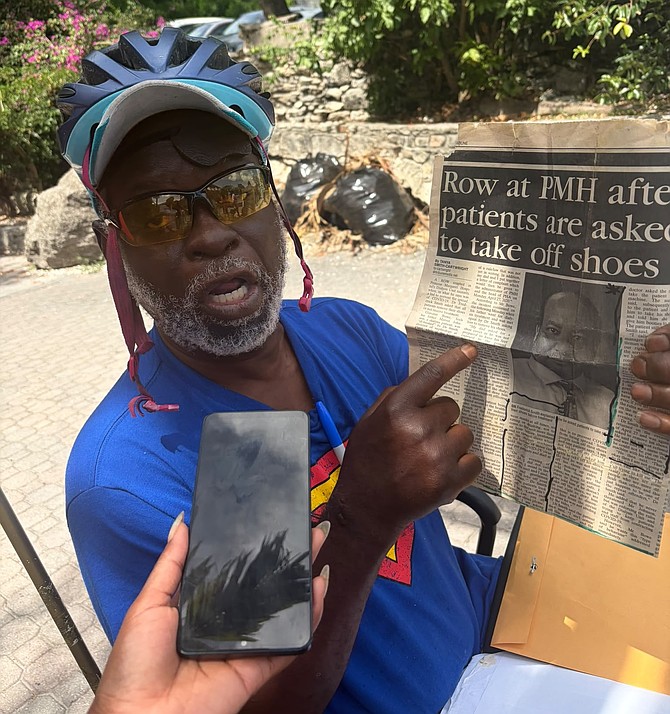
    Sixty-two-year-old Marvin Johnson, a partially blind wheelchair user who has relied on three-times-weekly dialysis treatment at Princess Margaret Hospital (PMH) for seven years, says the facility’s decision to reassign him to the private Renal House on West Bay Street ignores his crippling transportation barrier: with a monthly pension of just over $600, he cannot cover the cost of daily round-trip travel to the new location. Johnson, who lives within walking distance of PMH, warns that missing even a handful of treatments could be fatal.

    “If I don’t go for treatment two or three times, I might as well pick out my casket,” Johnson told reporters outside PMH Friday. He claims the transfer is retaliation for years of public criticism over what he calls substandard care at the public hospital, a charge that health administrators have flatly denied.

    According to Johnson, he was never consulted about the permanent move to Renal House, after a temporary stay at Doctors Hospital arranged amid recent power outages that disrupted PMH’s dialysis unit. He does not oppose receiving care at an outside facility, he says, but is demanding full, 100% transportation coverage from the Public Hospitals Authority (PHA) if officials insist on moving forward with the reassignment. Johnson, who has reached out to multiple parties for intervention without success, says he was quoted around $80 per day for round-trip ride-share service — a sum that far outstrips his fixed income.

    The PHA’s managing director, Dr. Aubynette Rolle, has pushed back sharply on Johnson’s account, saying the patient personally requested a transfer out of the public dialysis system. She told reporters Johnson was fully aware of the plan to move him to Renal House, and that he appeared satisfied with the arrangement when the pair discussed it.

    Rolle explained the temporary transfer to Doctors Hospital was arranged to address disruptions from PMH power outages, and the permanent move to Renal House was intended to de-escalate long-running tension between Johnson and the head of PMH’s nephrology department. The conflict dates back to 2020, when Johnson claimed the department leader refused to treat him over a disagreement about removing his shoes. Johnson says he was ultimately vindicated in that dispute, but alleges the doctor has carried a grudge and influenced the transfer decision.

    Dr. Rolle countered that an internal investigation cleared the nephrology department head of any wrongdoing, and dismissed Johnson’s retaliation claims as unsubstantiated. “He just alleges without nothing concrete,” she said, noting Johnson is welcome to pursue legal action if he believes his rights have been violated. While Rolle acknowledged Johnson’s transportation challenges, she said the PHA’s mandate covers medical care, not patient travel, and that patients requiring transportation support are routinely referred to social services. “The hospital cannot be blamed for the transportation element,” she added.

    The decision to move Johnson has drawn condemnation from opposition political figures, with Coalition of Independents deputy leader Dr. Veronica McIver joining Johnson outside the hospital Friday to speak out against the policy. Johnson, for his part, says the transfer violates his constitutional rights and the PHA’s own patient bill of rights, arguing that unfair treatment of a legally blind, mobility-impaired patient is unacceptable in a public health system meant to serve vulnerable communities.

  • Plane crash triggers memories of tragic loss for son of late Myles Munroe

    Plane crash triggers memories of tragic loss for son of late Myles Munroe

    For Myles Chairo Munroe Jr., the recent news of a fatal Independence Day plane crash that claimed 10 lives near San Andros airport did more than just bring up tragic headlines. It unlocked decades-old, raw grief that he has carried since losing both his parents in an almost identical aviation disaster 12 years ago. A loss he has long acknowledged is one no one ever truly moves past — you only learn how to carry it and build a new life around it. Now 42 and preparing to welcome his second child with his wife, Munroe Jr. told local Bahamian outlet The Tribune that news of any plane crash is painful to absorb, but this latest incident hit particularly hard due to the sheer scope of lives cut short.

    This July crash, which involved a Flamingo aircraft, killed one more person than the 2014 Grand Bahama aviation tragedy that took the lives of Munroe Jr.’s parents: prominent leadership expert Dr. Myles Munroe and his wife Ruth. Back in 2014, Munroe and his traveling delegation were en route to Freeport to participate in the Global Leadership Forum when their crash occurred.

    Reflecting on the wave of news that followed this month’s crash, Munroe Jr. said the incident immediately pulled him back to 2014, when widespread unconfirmed rumors and misinformation circulated in the first chaotic hours of reporting. He recalled how overwhelming and hurtful that flood of false information was for his own family in those early days of grief.

    Calling for greater public empathy, Munroe Jr. urged people to be more sensitive to the devastating realities that grieving families grapple with in the aftermath of mass casualty tragedies. He described reading the emerging reports from the San Andros crash as a surreal experience, but added that he was deeply moved by accounts of local residents who rushed to the crash site to comfort the lone surviving passenger in their final moments. Even so, his heart aches for the families of the 10 victims, who will carry the weight of that tragedy and those memories forever.

    “Every situation, every incident related to a plane crash is different,” he emphasized. While he shares the common experience of losing loved ones in an aviation disaster, he noted every tragedy carries its own unique pain, and every person processes grief at their own pace on their own terms.

    For Munroe Jr., moving forward has meant living each day with intentional purpose while upholding the legacy his parents left behind. His core mission today is advancing his father’s long-held vision: building the Munroe Institute of Leadership. He and his team have been working steadily to turn that vision into reality, developing accessible leadership and personal development programs that continue the work his father started decades ago. Additional initiatives to honor his parents’ legacy are already in development, with public announcements expected in the near future.

    Offering advice to the families of the San Andros crash victims, Munroe Jr. urged them not to rush their grieving process. He stressed that there is no universal, set timeline for healing, and encouraged those struggling to hold onto the happy memories of their loved ones — a practice that has become a cornerstone of his own healing journey. “There’s no telling how long it’ll take for you to feel maybe not over it, but a little more at peace because you really never get over it, right? You just learn how to live with this new reality,” he explained. This November marks 12 years since he lost his parents, and he says the pain still feels as fresh as if it happened yesterday. Accepting that many of life’s most devastating events are outside of human control has also helped him find gradual peace, he added: a lesson his father often shared with their family, reminding them that life is unpredictable, and everyone should live each day with clear purpose.

  • Elderly man attacked by pack of dogs

    Elderly man attacked by pack of dogs

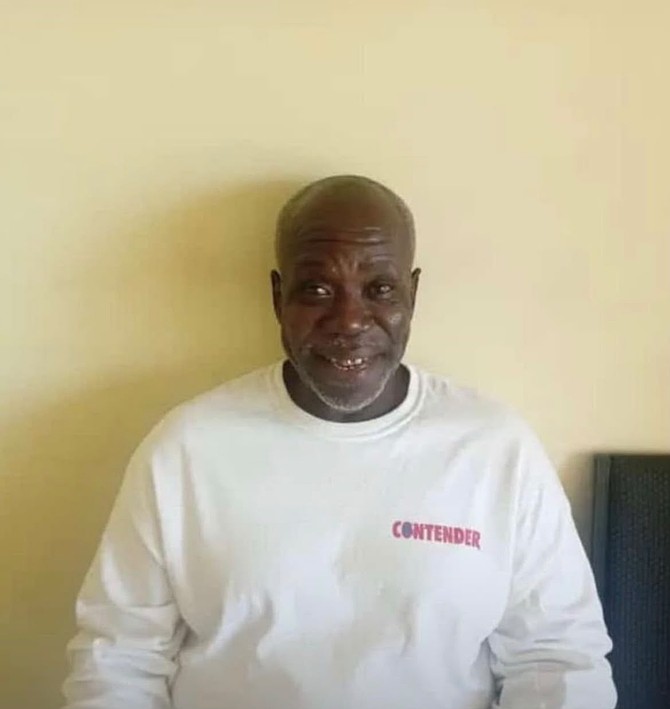
    A violent, life-threatening dog attack in a residential neighborhood has reignited calls for urgent government intervention to address the persistent danger of uncontrolled dangerous dogs roaming public areas. Seventy-year-old Jackie Livingston Thompson is recovering from emergency surgery after he was mauled by five mixed-breed dogs while walking home from a local store around 11 p.m. last Friday.

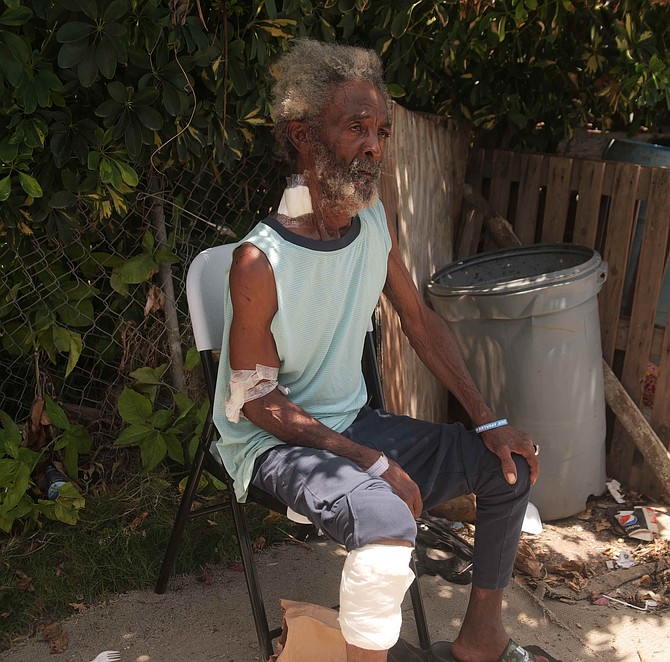
    Speaking to reporters just 48 hours after his discharge from the hospital, Thompson, still visibly marked by the attack with thick bandages wrapped around his neck, right arm and right leg, shared the terrifying details of the assault. The 70-year-old, who had occasionally fed the dogs in the past, explained that the animals – which he identified as pit bull-potcake mixes, one of which is named Trigger – split their attack: multiple dogs clamped down on his arm and leg, while the others lunged repeatedly for his neck.

    Surrounded and outnumbered, Thompson said he could do nothing to fend off the pack beyond shielding his face, convinced he would not survive the encounter. “I genuinely thought I was going to die right there on the street,” he recalled. Despite crying out for assistance when the dogs’ owners arrived at the scene, Thompson said the owners simply walked away and left him bleeding on the ground. It was only a short time later that another nearby resident noticed his distress and pulled him to safety, before he was transported to a local hospital for emergency surgery on his neck wound and treatment for multiple cuts and bruises across his body.

    Notably, this is not the first time the same pack has targeted Thompson; he told reporters the dogs attacked him two or three years earlier, and despite the severity of this latest assault, he has no plans to pursue criminal charges against the dogs’ owners.

    Thompson’s sister, Margo Thompson, is now leading a public call for decisive action from local authorities, warning that without immediate intervention, a future attack will end in a fatal outcome. She emphasized that her brother’s small frame left him completely unable to fight off five large dogs, and that the quick action of the Good Samaritan neighbor was the only reason he survived.

    “Had that neighbor not stepped in, he would be dead right now,” Margo Thompson said. “And if this can happen to him, it can happen to a child playing in the neighborhood. A child would never stand a chance against five dogs like this. The owners don’t seem to care that their animals are putting everyone at risk.”

    She added that unaddressed dangerous dog attacks have become a systemic problem in the area, noting she is aware of at least four severe mauling incidents in the past 12 months that have not resulted in any meaningful regulatory action. “Police come, take a report, and then nothing happens. The report gets filed away, and the dogs are still roaming free. Until authorities step up to fix this, the problem is only going to get worse,” she said. Margo Thompson also urged local residents to speak up about dangerous unrestrained animals even when they fear retaliation from pet owners.

    Tensions flared on-site during the media visit, when a female relative of Thompson got into a heated argument with a neighboring woman who claimed the Thompson family’s own unchained dog had previously attacked other people. The Thompson family firmly rejected the accusation as their dog walked freely through the yard during the exchange.

    This latest attack comes just one month after another high-profile incident in the area, where 66-year-old Kemp Road resident Don Smith was hospitalized and required stitches after being mauled by a different pack of roaming dogs.