标签: Bahamas

巴哈马

  • Mother demands answers after viral school attack

    Mother demands answers after viral school attack

    A violent bullying incident at C.H. Reeves Junior High School has sparked widespread public outrage after a viral video captured a group of students surrounding and attacking a 13-year-old boy, who was ultimately forced to flee for his safety across school grounds. The incident, which unfolded during summer classes for incoming eighth-grade students last Thursday, has also drawn sharp criticism over alleged failures by school administration to protect the victim, according to his mother Genal Bodie.

    The confrontation traces back to a heated group phone call the night before the attack, when multiple participants mocked the 13-year-old following the recent death of his grandmother. When the boy pushed back against the insults, the attackers planned to target him at school the next day, a escalation he never anticipated. On Thursday morning, tensions boiled over: at least eight boys cornered the teen on campus, with one attacker ordering another to strike the victim before a boy in a black head wrap shoved him. The victim repeatedly refused to fight, telling the group the primary aggressor was once his friend, but his attempts to de-escalate only egged on the crowd. Surrounding students jeered and urged the attackers to continue, with some shouting calls to seriously hurt the teen. One attacker grabbed the 13-year-old by the shirt, another slapped him in the head, and a third threatened the victim by claiming he had a knife. Overwhelmed, the teen ran for his life, with the entire group chasing him across the school campus.

    After escaping the pursuit, the teen fled to the school administration office to request help, saying he feared for his safety if he tried to walk home alone. According to Bodie, school officials contacted the parents of the attacking students, notified them their children would face suspension through September, and asked the families to pick up their children from campus. However, no administrator reached out to Bodie to inform her of the incident, nor did any staff arrange safe transport home for her son. When the teen eventually left campus on his own, he found the entire group of attackers waiting for him just outside the school gate. Only the quick intervention of the victim’s cousin, a school security officer, prevented further violence: she pulled the boy into her car for protection while other security personnel ordered the group to disperse.

    Bodie said she first sensed something was wrong when her son arrived home earlier than usual, but he hid the full extent of the attack from her because she lives with a seizure disorder and he did not want to cause her additional stress. The teen initially only told her a few boys had tried to fight him, and said the school had resolved the issue. It was only after Bodie noticed a lump on her son’s head and swelling along his cheek that she began pressing for more details, and she learned the full truth only when a neighbor’s daughter shared the viral video with her while the pair ran errands.

    “When I saw the video, I felt my knees go weak,” Bodie told local outlet The Tribune. “Watching that happen to my child was heartbreaking — I felt every blow he took, every bit of fear he went through. When I showed it to him, he just started trembling; it was only then that the full trauma of what happened really hit him.”

    Bodie questioned the school’s handling of the incident, saying: “What were the teachers and administrators at C.H. Reeves thinking? Aren’t they parents themselves? How could they let my son walk out of the gate when the same boys who just attacked him were waiting there for him?”

    Bodie, who is now considering transferring her son to a different school for his safety, reported the incident to police on Friday and accompanied officers to the campus to demand answers about the school’s response. She acknowledged that her son had been involved in two minor fights in the past, and had completed a two-week behavioral program to learn conflict resolution skills after yielding to peer pressure to fit in. Still, she said the attackers must be held legally accountable for their actions, warning that unaddressed bullying could easily end in tragedy.

    As of press time, police have not released any updates on the investigation, including whether any attackers have been taken into custody. The viral video of the incident has spread rapidly across social media in the region, racking up nearly 1,000 shares and more than 700 comments by the time local media reported on the case. The incident has sparked widespread condemnation of the attack, with many social media users praising the 13-year-old for avoiding a fight and escaping the dangerous situation, while questioning the upbringing of the students involved.

    Khandi Gibson, president of local advocacy group Families of All Murder Victims, has called for an urgent meeting with all families involved to resolve the conflict, and urged the broader community to take a public stand against bullying. She praised the 13-year-old as a hero for choosing to run rather than escalate the violence, and has organized community support for the victim: she is gifting him a new phone for the upcoming school year, and community members have stepped forward to donate school supplies, with response overwhelming. “This child endured humiliation, fear and embarrassment that no young person should ever have to face at school,” Gibson said. “It’s long past time we stood together to put a stop to this kind of senseless violence.”
  • GBPA issues stop-work order on $21m marina

    GBPA issues stop-work order on $21m marina

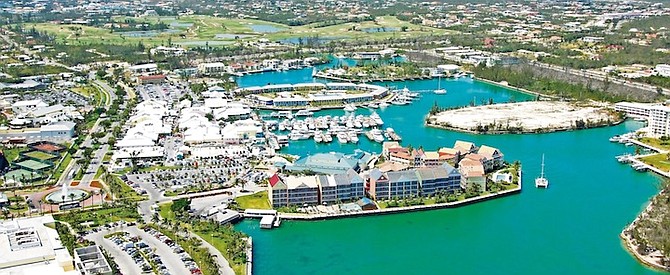
    A high-stakes $21 million revitalization project for the aging Port Lucaya Marina on Grand Bahama has hit an unexpected legal roadblock, just 24 hours after demolition work got underway. The Grand Bahama Port Authority (GBPA) has issued a stop-work order that has brought the entire first phase of the redevelopment to a sudden standstill, centered on unresolved questions surrounding the legal transfer of the marina’s critical seabed lease.

    The project’s new developer, Bahamas Land and Waterways, received the cease-and-desist notice from GBPA’s Inspection Department on Friday, putting a premature end to the initial demolition of the long-deteriorated waterfront facility. Frank Delancy, managing director of Bahamas Land and Waterways, has pushed back against the order, arguing that regulators issued the mandate in error. Delancy noted the stop-work order incorrectly references prohibited repair work, when the firm was clearly engaged in full demolition of the existing structure.

    “I explained to the personnel at the Inspection Department that we’re not doing repairs. We are actually doing demolition,” Delancy told reporters. “They were very overzealous in issuing that, and if you look at the stop-work order, it says repairs when we’re doing demolition.”

    The dispute expanded further on Monday, when the Grand Bahama Development Company (DEVCO) – the entity that still claims to be the official landlord under the existing seabed lease – confirmed it has not received required legal documentation to formally recognize the marina’s new ownership or their authorized project representatives. DEVCO emphasized that the original lease remains fully in effect, and it requires any change to the property’s beneficial ownership to be formally disclosed and approved through standard administrative channels.

    “While we understand that the property has been sold by third parties, DEVCO has not yet received the legal documentation confirming the new ownership or identifying the individuals authorized to act on behalf of the owner,” the company said in an official statement. DEVCO stressed that its request for paperwork is a routine legal and administrative requirement baked into the original lease agreement, not a broader objection to the much-anticipated redevelopment project.

    “Our only requirement, as stated in our lease agreement, is that we receive the necessary legal documentation so that we can recognize the properly authorized party and fulfill our obligations under the lease,” the statement continued. “This is a standard legal and administrative process that is common to landlord and tenant relationships. The new owners of the Port Lucaya Marina are not exempt from this requirement.”

    Project contractor Executive Marine Management announced demolition had officially kicked off on Thursday, marking the formal launch of the first phase of the waterfront transformation. According to Delancy, Bahamas Land and Waterways notified GBPA of its project plans well in advance of the start date, and the contractor submitted an application for the required demolition permit eight to nine days prior to beginning work. Delancy claims the project received verbal approval from regulators, was assigned a permit number, and was told formal documentation would be processed after work commenced.

    “We kept in communication through the contractor, which is a very reputable contractor, and they’ve done things of this nature before,” Delancy said. “They applied for the permit. They were given a verbal approval, with the permit number to be processed later. However, that did not happen, but we were told to commence the work.”

    Delancy added that open communication between the developer and GBPA continued through the previous Wednesday, when the firm once again received verbal clearance to move forward with demolition. He noted that no GBPA representatives visited the work site to halt the project before work started, even after the developer publicly announced the demolition timeline. Delancy stressed the developer does not view the conflict as a broader breakdown in relations with GBPA, and the firm is eager to resolve the administrative standoff quickly to get the project back on track. Bahamas Land and Waterways has scheduled a meeting with GBPA officials this week to negotiate a path forward.

    Charisse Brown, president of GB DEVCO, echoed that sentiment, saying her company welcomes the planned private investment and has no fundamental objection to the proposed redevelopment work. “We welcome the planned investment in and improvement of the marina,” Brown said. “Enhancements to this important asset are positive for Port Lucaya, Grand Bahama, and the wider economy. DEVCO has no objection to the proposed works and is committed to supporting responsible development.”

    Brown added that there appears to be “some misunderstanding and misinformation” surrounding the public dispute, and DEVCO is fully willing to work with the new ownership to secure all required approvals and move the project forward once the necessary legal paperwork is submitted.

    Prior to the stop-work order, Delancy said demolition was expected to take between four and six weeks to complete. Once that phase wraps up, the developer planned to wait for delivery of new prefabricated dock infrastructure before beginning installation. “We just want to get this development started because we know the state of Grand Bahama, so we’re trying to do things in order to progress forward with this development,” Delancy said.

  • $5.9m in marijuana seized in joint operation

    $5.9m in marijuana seized in joint operation

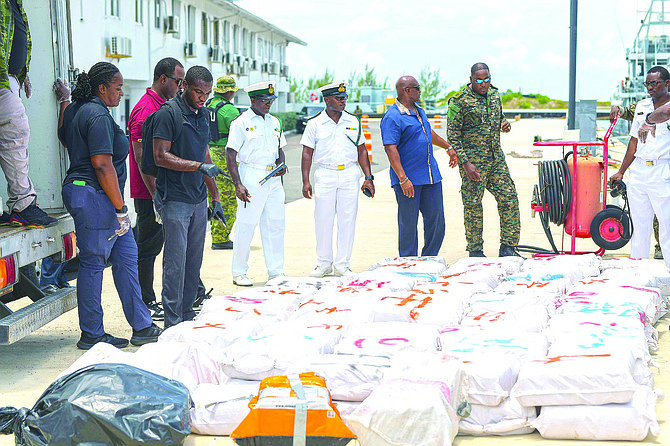
    A sweeping 72-hour transnational anti-narcotics operation led jointly by law enforcement agencies from the Bahamas and the United States has yielded one of the region’s recent high-profile drug seizures, with authorities intercepting a speedboat in Bahamian territorial waters and taking three Bahamian nationals into custody. Authorities confirmed the illicit cargo recovered from the vessel has an estimated street value of $5.9 million.

    According to Captain Derrick Ferguson, Staff Intelligence Officer for the Royal Bahamas Defence Force, the coordinated mission kicked off on July 24, after intelligence analysts received a tip that a Bahamian-flagged vessel transporting a massive shipment of illegal narcotics was en route to Bahamian waters. In the pre-dawn hours of July 25, a United States aerial surveillance asset picked up the vessel’s location, activating a coordinated response under two existing regional security frameworks: Operation Bahamas, Turks and Caicos, and the Bahamas Maritime Operations Coordination Working Group. The response brought together the Royal Bahamas Defence Force, the Royal Bahamas Police Force, and multiple U.S. law enforcement units.

    Ferguson outlined the deployment of resources for the intercept: U.S. authorities provided critical airborne surveillance, the RBPF mobilized its specialized drug enforcement teams, and the Defence Force repositioned two of its vessels, HMBS Kamalamee and HMBS Durward Knowles, to cut off the target’s escape route. As the operation unfolded, the crew of the targeted go-fast vessel realized they had been detected shortly after entering Bahamian territorial waters, and immediately attempted to alter course to flee back into unregulated international waters, Ferguson explained.

    With Bahamian defence vessels still repositioning to intercept, the Royal Bahamas Defence Force granted official authorization to a nearby U.S. Coast Guard cutter to board and search the vessel on its behalf. The boarding operation was completed without incident, and search teams uncovered the large cache of suspected marijuana hidden aboard the vessel, leading to the immediate detention of the three Bahamian men on board.

    Following the intercept, all three suspects, the seized narcotics, and the go-fast vessel were transferred to a Royal Bahamas Defence Force ship and transported to the HMBS Coral Harbour base for processing. While the initial estimated value of the seizure has been pegged at $5.9 million, authorities have declined to release further details on the exact volume of the drug shipment, noting that the investigation is still in its early stages.

    Next steps in the case will see the detainees and the suspected narcotics turned over to the RBPF’s Drug Enforcement Unit to continue the probe. Superintendent Wendy Pearson of the Drug Enforcement Unit confirmed that the intercepted go-fast vessel has also been seized, and will be subject to formal forfeiture under Bahamian drug law.

    In a statement emphasizing the strength of bilateral security cooperation, Ferguson stressed that the partnership between the two nations remains robust in the fight against transnational drug trafficking. “Be there no mistake. The US and the Bahamian partnership is strong, and we remain committed to detecting, disrupting, deterring, and denying any transnational criminal activity that may seek to enter and transit the Bahamian maritime jurisdiction, and as well as the US maritime jurisdiction,” he said.

  • Union says PMH flooding managed as FNM blasts govt

    Union says PMH flooding managed as FNM blasts govt

    When severe thunderstorms swept across New Providence, Bahamas, on Sunday, an unexpected incident unfolded at the country’s flagship Princess Margaret Hospital: floodwater breached the freshly completed Accident and Emergency (A&E) Department, just weeks after officials declared its long-delayed renovation finished and fully operational. While hospital authorities and the Bahamas Nurses Union quickly moved to contain the issue and restore services, the flooding has ignited a sharp political debate over the government’s management of public health infrastructure.

    Muriel Lightbourne, president of the Bahamas Nurses Union, confirmed that the incident caused no major disruption to critical care services. According to reports from frontline staff, the water did not penetrate through flaws in the newly renovated building structure, as some critics later claimed. Instead, an extraordinary volume of rainfall overwhelmed local drainage around the facility, causing surface flooding that seeped into the department through the open ambulance bay entrance.

    Immediately after flooding began, clinical teams moved patients and staff out of the affected zones, while cleanup crews were deployed to pump out standing water. Lightbourne noted that when she reached out to hospital leadership shortly after learning of the incident, staff were already midway through clearing the affected areas. Though nurses raised understandable concerns about the risk of standing water interacting with nearby electrical medical equipment, Lightbourne said the situation was handled swiftly and professionally, with no formal complaints submitted by union members.

    Visual evidence of the flooding, shared widely across social media Sunday, showed sections of the A&E with shallow standing water, with staff and visitors traversing affected zones in disposable protective shoe covers. Hospital officials echoed Lightbourne’s account, emphasizing that the flooding did not stem from roof or ceiling defects, and clarified that Princess Margaret Hospital sits in a low-lying area that experienced widespread inundation during the extreme storm. Neighboring commercial buildings and private properties also flooded amid the record rainfall, they added.

    To prevent disruption to care, hospital administration immediately relocated all critical services from the affected area, placed temporary barriers at the impacted ambulance bay entrance, and diverted incoming ambulance traffic to an alternate access point while safety assessments were conducted. Within hours, all core A&E services had resumed normal operation. Hospital officials added they will collaborate with government and construction partners to identify additional mitigation measures that can reduce the risk of future flooding during severe weather events, to better protect patients, staff and visitors.

    The timing of the incident, coming just weeks after Health and Wellness Minister Dr Michael Darville announced the completion of the years-long, repeatedly delayed A&E redevelopment project, created an opening for political opposition. Free National Movement chairman Dr Duane Sands launched a scathing attack on the governing Progressive Liberal Party administration, framing the flooding as symptomatic of widespread systemic failures in the country’s public health sector.

    Sands argued that the incident directly contradicts the government’s public claims of progress on upgrading public health infrastructure. He questioned the hospital’s explanation that the site is located in a natural flood zone, asking sarcastically whether the hospital’s location had changed after the multi-million dollar renovation. Sands linked the A&E flooding to a pattern of what he called ongoing infrastructure failures under the current administration, pointing to recurring nationwide power outages, persistent operating room disruptions at both Princess Margaret Hospital and Grand Bahama’s Rand Memorial Hospital, and widespread shortages of essential prescription medications. He accused the government of prioritizing elite perks over meeting the basic public health needs of ordinary Bahamian citizens.

  • Family pleads for police help in Andros search

    Family pleads for police help in Andros search

    For a week, the family of Antonio “Doe Doe” Bastian, a 45-year-old resident of Andros, The Bahamas, has clung to hope while growing increasingly desperate. With no trace of their missing loved one found, they are calling on authorities to deploy additional search resources from New Providence to ramp up efforts to locate him.

    Bastian was last spotted on July 13, as he walked along Queen’s Highway between the communities of Love Hill and Fresh Creek. According to his sister, Hanna Mott, Bastian was en route to a scheduled medical appointment when he vanished.

    Mott shared that her brother lives with a mental health condition that causes hallucinations, for which he receives regular injectable treatment. Bastian has a history of inpatient care at Sandilands Rehabilitation Centre, but Mott said he had made significant progress in his recovery in recent years, earning a steady income washing cars for local residents.

    Concern grew when Bastian failed to return to his home by July 14, an absence that his family says is completely out of character. Mott explained that Bastian only goes extended periods without reaching out “once in a blue moon”, making a full week without contact deeply alarming. After waiting 48 hours for any sign of him, the family officially filed a missing person report with police on July 16.

    Mott says she holds an unconfirmed suspicion that Bastian may have been targeted by foul play or moved against his will to another location. She traced the onset of her brother’s mental health challenges to a past incident where she believes he was given a drugged, contaminated substance by a third party. Bastian has received ongoing care at Sandilands for roughly four to five years, with periods of inpatient treatment interspersed with time living at home.

    Local law enforcement has already carried out extensive search operations across Central and North Andros since the report was filed, including deploying the Criminal Detection Unit’s drone team to cover hard-to-reach terrain. Mott was quick to praise the work of on-island officers, who have stood with the family from the first day of the search, joining search teams both early in the morning and late into the evening.

    “As much as the police can do in Andros, from Central to North, they are doing, but they need more help,” Mott said of the ongoing effort. So far, all searches have turned up no clues to Bastian’s whereabouts.

    Police released an official missing person poster with Bastian’s description on July 19. He is characterized as a slim man with a dark brown complexion, standing approximately five feet six inches tall. The Tribune reached out to the Royal Bahamas Police Force for additional comment on the search and the family’s request for extra resources, but had not received a response as of press time.

  • Engines from fatal flight sent to US investigators

    Engines from fatal flight sent to US investigators

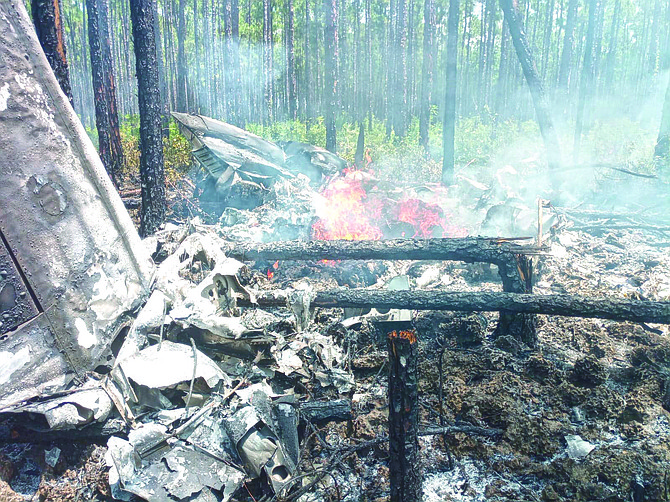
    One of the deadliest civilian aviation incidents in recent Bahamian history, which claimed 10 lives during an Independence Day flight, has entered a critical new phase of investigation, with recovered wreckage now shipped to the United States for detailed forensic examination. The Air Accident Investigation Authority (AAIA), the national body leading the probe, confirmed this week that all salvaged aircraft components—including both of the plane’s engines—have been transported for analysis at two separate U.S. facilities: a secure investigative site in Jacksonville, Florida, and the engine manufacturer’s dedicated assessment center in Mobile, Alabama.

    These technical examinations form a core pillar of the AAIA’s ongoing safety-focused investigation, designed to help experts piece together the exact sequence of events that led to the crash and identify any underlying factors that contributed to the disaster. In a public statement clarifying the scope of its work, the AAIA emphasized that the probe’s sole mandate is to advance aviation safety: by pinpointing existing safety gaps, the authority will develop targeted corrective recommendations to prevent similar tragedies from occurring in the future.

    Crucially, the AAIA noted that its safety investigation is completely separate from any parallel probes conducted by the Bahamas’ judicial, legal, or regulatory bodies, and it is not intended to assign blame or establish civil or criminal liability for the crash.

    The recovery of wreckage from the crash site was completed between July 22 and 24, carried out by the AAIA with technical support from SouthEast Air Recovery, a Florida-based firm specialized in aviation accident recovery. The downed aircraft was a Flamingo Air Cessna 402C, which was operating a scheduled passenger route from New Providence to North Andros when it crashed close to San Andros Airport on Independence Day.

    Initial witness and on-site evidence confirms the plane first collided with trees before traveling a short distance and coming to a stop in a heavily wooded area, where the wreckage was subsequently destroyed by post-crash fire. Of the 10 people on board, one individual survived the initial impact and escaped the damaged aircraft, but later succumbed to their injuries, bringing the total death toll to 10.

    The investigation remains in its opening phase, which is focused on the systematic collection, documentation, and preservation of all available evidence, the AAIA confirmed. Once this evidence-gathering stage is concluded, the probe will advance to its second phase: comprehensive data analysis, during which investigators will evaluate every piece of factual material, including results from the wreckage examinations, flight recorded data, aircraft operational records, maintenance logs, weather data from the day of the crash, witness testimony, and all other relevant evidence.

    The third and final phase of the investigation will be the presentation of findings, which will conclude with the preparation and publication of a full final report. This document will include any safety recommendations the AAIA deems necessary to strengthen national and regional aviation safety.

    In a timeline update, the authority announced that a preliminary report into the crash is expected to be released on or before August 10. In line with international aviation investigation standards, a full final report is projected to be published approximately one year after the date of the crash, though the AAIA cautioned that this timeline may be adjusted if additional investigative work is required to resolve outstanding questions.

  • Search for 27-year-old man ends with tragic discovery

    Search for 27-year-old man ends with tragic discovery

    A days-long search for a 27-year-old missing Bahamian man concluded in heartbreaking tragedy Thursday evening, after one of his family members located his body in the Hacio Point Close neighborhood. The deceased man was later identified by close relatives as Antonio Cartwright. Cartwright was last seen by associates around 8:30 a.m. on July 19 at the CBS Bahamas location in Southwest Plaza, according to a missing person alert circulated publicly by his family on Tuesday. Local law enforcement confirmed officers received a report of an unresponsive individual shortly before 8 p.m. Thursday, who was pronounced dead at the scene. Those who knew Cartwright have remembered him as a diligent, warm-hearted young man with a deep passion for house painting, who threw himself fully into his professional work. On Friday, CBS Bahamas, Cartwright’s employer, released an official statement extending its deepest sympathies to his loved ones. “Although Antonio had only recently joined the CBS Bahamas family, he quickly made a positive impression on both colleagues and customers alike,” the company said. “Many of our regular shoppers would recognize Antonio from our Paint Center, where he played an integral role in delivering expert guidance and high-quality service to everyone who walked through our doors. He was a joy to work alongside, and just recently, he was honored with our Employee of the Quarter award.” In the days between Cartwright being reported missing and his body being found, CBS Bahamas actively collaborated with his family to coordinate search efforts. The company supported the search by distributing missing person flyers, sharing information about his disappearance across its social media platforms, and reaching out to other businesses located along the route Cartwright typically took to travel home, all in an effort to gather any clues that could help locate him safely. Authorities have announced that a full post-mortem examination will be carried out to establish the exact cause of Cartwright’s death.

  • Tearful funeral for Stania and Diamond

    Tearful funeral for Stania and Diamond

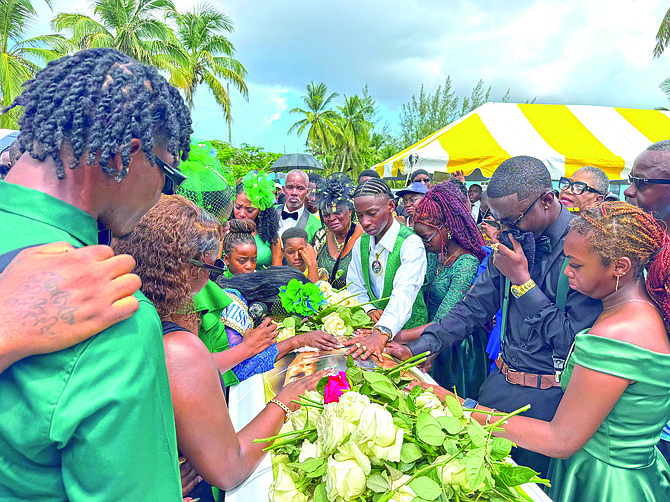
    A wave of collective sorrow washed over Cat Island this weekend, as hundreds of mourners gathered to lay to rest two young women whose ambition and academic excellence had made them beloved pillars of their tight-knit community. Stania Webb and Diamond Stubbs, both victims of the deadliest traffic accident The Bahamas has seen in at least 20 years, were buried side by side at Smith’s Bay Public Cemetery on Saturday, almost one month after the fatal June 28 crash on Shirley Street that claimed five lives total.\n\nThe tragedy also took the lives of 18-year-old Bertrica Brown, 19-year-old Evalena “Lilly” Johnson, and 19-year-old Keno Gordon Jr. All five were teenagers travelling in a Mazda sedan when the vehicle collided with a tree near the Shirley and Church Streets intersection shortly before 2 a.m. on June 28. Nineteen-year-old Marcus Thacker Jr, the driver, has since been charged with five counts of vehicular manslaughter, with prosecutors alleging he operated the vehicle in a dangerous manner leading up to the crash.\n\nThe grieving process for Webb and Stubbs began a day earlier, on Friday, when their remains were flown back to Cat Island to be received by heartbroken relatives and neighbors. Stania’s casket arrived first: her father Stanley Webb, the girl’s only parent on the island, walked out to meet the aircraft to help guide his only daughter’s body into the waiting hearse. When Diamond’s remains arrived moments later, uncontrolled sobs and cries of anguish erupted through the gathered crowd. “Look at my baby come back to Cat Island like this,” one mourner screamed, a raw expression of the pain that hung over the entire community.\n\nMourners gathered Saturday for a joint funeral, dressing in blue and green to match the colors of Diamond’s and Stania’s caskets respectively. Many family members struggled to get through their tributes, overwhelmed by the sudden loss of two lives cut down just as they were poised to begin their adult journeys. At the opening of the service, Stanley Webb was so overcome with grief that he needed assistance to reach his seat, but he soon gathered himself to address the congregation about the daughter he adored.\n\n“This is my only daughter. My only daughter,” Webb told the crowd. “I tell you, I love this little girl. Her mother said, ‘You have to be spoiled.’ I said she’s not really spoiled, she’s spoiled and she’s rotten.” He described the permanent, devastating hole her death has left in his family, saying, “I’m gonna miss this lovely young lady so much. They take a part of me. I’m hurting deep within.” He also extended his grief to all five families affected by the crash, noting, “We lost five beautiful little ones, darlings.”\n\nEven amid his pain, Webb shared that he had found small comfort in the outpouring of unity from Cat Island residents, who have rallied around the bereaved families in the weeks since the crash. “I tell my family in the group chat, I say I’m going to be as strong as Stanley can be,” he said. “I said the chain is only as strong as the weakest link. I am grateful for everything. All of my friends in Cat Island, we came together so united. It kind of freaked me out a little. We stand together in love and unity.”\n\nStania was a second-year student at Langston University in Oklahoma, where she studied music with a minor in law and performed as a saxophonist in the university’s marching band. Her brother honored her by playing the final music project she had completed before her death, a bittersweet tribute to her artistic passion. Diamond, by contrast, had only graduated as valedictorian and head girl of Cat Island’s Old Bight High School two weeks before the crash, and was preparing to join Stania at Langston University this coming semester. Officials from Langston presented a joint tribute to both young women at the funeral, announcing that the entire upcoming academic year would be dedicated to their memory.\n\nDiamond’s aunt shared a recording of her niece’s valedictory address, letting the congregation hear the teen’s voice one last time. Her words of perseverance, originally delivered to her graduating class, carried a devastating new weight for the mourners: “Standing here today as your valedictorian, I won’t lie, this means everything to me — not because my journey was perfect, but because it was worth it. The truth is, it was hard. There were times people called me out, times when I heard the whispers. So instead of breaking, I built myself. I pushed hard and prayed hard. When people were talking, I got quiet and got close to God. I stayed rooted in faith when things didn’t make sense, rooted in purpose when I felt lost and rooted in strength when I felt weak. This is why I can stand here today — not because everything was perfect, but because I didn’t give up.”\n\nShe had reminded her classmates that graduation was never just about grades or accolades, but about the growth that comes from overcoming hardship together. “Some of us had battles nobody saw. Some of us carried weight no one talked about, but we made it together,” she said in the recording. “We laughed together and leaned on each other when things got heavy. There were days we cared for one another, and that’s something I will never forget. This wasn’t just a journey; it was our journey.”\n\nBahamas Prime Minister Philip “Brave” Davis also spoke at the service, reflecting on the potential the two women held and the future that was stolen from them by the crash. A family representative for the pair noted that Stania and Diamond had long carried the hopes and pride of their entire community, serving as examples for Cat Island’s young people of what discipline, faith and education can achieve. “We grieve for the graduations, the birthdays, careers, marriages and family celebrations that should have followed,” the representative said.\n\nFormer teachers and family friends shared their own memories of the two teens, painting a picture of bright, kind young women who excelled in their studies and lifted up those around them. Bradley Dorsett, Diamond’s godfather, remembered her as a hardworking teen who had spent several weeks working at his wash house just weeks before the crash. Dr Bennique Brown-Pratt, principal of Old Bight High School, recalled that Stania was part of the first seventh-grade class she taught after joining the school in 2018. Though naturally reserved, Stania placed in the top three at a national public-speaking competition, a testament to her quiet determination. Of Diamond, Brown-Pratt said the teen was a gentle, unassuming, and dependable student who participated enthusiastically in every school activity. “You know how people fabricate those qualities for those references for other persons,” she said. “I didn’t have to. Everything written about her came to my heart because it was genuine.”\n\nBrown-Pratt added that the pair’s deaths have left a permanent gap at the school they once attended. “The loss of these two ladies is an immense one. Not only did they leave, but their physical diplomas — they left an ink mark in the hearts and halls of Old Bight High. Love never graduates; therefore, they will revere us as we navigate life without them.”\n\nA marching band escorted the two caskets to Smith’s Bay Public Cemetery for burial, where family members surrounded the plots to lay flowers and say their final goodbyes. As workers sealed Diamond’s tomb, a child’s cry cut through the quiet grief of the gathering: “That’s my sister. No.”’

  • Widespread BPL blackouts spark anger across islands

    Widespread BPL blackouts spark anger across islands

    Over the weekend, communities across two major Bahamian islands — Abaco and New Providence — were thrown into chaos by a series of prolonged, repeated power outages that upended daily life, shuttered local businesses, and reignited long-simmering public anger over the inconsistent service provided by Bahamas Power and Light (BPL).

    For Abaco residents, the latest wave of disruptions began as early as midweek, with one outage stretching to an 18-hour stretch of darkness. Across the country’s most populous island, New Providence, intermittent power cuts continued from Friday through the end of the weekend, with BPL attributing the issues to a perfect storm of natural and infrastructure failures: lightning strikes, damaged high-voltage cables, faulty transformers, degraded equipment, and crippling strain on the grid from excessive energy demand.

    Chantelle Sands, president of the Abaco Chamber of Commerce, described Thursday as one of the most devastating days for local commerce, with extended blackouts halting normal operations across the island. “Businesses that do not have backup generators are at an even greater disadvantage,” she explained. “When power fails, many are forced to close entirely, lose critical daily sales, and face the risk of losing entire inventories of refrigerated and frozen goods. Reliable power is not a luxury — it is a foundational requirement for keeping businesses open, protecting jobs, and sustaining the country’s economic momentum.”

    BPL officials have confirmed a string of separate failures across Abaco between Wednesday and Saturday. The issues started Wednesday with a sudden power surge at the Marsh Harbour Power Station that cut service to Murphy Town, Dundas Town and Forest Drive, which was restored shortly after. That same day, repairs to a damaged high-voltage cable in South Scotland Cay caused a second temporary outage for local residents.

    The most serious breakdown hit the Wilson City Power Station just after 1 p.m. Thursday, when one of the facility’s primary generating units unexpectedly tripped offline, cutting power to all of Central and South Abaco as well as the surrounding cays. According to Marvin Green, BPL’s Northern Regional Manager, this type of failure would typically take between 45 minutes and 90 minutes to resolve, but unforeseen additional complications dramatically slowed restoration efforts.

    Technicians eventually managed to restart the generating unit, but power only remained active for roughly 20 minutes before a second failure forced the entire station offline. Green explained that much of the repair work focused on the plant’s critical uninterruptible power supply system, which supports the station’s automated operations. After crews resolved that issue and restarted the engine, the station’s main transformer tripped, triggering yet another full blackout.

    Additional outages continued to plague Central and South Abaco and Guana Cay on Friday and Saturday, each tied to separate new infrastructure issues. For residents and business owners, these repeated disruptions are not an unexpected one-off event — they are the latest chapter in a years-long crisis that has raised daily stress and added unplanned costs across the islands.

    Sands shared one particularly striking example of the chaos: a local business that had its generator transfer switch damaged by BPL technicians, leaving the company completely without power even when it had planned for backup. While many business owners have invested thousands in private generators to keep operations running, Sands noted that the recurring costs of fuel and maintenance eat into already razor-thin profit margins for local companies.

    To address the long-term crisis, Sands is calling on local businesses to invest in solar energy infrastructure where feasible, and is urging the Bahamian government to eliminate import duties and value-added tax on renewable energy systems. She argued that lower upfront costs for renewable systems would encourage more widespread adoption, reduce strain on BPL’s overburdened grid, and strengthen the country’s overall energy security.

    Abaco resident Roscoe Thompson, who endured one 18-hour outage, said the problem has persisted since Hurricane Dorian hit the islands, and successive political administrations have failed to deliver on promises to fix the grid. “This isn’t an issue that just popped up out of nowhere,” he said. “Every new administration promises things will change, but when summer rolls around with higher demand, we end up right back where we were last year.” He added that the outages hurt not just local residents, but also the country’s critical tourism industry: without power, credit card machines do not work, and businesses cannot open at all for visitors.

    Another Abaco resident, Danny Sawyer, recalled an outage that started between 9 a.m. and 10 a.m. one day last week, with power restored to some neighborhoods by 3 a.m. the next day, while others waited until 7 a.m. or 8 a.m. to get service back. Outage lengths vary wildly, he said, ranging from two or three hours to more than six, and any severe thunderstorm with lightning typically prompts BPL to shut down power stations as a safety precaution. For residents without backup power, extended outages in the Bahamian heat become unbearable — Sawyer recalled one friend who was forced to sleep in his car to escape the high temperatures. Even for those who have portable generators, the cost is prohibitive, he said, with gasoline selling for roughly $8 per gallon.

    On New Providence, residents also faced days of repeated, intermittent outages, with BPL confirming that lightning strikes, cable faults, damaged transformers, broken equipment, and high demand affected communities across the island. Crews worked around the clock to complete repairs and gradually restore service, but frustrated residents took to social media to vent about the frequency and duration of the cuts. One Facebook user reported going seven hours and counting without power by Sunday, while another complained that power had fluctuated on and off five times, putting household appliances at risk of permanent damage from irregular voltage.

    Eastern New Providence was among the hardest hit areas over the weekend. Rosemary Sands, a resident of Joe Farrington Road, said her power was cut from 10 a.m. to 2 p.m. Sunday, following a shorter outage the day before. “We are annoyed but we’re used to this thing now,” she said. “It feels like we’re living in a third world country, dealing with these constant outages.” Still, she added that she believes BPL crews are doing the best they can with aging infrastructure.

    For small service businesses that rely entirely on electricity to operate, the outages create persistent financial and operational strain. Shanice Carey, owner of True Beauty Salon in New Providence, explained that every service her business offers depends on power — from hood dryers and heated styling tools to hot water and air conditioning. When power goes out, all work stops, pre-scheduled appointments have to be rescheduled, and sensitive salon equipment is put at risk of damage. “Frequent power outages disrupt client schedules, strain our equipment, and create significant unexpected operational costs,” Carey said. “While we do everything possible to adapt and minimize the impact on our clients’ experience, persistent outages place a heavy burden on our salon when trying to provide quality, efficient service.”

  • Govt seeks US tariff exemption for seafood

    Govt seeks US tariff exemption for seafood

    As the Bahamas’ high-stakes commercial crawfish season approaches just days away, the Davis administration is racing to secure a targeted exemption from a newly implemented 12.5 percent United States tariff that threatens to upend the country’s critical fisheries sector. The tariff entered into force on July 24, following a determination by the Office of the United States Trade Representative (USTR) that The Bahamas had not enacted and effectively enforced a ban on imports produced through forced labour.

    Agriculture and Marine Resources Minister Jomo Campbell has moved quickly to clarify that the USTR’s ruling is not an indictment of Bahamian fishing industry labour practices. He emphasized that the penalty stems from gaps in the country’s broader regulatory framework for imported goods from third parties, not evidence of forced labour in local commercial fisheries. All licensed Bahamian commercial fishing vessels are locally owned, operate in full compliance with Bahamian labour law, and do not rely on foreign labour, Campbell said, adding that the sector’s ethical track record remains uncompromised.

    The timing of the tariff is particularly problematic: the annual crawfish season, the most commercially valuable period for the country’s fishing industry, opens on August 1, leaving exporters and small-scale fishers bracing for increased costs in their largest export market. Spiny lobster (commonly called crawfish in The Bahamas) and stone crab are the two Bahamian seafood products most exposed to the new duty, with roughly 60 percent of the country’s spiny lobster exports destined for the US market. Data from the Marine Stewardship Council shows the sector exports over four million pounds of lobster tails annually, supporting roughly 9,000 Bahamian fishers. Adrian LaRoda, president of the Bahamas Commercial Fishers Alliance, estimates annual crawfish shipments to the US generate between $50 million and $70 million in revenue. These exports make up a substantial portion of The Bahamas’ total $120 million in annual export-generated foreign currency earnings, a critical lifeline for the country’s economy.

    In response to the tariff, the Bahamian government has outlined a three-pronged strategy to mitigate harm and resolve the dispute with Washington. First, the government has already passed amendments to the Customs Management Act that formally prohibit imports of forced labour-produced goods, aligning the country’s laws with USTR requirements. Campbell noted that six other countries have already updated their legislation following USTR’s action and successfully moved from the 12.5 percent tariff rate to a lower 10 percent levy, and The Bahamas intends to become the seventh. The government is currently investigating why its recent regulatory changes did not qualify the country for the lower rate, and identifying remaining gaps to address.

    Second, the administration is actively pursuing a product-specific exemption for Bahamian crawfish and stone crab, given their outsized importance to the local industry and the lack of forced labour concerns in the sector. Third, the Ministry of Agriculture and Marine Resources is coordinating with the Ministry of Finance, Bahamas Customs, and The Bahamas’ embassy in Washington to provide direct support to seafood processors and exporters as they navigate the new regulatory and cost requirements ahead of the season opening.

    The 12.5 percent tariff was imposed as part of 60 separate Section 301 investigations launched by the US into countries and trading blocs that Washington determined had failed to block forced-labour goods from entering their markets. USTR initially named 54 economies, including major US allies and trading partners such as Canada, the United Kingdom, the European Union, Australia, Japan and New Zealand, as failing to both enact and enforce forced labour import prohibitions, with six others cited for failing to enforce existing bans. Countries that met USTR’s requirements by enacting a full ban, committing to one via trade agreement, or establishing a partial blocking system were assigned a 10 percent tariff, while non-compliant economies faced the higher 12.5 percent rate. The final determination for The Bahamas went into effect at 12:01 a.m. on July 24, with goods already in transit before the deadline and entered into the US by July 28 exempted from the additional duty.

    Campbell also moved to correct misinformation about the magnitude of the cost increase for exporters. He explained that The Bahamas had already been subject to a temporary 10 percent US import surcharge since August 2025, implemented by the US to address what the White House called serious international payments imbalances and a large US balance-of-payments deficit. That temporary surcharge expired the same day the new 12.5 percent tariff took effect, meaning exporters face only a 2.5 percentage point increase in total duties, rather than a full 12.5 percentage point added to the existing charge. “Our fishermen should not go into this season believing the figure is five times what it is,” Campbell said.

    Even so, the additional cost lands on an industry that already operates on very narrow profit margins. A US seafood importer previously urged the US administration to grant an exemption for Bahamian crawfish and stone crab, arguing that the Bahamian fishery has no documented forced labour issues, and the tariff would harm not just Bahamian suppliers but also US distributors and American consumers. The importer warned that the full additional cost cannot be absorbed by the seafood supply chain, and would risk disrupting long-standing commercial relationships between US buyers and Bahamian fishing operations.

    Beyond the fisheries sector, the tariff could have much broader economic impacts for The Bahamas, which relies heavily on the US as its primary trading partner. A submission during the US public consultation period estimated that up to $985 million in 2024 Bahamian exports to the US could be affected, including refined petroleum, styrene polymers, pearl products, and financial documents of title. US trade data shows 83.3 percent of The Bahamas’ imports originate in the US, which exported $5.48 billion in goods to The Bahamas in 2024 and held a $3.7 billion trade surplus with the country.

    Campbell emphasized that the new tariff will not impact seafood sold within The Bahamas, nor exports to the European Union and Canada, and that the opening of the 2025 crawfish season will proceed as scheduled on August 1 across New Providence, Grand Bahama, and all of the country’s Family Islands.