标签: Bahamas

巴哈马

  • Elderly man attacked by pack of dogs

    Elderly man attacked by pack of dogs

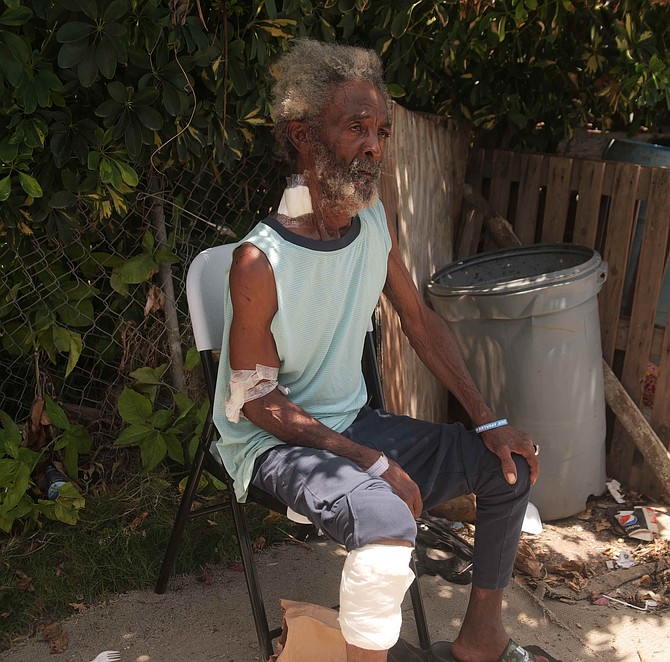
    A violent, life-threatening dog attack in a residential neighborhood has reignited calls for urgent government intervention to address the persistent danger of uncontrolled dangerous dogs roaming public areas. Seventy-year-old Jackie Livingston Thompson is recovering from emergency surgery after he was mauled by five mixed-breed dogs while walking home from a local store around 11 p.m. last Friday.

    Speaking to reporters just 48 hours after his discharge from the hospital, Thompson, still visibly marked by the attack with thick bandages wrapped around his neck, right arm and right leg, shared the terrifying details of the assault. The 70-year-old, who had occasionally fed the dogs in the past, explained that the animals – which he identified as pit bull-potcake mixes, one of which is named Trigger – split their attack: multiple dogs clamped down on his arm and leg, while the others lunged repeatedly for his neck.

    Surrounded and outnumbered, Thompson said he could do nothing to fend off the pack beyond shielding his face, convinced he would not survive the encounter. “I genuinely thought I was going to die right there on the street,” he recalled. Despite crying out for assistance when the dogs’ owners arrived at the scene, Thompson said the owners simply walked away and left him bleeding on the ground. It was only a short time later that another nearby resident noticed his distress and pulled him to safety, before he was transported to a local hospital for emergency surgery on his neck wound and treatment for multiple cuts and bruises across his body.

    Notably, this is not the first time the same pack has targeted Thompson; he told reporters the dogs attacked him two or three years earlier, and despite the severity of this latest assault, he has no plans to pursue criminal charges against the dogs’ owners.

    Thompson’s sister, Margo Thompson, is now leading a public call for decisive action from local authorities, warning that without immediate intervention, a future attack will end in a fatal outcome. She emphasized that her brother’s small frame left him completely unable to fight off five large dogs, and that the quick action of the Good Samaritan neighbor was the only reason he survived.

    “Had that neighbor not stepped in, he would be dead right now,” Margo Thompson said. “And if this can happen to him, it can happen to a child playing in the neighborhood. A child would never stand a chance against five dogs like this. The owners don’t seem to care that their animals are putting everyone at risk.”

    She added that unaddressed dangerous dog attacks have become a systemic problem in the area, noting she is aware of at least four severe mauling incidents in the past 12 months that have not resulted in any meaningful regulatory action. “Police come, take a report, and then nothing happens. The report gets filed away, and the dogs are still roaming free. Until authorities step up to fix this, the problem is only going to get worse,” she said. Margo Thompson also urged local residents to speak up about dangerous unrestrained animals even when they fear retaliation from pet owners.

    Tensions flared on-site during the media visit, when a female relative of Thompson got into a heated argument with a neighboring woman who claimed the Thompson family’s own unchained dog had previously attacked other people. The Thompson family firmly rejected the accusation as their dog walked freely through the yard during the exchange.

    This latest attack comes just one month after another high-profile incident in the area, where 66-year-old Kemp Road resident Don Smith was hospitalized and required stitches after being mauled by a different pack of roaming dogs.
  • Plane crash families have to wait six to eight weeks for DNA results

    Plane crash families have to wait six to eight weeks for DNA results

    Ten lives were cut short in a devastating plane crash near San Andros Airport on July 10, Bahamas’ Independence Day, leaving behind shattered families now facing a new, agonizing hurdle: weeks of waiting for DNA identification of their loved ones’ remains, a delay that has reignited longstanding demands for a domestic national forensic laboratory. Many of the victims’ bodies were severely burned in the crash, making visual identification impossible, so surviving relatives were required to submit DNA samples for matching just last week. Instead of processing these samples locally, Bahamian authorities are forced to send the genetic material to a testing facility in the United States, leaving grieving families stuck in a painful limbo they say repeatedly reopens their raw emotional wounds.

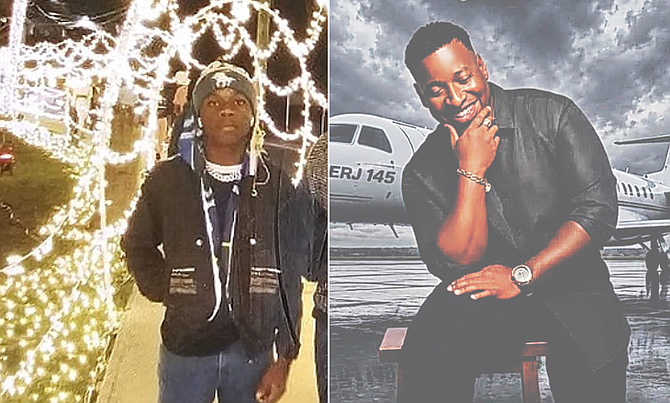
    Lavonia Burrows, whose 35-year-old brother Rashad Storr was one of the crash victims, says her family was informed the DNA testing results could take as long as six to eight weeks to return. Storr, a mechanic for Western Air and a guitarist for the popular local group Da Pond Band, was traveling with four bandmates to North Andros for a regatta performance when the 20-minute planned flight ended in tragedy. For 16-year-old Nicholas Oliver Jr.’s family, the projected wait is still four to six weeks, after they spent hours at the morgue providing their reference DNA sample. As of this week, Bahamian police have not released an updated count of how many victims remain formally unidentified.

    Burrows explained that until Storr’s remains are officially identified and released, her family cannot move forward with burial arrangements or begin the slow process of healing. The ongoing uncertainty, she says, keeps the family trapped in a cycle of grief, with every update or lack thereof tearing open fresh emotional scars. “After a while, you start to level off, and then here comes a call… that wound opens up again, and it’s almost like you’re going through the same process over again, it hurts,” Burrows shared. The family already planned a memorial service to welcome relatives traveling in from abroad, but the burial can’t take place until Storr’s remains are confirmed.

    This tragedy, Burrows argues, lays bare the urgent unmet need for The Bahamas to build its own national forensic laboratory. Currently, the country relies on overseas facilities for all specialized forensic testing including DNA analysis, a gap that forces grieving families into unnecessary extended waits when an incident like this crash occurs. Advocates have pushed for such a facility for years, noting it would provide a full suite of critical domestic services beyond DNA testing, including pathology, drug analysis, and firearms examination. Bahamian government officials have previously acknowledged the need, but have cited high establishment costs and complex technical requirements as barriers to moving the project forward.

    “In the times that we are living in, it is so important that we have these things in place,” Burrows said. “It will definitely help the nation, because we all are gonna go through this someday… so having a lab here is so important, and so I am praying for the day that we will get our priorities together so that we can make sure that we help families.”

    Beyond his career and musical contributions, Burrows remembers her brother as a devoted, loving family man who treated his nieces and nephews like his own children. Just one day before the crash, Storr spent the entire day teaching Burrows’ son Ledre practical skills, from changing a tire and car brakes to playing the drums. “I shouted out and I said, ‘Boy, you is the uncle of the year,’” Burrows recalled.

    All 10 people on board the Flamingo Air flight died in the crash. Alongside Storr, the victims include Storr’s Da Pond Band bandmates Giovanni McKenzie, Mateo Winder, Toniquea Gilot and Tra’vis Johnson; DJ Melvin Henfield (known professionally as DJ Fresh International); Andros residents Quintin Myers and Macaro Rolle; pilot Franklyn Cambridge; and 16-year-old Nicholas Oliver Jr. For the families still waiting for confirmation of their loved ones’ remains, the lack of identified bodies has blocked the traditional mourning and burial rituals that help many start processing loss, leaving them stuck between memorial planning and final goodbyes. “There is still no closure until we make sure that we have his remains,” Burrows said. “Once we get his remains, we will come together as a family, pray and bless the body and do what needs to be done at the end.”

  • Truck ploughs through cars on Sir Sidney Poitier Bridge

    Truck ploughs through cars on Sir Sidney Poitier Bridge

    On a routine Friday morning commute, a sudden mechanical failure sparked chaos on one of the Bahamas’ key river crossings, when an out-of-control Mack truck barreled through crowded traffic on the Sir Sidney Poitier Bridge, triggering a widespread collision that left multiple vehicles destroyed and stunned onlookers in shock. Miraculously, however, emergency officials confirmed no life-threatening injuries were sustained in the incident.

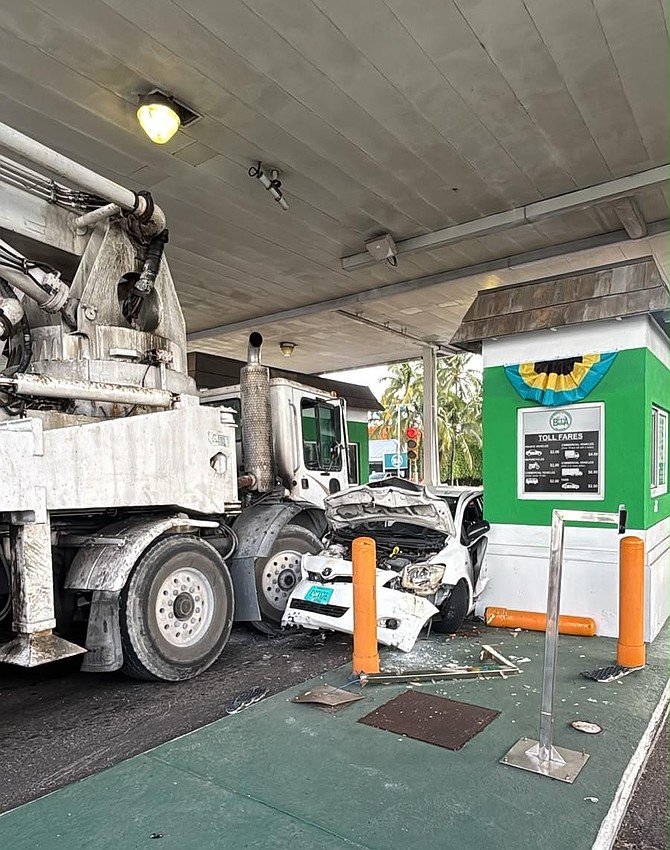
    According to Chief Superintendent Sybrina Porter, head of the Royal Bahamas Police Force’s Traffic Division, the heavy-duty truck was traveling northbound toward Paradise Island when its braking system failed as it crested the bridge’s highest point. Without functioning brakes to slow or stop its movement, the truck continued rolling forward unchecked, striking and damaging a string of passenger vehicles in its path before finally coming to a halt directly at the bridge’s toll plaza.

    While Porter could not immediately confirm an exact number of damaged vehicles, amateur footage captured by witnesses at the scene shows at least five cars caught up in the pile-up. The harrowing videos document the unfolding chaos: as the massive truck bore down on the toll plaza, trapped drivers blared their horns in warning and scrambled to swerve out of the 18-wheeler’s path, but a white passenger car directly ahead of the truck could not escape in time. The truck pushed the trapped vehicle ahead of it all the way to the toll booths, leaving the car crushed, wedged against a concrete booth structure with severe front-end damage. Additional damaged vehicles were scattered across the approach to the toll plaza, with some pushed up against the bridge’s side retaining walls.

    Despite the extensive destruction to property and the high-risk nature of the crash on the major bridge crossing, law enforcement confirmed that no motorists or bystanders suffered serious harm. Witness accounts describe one woman being treated on-scene, resting on the pavement under an umbrella while onlookers gathered around her. Many other motorists and passersby stood on the bridge’s sidewalk, visibly shaken and disoriented as they surveyed the wreckage around them, with one witness heard exclaiming in disbelief, “Oh my God.”

    The collision completely disrupted traffic flow across the Sir Sidney Poitier Bridge for hours after the crash. With damaged vehicles blocking the approach to the toll booths and police investigators working to document the scene and clear the wreckage, northbound and southbound traffic crawled at a near-standstill, leaving commuters stuck in lengthy delays that rippled out across surrounding roadways. Within minutes of the incident, user-generated photos and videos of the crash spread rapidly across social media platforms, and were quickly picked up by local news outlets. Public reaction to the viral footage centered largely on shock that the truck was able to plow through so many vehicles before stopping, with immediate online speculation about the truck’s speed at the time of the failure and potential maintenance issues that may have led to the brake malfunction.

  • Dad grieves slain son: ‘Not this one’

    Dad grieves slain son: ‘Not this one’

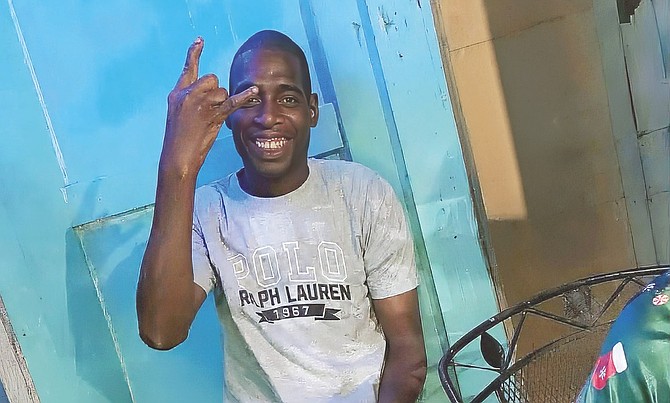
    A quiet, hardworking handyman has been killed in a brazen late-night shooting by masked assailants in the Bahamas, leaving his devastated family searching for justice and grappling with an unspeakable second loss to violent crime. Thirty-five-year-old Dwight “Smily” Benjamin was fatally shot just after 9 p.m. Wednesday as he left a private residence off Father Calnan Road, a side street connected to Market Street, according to local law enforcement accounts.

    Police investigations confirm two attackers arrived at the scene on a motor scooter. One suspect, wearing a black jacket and a white face covering, dismounted the vehicle and opened fire directly on Benjamin, striking him multiple times before the pair fled the area. The sudden attack has left Benjamin’s relatives in shock, as they describe the victim as a man who dedicated his life to work and caring for his family, and who never sought conflict with anyone.

    Shawn Benjamin, the victim’s grieving father, told local reporters he cannot reconcile why his son was targeted. He said if attackers had been aiming for his other son, he would not have been surprised – but that “not this one.” “My son ain’t that type of person,” Shawn Benjamin explained in an interview. “I have another son. If they say they come for that one, I could believe that, but not this one. I upfront. I grieving right now.”

    According to the elder Benjamin, his son was visiting a friend at the time of the attack. When he traveled to the residence to investigate the killing afterward, he was told the attack was almost certainly a case of mistaken identity. “I been hunting,” he said, describing his search for answers in the wake of his son’s death. “I don’t care whoever I come behind. That’s my son. I been hunting. I been up and down the place where they does be.”

    Tragically, this killing reopens a devastating old wound for the father of four. Shawn Benjamin already lost his eldest son to gun violence back in 2008, leaving him with just two surviving sons after this latest attack. “I done lose a son. I done know how it feel but this the second one and for unnecessary violence,” he said.

    Family members paint a consistent picture of Benjamin as a reserved, family-focused handyman with strong practical skills. He kept mostly to himself, they say, rarely leaving his routine of work and time at home, and was always willing to help relatives with errands, mechanical projects, construction work, and other hands-on tasks.

    Shandera Sweeting, Benjamin’s cousin, said the senseless nature of the killing has compounded the family’s pain. “This is why it really hurts a lot,” Ms Sweeting said. “Smily don’t even trouble people. This the first time my family ever had to go through something like this and for a person who don’t even party or any of them things, to do my cousin so dirty.”

    She added that the family is still reeling from the recent burial of another relative, making this sudden, violent loss even harder to process. “Something really need to be done with all this reckless killing,” Ms Sweeting urged. “They take away my uncle son. He didn’t deserve that. Smily was a very respectable man.”

    According to unofficial murder count records kept by The Tribune, Benjamin’s killing pushes the total number of murders in the country so far this year to 41, highlighting the ongoing crisis of violent gun violence that continues to tear apart communities and families across the nation.

  • Put ID badges on your kids before the next storm hits

    Put ID badges on your kids before the next storm hits

    As the Atlantic hurricane season brings heightened risk of destructive storms to Caribbean nations including the Bahamas, a leading disaster preparedness expert has issued a critical recommendation to local families: equip every young child with a customized identification badge before a storm makes landfall, to speed up family reunification if separation occurs during emergency response.

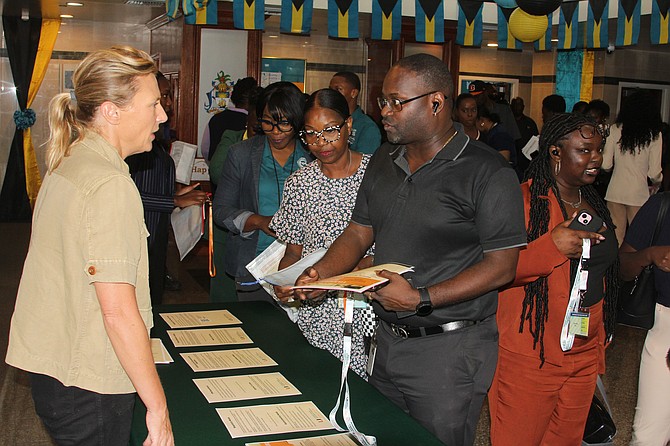
    Dr. Kendra Van Kirk, senior advisor for community engagement and education at the University of Miami’s Global Institute, laid out this guidance during Thursday’s “Stronger Than the Storm – Hurricane Preparedness” workshop hosted at the Collab Unit of the Ministry for Grand Bahama. The initiative is the result of a collaborative partnership between the University of Miami and the Grand Bahama Ministry, designed to deliver accessible, targeted disaster preparedness education to children, their families, and the community professionals that support them.

    As part of the outreach program, Dr. Van Kirk has already toured multiple Urban Renewal summer camps across the region, where she connected directly with young attendees and walked attendees through the custom ID badges the institute has developed for this purpose. She emphasized that the ID badges fill a particularly critical gap for two vulnerable groups: very young children who cannot share personal or family information, and children living with developmental conditions including autism spectrum disorder and attention-deficit/hyperactivity disorder, who may struggle to communicate their identity or family contact details in the chaos of a disaster evacuation or emergency response.

    Each of the custom-designed badges includes a sealed, secure compartment that stores key emergency and medical details: the child’s full name, family contact information, pre-existing health conditions, current required medications, and known allergies. This information allows first responders and temporary caregivers to deliver appropriate, timely medical care while working to reconnect the child with their family.

    Beyond the ID badge recommendation, Dr. Van Kirk used the workshop platform to urge Bahamian families to move away from the common habit of last-minute hurricane preparation. Too often, she noted, families leave critical prep work until a hurricane is already bearing down on the islands, leaving little time to address key details that can protect vulnerable family members.

    She encouraged households to complete three core preparedness steps well in advance of any storm threat: assemble a fully stocked emergency supply kit, develop a clear household emergency action plan, and pre-identify a designated meeting point where all family members can gather if separation occurs during evacuation or storm response. The ongoing partnership program also offers additional resources for families, including evidence-based guidance on managing storm-related stress and building long-term disaster resilience for children, young people, and their caregivers.

  • Aviation reps challenge claims on Andros crash response

    Aviation reps challenge claims on Andros crash response

    A deadly Independence Day plane crash that claimed 10 lives in North Andros, The Bahamas, has sparked a public dispute over emergency response preparedness, with aviation sector leaders pushing back against a local administrator’s claim that additional emergency vehicles would not have altered the outcome of the tragedy.

    The crash, which left only one initial survivor who later succumbed to severe burn injuries, occurred in a rugged pine forest roughly half a mile from the nearest road, a location inaccessible to standard ground vehicles. North Andros Administrator Beverley Laramore defended the existing emergency framework, arguing that even a large fleet of ambulances and fire trucks would have been unable to reach the wreckage. She also noted that the district’s aging fire truck had been heavily strained by a nine-week wildfire two years prior, and that North Andros could call on Central Andros for additional ambulance support if needed.

    Laramore further stated that emergency crews reached the lone survivor, Macaro Rolle, approximately 15 minutes after locating the crash site, though people close to Rolle have disputed that timeline, claiming it took nearly two hours to extract him from the forest. After being carried out to a waiting ambulance, Rolle was transferred to the local airport for stabilization before a planned medical evacuation to New Providence, but he died from his injuries before care could be completed.

    However, leaders of the Bahamas Aviation, Climate & Severe Weather Network (BACSWN) — founder Robert Dupuch-Carron, a former vice-chairman of the Public Hospitals Authority (PHA), and chief operating officer Michael Strachan — are challenging Laramore’s narrative, arguing that the core issue is not access to the crash site, but the lack of specialized emergency infrastructure designed specifically for aviation disasters.

    Dupuch-Carron emphasized during an appearance on the local program *Beyond the Headlines with Shenique Miller* that conventional ambulances operated by the PHA and the Department of Public Health are not engineered to handle the massive trauma cases that follow plane crashes. He noted that other nations maintain a separate, higher tier of emergency vehicles dedicated exclusively to aviation incidents, a standard The Bahamas has yet to fully implement.

    “Even if the crash site is unreachable for vehicles, having specialized, aviation-trained medical teams on standby drastically improves outcomes when survivors are extracted,” Dupuch-Carron explained. Drawing on his decades of experience with the PHA, he added, “The PHA is not designed for this level of mass casualty trauma response. Their teams did excellent work with the resources they had, but we owe the aviation sector a requisite level of preparedness that does not exist right now.”

    Strachan echoed that sentiment, criticizing stakeholders for falling into defensive posturing after the tragedy instead of using it as a catalyst to fix long-identified gaps in emergency response. He drew a parallel between the North Andros crash and an October 2010 plane crash at Lake Killarney that killed nine people, noting that both disasters are somber reminders that aviation tragedies rarely stem from one isolated failure — instead, they result from a chain of small, unaddressed gaps in safety and preparedness.

    To address these gaps, BACSWN has already begun rolling out specialized aviation disaster ambulances staffed by trained emergency medical technicians, paramedics, and in some locations trauma surgeons and physicians, to airports across the Bahamas’ Family Islands. Currently, the first phase of deployment covers five airports, but North Andros is not among them; the organization plans to add the district once additional vehicles are manufactured and shipped to the country.

    The Bahamas’ unique archipelagic geography, with 26 populated islands each hosting an airport, creates massive logistical and financial barriers to full preparedness. Many airports also lack dedicated storage facilities for the specialized emergency equipment, requiring BACSWN to complete construction projects before deploying vehicles. According to Strachan, the organization has already begun staffing up facilities in Mayaguana and is working with the Airport Authority to map out storage space at airports across the country, with the first phase of deployment on track to be completed by the end of the fourth quarter of this year.

    BACSWN has been waiting for official memoranda of understanding to formalize its partnership with public health agencies, allowing its trained medical personnel to operate alongside government teams. Dupuch-Carron noted that Attorney General Wayne Munroe has indicated the agreements will be signed soon, clearing the way for rapid deployment. All specialized equipment and trained staff are already ready for deployment once administrative hurdles are cleared, he added.

    In addition to emergency response gaps, Dupuch-Carron raised concerns about lax enforcement of existing aviation rules, specifically the illegal practice of using private aircraft for unregulated commercial operations — a practice he compared to unauthorized “hacking” of safety protocols. He also dismissed calls for the resignation of the country’s aviation minister as preposterous, arguing that the issue is a systemic lack of resources and enforcement, not individual failure. He added that BACSWN supports the Civil Aviation Authority Bahamas and has called for increased funding and resources to allow the agency to carry out its mandate more effectively.

    Moving forward, BACSWN plans to add additional safety services including flight tracking and up-to-date severe weather information, all aligned with international aviation safety standards. While Dupuch-Carron said he cannot guarantee no future lives will be lost in aviation accidents, he emphasized that the organization’s work will ensure that properly trained trauma teams, necessary medications, and specialized equipment will be on hand to respond when emergencies occur.

    Seeking to reassure the traveling public, he noted that the national aviation system is not entirely broken, and BACSWN has built a strong collaborative relationship with government aviation bodies including the Airport Authority. “I want people to feel confident that when you get on a plane, everyone has done everything right,” he said, “and if something were to go wrong, we’re going to be there to respond.”

  • LGBTQ+ Activist calls for hate crime laws

    LGBTQ+ Activist calls for hate crime laws

    A growing rift has emerged over LGBTQ+ safety and justice in The Bahamas, as prominent gay rights advocate Alexis DeMarco is pushing urgently for dedicated hate crime legislation, linking a series of recent and decades-old unsolved killings of presumed LGBTQ+ community members to systemic bias and gaps in the country’s legal framework. The push has been met with outright rejection from Attorney General Wayne Munroe, who maintains existing laws are sufficient and says no evidence has been presented to prove any murders in the nation have been driven by anti-LGBTQ+ prejudice.

    DeMarco’s call for reform centers on two high-profile fatalities recorded so far this year. The most recent came in mid-July, when the body of a 63-year-old man was discovered inside a burning duplex in Nassau Village’s Lee Street. First responders entered the structure shortly after 2 a.m. responding to reports of the fire and found the man unresponsive near the front entrance; subsequent investigation revealed he had suffered multiple stab wounds, prompting a homicide inquiry and an ordered autopsy to confirm the official cause of death. The second case dates back to January 14, when a 38-year-old man was found stabbed to death in his Daffodil Avenue residence after a concerned colleague requested a welfare check when they could not reach him. Authorities confirmed the victim sustained stab wounds to his upper body, noting the killing came almost three years after he survived a non-fatal shooting that led to an attempted murder and firearms charge against another suspect. To date, police have not announced any confirmed motive for either killing, nor ruled that either death qualifies as a hate crime – a reality DeMarco argues is part of the problem.

    Without formal legislation that explicitly recognizes bias-motivated offenses, DeMarco argues, law enforcement and justice system officials lack the structure to properly identify, track, and prosecute hate-fueled violence targeting marginalized groups. For years, she says, LGBTQ+ Bahamians have harbored deep-seated fears that violence against their community members is not investigated or prosecuted with the same urgency or gravity as violence against cisgender, heterosexual people.

    “When perpetrators of violence against LGBTQ+ people walk away with convictions for far lesser offenses instead of facing murder charges, our community is left wondering whether embedded prejudice and harmful stereotypes continue to shape how justice is pursued,” DeMarco explained.

    She pointed to a decades-old landmark case to back up her concerns: the 2010 prosecution of Latherio Jones, who initially faced a murder charge for fatally shooting Trevor Wilson, but ultimately was convicted of the lesser offense of manslaughter on grounds of provocation. The court heard during the trial that Wilson had made repeated same-sex advances toward Jones. Prosecutors with the Crown appealed the verdict, arguing the sentence was unduly lenient, noting that Jones had armed himself, traveled to Wilson’s room, and shot him in the head following what prosecutors described as a second advance. The Court of Appeal ultimately dismissed the appeal and upheld the manslaughter conviction. Delivering the court’s oral ruling, then-president Dame Joan Sawyer stated that “One is entitled to use whatever force is necessary to prevent oneself being the victim of a homosexual act.”

    DeMarco stressed that this ruling, paired with the legal defense widely known internationally as the “gay panic” defense, has amplified community fears that violence against LGBTQ+ people can be minimized or even justified through bias and harmful stereotypes.

    Beyond the two 2024 cases, DeMarco also highlighted a long list of unsolved killings dating back more than two decades that targeted people believed to be part of the Bahamas’ LGBTQ+ community. The list includes: police officer Kevin Williams, killed in 2001; lecturer Thaddeus McDonald and celebrated fashion designer Harl Taylor, both killed in 2007; HIV/AIDS activist Wellington Solomon Adderley, Jamaican waiter Marvin Wilson and dancer Paul Whylly, killed in 2008; photographer Sharvado Simmons in 2011; and waiter Elkin Moss in 2013. None of these cases have resulted in convictions, leaving families and community members without closure.

    In response to DeMarco’s demands, Attorney General Munroe pushed back firmly during a public statement this week, arguing that a separate, standalone hate crime legal framework is unnecessary to protect LGBTQ+ Bahamians. He emphasized that existing homicide laws apply equally to all victims, regardless of their identity or sexual orientation. “From all of the briefings I got, I didn’t get anything that appeared hate crime related,” Munroe said.

    He further explained that murder charges are only reduced to manslaughter in cases where established legal principles impact an accused person’s criminal liability, most commonly in instances involving diminished mental responsibility. To illustrate his point, he cited a past case he handled where a woman who set her abuser on fire, an intentional killing that was reduced to manslaughter due to long-term mental abuse in an intimate partner violence context. “Murders that get reduced to manslaughter are generally if you have anything that has a mental element,” he said.

    Munroe added that throughout his entire career working at the Bar, he has never encountered a murder he believed was motivated by hatred of a person’s sexual orientation or race. “I have not heard in all of my time at the bar of any hate crime-related murder where somebody is murdered because they are gay or because they are black,” he said. “I’ve not. I’ve seen a lot of personal, intimate partner violence. But the intimate partner violence has nothing to do with your sexual orientation or your sexual preference. It has everything to do with the nature of the interpersonal relationship.”

    For DeMarco and other LGBTQ+ advocates, however, the string of unsolved deaths and the history of lenient rulings in anti-LGBTQ+ violence cases makes clear that change is long overdue. The disagreement highlights a broader ongoing debate over equal justice for marginalized communities in the Caribbean nation, with advocates warning that without formal legal recognition of hate crimes, bias-motivated violence will continue to go unaddressed.

  • Teacher dies weeks after she was stabbed in throat

    Teacher dies weeks after she was stabbed in throat

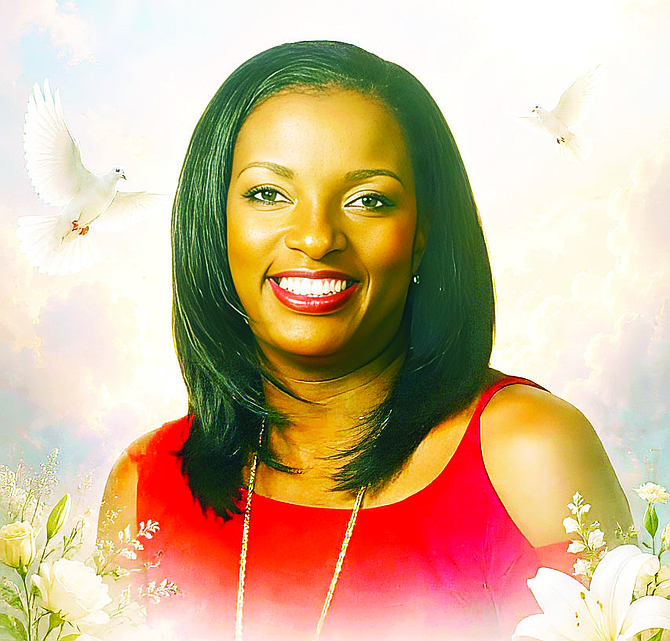
    Weeks after a brutal stabbing attack left her fighting for life, a beloved 61-year-old primary school educator has succumbed to her injuries in a Bahamian hospital, leaving her family, students, and the entire local education community in mourning.

    Jillian Pinder, a devoted wife and mother of one, had remained in critical condition in intensive care since the assault unfolded on June 4. Law enforcement officials confirmed that, shortly after the attack, Pinder was able to identify her two attackers to investigators: two men connected to a debt owed by someone close to Pinder. According to initial police reports, the pair stabbed Pinder in the throat before fleeing the scene of the attack immediately. After more than five weeks of medical treatment, Pinder passed away in hospital care on Monday, local newspaper The Tribune has confirmed.

    Pinder’s older sister, Judith Rahming, opened up about her overwhelming grief in a public Facebook post over the weekend, asking the broader Bahamian community to hold her family in their thoughts and prayers during the devastating ordeal. “This doesn’t feel real. It doesn’t feel fair. I keep hoping I’ll wake up and find out this was all a terrible nightmare. The silence you left behind is deafening and our hearts are shattered,” Rahming wrote. She shared that her sister’s impact on her life and the lives of everyone who knew her could not be put into words, adding that Pinder’s memory would remain a permanent, cherished part of their family forever. Rahming also made a public plea for justice, calling for clarity and accountability in the investigation into her sister’s attack. “Lord, we are asking You for justice. We pray that You would reveal everything hidden in darkness. Give investigators, our family, or someone out there a sign – something that leads to the truth and to the person responsible,” she said.

    Pinder’s death has sent ripples of grief through the school community where she spent decades working. Sheniqua Curry, principal of TG Glover Primary School, where Pinder taught, remembered the late educator as a consistently dedicated, warm-hearted professional who prioritized her students above all else.

    Bahamas Education Minister Chester Cooper also released a statement mourning Pinder’s passing, emphasizing that her loss will leave a lasting gap across the country’s entire education sector. “Mrs Pinder dedicated her life to shaping young minds and serving our nation through education. Her loss is deeply felt, not only by those who knew and loved her but by our entire educational community,” Cooper said.

    According to unofficial murder count tracking maintained by The Tribune, Pinder’s death marks the 40th homicide recorded in the Bahamas so far this year, bringing renewed attention to the country’s ongoing challenges with violent crime.

  • ‘I feel robbed’: Singer grieves partner killed in North Andros crash

    ‘I feel robbed’: Singer grieves partner killed in North Andros crash

    The tight-knit Bahamian music scene is engulfed in grief after a devastating plane crash last week took the lives of ten people on board, including five core members of the popular local group Da Pond. For Khreasel Glinton, a 35-year-old Bahamian musician, the tragedy brings an unfathomable double loss: her long-term partner and soulmate Rashad Storr, and four other band members she had grown to love as chosen family.

    Storr, 35, and his Da Pond bandmates were traveling to North Andros on a Friday afternoon for a scheduled performance at a local regatta. The short flight, operated by Flamingo Air, was projected to take less than 20 minutes to reach the destination near San Andros Airport. Instead, the aircraft went down shortly before landing, leaving no survivors among the ten passengers and crew.

    Glinton, who had built a five-year relationship with Storr centered on their shared love of music, opened up about the overwhelming waves of sorrow that have consumed her in the days since the crash. “It is heavy on the mind, because sometimes I don’t even know who I might be crying for or who I might be screaming for,” she shared in an interview. “When it comes on me, all I could do is cry.”

    The couple shared a life intertwined both on and off stage: Glinton often performed as a fill-in singer for Da Pond, gradually building deep, lasting bonds with every member of the group. The pair had weathered personal challenges together, shared a vision of marrying and starting a family, and saw each other as each other’s closest confidants. “He was my best friend. I didn’t want to be anywhere else. He didn’t want to be anywhere else. It was just us two in our own little world,” Glinton said. She remembered Storr as a kind, patient partner who dedicated himself to making her happy, and had long held onto the hope that they would spend their lives together.

    The morning of the crash was just another ordinary day for the couple, who were heading to separate performance engagements. Glinton was bound for the Turks and Caicos Islands with the Da Rhythm Band, while Storr traveled with Da Pond to North Andros. Storr dropped Glinton at her airport terminal before heading to catch his own flight, and the pair continued to exchange playful text messages after Glinton landed in Turks and Caicos.

    Glinton recalled joking with Storr about her pilot’s bumpy handling of the InterCaribbean Airways flight, with Storr teasing back that the pilot was just navigating air pockets. That lighthearted exchange was the last communication they would share. Before Da Pond boarded their flight, Storr messaged Glinton one final time, and Glinton asked him to text her when the group landed. She never got that message.

    When a mutual friend first shared news of the crash with Glinton, she refused to believe it. Desperate to confirm the report was false, she reached out to a Da Pond singer who had traveled to Andros on an earlier flight. As calls flooded in from friends and community members checking if Glinton had been on the doomed flight, her band director eventually confirmed the devastating truth that Storr and his bandmates had not survived. Even after seeing video footage of the crash site, Glinton said the loss still feels impossible to process. “It still felt so unreal, and then they started sending like videos of the crash, and I’m just like, this can’t be happening. I just looked at him this morning. I just kissed him this morning,” she said, holding back tears.

    Glinton returned to her home in New Providence on Sunday, supported by her fellow band members as she struggled through overwhelming anxiety during the flight. In the days since her return, she has not been able to bring herself to step into the apartment she once shared with Storr. She has also canceled multiple upcoming performances, as any connection to music now brings immediate, painful memories of the five Da Pond members lost in the crash.

    Alongside Storr, the crash claimed the lives of Da Pond members Giovanni McKenzie, Mateo Winder, Toniquea Gilot and Tra’vis Johnson. Glinton shared tender memories of each band member: McKenzie was one of her earliest and most loyal supporters when she launched her music career; Winder stepped into a big brother role, always offering guidance when she needed it; Johnson was remembered for his magnetic personality and one-of-a-kind captivating voice. The memory of Gilot brought fresh tears to Glinton, who recalled the singer’s beautiful voice and warm spirit, and shared that Gilont had reached out to her just moments before the doomed flight to request a song recording. “The last thing she said to me was that she appreciate me,” Glinton said, her voice breaking with grief.

    The tragedy has left a permanent hole in the Bahamian music community, as friends, fans and fellow artists mourn the loss of five talented creators taken far too soon.

  • Duke Strachan smiles again as prison officials deliver puppy

    Duke Strachan smiles again as prison officials deliver puppy

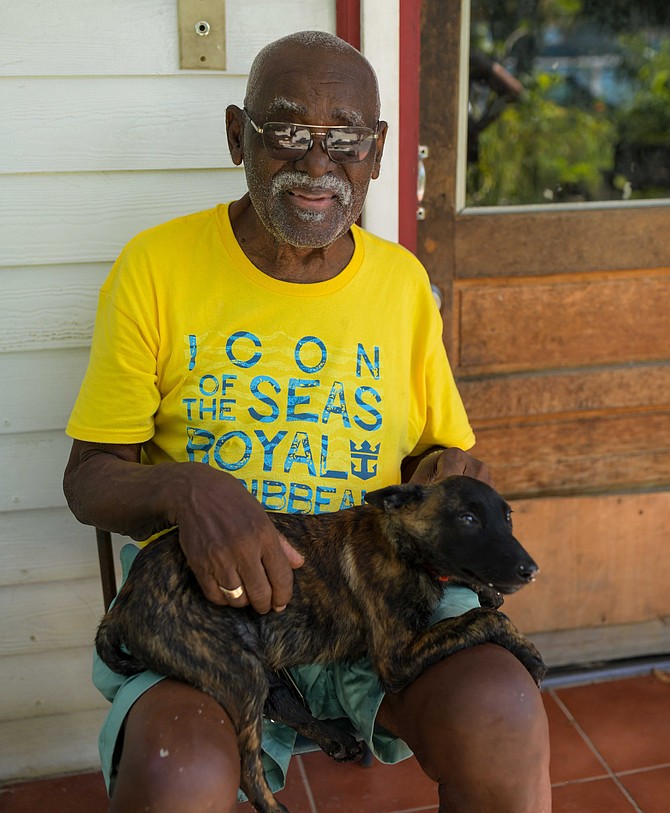
    Four months after the fatal shooting of his beloved three-year-old dog sparked national public outrage across The Bahamas, veteran local musician Duke Errol Strachan has once again found reason to smile. The Bahamas Department of Correctional Services has followed through on a public commitment to replace Strachan’s lost companion, gifting him a four-month-old Dutch Shepherd puppy he has named Lassie, along with a full set of supplies to care for the new animal.

    “They compensate me. I’m satisfied,” Strachan shared in an interview this week. “She get along very fine.”

    The veteran musician has already begun basic training for the energetic young puppy, though he has yet to introduce Lassie to the other dogs that live on his Soldier Road property, keeping her separated in a dedicated kennel during this initial adjustment period. For Strachan, Lassie’s arrival is far more than just the addition of a new companion to his home: it represents the correctional department honoring a promise it made after one of its own officers killed his original dog in March 2024.

    The shooting unfolded as a contingent of correctional officers marched along Soldier Road at the conclusion of a funeral procession for retired correctional officer Andrew Sears. Strachan’s dog was fully contained on his own private property when an officer opened fire on the animal, a decision that immediately triggered widespread public condemnation and widespread calls for official accountability for the unnecessary killing.

    Days after the incident, then National Security Minister Wayne Munroe announced that an internal investigation had found no breach of department policy by the involved officer. The controversial clearing of the officer meant no disciplinary action would be taken, despite fierce public backlash over the outcome.

    Beyond the puppy itself, the department provided Strachan with a sturdy new cage, complete official vaccination records, and a monetary cheque to cover future care costs for Lassie. Even as he welcomes his new companion, Strachan says the memories of his original dog remain vivid and meaningful to him.

    “It’s a different situation, totally different,” he explained. “It was mixed with hot cake. This one is purebred, but it was a good dog.” While Lassie can never truly replace the dog he lost, Strachan notes that the young puppy has already begun to build her own special place in his daily life and heart.

    Correction Sergeant Vanrea Armaly-Smith, second-in-command of the department’s K-9 Unit, shared that the entire correctional services team was relieved to see Strachan moving forward and happy again after months of controversy stemming from the March shooting.

    “I was really excited because we finally can get behind this negative situation,” Armaly-Smith said. “The incident that happened prior in March brought us a little closer. He was happy, and we were happy that we could be able to make him smile again in reference to the loss of his dog.”

    Strachan had initially requested a German Shepherd puppy, but the department offered him a Dutch Shepherd puppy from its own K-9 breeding program instead, a breed Armaly-Smith described as notably energetic. All the puppy’s required vaccinations are complete, and no additional routine medical care is needed at this time, she confirmed.

    “We presented him with a cage and a vaccination card for the dog,” Armaly-Smith said. “Basically, the dog will not need any medical attention unless she’s sick. She’s fully vaccinated.” The sergeant also added that Lassie has already impressed handlers by mastering basic obedience commands at just four months old.