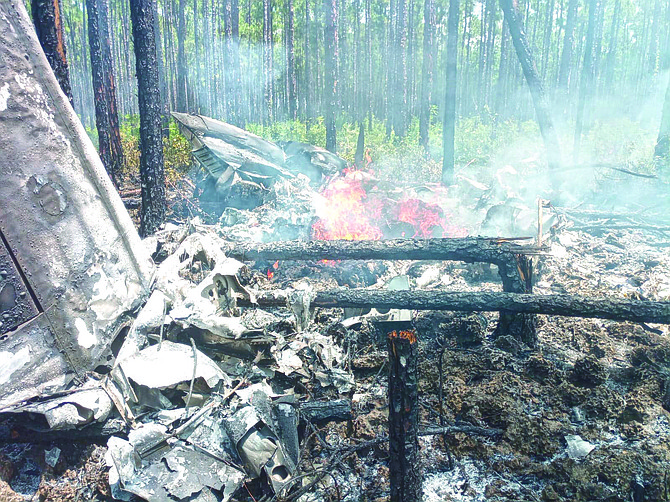
One of the deadliest civilian aviation incidents in recent Bahamian history, which claimed 10 lives during an Independence Day flight, has entered a critical new phase of investigation, with recovered wreckage now shipped to the United States for detailed forensic examination. The Air Accident Investigation Authority (AAIA), the national body leading the probe, confirmed this week that all salvaged aircraft components—including both of the plane’s engines—have been transported for analysis at two separate U.S. facilities: a secure investigative site in Jacksonville, Florida, and the engine manufacturer’s dedicated assessment center in Mobile, Alabama.
These technical examinations form a core pillar of the AAIA’s ongoing safety-focused investigation, designed to help experts piece together the exact sequence of events that led to the crash and identify any underlying factors that contributed to the disaster. In a public statement clarifying the scope of its work, the AAIA emphasized that the probe’s sole mandate is to advance aviation safety: by pinpointing existing safety gaps, the authority will develop targeted corrective recommendations to prevent similar tragedies from occurring in the future.
Crucially, the AAIA noted that its safety investigation is completely separate from any parallel probes conducted by the Bahamas’ judicial, legal, or regulatory bodies, and it is not intended to assign blame or establish civil or criminal liability for the crash.
The recovery of wreckage from the crash site was completed between July 22 and 24, carried out by the AAIA with technical support from SouthEast Air Recovery, a Florida-based firm specialized in aviation accident recovery. The downed aircraft was a Flamingo Air Cessna 402C, which was operating a scheduled passenger route from New Providence to North Andros when it crashed close to San Andros Airport on Independence Day.
Initial witness and on-site evidence confirms the plane first collided with trees before traveling a short distance and coming to a stop in a heavily wooded area, where the wreckage was subsequently destroyed by post-crash fire. Of the 10 people on board, one individual survived the initial impact and escaped the damaged aircraft, but later succumbed to their injuries, bringing the total death toll to 10.
The investigation remains in its opening phase, which is focused on the systematic collection, documentation, and preservation of all available evidence, the AAIA confirmed. Once this evidence-gathering stage is concluded, the probe will advance to its second phase: comprehensive data analysis, during which investigators will evaluate every piece of factual material, including results from the wreckage examinations, flight recorded data, aircraft operational records, maintenance logs, weather data from the day of the crash, witness testimony, and all other relevant evidence.
The third and final phase of the investigation will be the presentation of findings, which will conclude with the preparation and publication of a full final report. This document will include any safety recommendations the AAIA deems necessary to strengthen national and regional aviation safety.
In a timeline update, the authority announced that a preliminary report into the crash is expected to be released on or before August 10. In line with international aviation investigation standards, a full final report is projected to be published approximately one year after the date of the crash, though the AAIA cautioned that this timeline may be adjusted if additional investigative work is required to resolve outstanding questions.