标签: Antigua and Barbuda

安提瓜和巴布达

  • Two Antigua & Barbuda Officials Selected For 2026 ECVA Beach Volleyball Referee Course

    Two Antigua & Barbuda Officials Selected For 2026 ECVA Beach Volleyball Referee Course

    The Eastern Caribbean Volleyball Association (ECVA) has announced the selection of two promising officiating representatives from Antigua & Barbuda to participate in its highly anticipated 2026 Beach Volleyball Referee Course, marking a key milestone for the nation’s volleyball development agenda.

    This competitive selection process drew applications from dozens of aspiring volleyball officials across 11 member territories of the ECVA, with the two Antigua & Barbuda candidates standing out for their demonstrated on-court experience, thorough understanding of international volleyball rules, and commitment to advancing the sport at both the grassroots and regional levels. The specialized training course, scheduled to kick off in early 2026, is designed to elevate the standard of officiating across the Eastern Caribbean by providing participants with advanced instruction on match management, conflict resolution, adaptive rule interpretation for beach volleyball’s unique outdoor conditions, and modern referee fitness standards.

    Local volleyball governing bodies in Antigua & Barbuda have welcomed the announcement, noting that the opportunity will not only boost the professional development of the two selected officials but also create long-term benefits for domestic beach volleyball competitions. By gaining international-level certification and training, the officials will bring back updated knowledge and best practices to train newer local referees, strengthening the overall officiating ecosystem in the country. For the ECVA, the initiative aligns with its broader strategic goal of growing beach volleyball as a popular recreational and competitive sport across the Caribbean, building a pipeline of qualified officials to support upcoming regional tournaments, including qualifiers for the Central American and Caribbean Games and FIVB international events.

  • The UWI Celebrates 14 Top Postgraduate Presentations and Prepares for 2026 Regional Conference

    The UWI Celebrates 14 Top Postgraduate Presentations and Prepares for 2026 Regional Conference

    As one of the Caribbean’s leading higher education institutions with a 75-year legacy of regional impact, The University of the West Indies (The UWI) has formally announced plans for its 4th Annual One UWI Postgraduate Student Conference, scheduled to run from November 18 to 21, 2026. The upcoming gathering will center on the forward-thinking theme “Advancing Knowledge, Shaping Futures: Research, Innovation, and Impact Across the Caribbean and Beyond,” a vision shaped by the overwhelming success of the conference’s third iteration held earlier this year.

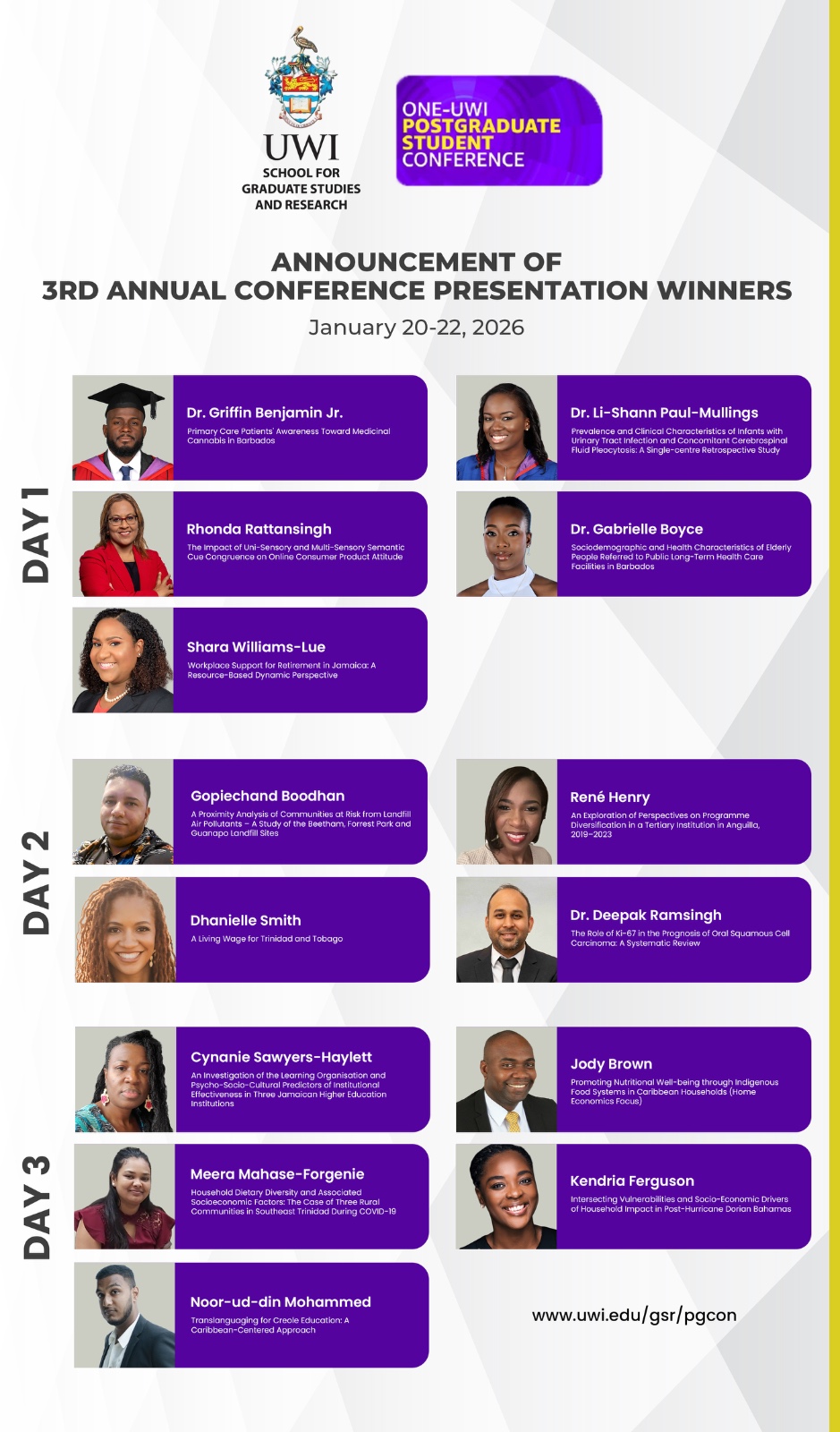
    Originally planned for November 2025, the third annual conference was rescheduled and held as a fully virtual event between January 20 and 22, 2026. The event drew more than 600 registered attendees from across the region and beyond, showcasing 51 original research presentations spanning a diverse range of pressing topics: public health, climate resilience, education, governance, and sustainable development, all aligned with the Caribbean’s most urgent development priorities. Following the conclusion of the virtual event, organizers awarded honors to 14 standout oral presentations, recognizing the exceptional quality of postgraduate scholarship across the university’s five regional campuses.

    The 14 award recipients, who recently received electronic gift cards and commemorative prizes, were selected based on three core criteria: research originality, strict academic rigor, and direct relevance to Caribbean community and policy needs. The winning projects represent the full breadth of postgraduate research at The UWI, spanning public health, social science, agricultural sustainability, education reform, and economic justice. Standout winning works include a retrospective analysis of pediatric urinary tract infection comorbidities from the Mona Campus’ Faculty of Medical Sciences, a study of primary care patient awareness of medicinal cannabis in Barbados from the Cave Hill Campus, and an analysis of socioeconomic drivers of post-hurricane household vulnerability in the Bahamas, among other high-impact projects.

    The third annual conference opened with a keynote address from The UWI’s Vice-Chancellor Professor Sir Hilary Beckles, and featured a lineup of distinguished international speakers including Nadine Bushell of Lions Clubs International, Rodolpho Gonçalves da Silva from Brazil’s Universidade Estadual Paulista (UNESP), and Indian sustainability entrepreneur Ishaan Sudan. Across their remarks, speakers centered on the critical roles of community resilience, interdisciplinary innovation, youth leadership, and cross-sector service in addressing interconnected global challenges from climate change to public health inequality.

    In comments following the award ceremony, Professor Aldrie Henry-Lee, Pro Vice-Chancellor for Graduate Studies and Research (SGSR), highlighted the real-world value of the research presented at the conference. “These presentations demonstrate the exceptional quality of postgraduate research across The UWI and direct application to real-world challenges. They reflect a strong commitment to producing knowledge that matters to the Caribbean,” she said. Professor Henry-Lee also extended gratitude to all contributors to the conference’s success, including session chairs, discussants, campus graduate study directors, student and guild representatives, presenters, attendees, and the central organizing team.

    Beyond academic exchange, the third annual conference integrated a tangible community outreach component: on January 23, 2026, a team of postgraduate students and institutional partners traveled to Hanover, Jamaica, to deliver disaster relief and practical support to more than 200 families impacted by Hurricane Melissa. The outreach effort, organized in partnership with the Lions Clubs of Jamaica and the Kiwanis Club of New Kingston, aligned with The UWI’s longstanding institutional commitment to civic engagement. It will also serve as a pilot program for the proposed UWI Give Back Day, scheduled to coincide with the 4th annual conference in November 2026.

    Founded in 1948 as a small affiliate university college of the University of London with just 33 medical students based in Jamaica, The UWI has grown exponentially over the past seven decades to become a globally recognized research university serving nearly 50,000 students across five regional campuses: Mona in Jamaica, St. Augustine in Trinidad and Tobago, Cave Hill in Barbados, Five Islands in Antigua and Barbuda, and a distributed Global Campus. The university also maintains global academic partnership centers across North America, Latin America, Asia, Africa, and Europe, offering more than 1,000 credential programs ranging from professional certificates to doctoral degrees across nine broad academic disciplines.

    Consistently ranked among the world’s top universities by Times Higher Education (THE) since 2018, The UWI holds the distinction of being the only English-speaking Caribbean institution featured in four separate THE ranking categories: the overall World University Rankings, the Golden Age University Rankings for institutions founded between 50 and 80 years ago, the Latin America and Caribbean Regional Rankings, and the Impact Rankings that evaluate institutional contributions to the United Nations’ Sustainable Development Goals (SDGs). This global recognition has supported the recent launch of The UWI’s International School for Development Justice (ISDJ), an innovative global online graduate business school focused on training the next generation of leaders in equitable sustainable development.

  • PHOTOS: Digicel Supports Barbuda’s Next Generation of Entrepreneurs

    PHOTOS: Digicel Supports Barbuda’s Next Generation of Entrepreneurs

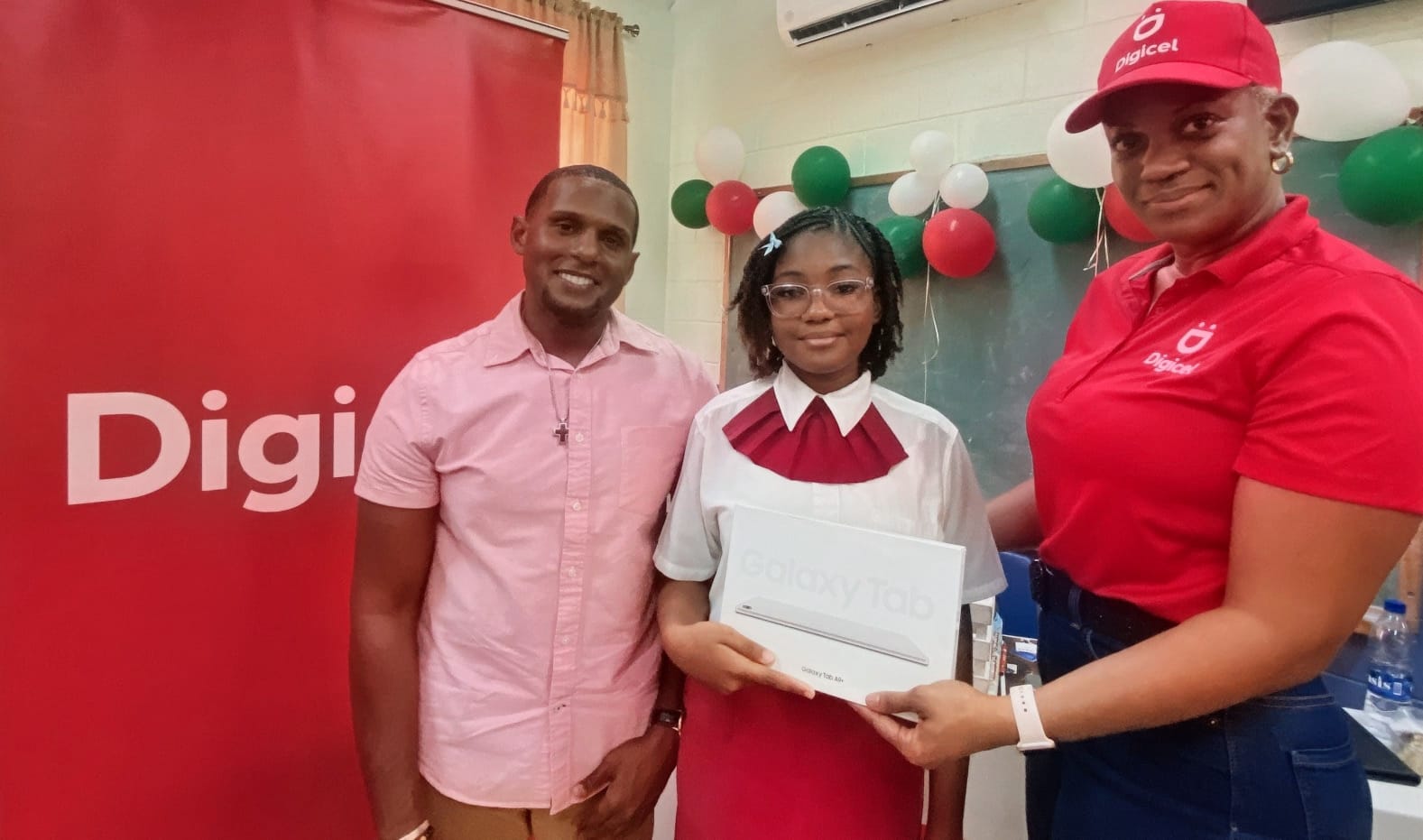
    On the Caribbean island of Barbuda, a new wave of young business creators is beginning to carve out their paths in local commerce, and regional telecommunications giant Digicel has stepped forward to provide critical support for this rising generation.

    The initiative, centered on empowering homegrown entrepreneurial talent, addresses a longstanding gap in resources for early-stage small business owners on the island, many of whom have struggled to access funding, mentorship, and digital infrastructure to grow their ideas. Digicel’s support package includes not only financial grants for selected startup projects but also access to low-cost connectivity, digital skills training, and networking opportunities that connect emerging Barbuda entrepreneurs to regional business networks.

    Local community leaders have welcomed the intervention, noting that sustainable economic growth on Barbuda depends heavily on retaining young talent and encouraging them to build businesses that serve local needs, from tourism-focused services to community-focused retail and agricultural ventures. Unlike many external development programs that prioritize outside investment, Digicel’s initiative centers Barbuda’s own residents as the drivers of long-term prosperity, creating a pathway for young people to turn their creative business ideas into viable, job-creating enterprises.

    Participants in the program have already highlighted how the support has removed key barriers to launching their projects, with many planning to expand their operations within the next year. For a small island community still recovering from the economic and infrastructure impacts of recent major hurricanes, this targeted investment in local entrepreneurs offers a tangible boost to long-term community resilience and economic self-determination.

  • Denushka H. Gibbs Tops 2026 Grade Six National Assessment

    Denushka H. Gibbs Tops 2026 Grade Six National Assessment

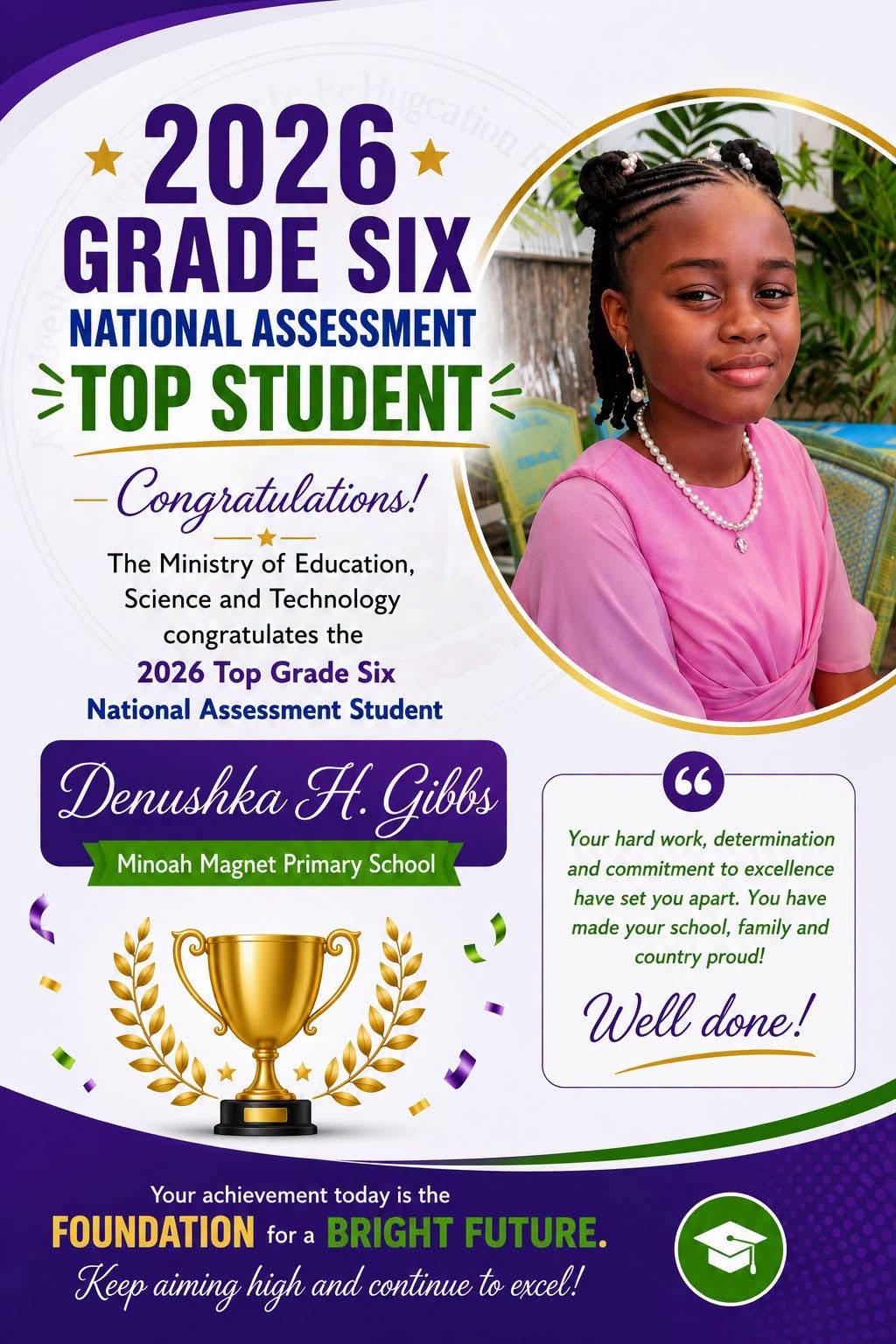
    The Ministry of Education, Science and Technology has officially announced the results of the 2026 Grade Six National Assessment, naming Denushka H. Gibbs from Minoah Magnet Primary School as the nation’s top-performing student this year. Gibbs secured the highest national ranking with an outstanding total score of 383, outperforming hundreds of thousands of sixth-grade students across the country.

    In an official statement following the results release, the ministry celebrated Gibbs’ historic achievement, emphasizing that her success is a direct reflection of her consistent effort, unwavering resolve, and lifelong dedication to academic excellence. “Your exceptional achievement is a testament to your hard work, determination, and commitment to excellence. You have made your school, your family, and the nation proud,” the statement read.

    The ministry also extended its formal congratulations to all members of Gibbs’ support network, including her parents, classroom teachers, school administrators, and community mentors who guided her through her primary education journey. Officials expressed strong confidence that Gibbs’ remarkable accomplishment will serve as a source of motivation for young learners across the nation, encouraging them to pursue their own academic goals with dedication.

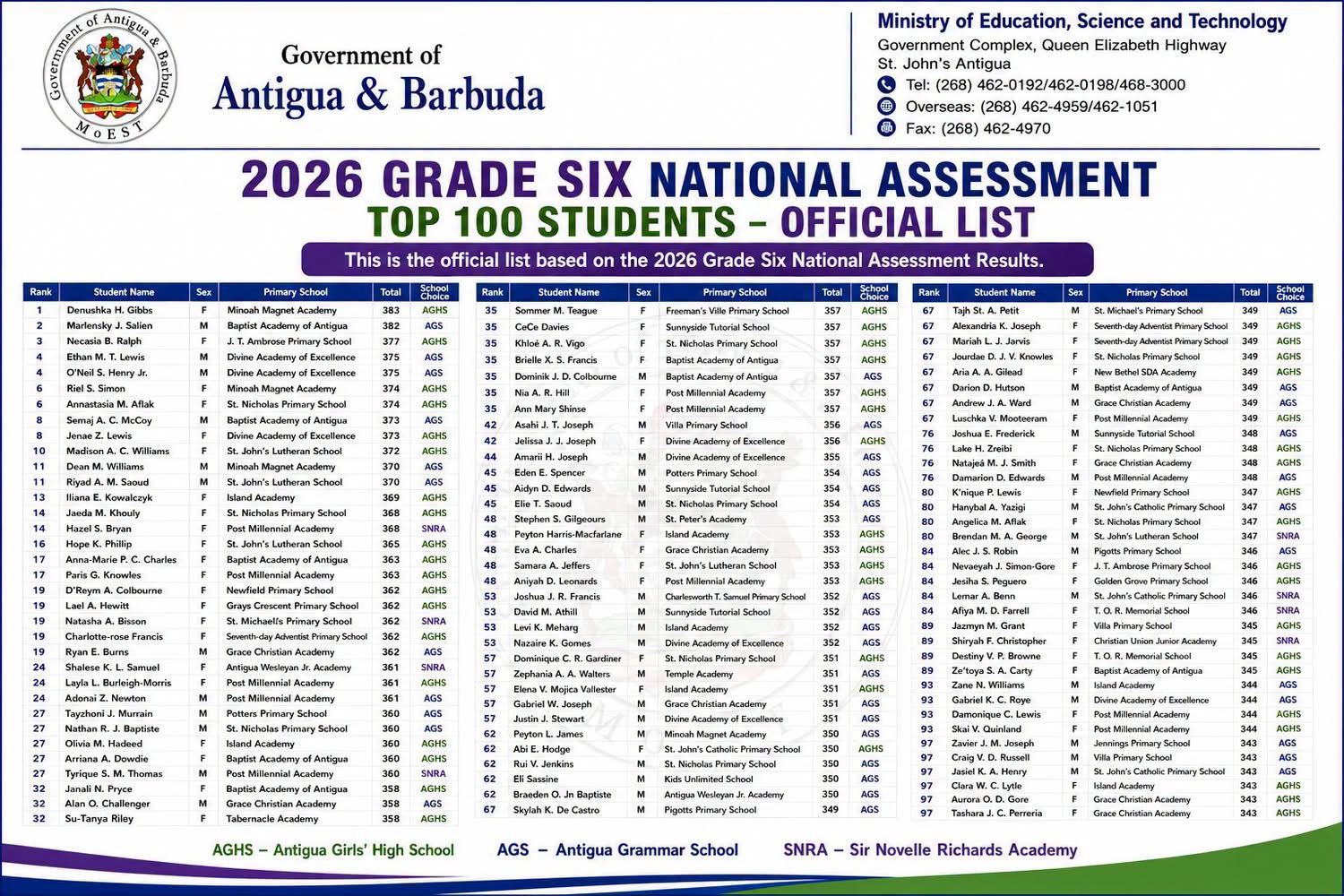
    Alongside the announcement of Gibbs’ top ranking, the ministry released the full official list of the top 100 performing students in this year’s assessment. Marlen sky J. Salien of Antigua Baptist Academy claimed the second-highest national score with 382 marks, earning him the title of the top male student in the 2026 cohort. Closing out the top three overall placements was Necasia B. Ralph of J.T. Ambrose Primary School, who scored 377 marks. Ralph’s performance also earned her distinction as the highest-ranked student from a government-run primary school.

    Education Minister Daryll S. Matthew also joined in offering congratulations to all participating students, their families, teaching staff, and entire school communities following the results release. Minister Matthew highlighted a key standout from the top 100 rankings: Post Millennial Academy secured the highest number of placements on the national list, with 12 of its students earning spots among the top 100 performers nationwide.

  • Ministry of Education Announces Top 100 Students in 2026 Grade Six National Assessment

    Ministry of Education Announces Top 100 Students in 2026 Grade Six National Assessment

    The long-awaited results of the 2026 Grade Six National Assessment are finally official, with the Ministry of Education, Science and Technology unveiling the roster of the nation’s 100 highest-performing sixth-grade students this week. Leading the pack of standout learners is Denushka H. Gibbs, a student at Minoah Magnet Academy, who secured first place nationwide with an impressive total score of 383.

    Following closely behind Gibbs is Marlenky J. Salien from Antigua Baptist Academy, who earned second place overall with a score of 382, a performance that also earned Salien the title of the top-ranking male student across the country. Claiming the third position on the national leaderboard is Necasia B. Ralph of J.T. Ambrose Primary School, with a solid score of 377. Ralph’s third-place finish also marks her as the highest-scoring student from a public government-run primary institution in this year’s assessment.

    In his official remarks following the results release, Education Minister Daryll S. Matthew extended warm congratulations to all the ranked students, as well as the parents, teachers, principals and school communities that supported them throughout the preparation period. Minister Matthew framed the achievement of placing among the Top 100 as a defining milestone in each student’s academic journey, celebrating the hard work that brought each learner to this point.

    Beyond individual accomplishments, the minister also highlighted the institutional success of Post Millennial Academy, which outperformed all other schools in the country this year by placing 12 of its students on the national Top 100 list – the highest number of entries from any single school.

    In an official congratulatory statement published alongside the results, the Ministry of Education, Science and Technology reaffirmed its pride in the cohort, saying: “We congratulate the Top 100 Students in the 2026 Grade Six National Assessment. Keep aiming high and continue to excel!”

    Matthew also took the opportunity to encourage all participating students, not just those who earned a spot in the Top 100. He reminded learners that regardless of their final ranking, they should take pride in the effort they put into the assessment, and continue pursuing academic excellence as they transition into secondary school in the coming year.

    Alongside student rankings, the official results list also records each learner’s preferred secondary school for the next stage of their education. The vast majority of the Top 100 students selected either Antigua Grammar School or Antigua Girls’ High School as their first choice, with a smaller group opting to attend Sir Novelle Richards Academy.

  • National Solid Waste Management Authority Pays Tribute to Okeen Lightfoot

    National Solid Waste Management Authority Pays Tribute to Okeen Lightfoot

    The National Solid Waste Management Authority (NSWMA) of Antigua, alongside the Ministry of Health and the Environment, is in mourning following the tragic on-duty death of 29-year-old sanitation employee Okeen Lightfoot. Lightfoot lost his life on May 12, 2026, after an out-of-control motor bus veered off All Saints Road and pinned him against a parked vehicle, while he was performing routine grass-cutting work along the north shoulder of the highway. First responders pronounced him dead at the crash site immediately after the incident.

    In an official condolence statement released to the public this Friday, NSWMA leadership paid tribute to Lightfoot, describing him as a deeply valued colleague and beloved friend to everyone on his team. The statement highlighted his consistent dedication, genuine kindness, and unshakable commitment to public service, noting that these qualities left an indelible mark on all who had the chance to work alongside him.

    “It is with heavy hearts that we mourn the passing of our valued colleague and friend, Mr. Okeen Lightfoot,” the statement read. “His dedication, kindness, and unwavering commitment to service will be remembered and cherished by us all.”

    The authority extended its deepest sympathies to Lightfoot’s family, friends, and loved ones, emphasizing that his legacy of dedicated public service will never be forgotten by the organization. The statement balanced the community’s shared grief with gratitude for Lightfoot’s life and the contributions he made during his tenure.

    “Today, we stand together in grief—but also in gratitude for the life he lived and the impact he made,” the statement continued. “Our thoughts and prayers are with his family, friends, and colleagues during this difficult time. May they find strength, comfort, and peace in the days ahead. You will never be forgotten.”

    In the wake of the fatal incident, Jamaica’s Health Minister traveled to the crash site to assess the situation and issued an urgent public appeal, calling on all road users to practice greater caution and responsibility on Antigua’s roadways to prevent similar preventable tragedies in the future.

  • CARICOM’s advancement must be driven by collective action, Secretary-General says on 53rd Anniversary

    CARICOM’s advancement must be driven by collective action, Secretary-General says on 53rd Anniversary

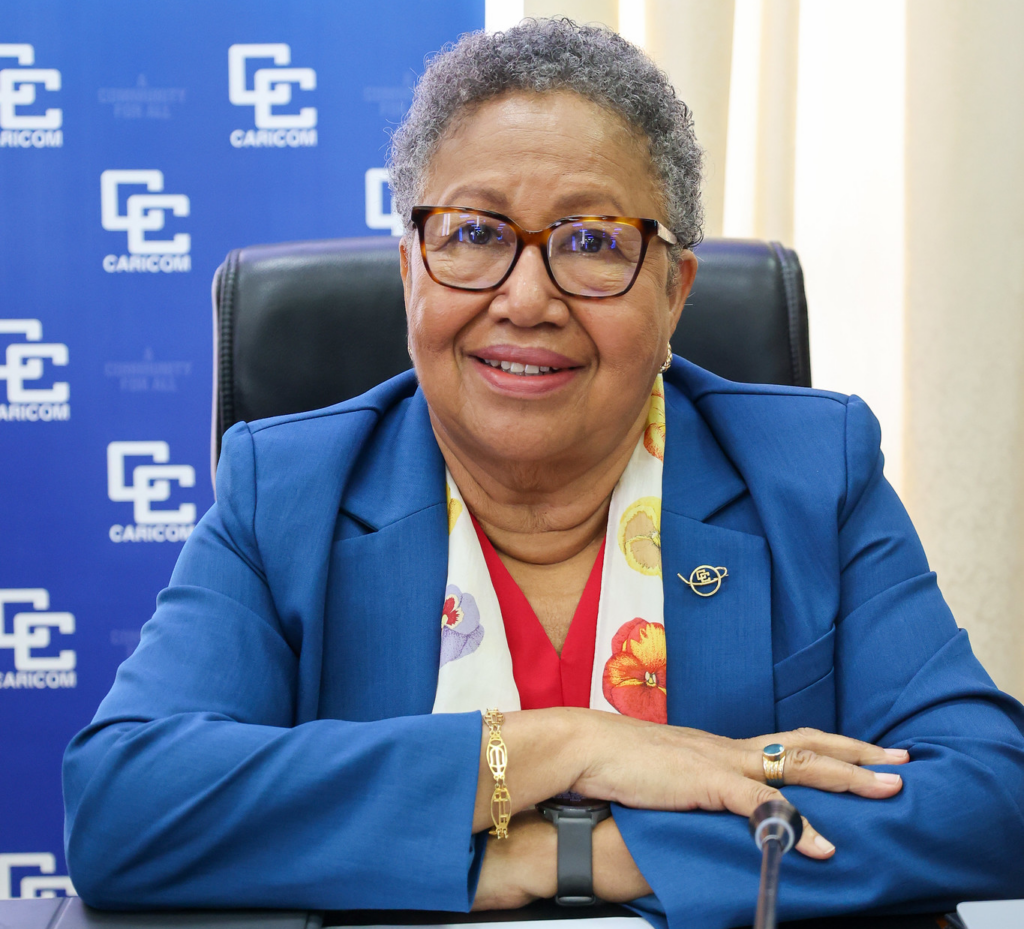
    As the Caribbean Community (CARICOM) observes its 53rd anniversary of the signing of the Treaty of Chaguaramas this CARICOM Day 2026, Secretary-General Dr. Carla Barnett has delivered a keynote message reaffirming the bloc’s unwavering commitment to advancing regional integration through collaborative effort, even in the face of mounting challenges that threaten decades of hard-won progress.

    Founded in 1973 when regional leaders gathered to sign the foundational Treaty of Chaguaramas (later revised in 2001 to launch a single market and economy), CARICOM has grown into one of the developing world’s most successful regional integration projects. Today, the bloc counts 15 full Member States and six Associate Members, representing a combined population of roughly 16 million people—60 percent of whom are under the age of 30. Its work is structured around four core pillars: economic integration, coordinated foreign policy, human and social development, and cross-border security cooperation, with its central administrative body, the CARICOM Secretariat, based in Georgetown, Guyana.

    In her anniversary address, Barnett framed CARICOM from its inception as a powerful collective declaration of the Caribbean region’s right to shape its own independent destiny. Over more than five decades, she noted, intentional collaboration and mutual support across member states have delivered tangible results: deepened regional economic partnerships, and a greatly amplified voice for small island Caribbean nations on pressing global issues that directly impact their populations.

    Barnett detailed the breadth of progress the bloc has driven across sectors critical to public well-being, from bolstering regional security frameworks and emergency response systems to accelerating coordinated action on climate change, improving public health outcomes and expanding educational access across the region. Working alongside national implementation bodies in each member state, CARICOM’s governing bodies, the Secretariat, and its specialized institutions have built the regulatory frameworks, protective safeguards, and targeted initiatives needed to foster inclusive growth and long-term sustainable development across the Caribbean, laying the groundwork for a safer, more resilient regional home for all citizens.

    The secretary-general emphasized that CARICOM’s enduring strength has always grown out of shared purpose and the determination of Caribbean people to overcome the structural constraints of small national size and limited individual national resources. Across every sector, at home and around the world, CARICOM nationals continue to distinguish themselves through extraordinary creativity and dedication, serving as an inspiration for the entire region.

    Even as the bloc celebrates these milestones, Barnett acknowledged the growing pressures that threaten to erode progress and strain regional unity. The Caribbean has faced consecutive years of record-breaking climate-driven disasters, including devastating hurricanes that have crippled key growth sectors such as agriculture and tourism, which underpin livelihoods across much of the region. Compounding these local shocks, the bloc continues to navigate an increasingly volatile global landscape, marked by shifting economic conditions and widespread disruptions to cross-border trade and international commerce.

    Against this challenging backdrop, Barnett reaffirmed CARICOM’s core conviction that continued progress depends entirely on sustained collective action. Together, member states remain committed to advancing priorities that directly improve citizens’ lives: expanding intra-regional trade, generating new employment opportunities, cutting the region’s heavy reliance on food imports, reducing violent crime, and retrofitting built infrastructure to withstand climate impacts. Equally high on the bloc’s agenda are improving digital connectivity and expanding regional transportation networks, to enable seamless, affordable communication and smooth movement of people and goods across member state borders.

    Barnett also stressed that CARICOM remains deeply focused on meeting the current and future needs of the region’s large youth population, who deserve a prosperous, technologically advanced Caribbean full of economic and social opportunity. Closing her message, she called on the region to use the 53rd anniversary as a moment to renew confidence in the enduring value of regional unity and interdependence.

    “Happy CARICOM Day 2026!” she concluded.

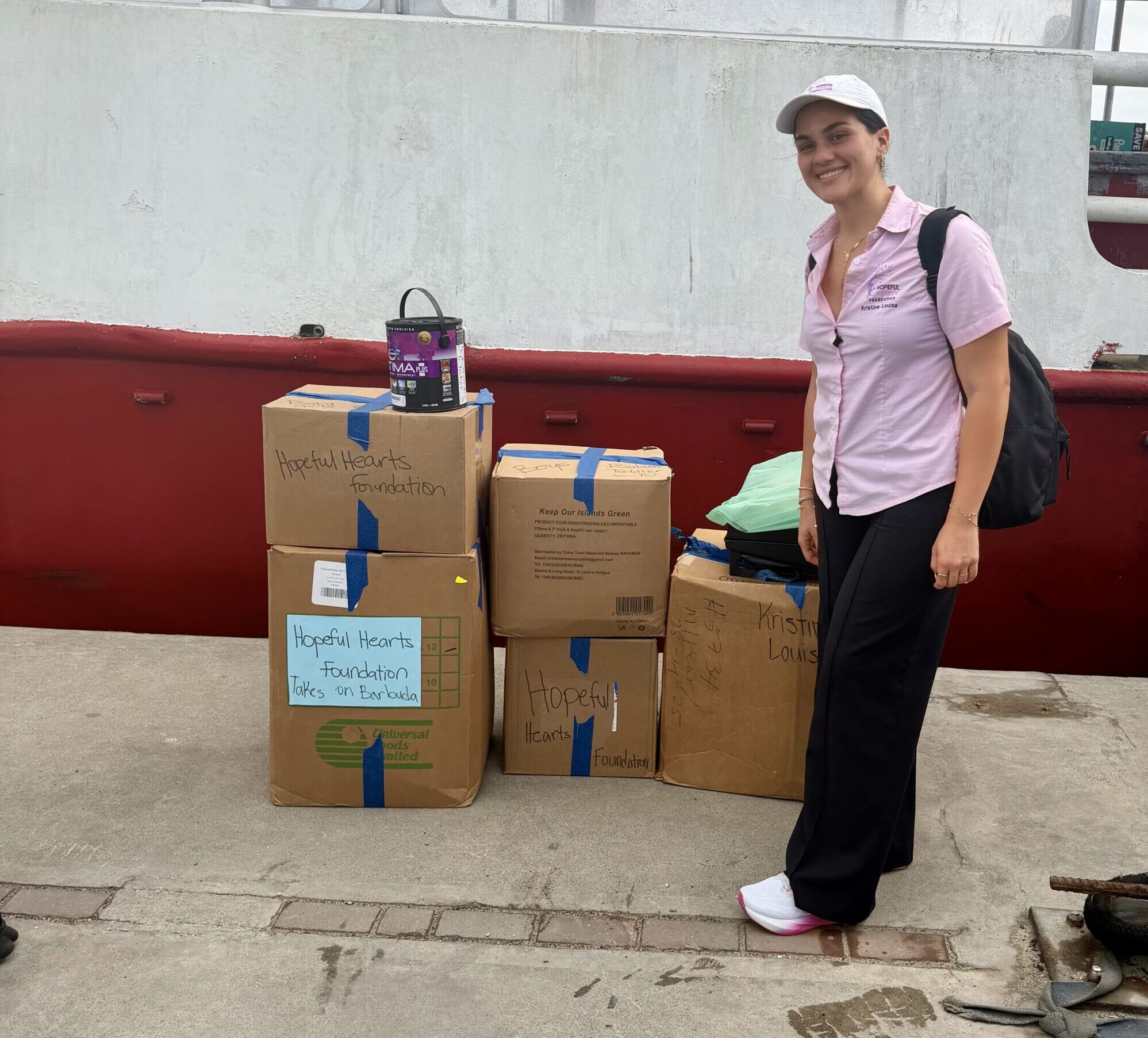
  • Hopeful Hearts Foundation Arrives in Barbuda for Community Outreach Mission

    Hopeful Hearts Foundation Arrives in Barbuda for Community Outreach Mission

    A volunteer mission from the Hopeful Hearts Foundation has crossed from Antigua to the neighboring island of Barbuda, carrying a cargo of donated educational materials, children’s toys and clothing to lift up local families and young community members. Over the course of the three-day outreach, the foundation has planned a full slate of community-centered activities designed to deliver immediate support and long-term value to residents.

    Core activities include the distribution of the collected school supplies to local students, a community-wide clothing drive to provide essential garments to families in need, structured recreational activities to bring joy to local children, and the kickoff of a new public mural project at Holy Trinity Primary School. The mural initiative is being carried out in formal collaboration with Chaneil Imhoff, a representative of the WISH organization, and is intended to create a permanent, uplifting public artwork for the school community.

    All of these coordinated efforts are rooted in three clear core goals: easing financial and material burdens for local families, fostering positive growth opportunities for young people, and leaving a durable, beneficial imprint on the Barbuda community that extends far beyond the mission’s three-day timeline.

    One of the most anticipated moments of the visit is a scheduled interactive session with the Barbuda Youth Council. During this gathering, Kristine Louisa — who serves dual roles as Hopeful Hearts’ National Youth Ambassador, as well as its chief executive officer and founding director — will open up about her own personal and professional journey. She will deliver a talk focused on three key themes: building resilience in the face of challenge, cultivating strong leadership skills, and expanding empowerment opportunities for young people across Barbuda.

    The Hopeful Hearts Foundation has publicly extended its sincere appreciation to all stakeholders that made the mission possible. Key contributors include major institutional donors the Barbuda Ocean Club, Senator Kendra Beazer, and Fastlane Construction, alongside the dozens of volunteers and community supporters that donated goods, time and effort to prepare for the trip. In a statement, the organization emphasized that collective action, even rooted in small individual acts of generosity, is capable of driving transformative, meaningful change for marginalized and vulnerable communities.

    Looking ahead, the foundation plans to share regular on-the-ground updates from the Barbuda mission throughout the weekend, with the goal of inviting the broader global and regional community to celebrate the tangible impact of the outreach once activities are completed.

  • Government Projects Antigua and Barbuda’s Economy to Grow Another Five Percent This Year

    Government Projects Antigua and Barbuda’s Economy to Grow Another Five Percent This Year

    The twin-island nation of Antigua and Barbuda is on track to notch a fifth consecutive year of robust economic expansion, with official projections putting 2026 growth at 5 percent, driven by a red-hot construction sector, expanding residential development, rising consumer activity, and growing import volumes. The growth forecast was unveiled Thursday by Maurice Merchant, Director General of Communications, during the question-and-answer portion of the government’s weekly post-Cabinet press briefing. Merchant shared the outlook after being queried about the consistent upward trajectory of the country’s customs revenue collections, and he went on to detail the administration’s strong fiscal performance for the second quarter of the year.

    Merchant emphasized that the nation’s improving economic results are not limited to stricter tax enforcement and higher compliance rates, noting that broad-based growth is being felt across multiple key sectors of the domestic economy. “It’s enforcement, compliance, and of course individuals are importing more into Antigua and Barbuda,” Merchant explained, adding that the country’s economy remains heavily reliant on imported goods, with rising overall economic activity pushing up demand for products from both businesses and consumers.

    “Antigua and Barbuda imports everything,” Merchant said, noting that grocery chains, retail outlets, and other commercial operations are bringing in larger shipments of goods to match the growing appetite of local consumers. This confluence of trends, he argued, has set the stage for another year of strong economic expansion for the small Caribbean nation.

    Beyond import growth, Merchant traced the projected 5 percent expansion to consistent momentum in the construction and residential development industries, paired with rising household disposable incomes and strengthening consumer spending. “Construction, housing, people spending more, people having more disposable income — all of that lends to a great economy,” he stated.

    The brighter economic outlook has also translated into improved fiscal fortunes for the national government, Merchant confirmed. He disclosed that revenue agencies including the Customs Division and Inland Revenue Department are now generating budget surpluses, giving the current administration greater financial room to address urgent national priorities. “Government has more disposable income,” Merchant said.

    As a concrete example of this new fiscal flexibility, Merchant pointed to Cabinet’s recent decision to immediately allocate EC$2.5 million to purchase a new CT scanner for the country’s main public healthcare facility, the Sir Lester Bird Medical Centre. “That’s why government was able to immediately say that the EC$2.5 million needed for that CT scanner at the Sir Lester Bird Medical Centre should become available right away, and it’s because of surpluses that the government has at its disposal at this time to meet the needs of the people of Antigua and Barbuda,” he explained.

    Earlier in the briefing, Cabinet received updated data showing that customs revenue has climbed steadily in recent years, growing from EC$392 million in 2022 to EC$402 million in 2023, EC$502 million in 2024, and a record EC$573 million in 2025. For the first half of 2026, the Customs and Excise Division pulled in EC$276.85 million, compared to EC$255.37 million collected during the same six-month period in 2025. Merchant emphasized that this consistent growth in government revenue is a clear sign of the economy’s underlying resilience, and it has strengthened the government’s ability to invest in public healthcare, infrastructure, and other core public services while still maintaining responsible, prudent fiscal management practices.

  • Salary Deductions Likely Under Government’s New Rent-to-Own Housing Programme

    Salary Deductions Likely Under Government’s New Rent-to-Own Housing Programme

    The British government’s ambitious new rent-to-own housing programme, designed to help lower and middle-income households step onto the property ladder, looks set to include automatic salary deductions for participating workers, multiple government sources have confirmed.

    The policy, first floated by the Department for Levelling Up, Housing and Communities earlier this year, was crafted to address the country’s worsening affordability crisis that has pushed home ownership out of reach for millions of young Britons. Unlike traditional shared ownership or mortgage schemes, the programme lets tenants pay a monthly amount that includes both market-rate rent and an incremental contribution toward purchasing the property over time, eventually allowing them to take full ownership after a set 15 to 30-year period.

    Early drafts of the scheme’s implementing regulations, leaked to parliamentary media this week, outline that for employees working in registered companies, the monthly contribution will be deducted directly from their salary by employers, with the funds transferred automatically to housing providers. Government officials argue that this automatic deduction structure will reduce missed payments, lower administrative costs for housing associations, and help participants build consistent equity without the temptation to skip contributions for other expenses.

    Critics of the plan have already raised concerns about the impact on workers’ take-home pay. Opposition housing spokespeople note that for low-income households already struggling with rising energy and food costs, a mandatory monthly deduction could push some into further financial hardship, especially if their income drops unexpectedly. Some business groups have also pushed back, arguing that adding another mandatory payroll deduction will increase administrative burdens for small businesses already coping with post-pandemic cost pressures.

    Supporters counter that the programme offers a rare path to ownership for groups locked out of the housing market, and that the salary deduction structure is designed to remove the barriers that have sunk similar affordable home ownership schemes in the past. A final public consultation on the scheme’s rules is expected to launch by the end of the year, with the first properties available for participation in early 2025.