标签: Antigua and Barbuda

安提瓜和巴布达

  • ABWU Attends Global Tourism Services Conference as Support Grows for Women Workers

    ABWU Attends Global Tourism Services Conference as Support Grows for Women Workers

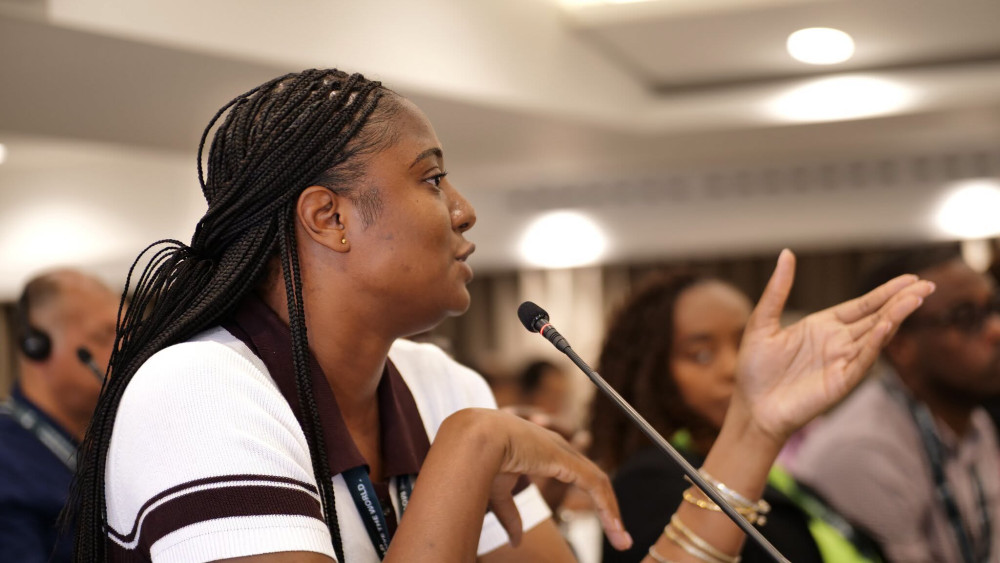
    In late June, London played host to the landmark International Transport Workers’ Federation (ITF) Tourism Services Section Conference, where global labor leaders and industry stakeholders gathered to map out a more equitable and sustainable future for the global tourism transport sector. Among the attendees were David Massiah, General Secretary of the Antigua and Barbuda Workers’ Union (ABWU) and Chair of the ITF Tourism Services Section, alongside ABWU Shop Steward Briann Russell.

    Opening the two-day gathering, Massiah delivered a stark assessment of the industry’s unaddressed inequalities. He pointed out that while billions in global investment continue to pour into expanding and upgrading tourism infrastructure, the millions of working people who keep the sector running are still systematically left behind.

    “Too often, those same workers are the ones facing the greatest insecurity—informal work, low wages, unsustainable working conditions, and increasing pressure from changing business models,” Massiah told delegates, highlighting a systemic gap between industry growth and worker well-being that has persisted for decades.

    Gender equity emerged as the central priority of the 2024 conference, with discussions and policy efforts culminating in the official launch of a groundbreaking joint report by ITF and the United Nations: the *Global Report on Women in Tourism Transportation*. The comprehensive new study documents long-standing gender gaps across every stage of employment in the sector, from entry-level recruitment to senior leadership representation. It also lays out clear, actionable recommendations to help employers, governments, and unions build more inclusive, fair, and equitable workplaces across the global tourism transport industry.

    Beyond advancing gender equity, conference delegates agreed on a set of core strategic priorities to guide the sector through its ongoing transition to sustainability. These priorities include raising industry-wide Environmental, Social and Governance (ESG) standards, expanding union membership and building organizational capacity for labor groups globally, advancing safety standards for tourism destinations worldwide, and ensuring a just transition that protects worker rights as the sector shifts to lower-carbon operations.

    To advance cross-sector collaboration, the conference hosted a dedicated Tourism Industry Event that brought together trade union delegates with representatives from leading global tourism bodies. Participants included officials from UN Tourism, the University of Surrey, the World Travel & Tourism Council, the World Sustainable Hospitality Alliance, and other major industry organizations, all joining to debate shared challenges and opportunities for the global tourism sector.

    Speaking to assembled industry and organizational leaders, Massiah emphasized that no single stakeholder group can build a better future for tourism on its own. “The future of tourism cannot be shaped by any one group alone,” he said. “Governments set the framework. Industry drives investment and innovation. Workers deliver the service and the experience.”

    Following the London conference, Massiah traveled to Madrid to hold discussions at the UN Tourism Office, continuing diplomatic efforts to align labor priorities with global tourism development goals. Massiah stressed that genuine cross-stakeholder partnership is the only path to turning tourism into a powerful driver of inclusive development—especially for small island developing regions like the Caribbean, where tourism forms the backbone of national economic activity and social progress.
  • CARICOM Chairman calls for integration that people can feel

    CARICOM Chairman calls for integration that people can feel

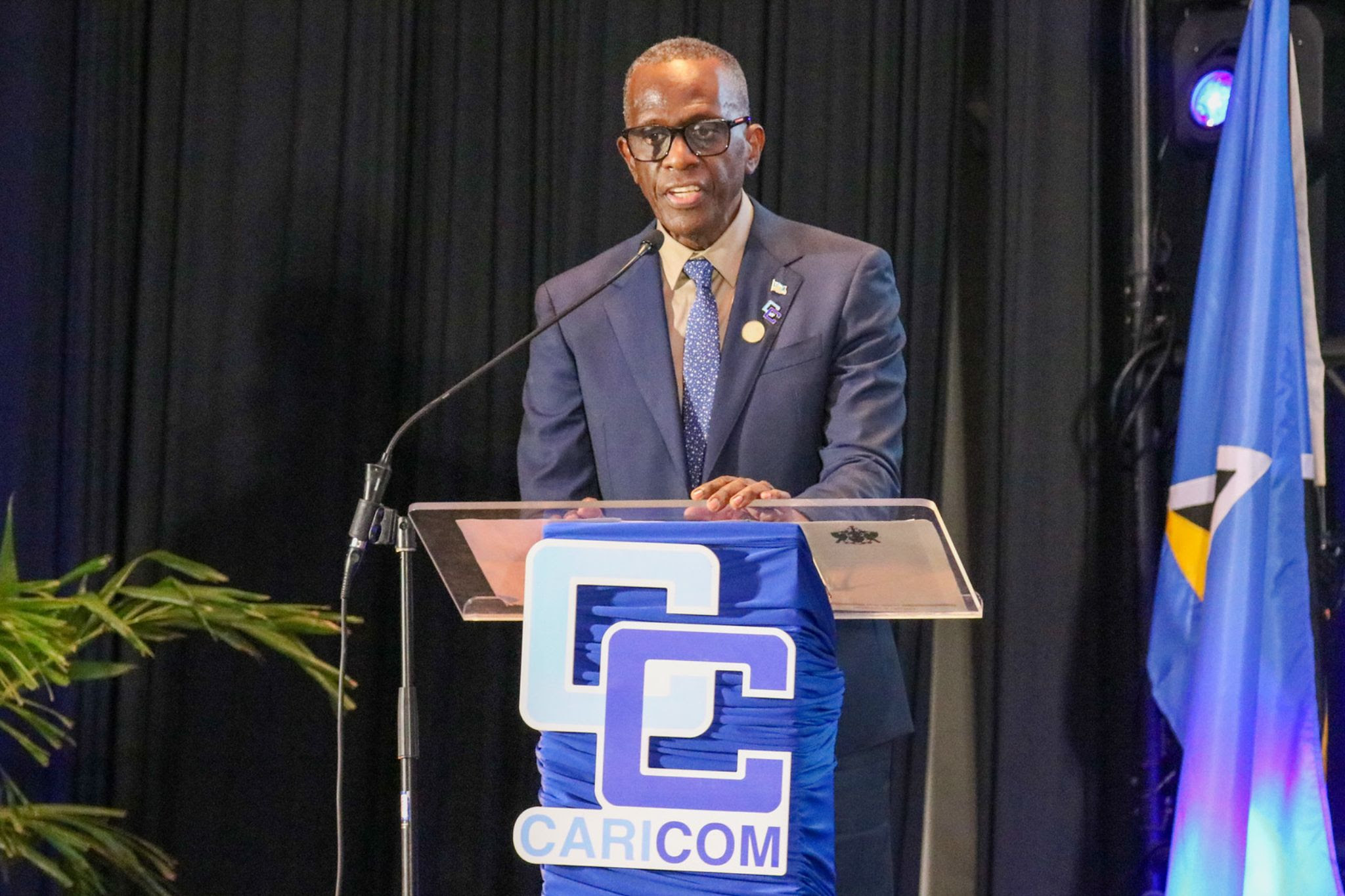
    On the evening of July 5, at the opening ceremony of the 51st Regular Meeting of the Conference of Heads of Government held in Sandals Grande, Saint Lucia, newly installed Caribbean Community (CARICOM) Chairman Philip J. Pierre laid out a transformative vision for his tenure, centering his leadership on a question that resonates with ordinary residents across the region: “What more can CARICOM do for me?”

    Pierre, who also serves as Prime Minister of Saint Lucia, assumed the top CARICOM post on July 1. He was quick to clarify that the question does not represent criticism of the regional bloc, but rather a sincere call from residents grappling with a cascade of daily challenges. These pressures span soaring food and energy prices, the growing intensity of Atlantic hurricanes, erratic rainfall patterns that disrupt livelihoods, climate change-driven harms to farming and fishing communities, and widespread public anxiety over rising crime and violence.

    In his keynote address, the new Chairman stressed that decades of regional integration must move beyond institutional processes to directly impact the daily lives of the 16 million people who call CARICOM member states home. He argued that the bloc’s work must transition “from conference rooms to communities; from rhetoric to reality; from communiqués to results,” shifting from an institution focused on policy agreement to one driven by tangible, on-the-ground implementation.

    Outlining his vision for a people-first, action-oriented CARICOM, Pierre emphasized that his Chairmanship belongs not just to regional governments, but to the ordinary citizens the bloc was created to serve. Every major decision made by CARICOM, he said, should be evaluated by its tangible impact on residents’ daily lives. “It is not enough for our decisions to be recorded. They must be acted upon, measured, and followed through. My mantra is simple: Integration that our people cannot feel will not last,” Pierre told attendees.

    At the top of Pierre’s priority list is strengthening regional unity, which he described as the foundational pillar of all future progress for the bloc. He noted that outside larger powers and global markets have long benefited from divisions among Caribbean nations, as a fragmented region is far easier to engage and influence on the global stage. By contrast, when CARICOM speaks with one unified voice, acts collectively, and negotiates as a single bloc, the region’s collective global influence grows exponentially. To advance this goal, Pierre pledged to work to ensure that no CARICOM member state ever feels unheard, overlooked, or isolated during his tenure. “Every voice counts. Every nation matters. Every citizen must be able to see themselves reflected in the work of CARICOM,” he said.

    Beyond unity, Pierre outlined a broad slate of additional priorities for his term: advancing comprehensive citizen security across the region, leading global advocacy for climate justice for small island developing states, driving post-shock economic renewal, strengthening regional food and nutrition security, and centering inclusion for youth, women, and vulnerable groups in all regional development planning.

    Young people will be a particular focus of Pierre’s Chairmanship, he confirmed, noting that more than 60% of CARICOM’s population is under the age of 30. The future of the regional integration project depends entirely on young people’s participation and their confidence in the movement, Pierre argued. Echoing the core question of his tenure, he noted that young Caribbean residents are asking whether CARICOM can deliver a viable future for them – and the bloc must answer that question not with empty slogans, but with concrete action.

    Pierre also called for renewed investment in and support for CARICOM’s core institutional bodies, describing them as critical tools for boosting regional development and collective resilience. He noted that ordinary citizens often lack a clear understanding of how these institutions support daily life across the region, from advancing public health and coordinating disaster response to improving education standards, boosting cross-border security cooperation, and driving inclusive economic growth.

    Established in 1973 via the Treaty of Chaguaramas (revised in 2001 to launch a single market and economy), CARICOM counts 15 full member states and six associate members, standing as one of the most successful examples of regional integration in the developing world. The bloc organized its work around four core pillars: economic integration, foreign policy coordination, human and social development, and security cooperation, with its administrative secretariat headquartered in Georgetown, Guyana.

  • Antigua’s oldest known resident celebrates 103rd birthday

    Antigua’s oldest known resident celebrates 103rd birthday

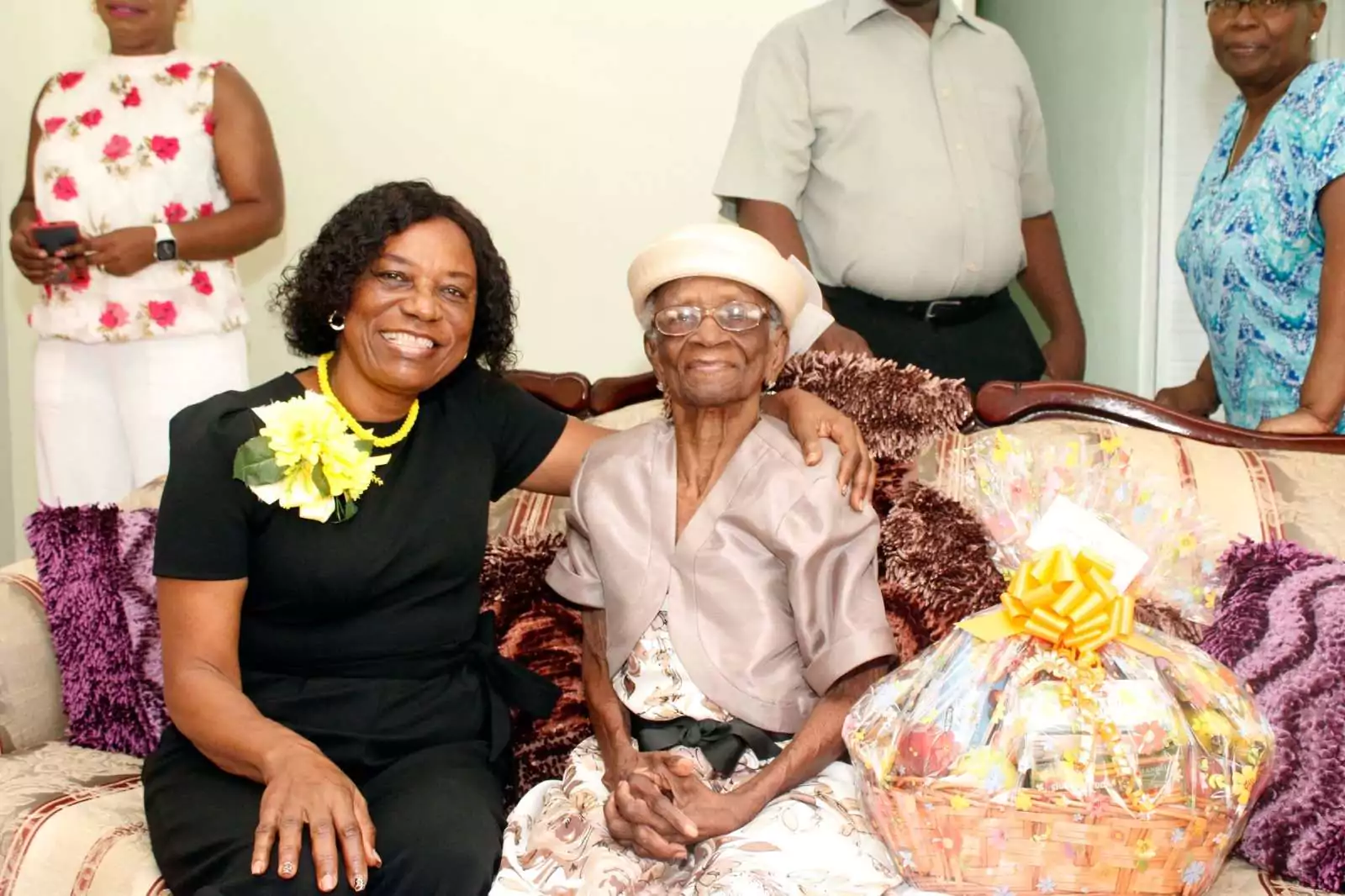
    The oldest documented living citizen of Antigua and Barbuda, Irenie Mussington, has marked her 103rd birthday surrounded by love, official recognition and warm tributes from the nation’s highest leaders, family members and countless well-wishers across the country.

    Born on July 4, 1923, Mussington’s life has been defined by quiet resilience and persistent hard work from her earliest years. When she was just nine years old, she lost her mother, a devastating loss that forced her to leave formal education just two years later to step into a caregiving role for her injured grandmother. To support herself and her family, she took up work as a domestic helper, shouldering adult responsibilities long before most girls her age.

    At 18, Mussington took a bold step to build her own livelihood, launching an independent small business as a street vendor. She started by selling handcrafted homemade sweets, gradually growing her enterprise to include locally produced beverages and clothing items. For more than six decades, she ran her small trading operation out of St. John’s, continuing her work until she retired at the age of 83.

    Beyond her professional tenacity, Mussington has built a sprawling, loving family: she is a mother of three, grandmother to nine, and great-grandmother to another nine children. Governor General Sir Rodney Williams lauded Mussington as a shining model of resilience, relentless work ethic and committed service to local communities across the nation. During his weekly public broadcast, Prime Minister Gaston Browne echoed this praise, calling her “a national treasure” and extending his warmest birthday wishes to the centenarian. To commemorate her extraordinary 103-year milestone, the government of Antigua and Barbuda presented Mussington with a 10,000 Eastern Caribbean dollar cheque as a formal recognition of her legacy and lifetime of contribution.

  • Antigua and Barbuda to Push CARICOM for Longer Suspension of Common External Tariff

    Antigua and Barbuda to Push CARICOM for Longer Suspension of Common External Tariff

    As the Caribbean Community (CARICOM) prepares to convene its annual Heads of Government meeting in Saint Lucia, Antigua and Barbuda has laid out a clear, cost-of-living-focused policy agenda centered on reforming the bloc’s core trade framework. Prime Minister Gaston Browne outlined his country’s priorities in an interview on the *Brown and Brown Show* on Sunday, confirming that Antigua and Barbuda will lead a push to extend and broaden the current suspension of the Common External Tariff (CET) — a regional import duty applied to all goods entering CARICOM from non-member nations.

    The existing CET suspension, currently capped at a one-year term, has already helped bring down prices for imported goods across the bloc. Browne argues that this temporary relief needs to be expanded to deliver sustained relief for households grappling with rising living costs. “We’ll certainly be one of the countries that’s going to push for a reduction in the cost of living by asking for a continued suspension of the CET,” Browne told listeners. “I know it’s on a yearly basis. I think we should go to at least two years in the suspension of the CET.” Beyond extending the timeline, Antigua and Barbuda is also calling for the suspension to be broadened to cover more product categories, unlocking additional price cuts for consumers.

    To complement the CET reform, Browne says Antigua and Barbuda will also advocate for expanded access to lower-priced imports from the Dominican Republic, a non-CARICOM neighbor with competitive production in multiple key sectors. To back this proposal, the prime minister has already instructed the country’s Ministry of Trade to compile a detailed list of goods that the Dominican Republic can supply at lower costs than existing intra-CARICOM suppliers. This move is part of a broader regional strategy to tame persistent inflationary pressures that have strained household budgets across the Caribbean in recent years.

    Browne also highlighted that CARICOM is currently advancing a new trade agreement with Colombia, which would open doors for member states to access a wider range of competitively priced goods. Leveraging its existing robust shipping connections to Panama, the Dominican Republic, and key South American markets, Antigua and Barbuda stands ready to act as a regional distribution hub for these lower-cost imports, the prime minister noted, positioning the country to support the entire bloc’s cost-reduction goals.

    While short-term trade adjustments are critical for immediate relief, Browne emphasized that long-term, sustainable reductions in the cost of living will require deeper structural change. “Ultimately, we will be able to reduce the cost of living by growing our own produce and having our own meats,” he said, calling on consumers across the region to prioritize and support locally produced agricultural goods as part of the collective push for lower living costs.

  • Antigua and Barbuda Projects EC$250 Million Budget Surplus on Strong Revenue Growth

    Antigua and Barbuda Projects EC$250 Million Budget Surplus on Strong Revenue Growth

    The twin-island nation of Antigua and Barbuda is on track to deliver a landmark annual budget surplus exceeding EC$250 million in 2025, with government revenue collections continuing to outperform results from the previous year, Prime Minister Gaston Browne announced in a public appearance Sunday.

    Speaking during an interview on the local *Brown and Brown Show*, Browne explained that the stronger-than-expected surplus forecast stems from robust revenue collection by two key government agencies: the Inland Revenue Department and the Customs and Excise Division. This positive fiscal outcome comes even as the administration maintains a controversial policy holding domestic fuel prices below global market rates, a choice that has carved into projected government earnings.

    “Year-to-date, revenue performance has been good, very strong,” Browne told listeners. “We’re quite pleased with the performance of both Inland Revenue as well as Customs. Both of them have actually shown increases over last year.”

    The prime minister noted that the upward trend in revenue has put the government in the rare position of delivering a multi-hundred-million-dollar surplus while simultaneously making progress on reducing the country’s overall sovereign debt burden. “We are projecting a surplus of about a quarter of a billion dollars, and the debt-to-GDP is falling down to about 62 percent,” Browne added.

    Browne also confirmed that the government has rejected advice from its own Ministry of Finance to scrap the fuel price subsidy, choosing to continue artificially lowering consumer costs at the pump. To maintain the policy, the government compensates the West Indies Oil Company to offset losses from the capped prices, and the administration gives up roughly EC$4 million in monthly tax revenue to keep the subsidy in place.

    Even accounting for this recurring monthly revenue loss, Browne confirmed that total year-to-date collections are still higher than the totals recorded during the same period in 2024, defying projections that the subsidy would erase fiscal gains.

    The prime minister used the announcement to defend his administration’s track record on fiscal stewardship, pointing out that since his government took office in 2014, national debt has grown only marginally even as the country’s overall economy has expanded substantially. “When it comes to fiscal responsibility, I can say here without any fear of contradiction that my administration has been the most fiscally responsible administration that this country has ever seen,” Browne stated.

    Looking ahead, Browne emphasized that the confluence of sustained broad-based economic expansion, improved tax compliance and collection, and careful fiscal planning has put the government in a stronger financial position, allowing it to keep pushing forward with critical infrastructure and development projects across the nation.

  • UPP to Hold Public Consultations Ahead of White Paper Debate on US Deportee Proposal

    UPP to Hold Public Consultations Ahead of White Paper Debate on US Deportee Proposal

    Ahead of a critical special parliamentary sitting scheduled for the week of July 13, Antigua and Barbuda’s main opposition United Progressive Party (UPP) has announced plans to host a nationwide series of public consultations to gather resident input on the government’s recently released White Paper detailing a proposed third-country deportee agreement with the United States.

    Jamale Pringle, UPP’s political leader and the party’s only sitting Member of Parliament, emphasized that the community-centered consultations are designed to give ordinary constituents a formal platform to share their perspectives on the high-stakes policy before parliamentary representatives cast their votes or stake out formal positions. While the consultations are confirmed to take place before the July parliamentary debate, the party has not yet released concrete details on meeting dates or locations, with a promise of further announcements in the coming days.

    Pringle framed the outreach as a core duty of elected office in a representative democratic system, noting that lawmakers are bound to reflect the will of the voters who put them in power. “We operate within a representative democracy, and representatives should reflect the wishes of the people who elected them,” Pringle stated, arguing that no decision on a matter of national significance should be made without first soliciting public input from affected communities.

    Beyond gathering public opinion, the UPP plans to use the upcoming parliamentary debate to flag critical gaps it has identified in the government’s White Paper. The opposition’s top criticism centers on the complete lack of supporting official documentation that would outline the full terms of the proposed arrangement with Washington, with the party stressing that it is deeply concerning that key documents related to the policy proposal have not been made accessible to the general public.

    The policy discussion was triggered last week when the Antigua and Barbuda government published the White Paper, which lays out U.S. proposals for the small island nation to accept certain third-country nationals who have been deported from U.S. territory. According to the government’s official document, the White Paper provides full context for the ongoing bilateral discussions, enumerates the core risks and opportunities for Antigua and Barbuda, outlines the government’s official assessment of the proposal, and details the core principles and conditions under which any form of cooperation with the U.S. on this initiative could be considered.

    The White Paper explicitly acknowledges that the agreement would raise profound questions across multiple critical policy areas, including national sovereignty, domestic legal responsibility, public expenditure, national security, domestic social stability, and the country’s standing international obligations. It also stresses a hard reality for the small Caribbean nation: as a state with limited institutional, financial, and infrastructural resources, Antigua and Barbuda cannot reasonably take on open-ended commitments related to non-citizens whose deportation is being sought by a foreign government.

    Moving forward, both the government and opposition are aligning on the timeline: the White Paper will formally be tabled before parliament during the special session expected the week of July 13, with the UPP expected to bring the feedback collected from its public consultations into the debate.

  • PM Browne Says Government Housing Policies Have Reduced Wealth Inequality

    PM Browne Says Government Housing Policies Have Reduced Wealth Inequality

    Antigua and Barbuda Prime Minister Gaston Browne has credited his administration’s targeted housing initiatives with driving a dramatic reduction in national wealth inequality, announcing a sharp improvement in the country’s Gini coefficient over his decade in office. Speaking during an appearance on the Brown and Brown Show this past Sunday, Browne outlined that core programs including the Housing Assistance Programme for Indigent People (HAPI) and large-scale affordable housing developments are intentionally structured to expand access to homeownership, a key tool for transferring accumulated wealth to working and low-income citizens.

    “Every time we construct these homes and a member of the public gets to benefit from that property, we are actively moving wealth into the hands of ordinary men and women across the country,” Browne explained during the interview.

    The Gini coefficient, a globally recognized statistical metric that measures the gap between the most and least wealthy members of an economy, ranges from 0 (perfect equality across all population segments) to 1 (maximum inequality, with almost all wealth concentrated in a tiny elite). When Browne’s administration took power in 2014, the prime minister noted, the country recorded a Gini coefficient of 0.87—an extremely high figure pointing to severe wealth concentration. That figure has now fallen to 0.47, a drop of 0.40 that marks one of the most rapid improvements in wealth distribution recorded in the region.

    “The closer the Gini coefficient gets to one, the more skewed wealth distribution becomes. It means a tiny group of wealthy individuals are capturing almost all of the country’s economic gains,” Browne added. He emphasized that the dramatic reduction in the metric confirms that wealth is now spread far more broadly across Antigua and Barbuda’s population than it was a decade ago.

    Browne used the interview to push back against widespread criticism that recent economic growth in the country has only benefited a small, well-connected elite. He argued that if corruption and mismanagement of public resources were as widespread as critics claim, the national statistical data would reflect that failure, rather than showing clear progress in reducing inequality.

    Beyond the drop in wealth inequality, the prime minister highlighted additional markers of economic progress under his leadership: a significantly strengthened national fiscal position, and steady growth in per capita income across the country.

  • Minister Freeland Attends Global Intellectual Property Talks in Geneva

    Minister Freeland Attends Global Intellectual Property Talks in Geneva

    A high-stakes global gathering on intellectual property governance is kicking off in Geneva this month, with a senior official from Antigua and Barbuda set to represent the small Caribbean nation at one of the world’s most influential forums for creative and economic policy. From July 7 to 15, Minister of State for Tourism Michael Freeland is taking part in the 68th session of the World Intellectual Property Organization (WIPO) Assemblies of Member States, the UN agency’s top decision-making body that draws more than 1,000 delegates from national governments and international institutions each year.

    In advance of the official opening of the assembly proceedings, Freeland will join a preeminent ministerial policy dialogue centered on a pressing global question: how can intentional investment in innovation and creative industries lay the foundation for more inclusive future societies and drive long-term, sustainable economic expansion? The core agenda of the two-week gathering brings together public sector leaders from every region of the world to tackle cross-cutting intellectual property (IP) issues, from standards for patents and trademark protection to rules governing copyright and geographical indication labeling, with the ultimate goal of charting the trajectory of global IP policy for years to come.

    Beyond plenary sessions and policy debates, Freeland has a packed schedule of bilateral and regional engagements during his time in Geneva. He is scheduled to hold official talks with Daren Tang, WIPO’s Director General, join a dedicated ministerial meeting for Caribbean nations, and lead technical discussions focused on strengthening Antigua and Barbuda’s domestic intellectual property framework.

    Key priorities for the Caribbean nation’s delegation include advancing actionable updates to national legislation governing new plant varieties, upgrading the country’s existing Industrial Property Automation System, rolling out convenient online filing services for IP applicants, expanding national access to and use of the WIPO-administered Madrid System for international trademark protection, moving forward with long-planned copyright reform, and rolling out public awareness campaigns to boost understanding of IP rights across the country.

    As the top decision-making forum for the global IP ecosystem, the WIPO Assemblies play a critical role in aligning national policy frameworks with global standards, creating opportunities for small and developing nations to shape rules that work for their unique economic and development goals. For Antigua and Barbuda, participation in this year’s gathering offers a key platform to advance domestic IP modernization that aligns with the country’s broader goals of sustainable growth and innovation-driven development.

  • Ministry of Finance Official attends Prestigious Oxford Sustainable Finance Executive Programme

    Ministry of Finance Official attends Prestigious Oxford Sustainable Finance Executive Programme

    In a milestone that highlights the growing voice of climate-vulnerable small nations in global sustainability conversations, Carlon Knight, a senior finance official from Antigua and Barbuda, has earned a spot in the prestigious Sustainable Finance Executive Programme at the University of Oxford — an institution that has held the top spot in the Times Higher Education World University Rankings for a full decade.

    Hosted at Oxford’s historic Rhodes House from July 6 to 10, the immersive programme is developed and led by the Oxford Sustainable Finance Group, the globe’s largest academic center focused exclusively on research and education in sustainable finance. Under the direction of founding director Dr. Ben Caldecott and senior associate Dr. Alex Money, the programme brings together a handpicked cohort of global leaders in finance, policy, and climate action. This year, Knight stands out as the only participant hailing from a Small Island Developing State (SIDS) and the sole representative from the entire Caribbean region. He joins an elite group of professionals from top global institutions including the International Sustainability Standards Board, Fidelity International, the Glasgow Financial Alliance for Net Zero, WWF-UK, and the Bank of England.

    In his day-to-day role as Senior Projects Officer in Antigua and Barbuda’s Ministry of Finance and Corporate Governance Project Management Office, Knight wears multiple critical hats for the eastern Caribbean nation. Working in close partnership with Director Gail Imhoff-Gordon, he oversees and coordinates the country’s full portfolio of externally financed infrastructure and development projects. This includes a wide range of climate finance initiatives backed by major global and regional development partners such as the World Bank, the Caribbean Development Bank, and the Saudi Fund for Development, among other multilateral and sovereign funders. Beyond project coordination, Knight also serves as the PMO’s Chief Risk and Compliance Officer, responsible for upholding robust governance standards for public investment.

    Knight’s expertise in sustainable development extends beyond the public sector: he also holds an appointment as an Adjunct Lecturer at The University of the West Indies Five Islands Campus, where he teaches undergraduate economics courses and leads a graduate-level specialized program in sustainable finance. Earlier this year, he was selected as an Alliance of Small Island States Fellow, where he supported Antigua and Barbuda’s official climate finance negotiation delegation at the 29th UN Climate Change Conference (COP29) held in Baku.

    In comments following his selection to the Oxford programme, Knight emphasized the outsized importance of such capacity-building opportunities for small island developing states like his own. “We are on the front line of climate risk, yet we are too often on the margins of the conversations shaping global sustainable finance,” he explained. “Building technical capacity at this level allows us to bring that expertise home and put it to work for our country. I am deeply proud to represent Antigua and Barbuda, and small island states more broadly, as the lone participant in this cohort.”

    Knight also extended his gratitude to local leadership, saying: “To the Financial Secretary, my Director, Dr Murdock, Ms Gardiner and the Board of Education — thank you for believing in this and for backing me every step of the way.”

    Government officials note that Knight’s selection is not an isolated achievement, but rather a reflection of the Government of Antigua and Barbuda’s broader strategic push to strengthen technical capacity across the public service, with targeted focus on sustainable and climate finance. For a low-lying island nation that faces disproportionate exposure to climate impacts including sea level rise, tropical storm damage, and coastal erosion, this policy area holds growing national strategic importance. Continued investment in specialized high-level training at world-class institutions like Oxford, officials say, will be central to equipping the Ministry of Finance to successfully access, structure, and manage the climate and development financing that the country will require to build resilience and drive inclusive growth in the coming years.

  • LISTEN: Antigua and Barbuda Considering US$100 Million Chinese Loan for Housing and Renewable Energy

    LISTEN: Antigua and Barbuda Considering US$100 Million Chinese Loan for Housing and Renewable Energy

    The Caribbean nation of Antigua and Barbuda is actively exploring a new $100 million concessional loan from China to advance two key domestic development priorities: upgrading renewable energy infrastructure and expanding affordable housing stock, Prime Minister Gaston Browne confirmed in a recent public interview.

    Appearing as a guest on the local Brown and Brown Show this past Sunday, Browne framed the proposal as a feasible step forward, citing a notable improvement in the country’s fiscal position in recent years. He told listeners that Antigua and Barbuda’s debt-to-GDP ratio has dropped sharply to roughly 62%, putting it just two percentage points above the widely accepted international sustainability benchmark of 60%. This improved fiscal standing has created room for the government to take on targeted new borrowing to drive long-term growth, he argued.

    Under the draft plan being evaluated by the administration, $40 million of the requested loan would be dedicated to the construction of a utility-scale renewable energy facility, a project designed to cut the country’s reliance on expensive imported fossil fuels and lower energy costs for residents. The remaining $60 million would be channeled directly into expanding housing supply across both main islands of Antigua and Barbuda, as the country grapples with a persistent shortage of affordable quality housing.

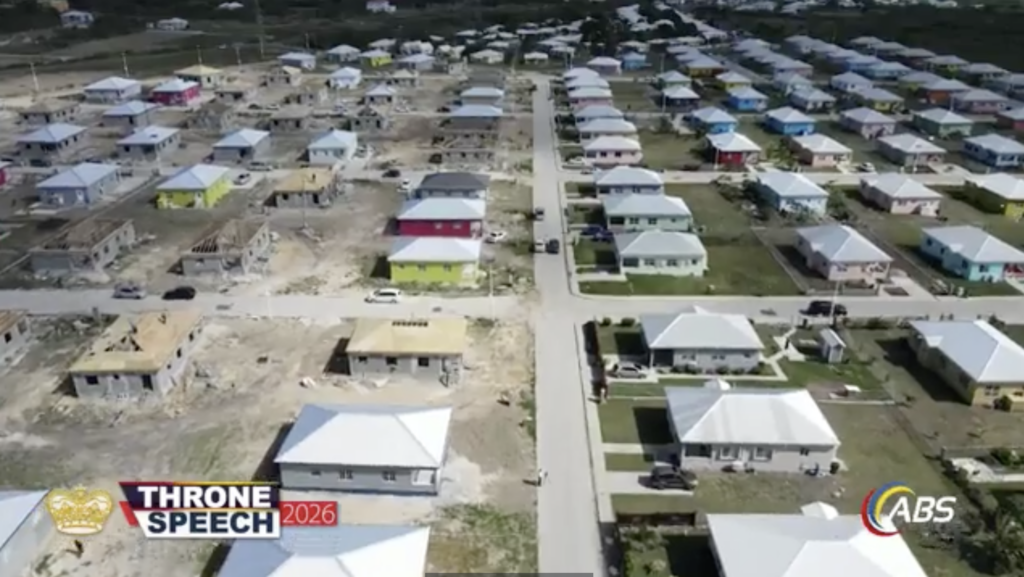
    Browne emphasized that the current housing shortage is far larger than ongoing projects already underway can address. Currently, the government is utilizing a $20 million Chinese grant to build 100 new homes: 50 units in the Bolans community on Antigua, and another 50 on the island of Barbuda. Even with these new units coming online, the prime minister noted that the country still needs thousands of additional homes to meet unmet demand, requiring a large-scale scaling up of residential construction.

    The Antiguan leader added that his government has a long-standing policy of pursuing concessional financing from international partners to fund high-impact infrastructure and development projects, and he specifically highlighted the favorable terms of past Chinese lending. It was those low-interest terms, he said, that have helped the country steadily bring down its overall debt burden to the current improved level.

    Browne outlined the specific terms his administration would view as acceptable for the new loan: a 20-year repayment period, a 2% interest rate, and a five-year moratorium on principal payments, terms that match the favorable borrowing conditions the country has secured from China in the past.

    In a nod to multilateral openness, the prime minister also noted that the government would be equally willing to accept financing from the United States, should Washington be able to offer terms comparable to China’s concessional rates. “If they’re able to match the Chinese and we’re getting cheap money, we will borrow,” Browne stated, underscoring the government’s priority of securing the lowest-cost financing for national development regardless of the source.