标签: Antigua and Barbuda

安提瓜和巴布达

  • Maria Browne calls for prayer and unity at National Thanksgiving Service

    Maria Browne calls for prayer and unity at National Thanksgiving Service

    In a powerful address following Antigua and Barbuda’s inaugural National Church Service for 2026, Works Minister Honorable Maria Browne delivered a compelling message of spiritual fortitude and national unity. The service, held on the first Sunday of the new year, became a platform for reflection and collective encouragement as the nation moves forward.

    Minister Browne drew profound inspiration from Apostle Andrews’ sermon, which centered on Micah chapter seven, verse eight—a biblical passage emphasizing hope during adversity. The Minister articulated how the religious message powerfully resonated with current national circumstances, emphasizing that temporary setbacks never signify permanent defeat and that illumination often emerges from periods of darkness.

    Characterizing the sermon as exceptionally timely, Browne highlighted its direct relevance to the psychological and spiritual needs of the Antiguan and Barbudan populace. She stressed the critical importance of maintaining faith and demonstrating perseverance amid challenges, framing these virtues as essential components of national character.

    Expanding her appeal beyond national borders, the Minister issued a regional call to action, urging citizens to sustain prayers not just for their homeland but for the entire Caribbean community. Her message specifically requested divine intervention for peace, stability, and strengthened unity throughout the region, recognizing the interconnectedness of Caribbean nations.

    The National Church Service represents a significant tradition within Antigua and Barbuda’s cultural and religious calendar, formally marking the commencement of each new year through collective worship and spiritual contemplation. This annual observance provides a moment for national introspection and reaffirmation of shared values before embarking on another year’s journey.

  • U.S. Indictment Alleges Caribbean Politicians Took Bribes to Facilitate Cocaine Route

    U.S. Indictment Alleges Caribbean Politicians Took Bribes to Facilitate Cocaine Route

    A comprehensive U.S. federal indictment has unveiled an extensive transnational narcotics network, alleging that Venezuela’s ruling elite, led by President Nicolás Maduro, orchestrated a multi-decade conspiracy to flood the United States with cocaine. The judicial document, filed in the U.S. District Court for the Southern District of New York, implicates numerous current and former Venezuelan officials in a scheme that leveraged the Caribbean as a critical trafficking corridor.

    The prosecution’s case details a sophisticated operation dubbed the ‘Caribbean route,’ where cocaine shipments originating from Venezuela utilized maritime and aerial pathways. Central to the alleged conspiracy was the systematic corruption of political figures across multiple Caribbean nations. These officials are accused of accepting payments from traffickers to provide protection from law enforcement and guarantee unimpeded movement for designated narcotics networks.

    Venezuela’s geographic position, with its extensive coastline and major ports, is presented as a strategic asset for launching narcotics toward transshipment hubs throughout the Caribbean basin. The indictment contends that this corruption-fueled pipeline not only enriched political accomplices at various stages of the supply chain but also empowered violent criminal and narco-terrorist organizations operating across the Western Hemisphere.

    U.S. authorities have clarified that the charges remain allegations at this stage, and all defendants are presumed innocent unless convicted in a court of law. The Maduro administration has consistently dismissed such accusations as baseless and politically motivated. This legal action represents a significant component of a broader U.S. strategy to combat international drug trafficking networks that exploit institutional vulnerabilities and corruption in key transit regions like the Caribbean.

  • PM Browne says his earlier call for peace in the region was never a defense of Maduro

    PM Browne says his earlier call for peace in the region was never a defense of Maduro

    Prime Minister Gaston Browne of Antigua and Barbuda has issued a definitive clarification regarding his recent diplomatic statements on regional stability. Addressing potential misinterpretations, Browne emphasized that his calls for peaceful dialogue and non-intervention in Venezuela were fundamentally mischaracterized if viewed as support for President Nicolás Maduro’s administration.

    The clarification comes amid heightened geopolitical tensions in the Caribbean region, where neighboring nations have adopted varying positions regarding Venezuela’s political crisis. Browne’s original appeal emphasized regional sovereignty and the principle of self-determination, urging Caribbean Community (CARICOM) members to maintain diplomatic neutrality while encouraging peaceful resolution mechanisms.

    Browne articulated that advocating for peaceful conflict resolution should not be conflated with endorsing specific governments or leaders. His statements reflect a broader Caribbean tradition of diplomatic engagement that prioritizes regional stability over alignment with particular political factions. This position maintains the delicate balance required for small nations navigating complex international disputes involving global powers.

    The Prime Minister’s office further elaborated that Antigua and Barbuda’s foreign policy remains committed to constitutional order and democratic principles, while simultaneously advocating for peaceful dialogue between all Venezuelan stakeholders. This nuanced approach characterizes many Caribbean nations’ attempts to maintain regional harmony while respecting international law and governance standards.

  • Antigua Carnival 2026 Registration is Now Open!

    Antigua Carnival 2026 Registration is Now Open!

    ST. JOHN’S, ANTIGUA – In a significant development for Caribbean cultural celebrations, the Antigua Barbuda Festivals Commission has formally inaugurated the registration process for Antigua Carnival 2026. The announcement, made on January 5th, 2026, marks the commencement of preparations for one of the region’s most anticipated cultural events.

    The comprehensive registration initiative encompasses eighteen distinct participation categories, reflecting the diverse artistic expressions that characterize the carnival. The categories include traditional competitive events such as Calypso Monarch, Party Monarch, and Road March competitions, alongside showcase categories including Queen of Carnival and Mr. & Miss Teenage Pageant. The registration further extends to Business Floats, Mas Bands, J’ouvert Tropes Bands, and various junior divisions including Junior Calypso Monarch and Junior Carnival School Mas. Additionally, opportunities exist for Individual Mas participants, Cheerleaders, Monday Wear designers, T-Shirt Mas groups, and Vendors seeking to operate during the festivities.

    Prospective participants may obtain registration documentation from two designated locations: the National Festivals Office situated on the first floor of the Cecil George-John Building at the intersection of Corn Alley and Redcliffe Street, and the Ministry of Creative Industries on Old Parham Road, located upstairs from the KFC/INET Building. These offices will maintain specific operating hours from Monday through Thursday between 10:00 a.m. and 2:00 p.m., with Friday hours extending from 10:00 a.m. to 1:00 p.m.

    Completed registration forms must be returned to the National Festivals Office at the Cecil George-John Building address. This early registration launch provides ample preparation time for artists, performers, designers, and entrepreneurs to organize their contributions to what promises to be a spectacular celebration of Antiguan and Barbudan cultural heritage, artistic innovation, and community spirit.

  • PM says as a global leader he must be able to speak on behalf of residents or step aside

    PM says as a global leader he must be able to speak on behalf of residents or step aside

    In a powerful address that redefined expectations for international governance, the Prime Minister delivered a compelling critique of contemporary global leadership. The speech emphasized that true international influence must be fundamentally rooted in faithfully representing one’s citizens, proposing that leaders who fail this essential duty should consider relinquishing their positions.

    The Prime Minister’s framework establishes a new paradigm for political legitimacy on the world stage, challenging the conventional metrics of power and economic might. This perspective shifts the focus toward democratic accountability and responsive governance as prerequisites for meaningful global engagement.

    Through specific examples and historical context, the address illustrated how nations that prioritize domestic welfare consistently achieve more sustainable and respected international standing. The Prime Minister contrasted this approach with instances where leaders pursued foreign agendas disconnected from their populations’ needs, ultimately diminishing both domestic stability and global credibility.

    This philosophical stance carries significant implications for international relations, potentially influencing how nations evaluate their participation in global institutions and multilateral agreements. The speech also arrives during a period of heightened scrutiny regarding the effectiveness of international organizations and the quality of leadership within them.

    The address concludes with a forward-looking perspective on how this accountability-centered approach could reshape diplomatic norms and create more stable international partnerships built on genuine popular support rather than temporary political arrangements.

  • PM Browne Responds to Opposition Allegations on Deportees Arrangement

    PM Browne Responds to Opposition Allegations on Deportees Arrangement

    Prime Minister Gaston Browne of Antigua and Barbuda has issued a firm rebuttal against allegations from opposition parties that his administration covertly agreed to accept massive numbers of criminal deportees from the United States. Characterizing the claims as a malicious falsehood, Browne condemned what he described as a politically motivated disinformation campaign designed to undermine public trust.

    The controversy centers on accusations from the United Progressive Party (UPP), which alleged the government secretly consented to receive over 100,000 deportees with criminal backgrounds from the U.S. Browne categorically denied these assertions, labeling them as ‘dastardly political spin’ rooted in falsehoods intended to score cheap political points.

    Clarifying the actual terms of the arrangement, Browne revealed his government had consented to review possibly up to ten non-criminal refugees who possess skills currently in short supply within Antigua and Barbuda. This limited humanitarian initiative, he emphasized, operates under a framework of complete discretion, allowing authorities to accept or reject any individuals recommended by U.S. officials.

    The Prime Minister further explained that the agreement includes provisions for biometric data sharing and criminal background transparency from U.S. authorities. This arrangement forms part of a broader international effort where the United States has invited over 100 nations to assist in alleviating refugee and deportee pressures.

    Browne noted that several Caribbean Community (CARICOM) member states have participated in similar agreements, contrasting their cooperative approach with what he characterized as the opposition’s habitual tendency toward sensationalism and misinformation for political gain.

  • Greg Walter, Son of National Hero Sir George H. Walter, Dies

    Greg Walter, Son of National Hero Sir George H. Walter, Dies

    Antigua and Barbuda mourns the passing of Greg Walter, son of the late National Hero and former Prime Minister Sir George H. Walter. The announcement of his death was confirmed through official state media channels, though specific details regarding the circumstances and timing remain undisclosed at this time.

    The Walter family legacy remains deeply embedded in the nation’s history, with Sir George H. Walter having served as the country’s second Prime Minister following independence. The elder Walter is celebrated as an instrumental force in shaping the nation’s labor movement and early political development, earning his designation as a National Hero for these monumental contributions.

    Greg Walter’s passing represents not just a personal family tragedy but a moment of national reflection on the Walter family’s enduring impact on Antiguan society. The absence of detailed information surrounding his death has left both the public and media awaiting further official statements. The government has yet to announce any commemorative plans, but the event has already sparked renewed interest in the historical legacy of the Walter family and their foundational role in the nation’s journey.

  • PM outlines conditions for accepting refugees and deportees

    PM outlines conditions for accepting refugees and deportees

    The Prime Minister has articulated a definitive and robust policy framework outlining the precise conditions under which the nation will consider accepting refugees and individuals facing deportation from other countries. This strategic announcement signals a significant shift toward a more selective and criteria-based immigration approach.

    The policy hinges on a multi-layered assessment protocol that prioritizes national security and successful integration prospects. Key conditions include rigorous, enhanced background checks to verify identities and ensure no links to criminal or terrorist organizations. Furthermore, a demonstrated willingness to actively participate in integration programs, including language acquisition and cultural orientation, is deemed mandatory.

    A cornerstone of the new framework is the requirement for bilateral cooperation. The government will only accept deportees from nations that reciprocate by entering into legally binding agreements, ensuring a mutually accountable process. The announcement also emphasized the nation’s commitment to its international humanitarian obligations, but clarified that this commitment will be exercised within a framework that prioritizes the country’s security and social cohesion. This recalibration is presented as a move to ensure a orderly, controlled, and sustainable system for accepting newcomers.

  • Apostle Tells National Thanksgiving Service Antigua’s Challenges Are Temporary

    Apostle Tells National Thanksgiving Service Antigua’s Challenges Are Temporary

    In a powerful address at Antigua and Barbuda’s National Service of Thanksgiving, Apostle Stephen C. Andrews delivered a transformative message framing the nation’s current difficulties as preparatory stages for national renewal rather than indicators of decline. Speaking before political leaders, clergy members, and congregants, the religious leader articulated a vision of restoration, resilience, and economic destiny that resonated throughout the sanctuary.

    Andrews issued a compelling caution against misinterpreting present hardships as national failure, urging citizens to consciously resist despair and public expressions of pessimism. Drawing theological parallels from the biblical book of Micah, he warned against placing excessive confidence in human systems and personalities, instead advocating for national confidence rooted in spiritual faith, moral discipline, and social unity.

    The apostle made a declarative prophecy that Antigua and Barbuda would ‘rise again,’ characterizing current pressures as temporary and necessary precursors to national recovery. He maintained that adversity should not be celebrated by critics, emphasizing that struggle typically precedes meaningful restoration.

    Expanding beyond individual spirituality, Andrews directly connected faith principles to national development, asserting the nation’s potential to emerge as an economic powerhouse if it maintains unity and integrity. He proposed that sustainable prosperity depends equally on ethical foundations as on policy decisions and financial investments.

    Sharing personal testimony of overcoming uncertainty through what he described as divine provision, Andrews presented his journey as a microcosm of the nation’s potential trajectory. He challenged the congregation to let resilience rather than fear define their collective response to contemporary challenges.

    Throughout his address, the apostle emphasized the power of narrative, urging citizens to speak positively about the country’s future. He warned that persistent negative discourse could undermine national confidence and social cohesion during this critical developmental period. His sermon established a reflective tone for the new year, seamlessly integrating faith, national identity, and civic responsibility in what has become an annual tradition setting the nation’s spiritual compass.

  • Leaders Urge Unity and Faith as Antigua and Barbuda Marks New Year at National Thanksgiving Service

    Leaders Urge Unity and Faith as Antigua and Barbuda Marks New Year at National Thanksgiving Service

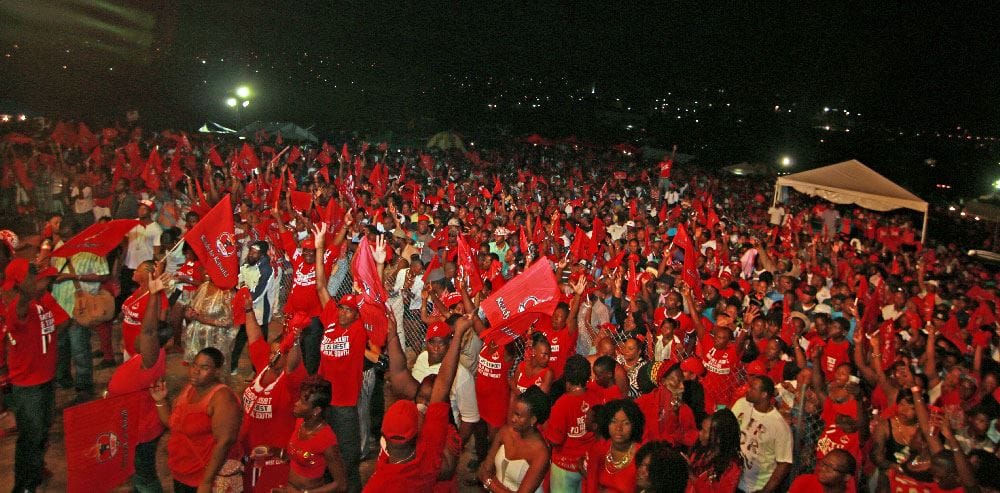
    National leaders in Antigua and Barbuda launched the new year with powerful appeals for unity, faith, and collective responsibility during the annual National Service of Thanksgiving on Sunday. The gathering served as both a reflection on recent challenges and a call to action for the nation’s future.

    Sir Clare Roberts, representing Governor General Sir Rodney Williams, addressed the congregation with a message of acknowledgment for surviving what he characterized as profoundly unsettled times. He highlighted global conflicts, economic pressures, and environmental concerns while crediting the nation’s endurance to prayer, resilience, and the dedicated efforts of families, churches, and public servants. Roberts emphatically stated, “Our survival is not accidental,” and called for renewed commitment to environmental stewardship, community cleanliness, and the pursuit of education through institutions like the University of the West Indies. He further appealed for enhanced compassion toward the elderly, vulnerable populations, and those grappling with mental health or homelessness.

    Prime Minister Gaston Browne framed the service as a testament to national resolve, noting his administration’s eleven-year tradition of holding this event as a reflection of its commitment to faith-based governance. While acknowledging 2025 as a “year of bounty” marked by advancements in healthcare, education, and national development, Browne cautioned that the path forward would not be easy. “No successful nation has been built on calm waters,” he declared, urging citizens to confront emerging challenges with purposeful unity rather than division. He reiterated the long-term goal of transforming Antigua and Barbuda into an economic powerhouse and detailed social support measures, including expanded food assistance and a program providing free building materials to impoverished households. Browne pledged to continue governing “with integrity” and requested prayers for the nation’s leadership.

    Adding a perspective from the political opposition, United Progressive Party Deputy Leader Sherfield Bowen struck a contemplative tone, expressing concern over military conflicts edging closer to the traditionally peaceful Caribbean region. He emphasized that these developments, coupled with domestic pressures on finances, healthcare, and national institutions, underscore the critical need for prayer, wisdom, and divine guidance in the year ahead.

    Throughout the proceedings, a consistent narrative emerged weaving together gratitude for past endurance with a sober recognition of future challenges. The service established a foundational tone for 2026, blending spiritual faith with civic duty and calling for unwavering unity across all societal divisions as the nation navigates an increasingly uncertain global landscape.