标签: Antigua and Barbuda

安提瓜和巴布达

  • Health authorities launches roadmap to improve blood pressure control and save lives

    Health authorities launches roadmap to improve blood pressure control and save lives

    The Pan American Health Organization (PAHO) has unveiled a groundbreaking practical guide designed to revolutionize hypertension and cardiovascular disease management across the Americas. Published in The Lancet Regional Health – Americas, the HEARTS Quality Framework provides immediate, actionable strategies for primary healthcare systems to significantly reduce heart attacks and strokes within communities.

    Cardiovascular diseases remain the region’s most devastating health crisis, claiming over 2.2 million lives annually—many during individuals’ most productive years. Hypertension, affecting nearly 40% of adults, stands as the primary risk factor. Despite available affordable treatments, only one-third of hypertension patients achieve controlled blood pressure levels.

    PAHO Director Dr. Jarbas Barbosa emphasized the framework’s practical nature: “Hypertension remains the world’s deadliest health threat, but also one of the most manageable. This is not just another policy document—it’s the playbook already saving lives in thousands of community health clinics.”

    The framework addresses critical systemic barriers including inaccurate blood pressure measurements from outdated equipment, medication shortages, suboptimal treatments, and inefficient monthly prescription renewal requirements. It translates successful real-world experiences from 33 participating countries into a standardized, adaptable model.

    HEARTS in the Americas represents the world’s most extensive adaptation of WHO’s global initiative, currently operating in nearly 10,000 primary care facilities and managing over six million patients through standardized protocols. Regions implementing the program fully demonstrate remarkable success, achieving 60% blood pressure control rates—nearly double the regional average.

    The structured model mandates several evidence-based strategies: implementation of reliable automated blood pressure monitors, guaranteed supply of quality affordable medicines through pooled procurement, multi-month prescriptions, and authorization for trained nurses to adjust medication doses. The system incorporates monthly monitoring tools enabling healthcare providers to track outcomes and optimize care.

    These coordinated efforts support an ambitious “80-80-80 target”: 80% hypertension diagnosis rate, 80% treatment rate among diagnosed patients, and 80% control rate among those treated. Dr. Pedro Orduñez, corresponding author and PAHO Senior Advisor for Cardiovascular Disease, projects this could “prevent more than 400,000 deaths and 2.4 million hospitalizations by 2030.”

    Demonstrable successes already emerge across the region. Matanzas, Cuba witnessed control rates surge from 36% to 58% within one year, while Chile achieved increases from 37% to 65%. Economic analyses reveal the program pays for itself in under two years by preventing costly cardiac events. Colombia, Mexico, Trinidad and Tobago similarly report substantially improved control rates after adopting HEARTS standards.

    The Dominican Republic has established HEARTS as a government priority providing free treatment to millions. El Salvador expanded the program across its primary healthcare network, achieving nearly 70% control rates. Mexico has initiated nationwide implementation.

    Dr. Anselm Hennis, Director of PAHO’s Department of Noncommunicable Diseases and Mental Health, urged comprehensive adoption: “By committing to this model, we can deliver better care for noncommunicable diseases, save millions of lives, and strengthen primary health care across the Americas.” Dr. Esteban Londoño, lead author and PAHO international consultant, confirmed these results demonstrate “hypertension control and cardiovascular risk management at scale are possible” through standardized clinical pathways, reliable medicines, and team-based care.

  • COMMENTARY: Is Accepting Refugees in the National Interest?

    COMMENTARY: Is Accepting Refugees in the National Interest?

    A profound national debate is unfolding across Antigua and Barbuda regarding the government’s decision to accept deportees from the United States, a move critics are labeling as potentially catastrophic for the nation’s sovereignty and social fabric. Political commentator Yves Ephraim has framed this development as an existential crossroads for the twin-island state, urging citizens to look beyond partisan politics and consider the long-term implications.

    The timing of this agreement, coordinated simultaneously with neighboring Dominica, raises significant geopolitical questions. The arrangement follows closely behind recent diplomatic efforts to reverse U.S. visa restrictions and controversial allegations of Caribbean leaders’ collusion in the capture of Venezuelan President Nicolás Maduro. This synchronization suggests a broader strategic negotiation rather than an isolated humanitarian gesture.

    Ephraim articulates four core objections to the policy: First, he questions whether Antigua and Barbuda risk becoming a ‘dumping ground’ for individuals deemed undesirable by the United States and their countries of origin, potentially earning the derogatory ‘sh*thole country’ label previously used by U.S. officials. Second, he warns against trading national dignity for visa privileges, establishing a dangerous precedent of concession under pressure. Third, he challenges the fairness of a ‘friendly’ nation denying entry to Antiguan citizens while expecting unconditional acceptance of U.S. deportees. Finally, he suggests this agreement could permanently brand the nation as a security concern, justifying continued visa restrictions.

    The commentary draws parallels with global migration challenges, specifically referencing increased knife violence and sexual assaults in the United Kingdom following substantial refugee influxes. Ephraim emphasizes that economic consequences remain unassessed but potentially devastating. He concludes with a powerful invocation of the national anthem’s call to ‘defend her liberty,’ urging citizens to consider what future they envision for their children and whether accepting ‘dubious rejects’ aligns with that vision.

  • Foreign Affairs Minister Says Observer Visa Story Is False and Misleading

    Foreign Affairs Minister Says Observer Visa Story Is False and Misleading

    The Antigua and Barbuda government has issued a formal rebuttal against what it characterizes as a deliberately misleading news report regarding U.S. visa processing. Foreign Affairs Minister E. Paul Chet Greene has unequivocally rejected an article published in the January 5, 2026 edition of the Antigua Observer, which alleged improper cancellation of a student visa despite government assurances.

    According to official statements, direct consultations with U.S. immigration authorities confirmed that the case referenced in the article bore no connection to Presidential Proclamation 10998. Instead, the application was denied under Section 214(b) of standard U.S. immigration law, which pertains to applicant eligibility requirements.

    The Ministry clarified fundamental aspects of U.S. visa processing protocols, noting that preliminary interview approval does not constitute final visa issuance. All applications undergo mandatory post-interview vetting through Washington, D.C., where refusals may occur if statutory criteria remain unmet. Crucially, no visa was ever issued in this instance, and the refusal notice made no reference to the Presidential Proclamation.

    Further investigation revealed that the photograph accompanying the article—purportedly showing a cancelled visa—was completely unrelated. The image actually depicted an H-1B work visa application from India, bearing no connection to either Antigua or student visa processing.

    The Ministry concluded that the article was constructed with malicious intent to falsely suggest that visas approved before January 1, 2026 were not being honored. The government maintains that all validly issued visas continue to be respected and that the newspaper’s claims lack factual foundation.

  • Consultations Begin on Antigua and Barbuda’s New Pharmacy Law

    Consultations Begin on Antigua and Barbuda’s New Pharmacy Law

    Antigua and Barbuda has initiated a landmark legislative review process to comprehensively update its pharmaceutical regulations, marking a significant step toward modernizing the nation’s healthcare governance framework. The two-day consultation forum, which commenced Monday at Parliament, brings together diverse stakeholders to examine the proposed Pharmacy Bill and Regulations 2026.

    The collaborative initiative, jointly organized by the Antigua and Barbuda Pharmacy Council and the Chief Parliamentary Counsel’s Office under the Ministry of Legal Affairs, represents the most substantial overhaul of pharmaceutical legislation in recent history. Preliminary documents indicate the proposed legislation will address multiple critical areas including pharmacy practice standards, controlled substance distribution protocols, and enhanced regulatory mechanisms for pharmaceutical professionals and establishments.

    Monday’s proceedings featured specialized sessions tailored to different industry segments. Morning discussions engaged practicing pharmacists, while afternoon deliberations included wholesalers, pharmacy proprietors, and their professional staff. The opening ceremony witnessed addresses from Health Minister Sir Molwyn Joseph and Minister of State Michael Joseph, underscoring the government’s commitment to regulatory modernization.

    Tuesday’s agenda expands participation to include broader societal input. Morning sessions will incorporate perspectives from general citizens and key regulatory agencies including Customs, Police, the Office of National Drug Control Policy, the Pesticide Board, and the Forensic Laboratory. Afternoon consultations will specifically seek expertise from medical doctors, veterinary professionals, and dental practitioners, ensuring comprehensive multidisciplinary input before final legislative formulation.

  • Nicolás Maduro pleads not guilty in New York court

    Nicolás Maduro pleads not guilty in New York court

    Venezuelan President Nicolás Maduro has formally entered a not guilty plea to comprehensive drug trafficking and narco-terrorism conspiracy charges during his inaugural appearance in a United States federal courtroom. The hearing marked a significant development in a case initially brought by the Trump administration, which had previously authorized a multi-million dollar bounty for Maduro’s capture.

    Addressing the court through an interpreter, Maduro asserted his innocence and presidential status, declaring, “I’m innocent. I am not guilty. I am a decent man, the president of my country.” The Venezuelan leader indicated he had not previously reviewed the indictment nor been adequately informed of his legal rights, stating, “Your honor is informing me of them now.”

    Following procedural formalities, the presiding judge recorded an official not guilty plea on Maduro’s behalf. When directly questioned about his plea, Maduro reaffirmed his position: “I am innocent. I am not guilty of anything that is mentioned here.”

    The judicial proceedings subsequently extended to First Lady Cília Flores, who similarly pleaded not guilty to related charges. Identified herself as “first lady of the Republic of Venezuela,” Flores asserted her complete innocence before the court.

    The case represents an unprecedented legal confrontation involving a sitting head of state and underscores the deteriorating relations between the United States and Venezuela. The charges allege Maduro’s involvement in coordinating with Venezuelan officials and Colombian rebel groups to transform Venezuela into a strategic hub for cocaine trafficking destined for the United States.

  • LETTER: Pre-Dawn Police Raids on Elderly Homes Raise Questions of Proportionality and Accountability

    LETTER: Pre-Dawn Police Raids on Elderly Homes Raise Questions of Proportionality and Accountability

    Recent law enforcement operations in Antigua have ignited serious constitutional debates regarding the balance between police authority and citizen protections. During the early hours of December 31, 2025, armed officers conducted simultaneous pre-dawn raids on two residential properties housing elderly occupants and young children, yielding no evidence of criminal activity despite the intrusive nature of the operations.

    The first incident involved a 63-year-old ailing woman and her caretaker daughters, whose home was entered by officers reportedly carrying military-style weapons around 3:00-4:00 a.m. The warrant sought illegal narcotics, firearms, and ammunition, but none were discovered. Simultaneously, a second residence occupied by a 70-year-old matriarch, her adult children, and young grandchildren operating a home-based business was searched under a separate warrant. Although this household had previous interactions with law enforcement, no illegal items were found.

    These events occur against the backdrop of Antigua and Barbuda’s legitimate anti-crime initiatives. In 2025, the Royal Police Force reported seizing over fifty illegal firearms and hundreds of ammunition rounds through targeted operations. The government had also implemented a National Gun Amnesty program encouraging voluntary surrender of weapons without prosecution.

    Constitutional experts emphasize that while search warrants require probable cause, the absence of recovered evidence doesn’t automatically invalidate authorization. However, multiple unsuccessful searches based on serious allegations naturally prompt public scrutiny of intelligence quality and authorization standards.

    The doctrine of proportionality emerges as a critical concern. The deployment of heavily armed units for pre-dawn raids in homes without known violent histories raises questions about appropriate restraint. Legal scholars note that even lawfully authorized searches must be executed reasonably according to circumstances.

    The incidents highlight systemic questions about post-search transparency and accountability mechanisms. What information are citizens entitled to receive when searches yield no evidence? What review processes exist for potentially erroneous intrusions? These questions touch upon the fundamental legal principle of ‘Ubi jus ibi remedium’ – where there is a right, there must be a remedy.

    While acknowledging law enforcement’s vital role in public safety, the article argues that true justice requires both the power to act and the wisdom to correct errors. A system worthy of public trust must demonstrate fairness, accountability, and commitment to protecting the dignity of innocent citizens alongside its crime-fighting responsibilities.

  • ABWU Mourns Passing of Greg Walter, Son of National Hero Sir George Walter

    ABWU Mourns Passing of Greg Walter, Son of National Hero Sir George Walter

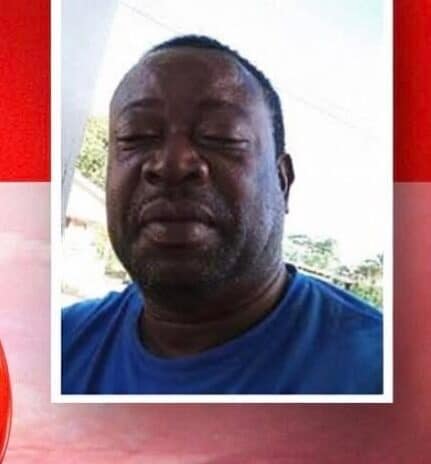
    The Antigua and Barbuda Workers’ Union (ABWU) has expressed profound sorrow following the passing of Greg Walter, descendant of National Hero Sir George Walter who served as the organization’s inaugural General Secretary.

    Greg Walter maintained a close relationship with the Union throughout his life, carrying forward the enduring legacy of public service and collective advocacy that his father had so distinguishedly established. While forging his own distinctive path, Walter upheld the family’s deep-rooted commitment to labor rights and social justice that characterized his father’s pioneering work.

    The ABWU leadership has issued official condolences to the Walter family and their extensive circle of friends during this period of collective mourning. Union representatives emphasized their shared sense of loss and commitment to standing in solidarity with the family as they commemorate and reflect upon his life’s contributions and personal significance.

    The statement concluded with traditional sentiments of respect, honoring Walter’s memory and expressing hopes for his peaceful rest, while acknowledging the profound impact of his family’s multi-generational dedication to workers’ rights and social advancement in Antigua and Barbuda.

  • 10 people convicted for online harassment after saying France’s first lady was born a man

    10 people convicted for online harassment after saying France’s first lady was born a man

    A Parisian judicial court delivered a significant verdict on Monday, convicting ten individuals for the coordinated cyber-harassment of Brigitte Macron, the First Lady of France. The defendants were found guilty of orchestrating a malicious online campaign that propagated the demonstrably false claim that she is a transgender woman born male.

    The long-standing conspiracy theory, which falsely alleges Brigitte Macron was born under the name Jean-Michel Trogneux—a name that actually belongs to her older brother—has plagued the presidential couple for years. While the Macrons had previously chosen to ignore the barrage of criticism focused on their 24-year age gap, this ruling signals a decisive shift in their legal strategy to confront such disinformation through the judicial system.

    This conviction represents a strategic legal victory for the Macrons, who are concurrently pursuing a separate, high-profile defamation lawsuit in the United States against right-wing commentator Candace Owens for repeating the same false allegations. The ten convicted individuals—eight men and two women—were found to have engaged in targeted harassment concerning the First Lady’s gender and sexuality, with some comments outrageously equating the couple’s consensual adult relationship to criminal behavior.

    The case unfolds against a backdrop of intensifying transatlantic debates on the boundaries of free speech and disinformation. The defendants’ argument that their malicious comments constituted protected satirical expression was firmly rejected by the court. One convicted individual, Bertrand Scholler, a 55-year-old gallerist, received a six-month suspended sentence and announced his intention to appeal, decrying the verdict as evidence of a societal drift away from free speech.

    In a powerful response, Brigitte Macron emphasized the profound personal impact of the harassment, pointing to the irrefutable evidence of her birth certificate. She framed her legal stance as a necessary example for vulnerable adolescents, stating, ‘A birth certificate is not nothing… I want to help adolescents to fight against harassment, and if I do not set an example, it will be difficult.’

  • Three Men Charged in Connection with Fraud Offences

    Three Men Charged in Connection with Fraud Offences

    In a significant development in financial crime enforcement, authorities in Antigua and Barbuda have formally charged three individuals in connection with an elaborate electronic fraud scheme. The Royal Police Force has taken decisive action against what appears to be a coordinated effort to illegally transfer funds from local banking institutions.

    The accused individuals have been identified as Jahari Adams, 28, of Golden Grove Extension; Judeah Francis, 25, of Golden Grove; and Kareem Davis, 19, of Cooks Extension. These three men face serious charges related to the unauthorized electronic transfer of $10,600 from a savings account at a financial institution based in the region. The alleged offense occurred on December 13, 2025, marking a concerning breach of financial security systems.

    The investigation gained momentum on January 2, 2026, when police officers intercepted a white Toyota Ractis vehicle traveling along Friendly Alley. The strategic interception led to the apprehension of all three suspects, with Francis operating the vehicle and Adams and Davis as passengers. This tactical move by law enforcement demonstrates the increasing sophistication of police operations in combating cyber-enabled financial crimes.

    Authorities have secured several crucial pieces of evidence believed to be instrumental to the investigation. Among the items confiscated were a silver HP laptop computer, a Digicel cellular phone, and a storage vault device. These technological artifacts are undergoing forensic analysis to establish their connection to the alleged fraudulent activities and potentially uncover additional evidence of digital wrongdoing.

    The case highlights the growing challenge that Caribbean nations face in combating electronic financial crimes as digital banking becomes more prevalent throughout the region. Law enforcement agencies are increasingly deploying specialized cybercrime units and forensic technology to address these modern criminal methodologies.

    The three accused individuals are scheduled to appear before the judicial system to answer to the charges brought against them. This case represents an important test of the nation’s legal framework for addressing digitally-facilitated financial crimes and may set precedents for future prosecutions of similar offenses in the region.

  • Nicolas Maduro arrives in Manhattan ahead of court hearing

    Nicolas Maduro arrives in Manhattan ahead of court hearing

    Venezuelan President Nicolás Maduro has made a notable arrival in Manhattan, New York, marking a significant diplomatic and judicial moment. His presence in the United States is directly connected to an impending court hearing, drawing intense international scrutiny. This development occurs amidst a complex backdrop of strained bilateral relations and serious legal challenges involving the Venezuelan government. The journey itself is remarkable given the existing geopolitical tensions and the serious allegations previously leveled by U.S. authorities against Maduro’s administration. The hearing is expected to address critical legal matters that have been a focal point in U.S.-Venezuela relations, potentially influencing future diplomatic engagements. Security around the proceedings is exceptionally tight, reflecting the high-profile nature of the case and the attendant political sensitivities. Global markets and political analysts are closely monitoring the situation for any potential ramifications on international oil markets and regional geopolitics. The outcome of this legal process is anticipated to have profound implications for Venezuela’s political trajectory and its interactions with the international community.