标签: Antigua and Barbuda

安提瓜和巴布达

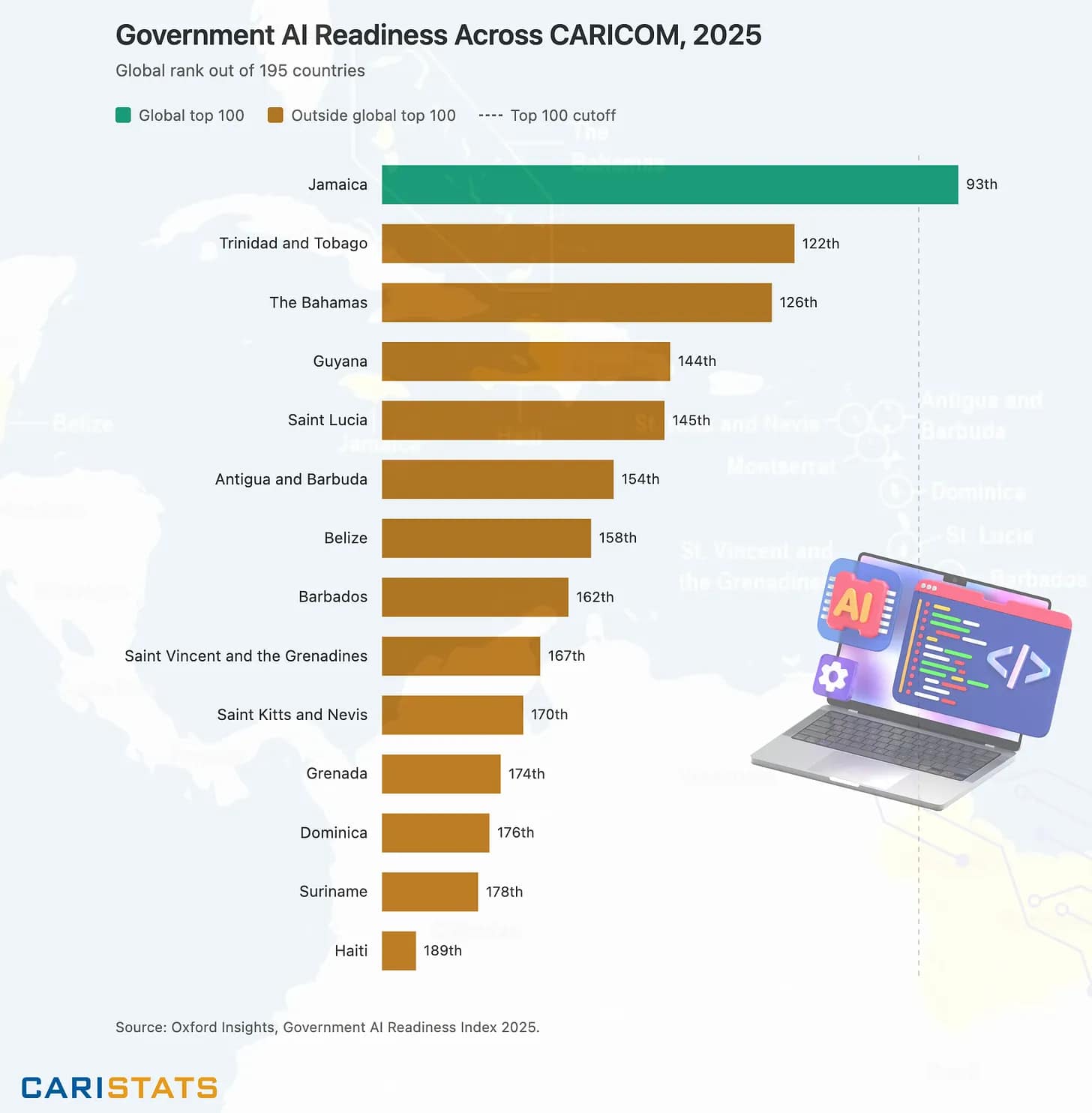
  • Antigua and Barbuda ranked 154th in CARICOM AI readiness index, 2025 report shows

    Antigua and Barbuda ranked 154th in CARICOM AI readiness index, 2025 report shows

    A new 2025 global assessment of government preparedness to leverage artificial intelligence for public good has revealed significant gaps in capacity across Caribbean Community (CARICOM) member states, published by leading international research firm Oxford Insights. Covering 195 nations worldwide, this year’s Government AI Readiness Index introduces a newly updated analytical framework built around six core pillars: Policy Capacity, AI Infrastructure, Governance, Public Sector Adoption, Development and Diffusion, and Resilience, replacing the index’s previous structure to better reflect evolving AI ecosystem needs.

    When ranked against the rest of the world, CARICOM nations see a wide spread in positions, stretching from 93rd all the way down to 189th. Only one CARICOM member, Jamaica, claims a spot in the global top 100, a outcome researchers attribute directly to the island nation’s recent launch of a formal national AI strategy. A second tier of mid-ranking regional states includes Trinidad and Tobago at 122nd and The Bahamas at 126th, while the 11 remaining member states fall far behind, with rankings between 144th and 189th.

    In addition to global rankings, the index assigns individual scores from 0 to 100 for each of the six measurement pillars across every assessed country. Aggregated regional data shows CARICOM’s strongest performing area is AI Infrastructure, which posts an average regional score of 33. Governance and Resilience tie for second place with average scores of 29 each. The region’s weakest pillars, by contrast, are Policy Capacity, and Development and Diffusion, which both carry an average regional score of just 13.

    Taken as a whole, the 2025 index data paints a clear picture of the CARICOM region’s current AI landscape: while member states have built comparatively stronger foundational digital infrastructure than many peer economies, they still lag far behind in developing formal national AI strategies, scaling up AI development, and rolling out applied AI solutions across public and private sectors.

  • Pressure mounts on executors in Jamaica after court blocks audit in Stewart estate dispute

    Pressure mounts on executors in Jamaica after court blocks audit in Stewart estate dispute

    A recent Supreme Court ruling in Jamaica has marked a major turning point in a years-long dispute over the estate of legendary tourism industry pioneer Gordon “Butch” Stewart, clearing a key legal barrier for the transfer of majority ATL Group shares to his son Adam Stewart. Attorneys representing Adam Stewart have publicly praised the court’s decision to dismiss a legal application brought by the estate’s acting executors, who had blocked the share transfer for years despite the terms of Butch Stewart’s uncontested will.

    Conrad George, a partner at the law firm Hart Muirhead Fatta, emphasized the significance of the ruling for his client. More than five years have passed since Butch Stewart’s passing, and in his publicly filed, unchallenged will, the business leader left a controlling majority stake in the ATL Group — the core holding of the Stewart family’s sprawling business empire — to Adam Stewart. Even after securing formal probate for the will, George explained, the existing executors have repeatedly refused to complete the share transfer. Their primary justification has been a claim that they must first commission a third-party red-flag audit of ATL Group conducted by an international accounting firm, tied to unsubstantiated allegations against Adam Stewart connected to Gorstew Limited, Appliance Traders Limited and their respective affiliate subsidiaries.

    To formalize their demand for the audit, executors Trevor Patterson, Cheryl Hamersmith-Stewart, Elizabeth “Betty-Joe” Desnoes and Hugh Martin Veira petitioned the Supreme Court for a court order authorizing the investigation. Justice Brown Beckford struck out the petitioners’ claim approximately two weeks ago, with the full written judgment officially released to parties last week. George called the ruling an important step toward forcing the executors to uphold their fiduciary duties and execute the transfer of shares exactly as outlined in Butch Stewart’s will.

    Legal and business observers across Jamaica have framed the judgment as a critical development in the protracted dispute over estate administration, which has centered on control of the ATL Group, a foundational asset for one of the country’s most high-profile and economically influential business families. In a separate, recent development tied to the estate, the court has appointed retired Court of Appeal Judge Hilary Phillips to serve as an additional executor. George noted that Phillips was not involved in the dismissed legal application, and expressed optimism that her addition to the executor team will bring greater balance and reasoned judgment to the group’s future decisions.

    However, the legal battle is far from over: within a day of the written judgment’s release, legal counsel for the executors — including Michael Hylton of the firm Hylton Powell — formally filed an appeal challenging Justice Beckford’s ruling. The appeal argues that the judge made a material error of law in two key findings: that the Jamaican Trusts Act does not apply to the case, and that the executors did not have legal standing to bring their original audit claim.

    Appellants contend that under Section 4(1) of the Trusts Act, any property held by one party for the benefit of another qualifies as a trust. When Butch Stewart’s shares were vested in the executors following his death, they automatically became trust property meeting all the criteria for a trust defined under the act, according to the appeal. The executors also push back against the judge’s reliance on the precedent set in *Heather Montague v GM and Associates*, arguing that the earlier ruling was handed down before the Trusts Act was enacted, meaning it did not address the law’s provisions or its applicability to cases like this one.

    The ongoing dispute has attracted close attention from Jamaica’s corporate and tourism sectors, as the final outcome is expected to set meaningful precedents for business governance and family business succession planning for large, influential corporate groups across the island.

  • Adam Stewart Wins Latest Jamaica Court Battle Over Butch Stewart Estate

    Adam Stewart Wins Latest Jamaica Court Battle Over Butch Stewart Estate

    A long-running family feud over the management of the late Jamaican hospitality magnate Gordon “Butch” Stewart’s business empire has hit a major turning point, after the Supreme Court of Jamaica threw out a legal bid by estate executors to launch a special “red flag” audit of two core holding companies tied to the tycoon. The court’s top finding centered on a critical question of legal authority: the executors did not have the standing to bring the claim under Jamaica’s Trusts Act, the statute they relied on to file their suit.

    Justice Cresencia Brown Beckford first delivered her ruling orally during a March 26 court hearing, and published the full 24-page written judgment this past Wednesday. The decision blocks the executors’ push to audit Gorstew Limited, Appliance Traders Limited, and all of their affiliated subsidiary businesses.

    Butch Stewart, the founder of the iconic Sandals Resorts international hotel chain, passed away on January 4, 2021. Three years after his death, in 2024, the four executors named in his will submitted an urgent court application for approval to launch the targeted audit. The group raised sharp red flags about corporate governance and operational management of the companies in the years following Stewart’s death. The four executors are Trevor Patterson, Cheryl Hamersmith-Stewart – Stewart’s common-law widow – Elizabeth “Betty Joe” Desnoes, and Martin Veira.

    Adam Stewart, Butch Stewart’s son and the current head of Sandals Resorts who stepped into his father’s role leading the business empire, launched a counter-application to have the executors’ claim struck out entirely. Adam Stewart’s legal team rejected all allegations of mismanagement, and argued the suit amounted to an abuse of court process. Their core legal contention was that the executors held no authority under the Trusts Act to bring their claim, a position the Supreme Court ultimately endorsed.

    In her written judgment, Justice Brown Beckford drew a clear legal distinction between the roles of executor and trustee, noting that while the two positions may sometimes involve overlapping tasks, they are not legally interchangeable. The judge emphasized that the executors brought this claim in their formal capacity as executors of Stewart’s will, not as trustees of the estate. Since the Trusts Act only governs actions taken by trustees, it does not grant legal standing for executors to bring this type of audit request.

    “In view of this finding, the executors in seeking to carry out this red flag audit are acting [as] executors and not trustees of the will of the Founder,” Justice Brown Beckford wrote. “In that event, they do not have standing under the Trusts Act to bring this claim.”

    The judge further clarified that even if the court accepted that the executors could be legally classified as trustees, the specific action they sought – the audit – fell squarely under core executorial duties rather than trustee functions. She pointed to the claimants’ own court filing, which explicitly identifies the applicants as executors, not trustees, confirming the capacity in which the suit was brought.

    Addressing a common wording convention in wills, the judge also noted that labeling named fiduciaries as both “Executors and Trustees” throughout the document does not automatically turn executors into trustees for all legal purposes. In Stewart’s will, this shared nomenclature was only for administrative convenience, not a legal reclassification of their roles, the court found. A close review of the will’s relevant clauses confirmed that the shares for the ATL Group – which encompasses the two targeted companies, Gorstew Limited and Appliance Traders Limited – were never placed in a formal trust structure.

    The court also considered a secondary argument from Adam Stewart’s legal team, which objected to the executors’ plan to hire the U.S.-based accounting firm Alvarez and Marsal to lead the audit. Stewart’s team argued that hiring a foreign firm without proper local accreditation would violate Jamaica’s Public Accountancy Act. Justice Brown Beckford noted this argument was “not without merit” on its face, but ultimately did not need to rule on the point, since the application before the court only requested general authorization to conduct an audit, not formal approval of the specific firm.

    As part of the ruling, the court ordered the losing side – the four executors – to cover all of Adam Stewart’s legal costs associated with the case. The judge granted the executors permission to file an appeal of the decision with a higher court if they choose to move forward with a challenge.

    The ruling marks a clear, substantial legal victory for Adam Stewart and his siblings Brian Jardim and Jaime Stewart, who have been locked in a protracted internal dispute over the administration of Butch Stewart’s multi-million dollar estate. The case featured a roster of top Jamaican legal talent: Walter Scott KC, Ian Wilkinson KC, Conrad George, Anna Gracie, André Sheckleford, and Gabrielle Chin represented Adam Stewart, while Michael Hylton KC, Kevin Powell KC, and Timera Mason led the legal team for the executors. John Graham KC and Peta-Gaye Manderson appeared on behalf of Gorstew Limited.

  • ABEC Says Voters Without Renewed ID Cards Can Still Vote Today

    ABEC Says Voters Without Renewed ID Cards Can Still Vote Today

    On election day across Antigua and Barbuda, the Antigua and Barbuda Electoral Commission (ABEC) has introduced a flexible last-minute measure to ensure no eligible voter is locked out of the democratic process, even if they failed to renew or replace their official voter identification cards ahead of the poll.

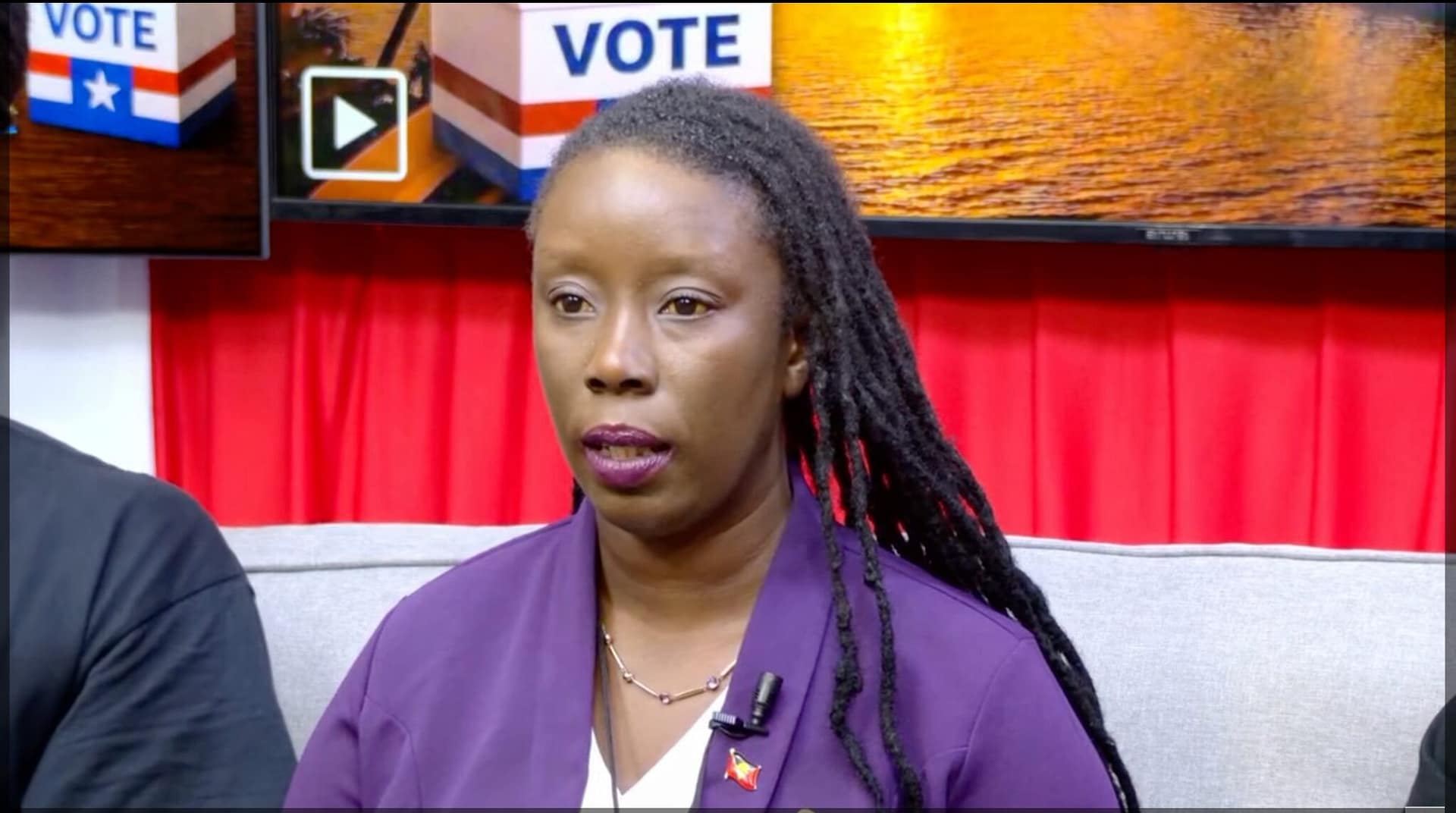
    Appearing on Pointe TV’s Thursday morning broadcast, ABEC Public Relations Officer Elisa Graham moved to ease widespread anxiety among affected voters, confirming that there remains a clear pathway for them to exercise their constitutional right to vote.

    Under the newly outlined special protocol, any voter without a valid, up-to-date voter ID can visit any active registration unit across the country – which will operate extended hours from 6:00 a.m. to 6:00 p.m. on election day – to initiate the replacement process immediately upon arrival. To complete the on-site procedure, voters only need to bring one passport-sized photograph and fill out the required official documentation. Once these steps are finalized, election officials will issue a temporary special identification card that grants the holder immediate access to cast their ballot at the polls.

    Graham detailed the dual function of this on-site process in an interview, noting: “So you’re facilitating two processes — starting the replacement process and being issued a special ID card to go out and exercise your franchise.” After the conclusion of election day, the commission will complete processing of the permanent replacement voter ID card, which can be collected by the voter at a later date.

    Graham stressed that the emergency accommodation was deliberately designed to remove unnecessary barriers to participation, ensuring every eligible citizen who wants to take part in the election can do so, regardless of missing the advance deadline for ID renewal or replacement. In additional guidance for voters, ABEC also urged those who had already submitted applications for replacement IDs but had not yet picked up their new cards to stop by registration units to collect their official documentation before traveling to their polling locations.

    This adaptive arrangement is a core component of ABEC’s broader strategy for the 202x election, balancing the dual goals of boosting maximum voter participation across the islands and upholding the strict integrity and security standards required for a free, fair, and credible electoral process, as voting continues throughout Antigua and Barbuda.

  • Commonwealth Observers Deployed Across Antigua and Barbuda Ahead of Election

    Commonwealth Observers Deployed Across Antigua and Barbuda Ahead of Election

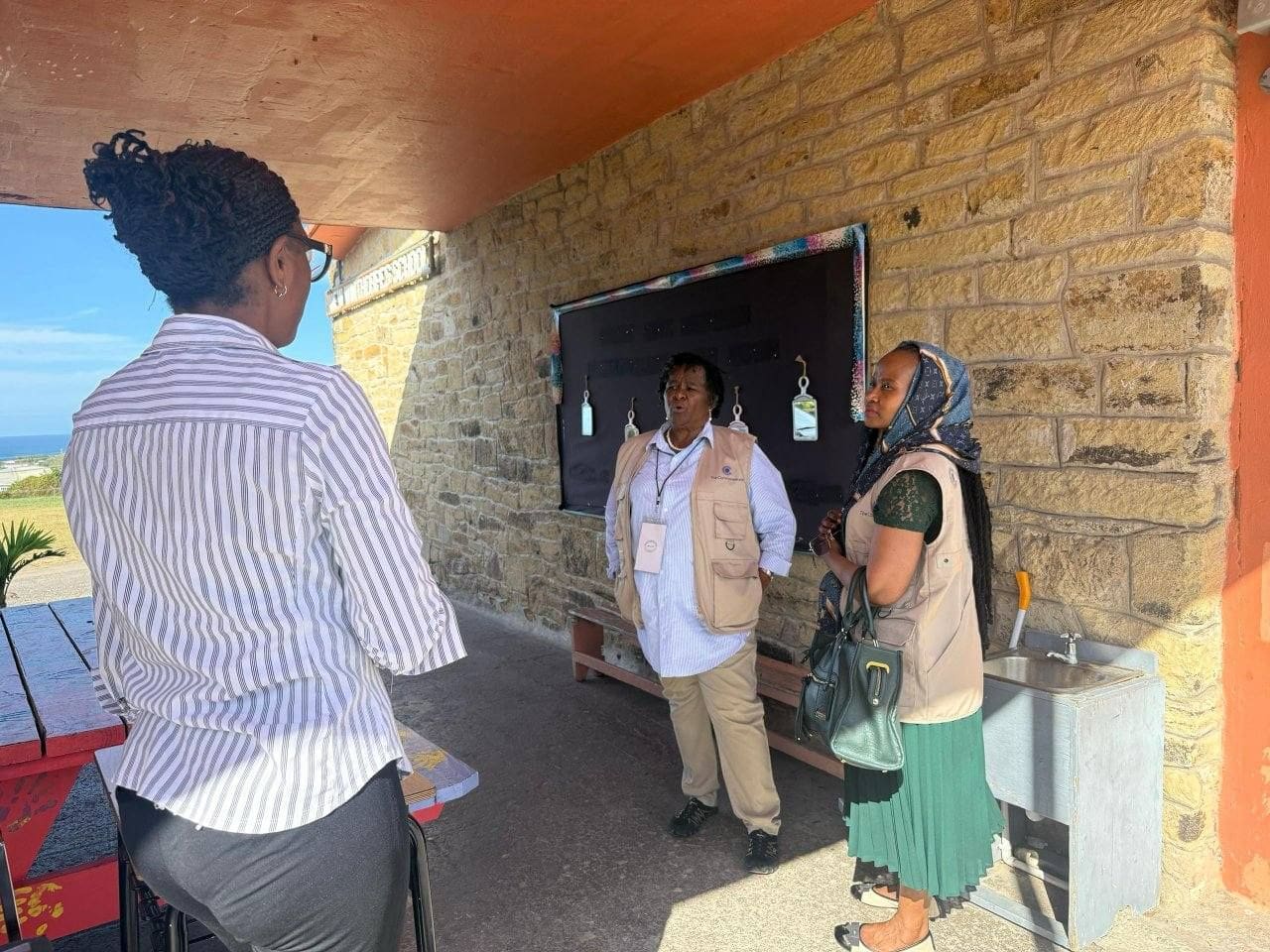
    As Antigua and Barbuda prepares to hold its nationally awaited general election this Thursday, international oversight has officially kicked into gear, with Commonwealth observer teams spreading out across the twin-island nation to vet pre-voting preparations. The mission is designed to uphold transparency and cement the credibility of the democratic process, one of the core mandates of the Commonwealth’s electoral observation work.

    Heading up the deployment is Pelonomi Venson-Moitoi, Botswana’s former Minister of Foreign Affairs, who occupies the role of Chairperson for the Commonwealth Observer Group. Under her leadership, members of the mission have been traversing every region of Antigua and Barbuda, conducting on-site checks at both polling stations and vote counting centres to gauge how ready these facilities are for the April 30 ballot.

    This Commonwealth deployment is not an isolated effort. It forms a key component of a wider international observation initiative, with all participating teams mandated to evaluate whether pre-election conditions and the upcoming conduct of the poll align with globally accepted democratic standards. Over the course of their pre-election work, observers are focusing on a range of critical areas: from the logistical arrangements that will allow voting to run smoothly, to whether all stakeholders are adhering to national electoral laws, and the overall political and social environment in which citizens will cast their ballots.

    Beyond assessment, the presence of independent observers serves a broader purpose: boosting public trust among Antigua and Barbuda’s electorate that the process will be fair and free of manipulation. Once voting is completed, the mission will compile its full observations, identify any strengths or shortcomings in the process, and publish a detailed post-election report laying out its findings.

    The outcome of this general election will shape the next half decade of governance in Antigua and Barbuda, as voters head to the polls to select the country’s next governing body. Given the nation’s position in the Caribbean and its ties to the Commonwealth and other international blocs, the vote is drawing close attention from both domestic stakeholders and the international community as a whole.

  • Increase to 190 Polling Stations Delivers Faster, Smoother Voting — ABEC

    Increase to 190 Polling Stations Delivers Faster, Smoother Voting — ABEC

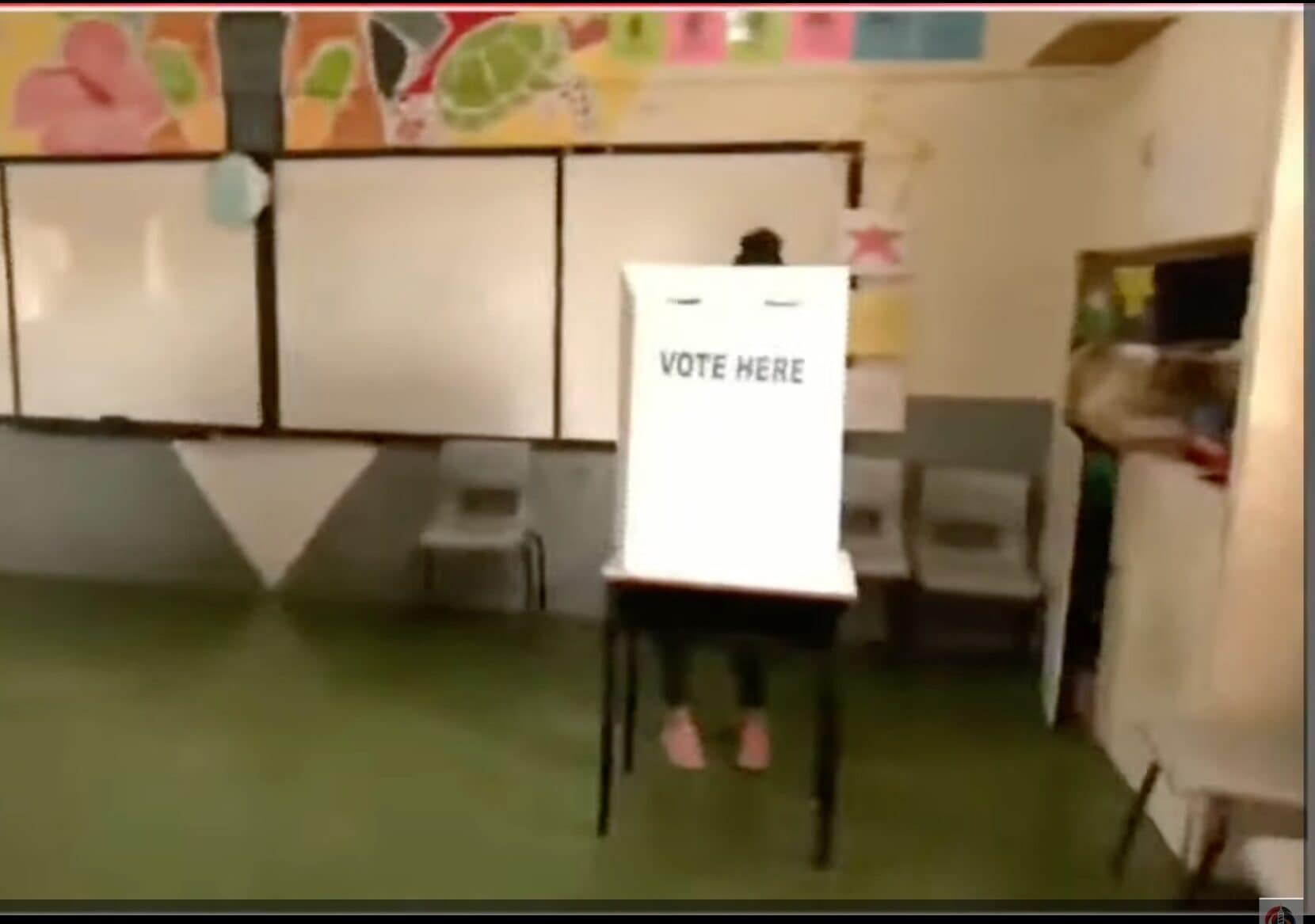
    Voting in Antigua and Barbuda’s latest election kicked off on a steady, trouble-free note on polling day, with administrative systems operating at high efficiency as registered electors made their way to polling stations across the two-island nation, according to senior electoral official Elisa Graham.

    Graham, who serves as the Public Relations Officer for the Antigua and Barbuda Electoral Commission (ABEC), shared the update during a morning interview on Pointe TV’s flagship current affairs program. She confirmed that the opening hours of voting proceeded entirely without disruption, and voiced steady confidence that the electoral process would maintain this orderly trajectory through to the final closing of polls.

    One key point Graham addressed was widespread public speculation that unusually short lines at polling locations might signal lower-than-expected voter turnout. She pushed back against this interpretation, clarifying that the compact queues are not a sign of low participation — they are the direct outcome of intentional administrative design to eliminate crowding.

    To cut down on wait times and keep voter movement flowing smoothly, ABEC expanded the total number of polling stations for this election to 190, a larger network than was available during the 2023 general election. This targeted expansion has allowed voters to check in, cast their ballot, and exit in far less time than in previous cycles, eliminating the need for the long lines that often mark major election days.

    Beyond outlining the operational design behind the day’s early success, Graham also highlighted remaining accommodations for voters who have not yet picked up replacement voter ID cards. Eligible voters who submitted applications for replacement identification can still collect their documents at designated registration units, with operating hours extended through the close of polls to accommodate last-minute needs.

    Graham used her public appearance to issue a renewed call to action for all eligible citizens of Antigua and Barbuda to exercise their democratic right by casting a ballot. “We want to encourage all eligible Antiguans and Barbudans to go out and exercise their franchise,” she emphasized, reinforcing the value of broad participation in the nation’s democratic process.

    The ABEC spokesperson also confirmed that the election is being overseen by independent international observers, as part of the nation’s commitment to electoral transparency. Observers from the Commonwealth, the Organization of American States (OAS), and the Caribbean Community (CARICOM) were all officially invited to monitor every stage of voting and ensure the process meets international standards for credibility.

    In her closing remarks, Graham reiterated core election day regulations that all voters are required to follow. Most notably, she reminded electors that they are prohibited from wearing political paraphernalia or any clothing branded with party logos or messaging when entering polling stations, a rule designed to maintain a neutral, non-intimidating environment for all voters.

    She wrapped up the interview by reiterating a call for continued peaceful participation across the day, urging all citizens to play their part in ensuring the election proceeds seamlessly and upholds its status as a credible expression of the public will.

  • PM Browne and Maria Browne cast their ballots

    PM Browne and Maria Browne cast their ballots

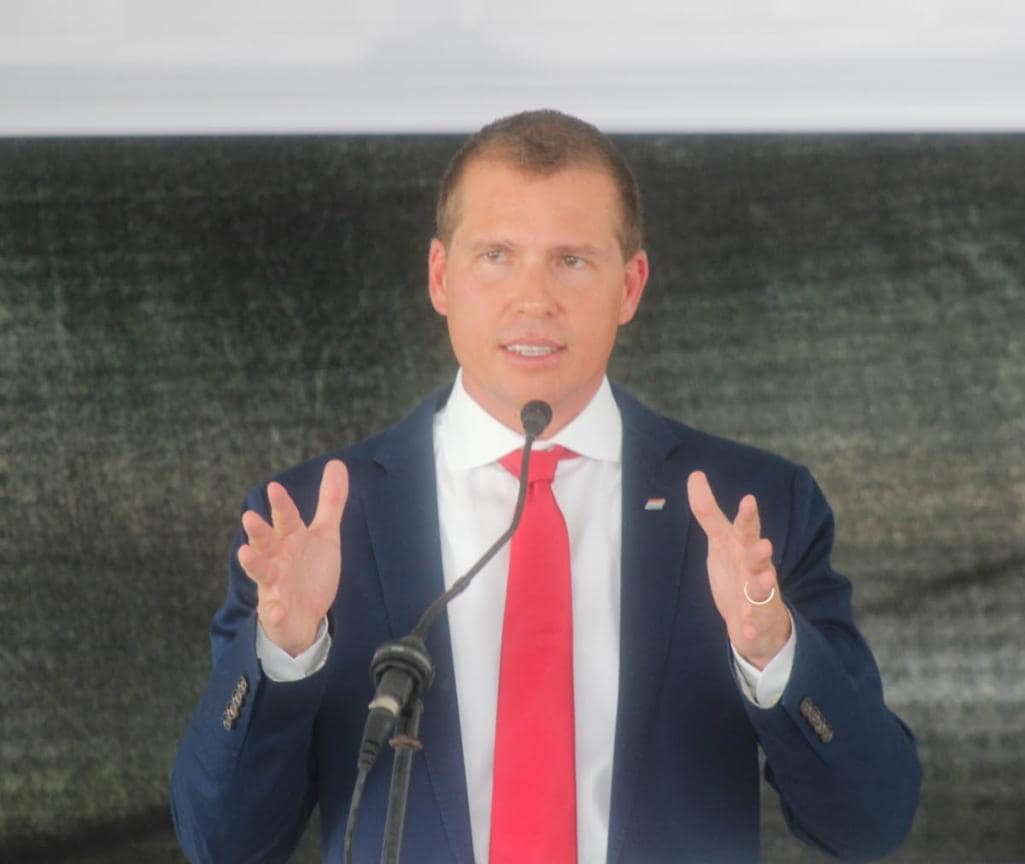
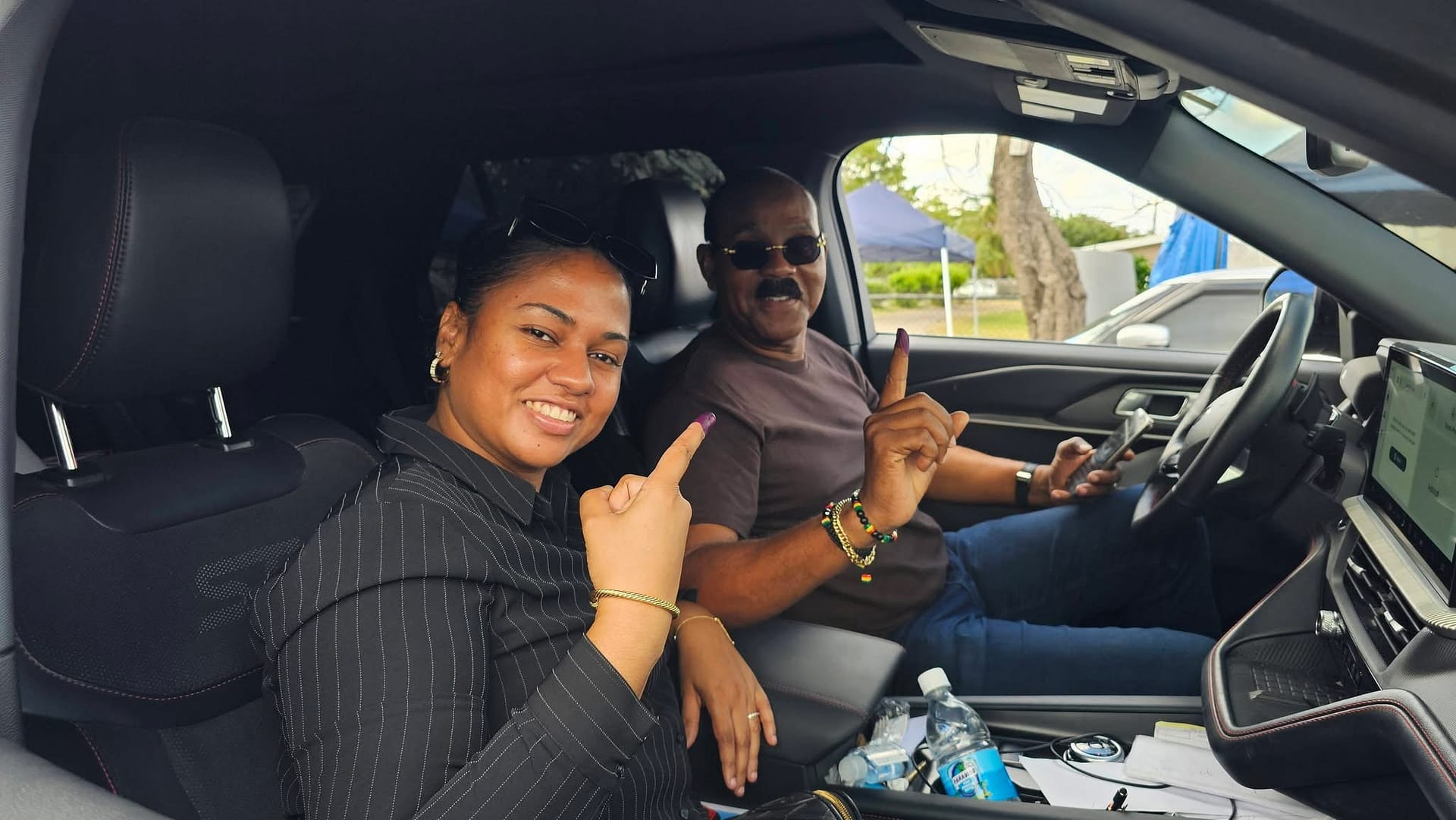
    On a busy polling day that marked a key milestone in the country’s democratic process, Prime Minister [Name] Browne and his wife Maria Browne joined thousands of eligible voters across the nation to cast their official ballots. The couple arrived at their assigned local polling station in the early morning, where they were greeted by election officials before moving through the standard voting procedures established by the country’s electoral commission.

    As sitting head of government, Prime Minister Browne’s participation in the vote underscores the foundational role of democratic participation in the nation’s political system. Speaking briefly to reporters after casting his ballot, Browne urged all registered citizens to make their voices heard by participating in the election, emphasizing that every vote carries equal weight in shaping the country’s next chapter of governance. The election, which is being contested by multiple political parties vying for control of parliament and the executive branch, has drawn widespread attention from both domestic observers and international monitoring groups focused on ensuring a free and fair electoral process.

    Maria Browne echoed her husband’s call for voter turnout, noting that civic participation is a shared responsibility for all eligible citizens that helps sustain the country’s democratic institutions. The couple’s appearance at the polls follows a weeks-long campaign season that saw candidates travel across the country debating policy priorities ranging from economic recovery and healthcare reform to climate action and education investment. With polling stations set to close later in the evening, vote counting is scheduled to begin immediately after, with preliminary results expected to start trickling in by midnight local time.

  • Moringa Seeds Found to Remove Up to 98.5% of Microplastics from Drinking Water, Study Shows

    Moringa Seeds Found to Remove Up to 98.5% of Microplastics from Drinking Water, Study Shows

    For thousands of years, the fast-growing moringa tree — widely nicknamed the “miracle tree” for its dense nutritional profile and long-documented healing properties — has been used across civilizations to clean contaminated water. Now, a new joint study by researchers from Brazil and the United Kingdom has uncovered another groundbreaking application: extracts from the tree’s seeds can filter out nearly 99% of harmful PVC microplastics from tap water, matching the efficiency of traditional chemical water treatment methods while offering far more sustainable benefits.

    Published in April, the research builds on a decade of work led by Adriano Gonçalves dos Reis, a professor at São Paulo State University’s Institute of Science and Technology. Historical records show ancient Greek, Roman, and Egyptian societies already used moringa to purify water, but Gonçalves dos Reis and his team set out to test whether the plant’s natural coagulant properties — which cause small suspended particles to clump together for easy filtering — could work on microplastics, one of the modern era’s most pressing environmental contaminants.

    Microplastics, defined as plastic fragments smaller than 1 micrometer (roughly 1/25,000 of an inch), have permeated every corner of the global environment, from the deepest ocean trenches to the highest mountain peaks. A 2024 analysis found microplastics in 83% of tested tap water supplies worldwide, and the tiny particles have already been detected in human organs including the brain, reproductive systems, and cardiovascular tissue. While researchers are still working to map the full health impacts of microplastic exposure on humans, animal studies have linked the particles to reproductive damage and hormonal disruption.

    For their experiment, the research team focused on PVC microplastics — one of the most common and hazardous types of microplastic found in drinking water — with an average size of 18.8 micrometers, about one-quarter the thickness of a human hair. When moringa seed extract was added to standard filtration systems, the researchers measured a 98.5% removal rate of PVC microplastics from tap water.

    This efficiency is on par with aluminum sulfate (commonly called alum), the conventional chemical coagulant widely used in municipal water treatment facilities. Strikingly, the team also found moringa seed extract outperformed alum in more alkaline water conditions, a common trait of many natural water sources.

    Beyond comparable effectiveness, moringa offers major advantages over traditional chemical treatments. Unlike alum, which relies on aluminum (a metal linked to neurodegenerative disease when present in high concentrations and requires environmentally destructive mining to produce), moringa seeds are a renewable, fully biodegradable resource. They also produce far less toxic sludge waste and carry minimal toxicity risks for human consumption.

    Matthew Campen, a distinguished professor of pharmaceutical sciences at the University of New Mexico Health Sciences Center who was not involved in the study, called the finding a promising step forward. “Using a natural product to replace an aluminum-based filtration system may offer a cheaper and more sustainable solution to removal of PVC microplastics,” he explained, noting that the approach would also eliminate the environmental harm tied to aluminum mining.

    Still, the method has important limitations that require further research. The study found one moringa seed can treat approximately 10 liters of water, meaning large urban water treatment facilities processing millions of liters daily would require massive quantities of seeds to adopt the technique. Additionally, increased use of organic seed extract could leave higher levels of organic residue in treated water, which would require additional processing to remove.

    Gonçalves dos Reis noted that the technique is already well-suited for small rural communities or remote regions where access to chemical coagulants like alum is limited. For wider use, however, more research is needed to answer key questions: how moringa seed extract breaks down after use, what becomes of the captured microplastics, how scalable the method is for large operations, and whether it remains cost-effective at scale.

    Campen added that future tests will also need to confirm whether moringa can effectively remove other types of microplastics, as well as nanoplastics — the even smaller particles, roughly 1/1000 the width of a human hair, that are most likely to penetrate human organs and bloodstream.

    Gonçalves dos Reis says his team is already moving forward with this research, and he is confident moringa seeds will prove effective across a wide range of plastic contaminants. For experts like Campen, developing scalable solutions for microplastic contamination could not come soon enough: global microplastic and nanoplastic exposure levels continue to rise, a trend that experts expect will persist for decades to come.

  • Vehicle Crashes Through Preschool Fence Behind Greenbay School

    Vehicle Crashes Through Preschool Fence Behind Greenbay School

    A startling incident has unfolded at a preschool situated adjacent to Greenbay School, after a motor vehicle careened off course and crashed through the site’s perimeter barrier. Photographic evidence captured at the scene shows the car remains wedged deep within the crumpled, damaged fencing that borders the early childhood education facility. As of the latest update, local authorities have not yet released any official details confirming whether anyone sustained injuries in the crash, nor have they shared information on the potential causes that led the vehicle to end up on the preschool grounds. Parents of children attending the facility have not yet received formal notifications about any risks to student safety, leaving community members waiting for further clarification on the situation.

  • Crabbs Water Line Break Causes Service Disruptions in Several Communities

    Crabbs Water Line Break Causes Service Disruptions in Several Communities

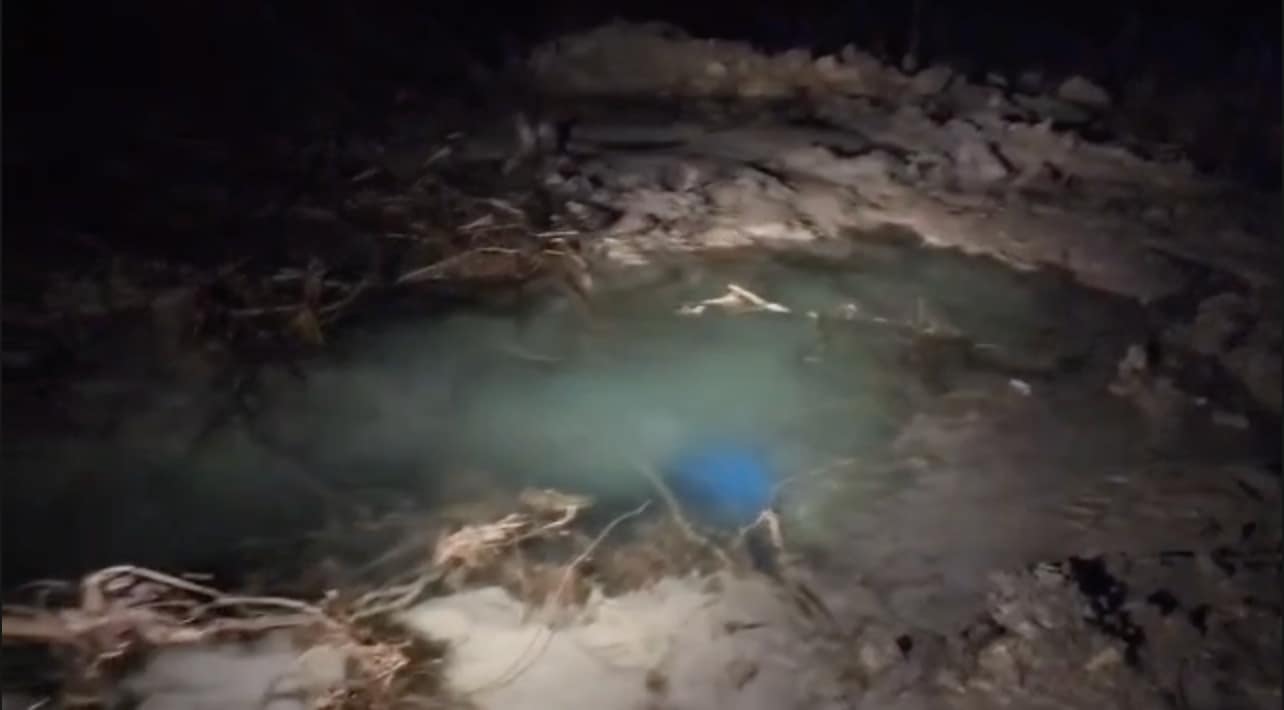
    The Water Business Unit of the Antigua Public Utilities Authority (APUA) has issued an urgent public announcement confirming that a critical 20-inch water transmission line in the Crabbs region has suffered a complete break. Utility crews moved swiftly to isolate the damaged segment of the pipeline immediately after the incident was reported, clearing the way for emergency repair work to begin without delay.

    To minimize widespread disruption to residential and commercial consumers, system operators have reconfigured the local water distribution network to reroute supply through a standby 16-inch transmission line that was not in active regular use. While this temporary workaround is currently keeping the network operational, utility officials have warned that the smaller alternate line lacks the full capacity of the damaged 20-inch infrastructure.

    This capacity shortfall means the network cannot guarantee sufficient water delivery to all end customers that are normally served by the Parham Booster Station. As repair efforts continue over the coming hours and days, residents and businesses across several nearby communities should prepare for inconsistent water service, including periods of reduced water pressure and unplanned temporary outages. These service impacts will persist until crews fully repair the broken main line and restore the network to its normal operating configuration.

    APUA’s repair team has mobilized all available resources to accelerate the project, with field technicians working around the clock to complete fixes as quickly as safety standards allow. In a public statement accompanying the service alert, the authority extended a sincere apology to all customers affected by the unplanned outage and associated disruptions, and expressed gratitude for the public’s patience and understanding as crews work to resolve the issue.