标签: Antigua and Barbuda

安提瓜和巴布达

  • Senator O’Donoghue Urges AT&LU to Prepare Young Workers for Changing Labour Market

    Senator O’Donoghue Urges AT&LU to Prepare Young Workers for Changing Labour Market

    At the 87th Annual Delegates’ Conference of the Antigua and Barbuda Trades and Labour Union (AT&LU) held at People’s Place on Nugent Avenue, Senator Angelica O’Donoghue delivered a keynote address on behalf of the Antigua and Barbuda Labour Party, laying out a clear vision for the future of the nation’s labor movement. Her core call centers on a balanced approach: the union must expand its focus to support young workers navigating a shifting economic landscape, while never forgetting the foundational struggles and hard-won gains of past generations of labor organizers.

    Speaking to the conference’s official theme, “Developing Stronger Workers, Stronger Future,” O’Donoghue emphasized that the global shift toward a tech-driven economy has created unprecedented new challenges for the labor sector. Breakthrough technologies including artificial intelligence, widespread workplace automation, the expanding digital economy, and rising cybersecurity demands are fundamentally reshaping what roles look like across nearly every industry, requiring new approaches to worker preparation. She argued that trade unions can no longer limit their mandate to traditional advocacy for worker rights and fair working conditions. To remain relevant and effective for current and future generations, unions must prioritize expanding access to targeted education, professional training, and upskilling opportunities that equip workers to compete in the modern labor market.

    O’Donoghue specifically encouraged young workers to pursue in-demand qualifications spanning a wide range of high-growth fields, from technical and vocational certifications to advanced digital literacy, AI skills development, business management, entrepreneurship, and financial literacy. Each of these skill sets, she noted, will give workers the flexibility and resilience they need to adapt to ongoing economic and technological change.

    Even as she pushed for modernization, O’Donoghue struck a firm note warning against erasing the labor movement’s history to make room for new priorities. “Modernization must never become amnesia,” she stated. She stressed that the rights and protections today’s workers take for granted were secured through decades of collective struggle by earlier generations of organizers, and that passing down this history to young workers is a non-negotiable responsibility for veteran movement leaders. Drawing a direct throughline from past organizers to current stakeholders, she told delegates, “We are because you were,” tying the modern identity of both the union and the Antigua and Barbuda Labour Party to the sacrifices and work of those who came before.

    During her remarks, O’Donoghue also offered public praise to key leaders of the nation’s labor movement, including AT&LU President Bernard de Nully, Ambassador Lionel “Max” Hurst, who serves as Chief of Staff in the Office of the Prime Minister, and other longstanding union members for their decades of commitment to advancing worker interests.

    Closing her address, O’Donoghue underscored the intergenerational responsibility that lies at the heart of a strong, sustainable labor movement. “I am because we are. We are because they were. And those who come after us will be, because of what we choose to do today,” she said, framing the choices made by current union leaders and members as a lasting legacy for future generations of Antiguan and Barbudan workers.

  • Antigua and Barbuda Says Global Whaling Decisions Must Be Based on Science, Not Emotion

    Antigua and Barbuda Says Global Whaling Decisions Must Be Based on Science, Not Emotion

    Against a backdrop of decades-long global division over whaling policy, the twin-island Caribbean nation of Antigua and Barbuda has made a clear call for international regulatory bodies to prioritize empirical scientific data over emotional public sentiment when shaping future rules for whale population management.

    Addressing a recent international gathering focused on ocean conservation and marine biodiversity, representatives from Antigua and Barbuda emphasized that sustainable utilization of marine resources can only be effective when rooted in rigorous, peer-reviewed population assessments. For years, the country has defended limited, controlled aboriginal subsistence whaling as a cultural practice that supports small local fishing communities, arguing that well-monitored hunts do not threaten the overall stability of healthy whale populations.

    The delegation pushed back against growing calls from environmental advocacy groups for an all-out global ban on all forms of whaling, noting that blanket prohibitions fail to account for divergent national circumstances and the latest scientific findings that show many whale species have rebounded significantly from historic over-hunting. Antigua and Barbuda’s stance reaffirms its long-held position that small island developing states must have a voice in global marine policy that balances conservation goals with the socioeconomic needs of coastal communities that have relied on ocean resources for generations.

  • Prof. Justin Robinson Remembers the Mighty Sparrow: ‘The Professor Who Never Held a Chair’

    Prof. Justin Robinson Remembers the Mighty Sparrow: ‘The Professor Who Never Held a Chair’

    When news broke of Mighty Sparrow’s passing at around 4 p.m. on Sunday, September 27, I paused before accepting it. After all, this was not the first time rumors of the legendary calypsonian’s death had circulated – and he had turned those false reports into art decades earlier. Back in 1969, Sparrow recorded the iconic calypso *Sparrow Dead*, a sharp, playful rebuke that mocked the false gossip about his failing health and turned death hoaxes into one of his most memorable tracks.

    Growing up in St. Vincent, Sparrow’s music was a constant backdrop to my childhood, streaming from every radio and woven into the fabric of daily community life. His tracks were more than songs – they were our collective anthems. From *Capitalism Gone Mad* to *Where the Lizard*, *Education*, *Dan is Man*, *Wanted Man* and dozens more, his work was the soundtrack of our youth. Even my deeply religious relatives could not resist singing along to his line “all saltfish sweet” – a joke that only a West Indian can fully appreciate. I still recall celebrating with Chrys Ralph when he returned home and took the road march title with *Don’t Back Back on me*, and to this day, the sharp, cutting wit of *Lying Excuses Parts 1 and 2* remains unmatched in calypso.

    I have never had a trained ear for music, which is why I always gravitated toward Sparrow’s brilliant lyrics. He had an unmatched gift for wrapping complex social and political issues in witty, catchy, accessible verse that resonated with everyday people. As I grew older and entered academia, I came to a clear conclusion: Sparrow was one of the sharpest social analysts the Caribbean region has ever produced. He was far more effective at communicating hard truths to the public than any trained academic, because he shared his analysis in public spaces, in the everyday language of Caribbean people, backed by a infectious chorus that stuck in your head for days.

    I studied economics in lecture halls across the Caribbean, the United States, and the United Kingdom, but some of my earliest and most lasting lessons in political economy came from this Grenada-born, Trinidad-raised calypsonian, whose music reached every corner of the world where West Indians gathered with a radio. His 1956 breakout hit *Jean and Dinah*, which launched his legendary career, is still the greatest calypso ever written in my view. On the surface, it is a humorous story about American soldiers withdrawing from the Chaguaramas military base, leaving Port of Spain’s sex workers without their main source of income. But beneath the lighthearted tone, it offers a searing analysis of national sovereignty reclamation and the economic impact of losing the foreign spending that a dependent local economy has come to rely on.

    Three years after that breakout hit, he released *Simpson* to push back against early death hoaxes, a pattern that would repeat through his career. As the West Indies Federation teetered and collapsed in 1962, Sparrow released *Federation!*, his diagnosis of the union’s failure. He called out the toxic combination of small states with oversized egos, and the collective failure to recognize that the region was far stronger united than divided. That analysis remains just as accurate 64 years later, as Caribbean nations still grapple with the same question of regional integration.

    For those of us who were students in the mid-20th century, *Dan is the Man* remains endlessly relatable. It follows a working-class young man who systematically dismantles the absurdity of the colonial education curriculum, line by line. Today, as many call for the Caribbean Examinations Council (CXC) to be scrapped entirely, Sparrow’s song holds a key lesson: while CXC must be held accountable for its shortcomings, destroying the institution entirely is not the answer.

    In the 1980s, when Trinidad and Tobago – long the Caribbean’s oil-rich economic powerhouse – went from a crippling oil boom to a devastating bust and was forced into an IMF restructuring program, Sparrow released *Capitalism Gone Mad*. You will not find a clearer, more accessible explanation of import cost-push inflation anywhere in academic textbooks, and it is set to one of the catchiest melodies Sparrow ever wrote.

    Legendary Caribbean thinker CLR James once described Sparrow as a genuinely West Indian artist: rooted in working people, unapologetically speaking for their experiences and concerns. University of the West Indies scholar Gordon Rohlehr spent decades documenting this truth in his academic work, and titled his collection of essays on Sparrow *My Whole Life is Calypso* – a phrase that perfectly sums up the singer’s life and legacy. In 1987, UWI awarded Sparrow an honorary Doctor of Letters, a decision that remains one of the wisest the institution has ever made.

    Even today, the Caribbean too often waits for outside validation, funding, and salvation from foreign powers. In that context, Sparrow’s decades-long career is a critical case study for what the region needs to thrive in the new global order. Sparrow built his excellence locally, owned his work locally, and exported it to the world with unshakable confidence.

    Sparrow was no saint, and he never pretended to be. A Vincentian calypsonian once told me that Sparrow sang too much raunchy material, and it is true: his songs were just as often racy as they were profound. He would have laughed at any tribute that tried to sanitize his legacy or smooth over his rough edges. A core part of his genius was that he refused to be forced into a false choice between being respectable and being real – he gave us both, often in the same verse.

    I still remember the shock and joy when, at an age when most performers have long retired, Sparrow came back to win the calypso crown in 1992 with *Both of Them* and *Survival*. For all his insight and impact, Sparrow was a public intellectual who never held an endowed academic chair at a university.

    As a friend of mine wrote after his passing: “Well boys, Kitch gone, Melody gone and now the Birdie gone too. They have left us with a wonderful legacy.” Now, the great Birdie’s lecture has come to an end, but the lessons he left us will never fade. Rest well, Mighty Sparrow.

  • Antigua and Barbuda Dental Association Wins International Award at FDI World Dental Congress

    Antigua and Barbuda Dental Association Wins International Award at FDI World Dental Congress

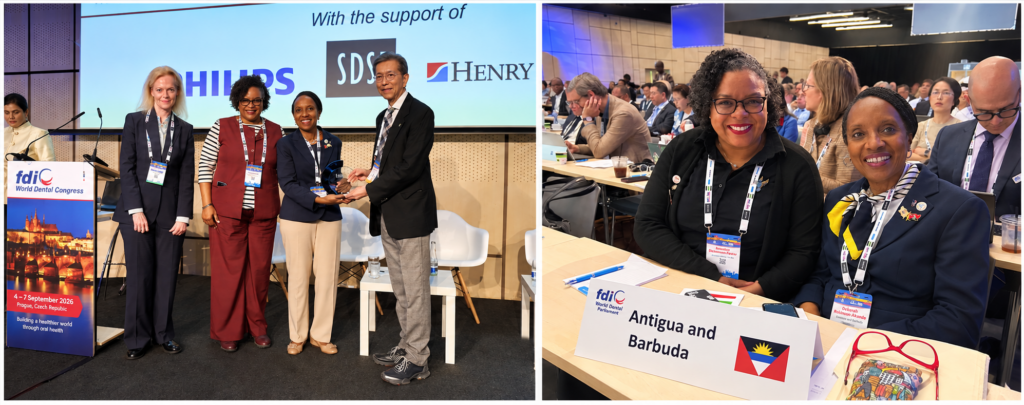
    Just 12 months after gaining membership to the FDI World Dental Federation, the small Caribbean nation of Antigua and Barbuda has earned global acclaim for its commitment to dental professional development, taking home a top award at the recent FDI World Dental Congress held in Prague, Czech Republic.

    The national honor was awarded to the Antigua and Barbuda Dental Association for its innovative Young Dentists initiative, a program designed to nurture the next generation of oral health leaders in the country. The nation was represented at the award ceremony by two senior association leaders: Dr. Deborah Robinson-Akande, who serves as both president of the national association and FDI National Liaison, and Dr. Kronskie Dickenson-Foster, the association’s vice president and acting senior dental consultant for the country’s Ministry of Health.

    Industry observers note that this achievement carries unusual weight, coming just one year after Antigua and Barbuda formalized its membership in the global federation, which counts more than one million dentists across the globe as its members and acts as the leading unifying voice for the international dental profession.

    Reflecting on the milestone, Dr. Robinson-Akande emphasized that joining the FDI has opened transformative doors for the Caribbean nation. “Membership in the FDI has not just given our team space to learn from the world’s leading dental professionals – it has also let us contribute to global conversations that shape the future of oral health,” she explained. “Critical oral health policies that guide national ministries of health and local dental associations are developed right here in the FDI. It was incredibly meaningful to learn that suggestions our delegation put forward helped shape one of these recent policies. It proves that even as a small island nation, our voice, our experience, and our perspective matter on the global stage, and the decisions we help make will ultimately benefit the people of Antigua and Barbuda.”

    During the congress, delegates also got to see the nation’s public health impact on display: a photograph documenting Antigua and Barbuda’s annual World Oral Health Day outreach activities was featured alongside submissions from other participating nations from every corner of the globe. Dr. Dickenson-Foster called that moment a powerful reminder of the value of international engagement. “To see Antigua and Barbuda represented right alongside major nations from across the world drove home a key point: the work we are doing at home is being seen by the global community. Our participation counts, and our contributions are valued and recognized,” she said.

    The recognition at the congress has already translated into tangible benefits for dental care and professional development in Antigua and Barbuda. One immediate outcome is a new support partnership with the FDI, which has agreed to fully cover the travel costs for regional dental education experts to visit Antigua to lead continuing professional development courses for local dentists. The national dental association will only be responsible for covering local accommodation for the visiting speakers, drastically lowering the barrier to expanding access to high-quality continuing education.

    In addition, the chair of FDI Membership has extended a formal invitation for the Antigua and Barbuda Dental Association to join the North American Regional Organisation (NARO), a regional collaborative body that currently counts dental associations from the United States, Canada, and Mexico as its members. NARO’s core mission is to foster cross-border collaboration between member organizations across key areas including professional education, clinical research, dental practice innovation, and public health outreach, opening new pathways for knowledge sharing and partnership for the Caribbean association.

    Beyond award celebrations and new partnership opportunities, the Antigua and Barbuda delegation also took an active role in the congress’s core governance work, participating in FDI parliamentary and leadership sessions alongside delegates from national dental associations from around the world. During these sessions, delegates joined in global discussions on emerging oral health policies, community outreach programs, and shared global priorities for the profession.

    Leaders of the Antigua and Barbuda Dental Association framed the award as more than just a reward for past work: for the organization, it is a call to continue expanding investment in its Young Dentists initiative. By building up young clinicians’ clinical expertise, leadership capabilities, and long-term professional growth, the association works to cultivate a new cohort of skilled dental leaders, while also raising the standard of patient care for all residents of Antigua and Barbuda.

  • Antigua and Barbuda wants OECS to Pool Electric Vehicle Orders to Cut Costs

    Antigua and Barbuda wants OECS to Pool Electric Vehicle Orders to Cut Costs

    Against a backdrop of volatile global fossil fuel prices and growing regional momentum to transition to clean energy, Prime Minister Gaston Browne of Antigua and Barbuda has put forward a bold collaborative proposal: that all member states of the Organization of Eastern Caribbean States (OECS) pool their demand for electric vehicles to negotiate bulk pricing that would be out of reach for individual nations. The idea was first shared by Browne during an appearance Saturday on the Pointe FM current affairs program *Browne and Browne*, where he detailed outcomes from a recent trip to the United States focused on securing international backing for regional renewable energy projects. During his travels, Browne held discussions with representatives from Octopus, a United Kingdom-based energy firm with growing interests in Caribbean clean energy development, covering electric vehicle deployment across the region. Browne emphasized that small island nations like those in the OECS hold very little individual bargaining power when negotiating large vehicle purchases. A collective bulk order, he argued, would flip the dynamic, giving the bloc far more leverage to lock in reduced per-unit costs. To illustrate the scale of collective impact the initiative could deliver, Browne pointed to a target of roughly 100,000 electric vehicles purchased jointly across the region. Though the prime minister’s remarks were cut off mid-broadcast before he could share additional details, he did not share projected per-vehicle prices or estimates of how much the bloc could save through the collaboration. The 100,000 vehicle figure was framed by Browne as an illustrative example of potential scale, not a formal finalized order for the bloc. As of his public remarks, no participating OECS governments have been confirmed, no framework for financing or procurement has been outlined, no allocation plan for distributed vehicles has been shared, and no timeline for negotiating a regional cooperative agreement has been set. Browne also stopped short of announcing any binding purchase contract with Octopus for the initiative, noting only that the UK firm has provided a small fleet of electric vehicles for an upcoming gathering of regional leaders. No details were shared on the size of that temporary fleet or any long-term supply arrangements between Octopus and OECS states. Browne’s joint EV proposal is just one component of a broader regional push to address longstanding challenges around energy cost and reliability across the Caribbean. He noted that OECS nations are currently actively pursuing international grants and low-interest financing to expand utility-scale solar energy generation and develop untapped geothermal energy reserves across the volcanically active region. The recent steep upward trend in global diesel prices, he added, has created new urgency to accelerate the transition away from imported fossil fuels. For Antigua and Barbuda specifically, Browne confirmed that the government currently maintains consumer subsidies for diesel to offset rising global costs, and has separately explored expanding national fuel reserves to mitigate potential supply chain disruptions. If advanced and implemented, a regional electric vehicle transition would help address the long-term structural challenge of fossil fuel import dependence across the bloc, though Browne offered no clear timeline for when the proposal would be drafted into a formal document for OECS member states to consider. Many regional policy analysts note that collective procurement initiatives have a track record of delivering cost savings for small island developing states, which often face higher import costs than larger economies due to their small market size, making the joint EV plan a promising potential step forward for Caribbean clean energy transition.

  • (Minister Michael Joseph joins AOSIS discussions on COP31 priorities)

    (Minister Michael Joseph joins AOSIS discussions on COP31 priorities)

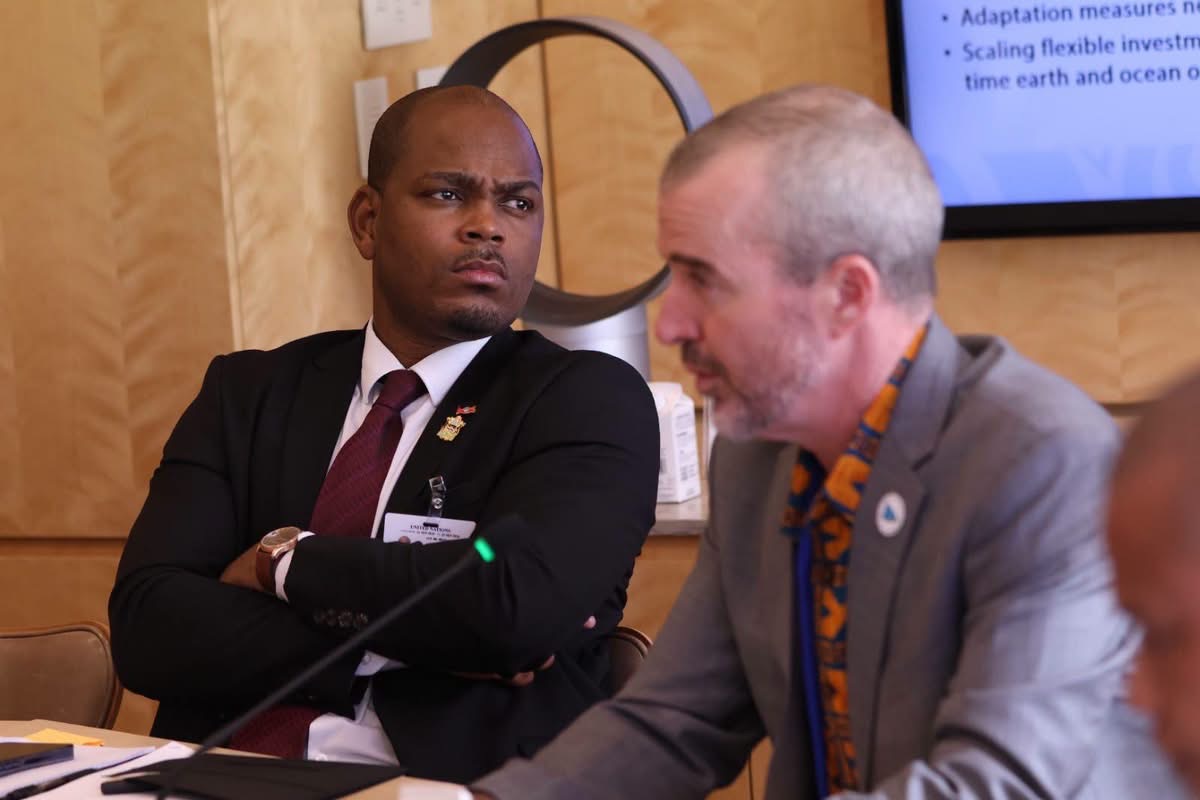
    In high-stakes ministerial talks held by the Alliance of Small Island States (AOSIS) earlier this week, Michael Joseph, the Minister of Health, Wellness, Environment and Civil Service Affairs, has emerged as a leading voice demanding that the global 1.5°C warming limit and the unique vulnerabilities of Small Island Developing States (SIDS) sit at the core of all preparatory work for the upcoming 31st Conference of the Parties (COP31).

    The closed-door discussions covered a wide range of critical climate policy priorities that directly impact low-lying island nations. Participants delved into the design and implementation of the Just Transition Mechanism, a global framework designed to support shifting to low-carbon economies while protecting vulnerable workers and communities. They also debated progress on developing standardized adaptation indicators to track and verify climate resilience efforts, reviewed ongoing work under the Mitigation Work Programme, and explored actionable reforms to expand SIDS access to affordable climate finance — including non-repayable grants and low-interest concessional loans that many small nations have long struggled to access.

    A central theme of the talks was the escalating existential threat that accelerating sea-level rise and unmitigated climate change pose to the basic foundations of island life. Ministers collectively highlighted how shifting weather patterns and rising oceans are already eroding water security, destabilizing local food systems, and destroying artisanal and commercial fisheries that are the primary source of livelihood and food security for millions of people across small island states.

    Minister Joseph threw his full weight behind a coordinated AOSIS strategy calling on all member states to develop concrete, actionable proposals on three core pillars: greenhouse gas mitigation, climate finance reform, and a just transition ahead of the next round of regional pre-COP talks scheduled to take place in Sydney and Fiji. The alliance’s unified push comes as small island nations continue to advocate for greater ambition from major global emitters ahead of COP31, seeking to lock in commitments that prevent catastrophic warming that would render many low-lying island nations uninhabitable.

  • Shuttle Plan for CHOGM Venue in St. John’s

    Shuttle Plan for CHOGM Venue in St. John’s

    As the Commonwealth Heads of Government Meeting (CHOGM) draws closer, Antigua and Barbuda Prime Minister Gaston Browne has revealed a preliminary traffic and parking strategy to accommodate the event at one of its key host venues. Speaking during an appearance on Pointe FM’s popular Browne and Browne Show this past Saturday, Browne addressed a lingering public question about parking access at the site of the former Deluxe building, a structure currently undergoing full conversion into a modern performing arts centre that will double as a CHOGM venue.

    Under the draft plan being evaluated by the national government, all event attendees will park their private and official vehicles at the expansive Rising Sun Grounds location, before boarding organized shuttle buses to transport them directly to the performing arts centre. To strengthen security and streamline movement around the high-level summit venue, Browne confirmed that the immediate perimeter of the site will be cordoned off, with all parking and through-traffic restricted in the adjacent surrounding area.

    At the time of the announcement, the prime minister did not release additional critical details about the plan. No information was provided on the exact shuttle routes that will connect the parking hub to the venue, the maximum vehicle capacity Rising Sun Grounds can accommodate, which local streets will be impacted by the restrictions, or a firm timeline for when the full finalized traffic arrangements will be made public. It also remains unclear whether the parking and traffic limitations will only be in effect during official summit sessions at the performing arts centre, or if they will be enforced for the full duration of the CHOGM event and extended into the pre-summit setup period.

    Beyond laying out the logistics framework, Browne offered an update on the renovation progress at the former Deluxe building, noting that the project has already delivered dramatic transformations to both the building’s interior layout and its exterior facade. He emphasized that the multi-purpose venue is being purpose-built to serve the Antigua and Barbuda community as a permanent performing arts centre long after the international summit concludes.

  • PM Calls on Churches, Parents and Businesses to Help Rehabilitate At-Risk Youth

    PM Calls on Churches, Parents and Businesses to Help Rehabilitate At-Risk Youth

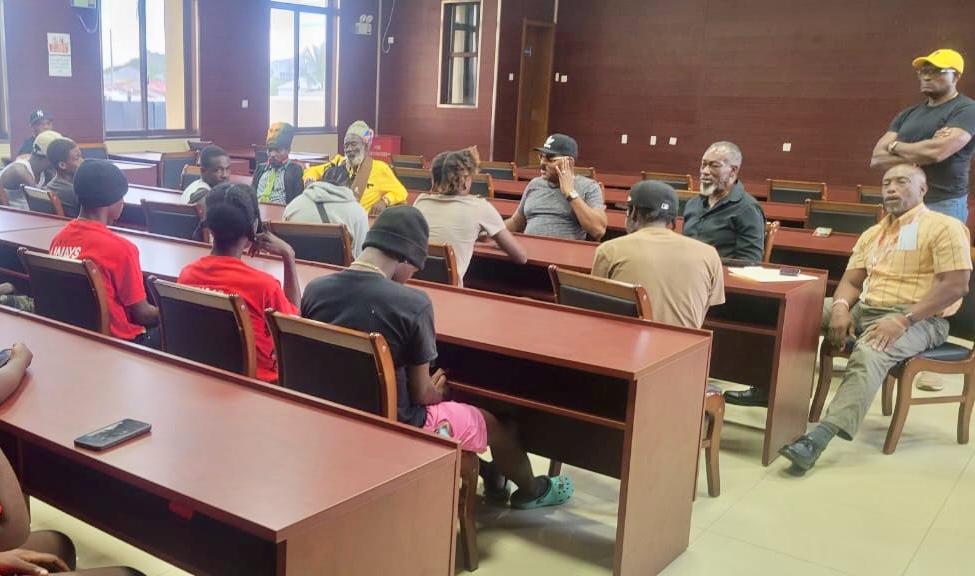
    Antigua and Barbuda’s Prime Minister Gaston Browne is pushing for a collaborative, cross-sector response to youth violence, arguing that harsher criminal sentencing alone cannot reverse the deep-rooted trends driving harm in communities. Speaking during an appearance on Pointe FM’s *Browne and Browne Show* this past Saturday, Browne defended a controversial initiative he launched roughly two years ago, which sought to engage former gang members in a bid to help them exit criminal lifestyles.

    When the program was first introduced, it drew significant public criticism, but Browne stood by his choice to pursue the intervention Saturday. He emphasized that even if the effort managed to help just one person leave violent gang life behind, the work would have been more than worthwhile. “Even if it’s one of them that we would have saved, it would have been worth the intervention,” he told listeners.

    Browne contends that this community-centered approach to reducing violence has proven effective, and now he is calling on every segment of Antigua and Barbuda’s society to share responsibility for steering young people away from harmful paths. He specifically highlighted faith institutions, particularly churches, as key potential partners in the work, extending invitations to parents, private sector businesses, public sector agencies, and civil society organizations to step up and contribute.

    The prime minister stressed that youth violence is a far too complex and widespread challenge to be solved exclusively by the government or law enforcement. What is needed, he argued, is a comprehensive “all-of-society approach” that brings all community stakeholders to the table.

    Notably, Browne offered few concrete details about the original gang intervention initiative during his comments. He did not share data on how many former gang members participated in the program, how many participants have gone on to reoffend, or what specific support services were offered to participants. He also did not announce any new formal programming or dedicated funding to support the expanded community effort he is calling for.

    Browne tied his appeal for broader community participation to a separate core policy priority of his administration: a planned legislative push to introduce longer prison sentences for serious and repeat violent offenders. He explained that extending custodial sentences for high-risk offenders will give correctional authorities more time to deliver meaningful rehabilitation and vocational skills training to incarcerated people before they are released back into communities.

    The ultimate goal of this paired approach, he said, is to ensure that people leaving prison have the tools and support they need to build constructive, law-abiding lives. “We’re not only speaking about the issue of stronger sentencing,” Browne explained. “We’re also pursuing a policy of reform concurrently.”

    Looking ahead, the Browne administration plans to bring new legislation to Parliament that would establish mandatory minimum sentences for gun-related crimes. The prime minister has repeatedly spoken out against what he views as overly lenient sentences for violent offenses, noting that repeat offenders are often released from prison before they can access the support they need to make lasting changes to their behavior.

    Browne also declined to share a clear timeline for the planned in-prison skills training programs, or specific details about what vocational skills the programs would prioritize. His Saturday comments laid out the dual framework of the government’s official response to rising violence: longer periods of incarceration for high-risk repeat offenders, paired with expanded prevention and rehabilitation efforts both inside correctional facilities and across the broader community to reduce recidivism.

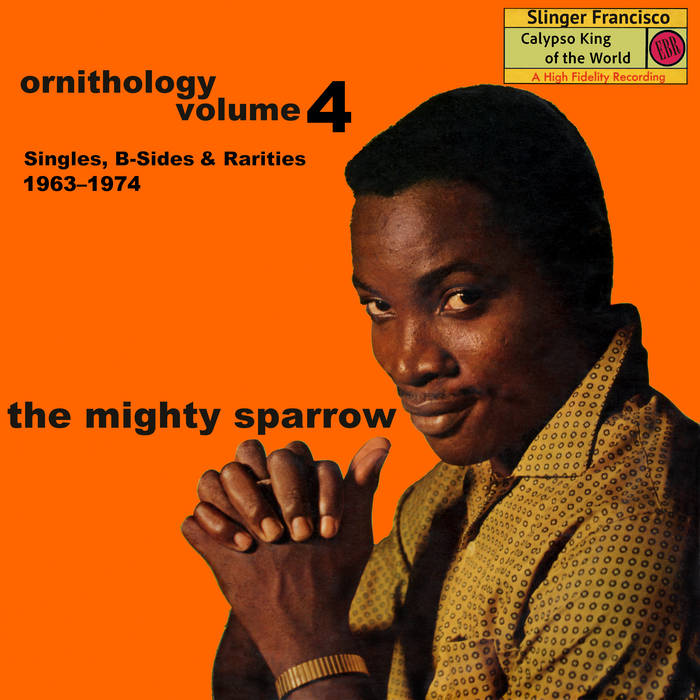
  • BREAKING: Calypso Legend Mighty Sparrow Dies at 91

    BREAKING: Calypso Legend Mighty Sparrow Dies at 91

    The global Caribbean and calypso communities are entering a period of mourning following the death of Slinger Francisco, the trailblazing artist universally known by his stage name Mighty Sparrow. The beloved icon was 91 years old when he passed away peacefully in a New York hospital on Sunday, according to an official statement shared by his immediate family.

    The statement confirmed that the legendary performer died after a short battle with illness, and that he was surrounded by close family members during his final hours. “It is with great sadness that we announce the passing of Trinidad and Tobago’s Calypso icon, Slinger Francisco, known to the world as ‘The Mighty Sparrow’,” the family shared.

    Widely hailed by critics, peers and fans alike as one of the most influential calypsonians to ever take the stage, Mighty Sparrow built a decades-spanning career that redefined the genre and brought it from regional folk tradition to global recognition. He revolutionized calypso’s place in global culture, elevating the art form and introducing it to audiences far outside the Caribbean basin.

    Famous for his resonant, powerful vocal delivery, razor-sharp lyrical wit, masterful compositional skill and magnetic on-stage charisma, Mighty Sparrow leaves behind an expansive discography that touched on nearly every facet of modern life. His work tackled timely social issues, cut through political rhetoric, explored Caribbean cultural identity, and delved into the nuance of personal relationships and everyday experiences, making him a relatable voice for generations of listeners.

    Beyond his catalog of groundbreaking music, Mighty Sparrow leaves a lasting legacy as a mentor and muse for countless emerging performers, who have drawn inspiration from his work across more than 70 years. His reach extended far beyond his home nation of Trinidad and Tobago, earning him enduring respect and admiration across the entire Caribbean and the global music industry.

    In addition to his iconic status as an entertainer, his family remembered him as a devoted and loving partner, parent and friend. “He was also a husband, father, grandfather, great-grandfather, life partner and friend,” the statement noted. The family also shared that in his final days, Mighty Sparrow embraced Christianity, committing his life to Jesus Christ and being baptized into the Seventh-day Adventist Church, saying he had “made his election sure”.

    Mighty Sparrow’s passing closes one of the most consequential chapters in Trinidad and Tobago’s modern cultural history. For more than half a century, his name has been synonymous with calypso itself, and his music consistently mirrored the social and political realities of his home nation and the broader Caribbean region.

    As news of his death spreads across the globe, tributes from fans, fellow artists and political leaders are already beginning to pour in, honoring a man whose artistry, vision and enduring impact shaped Caribbean music and culture for generations.

  • Magnitude 3.6 Earthquake Recorded Northeast of Antigua

    Magnitude 3.6 Earthquake Recorded Northeast of Antigua

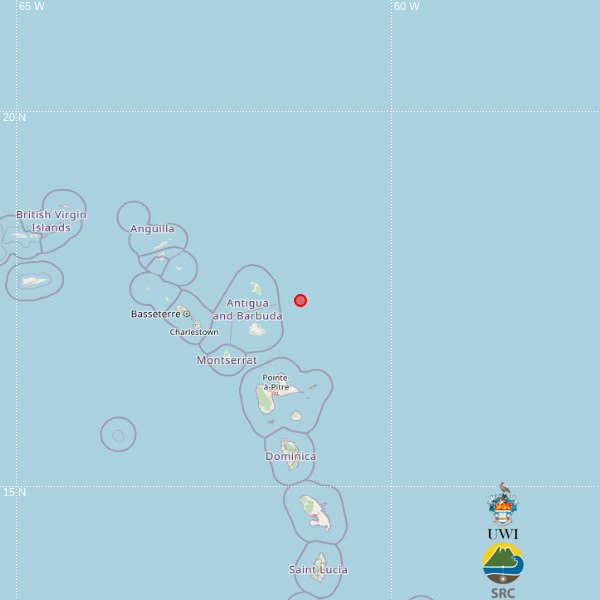
    A moderate 3.6-magnitude seismic event has been registered in waters northeast of the Caribbean nation of Antigua on Sunday afternoon, according to an early announcement from the University of the West Indies Seismic Research Centre.

    The geological disturbance struck at 3:10 p.m. local time, with its epicenter positioned roughly 81 kilometers outside the capital city of St. John’s in a northeastern direction. Experts from the centre estimate the earthquake originated at a depth of 10 kilometers below the Earth’s surface.

    In a note accompanying the preliminary data, the research centre confirmed that the current coordinates and magnitude measurements were generated through automated computational systems. As such, these figures are not final and may be adjusted following manual review and verification by professional seismic analysts.

    Antigua and surrounding Caribbean islands sit within a seismically active region along the boundary of the Caribbean and North American tectonic plates, making small to moderate quakes a relatively regular occurrence. No reports of damage or injuries have been released in the immediate aftermath of Sunday’s tremor.