标签: Antigua and Barbuda

安提瓜和巴布达

  • Antigua & Barbuda Youth Symphony Orchestra Hits a High Note with New Musical Equipment

    Antigua & Barbuda Youth Symphony Orchestra Hits a High Note with New Musical Equipment

    Young emerging instrumentalists of the Antigua & Barbuda Youth Symphony Orchestra (ABYSO) are preparing to showcase their craft with a fully upgraded percussion section, after the Sandals Foundation’s Caribbean Artisan Programme contributed more than $35,000 Eastern Caribbean dollars in new instruments and supporting equipment to the ensemble.

    As the philanthropic arm of Sandals Resorts, the foundation has built a long-running regional commitment to growing creative opportunities for young Caribbean people, and this donation marks another milestone in that work. Heidi Clarke, Executive Director of the Sandals Foundation, emphasized that investment in youth arts delivers far more than recreational benefits: “We are dedicated to nurturing Caribbean youth through the creative arts. Music acts both as a transformative tool for individual growth and a robust cultural sector that can generate sustainable livelihoods, boost national economies, and amplify the Caribbean’s unique cultural voice on the global stage. Today’s students are tomorrow’s composers, producers, educators and world-class performers who will carry our region’s heritage to audiences across the globe. By investing in initiatives like ABYSO, we help young artists refine their raw talent, build lasting confidence, and envision viable, long-term careers within the creative industries.”

    ABYSO leadership notes that the orchestra’s long-term viability relies entirely on partnerships with mission-aligned corporate donors and community supporters. Beyond directly improving the training experience for current orchestra members, the new equipment will allow the organization to dramatically expand its community outreach work across both Antigua and its sister island Barbuda. With the additional percussion gear in hand, ABYSO will deepen its in-school programming, delivering introductory instrumental classes to students at Pigotts Primary, Potters Primary, and Holy Trinity School in Barbuda. The outreach initiative also creates a clear talent pipeline, giving promising beginning student musicians a clear pathway to advance into ABYSO’s junior and full youth orchestral programs. A dedicated teacher training component is also included in the partnership, designed to build the instructional capacity of local music educators and ensure orchestral music education can grow steadily and sustainably across both islands. Combined, these efforts are expected to widen access to structured music learning while cultivating a steady pipeline of skilled young Caribbean musicians for years to come.

    For McKuelan Morris, ABYSO’s percussion coordinator, the donation could not have come at a better time. “The percussion instruments we received were not only timely but tremendously welcome additions to our section,” Morris explained. “As we work with our young musicians to develop their skills, the repertoire we tackle grows more complex. Having these high-quality instruments available now lets us add much-needed depth to our collective orchestral sound, while giving our percussionists the opportunity to learn multiple percussion instruments at the same time. We are incredibly grateful for this support.”

    This contribution is just one part of the Sandals Foundation’s decades-long regional investment in youth music education across the Caribbean. In The Bahamas, the foundation has supported community initiatives including the Exuma Community Youth Band and the LN Coakley Music Programme, expanding access to structured learning for young musicians in Exuma. In Jamaica, the organization has backed the Skyliner Marching Band, partnered with Sam Sharpe Teachers’ College to deliver specialized brass education workshops, and invested in the island’s legendary Alpha School of Music. Across all these initiatives, the foundation’s core goal remains consistent: to nurture the next generation of Caribbean musical talent and preserve the region’s rich, diverse musical heritage for future audiences.

  • OPINION: Accessibility + Consistency: Freeland’s Recipe for Effective Representation in St. George

    OPINION: Accessibility + Consistency: Freeland’s Recipe for Effective Representation in St. George

    For elected representatives, maintaining meaningful connection with the constituents they serve is far more than a box-ticking exercise — it is the foundation of legitimate, effective governance. In the Toronto riding of St. George, Deputy Prime Minister and Finance Minister Chrystia Freeland has built a reputation for strong representation that centers on two core principles: steady accessibility to local residents and unwavering consistency in delivering on commitments.

    Unlike many high-profile federal politicians who step away from local constituency work once they ascend to senior cabinet roles, Freeland has prioritized staying rooted in her home riding. She holds regular in-person town halls, hosts weekly mobile constituency clinics across St. George’s diverse neighborhoods, and maintains a rapid response protocol for constituent inquiries ranging from immigration paperwork delays to local infrastructure issues. For residents, this consistent accessibility means they do not have to go through layers of staff to reach their representative; they can expect direct engagement, whether at a local grocery store meet-and-greet or a scheduled meeting about a community concern.

    This approach stands in contrast to a common pattern in Canadian politics, where national cabinet duties often push constituency work to the margins, leaving residents feeling disconnected from their elected member of Parliament. Freeland’s model demonstrates that senior cabinet roles do not have to come at the cost of local representation. By embedding accessibility and consistency into her daily work as both a national leader and a local MP, she has built trust across St. George’s diverse population, which includes students from the University of Toronto, long-time immigrant communities, young professionals, and long-term residents.

    Critics may argue that Freeland’s high-profile national role means her local work is mostly performative, but on-the-ground feedback from constituents tells a different story. Local community leaders across partisan lines have acknowledged that she has followed through on commitments ranging from securing federal funding for local affordable housing projects to advocating for campus safety improvements and supporting small businesses recovering from pandemic shutdowns. These results stem directly from her consistent approach of showing up, listening, and following through.

    The model Freeland has built in St. George offers a useful blueprint for elected officials at all levels of government. At a time when public trust in political institutions is declining across much of the Western world, simple, consistent practices — prioritizing access to constituents and keeping promises at the local level — can go a long way toward rebuilding that trust. For Freeland, the recipe has been clear: effective representation does not rely on flashy publicity stunts or occasional photo ops. It relies on showing up consistently, listening to the people you represent, and delivering on the commitments you make. In St. George, that recipe has proven to be a winning one for both Freeland and the community she serves.

  • The King’s Foundation and ABCAS announce selected participants for UK Building Craft Programme

    The King’s Foundation and ABCAS announce selected participants for UK Building Craft Programme

    A landmark skills development initiative focused on heritage conservation and climate-resilient construction has officially kicked off in Antigua and Barbuda, with eight local participants selected to take part in the 2026 Building Craft Programme. The collaborative effort, led by The King’s Foundation—King Charles III’s charity dedicated to nature and sustainability—in partnership with the Antigua and Barbuda College of Advanced Studies (ABCAS) and the country’s Ministry of Foreign Affairs, marked its launch with an opening ceremony on April 8, 2026 at ABCAS’s Muriel O’Mard Campus. The event brought together key stakeholders from all partnering organizations, alongside the newly selected cohort of trainees, to kick off the innovative training initiative.

    After a rigorous competitive application and screening process that included final interviews, the eight chosen participants—Kyla Weaver, Glennoy Goodwin, Shannoy Spencer, Jesse Gilpin, Devon Thomas, Johnathan Joseph, Edmund Map, and Akeem Javin James—represent a diverse cross-section of Antigua and Barbuda’s construction and design industry. The entire training opportunity is fully funded by The King’s Foundation and its partner donors, including The King Charles III Charitable Fund, Kestrel Liner Agencies Ltd, and the Mill Reef Fund, removing financial barriers for emerging and established industry professionals looking to advance their skills. Two experienced ABCAS staff members will accompany the group for the UK-based portion of the programme: Jace Gore, Head of the Department of Industrial Technology, and Garry Southwell, CVQ Implementation Officer, who will offer ongoing academic and technical guidance throughout the training period.

    The cohort brings together a wide range of professional backgrounds, including practicing architects, civil engineers, skilled trade workers, one former ABCAS graduate, and one currently enrolled ABCAS student. This mix creates a dynamic group united by shared passion and commitment to advancing two critical priorities for Antigua and Barbuda: heritage preservation and climate-resilient building practices. Since the programme’s opening, participants have begun a week-long on-site orientation in Antigua, led by ABCAS with logistical and content support from The King’s Foundation. The orientation combines in-class foundational learning with hands-on field exposure to prepare trainees for the intensive training ahead. On April 12, the group will depart Antigua for the four-week UK-based portion of the programme, which will be hosted at The King’s Foundation dedicated training sites, starting at the charity’s headquarters at Dumfries House in Ayrshire, Scotland, with additional training taking place at Highgrove Gardens in Gloucestershire, England.

    During their time in the UK, participants will gain immersive, hands-on experience in a range of high-value traditional building crafts and modern sustainable techniques. Key skill areas include precision carpentry, traditional masonry, lime-based building methods, heritage structure restoration, and contemporary climate-resilient construction practices. After completing the UK training segment, participants will return to Antigua and Barbuda to put their newly learned skills into practice during a local community-focused live construction project, allowing them to apply their knowledge directly to a real-world development need in their home country.

    In remarks at the opening ceremony, Dr. Na-Ajele Buffonge, Vice President of ABCAS, emphasized the long-term value of cross-sector partnerships for skills development in the region. “At ABCAS, we remain committed to developing talent through meaningful partnerships,” Buffonge said. “This programme provides participants with internationally recognised skills while supporting sustainable and heritage-focused development in Antigua and Barbuda.” Dr. Simon Sadinsky, Executive Director of Research, Impact and Learning at The King’s Foundation, echoed that enthusiasm, noting “We are delighted to welcome these talented individuals to The King’s Foundation training sites, including Dumfries House in Ayrshire, Scotland, and Highgrove Gardens in Gloucestershire, England, to enhance their skills in heritage building crafts and climate-resilient construction.”

    A follow-up cocktail reception for stakeholders and participants was held on April 9 at Galley Bay Resort and Spa, creating space for continued dialogue and relationship-building as the programme moves forward. Overall, the 2026 Building Craft Programme marks a major milestone for Antigua and Barbuda’s efforts to build national capacity in heritage conservation and sustainable construction, aligning directly with the country’s core national development priorities while empowering local professionals with globally competitive, industry-leading skills.

  • Day After Election to Be Public Holiday, PM Announces

    Day After Election to Be Public Holiday, PM Announces

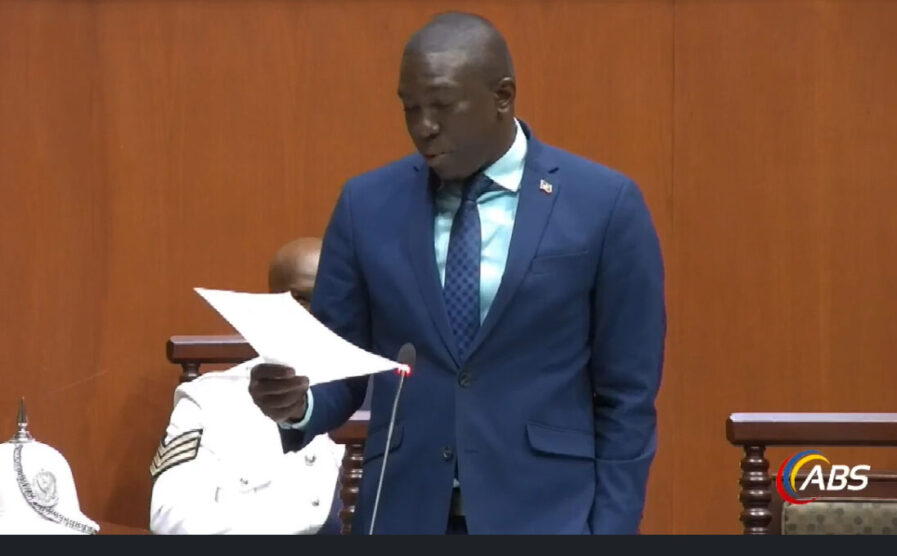
    Antigua and Barbuda’s Prime Minister Gaston Browne has made a key announcement at the official campaign launch of the incumbent Antigua and Barbuda Labour Party (ABLP), confirming that the day after the upcoming April 30 general election will be designated a nationwide public holiday. The announcement came as the party kicked off its bid for a fourth consecutive term in office at a well-attended rally held at People’s Place, where Browne addressed thousands of enthusiastic supporting supporters. Alongside the holiday declaration, Browne formally confirmed the full election timeline: Nomination Day is scheduled for April 13, with general voting to follow 17 days later on April 30. Positioning the public holiday as a pre-emptive celebration, the ABLP leader made clear he is confident of a victory for his party at the polls.

    In a wide-ranging campaign speech outlining the ABLP’s record in government since the party first took power in 2014, Browne framed the past decade as a period of profound national transformation, summing up the country’s trajectory as a shift “from struggle to strength.” He opened his assessment of the administration’s achievements by addressing the state of the economy when the ABLP took office, noting that the previous government left behind widespread mass job losses. Since taking power, Browne asserted, his administration has not only restored full employment to the islands but has also steered the country toward consistent, long-term economic expansion.

    To address widespread concerns over the rising cost of living, Browne highlighted a series of targeted policy measures rolled out by his government to ease financial pressure on households. These include the full elimination of personal income tax for residents, cuts to the Antigua and Barbuda Sales Tax applied to essential everyday goods, and a major expansion of government-run food assistance programs that support vulnerable communities. He also pointed to the government’s decision to maintain subsidies for fuel and household utility costs, explaining that the state has absorbed the bulk of sudden spikes in global commodity prices to avoid passing these additional costs onto local consumers.

    On infrastructure development, Browne pointed to a slate of ongoing and completed projects that have delivered tangible improvements to daily life across Antigua and Barbuda. These include widespread road improvement projects across multiple islands, a major expansion of national potable water production capacity, and large-scale affordable housing initiatives that have helped thousands of families achieve home ownership. These projects, he emphasized, are proof of the ABLP’s commitment to delivering concrete results rather than empty political promises. The prime minister also highlighted investments in two key public services: education and healthcare. Under the ABLP, he said, access to tertiary education has been expanded significantly for local students, and core medical services across the country’s public health system have been upgraded to better serve residents.

    Toward the end of his speech, Browne issued a call to action for all eligible voters, urging them to make the necessary preparations ahead of polling day, including updating or renewing their voter identification cards well in advance of the April 30 vote. With the election timeline now formally set, campaigning across Antigua and Barbuda is expected to ramp up quickly in the coming weeks, as the ABLP defends its record and its hold on government against opposition challengers.

  • WACTH: ABLP Leader Urges Voters to Renew ID Cards Ahead of April 30 Poll

    WACTH: ABLP Leader Urges Voters to Renew ID Cards Ahead of April 30 Poll

    ST. JOHN’S, Antigua — As the Caribbean nation of Antigua and Barbuda gears up for its upcoming general election, the head of the country’s long-standing major political party has issued an urgent public call for eligible voters to prioritize updating their voting documentation before polling day.

    Gaston Browne, leader of the Antigua and Barbuda Labour Party (ABLP), delivered the appeal to hundreds of gathered supporters during the official kickoff of his party’s election campaign, held at the local campaign hub People’s Place. The prominent politician focused heavily on voter preparedness, stressing that every eligible citizen’s ballot holds the power to shape the nation’s trajectory for the coming years.

    “Those of you who have not renewed your cards… do so immediately,” Browne stated during his address, doubling down on the critical need for voters to complete this administrative step as soon as possible.

    He went on to warn that putting off ID renewal can lead to unintended disenfranchisement, noting that voters who show up at polling stations with outdated identification will be barred from casting their ballots. With the election just weeks away, Browne urged citizens not to leave this requirement to the last minute. “Do not run any possibility of being disenfranchised inadvertently,” he added.

    Beyond pushing for ID updates, Browne also encouraged registered voters to plan to arrive at polling locations early on April 30, to avoid long lines or last-minute disruptions that could prevent them from participating.

    Browne’s call comes as election-related activities ramp up across the country, ahead of Nomination Day scheduled for April 13. Both independent electoral authorities and all competing political parties have aligned in urging eligible voters to complete all necessary registration and documentation steps well in advance to guarantee their right to vote. The country’s general election is officially set to take place across Antigua and Barbuda on April 30.

  • Oil prices plunge and shares jump on US-Iran ceasefire plan

    Oil prices plunge and shares jump on US-Iran ceasefire plan

    A conditional two-week ceasefire agreement between the United States and Iran, which includes the reopening of the strategically critical Strait of Hormuz, has sent shockwaves through global energy and financial markets, triggering a steep drop in international crude prices and widespread gains across stock exchanges worldwide.

    Following the announcement of the deal, global benchmark Brent crude plummeted roughly 13% to settle at $94.80 per barrel, while West Texas Intermediate, the U.S. benchmark, fell more than 15% to hit $95.75 a barrel. Even with this significant decline, oil prices remain well above the levels seen before the outbreak of hostilities on February 28, when crude traded at approximately $70 per barrel.

    The sharp run-up in energy costs over recent weeks stemmed from widespread disruption to Middle Eastern oil and gas supplies after Iran threatened to target transiting vessels in the strait, a retaliatory measure following joint U.S.-Israeli airstrikes on Iranian infrastructure. The Strait of Hormuz remains one of the world’s most vital chokepoints for global energy trade, with roughly a fifth of all globally traded oil passing through the waterway daily.

    Global equity markets responded immediately to the ceasefire news. After solid gains across Asian exchanges, European markets opened sharply higher: London’s FTSE 100 climbed 2.53% in early trading, France’s CAC 40 gained 4%, and Germany’s DAX rose nearly 5%. In Asia, Japan’s Nikkei 225 finished 5% higher, South Korea’s KOSPI jumped almost 6%, Hong Kong’s Hang Seng Index added 2.8%, and Australia’s ASX 200 gained 2.7%. U.S. stock futures also pointed to a strong opening rally for Wall Street following the news.

    The ceasefire deal came after Iran set an ultimatum deadline of 20:00 EDT Tuesday, warning that “a whole civilisation will die tonight” if no agreement was reached. Analysts note the truce marks a partial political victory for former U.S. President Donald Trump, but it comes at significant long-term economic cost for global energy markets.

    Xavier Smith, research director at market intelligence firm AlphaSense, noted that even with his tough public rhetoric, Trump always faced strong incentives to avoid conflict escalation that would send energy prices skyrocketing. “An uncontrolled price spike would have amounted to a self-inflicted economic wound that few politicians would risk, especially with the constant pressure of approval ratings hanging over his leadership,” Smith explained.

    Saul Kavonic, an energy analyst at financial services firm MST Marquee, projected that the dozens of oil tankers stranded near the strait in recent weeks will now be able to transit the waterway during the 14-day ceasefire, delivering much-needed near-term relief to tight global energy markets.

    Even amid the conflict, a small number of vessels have managed to pass through the strait, albeit at far lower volumes than normal. Several Asian nations, including India, Malaysia, and the Philippines, negotiated individual safe passage agreements for their flagged vessels in recent weeks, and China has confirmed multiple of its commercial ships have crossed the waterway since hostilities began. On Friday, French media outlet BFM TV confirmed a Malta-flagged container ship owned by French shipping giant CMA CGM successfully traversed the route, and Japanese shipping firm MOL also confirmed a Japanese-owned natural gas carrier exited the strait safely.

    Despite the immediate market optimism from the ceasefire, Kavonic warned that full resumption of Middle Eastern energy production is unlikely until global markets gain confidence in a lasting, permanent peace deal. He added that damage to regional energy infrastructure could take months, if not years, to fully repair, keeping long-term supply constrained even during the temporary truce.

    Rystad Energy, an independent energy research firm, estimates the total damage to regional oil and gas infrastructure from retaliatory Iranian attacks could exceed $25 billion and take multiple years to fully restore. A mid-March strike on Qatar’s Ras Laffan industrial hub, which produces roughly 20% of the world’s total liquefied natural gas (LNG) exports, cut the facility’s export capacity by 17%, with full repairs expected to take up to five years.

    Asian economies have borne the brunt of the conflict’s economic fallout, as most major Asian nations rely heavily on Gulf energy imports. Governments and private sector firms across the region have rolled out emergency measures over recent weeks to combat skyrocketing fuel prices and widespread supply shortages. On March 24, the Philippines — which imports 98% of its total oil supply from the Middle East — became the first nation to declare a national energy emergency after domestic petrol prices more than doubled. Multiple regional airlines have already raised ticket prices and cut scheduled flight routes to offset spiking jet fuel costs.

    Ichiro Kutani, an analyst at Japan’s Institute of Energy Economics, pointed out that developing Asian economies have faced disproportionate harm from the conflict, as many lack domestic refining capacity or sufficient strategic petroleum reserves to buffer against price shocks. “The ceasefire is unequivocally positive news for Asian nations,” Kutani explained. “If the truce holds, oil prices will gradually return to more normal levels, even if that process takes longer than many markets currently expect.”

  • WATCH: Award-Winning Billy ‘King Warrior’ Switches from UPP to Back Lamin Newton for All Saints East & St. Luke

    WATCH: Award-Winning Billy ‘King Warrior’ Switches from UPP to Back Lamin Newton for All Saints East & St. Luke

    In a surprising political shakeup that has sent ripples through Antigua and Barbuda’s electoral landscape, high-profile politician Billy, widely known by his nickname ‘King Warrior’ and a decorated figure within local political circles, has announced he is cutting ties with the United Progressive Party (UPP) to throw his full support behind independent candidate Lamin Newton in the upcoming race for the All Saints East & St. Luke constituency.

    The defection marks one of the most high-profile party switches in the lead-up to the constituency’s election, drawing immediate attention from political observers and voters across the region. Billy’s decision to abandon his former party came as he cited growing ideological misalignment with UPP’s current policy priorities and a belief that Newton’s vision for the constituency better addresses the unmet needs of local residents.

    Footage of Billy’s official endorsement event, where he formally introduced Newton to a crowd of assembled supporters, has been released to the public, giving voters a first look at the newly formed political alliance. During the event, Billy emphasized his track record of community advocacy in All Saints East & St. Luke, framing his endorsement as a move rooted in what he calls ‘the best interest of the people who have trusted me for decades.’

    For his part, Newton welcomed Billy’s backing, noting that the award-winning politician’s on-the-ground experience and deep connections to local communities will be a major boost to his campaign. Political analysts say the switch could reshape voter intentions in the competitive constituency, where UPP has long held a significant foothold. The shift leaves UPP grappling with unexpected instability in its candidate roster for the district, as it works to consolidate support ahead of polling day. For Newton, the addition of Billy’s political capital transforms what was once seen as a long-shot independent bid into a more competitive contest, forcing both major parties to reassess their campaign strategies for the area.

  • Johnson Targets Roads, Sports Facilities and Youth Development, Pledges ‘Educational Revolution’ in St. Philip South

    Johnson Targets Roads, Sports Facilities and Youth Development, Pledges ‘Educational Revolution’ in St. Philip South

    As general election political activity accelerates across the region, constituency candidate Kiz Johnson has laid out a clear, community-focused policy blueprint centered on closing critical infrastructure gaps, empowering young people, and transforming local education. Johnson has ranked upgrades to core public assets as her most immediate priorities, highlighting crumbling road networks and underfunded community recreational spaces as pressing unmet needs for residents.

    Among the most neglected community resources, Johnson points to underdeveloped basketball courts and neighborhood sporting facilities, assets she says are critical to supporting young residents. “Young people are relying on us,” she emphasized in comments outlining her policy platform, arguing that investment in public spaces goes hand-in-hand with investment in the next generation.

    Beyond physical infrastructure upgrades, Johnson stressed that holistic youth development requires intentional work to empower young people and embed them in community decision-making. She frames cultural and mindset shift as the foundation of any meaningful long-term progress, arguing that flashy, surface-level programs fail to deliver lasting change without buy-in and purpose-driven alignment from the community. “Everything starts from mindset,” Johnson explained. “We could run in and have all sorts of fancy programs… but if the mind is not where it is supposed to be, then how can we achieve that?”

    To turn this vision into action, Johnson has designed an approach centered on direct, consistent connection with young constituents, including structured community discussions and one-on-one mentorship. These programs are designed to help young people clarify their personal goals and find direction within their local communities. “We’re going to be talking… we’re going to flesh out life,” she said, noting that deep, trust-based connection at the grassroots level is non-negotiable for driving sustainable progress.

    Looking beyond immediate near-term priorities, Johnson has laid out an ambitious long-term vision anchored in expanding educational access and quality across the constituency, which she calls the single most critical pillar of the region’s future prosperity. She has positioned educational expansion as her signature policy goal, with a decades-long vision of systemic change. “My first priority… is to boost the educational capacity of the people in my constituency,” Johnson said. “Ten, fifteen, twenty years from now people should be able to look back and say… Kiz Johnson caused an educational revolution in St. Philip South.”

    Johnson emphasized that all her policy plans are rooted in consistent, year-round community engagement, pushing back against the common pattern of candidates only becoming visible to constituents during election cycles. Effective local leadership, she argued, requires constant accessibility and openness to resident input. To that end, her team is rolling out new channels to ensure constituents can easily connect with her and her team, regardless of whether an election is upcoming. “We are creating options… to be found, to be reached, and to be contacted,” she explained.

    She also addressed the aftermath of a hard-fought competitive primary race, noting that unifying all faction of the local party and supporter base is a key prerequisite to advancing her development agenda. With a shared larger goal of improving constituent lives, Johnson said internal division would only derail progress, making cross-group cohesion essential.

    Johnson’s policy rollout comes amid a broader surge in pre-election political activity, as candidates across all constituencies outline their own platforms focused on infrastructure investment, youth empowerment, and long-term social development ahead of the upcoming vote.

  • Dr. Kwasi Tonge urges constituency debate in St. Mary’s North and nationwide

    Dr. Kwasi Tonge urges constituency debate in St. Mary’s North and nationwide

    With general elections on the horizon in Antigua and Barbuda, a leading social science scholar from The University of the West Indies Five Islands Campus is pushing for a more informed, participatory democratic process by calling for organized candidates’ debates in every electoral constituency. Dr. Kwasi K. Tonge, who makes his home in the St. Mary’s North constituency, has thrown particular support behind a planned head-to-head forum between the two major parties’ contenders for that seat: Jonathan Joseph of the United Progressive Party and Dr. Philmore Benjamin of the Antigua and Barbuda Labour Party.

    In public remarks shared ahead of the vote, Dr. Tonge emphasized that structured, on-the-record debates offer voters an unmatched opportunity to directly evaluate each candidate’s policy priorities, leadership style, and long-term development vision for their local constituency. Unlike scattered campaign events or targeted social media messaging, he argued, these open forums create a level playing field that lets constituents connect directly with the people asking for their support.

    “Public debates are a non-negotiable pillar of a healthy, functioning democracy,” Dr. Tonge explained. “They give constituents space to engage in substantive dialogue, put pressing questions to candidates, and gauge firsthand the competence, personal character, and readiness of anyone seeking public office.”

    The researcher acknowledged that informal political back-and-forth and casual partisan banter are a natural, widespread part of every election cycle, but stressed that voters must move beyond surface-level rhetoric to cast ballots that align with their own values and community needs. “This is a make-or-break moment for our constituency and our nation,” he noted. “Voters deserve access to all the information they need to make thoughtful, responsible choices that shape their future and the future of the communities we call home.”

    Drawing on global democratic benchmarks, Dr. Tonge pointed to long-established debate traditions in established democracies such as the United Kingdom, where structured candidate forums are a standard, widely expected element of every electoral cycle. In these systems, he explained, debates create a transparent, accountable space where voters can hear unfiltered positions directly from candidates, rather than relying on second-hand messaging from party campaigns.

    As a native Antiguan and Barbudan with deep roots in the country, Dr. Tonge extended his well wishes to all candidates and both major political parties, sharing a core hope that the entire electoral process will center and reflect the explicit will of the Antiguan and Barbudan public. Closing his remarks, he reaffirmed his commitment to open democracy, saying “Ultimately, let democracy prevail.”

  • ID Cards Replacement hits 25K

    ID Cards Replacement hits 25K

    As preparations for the upcoming general election continue across Antigua and Barbuda, the national Electoral Commission has released new data showing that processed applications for voter identification card replacement have crossed the 25,000 threshold, though the rate of completion varies dramatically across the country’s 15 constituencies.

    Since the initiative launched, a cumulative total of 25,372 applications have been finalized by commission officials, with momentum picking up considerably over the first quarter of this year. Monthly data reveals a stark upward trend in submissions: just 355 applications were processed in January, followed by a modest increase to 508 in February. March saw a dramatic five-fold jump, with 4,168 forms submitted and processed in that 30-day window. For April, as of the latest reporting period, 2,021 applications have already been completed, nearly half of which came during the week of April 5 to 11, when 944 submissions were recorded. Most of that week’s activity was concentrated on April 7, with no applications processed on the public holidays of Easter Sunday and Easter Monday.

    When broken down by geographic constituency, the data highlights a sharp divide in progress between rural, outer-island and urban St. John’s areas. The parish of St. Peter leads the nation with 83% of its required voter ID replacements complete, followed by the sister island of Barbuda at 74% and St. Philip North at 73%. St. Philip South has hit 61% completion, and All Saints West stands at 55%, all clearing the 50% mark.

    By contrast, most constituencies falling within the St. John’s metropolitan area continue to lag well behind the national average. St. John’s Rural West has only completed 46% of projected replacements, St. John’s Rural South sits at 47%, and St. John’s City East reaches just 48%. St. Mary’s North holds the lowest completion rate across the country, at only 44%. Despite its low completion rate, St. Peter has processed the highest raw number of applications at 2,370, followed closely by St. George at 2,359 and St. John’s Rural West at 2,063.

    The ongoing voter ID replacement effort is a core pre-election initiative by the Electoral Commission, intended to update outdated voter rolls and identification ahead of the upcoming national poll. Thousands of eligible voters across the country have not yet submitted their applications for new cards, and commission officials have issued repeated public warnings that slow participation could disrupt voting access on election day. Officials specifically note that a last-minute rush of applications close to the registration deadline could create processing backlogs that leave thousands of voters unable to cast a ballot, urging residents to complete their replacement applications as soon as possible to avoid disenfranchisement.