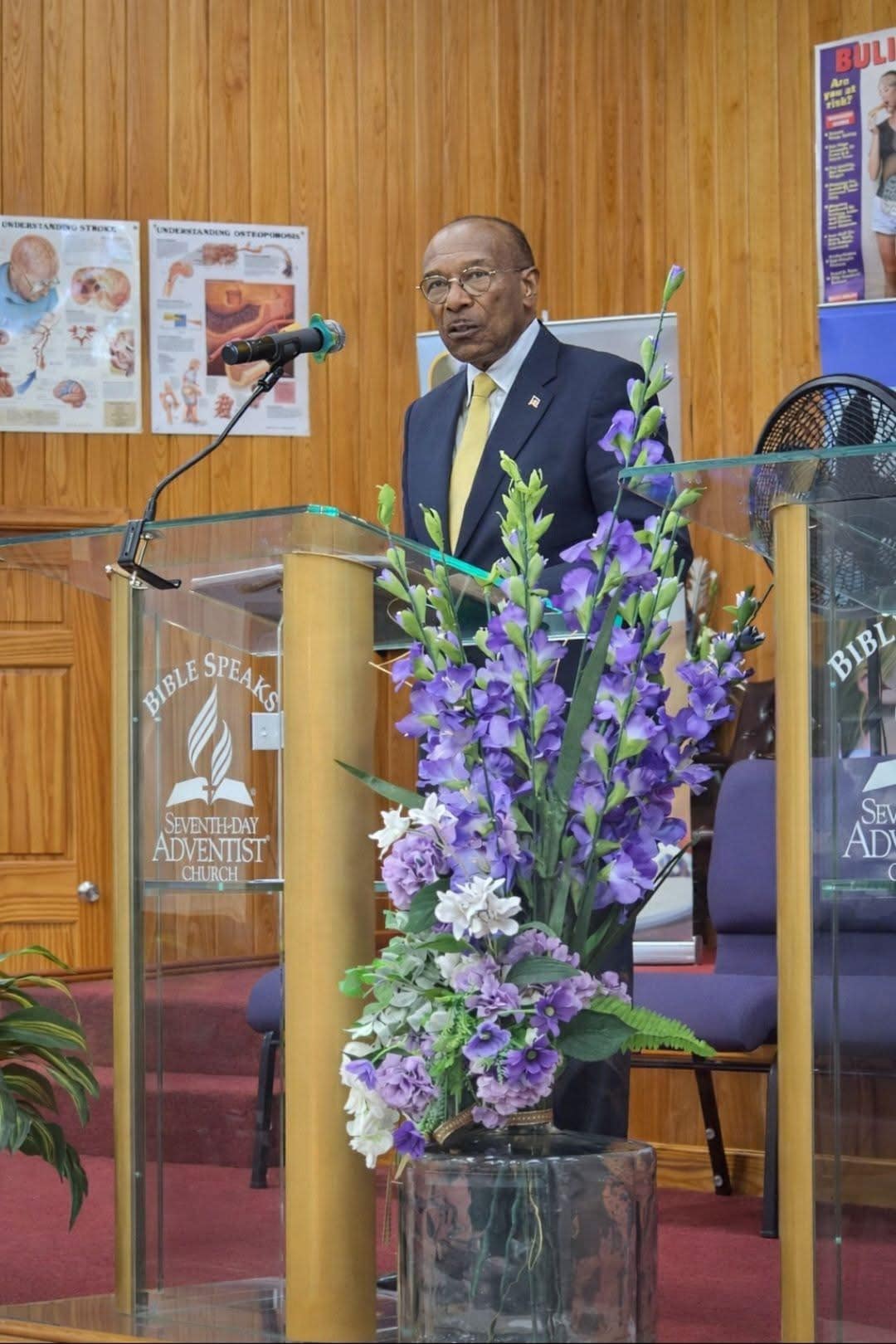
A high-ranking Caribbean Community (CARICOM) diplomat has articulated a compelling vision for enhanced regional integration as a critical defensive mechanism against the escalating fragmentation and unpredictability of international commerce. Ambassador Wayne McCook, Assistant Secretary-General for the CARICOM Single Market and Trade, delivered this strategic assessment during a panel discussion at the World Trade Centre in Georgetown, Guyana, on Wednesday, January 28th.
Ambassador McCook framed the Caribbean’s current position within the context of recent profound challenges. He specifically referenced the devastating impact of Hurricane Melissa as a stark embodiment of the dual threats confronting member states: the existential danger of climate change and persistent economic vulnerabilities. Simultaneously, he detailed how dramatic transformations in global trade, significantly propelled by an intensified ‘America First’ policy posture, have adversely affected regional exports and disrupted value and supply chains through a series of unprecedented tariff impositions.
Characterizing the international trade environment of 2025 as ‘truly tumultuous,’ McCook emphasized the resilience and collective ‘oneness’ of CARICOM as indispensable assets for navigating these turbulent conditions. He issued a stark warning that the ongoing erosion of established multilateral trade norms has transitioned from a theoretical risk to a concrete reality, already exerting negative pressure on global investment flows, supply chain stability, and economic growth prospects worldwide.
Citing data from UN Trade and Development (UNCTAD), he noted an 11% contraction in global foreign direct investment during 2024, representing a second straight year of decline, with further weakening anticipated in 2026. Furthermore, global trade expansion has slowed dramatically, registering below 1% in 2025, amid heightened uncertainty and geopolitical competition that is forcibly reshaping international supply networks.
In contrast to these daunting global headwinds, CARICOM’s trade metrics have demonstrated notable resilience. The community witnessed a substantial 32% surge in exports, reaching US$34.7 billion between 2023 and 2024, with exports to the United States skyrocketing by 86%. Nevertheless, McCook acknowledged that recent performance data indicates these positive effects have been unevenly distributed across member states.
The Assistant Secretary-General highlighted recent proactive measures—such as the move toward full free movement of people implemented by Barbados, Belize, Dominica, and St. Vincent and the Grenadines—as tangible evidence of progress toward a more deeply unified community.
‘Fundamentally, CARICOM integration should be perceived as a strategic countermeasure to a rapidly evolving global architecture,’ McCook asserted.
Looking ahead to international trade prospects in 2026, he advocated for a multi-faceted strategy. This approach prioritizes fortifying intra-regional commerce, reinforcing existing international relationships while actively diversifying global partnerships beyond traditional allies, and accelerating economic integration. Cornerstones of this strategy include the CARICOM Industrial Policy and Strategy (CIPS) and the ambitious 25×25+5 food security initiative, which aims to curtail reliance on imported foodstuffs and significantly boost regional agricultural production.