标签: Antigua and Barbuda

安提瓜和巴布达

  • COMMENTARY: World Heritage Day Renews Call to Safeguard Heritage Sites Under Threat

    COMMENTARY: World Heritage Day Renews Call to Safeguard Heritage Sites Under Threat

    When the word “heritage” is mentioned, many people picture only ancient stone monuments or dusty museum displays — but the United Nations Educational, Scientific and Cultural Organization (UNESCO) offers a far broader, more meaningful framing. As UNESCO defines it, heritage encompasses all cultural, historical, and social legacies passed between generations, stretching from celebrated historic landmarks and museum collections to living traditional practices and modern artistic expressions. More than just a connection to the past, this collective heritage enriches daily life and lays the foundation for inclusive, innovative, and socially resilient communities around the globe.

    Two core pillars anchor the concept of heritage: passing existing legacies to future generations, and protecting those legacies from harm long enough to be shared. Today, this protection work has become more critical than ever. Safeguarding the world’s cultural and natural heritage, alongside nurturing dynamic creative cultural sectors, is now recognized as a foundational strategy to address the defining challenges of the 21st century, from accelerating climate change and systemic poverty to widening inequality, the global digital divide, and rising interregional conflicts and humanitarian emergencies.

    Each year on April 18, the global community observes World Heritage Day — officially titled the International Day for Monuments and Sites — to honor the cultural legacies passed down through history and reinforce shared responsibility for their preservation for future populations. The annual observance traces its origins back to 1982, when the International Council on Monuments and Sites (ICOMOS) formally established the commemoration on that date.

    The 2024 theme for World Heritage Day, “Emergency Response for Living Heritage in Contexts of Conflicts and Disasters,” shines a spotlight on the growing urgency of protecting and managing cultural and natural sites facing existential threats from climate change, armed conflict, and unplanned rapid urbanization.

    Too often, heritage sites are dismissed as nothing more than revenue-generating tourist attractions. But this narrow perspective must evolve: heritage is a living, evolving force that shapes collective identity and holds shared collective memory for communities across the globe. This year’s theme acts as a timely wake-up call, reminding the world that coordinated global action is urgently needed to protect sites already grappling with damage from war, climate disasters, and other man-made and natural calamities.

    To build a sustainable future for heritage protection, young people must be at the center of efforts, advocates argue. Young generations must be educated on how heritage shapes their own personal and cultural identity, and expanded access to educational visits to heritage sites is a key step forward. As repositories of collective knowledge and centuries of history, heritage sites deserve a permanent place in national education curricula across every region, to ensure the next generation inherits both an awareness and appreciation of these legacy sites.

    The cost of losing unprotected heritage is incalculable. Any destruction or irreversible damage to a heritage site is a loss for all humanity, not just the community or nation that hosts it. For local populations, heritage sites often act as the social glue that fosters collective belonging and intergenerational community bonding. They are also spaces where current generations can connect — or reconnect — with centuries of architectural innovation and master craftsmanship.

    One of the most widely recognized frameworks for global heritage protection is the UNESCO World Heritage Designation. A UNESCO World Heritage Site can be any location — from a single building or entire historic city to a protected natural landscape — deemed to hold Outstanding Universal Value (OUV) for all of humanity. To earn designation, sites must meet at least one of 10 specific cultural or natural criteria, prove their historical authenticity and structural integrity, and present a robust long-term management plan to guarantee sustained protection.

    The Caribbean region is home to a diverse collection of acclaimed UNESCO World Heritage Sites, spanning cultural and natural landmarks across multiple island nations. Key sites include Port Royal and the Blue and John Crow Mountains in Jamaica, Morne Trois Pitons National Park in Dominica, Historic Bridgetown and its Garrison in Barbados, the Pitons Management Area in St. Lucia, Antigua’s historic Naval Dockyard, the Historic Area of Willemstad in Curacao, and Alejandro de Humboldt National Park in Cuba. What makes the World Heritage system unique is its universal mission: all designated sites belong to every person on Earth, regardless of which country or territory they are located in.

    On this World Heritage Day, the global call goes out for nations, communities, and individuals to unite in respect for shared heritage, and to lift up the rich tapestry of global cultural diversity that these sites represent. Preserving monuments, living traditions, and archaeological sites for future generations requires sustained, collective effort from all sectors of society.

    As Nelson Mandela once noted: “Our rich and varied cultural heritage has a profound power to help build our nation.” This commentary was contributed by Wayne Campbell, an educator and social commentator focused on development policies and their impacts on culture and gender equity.

  • ABLP St. John’s Rural East Branch Condemns Removal of Maria Browne Campaign Signs

    ABLP St. John’s Rural East Branch Condemns Removal of Maria Browne Campaign Signs

    A local chapter of the Antigua and Barbuda Labour Party (ABLP) has publicly denounced a disturbing act of electoral sabotage targeting the campaign materials of a sitting party politician, marking an ugly turn ahead of the island nation’s democratic political activity. The St. John’s Rural East Branch of the ABLP confirmed that the incident involved a small group of young men who traveled through the constituency in a white Toyota Vitz. Wearing the party’s signature red ABLP-branded shirts to obscure their true intentions, the group defaced and removed campaign signs and posters belonging to Hon. Maria Browne, an elected representative for the area. Party officials with the local branch emphasized that this behavior has no place in Antigua and Barbuda’s democratic framework. They labeled the actions as both ethically unacceptable and legally unlawful, noting that the vandalism directly contradicts the core values that the ABLP has long promoted for political competition: fairness, mutual respect, and integrity across all campaign activity. The branch stressed that every political actor, regardless of which party they align with, has a fundamental right to engage in public political expression. That right, officials added, must always be exercised within the bounds of the law and with respect for opposing candidates and their supporters. Following the discovery of the vandalism, the St. John’s Rural East Branch formally filed a report with local law enforcement. Authorities have since launched a formal investigation into the incident, and party representatives confirmed that they are fully cooperating with police to identify all individuals involved in the act. The branch made clear that once the responsible parties are found, they will be held fully accountable for their actions under the law. In addition to calling for accountability, the local chapter issued a public appeal to all residents and political actors across Antigua and Barbuda. The branch urged every person to approach the political process with responsibility and respect, reiterating that aggressive, illegal tactics that undermine democratic activity will not be tolerated in the country.

  • PM says free university education to commence in September, earlier than expected

    PM says free university education to commence in September, earlier than expected

    In a surprise policy announcement made moments ago, Prime Minister Gaston Browne has confirmed that the Caribbean nation of Antigua and Barbuda will introduce fully funded free university education for its citizens starting as early as September 2026, bringing forward a long-promised reform that was originally tied to campus expansion work.

    The free tertiary education program, which will be hosted at the University of the West Indies Five Islands Campus, was initially scheduled to launch only after the institution completed its planned campus enlargement projects. But during a recent interview with local radio outlet Pointe FM, Browne revealed that updated conversations with the country’s Financial Secretary have cleared the way for an earlier rollout of the signature policy.

    Under the new program, eligible Antiguan and Barbudan students will have the opportunity to earn multiple undergraduate and graduate degrees entirely free of charge while studying locally. This includes the popular and high-demand law degree, opening up accessible pathways for students seeking to enter the legal profession without the burden of crippling tuition debt.

    Beyond the immediate rollout of free university education, Browne also dropped a hint that the governing party is preparing more sweeping education reforms. Plans to expand free access to education across all levels of schooling will be outlined in greater detail in the party’s upcoming electoral manifesto, which is scheduled for official launch next week.

    As this policy development is still unfolding, additional details about program eligibility, implementation logistics and broader education initiatives are expected to be released in the coming days.

  • Teachers Given Formula to Calculate Final Retroactive Pay for 2018–2023 Period

    Teachers Given Formula to Calculate Final Retroactive Pay for 2018–2023 Period

    Public sector teachers across Antigua and Barbuda who are eligible for long-awaited final retroactive payments from the 2018 to 2023 collective bargaining contract period now have step-by-step guidance to calculate their outstanding owed amounts, released this week by the Executive of the Antigua and Barbuda Union of Teachers (ABUT).

    The guidance is split into two distinct frameworks based on a teacher’s start date within the contract period, to ensure every eligible educator can accurately verify their entitlement. For educators hired between January 1, 2019 and December 31, 2023, the calculation follows a four-step process. First, multiply the teacher’s substantive salary (as recorded on January 1, 2019) by 0.05, then multiply that total by 12 to account for the full 2019 calendar year. Second, calculate the 2020–2023 component by multiplying the teacher’s substantive salary as of January 1, 2020 by 0.092, then multiply that by the total number of months the teacher worked between 2020 and 2023. Third, add the results of the first two calculations to get a subtotal, then sum up the value of all extra monthly salary payments received in 2022, 2024, and 2025. The final retroactive amount owed equals the subtotal minus this sum of previously received extra payments.

    To illustrate this first framework, ABUT provided a sample calculation for a hypothetical Teacher A, who was hired in January 2019 and remained employed beyond the end of 2023. With a 2019 starting substantive salary of $2,754, 48 months worked between 2020 and 2023, and extra payments totaling $9,154 across 2022, 2024, and 2025, the final retroactive payout comes out to $4,660.

    For educators hired between January 1, 2020 and December 31, 2023, a simplified framework applies. Teachers in this group calculate their base amount by multiplying their January 1, 2020 substantive salary by 0.092, then by the total number of months worked between 2020 and 2023. They then subtract the sum of their extra 2022, 2024, and 2025 salary payments from this base to get their final owed amount, with results rounded to the nearest whole dollar. ABUT’s sample for this group, Teacher B, also hired with a $2,754 salary and 48 months of work, ends up with a final retroactive payment of $3,008 after rounding.

    ABUT’s leadership emphasizes that this public guidance is designed to promote full transparency around the retroactive payment process, allowing every eligible teacher to independently confirm their expected payout rather than relying solely on government calculations. The union has advised both members and non-members who identify any discrepancies between their own calculation and the payment issued by the government to report inconsistencies to either the Accounts Department at the Ministry of Education or the Treasury Department for review.

    In closing the announcement, ABUT President Casroy Charles reaffirmed the union executive’s ongoing commitment to keeping all teaching staff updated on any new developments related to the retroactive payment process. The organization says it will continue working to ensure every educator receives the full and fair compensation they are entitled to under the 2018–2023 collective agreement.

  • COMMENTARY: Why should Antiguans and Barbudans vote for the right to keep their own property?

    COMMENTARY: Why should Antiguans and Barbudans vote for the right to keep their own property?

    As Antigua and Barbuda enters another national election cycle, a long-simmering debate over land ownership and property rights has moved to the center of national discourse, rooted in the nation’s complex history of emancipation and post-independence governance.

    Writer Yves Ephraim recently sparked this conversation after drawing a throughline from historical accounts of land access to modern policy failures in the island nation. Opening with a reflection on Agnes Meeker’s *Plantations of Antigua*, Ephraim highlights a striking observation from the text: in the early days following emancipation, the most pressing desire of newly freed people was to secure permanent, individual ownership of land — a goal that remained frustratingly out of reach for most.

    This historical reality resonates deeply with ongoing inequities in 2026, Ephraim argues. Property ownership is not merely a personal convenience; it is a foundational pillar of human freedom, economic stability, and national prosperity. Economically, land stands as one of the four core factors of production, alongside capital, labor, and entrepreneurship. Without access to secure land tenure, individuals cannot build homes, launch businesses, or achieve long-term financial security. Historically, concentrated land ownership has always equated to concentrated power, from the feudal systems where monarchs controlled all territory to the colonial era where enslaved labor generated massive wealth from Antigua and Barbuda’s fertile sugar lands, while those who did the work were barred from owning any land themselves.

    In a democratic society built on the principles of individual freedom, the protection of private property rights is a non-negotiable obligation of government. Land ownership and personal liberty are inextricably linked: without secure claim to a plot of land, people face homelessness, systemic abuse, and constant vulnerability to state action. Yet 180 years after emancipation and more than four decades after independence in 1981, Ephraim questions why successive governments have failed to deliver widespread land access to the descendants of formerly enslaved people.

    Simple arithmetic underscores the feasibility of broad land distribution, he notes. Antigua alone holds roughly 3 billion square feet of total land mass. Allocating a 5,000 square-foot plot to each of the nation’s 100,000 citizens would require just 500 million square feet — less than a fifth of the total available area, and an amount that fits easily within the footprint of the publicly acquired Syndicate Lands alone. Decades ago, the nation took on debt to purchase these lands, a debt that was repaid by ordinary taxpayers. Instead of distributing these plots broadly to ordinary citizens, however, past administrations limited cheap land grants to political cronies and sold off vast swathes of public land to foreign investors, treating the finite resource as if it were unlimited.

    This mismanagement has created the current housing crisis, where low-income families struggle to find affordable land and homes. Rather than address the legacy of poor stewardship of public land, the current government has turned to seizing privately held land from citizens who lawfully purchased and paid taxes on their property, framing the seizures as necessary to build low-income housing. Ephraim calls this action a fundamental violation of individual freedom and constitutional principles, arguing that overreach by the state has always been the greatest threat to personal liberty in the nation’s history — from the legal enshrinement of slavery to today’s arbitrary property confiscation.

    Secure property rights are also the backbone of a growing, stable economy, he emphasizes. No investor will commit to a mortgage or business venture if there is a constant threat that the government will seize their property for arbitrary reasons. As voters head to the polls in the upcoming election, Ephraim urges Antiguans and Barbudans to make property rights a core voting issue. He challenges all citizens to support only candidates and administrations that explicitly pledge to protect private property rights, laying the groundwork for a free, prosperous nation where all citizens can thrive.

  • Soca Army Donates PA System to Holy Trinity Primary School in Barbuda

    Soca Army Donates PA System to Holy Trinity Primary School in Barbuda

    In a landmark moment for community-focused education investment in Antigua and Barbuda, the community group Soca Army has officially handed over a brand-new public address system to Holy Trinity Primary School on the island of Barbuda. The donation marks the completion of a pledge made during last year’s Aunty Claudette’s Kiddies Fete, a popular local fundraising event that channels proceeds back into educational infrastructure across the twin-island nation.

    In an official statement released Saturday by event organizers on the ground in St. John’s, Soca Army confirmed that the handover aligns with the organization’s core mission of reinvesting in local communities and nurturing the next generation. “This morning, Soca Army proudly fulfilled the promise made through Aunty Claudette’s Kiddies Fete by donating a PA system to Holy Trinity Primary School as part of our commitment to giving back to the community,” the group shared, emphasizing that every step of the project has been driven by community support.

    Looking ahead, the initiative is set to scale up significantly, with 2026 bringing a targeted shift to serve secondary education institutions across the country. Under the expanded plan, Soca Army aims to stock the music rooms of 12 secondary schools with new musical instruments, with one of the first scheduled beneficiaries being Sir McChesney George Secondary School, located in Barbuda. “This year, we are going even bigger. Aunty Claudette’s Kiddies Fete 2026 will focus on secondary schools, with our goal of providing musical instruments for the music rooms of 12 secondary schools,” the statement added.

    Organizers were quick to credit the widespread public backing the event has received since its launch, noting that ongoing community participation is the backbone of the group’s ability to advance youth development across the nation. “Because of your support, we are able to continue investing in our youth, their talent, and their future,” organizers said.

    Reaffirming the initiative’s long-standing ties to the island of Barbuda, the group emphasized its commitment to centering the needs of all communities across the twin nation, adding: “Soca Army never forgets Barbuda. Aunty Claudette never forgets Barbuda.” With preparations for the 2026 fundraising fete now underway, organizers are calling on the general public to continue supporting the effort, with the goal of delivering even more tangible, life-changing improvements to education across Antigua and Barbuda in the coming years.

  • LETTER: While we wait: Abortion Law

    LETTER: While we wait: Abortion Law

    As a nation waits anxiously for a High Court ruling on the constitutionality of its restrictive 1861 abortion law, a recent legislative move across England has drawn renewed attention to the injustice of outdated criminal penalties for reproductive healthcare. In a significant act of accountability, the UK Parliament has passed new legislation that will clear the criminal records of every woman convicted of abortion or attempted abortion under laws dating back to the 1800s. This step marks a formal acknowledgment by the British government that criminalizing women’s access to abortion was a misguided, ineffective, deeply unfair, and cruel policy that caused unnecessary harm to generations of people.

    England first decriminalized most abortions nearly six decades ago, in 1967, marking the first major break from a punitive approach to reproductive care. Shifting from criminal prosecution to public health-focused regulation has yielded measurable positive results: England currently reports an abortion rate of 23 per 1000 women, far lower than the 59 per 1000 rate recorded in the nation still clinging to its 1861 law. Now, almost 60 years after decriminalization, England is addressing the lingering harm of its former policy: clearing past convictions will lift the lifelong stigma and professional barriers that came with permanent criminal records, which for decades barred affected women from career advancement and caused deep emotional distress.

    Advocacy group ASPIRE, which authored this open letter calling for reform, points out that the push to strike down the outdated domestic abortion law is not an unprecedented demand. Forty years ago, Canada’s Supreme Court ruled in the landmark 1988 case R v Morgentaler that an abortion law nearly identical to the 1861 law currently in place here was unconstitutional. More recently, in 2017, Northern Ireland’s Court of Appeal found that the abortion-related provisions of the 1861 Offences Against the Person Act were incompatible with Article 8 of the European Convention on Human Rights.

    Despite gaining political independence in 1981, this nation chose to retain the 1861 Victorian-era abortion law inherited from its colonial past, a policy that remains in place as of 2026. ASPIRE urges the domestic High Court to follow the examples set by Canada, Northern Ireland, and now England, breaking with the culture of punitive approaches to reproductive healthcare and issuing a ruling that declares the current restrictive abortion law unconstitutional.

  • Police Issue Warning as Campaign Materials Are Removed and Defaced Across Communiti

    Police Issue Warning as Campaign Materials Are Removed and Defaced Across Communiti

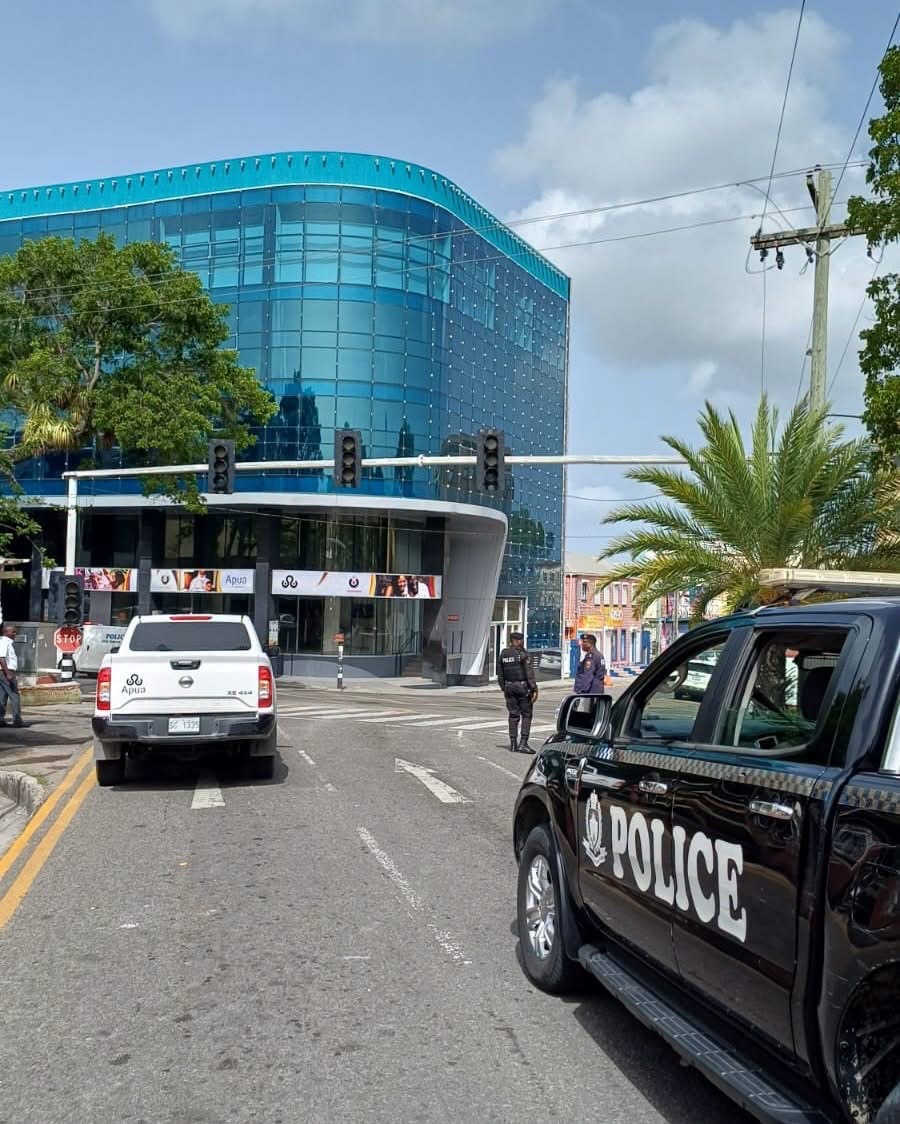
    Local law enforcement agencies have issued an official public warning after reports of widespread removal and deliberate defacement of political campaign materials emerged from multiple residential communities in the region. According to initial police briefings, investigators have documented dozens of incidents dating back to the start of the current election cycle, where campaign signs, posters and promotional displays were either torn down from public and private property or marked with vandalism.

    Local policing officials emphasize that this type of behavior violates local public property laws and undermines the core principles of free democratic expression, regardless of an individual’s political alignment. Authorities are urging community members who witnessed any acts of vandalism or have relevant surveillance footage to come forward to assist with ongoing investigations. They also note that anyone found responsible for the damage could face misdemeanor charges, fines, and other legal penalties.

    As the campaign season enters its final stretch, police have increased patrols in high-traffic community areas to deter further vandalism, and remind both campaign teams and residents to report any suspicious activity related to campaign materials immediately.

  • Two Pitbulls Reported Missing in Bolans as Owners Appeal for Help

    Two Pitbulls Reported Missing in Bolans as Owners Appeal for Help

    A community-wide search is underway for two missing pitbulls in Bolans village, with the animals’ owners stepping up their efforts to bring the beloved pets home safely and calling on local residents to help with any information they can provide.

    The two missing dogs, named Raptor and Catalyea, were last spotted wandering in the Bolans region, and details of their appearance and circumstances have been shared widely across local online platforms to boost visibility of the search. Three-year-old Raptor is a medium-sized pitbull with a distinct light golden coat. Described as naturally friendly by his owners, he was wearing a plain black collar when he went missing. Catalyea, the younger of the two dogs at 18 months old, is a smaller pitbull with a rich chocolate-brown coat. She was outfitted with a multicolored black, red and yellow collar at the time of her disappearance.

    Public alerts shared across social media and local community groups note that both dogs are approachable and gentle with people. This key detail has sparked a specific concern among the owners: that a well-meaning local resident may have taken the two stray-looking dogs in, without realizing they are already beloved pets reported missing from their home.

    With the search entering its active phase, the owners are urgently asking anyone who has spotted the two dogs, or has information about where they might be staying, to come forward with any details that can help reunite the pair with their family.

  • Carl Christopher, Casilda Verela Donate Infant Care Items to Hospital’s Paediatrics Unit

    Carl Christopher, Casilda Verela Donate Infant Care Items to Hospital’s Paediatrics Unit

    Officials at Sir Lester Bird Medical Centre have announced that the facility’s Paediatrics Unit has received a substantial donation of essential baby and child care items from local donors Carl Christopher and Casilda Verela. Hospital leadership has characterized the contribution as a timely and meaningful boost to the quality of care the unit can provide to its young patients.

    Details of the donation were first shared via an official social media post from the medical centre, which outlined that all contributed supplies are specifically earmarked to support the treatment and daily care of infants and young children receiving treatment at the facility. In an official statement confirming the gift, the hospital reiterated their appreciation for the pair’s generosity.

    “Our Paediatrics Unit has received a generous donation of baby and child care essentials from Carl Christopher and Casilda Verela,” the hospital’s statement confirmed. Leadership went on to emphasize the critical role that donations like this play in keeping the unit’s daily operations running smoothly, noting that the items will fill key gaps in the unit’s current resource inventory.

    “Thank you so much for seeing the need and stepping in and supporting our hospital. Your gift will definitely assist with our care. We look forward to having your support in the future,” the statement added. This donation arrives at a time when public healthcare facilities across many regions increasingly depend on community partnership to stretch public funding further and upgrade patient services. Specialized care areas, including paediatrics, often face unique resource constraints that make community contributions particularly impactful for improving care outcomes for vulnerable young patients.