博客

  • Abiamofo: Wanbetaling overheid aan SWM belemmert uitbreiding drinkwatervoorziening

    Abiamofo: Wanbetaling overheid aan SWM belemmert uitbreiding drinkwatervoorziening

    Planned expansions to Suriname’s national drinking water network are facing significant delays, driven by a combination of crippling unpaid utility bills from state agencies and chronic underfunding, Natural Resources Minister David Abiamofo has confirmed. Speaking Friday during budget debates in the country’s National Assembly, Minister Abiamofo outlined the multiple overlapping challenges that have derailed the timeline for improving access to clean piped water across the nation.

    At the top of the list of issues is the severe financial strain weighing on the Suriname Water Supply Company (SWM), the public utility responsible for managing and expanding the country’s drinking water infrastructure. Minister Abiamofo revealed that government agencies collectively owe SWM approximately 100 million Surinamese dollars in unpaid water bills, a sum large enough to move several stalled expansion projects to completion if it were collected. Beyond this accumulated debt, the minister added that the annual budget allocated to national drinking water projects has long been structurally insufficient to meet the country’s needs.

    As a result of the funding gap, only a small number of communities will be connected to the national drinking water network this year, even as expansion projects launched between 2023 and 2025 remain incomplete. “With the amount allocated in the current budget, we can only connect a handful of communities,” Abiamofo told lawmakers.

    The minister also noted that the national government is continuing ongoing efforts to secure additional financing from multilateral development organizations, bilateral international partners and private sector investors to close the funding gap. Beyond core budget shortfalls and unpaid public sector debt, Abiamofo highlighted two additional barriers putting extra pressure on SWM’s limited resources.

    First, many new residential subdivision developers fail to complete the required water connection infrastructure before selling lots and moving in residents. When homeowners are left without access to piped water, they turn to SWM to complete the work, forcing the already cash-strapped utility to cover unplanned costs. Second, low water pressure across many regions of Suriname remains a persistent, well-documented problem. While the government has already developed a formal Water Supply Masterplan to address this and other longstanding infrastructure issues, full implementation of the plan is entirely dependent on securing enough outside funding to move forward.

  • D1 pilots successful primary school netball programme

    D1 pilots successful primary school netball programme

    A nine-month grassroots netball development initiative launched by the Department of Youth Development & Sports culminated in a vibrant celebratory festival held on June 19 at the Beausejour Gymnasium, showcasing the progress of young primary school athletes from the region’s northernmost district. The programme, which kicked off in September ahead of the 2025-2026 academic year, targeted primary schools across District One, bringing more than 100 young male and female participants from eight local schools plus visiting guest team Camille Henry Memorial to the end-of-programme showcase.

    Roxanne Snyder, District One’s sports coordinator and a senior national netball player, former track athlete, and physical educator, outlined the deliberate, skill-first structure of the initiative. Unlike typical quick-entry sports programmes that rush students into full match play, the development model prioritized foundational movement literacy over early competition. “In the first and second terms, all our work centered on core fundamentals: passing technique, controlled catching, proper jumping form, and safe landing,” Snyder explained. “Only in the third term did we integrate those basics into full netball-specific gameplay.”

    The programme fills a gap in traditional primary school athletic offerings across the region, where common sports have long been limited to track and field, football, cricket, and table tennis—disciplines that remain dominant even at the secondary level. Snyder argues that netball offers unique benefits that transcend the sport itself, building well-rounded athletic ability that translates to any physical activity. “From my years of experience as an athlete, I’ve seen how netball cultivates a holistic student-athlete,” she noted. “It improves agility, makes athletes lighter on their feet, and builds all-purpose movement control that opens doors to any other sporting discipline they want to pursue later. We’re not just training netball players; we’re building versatile athletes.”

    At the close of the one-day festival, Dame Pearlette Louisy Primary claimed the top overall position, with La Guerre Primary and Balata Primary finishing second and third respectively. Event organizers emphasized that every participating school walked away as a winner, highlighting the initiative’s core focus on participation and development rather than elite competition.

    Alice Lynch, a national netball coach assigned to the Department of Youth Development and Sports, joined Snyder in praising the programme’s early impact, noting it lays critical groundwork for the future of national netball. “This is a game-changer for netball development in our country,” Lynch said. “From this group of young learners, we can identify and nurture talent that will one day represent our country on the under-16 national team. The progress we’ve seen already is extraordinary, and I’m so proud of the work District One has put in. Whenever we call for participants, they always step up with full teams ready to compete.”

    Lynch added that teaching foundational netball skills to young children is no small feat, requiring patient, step-by-step instruction—but the initiative has already paid off in visible enthusiasm. “Mastering basic netball technique takes time and consistent practice, but you can see how much the kids are enjoying the process. They’re engaged, they’re learning, and they love the sport.”

    Coordinated by head coach Marcia Montoute, the District One model serves as a blueprint for expansion across the country, Lynch said, urging principals and physical education leaders in other districts to adopt the programme to grow the sport. With strong, visible excitement from students, teachers, and attending parents around the inaugural festival, Lynch says she is eager to roll out the foundational netball development model islandwide in coming years.

  • Region 3 accounts dept staff to face suspension for missing 10-day salaries

    Region 3 accounts dept staff to face suspension for missing 10-day salaries

    A major administrative shakeup is unfolding in Guyana’s Region Three (West Demerara-Essequibo Islands), where four accounting department employees are set to begin unpaid suspension Monday amid a delayed police probe into the disappearance of GY$2.3 million earmarked for National Pathway worker salaries, a senior regional official has confirmed.

    Region Three Chairman Sheik Mohamed Inshan Ayube told reporters the missing funds were intended for more than 50 program participants, each set to receive a GY$40,000 payment in March 2026. According to the official’s account, after counting and securing the full cash sum in a locked accounting cage ahead of disbursement, the responsible staff left the facility for a midday meal, only to return and find the money no longer located.

    Ayube clarified that the four implicated female employees have already fully restituted the missing sum, ensuring the eligible workers received their scheduled payments without disruption. The staff were initially reassigned to other non-financial roles while the regional administration awaited completion of a police investigation. With the probe dragging on past expected timelines, however, the administration has moved forward with unpaid suspensions that will remain in effect until law enforcement issues a formal, conclusive finding. Any staff members ultimately cleared of wrongdoing will be reinstated to their original positions and receive back pay for the suspension period, Ayube added.

    The current cash-based disbursement process sees the regional administration receive a lump-sum cheque for National Pathway salaries, which is then cashed, split into individual envelope amounts, and distributed directly to workers. This practice has now come under sharp criticism from opposition lawmaker Ganesh Mahipaul of A Partnership for National Unity (APNU), who has formally requested the Auditor General of Guyana launch a full independent audit into the incident.

    In his formal request, Mahipaul called for a comprehensive review of how the program funds were allocated, distributed, and managed, with final findings released through official oversight channels. The opposition MP stressed that any financial irregularities must be addressed quickly, with systemic fixes implemented to prevent similar losses of public money in the future. Speaking to Demerara Waves Online News, Mahipaul questioned how such a large sum could go missing under standard financial protocols, arguing that the case almost certainly points to failures in existing accounting and security practices that rely on liquid cash.

    Mahipaul argued that cash disbursements are an unnecessary and high-risk practice in the current policy context, noting that all Guyanese citizens are already required to hold bank accounts to access the government’s universal GY$100,000 cash grant. Switching to individual cheque payments or direct bank transfers would create a mandatory paper trail, he said, that would greatly reduce the risk of misappropriation or loss and make it far easier to trace irregularities when they do occur.

    In response, Chairman Ayube defended the longstanding cash policy, pointing to significant barriers for workers in remote and riverain communities across Region Three. For these residents, traveling to a commercial bank branch to cash a salary cheque represents a major logistical and financial burden that the regional administration seeks to avoid. Ayube noted that the regional government will open discussions with the Ministry of Local Government and Regional Development to review the disbursement model moving forward, in light of the recent incident.

    Mahipaul emphasized that the disappearance of funds intended for vulnerable program participants raises serious questions about public financial management. The incident demands urgent, thorough scrutiny to clarify the full circumstances, verify whether required financial protocols were followed, and assign accountability where wrongdoing is found, he said. Public trust in government anti-poverty and employment programs, Mahipaul added, depends entirely on transparent processes, robust independent oversight, and responsible stewardship of taxpayer resources.

  • Vieux Fort Police Station has safer space for victims of gender-based violence

    Vieux Fort Police Station has safer space for victims of gender-based violence

    Victims of gender-based violence in southern Saint Lucia now have access to a dedicated, private space to share their experiences and access support, after the official handover of a renovated counseling and interview suite at the Vieux Fort Police Station.

    The upgraded facility was purpose-built to address a longstanding gap in survivor care: it offers a confidential, trauma-sensitive environment where survivors of abuse and sexual violence can speak openly when filing reports or initiating their journey to healing. The project was delivered through the two-year STOP Gender-Based Violence Initiative, funded by the Government of France as part of broader regional efforts to strengthen frontline responses to gender-based harm across the Eastern Caribbean.

    Emma Hippolyte, Saint Lucia’s Minister for Gender Affairs, celebrated the launch of the new facility while urging stakeholders to look beyond infrastructure to drive meaningful change. Hippolyte emphasized that physical upgrades and policy reforms alone cannot end systemic gender-based violence, noting that deep-seated cultural change must start with shifting individual attitudes and behaviors.

    “Beyond filling a service gap and aligning with international standards, this new space shines a spotlight on the tireless work that officers from the Vulnerable Persons Unit have carried out for years with limited, inadequate resources,” Hippolyte said during the inauguration. “We must not fall into the trap of believing that a new law, a renovated room, or additional resources alone are enough to solve this crisis. True change begins with how we think and act toward survivors. If we uphold our government’s commitment to putting people first, these new tools will only help us serve vulnerable community members more effectively.”

    Superintendent Curtis Roberts, speaking on behalf of the Commissioner of Police and the Royal Saint Lucia Police Force, framed the facility as far more than a physical renovation. “This space represents hope, dignity, and a collective promise that survivors of trauma will receive the compassionate, respectful care they deserve,” Roberts explained. “It provides a secure, private setting where survivors can speak freely, access professional support, and take their first steps toward healing. It strengthens our capacity to deliver survivor-centered services and reinforces our commitment to protecting the rights and well-being of Saint Lucia’s most vulnerable residents.”

    Marie-Noelle Duris, Ambassador of the French Republic to Saint Lucia and the Eastern Caribbean, highlighted the global scope of the gender-based violence crisis and the importance of cross-border collaboration to address it. “Gender-based violence is not an abstract policy issue: nearly one in three women and girls worldwide will experience physical or sexual violence in their lifetime,” Duris noted. “This is a global challenge that demands action from communities, national governments, and the international community alike. The counseling room we open today is a tangible outcome of our shared work to ensure survivors receive the support, protection, and dignity they are entitled to. Today, we celebrate not just the completion of a project, but the cross-sector partnerships we have built, the local capacity we have strengthened, and the growing global commitment to ending this crisis.”

    Over its two-year implementation period, the STOP Gender-Based Violence Project has delivered far more than infrastructure upgrades. The initiative has supported large-scale public education campaigns including the “Know Your Rights” outreach, provided specialized training for frontline service providers, extended core funding and operational support to local civil society organizations, and invested in community-led initiatives designed to protect women, girls, and other marginalized groups at higher risk of gender-based harm.

  • Red Cross Issues Urgent Appeal for O-Positive Blood Donors for Deja Dyer

    Red Cross Issues Urgent Appeal for O-Positive Blood Donors for Deja Dyer

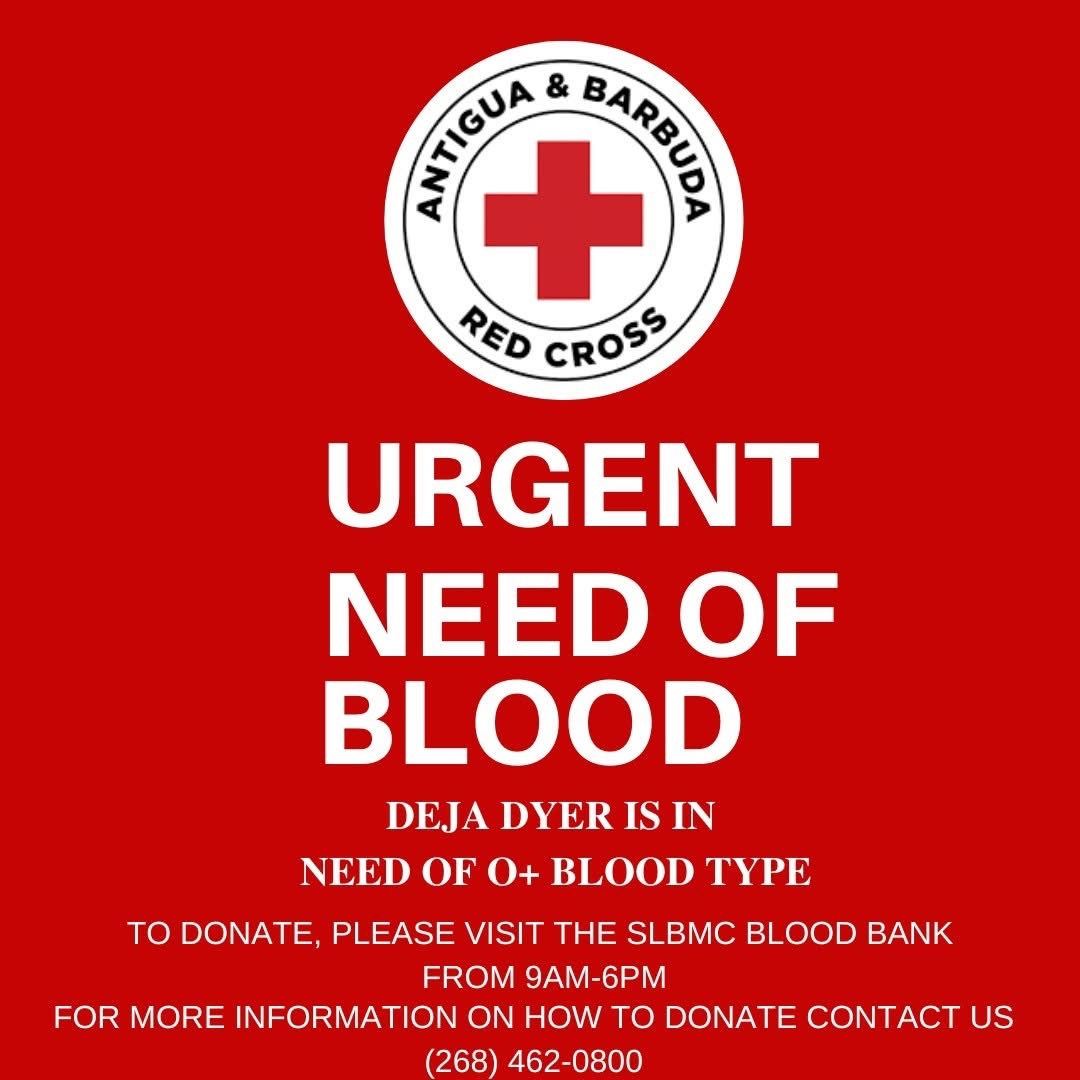
    The Antigua and Barbuda Red Cross Society has launched an urgent public appeal to the community, calling on all eligible O-positive blood donors to step forward to support Deja Dyer, a local patient currently in critical need of blood transfusions. In an official public notification shared across community channels, the humanitarian organization outlined clear details for potential donors, noting that those who wish to contribute can visit the on-site Blood Bank located at the Sir Lester Bird Medical Centre between the hours of 9 a.m. and 6 p.m. during operating days. Reaffirming the life-saving impact of voluntary contributions, the Red Cross stressed that every single donation carries the potential to turn the tide for a patient facing a medical emergency, and pushed for community members with compatible blood types to prioritize this urgent need and offer their support. For any community members with questions about donation eligibility, health requirements, or the process itself, the organization has left an open line of contact — anyone seeking additional details can reach the Antigua and Barbuda Red Cross Society directly at 462-0800. This urgent appeal shines a light on a long-standing reality for Antigua and Barbuda’s healthcare system: local medical officials remain dependent entirely on voluntary community blood donations to meet the constant demand from patients across the country who require transfusions and other life-sustaining critical medical interventions. Without consistent, voluntary contributions from the public, healthcare facilities often struggle to maintain sufficient blood supplies to respond to both planned treatments and unexpected emergencies, making public appeals for specific blood types a critical tool to address immediate patient needs.

  • Alphonsos, Azruddin Mohamed in row over gold mining rights at quarry concession

    Alphonsos, Azruddin Mohamed in row over gold mining rights at quarry concession

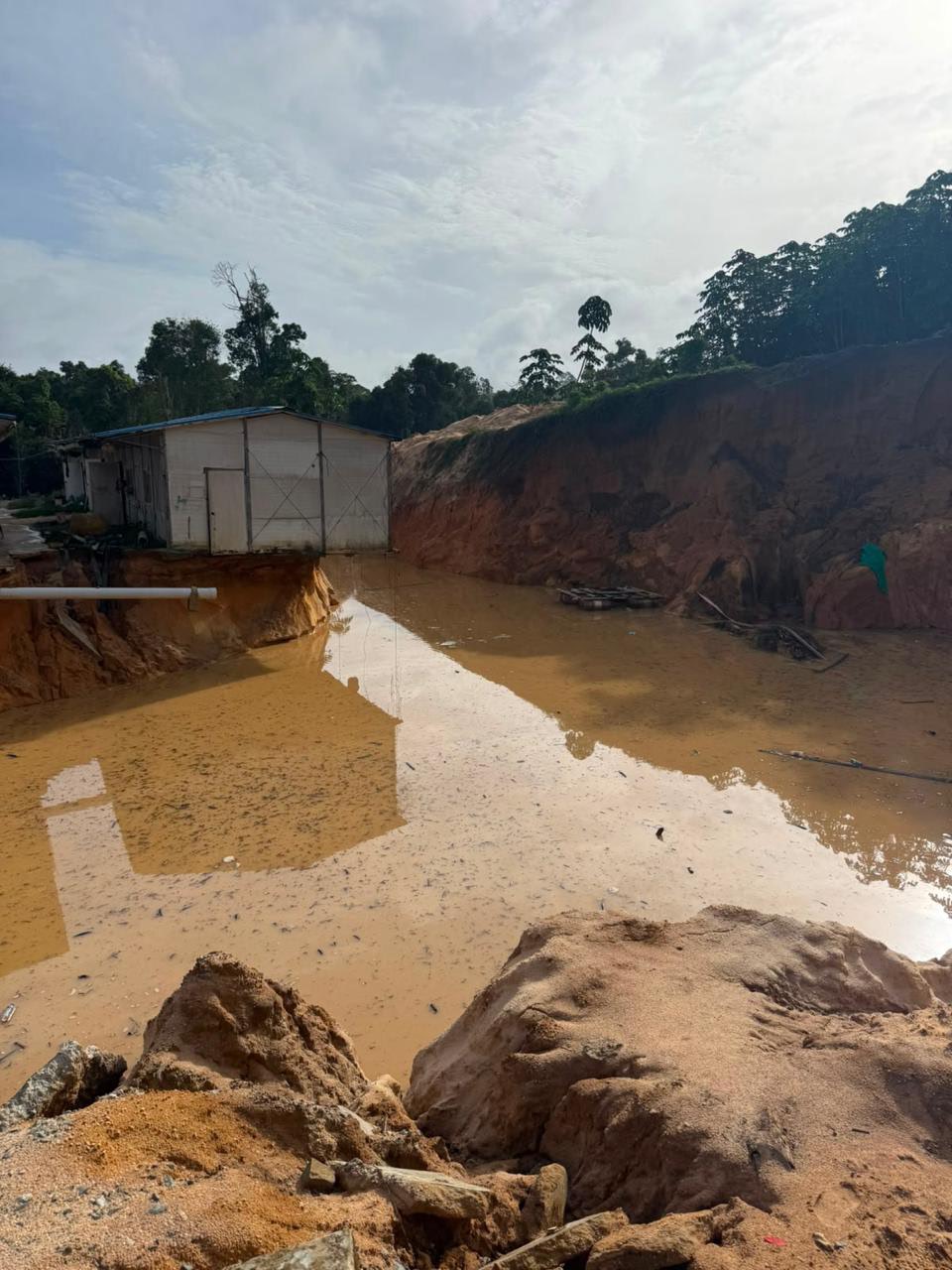
    A high-stakes legal and territorial conflict over overlapping land rights for gold and quarry mining has erupted in Guyana’s Itaballi, Mazaruni district, pitting prominent local business and political figure Azruddin Mohamed against the long-established family-owned Alphonso Mining firm. The dispute, which dates back years, burst into public view in mid-June 2026 after Mohamed filed a formal complaint alleging Alphonso Mining had deployed mining equipment to conduct unauthorized gold extraction on a quarry concession he controls.

    In an official statement released Saturday, Alphonso Mining forcefully rejected all of Mohamed’s claims of illegal trespass, asserting it has held fully valid legal rights to extract gold and diamonds from the disputed plot for more than a decade. According to the company, Alfro Alphonso & Sons acquired the subsurface mineral rights to the land in 2014 through an open, competitive public auction, paid all required fees in full, and has continuously maintained those rights ever since. The firm emphasized that Guyanese law explicitly allows for separate and coexisting mineral rights and quarry material rights, noting that the later quarry license issued to Mohamed’s company Hadi’s World Inc. does not override its pre-existing, legally held mining rights. Alphonso Mining also announced it plans to pursue legal action over what it calls “false and deliberately damaging statements” published on social media pages connected to Mohamed.

    Guyana’s Minister of Natural Resources Vickram Bharrat confirmed the government has launched an official probe into the conflicting claims. Speaking to Demerara Waves Online News, Bharrat said the Guyana Geology and Mines Commission (GGMC) has deployed an inspection team to conduct an on-the-ground physical survey of the area, with officials currently cross-checking documentation to verify whether all required permits are in order for operations on the site. The minister reaffirmed the country’s existing legal framework that permits separate mineral and quarry rights to be held on the same parcel of land.

    Mohamed, who serves as Guyana’s Opposition Leader and heads the We Invest in Nationhood (WIN) political party, acknowledged he is aware that Guyanese law allows for overlapping mineral and quarry rights, but claims he had no prior knowledge that any third party held valid mineral rights to his concession area. “I am not aware of anyone having mineral rights. How all of a sudden persons have mineral rights?” he told reporters, questioning how the rights were granted without his knowledge.

    Mohamed’s company secured its quarry license for the site in June 2021, and has since invested nearly US$25 million to dredge the shallow Mazaruni River channel to allow access for mining barges. However, his operations have been crippled since June 2024, when the U.S. Department of the Treasury’s Office of Foreign Assets Control (OFAC) imposed sanctions on Azruddin Mohamed and his father over alleged financial crimes linked to their gold export business. The pair have since been indicted by a U.S. federal grand jury and are currently fighting extradition proceedings in Guyanese courts.

    Since the sanctions were imposed, Mohamed says he has been unable to continue production because the licensed importer for mining explosives refused to process his payments from the U.S.-based supplier. He also claims the GGMC has declined to accept future concession payments from him due to the sanctions, an odd contrast he notes to the Guyana Revenue Authority and Attorney General’s Chambers, which have continued to accept his payments.

    The timeline of the incursion, per Mohamed’s account, began after he was forced to move his heavy machinery off-site once he could not acquire explosives, leaving the concession’s infrastructure unprotected. A group of small-scale miners, including local Indigenous Amerindian miners, began mining on the unoccupied land without Mohamed’s permission. After local contacts alerted him to the unauthorized activity, he requested government intervention, prompting the ruling PPP administration to deploy a 50-member armed task force made up of personnel from the GGMC, Guyana Police Force, Guyana Defence Force, and Ministry of Natural Resources to arrest the small miners and bring charges against them.

    It was after this intervention that Mohamed discovered Alphonso Mining had moved its own gold mining equipment onto the concession, triggering the current public dispute. Mohamed warned that the gold mining operations planned by Alphonso Mining pose a major risk of toxic pollution to the Mazaruni River and adjacent agricultural farmlands in the area.

    Alphonso Mining, for its part, is calling on the GGMC and other relevant authorities to launch a separate investigation into what it frames as illegal incursion by the small miners. The firm says key unanswered questions remain: who supported or funded the small miners’ entry to the site, and who purchased the illegally extracted gold from the area. “These are the real questions that deserve answers,” the company stated.

    The dispute also carries tangential links to Guyana’s growing offshore oil sector. Mohamed was once a partner in NRG Holdings, a consortium that included the Alphonso and Deygoo-Boyer families, to develop the US$300 million Vreed-en-Hoop Shorebase, which is contracted by ExxonMobil to support production at the oil major’s Yellowtail offshore oilfield. After news of potential U.S. sanctions against Mohamed broke, Hadi’s World exited the project.

  • National Cleanup Programme Expands Operations Across Rural East Communities

    National Cleanup Programme Expands Operations Across Rural East Communities

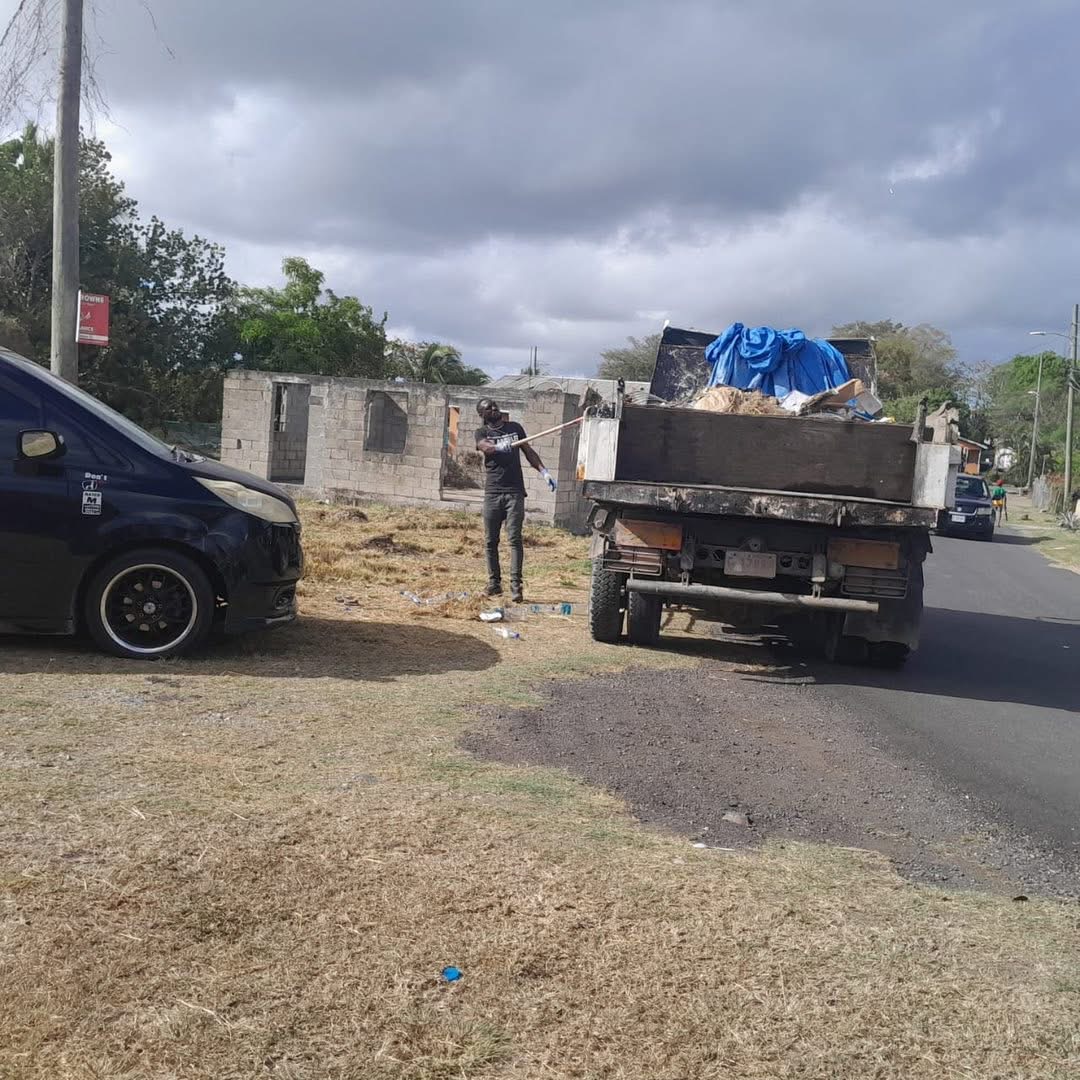
    On the eastern side of Antigua’s rural belt, a coordinated environmental improvement push led by the National Cleanup Programme is well underway, bringing much-needed infrastructure and aesthetic upgrades to multiple residential communities. Teams from the National Solid Waste Management Authority (NSWMA) are deploying a mix of manual labor and heavy equipment to address a range of longstanding environmental and accessibility issues across the region, working their way across the constituency in a phased rollout of work.

  • Derde helft WK 2026: Nederland verplettert Zweden met 5-1 in Groep F

    Derde helft WK 2026: Nederland verplettert Zweden met 5-1 in Groep F

    June 20, 2026 — Group F action at the 2026 FIFA World Cup delivered a dominant display from the Netherlands on Saturday, as Louis van Gaal’s side ran out convincing 5-1 winners over Sweden at Houston’s packed stadium. The commanding result strengthens the Netherlands’ grip on first place in the group, putting them well on track for a knockout stage berth, while Sweden faces a significant uphill battle to qualify for the next round.

    The Oranje seized control of the match from the opening whistle. Forward Brian Brobbey stole the early spotlight, netting two clinical goals within the first 17 minutes, both finished off perfectly after low, pinpoint crosses from winger Cody Gakpo and right-back Denzel Dumfries. The rapid 2-0 advantage set the tone for the entire half, forcing Sweden into a defensive shell for most of the opening 45 minutes.

    Sweden pushed hard to fight their way back into the contest, and earned their first clear chance in the 41st minute, when Yasin Ayari unleashed a powerful long-range effort from just outside the penalty area that sailed just over the crossbar. Two minutes later, Ayari accidentally handled a Dumfries cross as he attempted to intercept, clearing the path for the Netherlands to easily clear the danger. Just before halftime, Gustaf Lagerbielke powered a header on target from a sharp cross, but the linesman’s flag ruled the effort out for offside. In first-half stoppage time, Netherlands goalkeeper Bart Verbruggen produced a series of impressive stops to keep Sweden off the scoresheet, headlined by a brilliant save on a free kick from Viktor Gyokeres. The Netherlands went into halftime holding a 2-0 lead, thanks to a solid first half defined by incisive attacking and a reliable defensive performance.

    After the break, Netherlands manager Ronald Koeman injected fresh energy into the side by bringing on Crysencio Summerville to replace Donyell Malen. It took less than two minutes for the substitute to make an impact: he pulled off a blistering attacking run, combined neatly with Dumfries, and played a perfect pass into the path of Gakpo, who tapped in the simplest of goals to extend the lead to 3-0. With this strike, Gakpo surpassed Dutch legend Johan Cruyff for the most World Cup goals in Dutch history.

    Sweden refused to drop their intensity, continuing to push forward, but Verbruggen remained in inspired form, turning away multiple dangerous efforts to keep the Swedish goal tally at zero. In the 54th minute, a giveaway from Alexander Isak sparked a blistering Netherlands counterattack: Summerville found Gakpo in space, and the winger drilled a low, hard shot past Sweden goalkeeper Robin Olsen to make the score 4-0. This strike also marked the 100th goal of the entire 2026 World Cup, coming in just the tournament’s 33rd match.

    Even with a substantial three-goal deficit, Sweden remained a constant threat on the break. In the 59th minute, Manchester United winger Anthony Elanga gave the Scandinavian side a glimmer of hope, producing a sublime first touch to lift the ball over a defender before finishing clinically to pull one back, making the score 4-1. Despite the concession, the Netherlands retained full control of the match.

    Following a mandatory water break for players amid Houston’s warm conditions, the Netherlands brought on Memphis Depay to replace goalscorer Brobbey, marking a successful return from injury for the experienced forward. Sweden cranked up the attacking pressure, but the Netherlands defense held firm, with Ayari picking up a yellow card for a rough tackle. The match grew scrappy in the final third as Sweden pressed for a second goal, but Summerville continued to create danger for the Oranje on the counter. Sweden added extra attacking impetus by bringing on Taha Ali, but Verbruggen stayed alert to turn away long-range efforts and dangerous corner kicks.

    In the 89th minute, Summerville capped off his phenomenal substitute performance with a goal of his own. A clever feint created just enough space for the Leeds United winger, who placed a calm low shot into the far corner to extend the Dutch lead to 5-1.

    After five minutes of stoppage time — which included a late cameo for Noa Lang and an early exit for Gakpo, who left the field with an ice pack wrapped around his arm — the final whistle blew to confirm a resounding Dutch victory. The only minor sour note for the Netherlands was a late injury to Summerville, who picked up an accidental knee to the body in the closing moments, though the setback did not dampen the team’s post-match celebrations.

    With this dominant performance, the Netherlands sent a clear message to the rest of the 2026 World Cup field: the Oranje are legitimate title contenders, playing a brand of fast, sharp, clinical attacking football that gave Sweden no path back into the contest.

  • Farmers trained in advanced guava grafting under Taiwan-backed project

    Farmers trained in advanced guava grafting under Taiwan-backed project

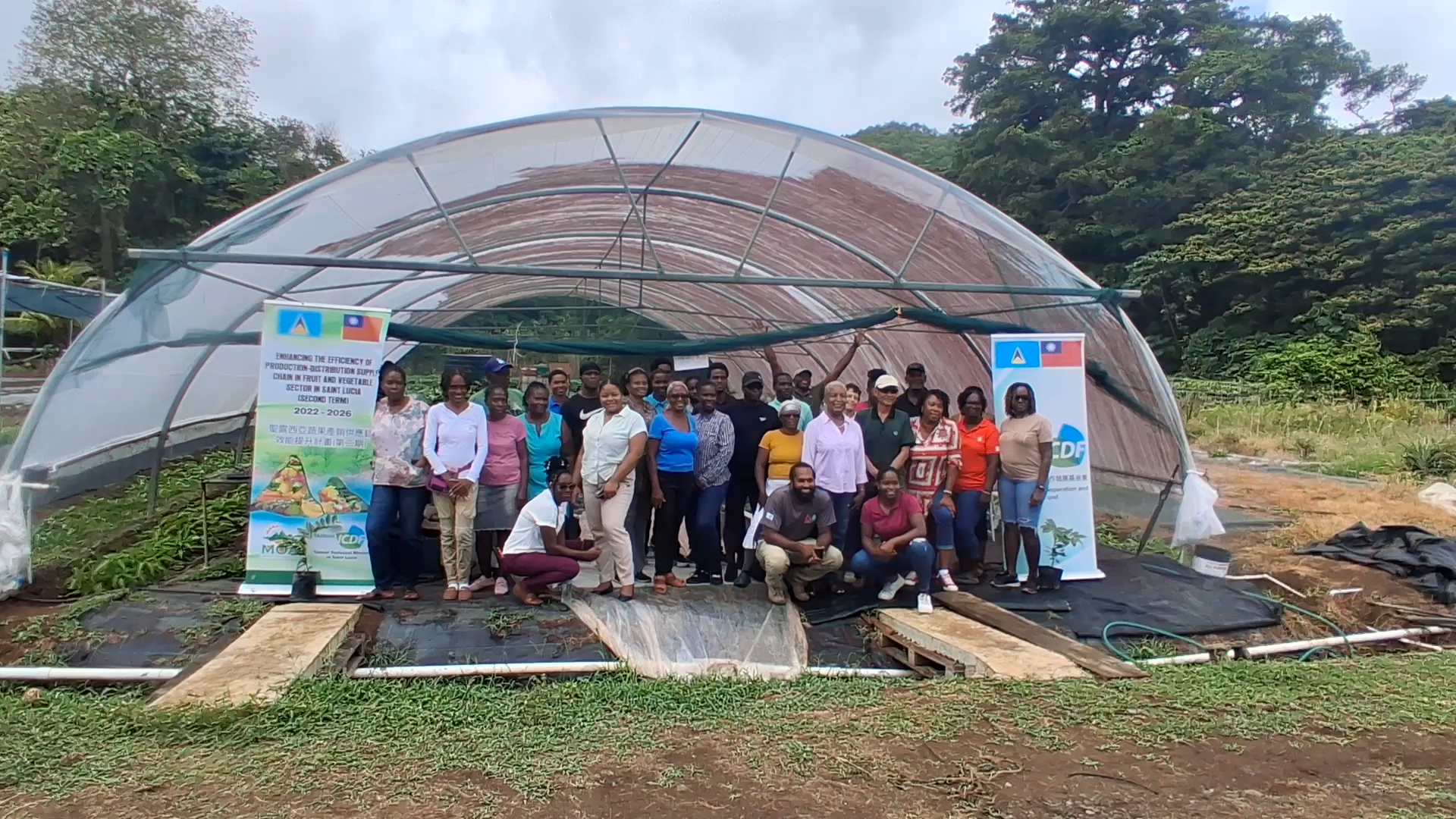
    A Taiwan-supported hands-on training workshop focused on advanced guava grafting has equipped local farmers in Saint Lucia with upgraded agricultural skills, in a push to ramp up domestic fruit output and cut the Caribbean nation’s heavy reliance on imported food products.

    This capacity-building event falls under the umbrella of the Seven Crops Project, a national agricultural development initiative with a core goal of shrinking Saint Lucia’s national food import expenditure. It pursues this target by bolstering local agricultural output and introducing high-potential commercial crop varieties to the island’s farming sector.

    The project launched its first phase with an initial focus on seven priority staple crops: watermelon, lettuce, cabbage, tomatoes, pineapple, honeydew, cantaloupe and bell pepper. As the initiative moves into its second phase, it has expanded its scope to deepen agricultural diversification across the country, working to expand the range of fresh, locally grown produce available to both everyday consumers and bulk commercial purchasers.

    The recent guava grafting workshop introduced participating farmers to a new table-grade guava variety imported from Taiwan. Unlike traditional local guava strains, which are mostly suited for industrial processing, this new cultivar boasts a significantly longer shelf life and stronger market attractiveness for direct retail sale.

    Adeline Eudovic, coordinator of the Seven Crops Project, explained that the shift to this new guava variety came from direct feedback from major local buyers. “From our different discussions with the buyers, such as the hotels, the different supermarket chains and so on in Saint Lucia, we saw the need to improve the variety of crops offered at the supermarkets. So we’re looking at a different type of guava…. This is not a processing guava, this is a guava that is perfect for eating. It’s a guava, from what we have seen so far – because we’ve had it on the farm in an experimental way – that can have a longer shelf life,” Eudovic said.

    Beyond introducing the new cultivar, the workshop delivered immersive, practical training on specialized grafting techniques. These methods are engineered to boost overall fruit quality, lift annual crop yields, and enhance the trees’ natural resistance to common pests and diseases. Project organizers noted that the grafting skills farmers learned are not limited to guava — they can also be adapted to other local tree-grown fruits, including mangoes and other similar tropical varieties.

    Local agricultural officials emphasized that this workshop and the broader Seven Crops Project are key components of Saint Lucia’s long-term strategy to strengthen national agricultural resilience. By building technical expertise among smallholder and commercial farmers, expanding production diversity, and increasing the share of domestic food in local markets, the initiative ultimately aims to shore up the island nation’s food security.

  • Papi’s Horns Live On in Zamoni’s New Anthem “What We Drinking?” for Antigua Carnival 2026

    Papi’s Horns Live On in Zamoni’s New Anthem “What We Drinking?” for Antigua Carnival 2026

    One of the Caribbean’s most anticipated annual cultural celebrations, Antigua Carnival, is gearing up for its 2026 edition with an exciting new release that is already building buzz across the region. Rising local soca artist Zamoni has dropped his highly anticipated carnival anthem “What We Drinking?”, a track crafted to carry forward the beloved legacy of Papi’s Horns, a legendary musical institution that has defined Antigua’s carnival sound for decades.

    Antigua Carnival, held annually to celebrate the nation’s emancipation from slavery and highlight the vibrant spirit of Antiguan and Barbudan culture, draws thousands of visitors from across the globe each year, eager to experience the pulsating rhythms, colorful parades, and infectious joy that define the event. At the heart of many of the carnival’s most iconic moments has been Papi’s Horns, a brass collective whose distinctive melodies have become inseparable from the sound of Antigua’s biggest celebration. After the passing of the group’s founder, the community has rallied to ensure his musical influence does not fade, and Zamoni’s new track stands as one of the most heartfelt tributes to date.

    “What We Drinking?” weaves the recognizable, punchy horn lines that Papi’s Horns made famous into a modern soca arrangement, designed to get crowd jumping from the opening beats. Zamoni, who grew up attending Antigua Carnival and listening to Papi’s Horns perform along the parade route, shared in early comments that the track is a personal love letter to the culture that raised him, as well as a nod to the generations of musicians who built Antigua’s carnival sound. The track leans into the signature call-and-response that gets crowds singing along all day, with lyrics centered on the communal joy, friendship, and unbridled celebration that are the core of the carnival experience.

    Industry insiders and carnival veterans have already praised the track for balancing respect for tradition with fresh, contemporary energy that resonates with both long-time carnival attendees and younger first-time visitors. As event organizers finalize plans for the 2026 celebration, “What We Drinking?” is already positioned as one of the leading road march contenders, with many local fêtes and events already adding the track to their rotation months ahead of the official parade. For Antigua’s cultural community, the release is more than just a new carnival song—it is proof that the legacy of Papi’s Horns will continue to echo through the streets of St. John’s for many more carnivals to come.