博客

  • FNM demands accounting for 50th Independence spending

    FNM demands accounting for 50th Independence spending

    As The Bahamas gears up to mark its 53rd year of sovereign independence this year, a long-simmering question over public spending on the country’s landmark 50th anniversary celebrations three years ago has reemerged, with the opposition’s top culture official calling for full, public accounting of taxpayer funds used for the events.

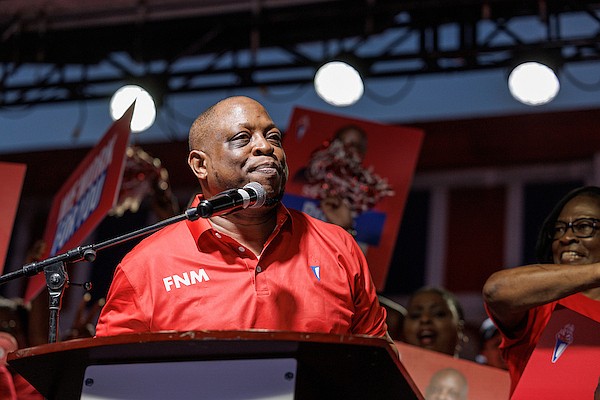
    Serfent Rolle, culture shadow minister for the opposition Free National Movement, laid out the call for greater fiscal transparency and governmental accountability in public statements this week, emphasizing that Bahamian citizens have an inherent right to know exactly how their money is allocated and spent for national initiatives. His remarks come at a time when basic spending details for not just the 50th anniversary, but also Independence events held in the two years following that milestone, remain undisclosed, with government officials unable or unwilling to release cost breakdowns when formally requested.

    “Unanswered questions still remain about the gap between the original allocated budget and the final total expenditure for our 50th Independence celebrations,” Rolle explained. “Moving forward, we must prioritize and insist on the level of transparency and accountability that Bahamian people reasonably expect, and are fully entitled to, for national celebrations and all public events.”

    Rolle added that while national events should deliver meaningful, unifying moments that inspire national pride, that goal should never come at the cost of open fiscal governance. “The national pride we feel for our country is limitless, especially on these milestone occasions. But our public resources are finite, and every cent of taxpayer money must be accounted for,” he said.

    Official budget documents show $5.2 million was earmarked for the 50th anniversary celebrations in the 2022-2023 national fiscal plan, but to date there has been no official confirmation of whether event organizers came in under budget, stayed on target, or overspent the allocation. Back when the budget was first approved, St Anne’s Member of Parliament Adrian White questioned why the Cabinet Office’s ceremonial events budget jumped from the usual $750,000 to $5.2 million for the year. Then-Deputy Prime Minister Chester Cooper responded at the time that the golden independence anniversary was a “big, big deal for us and we are going to celebrate it thoroughly.”

    The 50th anniversary festivities featured a packed multi-event schedule, including galas hosted across The Bahamas and international celebrations in major cities with large Bahamian diaspora populations: London, Miami, and Atlanta. Domestic highlights included the 50th Golden Soirée, a nationwide float parade, and a multi-day jubilee in Nassau’s Pompey Square that featured an evening night market and a series of public concerts. Despite the high-profile, public nature of the events, organizers have repeatedly deflected questions about the final total cost of the elaborate celebrations, offering only vague excuses instead of concrete numbers.

    Rolle stressed that all elected and appointed public officials have a core responsibility to voluntarily answer to the public for how they manage taxpayer assets. “Those of us in positions of public trust must always be prepared, willing, and open to account for our stewardship of public funds,” he said. “When we do this, we cut down on unnecessary distractions and reduce the potential for division at moments when we should be coming together as a nation to celebrate our shared identity as Bahamians.”

    Notably, Rolle stopped short of criticizing the celebrations themselves, praising organizers for putting together a series of events that created a lasting moment of national pride for the country. He added that he fully supports holding a high-quality 53rd Independence anniversary celebration that honors The Bahamas’ sovereignty and shared national identity, echoing the national unity he hopes can come from greater fiscal openness.
  • Nine earthquakes recorded across Dominican Republic in one day

    Nine earthquakes recorded across Dominican Republic in one day

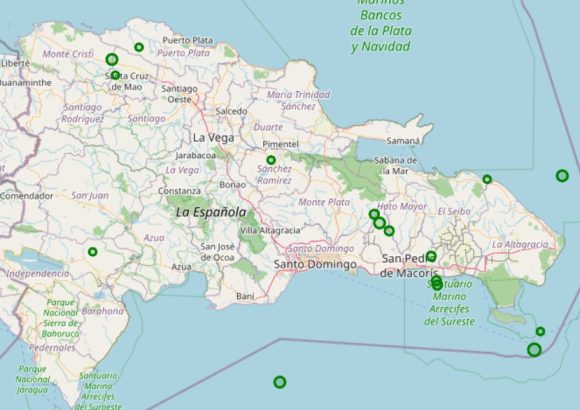
    The Dominican Republic experienced a cluster of low-intensity seismic activity on Wednesday, when nine minor earthquakes were detected across the island nation by the National Seismological Center, operated by the Autonomous University of Santo Domingo (UASD).

    According to the center’s official report, the magnitudes of these tremors fell between 2.2 and 3.5 on the Richter scale. The most powerful of the nine events, registering a 3.5 magnitude, struck just after noon local time in waters southwest of Saona Island. Other seismic events were pinpointed in regions near Catalina Island, San Pedro de Macorís, Miches, Hato Mayor, Sabana Grande de Palenque, Guayubín, and Los Hidalgos, covering both coastal and inland areas of the country.

    Geologists noted that the majority of the recent seismic activity originated offshore, in the Caribbean Sea and the Atlantic Ocean, though a small number of tremors were recorded on land. As of Wednesday evening, no official reports of structural damage or bodily harm caused by the cluster of earthquakes had been released by local emergency management agencies.

    This new sequence of minor tremors comes less than seven days after a stronger magnitude 5.1 earthquake hit the region on June 26. That earlier event was felt across large swathes of the Dominican Republic, triggering precautionary evacuation protocols at multiple public facilities across the country as a safety measure.

  • Report links former Spanish Minister José Bono to Dominican energy projects

    Report links former Spanish Minister José Bono to Dominican energy projects

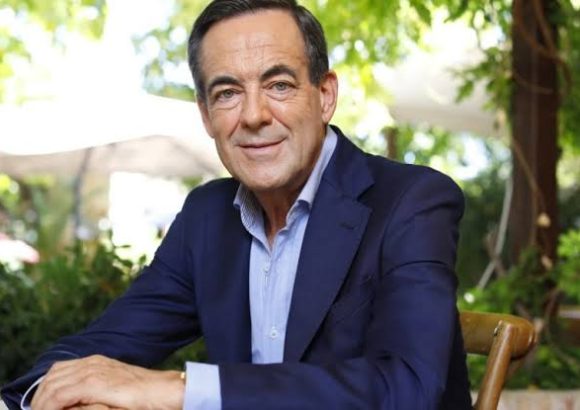
    A new investigative journalism collaboration between Spanish outlet ABC Diario and Dominican reporter Julissa Céspedes from CDN has uncovered alleged hidden business ties between former Spanish Defense Minister José Bono and a controversial Valencian business magnate, linking the ex-official to hundreds of millions of dollars in solar energy contracts in the Dominican Republic.

    According to corporate records cited in the probe, Bono holds 105 shares in Robiser Arrendamientos SL, a Spanish-registered company connected to businessman Dimas de Andrés Puyol. This stake makes Bono the single largest shareholder of the firm, a detail that only appears in Dominican business registries and is nowhere to be found in Spain’s national commercial database.

    De Andrés, through his Caribbean-based energy firm Medcap Energy Caribe SRL, has secured 25-year government concessions to develop two large-scale photovoltaic projects: the Pimentel Energy facility in Duarte province and the Las Parras Energy project in San Antonio de Guerra. Combined, the total investment planned for these two renewable energy ventures surpasses $400 million, with more than $300 million already awarded in formal contracts to companies linked to the businessman.

    This is not the first time De Andrés has drawn public scrutiny. Beyond the energy projects, his companies have secured other public contracts in the Dominican Republic, including a solid waste collection deal for the municipality of Santo Domingo Norte that has faced widespread public backlash over persistent claims of poor service delivery. Back in Spain, both De Andrés and his father faced investigation for alleged financial crimes, though both were ultimately acquitted of all charges in 2022.

    Bono has forcefully pushed back against the allegations released in the investigation. In a response to the report, the former Spanish cabinet minister denied having any formal business partnership with De Andrés, and rejected any claim that he holds a financial stake in the Dominican Republic’s renewable energy sector, dismissing the accusations as “an outrage and a lie.”

  • Abinader promotes Dominican Republic as trusted investment hub at AIF 2026

    Abinader promotes Dominican Republic as trusted investment hub at AIF 2026

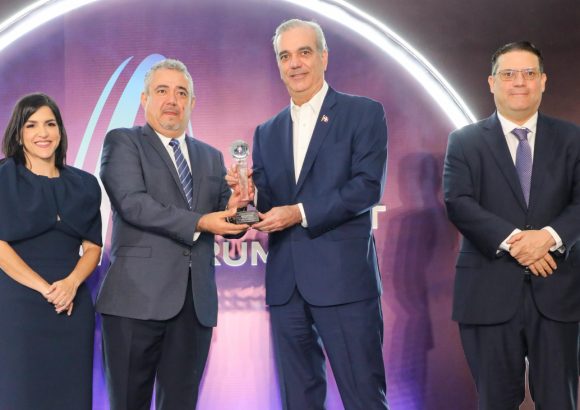
    SANTO DOMINGO — On Wednesday, Dominican Republic President Luis Abinader officially opened the 2026 Americas Investment Forum (AIF), using the high-profile opening ceremony to frame the Caribbean nation as a stable, trustworthy destination for international foreign direct investment. Speaking to an assembly of over 2,000 delegates representing 52 nations gathered for the three-day event, Abinader centered his opening address on the Dominican Republic’s core competitive advantages: consistent macroeconomic stability, binding legal certainty, robust institutional frameworks, uncompromising regulatory transparency, and clearly defined operating rules for foreign businesses.

    Abinader emphasized that reciprocal trust between governments and investors is the non-negotiable foundation of sustained long-term economic growth. He used his platform to challenge the entire Americas region to rebrand itself not as a zone of untapped potential, but as a global hub that delivers tangible, measurable results for international business partners.

    To back his claims, the Dominican president pointed to the nation’s recent record-breaking economic performance metrics, which include more than $5 billion in total foreign direct investment inflows recorded in 2025, an annual tourism footprint of over 11 million international visitors, and more than 200,000 formal jobs created by the country’s network of free trade zones. Abinader stressed that these headline figures do more than boost national economic statistics — they translate directly to expanded employment opportunities, accelerated domestic innovation, and broad-based improved livelihoods for Dominican people.

    He also noted that the global shift toward nearshoring and corporate efforts to build more resilient, diversified supply chains have opened a once-in-a-generation economic opportunity for the Americas region, reaffirming the Dominican Republic’s commitment to acting as a strategic, reliable partner for global investors looking to expand their regional footprint.

    Eduardo Sanz Lovatón, the Dominican Minister of Industry, Commerce and MSMEs, used his remarks during the opening ceremony to highlight the sweeping improvements the country has made to its investment climate in recent years, as well as its expanding role in global exports, cross-border innovation, and advanced manufacturing. Meanwhile, Biviana Riveiro Disla, Executive Director of ProDominicana, the country’s national investment and export promotion agency, outlined the forum’s core strategic goals: to deepen existing investment ties with partners in the Middle East, Asia, and Europe, while accelerating the development of high-quality, environmentally and socially sustainable investment projects across the Dominican Republic.

    Running through July 3 in the capital city of Santo Domingo, the 2026 Americas Investment Forum brings together sitting government leaders, global institutional investors, and C-suite business executives from across the Western Hemisphere and beyond. Attendees will engage in three days of discussions focused on expanding cross-border investment, growing interregional trade, and scaling innovative business development across the Americas.

  • PUCMM study finds building materials and vegetation drive urban heat in Bayahibe

    PUCMM study finds building materials and vegetation drive urban heat in Bayahibe

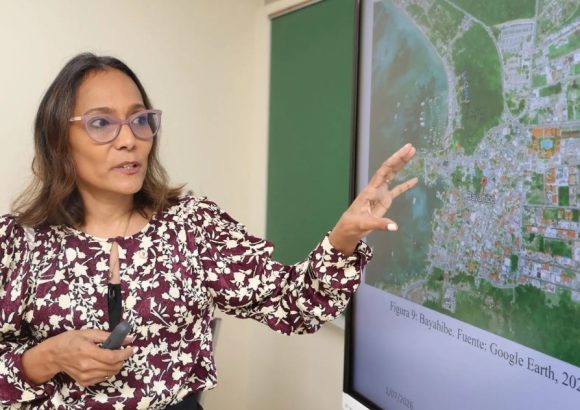
    In the Dominican Republic coastal community of Bayahibe, a groundbreaking academic study from the Pontifical Catholic University Madre y Maestra (PUCMM) has uncovered clear causal connections between localized urban temperature fluctuations and three key urban design factors: construction materials, exterior building colors, and the density of green vegetation across the city. This investigation, which focuses on the well-documented Urban Heat Island (UHI) effect – a common environmental phenomenon where developed urban zones register consistently higher temperatures than their undeveloped rural peripheries – was formally unveiled to the global scientific community during the 21st International Congress of Scientific Research, hosted by the Dominican Republic’s Ministry of Higher Education, Science and Technology (MESCyT).

    To reach their evidence-based conclusions, the PUCMM research team conducted on-the-ground temperature and infrastructure surveys across 24 distinct city blocks, collecting granular data from 355 individual buildings to map how different urban features shape local heat levels. Their analysis confirmed that urban districts dominated by heat-absorbent materials including asphalt, concrete, and zinc roofing, paired with sparse tree coverage, recorded the highest peak and average temperatures in the entire study area. By comparison, residential neighborhoods with extensive tree planting and large expanses of permeable, water-absorbent ground surfaces stayed significantly cooler throughout the study period, even during peak midday heat. The team also added nuanced findings about building design: light-colored exterior facades, most notably pure white coatings, reflect far more incoming solar radiation away from building structures, preventing excess heat from building up in urban surfaces and air. Darker facade pigments, by contrast, trap solar energy, driving up both surface and ambient air temperatures across surrounding blocks.

    The study’s authors issued a urgent warning about the growing risks of the UHI effect for small coastal Caribbean cities like Bayahibe, which already face overlapping climate hazards including accelerating sea level rise, increasing ocean warming, and more frequent, more intense extreme heat events driven by global climate change. To mitigate these rising risks, the research team put forward a set of actionable, accessible policy and design recommendations: expanding the total area of urban green space and street tree planting city-wide, switching to high-reflectance construction materials for new development and retrofits, and investing in shaded public gathering spaces to protect vulnerable communities from extreme heat. These changes, the authors note, would not only improve public thermal comfort and reduce heat-related health risks but also cut overall city energy consumption for air conditioning, creating secondary environmental and economic benefits for local residents.

  • World Bank Appoints Achim Fock as Division Director for the Caribbean

    World Bank Appoints Achim Fock as Division Director for the Caribbean

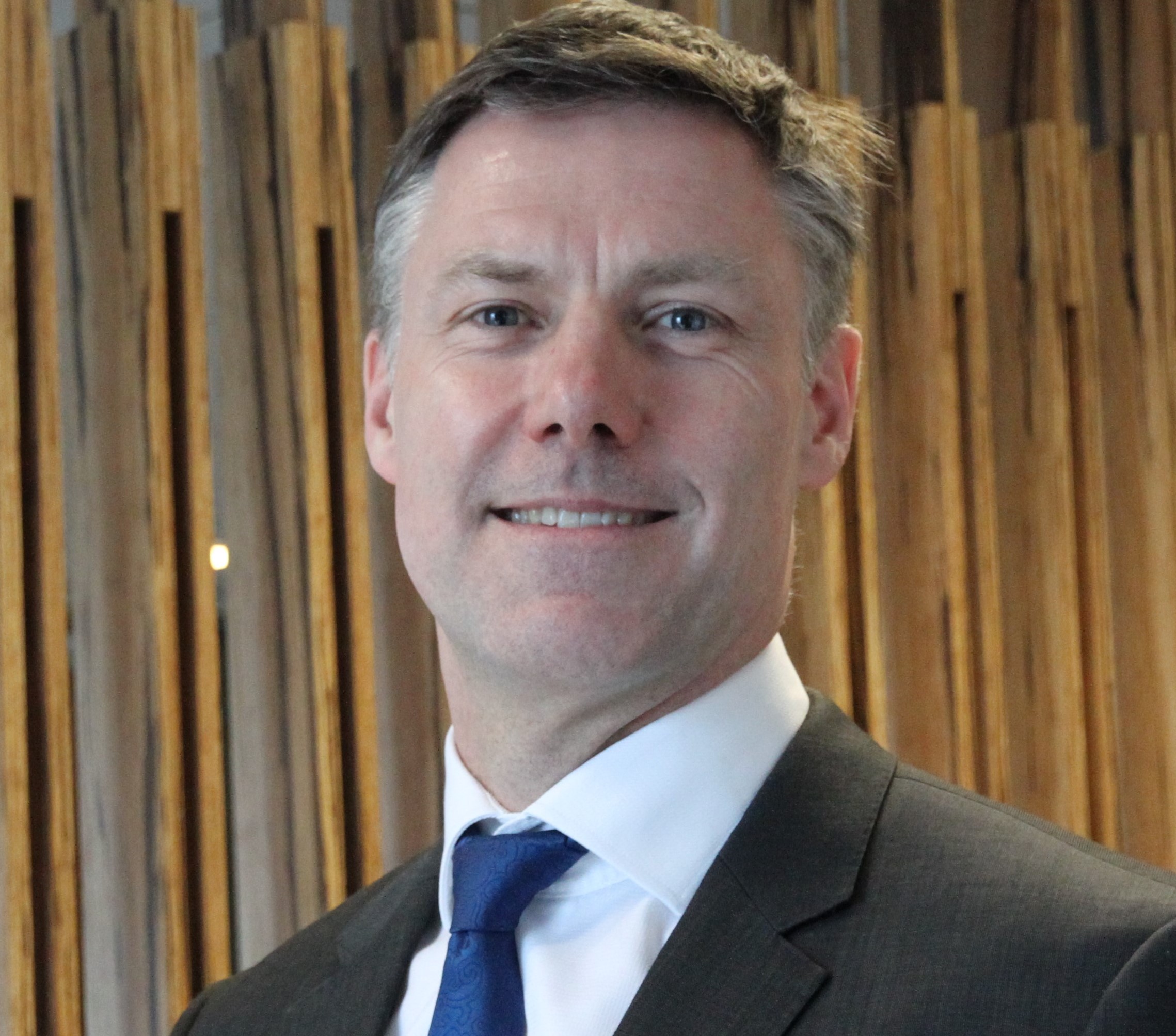
    The World Bank has revealed a key leadership appointment for its regional work in the Caribbean, announcing Wednesday that Achim Fock will take up the post of Division Director for the Caribbean region. In this senior leadership role, Fock will steer the global development institution’s strategic partnerships and active project portfolio across all Caribbean nations, with oversight over a broad portfolio of initiatives including development lending, data-driven analytical work, policy advisory services, and targeted trust fund programs. All of these efforts are focused on advancing inclusive, sustainable, and shock-resistant development across the small and vulnerable economies of the region. Fock brings a quarter-century of hands-on experience within the World Bank’s global network to his new role, giving him deep institutional knowledge of the bank’s operating models and development priorities. Most recently, he served as Country Manager for Zambia, where he led portfolio oversight and direct engagement with national government stakeholders and development partners. Prior to his posting in Southern Africa, Fock held the role of Operations Manager for four major Southeast Asian economies: Brunei, Malaysia, the Philippines, and Thailand. He also previously served as Operations Manager for Vietnam, and has held senior leadership roles including Manager of the Development Effectiveness Unit for the South Asia region. Early in his World Bank tenure, Fock worked as a Senior Economist, delivering policy and economic analysis across multiple countries across Africa, East Asia, and Eastern Europe, building a global perspective on diverse development challenges. In his new position, Fock will take ownership of all the World Bank’s regional programming across the Caribbean. Core priorities will include expanding and strengthening collaborative partnerships with national governments, local civil society organizations, and private sector actors across the region. He will also lead the bank’s support to Caribbean nations as they navigate a complex set of interconnected development challenges. These pressing priorities include expanding job creation and driving inclusive growth in key economic sectors, supporting a just and affordable energy transition to meet global climate commitments, and building comprehensive 360-degree resilience across the region. Key resilience-focused efforts will include expanding investment in disaster risk preparedness and accessible disaster risk financing, delivering climate-resilient infrastructure, and strengthening broad economic resilience to withstand global shocks and climate impacts. Fock holds an impressive academic background aligned with his development work: he earned a PhD in Agricultural Economics, two master’s degrees in Agricultural Science and Agricultural Economics respectively, and a postgraduate diploma focused on European Integration and International Economics.

  • Fuel Shortages Hamper Earthquake Rescue Efforts in Venezuela

    Fuel Shortages Hamper Earthquake Rescue Efforts in Venezuela

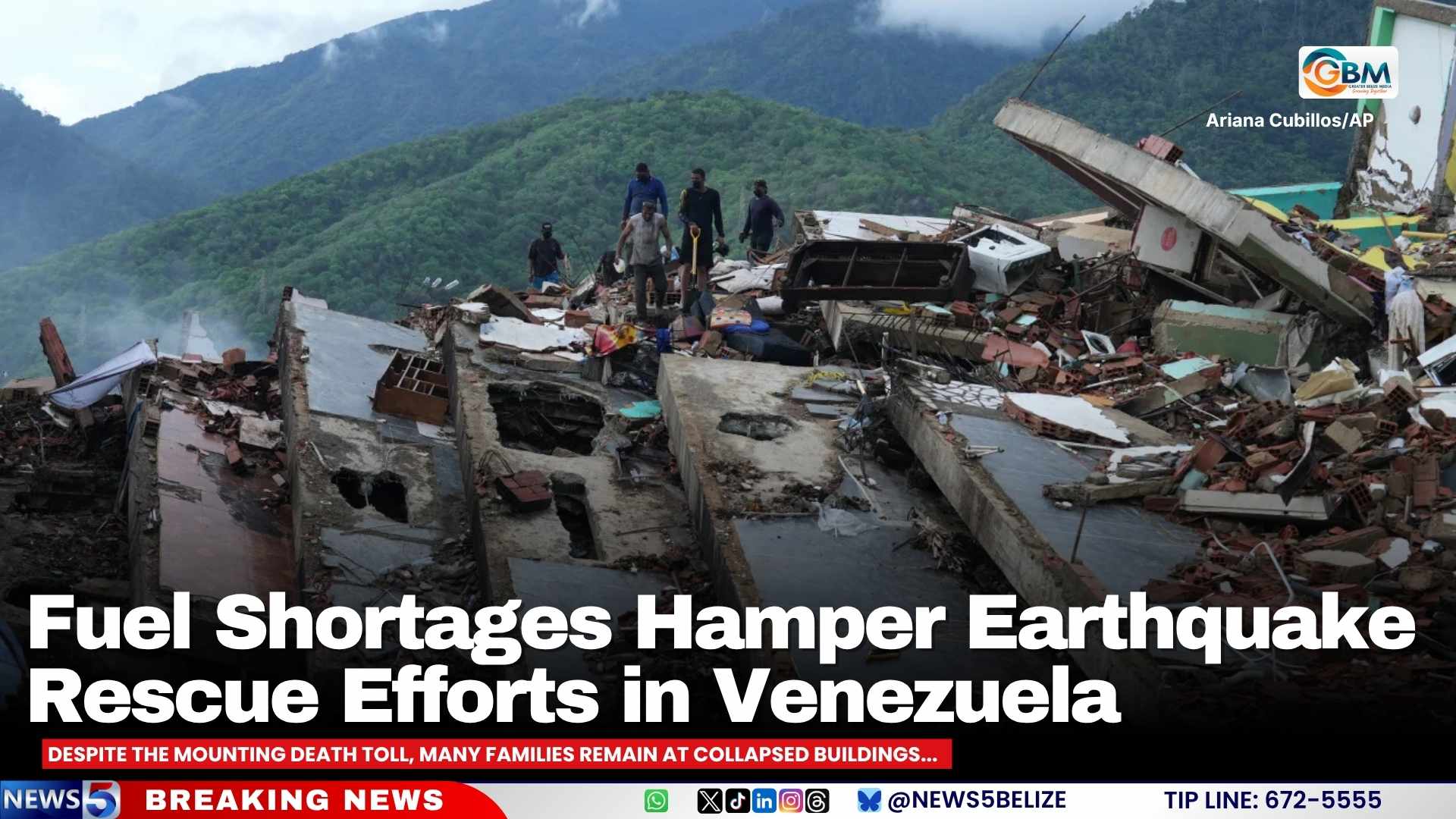
    Nearly a week after two powerful earthquakes tore through Venezuela’s northern coastal region of La Guaira, desperate families and volunteer rescuers are still digging through mounds of collapsed concrete and debris by hand, crippled by widespread fuel shortages that have left state-owned heavy rescue machinery idle, CNN reports. The devastating disaster has laid bare deep systemic failures in the country’s emergency response framework, drawing sharp criticism from observers and triggering a small-scale corruption scandal that has compounded public anger.

    In one high-profile example of the logistical gridlock, a large excavator parked meters from a major rubble pile has sat completely unused since the earthquakes struck, with no gasoline available to power its engine. Without access to the heavy equipment that could speed up search efforts, locals hoping to locate missing loved ones have been forced to rely on nothing more than basic hand tools — shovels, pickaxes — and their own bare hands to sift through wreckage.

    The botched response has amplified longstanding criticism of the Venezuelan government’s disaster preparedness. Political analyst Carmen Beatriz Fernández notes that the ongoing crisis exposes the severely diminished capacity of national institutions to coordinate large-scale emergency operations when disaster strikes. Adding to the controversy, Venezuelan law enforcement agencies have announced the arrest of four public officials who are accused of looting valuables from the earthquake wreckage. All four have been removed from their positions and their cases have been transferred to the national judiciary for prosecution.

    As of Tuesday, the official confirmed death toll from the quakes has risen to at least 1,943, but aid workers and local residents fear the actual number of fatalities is far higher, as hundreds of people remain unaccounted for buried beneath destroyed buildings. In response to the growing need for body recovery, the United Nations has reportedly begun the process of procuring 10,000 body bags to support ongoing recovery operations. Even as the death count continues to climb and hopes of finding more survivors fade, scores of grieving families continue to gather at disaster sites, clinging to the slim possibility that their loved ones will be pulled out alive.

  • Wayne George Football Academy receives EC$5,000 support from RUBIS

    Wayne George Football Academy receives EC$5,000 support from RUBIS

    Dominica’s long-running grassroots football program, the Wayne George Football Academy, has received critical financial support from local fuel brand Team RUBIS to upgrade its athlete resources ahead of the organization’s upcoming competitive fixtures. In a recent official press statement, the academy announced the EC$5,000 donation, which will be allocated exclusively to purchasing new team uniforms and modern football training and match equipment for its young roster of players.

    The contribution from Team RUBIS is designed not just to outfit athletes for upcoming matches, but also to sustain the academy’s 15-plus-year mission of nurturing youth football talent across the island nation. Vanalda Henry-Vidal, Accounts Executive at RUBIS, noted that the company was proud to formalize this partnership with the community-focused academy.

    “Sports play a fundamental role in shaping the next generation of leaders, instilling core values like collaborative teamwork, personal discipline, and persistent resilience,” Henry-Vidal said in a statement shared alongside the announcement. “We are honored to contribute to an initiative that directly improves young lives and makes our local community stronger.”

    Wayne George, founder and head coach of the academy, expressed sincere gratitude for Team RUBIS’ investment in the program and its young athletes. He emphasized that corporate partnerships like this are instrumental to the academy’s work of growing football talent and molding well-rounded, responsible citizens out of program participants. “A huge thank you to RUBIS for partnering with us to nurture young football talent and help us build future leaders and community members. We deeply appreciate this support and look forward to continuing our collaboration moving forward,” George said.

    Founded all the way back in 2008, the Wayne George Football Academy is a legally registered, community-led football development program that has served young Dominicans for over 15 years. Headquartered in Bath Estate, the academy welcomes both boys and girls starting at age five, and currently supports more than 100 active young players across age groups. It has grown into a cornerstone of grassroots football development in Dominica, holding weekly training sessions every Saturday, organizing regular friendly matches against other local teams, and fielding senior squads that compete in official local leagues run by the Dominica Football Association.

    Over its decades of operation, the academy has helped develop dozens of promising young footballers, while embedding values of leadership, teamwork and discipline in all participants. The new funding from Team RUBIS will remove longstanding resource barriers, providing the gear and uniforms that players need to thrive both on the pitch and in their personal growth off the field, positioning the program to expand its positive impact across Dominica’s youth sports community.

  • Pearly Eusebe hits 102; three other centenarians share June birthdays

    Pearly Eusebe hits 102; three other centenarians share June birthdays

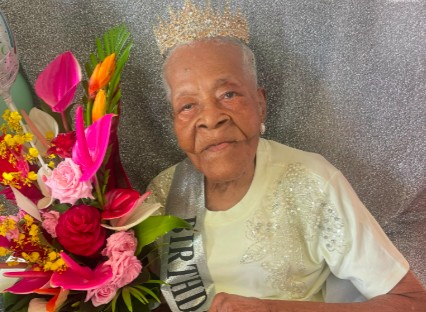
    On June 30, 2024, Pearly Paulina Ferdinand Eusebe — affectionately known to all as Auntie Pearly — marked her 102nd birthday, capping a century of life defined by unshakable resilience, quiet compassion, and a decades-long commitment to turning her childhood dream into reality. Born exactly 102 years ago in the small Dominican community of Delices, Auntie Pearly grew up as the second of seven siblings, her early years shaped by the humble, often harsh realities of rural life in the 1920s and 1930s.

    Even at age five, Auntie Pearly walked three miles barefoot to reach her local school, carrying her daily lunch in a repurposed butter tin. Her route crossed multiple rushing streams; during seasonal heavy rains, the crossings became impassable, forcing her to miss classes entirely. It was at this school that a young Auntie Pearly first learned of the Second World War: her strict headmaster, Teacher Didier, read daily newspaper updates to students, discussing Hitler, Churchill, and the conflict’s global reach. Back in the village, entire communities gathered at the local church every afternoon to pray for an Allied victory, reciting the collective chant “Down with Hitler.”

    Auntie Pearly’s lifelong calling to nursing emerged during a childhood trip to the village clinic for a vaccination. As she watched the nurse calmly care for patients, she knew immediately that she wanted to dedicate her life to helping others — a dream she would hold close through decades of setbacks. When she left school at 15, Teacher Didier helped her submit an application to a local hospital, but she never received a response. Her mother, resigned to the barriers facing poor rural girls, was not surprised. Refusing to accept her fate, Auntie Pearly moved to Dominica’s capital Roseau to live with relatives, taking a job as a live-in domestic servant that she openly disliked.

    A year later, her good character caught the attention of Cissie Caudeiron, a Dominican woman married to a French engineer based in Venezuela. Caudeiron hired Auntie Pearly as a nanny for her five children, and when Caudeiron relocated to Venezuela permanently, she left the young nanny to care for the children in her absence. When the order came to bring the children to Venezuela, 20-something Auntie Pearly set off alone on a multi-leg sea journey, first to Grenada, then to Trinidad. The ship’s captain was stunned by her youth, exclaiming, “But you are only a child!”

    Even as she cared for Caudeiron’s children through years of international relocation, first in Venezuela and later in Trinidad, Auntie Pearly never abandoned her dream of nursing. Multiple applications were met with silence, rejection rooted in her humble origins. In Venezuela, she even survived being caught in the crossfire of the national revolution; soldiers and rebels paused their fighting to let the stranger pass, a small moment of grace amid chaos that she would remember for the rest of her life. While in Trinidad, she joined the local church choir, where her soaring voice and command of Latin hymns won her widespread admiration.

    Decades after she first dreamed of becoming a nurse, Auntie Pearly finally got her chance. After stints working in Dominica and Curaçao, she moved to England to join her sister, who worked at a London hospital. Now in her early 40s, she feared she was too old to train, but a doctor she met through her sister encouraged her, telling her: “Once you have life and are prepared to learn, nothing is impossible.” Auntie Pearly threw herself into studying anatomy and physiology alongside students half her age, passed every exam, and officially qualified as a registered nurse in England.

    Her career was a testament to her warmth and devotion: patients affectionately called her “Mama,” explaining to the hospital matron that she was far more than a nurse — she was a caring maternal figure to all who relied on her. To supplement her modest nursing salary, she took extra shifts through a medical agency on her days off, saving every extra penny to buy a home back in Dominica and support her parents and siblings back home. A devout Catholic, she relied on her faith through every challenge, often praying during her daily commute through London, calling God her constant protector.

    Today, at 102, Auntie Pearly remains sharp, lucid, and in good health, with a sharp sense of humor and a memory that retains every detail of her 10 decades of life. She still maintains her independence, cooking her own meals, cleaning her own catch of fish, making her favorite cocoa tea every morning, and tending to her own household. She loves talking about her nursing career, and delights in conversing in fluent Spanish with visiting doctors, a skill she picked up during her years in Venezuela. Though she regrets no longer being able to walk the local streets, and finds modern noise like loud motorbikes and music jarring, her attitude remains positive and warm.

    Auntie Pearly’s remarkable life story is now being captured in a biography written by author Mary Isidore, giving audiences the chance to learn more about her extraordinary journey. She is not the only centenarian from Dominica celebrating a milestone birthday this June: Mathew St. Rose of Kings Hill turned 100 on June 16, Margaret Andre of Goodwill marked her 101st birthday on June 12, and Lucille Pascal of Grand Fond celebrated her 100th birthday on June 22.

  • Three-year-old rescued and taken to hospital six days after Venezuela quake

    Three-year-old rescued and taken to hospital six days after Venezuela quake

    A remarkable story of survival has emerged from the wreckage of a recent earthquake in Venezuela, where rescue teams have pulled a three-year-old child alive from collapsed structures six full days after the seismic event struck. The young survivor was immediately airlifted by emergency responders to a nearby medical facility for urgent assessment and treatment, leaving both rescue workers and the local community stunned by the extraordinary outcome.

    The earthquake, which hit the South American nation recently, caused widespread destruction across affected regions, toppling buildings, displacing hundreds of residents and cutting off critical infrastructure access for first responders. For six straight days, search and rescue teams worked around the clock, sifting through tons of concrete and debris in the hopes of finding any remaining survivors trapped beneath the ruins—an effort that many thought would only yield recovery of victims, not living people.

    Local health officials have not yet released detailed information about the child’s condition, but initial reports from emergency crews confirm the toddler was responsive when found, marking one of the most uplifting moments in the aftermath of the natural disaster. Rescue team leaders have praised the tenacity of their crews, who refused to abandon the search even as the window for finding surviving survivors narrowed dramatically after the first 72 hours, the typical critical period for earthquake rescue operations.

    The international disaster response community has been monitoring the situation in Venezuela closely, with multiple organizations offering logistical support and additional resources to assist with search, rescue and recovery efforts. This unexpected miracle has given a glimmer of hope to a nation grappling with the aftermath of the quake, which has already claimed an untold number of lives and left many more homeless.