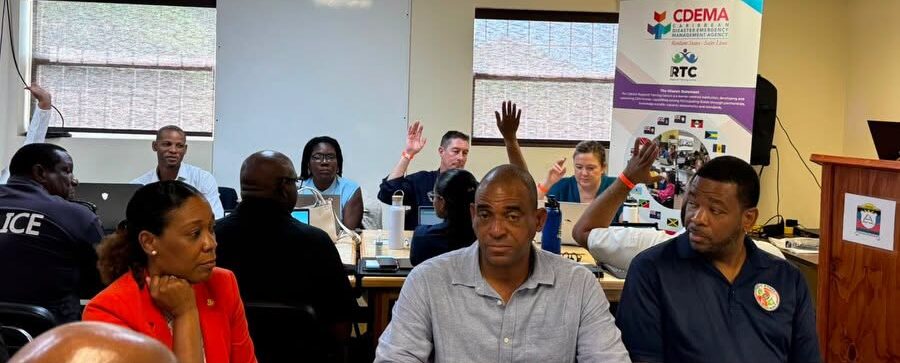
The Caribbean Disaster Emergency Management Agency (CDEMA) has launched a specialized Emergency Operations Centre (EOC) Management Training program at the National Office of Disaster Services (NODS) headquarters in Antigua and Barbuda, marking a key milestone in the agency’s regional disaster preparedness strategy. Organized through CDEMA’s Regional Training Centre, the five-day program brings together 33 emergency management professionals drawn from seven different member territories across the CDEMA coordination system, creating a collaborative space for cross-regional knowledge sharing and skill building. Unlike traditional theoretical training programs, this initiative prioritizes hands-on, practical learning that directly translates to real-world disaster scenarios. The core goal of the program is to elevate participants’ core competencies in operating and coordinating EOCs across all phases of disaster management: pre-disaster preparation, active response during a crisis, and post-disaster recovery operations. Curricular focus areas include maintaining operational continuity during large-scale events, strengthening inter-agency coordination, and building the capacity for rapid, effective decision-making under high-pressure conditions. To deliver on these learning objectives, organizers have structured the program around a mix of interactive discussion sessions, small-group problem-solving exercises, and a full-scale capstone simulation that replicates a major regional disaster event. Beyond upskilling frontline emergency personnel, the training also serves a second strategic purpose: cultivating a regional pool of certified instructors who can go on to deliver CDEMA’s newly upgraded EOC Management Course across member territories in the coming months, expanding the program’s reach and impact. This capacity-building initiative is directly aligned with CDEMA’s 2022–2027 Strategic Programme, the agency’s overarching framework for improving regional disaster resilience. It also advances CDEMA’s long-term commitment to strengthening the Next Level Regional Response Mechanism, a coordinated system designed to speed up and improve the effectiveness of cross-border disaster assistance across the Caribbean. In closing out the opening session, CDEMA representatives extended formal thanks to NODS for its work hosting the training program, as well as to representatives from all participating territories and the lead facilitators whose contributions have made the regional initiative possible. Stakeholders note that as climate change increases the frequency and intensity of hurricanes and other natural hazards in the Caribbean, investments like this training are critical to ensuring regional agencies are prepared to protect communities and coordinate rapid response when disasters strike.
CDEMA Strengthens Emergency Operations Centre Capacity in Antigua and Barbuda