博客

  • Darrel Bradley Sets Conditions For Political Return

    Darrel Bradley Sets Conditions For Political Return

    As Belize’s main opposition United Democratic Party (UDP) navigates internal and national calls for systemic political change, a familiar former leader has opened the door to a potential return to electoral politics — on his own terms. Darrel Bradley, who served as mayor of Belize City before stepping away from electoral contention, has confirmed he still holds unmet political ambitions and is willing to run for office again, but only if the UDP commits to a concrete, ambitious reform platform for the country.

    Bradley’s last bid for public office came over a decade ago in 2015, when he lost the Caribbean Shores constituency seat to incumbent Kareem Musa by a razor-thin margin of just 56 votes. Since that narrow defeat, he has kept a low profile on electoral ballots, but has not stepped away from conversations about the future of Belizean governance. In a recent televised address, the former mayor laid out his vision for the change Belize needs, and framed his own political comeback as contingent on the party delivering that change.

    “It is my desire to return to public service, and this is something that could happen in the not-too-distant future,” Bradley said. “I take the responsibility of leadership extremely seriously. The transformation this country needs does not rest on the shoulders of a single person — it requires a collective of leaders committed to principled governance and shared values to move Belize forward.”

    Bradley emphasized that he is ready to take on the heavy responsibility of leadership as part of that collective, noting that a reformed, forward-looking Belize needs many committed leaders working side-by-side, not just one individual at the top. The core of his demand centers on shifting the UDP’s focus from rhetorical protest to actionable policy, pushing the party to prioritize a concrete set of reform measures that address longstanding governance gaps in the country.

    The former mayor pointed out that many of the frameworks for meaningful reform already exist, and do not require reinventing the wheel. “This isn’t rocket science,” he explained. “Nations across the world grapple with the same governance challenges we face, and proven model legislation already exists for key priorities like campaign finance reform and whistleblower protection. Belize has already signed onto the United Nations Convention Against Corruption (UNCAC), and many of these principles are already written into our national laws — what is missing is strong enforcement and consistent accountability for all leaders, including ourselves.”

    Bradley’s announcement comes amid growing pressure on Belize’s major political parties to address public frustration with corruption, weak governance, and unfulfilled campaign promises. By tying his return to a reform-centered UDP, the former mayor has thrown a spotlight on the internal debates shaping the opposition party’s direction ahead of upcoming electoral cycles, forcing party leadership to reckon with public demands for tangible policy change rather than just political rhetoric.

  • Retirement at Sixty? Public Officers on Alert

    Retirement at Sixty? Public Officers on Alert

    In a policy proposal that has sparked early debate across Belize’s public sector, the national government is currently reviewing a plan to lift the mandatory retirement age for public servants from 55 to 60. The reform is framed as a targeted response to two pressing long-term fiscal and demographic challenges: rising national pension system costs and increasing national average life expectancy, which has extended the period of post-retirement benefit payouts. As of August 27, 2026, no final decision has been signed into policy, but the leaked proposal has already drawn sharp criticism from the country’s main opposition bloc.

    Sheena Pitts, chair of the United Democratic Party (UDP), has emerged as a leading voice against the plan, warning that both the delayed retirement age and potential accompanying cuts to pension benefits would impose severe additional financial strain on public servants, who rely on combined payouts from their government pension and national Social Security program once they leave the workforce.

    Pitts broke down the financial impact of the proposal with a concrete example to illustrate how the change would affect monthly income for affected workers. Under the current system, a public officer who retires at 55 receives $500 per month from their government pension, and becomes eligible for an additional $500 per month in Social Security benefits once they reach 60. Under the proposed reform, Pitts explained, the government is considering two overlapping changes: raising the minimum retirement age to 60, and cutting the total pension payout from its current rate of two-thirds of a worker’s final salary to a lower percentage.

    Using the same example, Pitts outlined that under the new terms, the same worker would only receive a reduced government pension of approximately $350 per month once they retire at 60, and would be forced to survive on this lower single income between the ages of 55 and 60, when Social Security benefits become active. Unlike the current framework, where workers access both streams after 60, the proposed changes would leave a half-decade gap in stable income for hundreds of public servants, she argued.

    In a separate advisory included alongside the policy debate, public officers across the country have been urged to update their official employment records as early as possible to avoid processing delays for future pension and gratuity payouts. This report is a transcribed version of an evening television newscast, with Kriol language statements adapted to a standardized spelling system for print and online publication.

  • 400 Belize City Students Receive Back-to-School Boost

    400 Belize City Students Receive Back-to-School Boost

    As Belize prepares for the 2026-2027 academic year to kick off, 400 students from marginalized, at-risk neighborhoods in Belize City have received critical support to start their school term successfully, through a cross-sector community partnership centered on educational equity.

    The collaborative initiative, brought together by the Rotary Club of Belize, the Belize Police Department, and the Leadership Intervention Unit, culminated in a distribution event where every participating student received a fully stocked school bag to meet their classroom needs. Senior local leaders and law enforcement officials attended the event to deliver words of encouragement and reinforce the community’s investment in the young students’ futures.

    Among the speakers was Police Commissioner Dr. Richard Rosado, who outlined the grassroots work that preceded the distribution drive. “Our community policing officers went into our communities, listened to families, identified young people with potential,” Rosado explained. “We saw children who deserve opportunities to succeed. We made a commitment we will not allow you to be left behind. Today is more than school bags. It represents that we all believe in you, and we want you to never forget that. Life may present challenges but your circumstances do not have to determine your destiny.”

    Lauren Smith, Chief Executive Officer of Crime Stoppers Belize, also joined the event to praise the on-the-ground work of community police and highlight the full contents of the donated school kits. “Can I also have a round of applause to all your community police? Yes. They’ve done a great job. And most importantly, I wanna say a big thank you from all of you to the commissioner for his initiative helping you guys stay in school,” Smith said. She added that the bags are packed with every essential a student could need for the school year: notebooks, pens, pencils, crayons, calculators, rulers and other core supplies. “Everything that you need to stay in school, that bag has it. So take care of it, value it, and let it help you build your success.”

    The entire back-to-school drive was funded through private donations from a broad coalition of local businesses across Belize City, demonstrating widespread cross-community support for expanding educational access for vulnerable youth. This report is a transcript of an evening television broadcast originally published on August 27, 2026.

  • Belize & Honduras Explore Medical Exchange

    Belize & Honduras Explore Medical Exchange

    Across Central America, shared healthcare workforce challenges are pushing neighboring nations to explore collaborative solutions, with Belize and Honduras the latest to advance cross-border cooperation in the medical sector. During an official state visit led by Belizean Prime Minister John Briceño to Honduras in late August 2026, Belize’s Minister of Health and Wellness Kevin Bernard tabled a proposal for a bilateral medical exchange memorandum of understanding (MOU), building on a 1995 existing agreement between the two countries that covers cultural and educational exchanges.

    Unlike one-sided recruitment arrangements that target medical workers from lower-resource nations, the proposed partnership is designed as a mutual exchange that addresses shared pain points: both Belize and Honduras face critical shortages of skilled healthcare personnel, a systemic challenge that impacts nearly all countries across the Central American region. For Belize, the arrangement would create structured pathways for the country’s medical graduates to complete residency training in Honduras’ established medical education system, while creating opportunities for knowledge sharing and specialized skills development that are harder to access domestically. For Honduras, the partnership would similarly open doors for its own healthcare professionals to gain experience and insights from Belize’s healthcare system, creating reciprocal benefits for both sides.

    Bernard explained that the proposed exchange would go beyond simple workforce movement, enabling the two countries to share clinical expertise, deliver joint specialized training programs, and expand access to advanced medical services for patients in both nations. At this early stage of negotiations, formal talks between technical working teams from both health departments have not yet been scheduled, as policymakers focus on framing the parameters of the partnership before advancing to detailed implementation planning. Bernard noted that discussions are still in the preliminary phase, with leaders working to align on how the program will operate to strengthen healthcare delivery for populations on both sides of the border.

    This initiative reflects a growing regional trend of neighboring countries collaborating to address common healthcare workforce challenges, rather than pursuing individual, zero-sum solutions that leave lower-resource nations further disadvantaged. By framing the partnership as a mutual exchange rather than one-way recruitment, leaders are aiming to create a sustainable model that strengthens health systems across the region.

  • BCCI eyes South America supply routes to bypass costly North American shipping

    BCCI eyes South America supply routes to bypass costly North American shipping

    As Barbados grapples with persistent cost-of-living and affordability crises, the country’s leading private sector business organization has mapped out a targeted strategy that could slash prices of key imported food staples by at least a quarter, if proposed logistics overhauls are implemented.

    In a public forum focused on addressing rising living costs held Thursday, Barbados Chamber of Commerce and Industry (BCCI) President Paul Inniss outlined the private sector’s ongoing efforts to overhaul food supply chains, eliminate avoidable markup costs, and ease financial pressure on local households and businesses. Currently, most of the Latin American-origin food sold in Barbados follows an indirect shipping route: products are first sent to North America, then transported south to the Caribbean island, a circuitous path that piles on extra logistics and handling charges that are ultimately passed to consumers.

    Inniss told attendees of the forum, which also included University of the West Indies (UWI) Cave Hill campus Deputy Principal Professor Winston Moore, that BCCI has already identified alternative overseas source markets that can supply fresh fruits, vegetables and other core food items at lower base costs. The organization has been working around the clock to connect its member businesses with these new supply options, after confirming that direct, efficient shipping from these markets could deliver the 25% retail price cut.

    “We have met recently with the Brazilian Ambassador to discuss trade logistics, and our review confirmed that nearly all Brazilian food products already sold in Barbados travel through North America before reaching our ports,” Inniss explained. “This roundabout arrangement adds massive unnecessary costs to local businesses. While securing lower base prices from new source markets is a key breakthrough, the biggest hurdle we now face is fixing the logistics to move these goods directly to Barbados.”

    If the private sector can establish reliable, efficient direct shipping links from Latin American source markets to Barbados, Inniss confirmed the 25% price reduction for imported produce and other foods is a achievable target. He added that while global supply chain disruptions are outside of Barbados’ control, local stakeholders can leverage innovation, streamlined processes and better cross-sector collaboration to cut unnecessary costs across the entire business ecosystem.

    As part of its broader cost-reduction push, BCCI has also built close working partnerships with key local stakeholders including Bridgetown Port, the Customs and Excise Department, the banking sector and the energy industry. The organization’s goal is to identify, reduce or eliminate unnecessary administrative delays, hidden charges and frictions that drive up operating costs for businesses and consumer prices. Inniss emphasized that solving Barbados’ cost-of-living challenge is a collective responsibility: no single institution or sector can deliver relief alone, requiring coordinated action from government, the private sector, labor groups, regulators and ordinary Barbadians.

    Professor Moore also shared details of UWI’s contributions to the national effort to lower living costs. The university is training new cohorts of specialized graduates in data analytics and software engineering, who will enter local businesses to implement innovative, cost-cutting operational improvements. Recognizing that food and energy are the two largest components of local consumer costs, UWI has also launched research initiatives through its Centre for Agricultural Research and Innovation to develop new solutions to boost domestic agricultural production, alongside ongoing work to address high energy prices.

    On outstanding trade facilitation reforms such as seaport pre-clearance procedures – a change that would also reduce consumer prices by cutting clearance delays – Lalu Vashwani, chair of BCCI’s Customs and Trade Facilitation Committee, set a target of October 1 for resolving the open issue. However, he stressed that meaningful progress will require increased commitment and collaborative will from all involved stakeholders.

  • Six New Lactation Counsellors Strengthen Breastfeeding Support

    Six New Lactation Counsellors Strengthen Breastfeeding Support

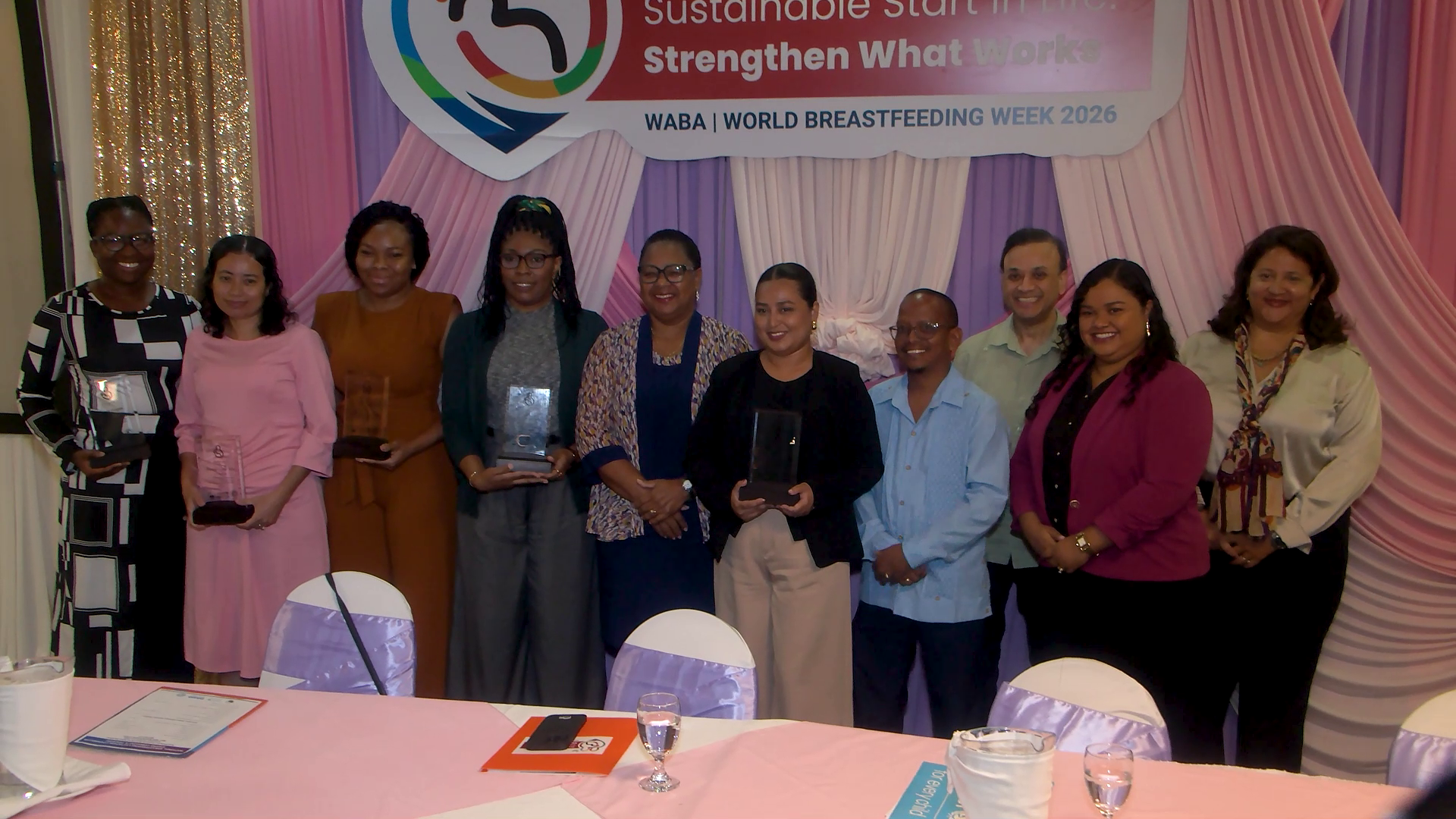
    In a significant step to strengthen public health outcomes for new families in Belize, six professionals have completed a rigorous six-month lactation counselling certification program, bringing expanded, specialized breastfeeding support to communities across the nation. The newly minted counsellors were formally recognized at an official inauguration ceremony held on the morning of August 27, 2026, where senior health officials and international development partners highlighted the far-reaching public health benefits of the initiative.

    Kevin Bernard, Belize’s Minister of Health and Wellness, praised the graduates for their commitment to completing the intensive training, noting that the new cohort directly advances the government’s 2024 national Breastfeeding Policy. The policy prioritizes expanding accessible, evidence-based support for breastfeeding mothers through targeted education, hands-on practical guidance, and whole-family engagement to boost breastfeeding success rates across the country.

    “As the minister, I can confirm that our administration remains fully committed to supporting initiatives like this at every level, from local health directorates up to Cabinet,” Bernard stated during the ceremony. “This work delivers tangible improvements: it advances our public health goals for breastfeeding, supports healthier mothers, and sets the foundation for healthier children across Belize.”

    Dr. Karen Bell, the Pan American Health Organization (PAHO) representative to Belize, reinforced the overwhelming scientific consensus on the benefits of breastfeeding for infant health. She emphasized that breast milk is uniquely suited to meet the nutritional needs of newborns, providing all essential nutrients in the correct balance to support healthy growth and early development. Beyond nutrition, Dr. Bell noted that breastfeeding also confers long-term protective benefits, reducing infants’ risk of both acute infectious illnesses in early life and chronic health conditions later in adulthood.

    The six-month training program received partial funding from UNICEF Belize, which covered certification costs for four of the six new counsellors. Sajid Ali, UNICEF Belize’s representative, expressed the organization’s pride in the program’s successful completion and its commitment to future expansion. “We look forward to seeing these new counsellors act as champions for skilled breastfeeding support across the country, inspiring more professionals to enter this critical field,” Ali said. “Moving forward, we will continue working with local partners to scale up training opportunities and grow the national network of lactation support providers.”

    Following their certification, the six new counsellors will be deployed to health regions throughout Belize, ensuring that breastfeeding mothers in both urban and rural communities can access the trained, personalized support they need to overcome common breastfeeding challenges. This expansion marks a key milestone in Belize’s multi-year effort to improve maternal and child health outcomes through targeted public health programming.

  • When Danger Strikes, Where Can Wheelchair Users Turn?

    When Danger Strikes, Where Can Wheelchair Users Turn?

    For millions of people around the world, the ability to quickly flee danger and access safe spaces is an unspoken, taken-for-granted part of daily life. But for wheelchair users and people with limited mobility across Belize, this basic security remains out of reach – a gap that disability advocates argue has made disabled people increasingly targets for violent crime, with deadly consequences in recent years.

    The crisis came into sharp public focus following a string of high-profile fatal attacks targeting disabled Belizeans between 2024 and 2025. In 2025, Evadnie Jones and her son Luke were shot and killed inside their own yard. Their murders came just after the fatal shootings of two other wheelchair users, Trayson Gibson and Gion “Gizmo” Bernard, highlighting a pattern of targeted violence against this vulnerable community.

    Marshall Nunez, Disability Desk Coordinator at Belize’s Ministry of Human Development, condemned the attacks as a mark of a deep, disturbing lack of societal empathy for disabled people. Speaking to local outlet News Five, Nunez criticized the perpetrators for targeting people who cannot escape or defend themselves. “That’s bad already [when people shoot indiscriminately]. But when you do that to one vulnerable person, you know, wheelchair man. That is despicable. That is unconscionable. Where is our humanity?” he said.

    For Belizeans like 63-year-old Austin Burgess, the daily reality of disability-related vulnerability is a recent, life-altering shift. Just four months ago, Burgess underwent an emergency amputation after a late diagnosis of poor circulation in his foot, a complication that left him wheelchair-dependent overnight. Never expecting to face disability, he now lives alone, navigating a world that offers little structural support for limited mobility.

    Burgess now relies on occasional charity from neighbors to access food and basic necessities, a sharp change from his former independent life. “It changed big time for me. Because then I have people weh de deh for me. But like I said, they only just bring the stuff. You understand me? I eat if I eat and if I no eat, then that’s up to me. What happened is, I no got nobody to do nothing for me otherwise,” he explained. He now urges all Belizeans to cultivate greater compassion for disabled community members, noting that disability can impact anyone at any time, whether from birth, illness, or random violence. “One of these days, it might happen to you. I da mi never expected this,” he said.

    In a promising step forward, Belize passed its landmark first Disability Act in 2024, introducing sweeping legal protections for disabled people and mandating equal access to core public services including education and healthcare. But Nunez emphasized that legislation alone is not enough to solve the systemic exclusion and vulnerability disabled Belizeans face.

    Passing the law, he explained, is only the first critical step toward full inclusion. The act is designed to protect the dignity and inalienable human rights of all disabled Belizeans, but cultural shift must follow legal change. “But the best we could do is to reach out to the society, to the community and make it be sensitive to our vulnerable people, to the people with disabilities,” Nunez said.

    Looking ahead, Belize is moving forward with plans to launch a formal National Disability Commission, which will lead nationwide public education and awareness campaigns focused on disability rights and inclusion. Advocates hope the new body will help bridge the gap between legal protections and on-the-ground safety, ensuring that disabled Belizeans can live free from the threat of targeted violence and exclusion.

    This report from Britney Gordon of News Five was first broadcast on August 27, 2026.

  • APA calls on govt to halt incursion into Amerindian lands at Chinese Landing; CCJ’s decision prohibits govt action- Bharrat

    APA calls on govt to halt incursion into Amerindian lands at Chinese Landing; CCJ’s decision prohibits govt action- Bharrat

    A decades-long land rights dispute in Guyana has reached a new flashpoint, with the country’s leading Indigenous advocacy organization calling on the government to block gold mining operations on community-held territory that an established miner has entered despite ongoing legal claims to the area. On Thursday, the Amerindian People’s Association (APA) issued a formal appeal to state officials to stop the recent incursion by veteran miner Wayne Vieira, a move that comes as residents of Chinese Landing, the Indigenous community that holds official title to the contested land, have already blocked mining equipment from entering the site. The call to action is rooted in a demand that the government uphold constitutionally protected Indigenous rights enshrined in national law.

    In its official statement, the APA outlined its core demand: “We are calling on the government to take immediate action to halt these operations, uphold the rights of Chinese Landing, and find a peaceful resolution between the parties that protects the rights-holders while not impeding their livelihood.”

    However, Guyana’s Minister of Natural Resources Vickram Bharrat has pushed back on the appeal, explaining that a prior ruling from the Caribbean Court of Justice (CCJ) leaves the government and national regulatory body the Guyana Geology and Mines Commission (GGMC) with no legal authority to interrupt Vieira’s activities. “Vieira has a decision from the CCJ which tied the hands of GGMC. This is the crux of the matter. It is not government or the GGMC’s inaction,” Bharrat told Demerara Waves Online News.

    The 2017 CCJ ruling in question struck down a 2010 GGMC cease-and-work order issued against Vieira, ruling that the mines officer who authorized the order had exceeded their legal authority and failed to demonstrate that the order was absolutely necessary to protect public peace or third-party property rights. The court established that such orders can only be issued in extreme circumstances where no other alternative exists, setting a binding precedent that constrains current government action.

    The APA argues that the government’s inaction and Vieira’s advance violate multiple layers of Guyanese law, including Section 48 of the Amerindian Act and Section 80 of the Mining Act. Both provisions explicitly require Indigenous communities to grant free, prior consent before medium-scale mining operations can proceed on their traditional titled lands. The association also notes that the incursion violates multiple articles of Guyana’s Constitution that protect the property rights of the Chinese Landing Village Council, which is currently waiting for a ruling from the Guyana Court of Appeal on its formal substantive land claims to the entire Tassawini area where mining is underway.

    Trust in ongoing mediation efforts between the community, the miner, and the state has collapsed completely, the APA confirmed, after Vieira began moving heavy mining equipment into the area on August 21. The Village Council was given no advance notice of Vieira’s move and had never granted formal consent for mining to proceed in the Tassawini sector. “Unfortunately, the actions taken by Vieira have broken trust in the current mediation process,” the statement reads. The APA added that continuing mining activity without a good-faith resolution has left Chinese Landing residents facing growing security risks and threats linked to the incursion.

    Beyond legal and security concerns, the APA alleges that Vieira’s long-running mining activities in the area have already caused measurable environmental harm and social disruption for the Chinese Landing community, though specific details of these harms were not outlined in the latest appeal.

    The association has reaffirmed its full solidarity with Chinese Landing’s Toshao (Indigenous community leader) Nikita Miller, the Village Council, and all local residents, who have been engaged in this standoff to defend their land for nearly 30 years. “The current standoff in Chinese Landing highlights the level of desperation faced by the community, and the lengths to which they must go to secure their land and the future of generations to come. This highlights the crucial support that Chinese Landing needs in order to protect its lands as its rights continue to be violated,” the statement says.

    To contextualize the dispute, the APA laid out the long history of Chinese Landing’s legal ownership of the territory: the community first received official land title for the area in 1976, with a reissued title granted under the State Lands Act in 1991. This was nearly two decades before Vieira received his first prospecting permits for the Tassawini area in 1998. A fully demarcated Certificate of Title was reissued to the community in 2018, formally confirming that the entire mining area falls within Chinese Landing’s legally recognized boundaries. Negotiations between the community and Vieira collapsed in 2004 after the two sides failed to renew a 1998 access agreement that had permitted limited exploration, and low-level incursions have continued ever since.

    The APA also reminded the government of binding precautionary measures issued by the Inter-American Human Rights Committee (IACHR) in 2023, which require the Guyanese state to take all necessary steps to protect the right to life and personal safety of Chinese Landing residents. The IACHR measures also explicitly require that the Village Council be consulted and give consent to any resolution framework adopted to end the dispute between the community and Vieira. The APA says Vieira’s latest incursion directly violates these international human rights requirements.

    In a separate 2023 development, the Guyanese government imposed a mining ban on the Tassawini area without consulting the Village Council, but the ban was never uniformly enforced: multiple reports confirmed Vieira continued mining operations in the disputed zone throughout the ban’s implementation. As the legal standoff continues, Chinese Landing’s formal land rights case remains pending before the Court of Appeal, with no timeline for a final ruling announced as of Thursday.

  • NDP gov’t inherited $10m debt to JetBlue as ULP signed deal, failed to pay

    NDP gov’t inherited $10m debt to JetBlue as ULP signed deal, failed to pay

    During a sitting of St. Vincent and the Grenadines (SVG) Parliament on August 27, 2026, Tourism Minister Kishore Shallow made a striking disclosure that the newly elected New Democratic Party (NDP) administration has inherited an unpaid debt totaling more than 10 million Eastern Caribbean dollars owed to major carrier JetBlue. The revelation came as Shallow responded to questions from opposition senator Keisal Peters regarding Delta Air Lines’ upcoming exit from its nonstop route connecting Atlanta to SVG’s Argyle International Airport, scheduled for September 2026.

    The NDP, which assumed office in November 2025 after winning national elections, blames the previous Unity Labour Party (ULP) administration for the outstanding liability. Shallow told lawmakers that the ULP signed the bilateral agreement with JetBlue but failed to fulfill required payments between the start of 2024 until it left office, leaving the current government to settle the accumulated overdue sum. To date, the minister has not released additional details about the debt, including a cost breakdown, the exact date the financial obligation was incurred, what specific services the agreement covered, or whether the current administration has opened repayment talks with JetBlue.

    Shallow also criticized the opaque and unprofessional negotiation process behind the JetBlue agreement, noting that he has not been able to identify which government representatives led the talks, and confirming that no independent professional consultant or neutral industry body was involved in drafting or reviewing the contract. All three sitting opposition members of Parliament, including former ULP Tourism Minister Carlos James, were present for the announcement but declined to issue an immediate on-the-record response to Shallow’s claims.

    Shallow’s remarks were part of a broader policy address addressing airlift accessibility to SVG, a key driver of the island nation’s core tourism industry. He confirmed that senior government officials held two closed-door consultations with Delta leadership on May 19 and July 31, 2026, ahead of the carrier’s official route cancellation announcement. According to Shallow, Delta attributed its decision to exit the Atlanta-Argyle route to three core factors: passenger volumes that consistently fell short of initial launch projections, persistently high global aviation fuel costs, and reduced demand for premium cabin travel.

    Despite the upcoming exit, Shallow added that Delta has left the door open to a potential return. The carrier has indicated it is open to re-evaluating limited service for the 2027 winter travel season, though any resumed service would likely operate at a lower frequency than the original launch schedule. Delta launched the nonstop Atlanta route on December 20, 2025, with an ambitious initial schedule of 22 flights per month — a far higher monthly frequency than other international carriers operating at Argyle International Airport, Shallow noted.

    The tourism minister shared data showing improving passenger trends across major carriers serving SVG, even amid the upcoming Delta exit. He reported that Delta’s average load of arriving passengers per flight grew from 64 passengers in its first three months of operation to 117 passengers in the most recent three-month reporting period. Similarly, JetBlue — which Shallow emphasized remains a critically important aviation partner for SVG — saw its average arriving passenger count rise from 114 per flight in the first three months of the NDP administration to 140 per flight in the latest quarter. Shallow framed these rising numbers as clear evidence that overall visitor traffic to the island nation is on an upward trajectory.

    To strengthen SVG’s position as a competitive Caribbean tourism and aviation destination, Shallow outlined a series of ongoing structural reforms led by the new administration. The government is currently restructuring the St. Vincent and the Grenadines Tourism Authority, with Shafia London recently appointed as the agency’s new chief executive officer. The restructuring also includes creating new senior leadership roles focused on commercial development, destination marketing, tourism product and visitor experience development, quality intelligence and strategic planning, and internal operations.

    Beyond internal restructuring, Shallow confirmed the government has resumed active outreach to all existing airline partners and is in advanced exploratory discussions with two new international carriers interested in launching service to Argyle International Airport. He also acknowledged that limited hotel room inventory is a top concern for airlines evaluating new routes to SVG, and the government is implementing targeted measures to expand available accommodation. Looking ahead, Shallow projected that SVG will secure commitments for at least five major branded hotel developments over the course of the NDP administration’s first two consecutive five-year terms.

  • High Court Honors Legal Legend Edmund Pennil

    High Court Honors Legal Legend Edmund Pennil

    On August 27, 2026, Belize’s entire legal community gathered at the nation’s High Court for a solemn morning of reflection to honor one of its most transformative figures: Edmund Oliver Pennil, the legal legend who dedicated 64 years of his life to Belize’s judiciary before his passing on June 6 this year.

    Widely celebrated across the national legal fraternity as a living, walking encyclopedia of Belize’s court system, Pennil earned widespread reverence not only for his unmatched, decades-deep grasp of local legal procedures and institutional history, but also for his consistent, generous commitment to lifting up emerging generations of legal professionals. The tribute, which blended shared memories, warm reflections, and formal recognition of Pennil’s lifetime of service, drew remarks from colleagues, loved ones, and the nation’s top judicial leader.

    Speaking after the emotional ceremony, prominent Belizean attorney Darrell Bradley opened up about the profound impact Pennil had on his own early career, and on hundreds of other young lawyers who followed. “Whenever anyone had a question about procedure, precedent, or the inner workings of our courts, Mr. Pennil was always the first person everyone turned to,” Bradley recalled. “You could go to him for everything — to track down a critical precedent, to ask for hard-earned wisdom, to get clear guidance on how the system actually functions. He was unwavering in his commitment to upholding the rule of law through his meticulous stewardship of the registry’s records. But more than that, he was a natural teacher and nurturer. I remember when I was just starting out as a young attorney, I would go to his office, and he would take the time to review my documents, point me to the right precedents, and walk me through every step. This gathering today wasn’t just a remembrance — it was a celebration of a life incredibly well-lived, and a career that stretched across six decades of service to our nation.”

    Rosalie Flowers, Pennil’s life partner, shared a tender, personal look at the late legal icon’s relentless dedication to his work and his community. Echoing the colloquial phrasing common in local Belizean Kriol, she noted: “He was the first one to arrive at work every morning, and the last one to leave every night. He even worked most Saturdays and Sundays. Even when he was at home, people from the registry would call him with questions, and he would always stop what he was doing to help them. I used to joke with him, ‘When you’re gone, I don’t know what these people will do — who will they call?’ But that’s just who he was: a good man, who helped every single person he could. That was Edmund.”

    Chief Justice Louise Esther Blenman, the head of Belize’s judiciary, delivered closing, heartfelt remarks to close the tribute. She extended a formal note of gratitude to Pennil’s family, for sharing their beloved husband and relative with the entire legal fraternity for 64 years of service to the people of Belize.

    This report is adapted from a transcript of a televised evening newscast, with Kriol language quotations preserved using standard regional spelling conventions.