博客

  • Govt to target derelict properties tied up in family disputes, revive City

    Govt to target derelict properties tied up in family disputes, revive City

    Barbadian Prime Minister Mia Mottley has announced a sweeping new national housing initiative designed to unlock thousands of derelict properties trapped in intergenerational family disputes, a move aimed at easing national housing shortages, cutting urban blight, and driving widespread homeownership across the island ahead of key national milestones.

    Speaking at a groundbreaking ceremony for a new public-private joint venture housing project in Vineyard, St. Philip, Mottley explained that hundreds of unused properties across Barbados have sat abandoned for decades, frozen in limbo after the death of their original owners when surviving family members fail to reach a consensus on managing or developing the assets. What starts as a private family deadlock quickly becomes a public liability, she noted, dragging down neighborhood property values and contributing to urban decay. To break these logjams, the Prime Minister has tasked the Ministry of Housing with developing a comprehensive support framework that brings together a cross-disciplinary team of legal experts, architects, engineers, financiers and contractors to offer families a flexible “menu of options” to move forward with stalled properties.

    Under the proposed scheme, the government will offer multiple pathways to unlock deadlocked assets. The state can enter into formal agreements to standardize legal documentation and pre-approved architectural plans for families, or even enter into long-term leases of up to 15 years, developing the property before returning full ownership to the family. The administration is also open to increasing housing density in established neighborhoods, allowing underused single-family derelict structures to be converted into duplexes, four-unit or six-unit multi-family dwellings to expand the total housing stock.

    This initiative forms the centerpiece of a far-reaching restructuring of Barbados’s national housing policy, launched as the country prepares to mark its 60th anniversary of independence. Mottley outlined a clear strategic shift away from the traditional model of fully state-funded housing construction toward a model centered on public-private partnerships and joint ventures. The ambitious target of this new approach is to deliver at least 2,000 new housing units per year, generating an estimated $400 million in annual economic activity across the construction and real estate sectors.

    “It is the ambition of this government to see and to create the opportunities for every Bajan to be homeowners rather than renters and tenants in their own land,” Mottley said. To scale up housing production to meet this goal, the administration is working to transform Barbados’s housing construction sector from a fragmented, artisanal activity into a streamlined industrial process. Key regulatory reforms planned in the coming months include expanding the scope of the Mortgage Indemnity Act to cover all commercial banks, a change designed to make mortgage lending more accessible to average citizens — including informal sector workers and self-employed people who can prove consistent income via digital records.

    Mottley emphasized that revitalizing existing communities by repurposing abandoned and derelict properties carries major cost benefits compared to building new greenfield residential developments, as it avoids the heavy public expense of building entirely new roads, water, sewage and power infrastructure for undeveloped land. She also moved to reassure the public that the national urban renewal drive, which includes planned multi-storey residential developments across the greater Bridgetown area, will not come at the expense of Barbados’s agricultural sector or food security. This assurance came even as she presided over the groundbreaking of a new residential project that converts a former rural plantation into a large residential district. Mottley noted the country is already shifting toward vertical, climate-smart greenhouse agriculture to boost domestic food production and protect food security, freeing up low-lying urban and former agricultural land for residential use.

    Looking ahead to the 400th anniversary of Bridgetown’s settlement in 2028, the Prime Minister laid out a two-year timeline to revitalize the capital city and bring it back to active life. She argued that a functioning capital city must be more than a hub for work and commerce; it must also be a vibrant residential community where people live year-round. To achieve this vision, the government is moving forward with new multi-storey condominium developments within Bridgetown’s city limits, with active planning already underway for central city districts including Exmouth and Greenfield. By building upward and expanding the range of housing options available in the urban core, the administration aims to modernize Bridgetown, reverse decades of urban blight, and make homeownership a reality for more Barbadians.

  • The price SVG paid for saying ‘no’ to CBI

    The price SVG paid for saying ‘no’ to CBI

    For over two decades, St. Vincent and the Grenadines’ (SVG) former Unity Labour Party government stood firm in its opposition to a citizenship-by-investment (CBI) programme. Then-prime minister Ralph Gonsalves framed the policy as a threat to national sovereignty, warning it would open SVG to global reputational harm and create unmanageable governance risks. For successive election cycles, this rejection was not a evidence-based policy option up for debate—it was an unchallenged ideological doctrine, even as the economic costs of that choice mounted year after year.

    Gonsalves’ concerns were not entirely unfounded. Across the Organisation of Eastern Caribbean States (OECS), poorly run CBI initiatives have indeed drawn intense international scrutiny and created tangible governance challenges for some member states. But sound public policy requires weighing both avoided risks and forgone opportunities—and it is on this second metric that the former administration’s decision demands rigorous re-examination.

    When SVG’s neighbors embraced CBI, the small island nation stood alone as the only independent OECS member to reject the programme. St. Kitts and Nevis launched the Caribbean’s first CBI initiative as early as 1984, followed by Dominica in 1993, Antigua and Barbuda in 2012, Grenada in 2013, and Saint Lucia in 2015. Between 2013 and 2025, these five programmes collectively generated an estimated 16.5 to 22.1 billion Eastern Caribbean dollars (EC$) in non-tax revenue for their economies, while SVG opted to hold to its ideological stance rather than pursue the transformative economic opportunity.

    Economic analysis of that choice delivers a sobering conclusion: SVG is estimated to have foregone between EC$1.1 billion and EC$4.9 billion in potential revenue over that 13-year period. Even the lower end of that range marks one of the most significant missed economic opportunities in SVG’s modern history. This is far from an abstract academic debate: as of April 2026, the International Monetary Fund (IMF) pegs SVG’s public debt-to-GDP ratio at 120.1%. Even under conservative projections, the forgone CBI revenue would have nearly offset the total national debt accumulated over that 13-year period—debt that SVG was forced to build through interest-bearing borrowing, while neighboring countries banked direct cash inflows from CBI.

    The contrast between SVG and its CBI-participating neighbors is nowhere clearer than in their approach to major infrastructure. Argyle International Airport, the flagship infrastructure project of the Gonsalves era, was almost entirely financed through public borrowing, adding hundreds of millions of dollars to the national debt that SVG taxpayers will repay for decades. Just a short distance away, Dominica is constructing a billion-dollar, wide-body-capable international airport in Wesley, entirely funded through CBI revenue, with all financing risk carried by the developer rather than the Dominican public treasury. Dominican officials have explicitly confirmed that no current or future Dominican taxpayer will be on the hook for the project—an outcome that stands in stark opposition to SVG’s experience with Argyle.

    Critics often frame the CBI debate as a simple clash between principle and profit, but that framing is a misleading oversimplification. The real comparison is between the development gains neighboring countries have secured and what SVG could have achieved if its former government had chosen to manage CBI risks rather than reject the entire opportunity out of hand. While SVG leaned on heavy borrowing to fund core development, neighboring states used CBI revenues to deliver far-reaching public goods: new airports, upgraded hospitals, modernized schools, climate-resilient affordable housing, utility-scale renewable energy projects, and fully funded disaster recovery programmes.

    Dominica, in particular, offers a striking case study for comparison. Like SVG, it is a small island nation highly vulnerable to natural disasters, with limited natural resources and deep structural economic vulnerabilities. Yet CBI revenue has allowed Dominica to fund transformative projects that would have otherwise required massive public borrowing: the new international airport, thousands of climate-resilient homes for families displaced by 2017’s Hurricane Maria, dozens of new community health centers, and a raft of critical infrastructure upgrades. The gap between the two countries’ outcomes was not a product of geography or luck—it was a product of deliberate policy choice.

    For SVG, the lack of alternative non-tax revenue left successive governments with no option but to borrow for every major project. From road upgrades and coastal sea defenses to new housing, port expansions, hospitals, and post-disaster recovery, nearly all major public investment was debt-financed. While many of these investments were necessary, debt carries unavoidable long-term costs. As of the first quarter of 2026, SVG’s total disbursed outstanding public debt stands at EC$3.611 billion, with the 120.1% debt-to-GDP ratio forcing the government to divert hundreds of millions of dollars annually from core public services to debt interest payments. That is the true opportunity cost of rejecting CBI: not just the billions in unearned revenue, but the hundreds of millions in annual interest payments that could have been funding improved healthcare, higher education budgets, increased pension benefits, and higher public sector wages.

    SVG’s working population has borne the brunt of these costs. Governments burdened by high debt have little fiscal space to raise public sector wages, expand employment opportunities, hire additional frontline public servants, or improve working conditions. For years, public sector workers have been told that tight fiscal constraints prevent the government from meeting their wage demands—constraints that did not emerge by accident, but are the cumulative result of decades of policy choices that prioritized rejecting CBI over building alternative revenue streams. The opportunity cost extends far beyond public finances: nearly one in five Vincentians remains out of work, and thousands of young people leave the country annually to seek employment opportunities that do not exist at home. Every unbuilt major investment project represents jobs that were never created, local businesses that never expanded, and communities that never reaped the economic multiplier effects of construction, tourism growth, and private investment.

    The 2024 Hurricane Beryl exposed just how costly that lack of preparedness is. In July 2024, the storm hit Grenada’s Carriacou and Petite Martinique, and SVG’s Union Island, Mayreau, and Canouan with near-identical intensity, destroying homes, damaging critical healthcare facilities, and wiping out artisanal fishing fleets on both sides of the regional waterway. But Grenada held a critical advantage SVG lacked: a legally mandated disaster contingency reserve held within its CBI-funded National Transformation Fund, created specifically to respond to exactly this type of event. Grenada did not even need to draw down the full reserve—the fiscal strength built from years of CBI revenue allowed it to absorb the sharp increase in reconstruction spending without derailing its national budget or taking on massive new debt. SVG, by contrast, had no dedicated reserve to fall back on. Just as it did after the 2021 eruption of La Soufriere, SVG was forced to rely on international donor goodwill, emergency United Nations appeals, and new rounds of borrowing to fund recovery—because the reserve a CBI programme could have built was never allowed to exist.

    That gap was already painfully evident after the 2021 La Soufriere eruption, when the government’s large-scale emergency response relied almost entirely on international donors, regional partners, and borrowed funds. Imagine if successive SVG governments had launched a CBI programme in 2013 and allocated a portion of annual revenue to a dedicated national disaster and climate resilience fund: even modest annual contributions would have accumulated to between EC$400 million and EC$800 million by the time La Soufriere erupted. While that fund could not have prevented the disaster, it would have dramatically strengthened SVG’s ability to respond rapidly, rebuild faster, and avoid the need for billions in new emergency borrowing.

    Critics are correct to note that CBI programmes carry real risks. Poor governance has weakened CBI initiatives elsewhere in the Caribbean, lax due diligence has led to costly visa restrictions for entire countries, political interference has eroded public trust, and revenue volatility requires disciplined fiscal management. All of these risks are tangible—but every OECS member state that now operates CBI programmes faced these exact same challenges, and they chose to implement guardrails to manage risks rather than walk away from the opportunity entirely. The key lesson from the past decade is clear: the question was never whether risks exist, but whether those risks can be responsibly managed. Decades of regional experience confirm that they can.

    That is why the new SVG government’s proposed CBI framework deserves serious, open-minded consideration. The proposed framework includes critical guardrails to avoid the mistakes other countries have made: a legislatively protected independent investment fund, mandatory residency requirements for citizenship applicants, robust parliamentary oversight, and alignment with strengthened regional CBI regulation. If implemented effectively, SVG could launch its programme not as just another participant in the regional market, but as the best-governed CBI initiative in the Caribbean.

    There is no changing the past: the billions in potential revenue between 2013 and 2025 are gone forever. The upgraded hospitals, modernized schools, disaster-resilient homes, and reduced national debt that CBI revenue could have delivered are now part of SVG’s history of forgone opportunity. But governments should be judged not only by their active mistakes, but by the opportunities they fail to seize. Based on the available evidence, the former government’s decades-long rejection of CBI was far more than a routine policy disagreement. It was one of the most consequential economic decisions in modern SVG history, with costs measured not only in billions of lost dollars, but in opportunity denied to generations of Vincentians.

    *Disclaimer: This is an opinion piece reflecting the views of the individual author, and does not necessarily represent the editorial stance of iWitness News.*

  • NGSA pass rates improve across all four subject areas, including Math at the highest level

    NGSA pass rates improve across all four subject areas, including Math at the highest level

    On Friday, 10 July 2026, officials from Guyana’s Ministry of Education and the Caribbean Examinations Council (CXC) officially released the results of the 2026 National Grade Six Assessment (NGSA) at the Arthur Chung Conference Centre in Liliendaal, Greater Georgetown, announcing a historic milestone in the country’s primary education outcomes.

    Education Minister Sonia Parag confirmed that 15,706 Grade Six students sat this year’s assessment, and the 2026 results mark the strongest performance in Guyana’s national history. Not only do the results outperform all outcomes recorded over the past five years, they also meet the regional benchmark for comparable primary school assessments across the Caribbean, Parag said. She credited the landmark achievement to decades of consistent, targeted education investment by the People’s Progressive Party Civic-led government, and highlighted the foundational work laid by former education minister Priya Manickchand for building the framework that enabled this transformation of Guyana’s education system.

    CXC Director of Operations Dr Nicole Manning echoed Parag’s optimism, noting that steady year-over-year improvement in pass rates confirms the positive impact of ongoing education interventions across the country. Official data from Guyana’s Department of Public Information shows that the share of students scoring 50 percent or higher grew across all four core NGSA subject areas between 2025 and 2026. English Language posted the highest overall pass rate at 73.08 percent, rising from 69.25 percent in 2025; Social Studies saw a modest increase from 64.77 percent to 65.28 percent; Science improved from 63.70 percent to 65.38 percent; and Mathematics recorded the largest single gain, jumping from 55.51 percent of students hitting the 50 percent threshold in 2025 to 59.80 percent in 2026.

    Beyond improved pass rates, Manning highlighted additional positive trends: a marked increase in the number of students earning full marks across all four core subjects, and a historic drop in zero-score outcomes. No students received a zero mark in English Language or Social Studies this year, while Mathematics recorded its lowest number of zero scores in five years. Dr Manning emphasized that these gains were achieved even as CXC strengthened quality assurance protocols to protect the integrity of the results. Approximately 350 trained examiners were contracted to mark the 2026 assessments, with a multi-layered monitoring process including standardisation training for markers, a three-tiered system of independent review, targeted remarking for questionable scores, and forensic post-marking audits before final results were confirmed.

    The 2026 NGSA results are publicly available for access via the Guyana Ministry of Education’s official portal at https://exams.moegy.org/. Officials have also announced key dates for the 2027 assessment cycle, with the next NGSA scheduled to be held 14–15 April 2027 and results set for release on 25 June 2027. Top-performing students from each of Guyana’s administrative regions were also recognised, with dozens of highest-scoring students earning placement at the country’s most prestigious secondary institutions, including Queen’s College, The Bishops’ High School, and St. Stanislaus College.

  • COMMUNIQUE | Fifty-First Regular Meeting of the Conference of Heads of Government of CARICOM

    COMMUNIQUE | Fifty-First Regular Meeting of the Conference of Heads of Government of CARICOM

    Between July 5 and 8 2026, leaders from across the Caribbean Community (CARICOM) gathered in Gros Islet, Saint Lucia, for the bloc’s 51st Regular Meeting of the Conference of Heads of Government, chaired by Saint Lucia Prime Minister Philip J. Pierre. The gathering brought together full member state leaders, observer delegates from associate members, and special guests, kicking off with a vibrant opening ceremony showcasing Saint Lucian cultural performance that centered a unifying call to make regional integration deliver tangible benefits to everyday Caribbean people.

    Opening remarks set the tone for a meeting framed around the theme “From Resilience to Renewal”. CARICOM Secretary-General Dr. Carla Barnett highlighted the bloc’s recent progress, including the upcoming launch of full free movement of people across four member states in October 2025 and steady gains in regional agricultural output under the 25 by 2025+5 food security strategy. She emphasized that shaping the region’s future requires collective, unified action on the bloc’s own terms: “To move ‘from resilience to renewal’ … requires active recognition that as architects of this Region’s future, we should work, in unison, to shape our own destiny, on our own terms.”

    Youth voice took center stage during the opening, with Saint Lucian Rhodes Scholar Rahym Augustin-Joseph urging leaders to match the ambition of young Caribbean people who already live integration daily. He called for placing youth participation, innovation, freedom of movement, food security, and AI at the core of CARICOM’s agenda, warning that outdated political processes for integration were falling short of young people’s expectations. “If ever there was a time for us to integrate, it is now,” he stressed.

    Outgoing CARICOM Chair Dr. Terrance Drew, Prime Minister of St. Kitts and Nevis, noted that modernized governance and faster implementation of collective decisions would deliver a safer, more prosperous region. Current Chair Pierre expanded on this vision, arguing that integration must move beyond bureaucratic discussions to impact community life: “It must move from conference rooms to communities; from rhetoric to reality; from communiqués to results.” He added that a unified Caribbean holds far more global influence than a divided one, noting that external powers have long benefited from Caribbean disunity.

    ### Core Policy Priorities and Agreed Actions

    Leaders focused first on advancing the CARICOM Single Market and Economy (CSME), identifying rising cost of living driven by global inflation, geopolitical shocks, and disrupted energy and supply chains as a top priority for citizens. They discussed expanding free movement of labor, activating a regional intraregional ferry service, and building an integrated regional capital market with efficient cross-border payments. In a landmark step for regional digital governance, leaders agreed to establish a Blue-Ribbon Commission of top regional and international experts to develop a comprehensive regional AI framework covering policy, governance, and capacity building. Three jurisdictions — Grenada, Saint Lucia, and Montserrat — also confirmed they are taking steps to join the full free movement regime for CARICOM nationals.

    On climate change, CARICOM leaders reaffirmed their core goal of limiting global warming to 1.5°C above pre-industrial levels and securing recognition of the unique vulnerabilities of Small Island Developing States (SIDS) ahead of COP 31 in Turkey in 2026. They endorsed the 2026–2030 CARICOM Climate Diplomacy and COP 35 Framework as a guide for advancing regional interests in global climate talks, and formally backed Guyana’s bid to host COP 35 in 2030. To address the growing gap in disaster coverage amid more frequent extreme weather, leaders agreed to create a CARICOM Reinsurance Task Force to develop a regional strategy expanding catastrophic insurance coverage for critical tourism, health, and social infrastructure.

    Leaders reaffirmed their commitment to regional food and nutrition security, acknowledging ongoing challenges amplified by the Middle East conflict and welcoming progress under the 25 by 2025+5 initiative. They formally supported the 20th Caribbean Week of Agriculture to be held in Jamaica in September 2026.

    In a historic step for the regional reparations movement, leaders approved the *CARICOM Ten Point Plan for Reparations: A Manifesto for the Coming Enlightenment*. They agreed to a series of coordinated actions to advance the agenda, including high-profile advocacy at the 2026 Commonwealth Heads of Government Meeting in Antigua and Barbuda, ongoing collaboration with the African Union, a third regional reparations conference in Barbados in September 2026, the unveiling of the Newton Enslaved Burial Ground Memorial in Barbados that November, and support for Jamaica’s upcoming reparations petition to King Charles III in London.

    The meeting also marked major expansion of the bloc: following Martinique’s accession in June 2026, French Guiana formally became CARICOM’s eighth associate member during the gathering. Leaders also noted progress on reviewing full membership applications from Bermuda and the Turks and Caicos Islands, agreeing to continue advancing the processes alongside broader discussions of CARICOM’s enlargement policy.

    On global and regional security, leaders addressed multiple pressing issues. They expressed unwavering solidarity with Haiti’s government as it addresses complex security challenges and prepares for upcoming elections, agreeing to support the renewal of the Gang Suppression Force’s mandate and accept The Bahamas’ offer to host a permanent CARICOM presence in Port-au-Prince. With incremental security gains allowing improved aid delivery, Guyana committed 500 tons of rice as the first installment of new regional humanitarian support for Haiti. Leaders also voiced deep concern over the unfolding humanitarian crisis in Cuba and committed to continuing coordinated regional humanitarian aid, and joined global calls for a ceasefire and two-state solution to resolve the ongoing humanitarian crisis in Gaza, condemning military incursions into Lebanon.

    On public health, CARICOM leaders endorsed recommendations from the Caribbean Public Health Agency (CARPHA) to strengthen regional preparedness for emerging health threats, including Ebola, noting that while importation risk to the Caribbean is low, coordinated regional action and information sharing remain critical.

    A key institutional process was launched after Trinidad and Tobago maintained its objection to the process used for the reappointment of the CARICOM Secretary-General. Leaders agreed to refer the dispute to the Caribbean Court of Justice (CCJ) for an advisory opinion under the terms of the Revised Treaty of Chaguaramas, with the status quo remaining in place until the court’s opinion is received. Leaders emphasized that the process reflects the bloc’s commitment to good governance and does not question the integrity of any member state or individual.

    On border disputes, CARICOM reaffirmed its full support for ongoing International Court of Justice (ICJ) processes to resolve the longstanding Guyana-Venezuela territorial controversy, as well as border disputes between Belize and Guatemala and Belize and Honduras. Leaders condemned recent attacks on Guyanese security personnel in Guyana’s sovereign territory from Venezuelan soil, and expressed concern over illegal deforestation and rising tensions along the Belize-Guatemala border, urging both parties to avoid escalating tensions and finalize a cooperation mechanism for the Sarstoon River with support from the Organization of American States (OAS).

    In a significant endorsement for regional representation at the United Nations, CARICOM leaders fully endorsed Guyana’s nomination of Ambassador Carolyn Rodrigues-Birkett for the position of UN Secretary-General, noting the critical need for strong multilateral leadership amid global challenges.

    ### Closing Outcomes and Next Steps

    Other key decisions included accepting Guyana’s offer to host CARIFESTA 2027 and the 2027 CARIFTA Games, with Antigua and Barbuda set to host CARIFESTA 2029 and Barbados the 2028 CARIFTA Games. Leaders also agreed to continue supporting the indigenization of the University of the West Indies as it transitions from a Royal Charter to a CARICOM intergovernmental agreement. They observed a moment of silence to honor recently deceased regional leaders and public servants, including former Suriname President Chandrikapersad Santokhi and former CARICOM Secretary-General Roderick Rainford.

    Leaders closed the meeting by thanking the government and people of Saint Lucia for their warm hospitality and excellent hosting arrangements. The 52nd CARICOM Regular Meeting of Heads of Government will be held in Suriname in February 2027.

  • JIT onderschept boot met circa 1.600 kilo drugs; 9 Ghanezen aangehouden

    JIT onderschept boot met circa 1.600 kilo drugs; 9 Ghanezen aangehouden

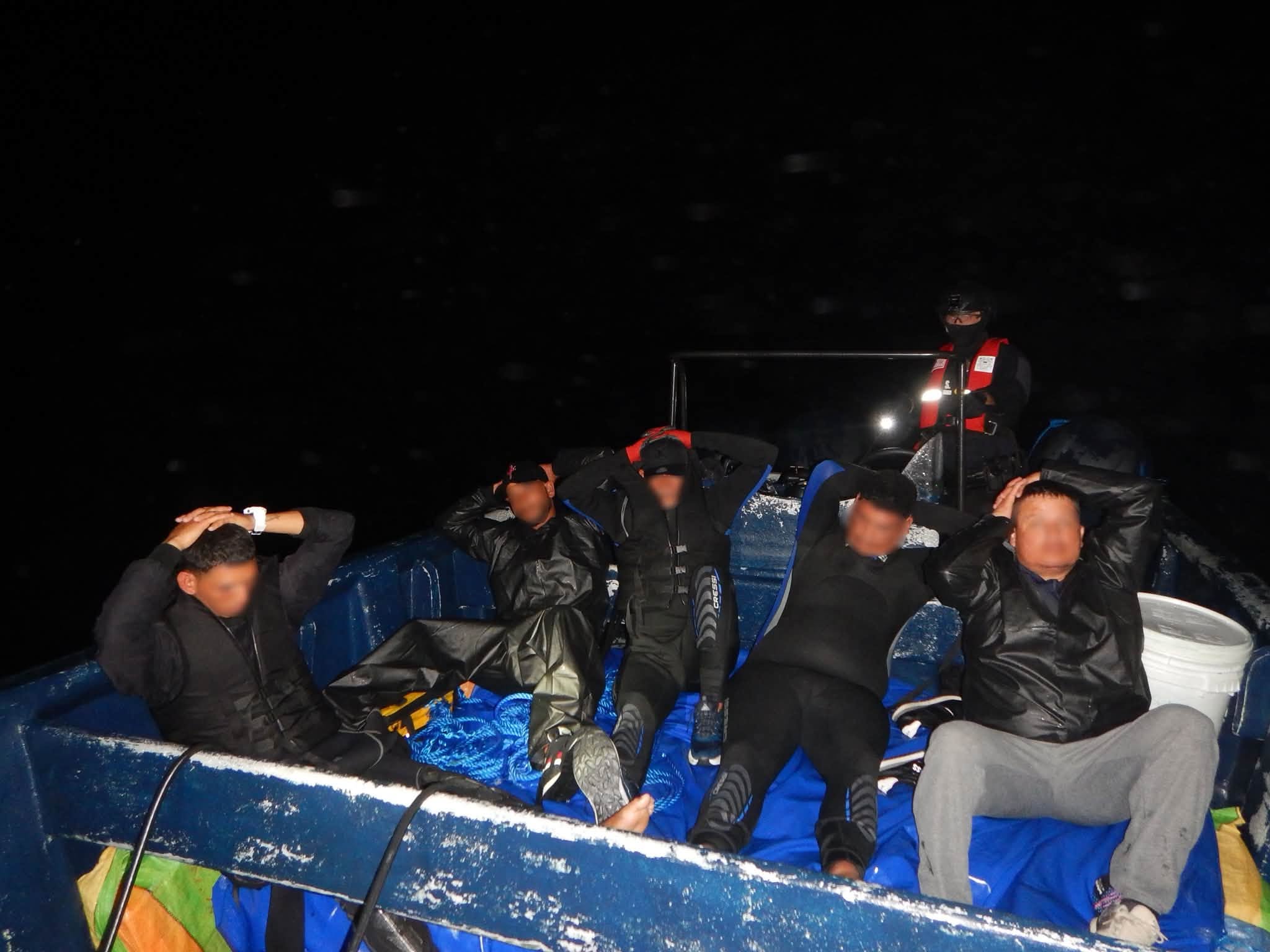
    In a major coordinated crackdown on transnational drug trafficking, Suriname’s combined security forces have intercepted a low-profile smuggling vessel carrying roughly 1,600 kilograms of illicit narcotics on the Suriname River, close to the Jules Sedney Harbor, and taken all nine Ghanaian crew members into custody. The operation, carried out on July 10 by the country’s Judicial Intervention Team (JIT), was built on actionable intelligence developed by the Counter Narcotic & Terrorism Intelligence Unit (CNTI), which operates under the Directorate of National Security (DNV).

    According to an official press statement released by Suriname’s Public Prosecutor’s Office, following the interception on the water, the vessel and all people on board were escorted to the pier managed by the Suriname Coast Guard and Maritime Authority Service (MAS). At this location, JIT agents, CNTI analysts, and Coast Guard personnel conducted a full, joint search of the craft. The search uncovered the large cache of narcotics hidden in a concealed compartment built into the vessel.

    Local Surinamese outlet Starnieuws has additionally confirmed that the intercepted vessel departed from a well-known local fishing enterprise, a detail that points to potential exploitation of legitimate commercial operations by transnational smuggling networks to move illicit goods.

    Authorities confirmed that all nine crew members, who hold Ghanaian nationality, were arrested immediately following the discovery of the drugs. The investigation into the broader trafficking network connected to this shipment remains active and ongoing, and law enforcement officials have not ruled out additional arrests as more details of the operation emerge.

    In the wake of the interception, the Public Prosecutor’s Office emphasized that Suriname remains unwavering in its commitment to combating transnational organized crime. The statement made clear that the South American nation will not serve as a safe haven for foreign criminal actors or transnational criminal organizations seeking to use its territory for illicit trafficking activities.

  • Barbados steps up disaster preparedness push

    Barbados steps up disaster preparedness push

    As climate-driven extreme weather events grow increasingly destructive across the Caribbean, Barbados has reiterated its commitment to scaling up disaster preparedness infrastructure and policies, with regional leaders prioritizing protection for communities that bear the brunt of climate change impacts. The call to action came from Adrian Forde, Barbados’ Minister of People Empowerment and Elder Affairs, during a recent regional dialogue focused on Adaptive Social Protection and Disaster Response hosted at the Lloyd Erskine Sandiford Centre.

    In his address to attending stakeholders, Forde emphasized the sharp upward trend in the frequency, intensity, and economic cost of climate-related natural disasters across the Caribbean basin. He noted that every nation in the region has already experienced firsthand the catastrophic damage these events leave in their wake, a reality that has shaped Barbados’ urgency to reinforce adaptive protections for vulnerable groups.

    Forde referenced the recent hit of Hurricane Beryl, which inflicted severe damage on Barbados’ critical fishing industry, as just the latest example of the threat climate disasters pose to regional development. “We in the region do not need statistics to tell us how destructive natural disasters can be — we have lived that destruction,” Forde stated. “Each extreme weather event chips away at years of intentional hard work and hard-won developmental progress, pushing already vulnerable households further into economic hardship. In just a few hours, a single powerful storm can reverse a full decade of steady, consistent growth for our communities.”

    The two-day dialogue and workshop was organized by the Inter-American Development Bank (IDB), a leading regional financial institution focused on development in Latin America and the Caribbean. The event’s core goal is to strengthen integrated social protection systems across the region, covering both contributory social programs, non-contributory support initiatives, and essential care services that serve communities in the aftermath of climate disasters.

  • Aunty Cavelle’s Restaurant Burglarized Overnight

    Aunty Cavelle’s Restaurant Burglarized Overnight

    A local eating establishment has become the newest addition to an expanding roster of commercial properties hit by a recent wave of break-ins, according to a public post from the business. In the statement, the restaurant’s management has issued an urgent appeal to ordinary community members to step forward with any details that could help law enforcement pinpoint the individual responsible for the break-in.

    The call for public assistance outlines two clear pathways for people to share what they know: anyone holding relevant information is encouraged to reach out directly to local law enforcement authorities, or they can choose to submit their tips privately through an alternative channel to support the ongoing investigative process.

    As of the latest update, police departments have not published any formal, verified statements regarding the details of this reported break-in, leaving key questions about the value of stolen property, the timing of the incident, and potential leads still unanswered while the probe remains in its early stages.

  • Sod turns on Vineyard Meadows in mill’s shadow

    Sod turns on Vineyard Meadows in mill’s shadow

    On a sunny Friday in Barbados, construction officially kicked off on what will stand as one of the largest affordable housing developments in the nation’s modern history. The 300-year-old former Vineyard agricultural plantation in St. Philip, once dedicated exclusively to growing commercial crops, will now be reborn as Vineyard Meadows, a planned 1,100-home community forged through a groundbreaking public-private joint venture.

    The partnership pairs Barbados’ state-run National Housing Corporation with Vineyard Development Inc., a subsidiary of BJ Investments Ltd. led by Bjorn Bjerkhamn, a construction industry leader with five decades of experience delivering residential developments across the island, including the successful Ridge Meadows and Whitehall Meadows projects.

    Spread across six construction phases that will unfold over five to six years, the development is centered on the last surviving landmark of the original plantation: the 300-year-old Pollards Mill, which will be preserved as a historic touchstone for the new community. Initial pricing for complete house-and-land packages will start at $170,000, a rate structured to meet the needs of middle- and low-income Barbadian families.

    Speaking at the official groundbreaking ceremony, Prime Minister Mia Mottley framed the initiative as far more than a standard construction project, positioning it as a core driver of national transformation and long-term macroeconomic growth. She emphasized that the project marks a fundamental shift away from outdated, piecemeal housing strategies toward a model that builds complete, inclusive, and sustainable communities.

    “This housing project is not just a housing project – it is the building of a community,” Mottley told the gathered crowd of government officials, private sector leaders, and parliamentary colleagues. “It is the ambition of this government to create opportunities for every Barbadian to be homeowners rather than renters and tenants in their own land. I have said too often that rent is dead money. When it leaves your pocket, it’s gone and you get back nothing from it. But that same sum of money when it leaves your pocket as a mortgage payment gives you equity that builds long-term wealth.”

    Mottley also highlighted the unique financial structure of the joint venture that directly benefits homebuyers. Under the agreement, the Barbadian government contributes the land itself as its equity stake in the project, eliminating the need for private developers to take on costly land acquisition loans. This arrangement cuts out an estimated $10,000 to $15,000 in additional legal and financing fees that would otherwise be passed on to individual homeowners, making the properties far more accessible for first-time buyers.

    Staying true to the government’s vision of an inclusive society, the development rejects the model of segregated gated communities, a stance Mottley reaffirmed during the ceremony. “Barbados is best when everybody lives together as a community, and that is why I have never supported gated communities,” she said. “We have had poor people and rich people live next to each other and work with each other for generations. That interconnection is the foundation of a strong, cohesive nation.”

    Bjerkhamn, chairman of Vineyard Development Inc., noted that the project sets a historic precedent for Barbados as the first large-scale housing development delivered through a government-private sector collaboration. “Together with the National Housing Corporation, we share a common vision to make a meaningful contribution to the housing market by increasing the supply of affordable, quality homes for Barbadian families,” he said. “Beyond providing homes, Vineyard Meadows will create meaningful opportunities across the local economy.”

    During the construction phase alone, the project is projected to employ roughly 500 Barbadian workers, with developers prioritizing locally sourced building materials to support domestic businesses and stimulate broader economic activity across the island. When complete, the formerly underutilized plantation land will become a vibrant, connected residential neighborhood.

    To meet the diverse needs of residents from single young professionals to growing families, the development offers five distinct flexible architectural layouts ranging from 396-square-foot one-bedroom units (the Fern model) up to 936-square-foot three-bedroom, two-bathroom flagship units (the Laurel model). Unlike many entry-level affordable housing developments that force residents to relocate as their families or incomes grow, all Vineyard Meadows units are designed to be expandable. Owners can add space and upgrade finishes incrementally over time as their budgets allow, meaning homeowners can put down roots and stay in the community long-term as they move up economically.

    Derek Edwards, chief operations officer of Vineyard Development Inc., emphasized the community-centered design philosophy that guides the entire project. “Today, on the lands of the Vineyard plantation, surrounding the historic property of Pollard’s Mill, we do more than turn soil; we turn a page,” Edwards said. “For generations, this land grew crops. From today, it will grow something far more valuable: homes, families, and community. Affordability should never mean one size fits all, and our one-bedroom homes are deliberately designed to grow with you. As your family grows, and as your means grow, that one-bedroom can expand to a three-bedroom. You will not have to leave Vineyard Meadows to move up in life.”

    Neighborhood infrastructure is purpose-built to foster connection and active living, rather than the isolation common to many modern residential developments. Shared public amenities include road tennis courts, netball courts, a mini football pitch, children’s playgrounds, and an expansive walking track lined with outdoor fitness stations. A future on-site commercial village will add local dining, retail shops, and daily convenience services, cutting down on the need for residents to travel long distances for everyday needs. To address concerns from nearby communities in St. Philip, developers have adjusted road layouts and added green buffer zones to reduce the impact of construction and long-term traffic on existing residents.

    Vineyard Meadows is the flagship project in Barbados’ broader national strategy to overhaul the country’s housing infrastructure, with additional planned developments including multi-storey condominium projects in urban Greenfields and Exmouth. The government is also pairing housing renewal with climate-smart vertical agricultural initiatives across the country to preserve national food security.

    For stakeholders across both the public and private sectors, the project represents more than just a solution to the island’s affordable housing shortage: it is a proof of concept for how cross-sector collaboration can deliver inclusive, sustainable growth that benefits all Barbadians.

  • SAO-training Automontage past Micro Credentials-concept toe

    SAO-training Automontage past Micro Credentials-concept toe

    A landmark skills training initiative has launched in Suriname, marking the country’s first vocational auto mechanics training program delivered under the formal Micro Credentials framework. On Wednesday, six employees of Suriname Earth Moving Contractors N.V. (SEMC) received their official Auto Mechanics certification from the Suriname Foundation for Labor Mobilization and Development (Stichting Arbeidsmobilisatie en Ontwikkeling, SAO), capping off the successful pilot cohort of the innovative program. A second cohort of six SEMC staff members is scheduled to begin the same training on Saturday, July 11.

    Micro Credentials are nationally recognized, compact qualifications that verify learners have mastered specific, job-relevant knowledge, skills and professional competencies. Unlike traditional full-length vocational programs, this framework breaks a complete occupational training curriculum into standalone, bite-sized modules, each completed with its own formal certification. For the auto mechanics pilot, participating SEMC employees gained hands-on and theoretical expertise across critical areas of the trade, including routine vehicle maintenance and service, chassis repair and modification work, and brake system installation and preventative maintenance.

    According to SAO leadership, the adoption of the Micro Credentials framework represents a major milestone in the advancement of competency-focused vocational education in Suriname. The model shifts focus beyond simply earning certificates to prioritizing demonstrable, workforce-aligned skills that match current labor market demand. This approach directly advances the core goal of Suriname’s Directorate of Welfare and Labor to reduce mismatches between employer needs and worker qualifications, creating a more efficient and inclusive labor market.

    The certification ceremony was attended by key public and private sector stakeholders, including Raj Jadnanansing, Deputy Minister of Health, Welfare and Labor; Joyce Lapar, SAO Director; Naomi Esajas-Friperson, Chair of the SAO Board of Directors; and Avriëlle Cicilson, Commercial Operations Manager of SEMC Labor. All speakers addressed the graduating participants, highlighting the critical value of continuous upskilling in today’s evolving labor market. They emphasized that the partnership between SAO, a public labor development body, and SEMC, a major private sector employer, serves as a strong model for cross-sector collaboration to develop a skilled national workforce.

    Deputy Minister Jadnanansing noted that the Micro Credentials model is built around the principle of “learn while working,” a structure that creates tight, seamless integration between theoretical knowledge and on-the-job practical application. He congratulated the six new certification holders and encouraged them to leverage the professional development opportunities provided by their employer to advance their careers. Jadnanansing added that beyond technical trade expertise, soft social competencies are also essential for long-term career success, and that investing in a skilled workforce directly supports broad-based economic development across Suriname.

  • Barbados aim to stay unbeaten at FIBA Americup qualifiers

    Barbados aim to stay unbeaten at FIBA Americup qualifiers

    After securing two standout opening wins against Haiti and the Cayman Islands, Barbados’ Senior Men’s National Basketball Team has its sights firmly set on preserving its perfect start at the FIBA Americup 2029 Caribbean Pre-qualifiers being held in Guyana. With progression to the next stage of qualifying reserved exclusively for group winners, every remaining contest carries high stakes as the Caribbean side fights to lock in first place in Group B.

    Barbados will kick off its final stretch of group play against Grenada on Saturday at Georgetown’s Cliff Anderson Sports Hall, before wrapping up their pre-qualifier campaign against St Vincent and the Grenadines the following day. Fresh off the team’s come-from-behind victory over Haiti on Thursday, head coach Charles Vanderpool expressed confidence in his squad’s ability to keep their momentum going. The match against Haiti was widely projected to be one of Barbados’ toughest tests of the group stage, making the comeback win even more meaningful for the side.

    “This has been the product of so much hard work from the entire group, and this match really was our biggest hurdle to clear in this whole competition,” Vanderpool told the team’s media team after the win. “The effort every single one of my players put out there was outstanding. Even when we fell behind early in the game, no one got discouraged. We kept our composure and proved we belong on the same court as any team here. For a small island nation, we have no shortage of talent.”

    Vanderpool also noted that the series of positive breaks the team has experienced both in the lead-up to and during the tournament have been remarkable, crediting what he called divine intervention for the smooth path. “When so many elements align perfectly for the team, it can only be divine work. We truly believe we have God’s blessing with us throughout this competition, and we’ve been through a lot to get to this point,” he said, referencing the team’s preparation tours to Chile and Mexico over the past months. While those trips included several tough losses for the squad, Vanderpool emphasized that those defeats carried invaluable lessons that have made the team stronger ahead of the pre-qualifiers.

    Guard Kyrone Alexander emerged as the standout star of Thursday’s win, pouring in a game- and team-high 35 points to lead the comeback. Alexander shared that he was thrilled to contribute to the victory and praised the entire roster for their consistent effort. “I’m very proud of how we performed today. Every guy brought great effort and paid close attention to the game plan, even the substitutes who came off the bench maintained the same high intensity as the starters,” Alexander said.

    Mirroring his coach’s comments, Alexander pointed to last summer’s preparation matches in Chile as a critical turning point for the team’s development. He explained that the Barbados squad is now far more cohesive and strategically disciplined than it was just months ago, as the entire group remains focused on extending their unbeaten streak and securing their spot in the next round of FIBA Americup qualifying.