博客

  • Untapped demand for Caribbean travel revealed by Barbados campaign, says TEMPO CEO

    Untapped demand for Caribbean travel revealed by Barbados campaign, says TEMPO CEO

    A recent regional tourism marketing campaign centered on Barbados has exposed significant unmet demand for Caribbean getaways, especially among diaspora communities residing in the United States, campaign organizers have confirmed.

    The promotion, branded as the “Win a Trip to Barbados” initiative, was spearheaded by TEMPO Networks in strategic collaboration with interCaribbean Airways and Divi Southwinds Beach Resort. According to Frederick A. Morton Jr., founder and chief executive officer of TEMPO Networks, the campaign delivered impressive engagement metrics: it generated over 14,000 content impressions, drove more than 22,500 participant interactions, and captured the attention of over 1,800 unique active users.

    Breakdown of participant data shows that nearly 69% of all entrants were located within the United States, with additionally robust engagement recorded from both local Caribbean markets and diaspora communities across the globe. For Morton, these results align with a growing pattern that has emerged across the network’s recent destination marketing work. “This Barbados-focused campaign reinforced a trend we’ve spotted across multiple recent destination initiatives, including separate campaigns for the U.S. Virgin Islands and British Virgin Islands,” Morton explained. “In every project, we’ve seen the same pattern: high engagement from both on-island Caribbean audiences and the broader U.S. market. This makes clear that there is enormous untapped demand for Caribbean travel, and that demand is especially strong among the global Caribbean diaspora.”

    Beyond highlighting unmet demand, the campaign also validated the enduring power of culturally rooted messaging in driving tourism growth, Morton added. “The level of audience connection we built shows that when Caribbean stories are told in an authentic way, audiences respond enthusiastically,” he said. He went on to note that destination marketing delivers the strongest results when it is authentic, culturally resonant, and distributed through platforms that already hold the trust and sustained attention of Caribbean-centered audiences.

    The campaign’s grand prize winners, Erica and Winston Doras-Pemberton, recently wrapped up their five-night, six-day complimentary stay at Divi Southwinds Beach Resort, after flying to Barbados via interCaribbean Airways this Wednesday.

    Morton emphasized that the competition is part of TEMPO’s more than 20-year mission to boost regional travel across the Caribbean. The network’s first “Win a Trip” promotions, which first built a loyal audience, were launched in early partnerships with the now-defunct regional carrier LIAT, he recalled.

    Looking ahead, TEMPO Networks plans to scale this successful campaign model across the entire Caribbean region. “We expect to announce another exciting partner destination in the near future, as we work to make these campaigns a consistent core offering of TEMPO’s tourism development work,” Morton said.

    He also added that the results of the Barbados campaign provide a replicable blueprint for expanded cross-sector collaboration across the Caribbean’s tourism ecosystem, bringing together airlines, hotels, media outlets and tourism boards to drive shared growth.

  • Teens seek common ground through culture, conversation

    Teens seek common ground through culture, conversation

    On a recent Friday, 37 teenagers aged 14 to 18 from Barbados and the United States gathered at Barbados’ Skymall for a one-day collaborative workshop designed to tackle common youth mental health struggles through arts-based practice and cross-cultural connection. Titled *Finding My Voice, Embracing My Culture, Strengthening My Mind*, the event was co-hosted by two youth-focused organizations: Barbados’ Pinelands Creative Workshop (PCW) and the U.S.-based Taratibu Youth Association (TYA).

    The workshop was rooted in a core belief that creative expression offers a more accessible and authentic pathway to emotional processing than traditional talk-based settings, serving as a tool to help young people navigate anxiety, familial conflict, identity formation, and other common adolescent challenges. For PCW, this initiative builds on the organization’s longstanding mission to leverage creative arts as a vehicle for youth empowerment and healthy development.

    Sophia Greaves, chief executive officer of PCW, emphasized that the collaboration marked another milestone in the organization’s work to connect creative practice with youth mental health support. “This is part of our ongoing collaborative journey,” Greaves explained. “We’re working with Taratibu Youth Association to use creative methodologies to help young people work through all kinds of complexities – from anxiety and fear to internal family conflict, and the growing pains of transitioning from adolescence to young adulthood.”

    Greaves noted that creative outlets – ranging from dance and singing to visual art – enable young people to articulate emotions that often feel impossible to put into words, giving on-site mental health professionals clearer insight into participants’ needs to develop targeted coping strategies. “This space allows for emotional freedom of expression in a way that isn’t rigid or clinical,” she said. “Whether a participant dances, sings, or draws, our in-house psychologists get a genuine picture of what they’re struggling with, and can start guiding them toward healthy coping strategies.”

    Against a backdrop of rising reports of disorientation and isolation among young people globally, the workshop prioritized root-cause healing in a safe, supportive environment. The event also complements PCW’s existing Career Life Management Programme, and Greaves voiced her hope that similar arts-focused mental health initiatives will be integrated into schools and community programs across Barbados as a strategy to reduce youth violence.

    Dr. Yanique Edmond, a TYA representative and board-certified mental health and trauma specialist, emphasized that performing arts and emotional wellness are inherently linked, especially for young creatives. “To sustain a creative practice without it breaking you down or causing unaddressed trauma, you need a solid mental health foundation,” she explained. “When you channel other people’s emotions and pain into your art, it can easily become overwhelming if you don’t have the skills to process it.”

    The workshop’s core curriculum was designed to teach teens to first identify their emotions, then channel those feelings into creative expression in healthy, constructive ways. “The goal is to turn that emotion into art that becomes a source of hope and builds resilience,” Edmond said. “This doesn’t happen on its own. Teens need guidance from knowledgeable adults to support them on their journey to wellness.”

    This cross-border workshop is part of TYA’s broader international effort to connect young people through cultural exchange and advance a holistic, African-rooted framework for mental health that integrates mind, spirit, and body. The organization has hosted similar initiatives across Ghana, Togo, Benin, Tanzania, South Africa, Zambia, Zimbabwe, and St. Croix, centered on elevating interconnected African cultural traditions of holistic wellness that have been practiced for generations.

    After a full day of discussions, skill-building, and cultural exchange, participants translated their takeaways into original improvised performances, spanning dance, music, poetry, and spoken word. The pieces centered on themes of personal resilience, cultural identity, and hope, drawing directly from the day’s conversations.

    Dr. Dominique Charlot-Swilley, a clinical child psychologist from Georgetown University and TYA delegate, added that the workshop builds on more than two decades of international cultural exchange, but with an explicit new focus on emotional wellbeing. She noted that the event highlights a unifying truth often overlooked in global discourse: “There are so many similarities between us, even though the world often tries to make us feel divided. That narrative of difference simply isn’t true.”

    Cross-border exchanges like this allow young people from different national contexts to recognize their shared experiences of adolescence, while learning from one another’s cultural perspectives. “Young people all over the world are navigating trauma,” Charlot-Swilley noted. “We have more access to other people than ever through social media, but so many teens still feel deeply isolated and alone.”

    As social and emotional pressures on adolescents continue to grow, she emphasized, creating intentional safe spaces where teens can openly discuss their emotions, embrace their cultural identities, and build connections with peers across borders is more critical than ever.

  • SVG go under to Haiti after cruising past Cayman Islands

    SVG go under to Haiti after cruising past Cayman Islands

    The FIBA AmeriCup 2029 Caribbean Pre-Qualifiers, hosted in Guyana, delivered another chapter of competitive men’s international basketball on Saturday, as St. Vincent and the Grenadines (SVG) fell to a 100-66 defeat at the hands of Haiti. While the final scoreline paints a one-sided picture of the contest, the tournament has already revealed promising signs of growth for SVG, anchored by breakout young talent Shad Thomas. Thomas, a first-time standout with the senior national team, turned in yet another standout performance in Saturday’s matchup, pacing all SVG scorers with 17 points while adding 10 rebounds and 2 blocks to his stat line. The result marked the rookie’s second consecutive double-double of the pre-qualifier tournament, cementing his status as a breakthrough bright spot for the underdog Vincentian side through the opening group stage. Saturday’s setback comes just 24 hours after SVG notched a convincing 96-63 victory over the Cayman Islands on the tournament’s opening matchday. Contrary to the 33-point final margin of that win, the contest was tightly fought through the first two quarters, with SVG clinging to a narrow 41-37 halftime lead. A disciplined, focused defensive effort in the second half allowed SVG to expand its slim advantage into a lopsided win, showcasing the team’s depth, ability to withstand pressure, and defensive resilience. Leading the charge in that victory was wing Phillip Lawrence-Ricks, who put together a well-rounded all-around performance of 19 points, 6 rebounds, and 2 assists to guide his side to the opening win. Now, fresh off Saturday’s loss to Haiti, SVG is turning its full attention to its final group-stage matchup against Barbados, scheduled to tip off at 12:30 p.m. local time on Sunday. In an official press statement issued after Saturday’s contest, the St. Vincent and the Grenadines Basketball Federation reaffirmed the side’s determination to close out the tournament on a high note, saying that both players and coaching staff remain committed to delivering a strong, competitive performance in their final group-stage outing.

  • Govt opens doors for 92 young interns

    Govt opens doors for 92 young interns

    Starting this Monday, 92 young Barbadians will step out of the classroom and into real-world public service workplaces as participants in a newly relaunched Summer Internship Programme, a collaborative initiative led by the country’s Ministry of Home Affairs and Information and the Office of the Attorney General.

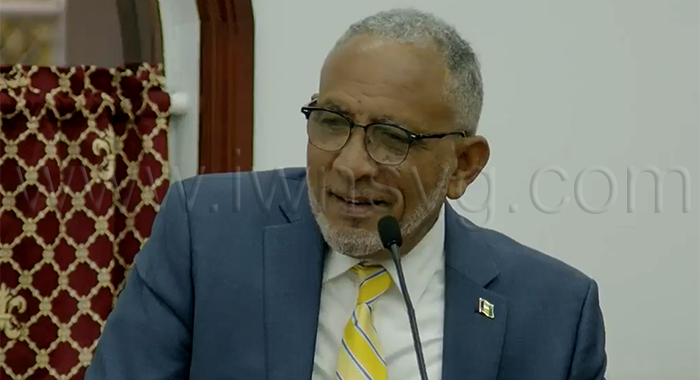
    The incoming cohort was officially welcomed during a press briefing held Friday at the Barbados Postal Service, where current Home Affairs and Information Minister Gregory Nicholls opened up about the origins of the programme, noting it was first launched by former Home Affairs Minister Wilfred Abrahams, who now serves as Attorney General. When Nicholls took over his ministerial role, Abrahams prioritized continuing the youth-focused initiative, and the pair worked across teams to expand placements across all relevant government departments. With 15 to 16 separate agencies falling under the Ministry of Home Affairs alone, the programme now offers diverse placement opportunities across multiple sectors of public service.

    Designed to bridge the gap between academic learning and professional work, the summer internship positions participants across more than a dozen government departments and public agencies, including the Probation Department, Immigration Department, Barbados Postal Service, Government Printery, Caribbean Broadcasting Corporation, Government Information Service, National Council on Substance Abuse, Barbados Meteorological Services, Department of Emergency Management, Barbados Prison Service, Government Industrial Schools and the Barbados Broadcasting Authority.

    In his address to the new intern cohort, Nicholls framed the programme as far more than a temporary summer job, positioning it as a foundational stepping stone for the next generation of national leaders. He encouraged participants to approach their placements with curiosity, humility and a commitment to learning, advising: “Do not see yourselves as summer workers; see yourselves as learners, as explorers, and as future leaders. Be curious, ask questions respectfully, of course. Observe, seek to understand not only what is done, but why it is done. Every task, no matter how small it may be, offers a valuable lesson.”

    Nicholls also highlighted three core traits he said would help interns get the most out of their experience: resilience, strength of character and respect. Acknowledging that new roles often come with uncertainty and unforeseen challenges, he noted that growth only happens when people push past their comfort zones. “There are moments when you encounter challenges. You’ll be asked to perform tasks that you have never done before, you may make mistakes and you may feel uncertain at times, that is perfectly normal. Growth often occurs when we step outside of our comfort zones,” he said. He added that robustness – defined as discipline, professionalism, punctuality and initiative – is key to building trust with supervisors and making a lasting positive impression. Nicholls closed by reminding participants that regardless of their future career paths, Barbados needs the energy, creativity, integrity and vision of its young people to move forward.

    Attorney General Abrahams, who founded the programme, explained that it fills a critical gap in youth development: it teaches unwritten professional skills that are rarely covered in formal education, including workplace dress codes, professional etiquette, communication norms and workplace professionalism. He also shared that the programme has a proven track record of creating long-term employment pathways, noting that many past participants have been hired as full-time staff by the departments where they interned.

    Abrahams pointed to the impact of the 2023 cohort’s placement during Hurricane Beryl, where interns at the Department of Emergency Management gained hands-on experience in disaster response, from processing emergency calls to coordinating public safety shutdowns. “This is not just something to spend the time on in the summer. We want to teach you about life, we want to teach you about work,” he said, adding that parents are encouraged to engage with their children about their experiences to fully integrate the learning.

    The attorney general added that the internship also drives transformative personal growth, helping young people shift from a student mindset to that of a working young adult. Sharing an example from his own constituency, he said many past participants entered the programme raw, undisciplined and unfocused, but left with clear direction and professional maturity that changed the trajectory of their lives.

    Participant feedback on the programme has been overwhelmingly positive, with many young people saying it addresses a critical gap in youth employment preparedness. Amiah Padmore, an aspiring psychology professional, called the opportunity “a great chance” to build foundational experience ahead of her planned career. “I feel very good. I feel like this is a great opportunity for me and I will definitely have experience doing things like this because I want to go into psychology. And I like to talk to people,” she said. While she has no preference for her department placement, she plans to make the most of every experience, noting that many young people like herself lack exposure to how professional workplaces operate. “It’s important because people like me are very misguided. They don’t have much knowledge about the work and how it operates or what to do, so it’s just for them to practice or get into it to know what to do,” Padmore explained.

    Seventeen-year-old Davidson Griffith, a participant with experience in the Barbados National Youth Parliament and a past youth ambassador advocating for students with disabilities, echoed that excitement. Griffith, who has dyslexia, said the programme gives young people a rare chance to build interpersonal skills while contributing directly to national development. “I feel extremely great it’s an opportunity for young people to come together and to develop their interpersonal skills as it pertains to serving the public of Barbados and contributing to the development of Barbados,” he said. Prepared to serve in any assigned department, Griffith said he hopes to set an example for other young Barbadians, encouraging them to take advantage of the opportunities the government provides. “My interest in this internship is to serve. If it’s serving in whatever department that the internship offers, I just want to be there to serve the people of Barbados and to be an example for young people of Barbados, especially young men in Barbados, that the government is providing these opportunities and don’t take them for granted,” he said.

  • Antigua and Barbuda Explores Strategic Partnership to Strengthen Eye Care Services

    Antigua and Barbuda Explores Strategic Partnership to Strengthen Eye Care Services

    The dual-island Caribbean nation of Antigua and Barbuda is actively pursuing a strategic collaborative partnership with one of China’s top-tier eye care organizations, a move that forms a core part of the government’s broader push to upgrade local ophthalmic services and expand equitable access to high-quality vision care for all its residents.

    A high-level official delegation from Antigua and Barbuda, led by Health, Wellness, Environment and Civil Service Affairs Minister Michael Joseph, recently completed a working visit to HE Vision Group, China’s preeminent eye care provider renowned for its integrated three-pronged focus on clinical care, professional medical education, and cutting-edge ophthalmic research. Joining Minister Joseph on the trip were Dr. Shivon Belle-Javis, Medical Director of Antigua and Barbuda’s flagship Sir Lester Bird Medical Centre, and Clement Antonio, the country’s resident ambassador to the People’s Republic of China.

    Guided by a senior medical team led by Dr. Wei He, the visiting delegation toured HE Vision Group’s full ecosystem of care and training, including its network of local community clinics, specialist ophthalmic hospitals, and affiliated university research and education facilities. During the tour, the delegation gained first-hand insight into how the institution delivers tiered eye care services across primary, secondary, and tertiary levels of care. They also delved into HE Vision Group’s unique integrated operating model, which unifies direct patient care, specialized professional training, and scientific research under one framework — a model that has cemented the organization’s position as a national leader in Chinese eye health.

    Following the visit, Minister Joseph shared that the bilateral discussions held during the trip have laid the groundwork for impactful collaborative work that stands to substantially upgrade the breadth and quality of eye care services across Antigua and Barbuda.

    Joseph highlighted that a key driver of HE Vision Group’s outstanding success is its extensive, purpose-built professional training infrastructure. This ecosystem supports ongoing upskilling for ophthalmic personnel to maintain high clinical standards, while also fostering continuous innovation in ophthalmic medical practice and technology.

    The proposed partnership under discussion includes multiple targeted initiatives: upgrading Antigua and Barbuda’s existing eye care infrastructure and expanding access to specialized vision services that are currently limited or unavailable locally. These planned projects align directly with the Antigua and Barbuda Ministry of Health’s long-term strategic vision: to develop a regional specialist eye hospital based in the country that can serve not only its own citizens but also patients across the broader Caribbean region.

    Minister Joseph underscored that strategic investments in professional education, advanced medical technology, and cross-border international partnerships are fundamental to improving overall healthcare delivery in Antigua and Barbuda. These efforts, he noted, will ultimately ensure that all citizens can access world-standard eye care services close to home.

  • Minister of Health Explores Strategic Partnership with Zhejiang People’s Hospital During China Visit

    Minister of Health Explores Strategic Partnership with Zhejiang People’s Hospital During China Visit

    During an official working visit to China, Hon. Michael Joseph, Minister for Health, Wellness, Environment and Civil Service Affairs of Antigua and Barbuda, has marked a major new advance in efforts to upgrade the Caribbean nation’s healthcare infrastructure through high-level talks with senior leadership at Zhejiang People’s Hospital.

    During his tour of the leading Chinese medical institution, Joseph got a first-hand look at the facility’s cutting-edge medical operations. He noted the hospital’s sophisticated integration of artificial intelligence into clinical diagnostics and care delivery, its pipeline of innovative healthcare technologies, and its long-standing focus on advancing medical training, academic research, and ongoing professional development for clinical staff.

    As a key outcome of the exploratory discussions, Dr. Zahong, a distinguished urologist and senior leader at Zhejiang People’s Hospital, pledged to organize a specialized medical mission to Antigua and Barbuda in the near future. Once deployed, the mission will carry out comprehensive assessments for patients in need of complex post-operative care and specialized surgical interventions, while also delivering targeted expert mentorship and capacity-building support to local clinical teams.

    Minister Joseph expressed enthusiastic support for the partnership initiative, framing the visit as a critical milestone in cultivating global healthcare collaborations that deliver tangible benefits to Antigua and Barbuda’s population. He emphasized that the cooperation will directly improve patient outcomes, lift the level of local clinical expertise, and expand access to life-saving advanced medical services for residents across both islands.

    “Through knowledge sharing, specialized skills training, and on-the-ground clinical support, this collaboration has the potential to transform the strength and performance of our entire healthcare system,” Joseph stated. “It aligns with our core commitment to ensuring that the people of Antigua and Barbuda can reap the benefits of global best practices and the most cutting-edge medical innovation developed around the world.”

    The Ministry of Health of Antigua and Barbuda reaffirmed its long-term dedication to building strategic international partnerships that upgrade the quality of local healthcare delivery, expand the capacity of domestic medical workforces, and deliver improved health outcomes for all citizens of the nation.

  • St. Kitts Grill Fest launches first regional BBQ Competition during Restaurant Week – WIC News

    St. Kitts Grill Fest launches first regional BBQ Competition during Restaurant Week – WIC News

    Caribbean barbecue culture is stepping into the regional spotlight this month, as St. Kitts prepares to host the inaugural edition of the St. Kitts Grill Fest Regional BBQ Competition, a highlight of the 10th anniversary celebration of St. Kitts and Nevis Restaurant Week.

    Scheduled to run from 1:00 PM to 9:00 PM on Saturday, July 18 at St. Kitts’ scenic Frigate Bay Lawn, the landmark competition brings together top grill masters from four Caribbean nations beyond the host islands: Anguilla, Barbados and Grenada, all vying for a single overall champion title. Organizers teased the historic event in a promotional Facebook post, asking: “One Title. Five Islands. Who will take the crown?”

    This 2026 iteration of the grill fest expands beyond St. Kitts’ long-running local barbecue contest to create the first regional showcase of Caribbean grilling technique, with five distinct competitive categories for participants. Joining returning staple categories chicken, lobster, pork, and fish is a brand-new 2026 addition: baby back ribs, adding an extra layer of challenge and variety for competitors and attendees.

    To build anticipation ahead of the event, organizers have rolled out a promotional video series dubbed “Firing Up the Grill,” with the first two episodes already released to the public. Behind the scenes, the event has secured key industry support: St. Kitts Marriott Resort and The Royal Beach Casino serves as the official accommodation sponsor, with organizers noting that the sponsorship has been “essential to bringing the experience to life and ensuring a seamless, welcoming stay behind the scenes.”

    Beyond the competitive grilling action, the one-day festival is designed to cater to attendees of all ages. A dedicated kids’ zone will keep younger guests entertained, while the event will also feature a full roster of additional attractions including a cash bar, independent food and beverage vendors, craft displays from local Caribbean artisans, continuous live musical and cultural entertainment, and attendee giveaways throughout the day.

    Anticipation has been building rapidly across social media, with Caribbean food and barbecue fans already expressing their excitement for the competition. One Facebook commenter summed up the mood, writing: “this gonna be super fun competition.. St. Kitts all the way.”

  • Padarath’s security tightened

    Padarath’s security tightened

    A shocking plot to assassinate sitting Trinidad and Tobago Public Utilities Minister Barry Padarath has prompted authorities to ramp up his personal protection, after a detained gang member confessed to police that a former government minister offered him $250,000 to carry out the killing. The heightened security detail now includes specialized protection from the Trinidad and Tobago Police Service (TTPS) Special Branch, a unit tasked with high-risk security assignments for public officials. The full details of the plot have emerged from a sworn statement given to investigators at the Carenage Police Station, dated December 4, 2025, by the suspect who is currently in police custody on unrelated criminal charges.

    According to redacted excerpts of the statement obtained by the Sunday Express, the alleged plot was first set in motion in November 2025. The gang member told investigators he was searching for a high-paying job through a relative, who connected him to a former government minister that owned a local club in McBean. When the suspect approached the ex-minister asking about work, complaining that other connected figures were securing large government contracts, the former official offered him a far more dangerous opportunity: a $250,000 payment to eliminate Padarath, whom the ex-minister criticized as overly outspoken.

    In the confession, the suspect quoted the former minister as saying he would provide all the logistical support needed for the attack, including firearms, vehicles, and detailed information on Padarath’s schedule and locations. The former minister also instructed the suspect to recruit additional accomplices and warned him to keep the plot completely secret. To solidify the agreement, the ex-minister reportedly handed the suspect an upfront payment of $3,000, calling it a “sweetener” to secure his cooperation and pressured him to complete the assassination as quickly as possible.

    When questioned by investigators, the suspect confirmed he understood the phrase “get rid of” Padarath meant killing him, noting the former minister made a throat-slitting gesture to clarify his intent. The ex-minister also described Padarath to the hitman as a talkative, slim Indo-Trinidadian government minister in the current UNC administration, adding that the minister “talks too much” and “had to go.”

    The suspect told police he had never previously accepted a contract killing, though he admitted to carrying out smaller acts of violence for his relative, including assault, intimidation, and needle injection to threaten targets. He added that the relative connected him to the plot because he assumed the suspect had prior experience with violent criminal work. When told of the $250,000 payout, the suspect said he immediately thought the former minister must be insane, calling the offer to kill a sitting sitting government minister shocking even to him.

    Beyond the assassination plot, the suspect also made additional allegations against the former minister, claiming the official runs a large criminal network that traffics cocaine from Colombia and smuggles firearms from both the United States and Colombia through the Port of Point Lisas, with ties to multiple gangs across Trinidad and Tobago. He also named another associate of the former minister who he says manages the drug and weapons smuggling operations.

    The suspect explained he chose to confess to the plot while in custody because he feared for his life outside of detention. He claimed the criminal network has corrupt police officers on its payroll at multiple stations across the country, describing the operation as a well-organized “big organization” that would target him if he spoke publicly about the plot while free. As a result of the confirmed plot, authorities have moved quickly to expand Padarath’s security to neutralize the threat to the sitting minister’s life.

  • Balisier House case could test unexplained wealth laws

    Balisier House case could test unexplained wealth laws

    A high-profile case centered on the construction of the People’s National Movement (PNM)’s multimillion-dollar Port of Spain headquarters, Balisier House, is poised to become a groundbreaking precedent for Trinidad and Tobago’s relatively new unexplained wealth legislation, marking the first documented application of the law in legal proceedings involving a major political party. This assessment comes from attorney Saira Lakhan, who shared her analysis in a WhatsApp response to inquiries from the Sunday Express, following a recent High Court ruling granting an order compelling the PNM to disclose full details of the funding that supported the building’s development. High Court Justice Margaret Mohammed issued the compulsory disclosure order, opening the door for what legal experts say will be a defining moment for the nation’s anti-illicit wealth framework.

    Lakhan emphasized that the case gives domestic courts an unrivaled opportunity to clarify the boundaries and operational mechanics of a law that has only been on Trinidad and Tobago’s books for a few years. “What makes the Balisier House matter unique is that, to the best of my knowledge, this marks the first reported use of the country’s unexplained wealth legislation in proceedings that directly involve a political party,” Lakhan explained.

    Beyond its status as a first-of-its-kind political case, Lakhan noted the proceedings will produce much-needed judicial clarity on how the legislation applies to political party-linked assets, resolving lingering uncertainties around core questions including formal ownership structures, de facto control of assets, identification of eligible respondents in such cases, and the scope of financial disclosure required under the law.

    Crucially, Lakhan cautioned that the court’s approval of this preliminary order does not equate to a formal finding of illegal activity or proof that the funds used to build Balisier House were obtained through unlawful means. “A Preliminary Unexplained Wealth Order is not a final ruling of criminal misconduct, nor does it constitute a definitive determination that the property in question was acquired with funds from illegal sources,” she clarified.

    This case is not the first time Trinidad and Tobago’s courts have examined the country’s unexplained wealth framework. Prior high-stakes proceedings involving multiple individuals — including David and Kendra Neeranjan, and several parties connected to the estate of Sheldon Spring — led to a major review of the legislation by the Court of Appeal in 2023. Those cases ultimately advanced to the Judicial Committee of the Privy Council, which delivered its binding judgment in *Richard Taylor, Assistant Superintendent of Police v Natalie Natasha Spring and another* on April 29, 2026.

    In that ruling, the Privy Council addressed key foundational questions for the legislation: the standard of evidence required to establish reasonable suspicion of unlawful wealth, whether law enforcement can rely on investigations conducted before the law came into effect, and whether a Preliminary Unexplained Wealth Order can be issued against the estate of a deceased person. The appellate body dismissed the appeal and upheld the Court of Appeal’s original ruling. Lakhan explained that the judgment confirms reasonable suspicion required under the act can draw on pre-legislation investigations, so long as the suspicion remains active at the time the application is filed.

    Lakhan also pointed to lessons from jurisdictions like the United Kingdom, which has more experience with unexplained wealth regimes, that can guide Trinidad and Tobago as authorities expand their use of these anti-corruption tools. “One of the clearest takeaways from international experience is that legislation by itself is not enough. Its effectiveness hinges on the quality of underlying investigations, the specialized expertise of the legal and investigative professionals involved, and the fairness and independence of the judicial process,” she said.

    Unexplained wealth probes regularly involve tangled cross-border financial transactions, complex corporate structures, opaque beneficial ownership arrangements, and assets held through shell companies, trusts, nominee holders or third parties, Lakhan noted. As a result, these investigations demand specialized skills from investigators, forensic accountants, legal counsel and other trained professionals.

    “For the legislation to work effectively and retain public trust, every application must be backed by thorough investigation and sufficient credible evidence,” she added. As use of the law becomes more common, Lakhan argued that greater transparency will be critical to maintaining public confidence. She proposed that authorities consider publishing regular aggregated statistics on the volume of applications filed, the number of preliminary and final orders granted, the total value of assets recovered through the framework, and the final outcomes of all proceedings.

    Lakhan stressed that public trust in the unexplained wealth regime will rise or fall based on consistent, impartial application of the law — particularly in high-stakes cases with political implications. “Public confidence depends on both the reality and the perception that the legislation is applied consistently and independently, regardless of the political affiliation, social standing or influence of any person or entity involved,” she said.

    She further clarified that unexplained wealth legislation should be understood as one component of a broader national framework to combat money laundering, organized crime and the illegal accumulation of assets. It is not intended to replace thorough criminal investigations, respect for due process, or formal criminal prosecution in cases where evidence supports criminal charges.

    When asked whether the decision to hire a UK King’s Counsel signals the unusual complexity of these cases, Lakhan noted that Trinidad and Tobago’s still-evolving unexplained wealth legal framework often requires specialized outside expertise as the law develops. The use of international counsel should be evaluated based on the specific legal issues at hand, and is not an extraordinary practice: both the state, private clients and other entities regularly retain overseas legal professionals depending on the unique circumstances of a given case.

    “The hiring of King’s Counsel or other external legal counsel is not inherently unusual,” Lakhan said. She explained that the selection of counsel is shaped by a range of practical factors, including the nature of the proceedings, the specific experience and expertise required for the novel or complex legal questions at hand, the availability of qualified counsel, the composition of the broader legal team, and cost considerations.

    Lakhan concluded that unexplained wealth law remains a developing area of practice in Trinidad and Tobago. The governing legislation, the Civil Asset Recovery and Management and Unexplained Wealth Act No. 8 of 2019, has already been reviewed by both the domestic Court of Appeal and the Privy Council, a fact that underscores the ongoing evolution of legal standards for these proceedings.

  • ‘The lies ruined my life’

    ‘The lies ruined my life’

    More than a decade after being swept up in a high-profile 2011 anti-crime dragnet that he claims was a politically fabricated frame-up, a 60-year-old Trinidadian man is still demanding official compensation for the irreversible damage done to his reputation, livelihood and family bonds.

    Ashmeed Mohammed, who now runs a small chicken processing operation and maintains a small farm in the rural community of Rio Claro, is one of approximately 17 Muslim men detained in August 2011 over unsubstantiated claims that they had plotted to assassinate then-Prime Minister Kamla Persad-Bissessar, her Attorney General Anand Ramlogan, and multiple sitting cabinet ministers. The false plot was the core justification the ruling United National Congress (UNC) government used to impose a nationwide state of emergency that lasted from August 21 to December 5 that year, a move framed as a aggressive response to rising violent crime at a time when the opposition People’s National Movement (PNM) was heavily criticizing the administration for failing to address public safety concerns.

    Mohammed says the entire assassination plot narrative was invented from thin air to shore up the UNC’s political standing, with local Muslim communities deliberately targeted to create the illusion of decisive action against a major national threat. He points to what he calls a deeply suspicious coincidence: the date the government claimed the plot was scheduled to launch was exactly the day authorities carried out the coordinated arrests. At the time of his arrest, Mohammed was running a successful import business out of La Romaine, supplying cooking oil to local Chinese restaurants along with event rental equipment like tents, tables and chairs. He was arrested immediately after leaving a bank, where he had just processed a wire transfer to China for an incoming shipment. Police surrounded him with drawn weapons, detaining him on initial claims of illegal weapons and drug possession.

    Over the course of his two-week detention, Mohammed says authorities never presented a shred of evidence linking him to any criminal activity, nor did any senior official question him about the alleged assassination plot. It was not until three days after his arrest that a police officer at the Santa Rosa detention center privately informed him he was being held on treason charges connected to the purported plot. The officer even acknowledged that many people within law enforcement already suspected the government had manufactured the entire scheme, asking Mohammed to keep their conversation confidential.

    He told the *Sunday Express* via WhatsApp that he had no prior connection to 80% of the other men arrested alongside him. Only a handful were familiar acquaintances from his local mosque, including the late Ashmeed Choate, who later died in Syria. Other high-profile detainees named by Mohammed, including David “Buffy” Milliard and Selwyn “Robocop” Alexis, were people he had only heard of before the arrest, never met.

    The aftermath of the unfounded allegations destroyed Mohammed’s life piece by piece. Even though he was never charged or convicted of any crime, all of his domestic and international bank accounts were immediately shut down, forcing him to abandon his import business entirely. He describes the experience as both religious targeting of Muslim residents and deliberate economic ruin.

    The damage extended far beyond his career, fracturing his entire family. Even some immediate relatives cut off contact with him after his release, many out of fear that police would monitor their homes if they associated with him. Others, he says, were die-hard political loyalists of the UNC who fully accepted the government’s false narrative and believed he genuinely planned to harm party leadership. Mohammed, who even had a personal and business relationship with a sitting UNC cabinet minister at the time of his arrest—their wives were both connected to the local Chinese community, and the pair socialized regularly—says this political blind spot affects hardline supporters of both major Trinidadian parties, acting as a form of brainwashing that stops voters from acknowledging wrongdoing by their preferred group. Ironically, the minister Mohammed was supposedly part of a plot to kill was the same official he had counted as a personal friend. When Mohammed sought an explanation from him days after his release, the minister flew into a rage and dismissed him out of hand; now that the minister is out of office, Mohammed says he greets him with friendly hugs whenever they meet.

    Unable to face the constant stigma and public scrutiny in La Romaine, Mohammed retreated to rural Rio Claro, where he has kept a low profile ever since. He has spent hundreds of thousands of Trinidadian dollars on legal efforts to secure compensation from the state, but all attempts have failed. Looking back, he says he and the other exonorated detainees made a mistake by pursuing the case through the courts rather than pushing aggressively for an out-of-court settlement, adding that he believes the government once offered a settlement that the group failed to negotiate properly.

    Now that the UNC has returned to national power, Mohammed says the administration has a moral obligation to redress the injustice it committed. For his part, he says he would accept a grant of state land to expand his current farming business as fair compensation, arguing that after more than a decade of harm, the government can even resolve the matter off the official record if it chooses. “The lies told by the government left a lasting stain on my name and my life,” he says. “All I want now is what is fair for me and my family, who have paid this price alongside me.”