
In a celebratory ceremony held in Santo Domingo, the Dominican Republic’s Ministry of Defense (MIDE) formally recognized the nation’s elite Special Forces unit for securing a groundbreaking first-place finish at the 2026 Fuerza Comando Paraguay international military competition, marking the first time the country has claimed the top honor in the event’s history. The official event was led by Defense Minister Lieutenant General Carlos Antonio Fernández Onofre, who opened the ceremony with a ceremonial raising of the Dominican national flag, a symbolic tribute to the extraordinary achievement of the participating service members. Each member of the victorious team received high-ranking honors tailored to their branch of service, including the MIDE Medal of Merit alongside distinguished decorations from the Order of Military Merit, the Order of Naval Merit, and the Order of Air Merit. During his address at the ceremony, Minister Fernández Onofre shared official congratulations from Dominican President Luis Abinader and confirmed that the champion team will receive a formal reception in the coming days at the National Palace, the seat of the country’s executive government. The victory, Fernández Onofre emphasized, is a clear reflection of the significant advances the Dominican Armed Forces have made in recent years across critical areas: rigorous training standards, professional development of service members, technological modernization of capabilities, and overall operational readiness. He also took time to acknowledge the personal sacrifices made by the competing soldiers, as well as the ongoing support they received from their families, training instructors, and commanding officers throughout their preparation for the competition. Encouraging the team to build on this success, the minister urged them to sustain their unwavering commitment to operational excellence and serve as a benchmark of dedication and skill for upcoming generations of Dominican soldiers. For MIDE leadership, this historic win stands as a defining milestone in the history of the Dominican Armed Forces. Beyond the competition itself, officials note that the achievement enhances the military’s global standing and provides tangible proof that Dominican Special Forces can compete effectively against the most elite units from around the world at the highest international levels.
博客
-

Abinader appoints Víctor Cedeño Brea as new Superintendent of Banks
In a recent leadership transition for Dominican Republic’s banking regulatory sector, President Luis Abinader has named seasoned legal and financial specialist Víctor Livio Enmanuel Cedeño Brea to the post of Superintendent of Banks. Cedeño Brea succeeds Alejandro Fernández W., who stepped down after six years at the helm of the key regulatory position.
The official appointment is formalized under Decree 606-26, and aligns with the provisions of the nation’s Monetary and Financial Law, which sets a two-year term of office for the role.
While Cedeño Brea’s foundational professional training is in law, the bulk of his decades-long career has centered on economics, financial governance, regulatory framework development, and enterprise risk management. He is no stranger to the Superintendency of Banks (SB), having previously held the role of Deputy Manager of Regulation and Innovation within the institution, and currently serves as its principal advisor and technical coordinator. Between 2022 and 2024, he also led the Capital Markets division of the Dominican Republic as Deputy Director.
Throughout his tenure at the Superintendency of Banks, Cedeño Brea has overseen a broad range of high-priority portfolios, including regulatory updates, anti-money laundering (AML) and counter-terrorism financing (CTF) protocols, fintech innovation, expanded financial inclusion, economic policy research, financial entity registration and licensing, and administrative enforcement for regulatory violations.
His expertise runs particularly deep in the areas of prudential regulation, regulatory compliance, and robust financial supervision, with a specialized focus on strengthening global frameworks to prevent money laundering and terrorist financing. Beyond his domestic work, Cedeño Brea has built an extensive international profile: he has delivered more than 100 professional training courses in both English and Spanish for international banking stakeholders across 22 cities spanning Latin America, Europe, the Middle East, North Africa, and Asia.
Academically, Cedeño Brea holds a joint doctorate in Law and Economics from the European Doctorate in Law and Economics (EDLE) program, a competitive collaborative initiative delivered by three top European institutions: Erasmus University Rotterdam in the Netherlands, the University of Hamburg in Germany, and the University of Bologna in Italy.
-

Government outlines ambitious road infrastructure agenda for the Dominican Republic
In a televised appearance on the local current affairs program *LA Agenda Semanal*, Dominican Republic’s Minister of Public Works and Communications Eduardo Estrella has laid out the government’s ambitious national road infrastructure initiative, a multi-year plan designed to transform the country’s transportation network, cut chronic urban congestion, and strengthen economic links between the nation’s distinct regions.
Estrella opened his remarks by noting that the Dominican Republic already boasts one of the most extensive road networks across Latin America, and outlined that the government’s immediate priority is upgrading key access points to the Greater Santo Domingo metropolitan area while eliminating persistent traffic bottlenecks that slow daily commutes and freight movement.
A core focus of the initiative centers on upgrades to the capital region’s transportation arteries. Projects underway include comprehensive renovations at Plaza de la Bandera, a new underground connection linking Avenida Isabel Aguiar and Avenida Luperón, expansion of the newly constructed Avenida Ecológica, and improvements to the Kilometer 9 entrance of the Duarte Highway. Three new overpasses are also in development along Duarte Highway at kilometers 17, 22, and 28: the first contract has already been awarded, the second is in final award negotiations, and the third is currently open for tender through the national public works entity RD Vial.
Once these projects and parallel bypass routes are completed, Estrella confirmed that passenger and freight vehicles traveling north from Santo Domingo will be able to make the entire trip without stopping at a single traffic light. The long-awaited full completion of the Amber Highway will also deliver uninterrupted, signal-free travel between the northern coastal city of Puerto Plata and the southern border town of Pedernales, cutting cross-country travel times significantly.
The minister also announced that the government has launched the tender process for an expansion of the Sánchez Highway between the Haina tollbooth and the capital’s ring road. This expansion will create a new alternate access route into Santo Domingo, reducing overwhelming traffic volumes on the existing Kilometer 9 and Pintura entrance corridors.
One of the most high-profile projects in the plan is a new bascule bridge spanning the Ozama River, which will replace the aging floating bridge currently in operation. Estrella revealed that the construction contract for the new bridge will be awarded this week. Unlike the existing structure, which often closes for multiple hours to allow passing ships, the new bascule design will only require roughly 15 minutes of closure to open for maritime traffic, drastically reducing disruptions for cross-river commuters.
Along the heavily traveled Duarte Highway, the government has prioritized safety-focused upgrades between the capital and Villa Altagracia, and between Santiago’s international airport and Loma Miranda. These upgrades include wider bridge spans, additional traffic lanes, and purpose-built U-turn access points designed to eliminate dangerous at-grade crossings and reduce the frequency of accidents in high-risk sections of the highway.
Beyond the capital, the government is advancing a series of regional bypass projects designed to divert through traffic away from densely populated urban centers in Navarrete, Los Alcarrizos, Moca, San Francisco de Macorís, and La Otra Banda. The Baní bypass was completed in 2024, and construction is already ongoing on the new bypass for Azua. The Navarrete bypass, scheduled to open by the end of this year, will drastically improve access to the country’s Northwest Line corridor and the deepwater port of Manzanillo. It will be extended by an additional six kilometers to the Esperanza intersection, with a dedicated overpass to separate local traffic heading to Esperanza, Mao, and Santiago Rodríguez from through traffic traveling to Montecristi and Dajabón, eliminating conflicts that have caused frequent congestion.
In the country’s southern region, the government plans to tender an extension of the completed Baní bypass to the Ocoa intersection, including two new overpasses: one near the Los Pilones bridge and another in the 15 de Azua district.
Estrella also highlighted that Avenida Ecológica, a new east-side arterial corridor, is nearly complete. This route will serve as a second major eastern entrance to Santo Domingo, connecting directly to the Caucedo international port and distributing overflow traffic away from the already overcrowded Las Américas Highway.
Across the entire country, Estrella confirmed that 957 kilometers of new and upgraded roads are currently under active construction, with an additional 141 kilometers of that network scheduled to be completed and open to traffic within the next three months. As an example of the government’s progress, he pointed to San Francisco de Macorís, where 46 kilometers of new roads have already been finished in recent months, with more than 50 additional kilometers planned for the coming year.
A new 103-kilometer cross-country corridor will also connect the country’s eastern and northeastern regions directly to the Northwest, eliminating the need for interregional traffic to route through the already congested Santo Domingo metropolitan area. The corridor will integrate existing and upgraded routes including Bayaguana-Monte Plata and Monte Plata-Cevicos.
The national infrastructure program also includes 220 bridge projects across the country. Of these, 51 are currently under construction, 21 are on track to be finished within three months, 43 have already had construction contracts awarded, 65 are awaiting open tender, and 35 are currently undergoing major structural repairs. A separate 150-bridge rehabilitation program is being developed with financial and technical support from the Inter-American Development Bank, with major overhauls planned for four of the country’s busiest crossings: the Duarte, Hermanos Patiño, Juan Bosch, and San Pedro de Macorís bridges.
Estrella emphasized that the entire infrastructure strategy is being rolled out in sequential phases aligned with the country’s top national priorities, with independent oversight provided by a multi-sector infrastructure commission that includes representatives from both the public sector and private industry to ensure transparency and accountability for public funds.
-

Suspected drug lord ‘Spy’ shot to death
A midday public shooting in Abaco has left high-profile suspected drug trafficker Warren “Spy” Ellis dead and a young child injured, sending shockwaves through the tight-knit island community and stoking widespread anxiety over potential follow-on violence.
The 51-year-old victim was gunned down by multiple assailants wielding high-powered firearms yesterday as he exited Parts City Auto Parts, a well-known local auto retailer. The young boy, caught in the barrage of bullets, was airlifted urgently to the main hospital hub in New Providence to receive specialized emergency care that was not available locally.
As of the publication of this report, Bahamian law enforcement has released only limited official details on the attack. Chief Superintendent Sheria King confirmed that a specialized investigative team from Grand Bahama has been deployed to Abaco to support local authorities in processing the scene and advancing the case. Unnamed police sources, speaking on condition of anonymity to The Tribune, indicate that investigators believe the gunmen are not residents of Abaco, and that the killing itself was likely an act of retaliation connected to prior criminal disputes.
Graphic videos of the aftermath circulating widely on social media show Ellis lying motionless on the pavement outside the retail store, with catastrophic visible injuries. Local media confirm his body remained at the crime scene for multiple hours before coroners removed it, a delay that drew hundreds of curious and concerned onlookers to the area. As word of the shooting spread across the island, the growing crowd revealed deep divides in public opinion: some residents openly mourned Ellis’ death, while others quietly expressed relief that a figure long linked to criminal activity had been killed.
Witnesses from nearby businesses described the terrifying moments of the attack, saying they heard dozens of shots ring out in quick succession before scrambling to take cover behind counters and walls. Multiple bystanders noted that Ellis’ cell phone continued to ring repeatedly as his body lay unattended at the scene, a small, haunting detail that has stuck with many in the community.
Roscoe Thompson, top administrator for the Marsh Harbour/Spring City Township, told reporters he counted at least 25 spent shell casings left scattered across the pavement after the attack. Thompson emphasized that the sheer boldness of carrying out a mass shooting in broad daylight, outside a busy commercial business where civilians and children regularly pass, has pushed community anxiety to new heights.
“It just shows you that if someone wants to get you, it doesn’t matter if you’re out in broad daylight or behind closed doors at night,” Thompson said. “If somebody is that brazen, they’re going to get you.”
Thompson added that the crime scene investigation clogged local roads, with police blocking off large sections of the main thoroughfare to preserve evidence, creating major traffic disruptions for hours after the shooting. “It’s just sad, and it’s concerning,” he said. “Is there going to be retaliation now? What’s going to happen next?” Local residents and government leaders are calling on law enforcement to maintain a heightened visible presence in Abaco to prevent further bloodshed.
Ellis had a long history of attracting law enforcement attention, even as formal convictions against him remained rare. In 2018, he and his wife were taken into custody at Lynden Pindling International Airport as they prepared to board a flight to Canada, after officers found $13,000 in cash stashed in their checked luggage. All criminal charges against the pair were ultimately dropped before they could go to trial. For years, Ellis’ name has appeared repeatedly in social media posts linking him to large-scale drug trafficking operations across the Bahamas, though none of those allegations were ever proven in a court of law.
According to The Tribune’s ongoing annual homicide tracking, yesterday’s attack marks the second murder recorded in Abaco so far this year, and the 52nd homicide across the entire Bahamas in 2024 to date. The killing comes amid ongoing national concerns about violent crime and gang-related retaliation across Bahamian island communities.
-

Dominican AI aviation initiative SARA wins Most Disruptive Award at Women in Tech LATAM 2026
An innovative Dominican artificial intelligence solution built exclusively for the global aviation sector has captured international acclaim, taking home the prestigious Most Disruptive Award at the 2026 Women in Tech LATAM Awards, held August 27 in Cartagena de Indias, Colombia.
Developed by veteran Dominican air traffic controller Olga Isabel Pérez Encarnación in partnership with digital creative firm Nolim Studios, SARA — short for System for Aviation With Real-time AI — beat four other Latin American finalists to claim the top prize in its category. The award not only recognizes the project’s groundbreaking innovation but also qualifies it to represent the entire Latin American region at the 2026 Women in Tech Global Awards, scheduled to take place later this year in Paris, France.
Unlike generic AI tools, SARA is purpose-built as a smart assistant for aviation stakeholders. It delivers instant, verified access to critical aeronautical data, equipping air traffic controllers, pilots, flight dispatchers, and other industry professionals with actionable insights to streamline day-to-day decision-making. Developers highlight that the system prioritizes speed, reliability, and traceability for all information provided, while directly addressing a longstanding industry pain point: the heavy cognitive load that comes with sorting through and processing massive volumes of scattered aeronautical data.
Beyond its functional innovation, the tool carries meaningful cultural legacy: its name was chosen to honor Sara Castaños, the first woman to work as an air traffic controller in the Dominican Republic.
Currently, SARA is undergoing real-world testing and evaluation by aviation professionals and students across six countries. The project also forms the foundational research base for an international academic proposal exploring the responsible and effective integration of artificial intelligence into aviation operations. Following its recent award win, the development team is now refining a new production version of the tool, which is set to launch first in the Dominican Republic and the United States. Longer-term plans also include rolling out specialized AI training workshops for aviation workers, with a focus on building technical literacy, critical thinking, and responsible AI adoption across the industry.
This is not the first time SARA has earned global recognition. In 2025, the project won the first phase of the ENAIRE Open Innovation International Business Ideas Competition, hosted by Spain’s national air navigation authority, where it outperformed more than 70 competing submissions from across the world.
The Women in Tech LATAM Awards are a regional initiative of Women in Tech Global, an international non-profit founded by Ayumi Moore Aoki dedicated to advancing women’s and girls’ participation and leadership in technology and STEAM fields.
During her visit to Cartagena for the awards ceremony, Pérez Encarnación also led a community-focused educational outreach activity at local Cecilia Porras School, where she introduced students to hands-on aviation and technology learning materials. The donation included a prototype air traffic control board game, an educational coloring book explaining aerodrome movement zones and flight instruments, and a flight simulation joystick developed by Andrés Carpio Andújar, a finalist from the second edition of *Quiero Ser Piloto*. Attendees also got to experience robotics and virtual reality demonstrations and screenings of *Quiero Ser Piloto* episodes, and all materials were donated to the school to support ongoing STEM learning.
These outreach efforts align with Pérez Encarnación’s broader mission to expand accessible aviation education under the Master The Skies and *Quiero Ser Piloto* brands, which operate with support from Editora El Nuevo Diario and other local partners.
With more than 10 years of on-the-job experience as an air traffic controller at the Dominican Institute of Civil Aviation (IDAC), Pérez Encarnación brings unique insider expertise to the project. She holds dual degrees in Air Traffic Control Technology from the Higher Academy of Aeronautical Sciences (ASCA) and Social Communication from Universidad O&M, and works as a journalist specializing in science, technology, innovation, and aviation, allowing her to connect industry expertise with public outreach.
She is also the creator and executive producer of *Quiero Ser Piloto*, a televised aviation competition that provides training opportunities and scholarships for young people pursuing aviation careers. The program, produced in partnership with Editora El Nuevo Diario and co-produced by Irving Novas, was named runner-up at the 2024 Air Traffic Management Awards, presented at Airspace World 2025 in Lisbon, Portugal.
-
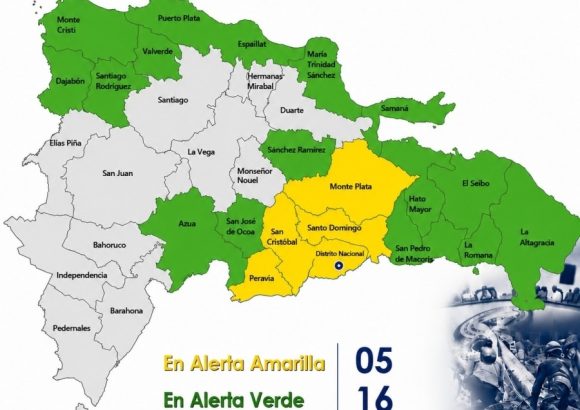
Weather Update: COE expands yellow alert amid heavy rain from tropical wave
Authorities in the Dominican Republic have ramped up weather preparedness measures, expanding the yellow-level weather alert to five regions – including the capital’s National District – as an active tropical wave approaches the Caribbean nation, the Emergency Operations Center (COE) confirmed this week. A further 16 provinces remain under a lower-level green alert as forecasters track the system’s evolving impacts on local weather conditions.
The National Meteorological Office (INDOMET) reports that the tropical wave has already begun to steadily boost atmospheric moisture levels across the country, while northeasterly trade winds persist across the region. This combination of weather conditions is projected to trigger widespread downpours, scattered severe thunderstorms, and sudden strong wind gusts across much of the affected territory.
Current numerical weather prediction models forecast total rainfall accumulation between 50 and 100 millimeters across alert zones, with some isolated pockets potentially seeing even higher precipitation totals. Officials have warned that the heavy rainfall creates a elevated risk of urban flash flooding, especially in low-lying communities, along roadside drainage corridors and other major transit routes that are prone to waterlogging during intense rain events.
The five jurisdictions placed under yellow alert, the second-lowest alert tier that calls for heightened preparedness, are Santo Domingo Province, the National District, San Cristóbal, Monte Plata, and Peravia. The 16 provinces maintaining green alert status, a lower-level warning that urges general precaution, are Samaná, San José de Ocoa, San Pedro de Macorís, Sánchez Ramírez, Espaillat, Puerto Plata, Santiago Rodríguez, Valverde, Azua, El Seibo, Hato Mayor, La Altagracia, La Romana, María Trinidad Sánchez, Dajabón, and Monte Cristi.
In a public advisory, COE has urged all residents living in alert zones to remain closely tuned to official weather updates from government agencies and implement basic precautionary measures to reduce flood-related risks. Specifically, officials warned the public against attempting to cross swollen rivers, streams, or ravines with fast-moving elevated water levels, and urged people to avoid recreational use of beaches and other coastal bathing areas throughout the alert period.
For maritime activity, COE noted that unsafe sea conditions are expected along the country’s Atlantic coastline between Cabo Engaño and Cabo Francés Viejo over the coming 24 to 72 hours. Operators of small, fragile, and medium-sized vessels have been advised to avoid non-essential travel and navigate with extreme caution if they must put to sea, due to the rough sea conditions forecast tied to the tropical wave.
-

Nepal haast zich om vastzittende arbeiders te redden; dodental boven 900
A catastrophic natural disaster triggered by a glacial collapse on the Nepal-China border has left a trail of destruction, killing more than 1,000 people and leaving thousands unaccounted for, with cross-border rescue efforts underway to reach hundreds of workers trapped in blocked hydropower project tunnels.
The disaster struck last Wednesday, when a sudden glacial collapse sent an unprecedented surge of ice, rock, and mud crashing down into river valleys below. The resulting flash floods and landslides devastated communities on both sides of the border, blocking roughly a dozen hydropower project tunnels with debris and leaving more than 900 construction workers trapped inside, according to Nepalese authorities.
As of the latest update, Nepalese disaster management officials confirm 903 people have been killed across the country, with another 4,247 still listed as missing. On the Chinese side of the border in the Tibet Autonomous Region, official records show at least 16 people have died, and 546 remain unaccounted for. Chinese state media also reports that 261 foreign nationals from 23 countries are among those missing in Tibet. In addition to the trapped hydropower workers, around 500 employees of Nepal’s Truck and Container Association are also still missing, local media reports confirm.
The International Committee of the Red Cross estimates that more than 90,000 people have been displaced or otherwise affected by the disaster, which Chinese authorities have linked to the broader impacts of climate change on glacial systems in the Himalayas. Nepalese Prime Minister Balendra Shah has described the event as an “unprecedented and devastating natural disaster” that has stretched the country’s emergency response capacity to its limit.
Nepalese authorities have launched a full-scale emergency operation to reach trapped workers and recover victims, with nearly 21,000 security personnel and volunteer rescue workers working around the clock to clear debris and open access routes. Army spokesperson Raja Ram Basnet noted that the massive volume of mud and rock debris blocking access to the tunnels presents an extraordinary operational challenge. While many damaged roads have been cleared for traffic, roughly 40 kilometers of highway have been completely washed away, slowing the delivery of emergency supplies and rescue equipment to affected areas.
In response to the crisis, Nepal has accepted specialized rescue support from both China and India, drawing on regional expertise to reach workers trapped in the blocked tunnels. China has deployed nine professional tunnel rescue experts to Nepal and shared real-time satellite imagery of the disaster zone to help Nepalese teams plan operations. China has also committed more than 2,100 rescue workers and allocated 220 million yuan (approximately 33 million USD) to disaster relief efforts, with emergency supplies airdropped to cut-off areas and Chinese soldiers using specialized detection equipment to locate potential survivors. Chinese President Xi Jinping has issued multiple calls for maximum rescue efforts to locate and assist missing people.
Difficult conditions, including unstable weather and the threat of outburst flooding from a newly blocked glacial lake, have forced multiple pauses in rescue operations. However, local authorities confirmed that weather conditions improved on Monday, allowing search and rescue work to resume across the disaster zone.
In Nepal’s Chitwan district, where mass burials for recovered victims have been held, grieving families are still searching for information on missing loved ones. Hundreds of unidentified remains have been interred in shallow mass graves due to hot, humid weather that accelerates decomposition, and mortuaries in the capital Kathmandu are operating beyond capacity, forcing families to search for missing relatives across multiple city hospitals.
-

TicketTing Denies Involvement in Unauthorised Transactions Appearing on Customers’ Bank Accounts
Ticketing services provider TicketTing Inc. has launched an official investigation after dozens of customers flagged unrecognized charges listed under the company’s name on their personal bank statements, the firm confirmed in a public statement released Friday, August 28.
The unexplained charges are limited to customers who hold payment cards issued by an unnamed local financial institution in Antigua and Barbuda, according to the company. Affected account holders have told TicketTing that they have no record of purchasing goods or services from the firm, despite the transactions appearing on their monthly statements under the TicketTing Inc. brand.
After an initial internal review, the ticketing company has pushed back on any connection to the charges. The firm confirmed in its statement that none of the suspicious transactions were initiated by its internal systems, and TicketTing has not received any revenue from the unrecognized charges. “After conducting internal investigations we can confirm that these transactions were not initiated by TicketTing nor have we accepted any funds for them,” the company said.
As of the statement’s release, TicketTing noted that it has not received any formal explanation from the involved bank about the root cause of the mislabeled charges. The company did, however, confirm that it has verified the bank is aware of the issue and is actively working to correct the erroneous transactions and resolve customer concerns.
TicketTing has chosen not to release additional identifying details about the involved bank, nor has it disclosed the number of impacted customers, the total dollar value of the suspicious charges, or the timeframe during which the transactions first appeared. The company extended its sympathy to customers who have been inconvenienced by the unexplained activity and pledged to publish new public updates as more information becomes available through the ongoing investigation.
This incident surfaces at a time when Antigua and Barbuda is already facing growing public concern over unauthorized financial transactions and electronic fraud across the country’s banking sector. Earlier this year, local law enforcement issued a public warning after reporting a sharp uptick in customer claims of unexpected, unrecognized charges on their accounts. Police urged all bank customers to build a habit of regularly reviewing their account activity and immediately report any mismatches or suspicious transactions to their financial service providers to speed up resolution.
-

OPEN LETTER: What happened to the questions? A response to Roosevelt Skerrit’s comments at the Dominica Labour Party executive meeting on August 29
On August 29, Prime Minister Roosevelt Skerrit addressed members of the Dominica Labour Party executive committee, and his remarks during that gathering have now prompted a critical public open letter calling out unaddressed questions raised by opposition voices and ordinary citizens across the island. The letter, published as a response to Skerrit’s comments, opens by calling out the prime minister’s reference to a 60-year-old resident who has never cast a ballot in any Dominican general election. The author of the open letter emphasizes that all opinions and assertions laid out in the piece are entirely their own, and do not represent the official stance of Dominica News Online, the outlet that published the correspondence. Beyond the specific anecdote Skerrit shared during the party meeting, the letter argues that the prime minister has failed to directly respond to a growing list of unresolved questions of public interest. These questions, the author contends, touch on matters of governance, public spending, and policy direction that directly impact the daily lives of Dominican voters from all demographics, regardless of their voting history. The author pushes back against what they frame as attempts to deflect scrutiny by focusing on the voting record of individual critics, noting that even citizens who have not participated in past elections retain the right to raise concerns about the current administration’s performance. The open letter makes a direct call for Skerrit and the Dominica Labour Party government to engage in transparent, substantive dialogue, rather than sidestepping legitimate questions from the public. Political observers note that the exchange comes as the country continues to navigate ongoing economic and social challenges, with public scrutiny of government actions becoming an increasingly prominent feature of national political discourse. While the full original text did not elaborate on all specific unanswered questions, the open letter itself marks a growing public demand for greater accountability from the island’s top elected official.
-
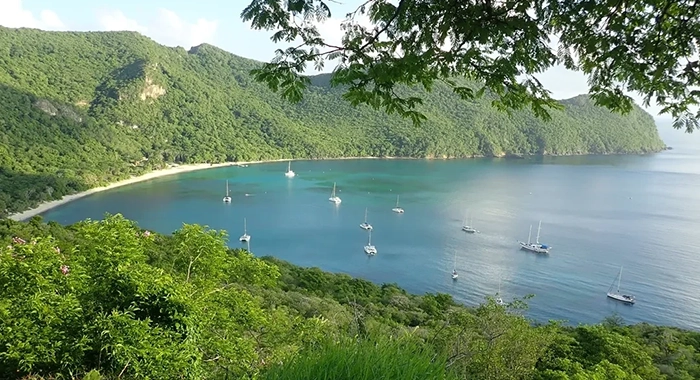
Criticisms overlook ‘two fundamental aspects’ of Chatham Bay sale — PM
A heated political debate has erupted in St. Vincent and the Grenadines (SVG) over the ruling government’s decision to sell 100 acres of coastal land at Chatham Bay, Union Island, with Prime Minister Godwin Friday pushing back hard against critics of the transaction. In an official statement issued by the Prime Minister’s Office on Monday, Friday outlined what he calls two core, non-negotiable pillars of the agreement that critics have repeatedly ignored: the entire parcel is being sold explicitly for permanent conservation purposes, and the government retains a two-year option to repurchase the land at the exact original sale price.
The land has been transferred to AHRA LLC, a locally registered company based in SVG, according to details of the agreement. The transaction injects EC$53 million directly into the national treasury, while placing permanent environmental protections at the heart of the land’s future use. Binding legal covenants are included in the deal to safeguard Chatham Bay’s unique natural ecosystems and biodiversity, restricting any large-scale commercial development on the site.
The criticism has been led by Opposition Leader Ralph Gonsalves, who has questioned the sale price by referencing a historical valuation of the property. Friday countered that Gonsalves’ comparison is fundamentally misleading, noting that the outdated valuation was calculated for a proposal to develop the land into a large hotel and resort — a completely different use case than the restricted conservation mandate in the current agreement.
Friday also pointed out a key contradiction in the opposition’s position: Gonsalves’ own administration, which held power for 24 years, explicitly rejected a conservation-focused approach for Chatham Bay in favor of pursuing resort development. Despite that decades-long policy priority, the proposed major resort project never moved forward. In that time, the previous administration also acquired southern lands on Union Island for foreign hotel development; Friday confirmed that shortly after finalizing the Chatham Bay sale, his government returned those lands to local Union Island residents.
Framing the transaction as a balanced new approach to national asset management, Friday emphasized that SVG does not have to choose between environmental protection and sound fiscal governance. He argued that conservation itself holds tangible value for the island nation, pushing back against the idea that every ecologically significant coastal parcel must be intensively developed for tourism to deliver benefit. “A country such as ours needs environmental investment and tourism development, and this Government will continue to pursue both. But responsible development also means recognising that not every beach, forest or environmentally significant piece of land must be intensively developed to have value. Conservation has value, too,” Friday said.
The prime minister noted that this type of conservation-focused transaction, while new to SVG, has a proven track record across the Caribbean and beyond. He cited Belize’s 2021 Blue Bond, a landmark debt-for-nature swap that cut the country’s national debt by 12% of GDP while freeing up millions of dollars for marine conservation as a successful regional precedent.
Friday also contextualized the decision within the severe fiscal challenges his administration inherited after taking office in November. Gonsalves’ previous government left SVG with a public debt burden equal to roughly 113% of GDP, a figure that has placed intense strain on the government’s ability to fund core public priorities including healthcare, development programming, and public sector reform. Proceeds from the Chatham Bay sale will be directed to key national priorities: debt reduction, fisheries management, expanded land and marine conservation efforts, climate resilience initiatives, and government efficiency reforms.
“ We are protecting Chatham Bay. We are securing significant value for the Vincentian people. We have retained an important buy-back safeguard, and we are using our national assets responsibly as we confront the substantial debt burden we inherited. That is the responsibility of Government: to know where we should develop, where we should invest and where we should preserve. Chatham Bay is worth protecting, and protecting it does not mean it cannot also deliver value for the people of Saint Vincent and the Grenadines,” Friday concluded.