博客

  • Demerara River bridge copper cable thief jailed; scrap metal dealer on bail

    Demerara River bridge copper cable thief jailed; scrap metal dealer on bail

    A Guyanese man has been sentenced to 12 months in prison after pleading guilty to stealing 90 feet of heavy-duty copper cable from the key Bharrat Jagdeo Demerara River Bridge, law enforcement authorities confirmed Friday.

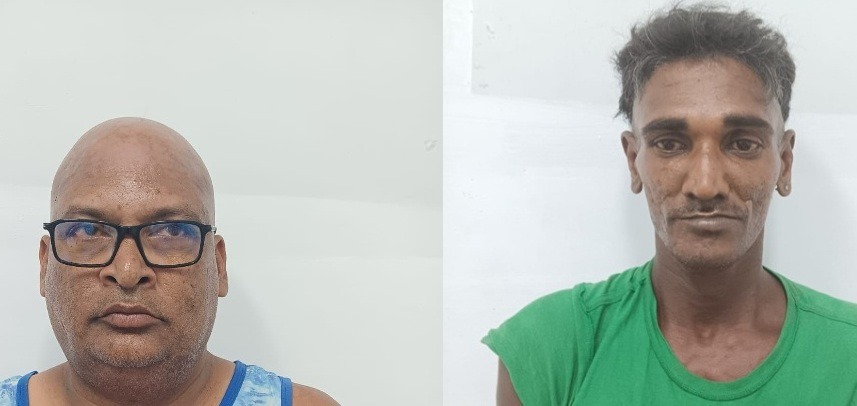
    Thirty-nine-year-old Roy Morgan, who has no permanent residential address, admitted to a charge of simple larceny for the theft that took place between August 23 and September 1, 2026. The stolen infrastructure cable was valued at approximately GY$1.62 million, according to official court documents.

    Magistrate Dylon Bess handed down the custodial sentence during a hearing at the Diamond/Grove Magistrate’s Court this Friday, September 4, 2026. Following his arrest earlier this month, Morgan told investigators he had sold the stolen copper to a local scrap metal dealer in the Albouystown neighborhood to fund purchases of food and illegal narcotics.

    The scrap dealer linked to the case, 51-year-old Mustafid “Mustaf” Pashaw, who resides in the Tuschen Housing Scheme on East Bank Essequibo, faces a separate charge of receiving stolen property. Pashaw was taken into custody on September 2 at a location on Sussex Street in Albouystown, Georgetown.

    He made his first court appearance Friday at Georgetown Magistrate’s Court #5, where the indictable charge was formally read by presiding Magistrate Faith McGusty. Under standard judicial procedure for indictable offenses, Pashaw was not required to enter a plea at this initial hearing. He was subsequently granted bail set at GY$300,000, with a mandatory condition that he check in with officers at the Ruimveldt Police Station on the third Friday of each month until the case concludes. The proceedings have been adjourned until October 2, 2026, when the next hearing is scheduled to take place.

  • OPEN LETTER: The time has come to revisit the question of Bird Island (Isla de Aves)

    OPEN LETTER: The time has come to revisit the question of Bird Island (Isla de Aves)

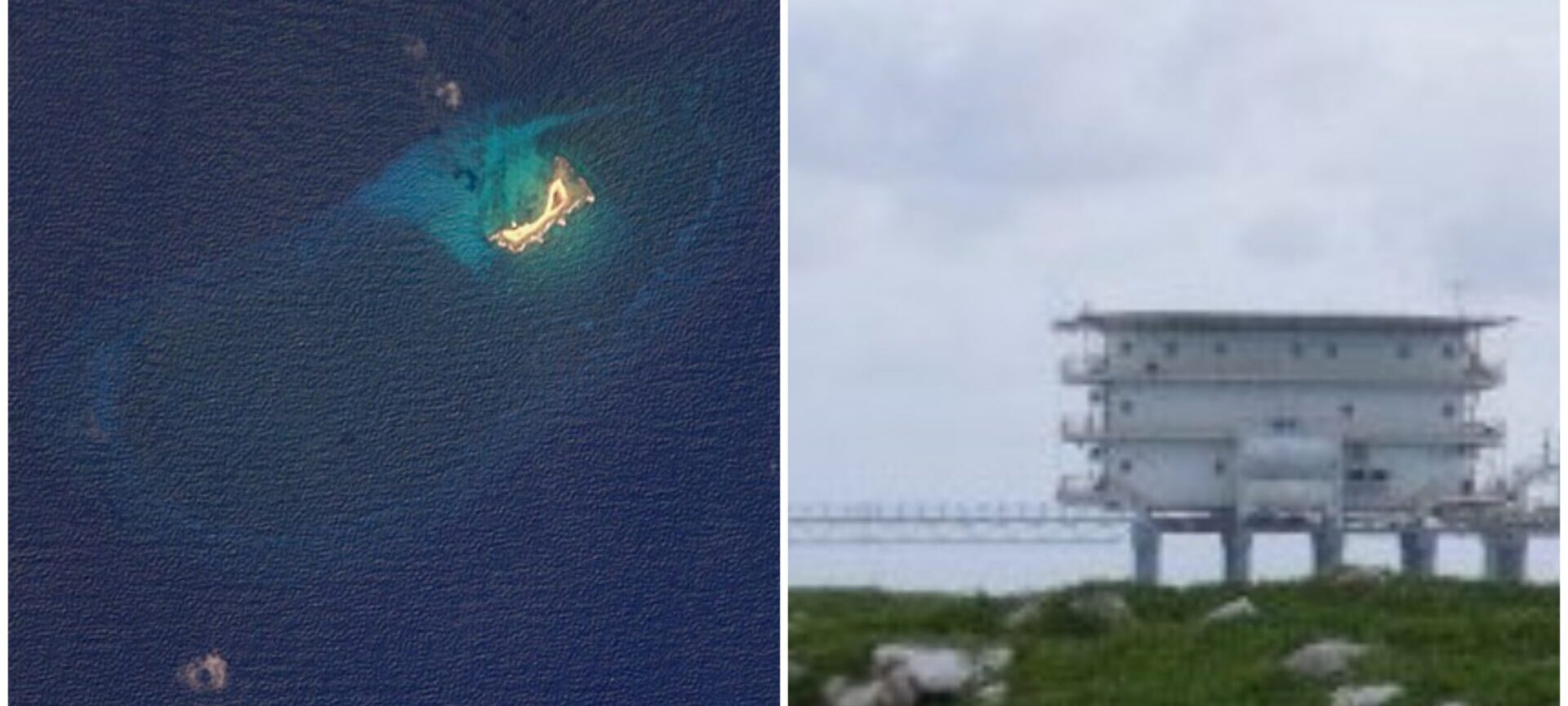
    A Dominican national residing overseas has penned an open letter to the nation’s public and leadership, urging a long-overdue, serious public debate over the country’s historical territorial and maritime interests connected to Bird Island, also known as Isla de Aves, a small Caribbean landmass currently under Venezuelan control.

    The author, who identifies as a concerned citizen deeply invested in Dominica’s long-term sovereignty, resource security and prosperity, frames the call for discussion as a timely step amid a global wave of nations revisiting their territorial borders, historical rights and natural resource claims. Bird Island sits in close proximity to Dominica’s existing maritime boundaries, and has been a source of quiet regional debate for decades. While Venezuela’s sovereignty over the island has been formalized through past international agreements and historical arrangements, the letter raises unresolved questions over how much maritime jurisdiction and Exclusive Economic Zone (EEZ) rights a tiny landmass of this kind should be granted over the surrounding Caribbean waters.

    Against this backdrop, the writer argues that the Dominican government cannot afford to dismiss the issue out of hand. Protecting the interests of current and future generations of Dominicans, they insist, requires a full review of historical records, factual verification, and deliberate public engagement rather than continued inaction.

    Crucially, the letter emphasizes that this call for discussion does not equate to a demand for confrontation or hostility toward Venezuela. Any process of review and negotiation, the author stresses, must be rooted in peaceful diplomacy, mutual respect, and strict adherence to frameworks of international law.

    To move the process forward, the writer calls on Dominica’s Prime Minister and national cabinet to launch an inclusive national conversation on Bird Island and its adjacent maritime areas. They recommend that the government engage independent legal and historical experts to assess whether any legitimate, unresolved claims related to Dominica’s maritime interests remain outstanding, and hold consultations with regional and international partner bodies to inform the process. The author also suggests that Dominican diplomacy should engage with key international stakeholders, including the United States and other friendly nations, not to solicit third-party intervention on territorial claims, but to access diplomatic support, technical expertise, and guidance under international law to advance the country’s legitimate national interests.

    A core component of the discussion, the letter notes, should center on untapped natural resource potential. For years, industry and academic observers have speculated that the broader maritime region around Bird Island could hold commercially viable reserves of oil and natural gas. While the existence of such reserves can only be confirmed through rigorous scientific and geological survey work, the author argues that Dominica has a fundamental responsibility to investigate any areas connected to historical contested maritime claims, given the potential upside for national development. If viable resources are confirmed, the letter notes, revenue from these assets could transform investment in key public services across Dominica, from public education and healthcare to infrastructure development, affordable housing, climate disaster preparedness, youth employment and broad-based economic growth.

    The author underscores that all final decisions related to territorial claims and natural resource development must remain the sovereign right of the Dominican people, guided by the national constitution, international law, environmental stewardship, and the long-term public good. No territorial claim or national resource should be negotiated or surrendered without full transparency and thorough public consideration, they add.

    Acknowledging that the issue is complex and unlikely to be resolved quickly, the writer argues that avoiding public discussion only does a disservice to the Dominican public and future generations. As an overseas citizen, the author notes that while they are physically separated from their home country, their commitment to Dominica’s future remains unshaken. They conclude by calling on elected representatives, historians, legal experts, diplomats and the general Dominican public to join in a deliberate, responsible review of the issue. The letter ends with a rallying cry for the nation to commit to researching its history, upholding the principles of international law, protecting its legitimate maritime interests, pursuing peaceful diplomatic solutions, and never shying away from asking hard questions that shape the country’s future. ‘The future belongs not only to those who inherit a country, but to those who are willing to protect, question, and responsibly develop its potential,’ the author writes.

  • DFP throws support behind Danny Lugay in Roseau North by-election

    DFP throws support behind Danny Lugay in Roseau North by-election

    Ahead of the September 7 by-election for Dominica’s Roseau North Constituency, the country’s longstanding opposition group the Dominica Freedom Party (DFP) has made a landmark strategic decision to throw its support behind United Workers Party (UWP) candidate Daniel “Danny” Lugay, framing the move as a commitment to advancing the island nation’s core democratic values over partisan priorities.

    In an official endorsement statement released September 4, 2026, the DFP emphasized that its backing of Lugay is a principled stand rooted in the party’s foundational commitments to democracy, transparent good governance, the rule of law, and governmental accountability. The organization was careful to clarify that this cross-party endorsement does not signal a retreat from its own independent political identity or core ideological convictions. Instead, party leaders argued that extraordinary political moments require putting national interest above narrow partisan gain, and the Roseau North by-election qualifies as exactly that kind of turning point for the country.

    “This is not simply about Danny Lugay,” the DFP statement noted, tying the election contest to broader national conversations over democratic accountability and institutional integrity. Echoing the party’s long-held slogan, “PEOPLE BEFORE POWER, PEOPLE BEFORE POLITICS, PEOPLE BEFORE PRIVILEGE AND THINGS,” the DFP reaffirmed its mission to center citizen welfare in all national decision-making. The party also outlined its long-term goal: to collaborate with all pro-democracy and opposition groups across Dominica to rebuild public trust in state institutions, strengthen democratic governance frameworks, and place the needs of ordinary Dominican citizens at the heart of national policy.

    The DFP’s endorsement follows a August 24, 2026 virtual solidarity rally organized by the Electoral Reform Coalition (ERC), where the party joined other opposition forces in rallying support for Lugay. The DFP is not the only opposition group to back the UWP candidate: the fellow opposition United Progressive Party has also publicly endorsed Lugay ahead of polling day.

    Three candidates are contesting the open Roseau North seat: Lugay for the UWP, Ashma McDougal representing the ruling Dominica Labour Party, and Sherman Boston running as an independent candidate.

    In its closing appeal to Roseau North voters, the DFP urged all registered constituents to turn out in large numbers on September 7 to exercise their democratic right, framing the vote as a critical opportunity for residents to signal their desired direction for national leadership. “The final decision rests with the electorate,” the statement acknowledged, urging voters to cast their ballots with the future of Dominican democracy and country in mind. The party closed with a clear, unifying message: “A VOTE FOR DANNY LUGAY IS A VOTE FOR DEMOCRACY.”

  • Unconstitutional SOE: Court Orders Major Payout in Damages to Five Detainees

    Unconstitutional SOE: Court Orders Major Payout in Damages to Five Detainees

    In a landmark ruling that reaffirms constitutional protections for fundamental civil liberties, Belize’s Court of Appeal has formally struck down two 2020 States of Emergency (SOE) declarations for Southside Belize City, finding the measures unconstitutional and ordering substantial damage awards to five men who were wrongfully detained under the policies.

    The two emergency orders were first implemented by the Belizean government in March 2020 and again in July of the same year, granting law enforcement sweeping extraordinary powers to arrest and hold individuals in detention without formal criminal charges. Government officials defended the declarations at the time, arguing that a surge in deadly violence — including the murder of two children — created a public safety crisis that regular law enforcement frameworks could not contain.

    Under Belize’s existing constitution, emergency powers that suspend core fundamental rights may only be invoked when a threat reaches a threshold of severity and breadth that outstrips the capacity of standard policing and existing criminal legislation. In its final ruling, the appellate court found the government failed entirely to meet this legal requirement, with no admissible evidence presented to prove a triggering event existed that could not be addressed through normal criminal justice processes.

    The court emphasized that even shocking acts of violence do not automatically justify rolling back constitutional protections. “The evidence of seven murders including children in one day in a particular locality, as hideous as that is, cannot of itself be sufficient to support a declaration of a state of emergency,” the ruling stated. The court further clarified that any disruption to public order must rise to the level of widespread civil unrest that threatens a large number of lives before fundamental rights can be legally suspended.

    Beyond invalidating the SOE declarations themselves, the court also scrutinized the procedural irregularities surrounding the detentions of the five claimants. Each detainee was given only vague justifications for their detention, broadly citing unspecified “gang activities” with no concrete evidence. Belizean law requires that all detentions under emergency powers be reviewed by an independent oversight tribunal, but the government never appointed such a body — leaving the men with no legal avenue to challenge their detention or question the grounds for their incarceration.

    In line with damage awards granted to other plaintiffs who won similar related claims, the court has ordered the government to pay each of the five detainees — Shane Harris, Laquan Shemar Flowers, Dejon Joseph, Dimetris Gordon and Nukie Barrow — a total of $22,000: $15,000 in compensatory damages for the harm suffered, and an additional $7,000 in vindicatory damages to uphold the rule of law.

    Deputy Solicitor General Samantha Matute led the government’s legal argument, alongside attorneys Jarvis Lou and Alea Gomez, while Leeroy Banner and Leslie Mendez served as counsel for the five detainees.

  • Two young Dominican farmers earn regional agricultural honours

    Two young Dominican farmers earn regional agricultural honours

    The Caribbean region is celebrating two rising agricultural leaders from the Commonwealth of Dominica, who have secured the most prestigious regional awards for young farming innovators this year. Dominica’s Ministry of Agriculture, Fisheries, Blue and Green Economy recently announced that 29-year-old Ephraim Elijah Roberts from Castle Bruce has been honored with the Organization of Eastern Caribbean States (OECS) Young Farmer Award, while 28-year-old Dywany St. John of Wesley has been named the 2026 CARICOM Young Farmer of the Year.

    Roberts collected his award on September 3 during the OECS Youth and Women in Agriculture Symposium held in Grenada. A lifelong advocate for agricultural resilience through diversification, Roberts has built a multifaceted farming operation that aligns with his core belief: that spreading production across multiple sectors creates stronger, more adaptable farms. His enterprise combines livestock rearing of goats, sheep, cattle, ducks and guinea pigs with cultivation of root crops, fruit varieties and high-turnover cash crops. He has also integrated beekeeping into his work, which not only generates premium honey as an additional revenue stream but also boosts pollination for his other crops, lifting overall productivity.

    Roberts’ connection to agriculture stretches back to his childhood. He got his start in youth agricultural organizations, leading his primary school’s 4-H Club and participating in his local Scout troop. By secondary school, his passion and aptitude for agricultural science earned him an award for outstanding achievement in the subject. He went on to complete an Associate’s Degree in Agricultural Science, and later became an active member of Dominica’s National Association of Youth in Agriculture (NAYA), an organization dedicated to expanding youth participation and leadership across the national agricultural sector.

    Today, Roberts works as an agricultural educator, working to reframe young people’s perception of farming as a modern, viable career. He introduces students to climate-smart, technology-forward farming practices, and promotes the industry as a sustainable, profitable path for young workers. In line with the official ministry statement, Roberts says his long-term vision is to inspire a new generation of young farmers to enter the sector, strengthen local and regional food security, build inclusive economic opportunity, and advance sustainable development for communities across the Caribbean.

    St. John, the second honoree, earned his CARICOM title after a rigorous selection process by a regional panel of agricultural experts. He will officially receive his award during the opening ceremony of the 20th Caribbean Week of Agriculture, scheduled for September 27 in Trelawny, Jamaica. What makes St. John’s achievement even more notable is that he balances full-time service as a Police Constable with managing a 15-acre diversified farm in Dominica’s northeastern region.

    Like Roberts, St. John has centered his farming model on diversification: his operation includes four acres of plantain, three acres of root crops, eight acres of perennial tree crops, and a livestock portfolio of cattle, goats, sheep and pigs. His interest in farming was nurtured from childhood by his father, a former award-winning farmer, and over the past 12 years, he has built his operation around three core principles: diversification, discipline, and adherence to Good Agricultural Practices.

    St. John supplies fresh produce to the Dominica Export Import Agency (DEXIA) Multi-Purpose Pack House for export, while also serving local vendors and regional market outlets. His track record of reliable delivery has already earned recognition: he previously received DEXIA’s Consistent Supply of Fresh Agricultural Produce Award, and was named Dominica’s national Outstanding Young Farmer of the Year in 2025 by the Ministry of Agriculture.

    St. John’s farming system combines short, medium and long-term crops with livestock production to create stable, ongoing revenue. He prioritizes sustainable environmental stewardship, using livestock manure to naturally enrich soil fertility, implementing responsible water management, and deploying targeted measures to cut down on soil erosion and chemical runoff. He is also an active NAYA member, collaborating regularly with fellow farmers, agricultural extension services, and national marketing bodies to strengthen the local agricultural ecosystem.

    The CARICOM Young Farmer of the Year award recognizes St. John’s excellence across production, diversification, innovative practice, environmental stewardship, and his contribution to regional agricultural development and food security. The Government of Dominica has issued an official statement congratulating both Roberts and St. John, highlighting their work as models for how young people can drive progress in agriculture, youth empowerment, and food security across the Caribbean.
  • Travel journalists celebrate World Tourism Journalism Day in Maimará, Argentina

    Travel journalists celebrate World Tourism Journalism Day in Maimará, Argentina

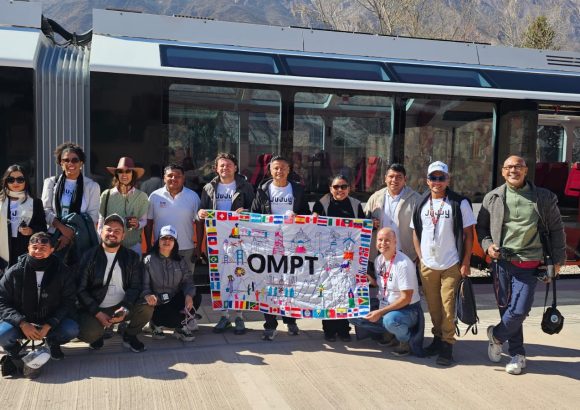
    Nestled in the vibrant high-altitude landscapes of Argentina’s northwestern Jujuy province, the postcard-perfect town of Maimará has stepped into the global tourism spotlight as the official host of this year’s World Tourism Journalism Day celebration, held September 5 by the World Organization of Tourism Journalism (OMPT). The event drew a global delegation of travel writers, who explored the region as part of an official press tour highlighting the intersection of cultural heritage, environmental sustainability, and community-centered development.

    Rather than flying or driving to the event, the international press corps arrived in Maimará aboard the Tren Solar de la Quebrada (Quebrada Solar Train), a groundbreaking sustainable rail project that links historic towns across the UNESCO World Heritage-listed Quebrada de Humahuaca valley. Local officials greeted the delegation on arrival: Luis Zerpa, Maimará’s Director of Tourism, was joined by Rocío Vellón, Communications Manager for the Solar Train, and other regional tourism leaders to open the day’s celebrations.

    The solar-powered rail journey was far more than just transportation—it offered journalists an immersive first-hand look at how Jujuy province is integrating green infrastructure with cultural heritage tourism. The scenic route connects six key regional destinations: Volcán, Tumbaya, Purmamarca, Posta de Hornillos, Maimará, and Tilcara. In just a short time, the service has become a standout regional attraction, recently hitting a major passenger milestone of more than 90,000 total riders.

    For an event centered on the future of travel reporting, the immersive journey carried symbolic weight. Instead of traveling to Maimará solely to cover a pre-organized event, the journalists began engaging with the region’s unique identity the moment they boarded the train. Along the route, the dramatic natural landscape and vibrant local communities are core parts of the travel experience, aligning perfectly with the OMPT’s mission of responsible tourism storytelling.

    The event carries extra significance for Maimará, which just weeks earlier earned global acclaim when UN Tourism named it one of the world’s “Best Tourism Villages.” The town beat out more than 260 other candidates from 64 countries to claim the title, becoming the second destination in Jujuy province to earn the honor—following nearby Caspalá. Maimará earned the recognition for its longstanding commitment to three core pillars: preserving its unique cultural heritage, advancing inclusive sustainable development, and building a tourism model led by local community members.

    Beyond its recent global awards, Maimará has long drawn travelers for its one-of-a-kind natural and cultural offerings. It is most famous for the Paleta del Pintor, or “Painter’s Palette,” a dramatic multicolored mountain formation that serves as the town’s iconic, jaw-dropping backdrop. Beyond this natural wonder, visitors can explore deep-rooted local agricultural traditions, sample authentic regional gastronomy, and visit historic landmarks including the well-preserved 19th-century colonial outpost Posta de Hornillos.

    For the OMPT, choosing Maimará as the host for its flagship annual event was a deliberate choice to highlight the critical role that specialized travel journalism plays in elevating underrated rural destinations. The gathering created direct space for global travel storytellers to connect with local government leaders, the team behind the innovative solar rail project, and Maimará’s local residents. This approach embodies the core ethos that defines modern responsible travel journalism: stepping directly into a place, listening to the stories of the people who call it home, and sharing those authentic narratives with global audiences.

    World Tourism Journalism Day itself marks a milestone with deep roots in Argentine tourism. It is held annually on September 5 to commemorate the founding of the OMPT in 2015. The date was selected to honor the vision of OMPT founder Miguel Ledhesma, who launched the organization in Iguazú, Argentina, with a clear mission: to promote ethical, sustainable, and responsible coverage of travel destinations across the globe that prioritizes local communities and environmental stewardship.

  • Protected areas that buffer hurricanes are also among the most exposed in the Dominican Republic.

    Protected areas that buffer hurricanes are also among the most exposed in the Dominican Republic.

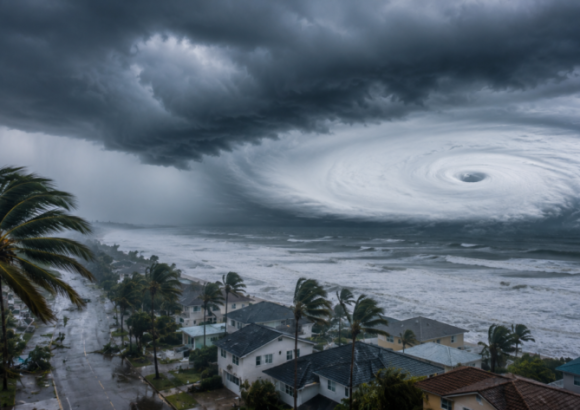
    Located in the hurricane-prone Caribbean basin, the Dominican Republic is confronting a striking environmental paradox: the very protected natural areas that shield its communities from hurricane and tropical storm damage are themselves the most vulnerable to repeated cyclonic impacts, new government analysis reveals.

    A comprehensive mapping study published by the Dominican Republic’s National Statistics Office (ONE) tracks the overlap between the country’s National System of Protected Areas and historical cyclone tracks spanning 1990 through projected 2025 pathways. The findings show that key conservation zones have accumulated exposure to as many as 20 separate cyclonic events over the 35-year period, creating urgent new challenges for ecosystem conservation and proactive disaster management.

    Protected areas across the Dominican Republic deliver irreplaceable public and environmental benefits: they safeguard fragile native biodiversity, regulate regional freshwater supplies, prevent soil erosion, and broadly reduce the overall risk of extreme weather damage for adjacent populated areas. However, the majority of these conservation zones are intentionally sited in coastal, mountainous, and other ecologically sensitive landscapes—geographic features that also put them directly in the path of recurring tropical cyclones that form in the Caribbean.

    The study’s most notable finding centers on the two most strictly protected conservation categories: Strict Protection Areas and Habitat and Species Management Areas. These zones, designed to preserve the country’s most vulnerable ecosystems and endangered species, recorded the highest cumulative exposure, with each category hit by 20 separate hurricanes or tropical storms over the study period. National Parks rank next with 15 recorded events, followed by Protected Landscapes at 12, Nature Reserves at 10, and Natural Monuments at six.

    These statistics confirm that the country’s most environmentally valuable conservation territories are also consistently subjected to extreme weather events that can strip away critical vegetation cover and permanently alter the delicate natural conditions these areas are meant to protect.

    ONE researchers explain that tropical cyclones trigger a cascade of harmful impacts in protected zones, including severe flooding, destructive landslides, accelerated coastal erosion, and widespread damage to native plant communities. These hits are disproportionately damaging in conservation areas, where even small ecological disruptions can erase decades of conservation progress for rare or endemic species.

    The situation is uniquely pressing for the Dominican Republic, whose geographic position in the Caribbean places it directly along the annual migration path of tropical cyclone systems forming in the Atlantic Ocean. For this island nation, extreme weather is not a rare anomaly but a recurring seasonal reality that shapes all environmental planning.

    Unlike many previous studies that focus on quantifying damage after individual cyclones, the ONE analysis takes a proactive approach: it does not set out to calculate harm from past storms, but instead maps the overlap between protected area boundaries and historical cyclone tracks to identify long-term exposure patterns. The goal of the work is to help conservation managers prioritize resource allocation for preventive protection that strengthens vulnerable ecosystems before storms hit.

    ONE officials note that the data collected through this study will be a critical tool to improve national territorial planning, inform more effective conservation policy, and enhance broader national disaster risk reduction strategies. Ultimately, the analysis brings a long-unrecognized paradox into sharp focus: the natural ecosystems that act as the Dominican Republic’s first line of defense against extreme weather events are themselves in urgent need of additional targeted protection to survive the rising frequency and intensity of tropical cyclones linked to a changing climate.

  • One in three formal businesses in the Dominican Republic already integrates AI into its daily operations

    One in three formal businesses in the Dominican Republic already integrates AI into its daily operations

    SANTO DOMINGO – A newly released bulletin from the Dominican Republic’s National Statistics Office has marked a key milestone in the nation’s private-sector digital transformation, reporting that 35 percent of formal Dominican companies with internet access have already integrated artificial intelligence (AI) into their operations.

    The findings are drawn from the 2025 National Survey of Economic Activity (ENAE), which also measured that 94.7 percent of all Dominican companies now have access to corporate internet connectivity. This widespread digital infrastructure has laid a critical foundation for the adoption of advanced cutting-edge technological solutions across the country’s business ecosystem, the survey confirmed.

    Analysis of the data shows that organizational size is a major determining factor in AI adoption rates. Large enterprises with 250 or more employees lead the national tech transition, posting a 52 percent AI usage rate. Mid-sized firms, those with between 50 and 99 workers, follow closely with a 46.1 percent adoption rate, positioning the mid-tier business segment as one of the most receptive to operational innovation driven by AI.

    When broken down by productive sector, the report reveals an unexpected leading adopter: the mining and quarrying industry, which holds a 45.7 percent AI usage rate, outpacing all other major economic sectors. Two other sectors with heavy automation dependence rank high as well: construction at 39.1 percent and manufacturing at 38.1 percent. These figures highlight a deep, ongoing shift in the nation’s construction frameworks and industrial production processes.

    Even in the retail sector, 36.9 percent of connected formal businesses have implemented AI solutions, a statistic that underscores a broader national shift: artificial intelligence is no longer a distant future trend for Dominican commerce, but a standard operational resource embedded in daily business activity.

    Alongside rising AI adoption, the Dominican business landscape is undergoing a parallel profound transformation in digital transaction systems. Carlos Santelises, vice president of GCS International, explained that the country has progressed rapidly from legacy magnetic payment terminals to a consolidated ecosystem of contactless payments and instant mobile transfers.

    This evolution has created a simpler, faster transaction infrastructure that benefits formal businesses and plays an outsized role in advancing national financial inclusion. The new system allows consumers to complete payments, deposits, and withdrawals through banking sub-agents located in everyday businesses such as local pharmacies and neighborhood supermarkets.

    Santelises emphasized that digital transaction tools also help both entrepreneurs and regular consumers build formal credit histories. This opens access to regulated credit products through the formal financial system, pulling users away from unregulated informal lenders, while also allowing financial institutions to gain deeper, more accurate insights into customer behavior.

    However, the rapid expansion of corporate connectivity and digital payment systems has also brought new, pressing risks. With that, cybersecurity has become a non-negotiable priority for companies operating in this new digital ecosystem, as threats linked to emerging technologies continue to grow.

    Speaking during the recent Dominican Fintech Forum, organized by the national Fintech association ADOFINTECH, Santelises warned that the development of new digital financial products must be paired with robust risk mitigation systems to address widespread cyber vulnerabilities. Only strong security frameworks can ensure a reliably safe digital environment for businesses and consumers alike.

    For all companies integrated into the nation’s new digital and AI-powered ecosystem, specialized security infrastructure and rigorous data protection protocols are no longer optional add-ons. They are core, essential components to safeguard daily operations and maintain the hard-won trust of Dominican consumers.

  • ! The crown returns to the Dominican Republic! Joheirry Mola wins Miss World in Vietnam

    ! The crown returns to the Dominican Republic! Joheirry Mola wins Miss World in Vietnam

    The Caribbean nation of the Dominican Republic is bursting with national pride this week, after one of its own captured a historic second Miss World title at the global pageant held in Vietnam this past Saturday.

    Twenty-year-old educator Joheirry Mola made history when she took home the coveted crown, marking only the second time a Dominican contestant has claimed the pageant’s highest honor. The country’s first Miss World victory came more than four decades ago, in 1982, when Mariela Álvarez made history by bringing the first title home to the Dominican tricolor flag.

    Unlike common misconceptions that frame beauty pageants as solely focused on outward appearance, Mola has centered her platform on purpose-driven advocacy that extends far beyond physical aesthetics. As an English teacher by profession, Mola designed her “Beauty with a Purpose” initiative — a core pillar of the Miss World competition — to expand access to English language education for marginalized, vulnerable communities across her home country.

    Mola argues that English, as a globally spoken universal language, is a key tool for empowerment. She emphasizes that the ability to communicate confidently in a global language opens doors to economic opportunity and personal growth, a right she believes everyone deserves regardless of their background. For Mola, sharing this knowledge with students is more than a job — it is a passion. She has long centered her teaching on helping young people understand that intentionality and preparation are foundational to building meaningful lives, a message she carried with her to the international stage.

    During the competition, Mola also used her platform to challenge outdated norms surrounding beauty and gender. As a woman competing in a global pageant, she pushed for broader conversations about breaking systemic barriers and redefining what it means to be a “beauty queen.” In her public remarks throughout the event, she made clear that outer appearance is far from the most important trait a person possesses, highlighting the power of purpose, advocacy, and education to create lasting change.

    Across the Dominican Republic, Mola’s win has been met with widespread celebration, with community leaders, educators, and members of the public praising not just her historic victory, but her commitment to lifting up vulnerable communities through accessible education.

  • Collado highlights that Punta Bergantín sells US$30 million in a single weekend

    Collado highlights that Punta Bergantín sells US$30 million in a single weekend

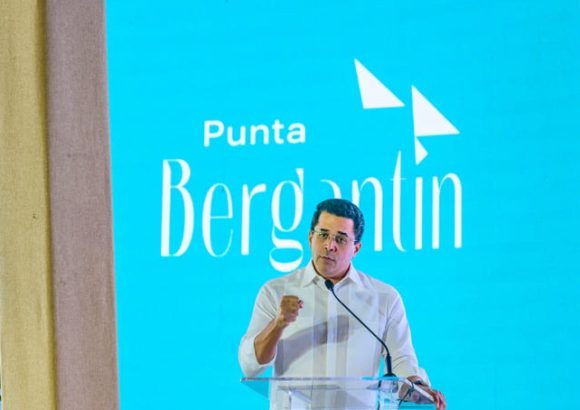
    The Dominican Republic’s burgeoning tourism real estate sector has landed a major vote of confidence, after Tourism Minister David Collado announced that the ambitious Punta Bergantín mixed-use development in Puerto Plata moved nearly $30 million worth of residential and commercial units over just one weekend of sales.

    The strong early performance of the project, which is being spearheaded by industry leader Andrés Marranzini, stands as a clear testament to the hard work and collaborative planning that has gone into launching the venture, Collado noted. Beyond the impressive initial sales numbers, officials project that the large-scale development will reshape Puerto Plata’s reputation as a travel and investment hub, elevating it from a well-regarded national destination to one of the most prominent high-end tourism spots across the entire Caribbean.

    Two of the world’s leading hospitality brands, Meliá Hotels International and Hyatt Hotels Corporation, have already signed on as the project’s first major anchor investors. Between the two chains, the development will add more than 1,000 new hotel rooms to Puerto Plata’s inventory, a boost that is expected to generate hundreds of local jobs across construction, hospitality, and supporting services, while sparking widespread new commercial activity across the province.

    Collado also emphasized that Punta Bergantín is being built around a core mission of sustainable development. The sprawling multi-hotel complex is intentionally designed to integrate seamlessly with Puerto Plata’s pristine natural landscapes, prioritizing eco-friendly practices that protect the region’s environment while delivering a luxury experience for visitors and property buyers.