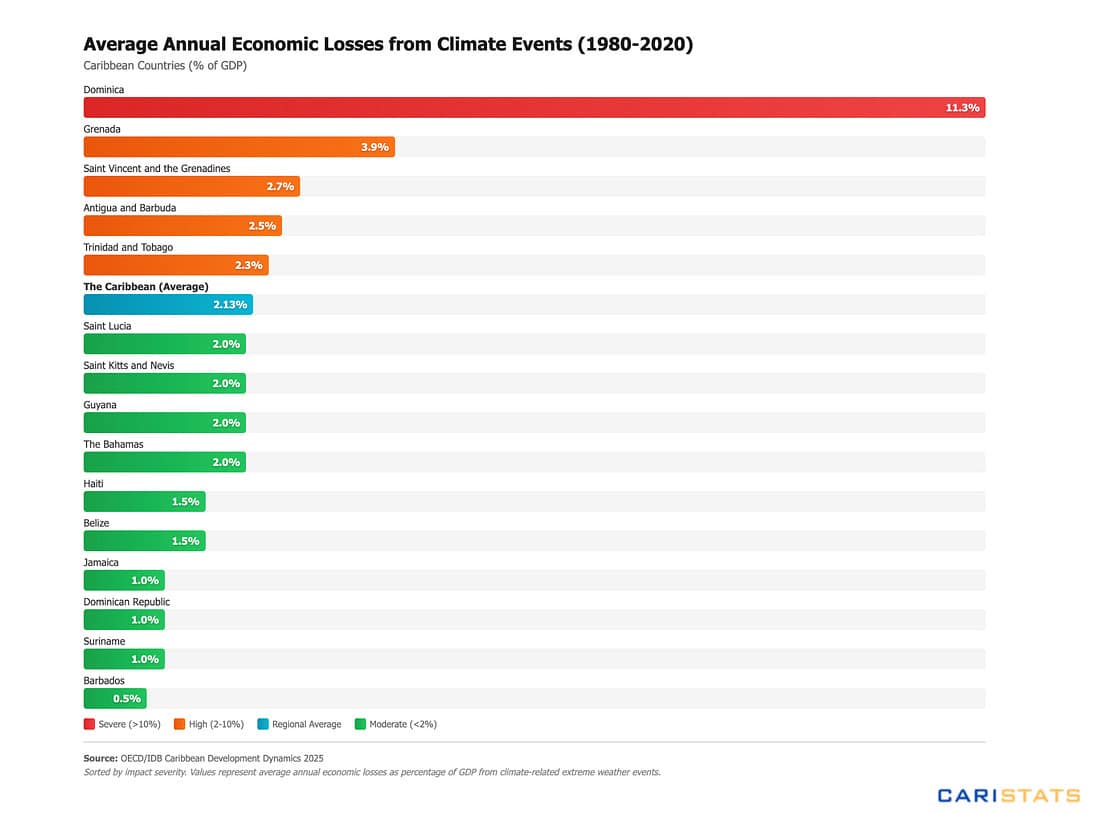
Caribbean nations are disproportionately impacted by climate-related disasters, with annual economic losses averaging 2.13% of GDP between 1980 and 2020, as revealed by a recent OECD/IDB analysis. This vulnerability was starkly highlighted by Hurricane Melissa, a historic Category 5 storm with winds reaching 185 mph, which devastated Jamaica this week. Government officials reported extensive destruction, widespread flooding, and power outages affecting over 530,000 residents. Dominica faces the highest economic burden, with annual losses equivalent to 11.3% of GDP, followed by Grenada (3.9%) and Saint Vincent and the Grenadines (2.7%). Even Barbados, with relatively lower exposure at 0.5% of GDP, experiences losses that would be deemed catastrophic in developed nations. Notably, the Caribbean contributes a mere 0.23% of global greenhouse gas emissions. The frequency of extreme weather events has surged by 85% from 2001 to 2020 compared to the previous two decades, with 322 climate disasters affecting 24 million people over the 40-year period. Haiti, the Dominican Republic, and Jamaica accounted for 60% of regional climate hazard events. Despite these challenges, Caribbean nations are leading the way in innovative climate finance solutions, such as hurricane clauses, blue bonds, and debt-for-nature swaps, which could serve as models for other climate-vulnerable regions while fostering resilience for future generations.
博客
-
Antiguan Students in Cuba Safe After Hurricane Melissa, Ambassador Confirms
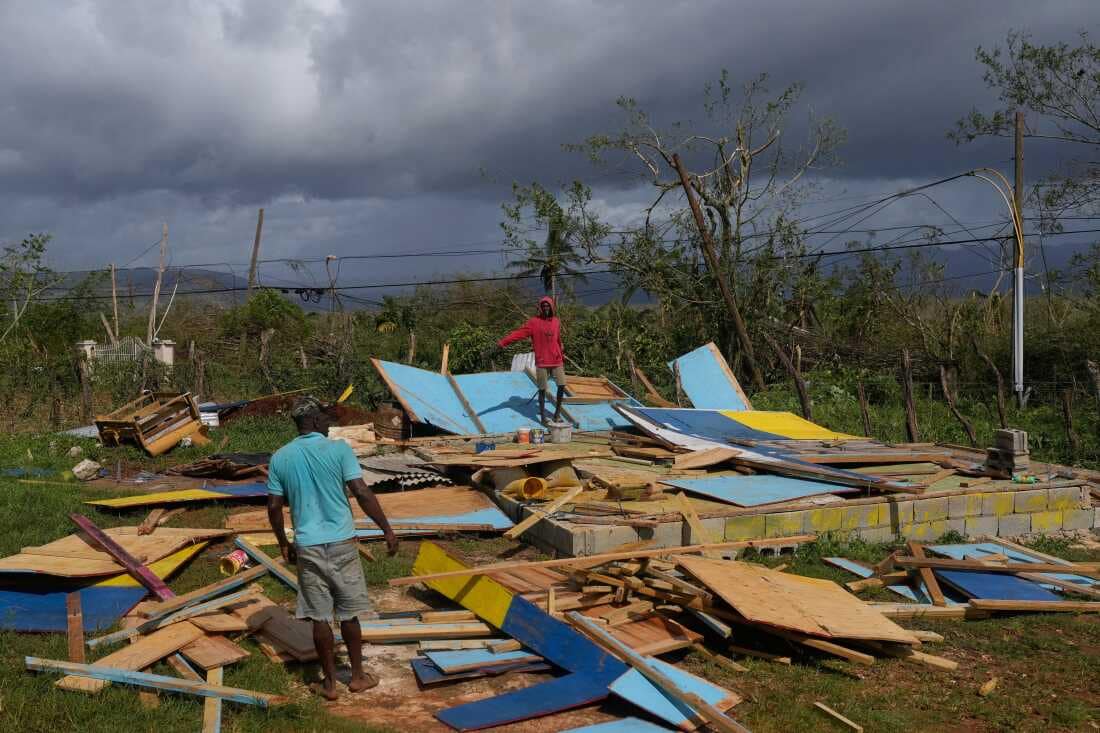
Following the devastating impact of Hurricane Melissa, which struck Cuba as a Category 3 storm, Antiguan students in the country have been confirmed safe by Cuban Ambassador Sergio Jorge Pastrana. The majority of these students are located in western Cuba, which remained largely unaffected by the hurricane. Six students based in Santiago de Cuba are reported to be in good health and are actively assisting medical teams in relief operations. Melissa initially made landfall in Jamaica as a Category 5 hurricane with winds reaching 185 mph, causing significant destruction and claiming at least 28 lives across Haiti and Jamaica, with many still unaccounted for. In preparation for the storm, Cuba evacuated over 735,000 residents and has since initiated recovery efforts, including power restoration and the distribution of essential supplies like food and medicine. Communication lines remained operational throughout the hurricane, facilitating coordination and enabling families to stay in touch. Ambassador Pastrana described Melissa as the most severe storm of the 2025 hurricane season and encouraged Antiguans interested in supporting relief efforts to reach out to the Cuban Embassy for further instructions.
-

Trinidad and Tobago to realign foreign policy amid Caricom rift
Prime Minister Kamla Persad-Bissessar of Trinidad and Tobago has unveiled a significant transformation in the nation’s foreign policy, citing a breakdown in trust with the Caribbean Community (Caricom). This announcement, widely covered by national outlets such as the Trinidad and Tobago Guardian, Daily Express, and Newsday, comes amid escalating tensions over regional security, divergent stances on Venezuela, and U.S. military activities in the Southern Caribbean. Persad-Bissessar emphasized that these changes are essential for bolstering the country’s economic and physical security, stating that Caricom is no longer seen as a dependable partner. While withdrawal from Caricom is not on the table, the administration plans to forge new international alliances focused on trade, investment, and security. The Prime Minister’s remarks follow Trinidad and Tobago’s decision to withhold support for an October 18 Caricom communiqué declaring the Caribbean a ‘Zone of Peace,’ a stance that highlighted the nation’s unique challenges with drug trafficking, gang violence, and gunrunning. Persad-Bissessar’s endorsement of U.S. military deployments, including the USS Gerald Ford, has further strained relations with Caricom and Venezuela. The Venezuelan government responded by suspending energy agreements and declaring her ‘persona non grata,’ a move she dismissed as inconsequential. Despite these tensions, Persad-Bissessar reaffirmed her commitment to regional humanitarian efforts, expressing solidarity with Jamaica following Hurricane Melissa. As a founding member of the Caricom Single Market and Economy, Trinidad and Tobago’s shift signals a potential reorientation of its long-standing regional engagement in response to evolving geopolitical dynamics.
-

Man shot dead at Chapman Lane
Authorities are actively investigating a deadly shooting incident that took place on Wednesday evening at 3rd Avenue, Chapman Lane, in St. Michael. The tragic event unfolded around 7:45 p.m., claiming the life of 30-year-old Kadeem Jelani Maycock, a resident of the same address. According to preliminary reports, Maycock was seated among a group of individuals when an unidentified assailant, wearing a mask, approached and fired multiple shots at him. Emergency services were promptly dispatched to the scene, but Maycock was found unresponsive and showed no signs of life. A medical doctor later confirmed his death at the location. The St. Michael Police Department has issued a public appeal for information, urging anyone who witnessed the incident or possesses relevant details to come forward. Witnesses are encouraged to contact the Criminal Investigations Department at 430-7189 or 430-7190, the Police Emergency number 211, or Crime Stoppers at 1-800-8477. The investigation remains ongoing as law enforcement seeks to uncover the motive behind the shooting and identify the perpetrator.
-

STATEMENT: Ministry of Labour thank you message, Ti Vilaj Kweyol – Tout Biten Domnik 2025
The 4th Annual Ti Vilaj Kweyol event, held from October 20th to 23rd, 2025, has been hailed as a resounding success, surpassing expectations in many aspects. The Ministers of Labour, Public Service Reform, Social Partnership, and Small Business Development, along with the Ministry of Tourism and Agriculture, have extended their heartfelt thanks to all individuals and organizations who contributed to the event’s triumph. The event, which celebrates cultural heritage and community spirit, saw an outpouring of support from patrons, partners, and sponsors, whose collective efforts made it a memorable experience. Organizers, volunteers, vendors, public officers, performers, media houses, and specialty services were also commended for their dedication and seamless coordination, ensuring a safe and rewarding occasion that reflected the nation’s resilience. Sponsors and community organizations were acknowledged for their generosity, which enriched the program and highlighted the importance of unity in advancing the national agenda. Attendees and dignitaries were thanked for their enthusiastic participation and for upholding the values that bind the nation together. The success of this year’s event sets a strong foundation for future initiatives aimed at fostering a brighter future for all citizens and small businesses.
-

Shepherd, Hosein, Holder power WI to 14-run T20I victory
The West Indies secured a hard-fought 14-run victory against Bangladesh in the second T20I on Wednesday, clinching the series with an unassailable 2-0 lead. Despite a shaky batting performance and multiple fielding errors, the Caribbean side’s bowlers delivered a match-winning performance at the Bir Sreshtho Flight Lieutenant Matiur Rahman Stadium. Romario Shepherd, Akeal Hosein, and Jason Holder spearheaded the bowling attack, restricting Bangladesh to 135 for eight in their 20 overs. This marked only the West Indies’ second bilateral T20I series win in their last nine attempts. Earlier, skipper Shai Hope and Alick Athanaze provided a solid foundation with half-centuries, but a middle-order collapse limited the visitors to 149 for nine. Bangladesh’s Tanzid Hasan top-scored with 61, but the hosts fell short despite several dropped catches by the West Indies. The final T20I will be played on Friday.
-
Stichting 8 December: Gerechtigheid blijft de enige weg naar berusting
The Foundation December 8, 1982, has issued a statement emphasizing the pivotal role of the verdict on the December Murders in shaping the future of Suriname as a constitutional state. The organization has welcomed President Jennifer Simons’ recent acknowledgment of the finality of the December 8 verdict and expressed openness to her call to focus on the future. The foundation underscores that impunity in any form contradicts both the Surinamese Constitution and international treaties. Given the president’s stance in favor of ‘human rights for all’ and against ‘summary executions,’ the foundation assumes her vision aligns with a future as a democratic constitutional state. The December 8 verdict marked the end of a prolonged era of impunity for grave state crimes, including the brutal torture and summary execution of innocent civilians. Official lies and slander were debunked, and the victims’ roles as champions of freedom and democracy in Suriname were affirmed. Impunity for such crimes against humanity, regardless of form or pretext, is fundamentally at odds with constitutional principles and international human rights treaties. Respecting the December 8 verdict means honoring the victims and their struggle for justice and democracy, rather than the perpetrators. Political considerations should not justify public honors for torturers and murderers, as such unethical behavior disrespects the victims and compounds the moral suffering of their families. Upholding human rights for all, as recently announced by the president, requires at a minimum: rehabilitation for the victims, recognition of the injustices and suffering endured by them and their families, and a genuine commitment to redress these wrongs. ‘Justice remains the only path to peace,’ the foundation concluded.
-
New historical novel on Indian Warner now available on Amazon
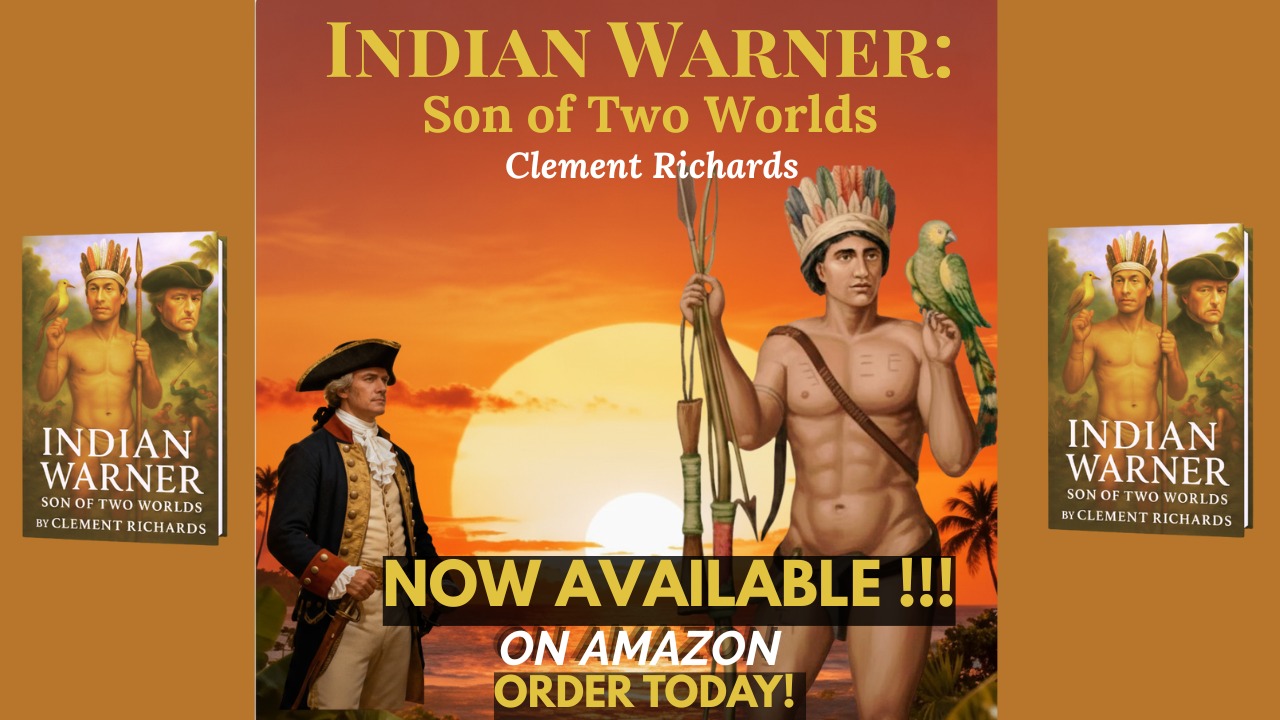
Dominican author Clement Richards has captivated readers with his newly released historical novel, *Indian Warner: The Son of Two Worlds*, which delves into the life of Indian Warner, a mixed-heritage figure who rose to prominence in 17th-century Dominica. Available in paperback on Amazon and set for an audio release by October 31, the book has sparked widespread interest for its nuanced portrayal of Warner’s complex identity and legacy.
Indian Warner, born in St. Kitts to Sir Thomas Warner, the first English colonizer in the Eastern Caribbean, was appointed Deputy Governor of Dominica. However, Richards reveals that this title was a political ploy to curb his influence. Despite this, Warner emerged as the de facto leader, wielding significant power. The novel traces Warner’s early life of privilege, including access to education and weaponry—luxuries seldom granted to individuals of mixed heritage. Following his father’s death, Warner faced colonial racism and betrayal from his brother, who later orchestrated his murder, forcing him to flee to Dominica at age 15.
In Dominica, Warner’s fluency in English, French, and Kalinago allowed him to integrate seamlessly into Kalinago society. Within 15 years, he ascended to the position of Carib Obutu (chief), fully embracing indigenous customs and shedding European influences. His leadership and resistance to European colonial forces made him a target, leading to his assassination near the village now known as Massacre—a name that stands as a grim reminder of colonial violence.
Richards’ novel blends historical facts with imaginative reconstruction, challenging colonial narratives that dismissed the Kalinago as uncivilized. The book highlights their sophisticated social structures and communal values, offering a fresh perspective on indigenous history. Richards also critiques myths surrounding figures like the Kalinago woman “Bob” and Sir Thomas Warner, emphasizing the lack of reliable documentation and the silencing of indigenous voices.
The author utilized artificial intelligence in his research, leveraging its ability to gather data from diverse sources. However, he cautioned against over-reliance on AI, citing instances where he had to correct inaccuracies. Priced between $14.99 and $15, the novel is marketed as an affordable yet valuable addition to home libraries, particularly for those in Dominica or visiting for cultural events like the Creole Festival or Independence celebrations.
Richards hopes the book will inspire the Kalinago community and foster cultural pride, advocating for Indian Warner’s recognition as a Caribbean hero. He also calls for greater unity between Afro-Dominicans and Kalinago people, particularly during national events, using the conch shell as a symbol of their shared history. The novel, while not a formal history textbook, aims to ignite further research into Dominica’s past and celebrate its rich heritage.
-

Worthy contenders
Several months ago, I purchased a delicate piece of measuring equipment. Upon its arrival, I meticulously inspected it, stored it safely, and studied its manual to avoid any mishaps. Over time, as I used it repeatedly and confirmed its reliability, I began to trust its durability and no longer treated it as fragile. This experience draws a parallel to how people approach the Bible. Many keep it untouched, unread, or approach it with fear and skepticism, often influenced by misconceptions. However, the Bible is far from fragile; it is a robust and transformative document that has shaped human history. The Bible encompasses the teachings of Jesus, prophetic guidance from God, detailed historical accounts spanning 4,000 years, genealogies, proverbs, songs, and predictions of future events. Authored by various individuals over millennia, it stands as an unparalleled historical and spiritual classic. Its authenticity is supported by archaeological findings and historical standards, such as the documented existence of Jesus and His crucifixion under Pontius Pilate. Reading the Bible offers profound insights into humanity’s past, present, and future. It encourages endurance, understanding, and hope. Some seek hidden codes or patterns within its text, such as the recurring mention of fourteen generations in Matthew’s Gospel. This pattern has sparked discussions about transformative figures like Moses, Jesus, and Mohammed, who emerged fourteen generations apart. Mohammed, a descendant of Abraham through Ishmael, initially preached monotheism and the teachings of the Bible before his message evolved. Over subsequent generations, religious leaders across Judaism, Christianity, and Islam often prioritized tradition over the Bible’s teachings, leading to conflicts and misunderstandings. Identifying transformative figures in the fourteen-generation pattern remains a complex but intriguing endeavor. The Bible, as a historical and spiritual guide, continues to inspire and challenge readers to reflect on their lives and the world around them.
-
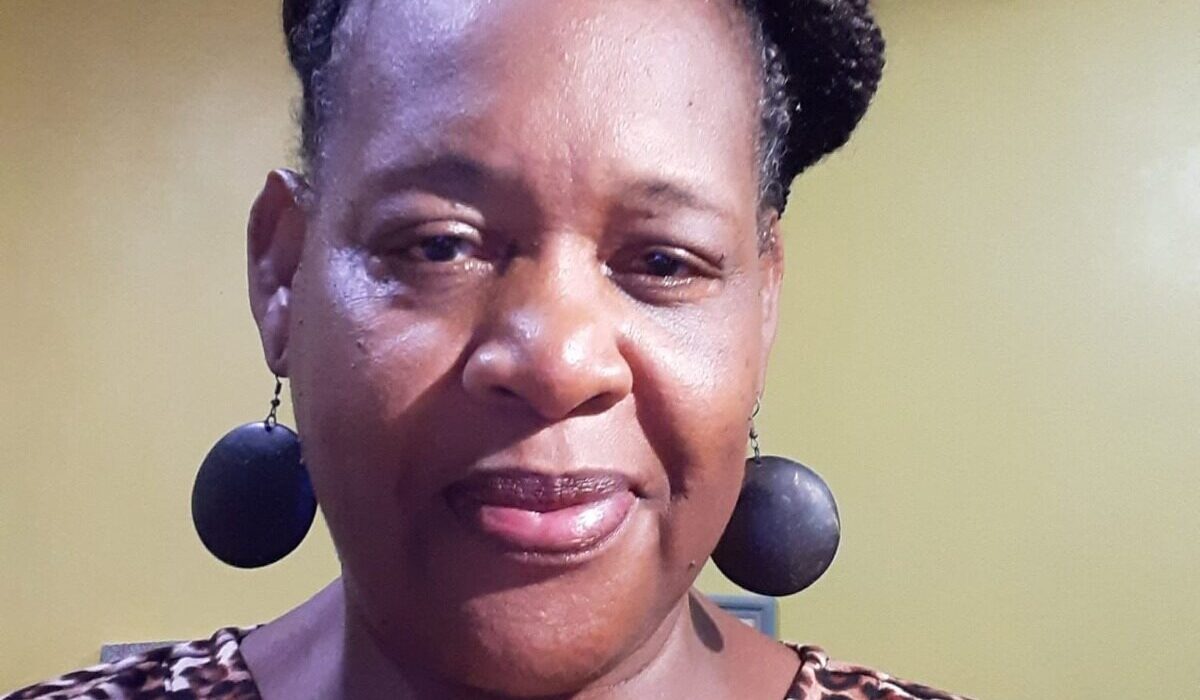
Jermainia Colaire-Didier to launch new book ‘Things ‘Dominican’ and Other Poems’
Dominican poet Jermainia Colaire-Didier is set to release her second poetry collection, titled “Things ‘Dominican’ and Other Poems,” on November 1, 2025. The collection, comprising 41 poems, delves into themes deeply rooted in Dominican identity while also inviting readers to reflect on broader regional and global perspectives. Known for her passionate engagement with creative writing, Colaire-Didier has consistently participated in literary events, including the “Lyrics under the Stars” series and the Poet’s Creative Workshop Series (PCWS). Her works have been featured in school literary programs and various open mic nights, showcasing her dedication to the craft. Beyond her poetic endeavors, Colaire-Didier, a retired French instructor at Dominica State College, remains active in academia and the arts as a freelance translator and private French tutor. Her commitment to language education underscores her passion for fostering cultural and linguistic connections. The official launch of her new collection will take place at the Alliance Française venue, offering attendees a chance to meet the poet and explore her latest work. The event promises to celebrate both the art of poetry and the vibrant cultural heritage of Dominica.