博客

  • Van malariavrij naar zorg in nood: wat gebeurt er met het binnenland?

    Van malariavrij naar zorg in nood: wat gebeurt er met het binnenland?

    When Suriname’s current ruling coalition took power after the 2025 general elections, it won a clear and undeniable political mandate from voters in the country’s interior districts. Over 17,000 votes were cast for the coalition partners — the National Democratic Party (NDP), ABOP, NPS, PL, BEP and A20 — across Brokopondo and Sipaliwini alone, with the leading NDP securing more than 7,700 votes across the two regions. This popular support, however, comes with equally clear political responsibility, and that responsibility is now being put to the test by a alarming crisis in the country’s most critical rural healthcare provider.

    Medische Zending, the organization that forms the backbone of primary healthcare for Suriname’s interior communities, has issued an urgent warning that its financial position has deteriorated to a critical level. Key operational funding has dried up, outstanding debts continue to mount, medical transportation services are on the brink of collapse, drug supplies are increasingly insecure, and dozens of outpatient clinics across the region are grappling with unresolved, dangerous maintenance backlogs. This is not a marginal, little-known community group: it delivers core primary care services that would otherwise be unavailable to tens of thousands of people, including maternal and child health services, routine vaccination programs, pharmaceutical care, emergency response, and disease surveillance across remote, hard-to-reach areas.

    What makes this crisis particularly stark is that it is unfolding under the watch of the very ruling party that now holds power, rather than a previous opposition-led administration. The contrast between the high of mid-2025 and today’s crisis could not be more dramatic. On 30 June 2025, the World Health Organization officially certified Suriname as malaria-free, making it the first country in the entire Amazon region to achieve this landmark public health victory. At the time, the WHO itself emphasized that reaching this status depended entirely on consistent, quality care reaching even the most isolated interior communities.

    As the former Minister of Health who led the country through that certification process, I stressed then a point that is far more urgent today than it was even six months ago: earning malaria-free status is one achievement, but maintaining it is an unending, non-negotiable responsibility. The WHO itself repeatedly underscored this need for constant vigilance. That historic win was not the work of a single politician or a single administration; it was the product of decades of tireless work from frontline healthcare workers, the National Malaria Program, Medische Zending, interior communities, and global public health partners. Since the 1970s, Medische Zending has been at the center of the country’s malaria elimination efforts, reaching remote communities that no other healthcare provider could serve.

    That is where the bitter political irony of today’s crisis lies. The very rural healthcare networks that made it possible to drive down malaria cases and earn Suriname international acclaim are now fighting to stay financially afloat. Eliminating malaria was a tremendous public health achievement; keeping it eliminated is the current government’s core responsibility. A WHO certification is not an end point. Holding that status requires constant disease surveillance, rapid detection of any new cases, and the ability to respond immediately to new outbreaks. This is especially critical for Suriname, which shares borders with countries where malaria remains endemic, and has high population mobility across remote gold mining regions that create constant risk of reintroduction.

    This leaves current Health Minister André Misiekaba, Chair of the National Assembly Standing Committee on Public Health Silvana Afonsoewa, and former opposition critic Jennifer Vreedzaam, who repeatedly issued public critiques of health policy between 2020 and 2025, with unavoidable questions. How do you plan to defend Suriname’s malaria-free status if you allow the interior’s healthcare system to be hollowed out by chronic underfunding? How will you reverse falling vaccination coverage when that directly increases the risk of deadly childhood disease outbreaks across remote communities? How can you guarantee the continued operation of critical medical outposts when frontline workers cannot even travel safely to their posts and are forced to work in dangerous, substandard conditions?

    Between 2024 and 2025, the previous administration made concrete progress to shore up interior healthcare: we secured a full year of medical supplies and equipment, and invested in expanding outpatient care infrastructure including the new Soekoenale clinic that just opened its doors. That progress should have been continued and scaled up by the new government. For years, the current ruling party, then in opposition, freely criticized the previous Santokhi administration and former health leaders. Today, the tables have turned. The NDP leads the government, Misiekaba holds the health ministry portfolio, and Afonsoewa leads the parliamentary health committee. There is no longer any room to blame the previous administration for ongoing failures.

    Interior voters gave this coalition their trust and their votes. Now they are entitled to demand tangible results — not empty speeches, not political excuses, not endless blame shifting to the past. The government must act immediately to secure the funding Medische Zending needs to continue operating, protect the interior’s fragile healthcare system, and safeguard the historic malaria-free status Suriname fought for decades to achieve.

    It would be a tragic, bitter irony if Suriname first made global public health history by eliminating malaria, only to lose that status through administrative neglect that weakens the very care systems that made the achievement possible in the first place. The interior turned out and gave this government its mandate. Now it is time for the government to show that vote was worth something. The coalition campaigned on a promise of change. That promise was clear. The people of the interior deserve to see that promise kept for their healthcare.


  • Condolences extended to Family of Aliyah Joseph of Delices

    Condolences extended to Family of Aliyah Joseph of Delices

    The tight-knit community of Delices is grappling with an unexpected, devastating loss this week, as tributes and condolences pour in for Aliyah Joseph, a local woman who died at a far too early age.

    In an official statement released following Joseph’s passing, the Delices Village Council honored the young woman’s life, framing her death as a heartbreaking tragedy that has cut short a promising life years before its natural end. The council extended its deepest sympathy and collective prayers to Joseph’s entire circle of loved ones, including her two young children, parents, siblings, extended relatives, and all residents of the village who have been touched by her loss.

    Joseph leaves behind two minor children, and community leaders have called on local residents to surround the young pair with ongoing support, whether through quiet prayers, practical assistance, or small acts of kindness that can ease the overwhelming hardship their family currently faces. The official message also urged all those mourning Joseph to draw on collective community strength to find comfort amid grief, as they hold memories of her close.

    “May all those who mourn her passing find strength and comfort during this difficult time, and may Aliyah’s soul rest in eternal peace,” the council’s statement concluded.

    Alongside the flood of tributes, unconfirmed independent reports have emerged alleging that Joseph’s death is linked to domestic violence. As of the latest updates, these claims have not been independently verified by official authorities or local leadership.

  • Govt plans surveillance investment to bolster animal disease response

    Govt plans surveillance investment to bolster animal disease response

    Barbados is moving forward with an ambitious, multi-million-dollar focused investment initiative to upgrade national disease surveillance, testing, and monitoring systems across the entire animal and food production sectors, as the country ramps up preparedness to fend off potentially catastrophic transboundary disease outbreaks, the Ministry of Agriculture announced Tuesday.

    Opening a technical workshop focused on building rapid response protocols for African Swine Fever (ASF) at the Hilton Barbados Resort, Agriculture Minister Dr. Shantal Munro-Knight emphasized that robust diagnostic and surveillance capabilities are non-negotiable to safeguarding three core national priorities: national food security, active agricultural trade, and the livelihoods of thousands of working smallholder farmers across the country.

    Dr. Munro-Knight outlined the current context of Barbados’ pork industry, noting that the nation slaughters between 25,000 and 30,000 hogs annually to meet domestic demand – a figure that has fallen from a peak of roughly 50,000 head in prior years. “That volume represents a significant share of the pork consumed by Barbadians each year,” she explained, adding that the country also imports approximately $1.5 million USD in raw pork products annually for domestic processing.

    ASF, a highly contagious transboundary animal disease with no currently available vaccine for widespread use, would deliver irreversible harm to small-scale producers and the many Barbadians whose incomes depend directly on the agricultural sector, the minister warned. She reframed the issue of animal disease preparedness as a matter of national critical importance, rather than an isolated agricultural concern, pointing out that smallholder producers form the cultural and economic foundation of Barbados’ agri-food system.

    “We recognize the deep interconnectedness between animal health, national food security, agricultural investment, and cross-border trade – but at its core, this work is about protecting people’s livelihoods,” Dr. Munro-Knight said. “The devastation an ASF outbreak would bring to small pig farmers, who are the backbone of our agri-food sector for historical and cultural reasons, elevates this from a niche agricultural issue to a national priority.”

    The government has already finalized an investment portfolio for the preparedness initiative, which includes plans to secure financing for a brand-new, modern slaughterhouse. Additional investments will target expanded testing capacity through comprehensive upgrades and expansion of both the national veterinary laboratory and the Government Analytical Services facilities. Dr. Munro-Knight noted that building robust in-region biosecurity and diagnostic infrastructure is a core strategic goal for Barbados, and the country has previously underinvested in the proactive surveillance, data collection, and reporting systems needed to respond quickly to emerging disease threats.

    Beyond animal health, the minister also highlighted gaps in crop traceability systems across the country, admitting that Barbados still lags behind many other nations in adopting modern traceability tools for crop production. “Even in our crop sector, we are playing catch-up to systems that other countries have already integrated into their production chains,” she said. “We are now actively working to develop and roll out improved crop traceability frameworks that align with international standards.”

    Dr. Munro-Knight emphasized that collaborative regional and international partnerships will play an indispensable role in strengthening Barbados’ ability to respond to emerging animal health threats, but she noted that any successful collaboration must center Barbados’ specific national priorities. “Partners must align their support with our national priorities, not their own,” she said. “They need to bring practical, actionable solutions and pathways that advance our agenda, no one else’s. At this critical juncture for our region and the entire globe, strong, aligned partnerships are the only way we can make meaningful progress.”

  • Insecurity : Young female police officer killed in the line of duty

    Insecurity : Young female police officer killed in the line of duty

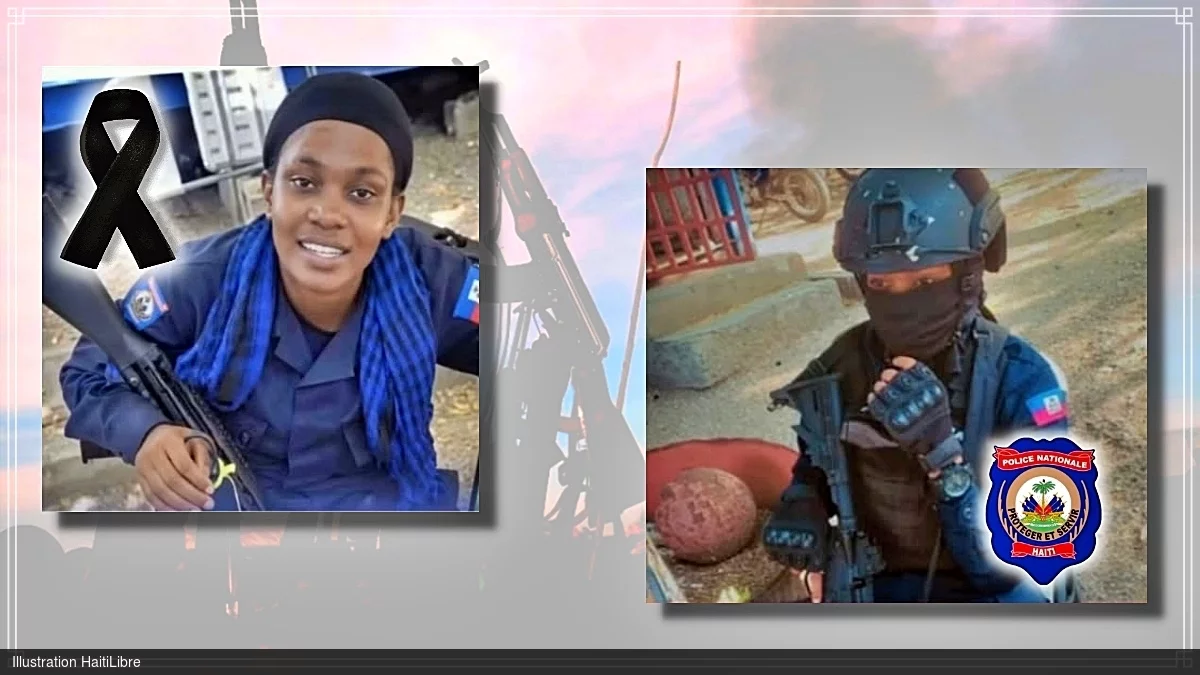
    Haiti’s national security crisis has claimed another life of a public servant, after a 2025 graduate of the Haitian National Police (PNH) was fatally shot in a targeted ambush by heavily armed gang members earlier this week.

    Officer Saint Jour Queturah, a first-class officer assigned to the Departmental Order and Intervention Brigade (BOID), was killed on Sunday, September 6, 2026, while her unit was conducting routine patrol operations through the Bercy region, a contested corridor between the coastal towns of Cabaret and Arcahaie. The area has been labeled a high-tension hotspot in recent months, as the Canaan criminal gang coalition repeatedly launches incursions into the territory in a bid to expand their territorial control, which has already displaced thousands of local residents.

    According to PNH official statements, unidentified heavily armed assailants opened deliberate fire on the police unit as it traveled along the strategic road, striking Saint Jour in the head. Fellow officers immediately rushed the wounded 34th Training Class graduate to the nearest medical facility, Saintard Reformed Hospital, but medical teams were unable to save her life.

    In a formal statement released following the incident, PNH leadership mourned the loss of the young officer, who had only served the Haitian people for a little more than 18 months since graduating from the police academy in January 2025. The department described Saint Jour’s death as a devastating blow not only to her biological family and close friends, but also to her BOID teammates, fellow graduates of the 34th Class, and the entire PNH community.

    The statement honored Saint Jour’s courage, commitment to public service, and ultimate sacrifice in the line of duty. “The PNH pays its deepest respects to the memory of Officer 1st Class Saint Jour Queturah,” the release read. “In this moment of profound grief, we extend our sincerest condolences to her family, loved ones, and all colleagues who served alongside her. We pledge to stand with her family through this unimaginable loss, and to provide ongoing support as they navigate this difficult time.” The department closed its statement by affirming that Saint Jour’s sacrifice would never be forgotten, ending with a message of rest for the fallen officer: “Rest in Peace, Officer 1st Class Saint Jour Queturah.”

    The killing comes amid a years-long surge in gang-related violence and insecurity across Haiti, which has seen heavily armed criminal groups seize control of large swathes of territory outside the capital Port-au-Prince, targeting security personnel and civilians in a bid to consolidate power. As of 2026, the United Nations estimates that more than 2,000 people have been killed in gang-related violence in Haiti since the start of the year, with hundreds of police officers among the casualties.

  • Matthews continues to dominate ICC all-rounder rankings

    Matthews continues to dominate ICC all-rounder rankings

    West Indies women’s cricket captain Hayley Matthews has once again secured her position as the world’s leading women’s T20 all-rounder in the latest rankings update from the International Cricket Council (ICC), capping off a remarkable run of individual form that has cemented her status as one of the sport’s top modern talents. Currently competing and leading the Barbados Tridents — the three-time defending champions of the Women’s Caribbean Premier League — Matthews has held onto the coveted number one position in the ICC’s T20 all-rounder standings, outperforming elite competitors from across the globe. New Zealand’s star all-rounder Amelia Kerr sits just behind her in second place, while Sri Lanka’s dynamic standout Chamari Athapaththu rounds out the top three positions on the list. Mathews’ consistent dominance extends beyond the shortest format of women’s international cricket as well. In the ODI all-rounder rankings, she holds a strong second place, trailing only Australia’s veteran star Ashleigh Gardner, but jumping ahead of fellow Australian rising talent Annabel Sutherland to claim the second spot. Her individual rankings across other disciplines further highlight her well-rounded skill set: she ranks fourth globally in ODI bowling, 14th in T20 bowling, fourth in the ICC’s list of top T20 batters, and seventh in the 50-over batter rankings. Notably, Matthews’ exceptional individual form has not translated to a top-tier ranking for her national side, however. The West Indies women’s team currently sits in seventh place in the ICC ODI team rankings, a list led by top-three sides England, India and South Africa. In T20 team rankings, West Indies also hold the seventh position, with Australia leading the table, followed by India in second and New Zealand in third. Despite the team’s current mid-table standing, Matthews’ consistent top-tier individual performances remain a bright spot for West Indies cricket as the side continues to build toward future international competitions.

  • Police searching for missing man

    Police searching for missing man

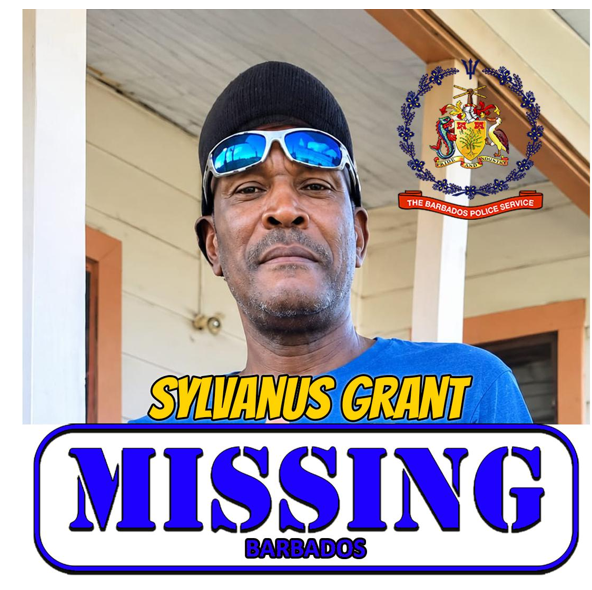
    Law enforcement authorities in Barbados are turning to the general public for help as they search for a missing middle-aged man who vanished more than a week ago. 54-year-old Sylvanus Grant, a resident of Blades Hill No. 2 in the parish of St John, was last spotted by members of the public on Saturday, September 5, and no confirmed sightings have been reported since that date.

    Investigators have released a full physical description of Grant to help community members identify him quickly. He has a dark skin tone, stands approximately five feet six inches tall, and has a slim body frame. Those who know him describe him as soft-spoken, and he speaks with a distinct Vincentian accent that sets him apart.

    On the day he was last seen, Grant was wearing casual clothing that authorities say makes him easy to recognize: a plain grey short-sleeved t-shirt, blue three-quarter-length denim jeans, and he was carrying a standard black haversack over one shoulder.

    According to information compiled by the District ‘C’ Police Station, which is leading the search effort, Grant regularly visits three popular commercial areas across two different parishes. He is known to frequent the coastal town of Speightstown in the northern parish of St Peter, as well as two busy locations in the capital parish of St Michael: Nelson Street and the Vincy Lane neighborhood.

    Police are urging anyone who has seen Grant matching this description, or anyone who has any information about his current whereabouts that could assist the investigation, to reach out to authorities immediately. Tips can be submitted directly to the District ‘C’ Police Station via phone at either 416-8200 or 416-8204. For urgent reports that require immediate attention, community members can contact the national police emergency line at 211. Anonymous tips can also be submitted through the Crime Stoppers hotline at 1-800-TIPS (1-800-8477), or members of the public can drop off information at any local police station across the country.

  • Police Call for Stronger Enforcement of Noise-Pollution Laws

    Police Call for Stronger Enforcement of Noise-Pollution Laws

    Across Antigua and Barbuda, persistent public outcry over unregulated excessive noise from motorists playing blaring music near sensitive public spaces has pushed top law enforcement officials to call for strengthened enforcement of the country’s existing noise abatement regulations. Superintendent Elson Quammie, who leads the nation’s Traffic Department, outlined the core issue in a recent appearance on the Browne and Browne Show, noting that while the legal framework to curb excessive noise is already in place, inconsistent application of the law has allowed the problem to escalate.

    “We have the Noise Abatement Act, but what I would say is that there is just a lack of enforcement,” Quammie stated during the public discussion. The traffic chief argued that current practices, which often allow violators to avoid meaningful consequences after disturbing residents and visitors in quiet zones, must be revised. Instead of letting offenders go with informal warnings, Quammie stressed that repeat and serious violators should be brought before the court to face formal penalties for their violations.

    Quammie called out specific high-priority areas that have been disproportionately impacted by the noise crisis. He expressed particular alarm over incidents near the Government House roundabout and houses of worship, emphasizing that the seat of national government should not be subjected to unnecessary disruptive noise. He added that schools and other officially designated quiet zones, which serve vulnerable or focused community functions, also demand urgent protection from excessive noise pollution.

    The public conversation on the issue was sparked by a recent high-profile complaint: a motorist reportedly blared music laced with offensive language at extreme volume while dropping off a family member at a local supermarket parking lot. Discussion panelists joined Quammie in highlighting that the problem extends far beyond residential neighborhoods, noting that disruptive noise has even interfered with official government events hosted near the Government House roundabout. In some extreme cases, panelists confirmed, official events have required traffic to be diverted away from the roundabout entirely to avoid the constant loud noise from passing or parked motorists.

    As of the current discussion, no new legislative penalties or island-wide enforcement campaigns have been formally announced. Even so, Quammie’s public remarks signal a potential policy shift, with local police expected to begin making far broader use of the existing Noise Abatement Act and increase the number of violators referred for court prosecution in the coming months.

  • Dominica State College reports strong growth in 2026 enrolment

    Dominica State College reports strong growth in 2026 enrolment

    Dominica State College (DSC), the Caribbean nation’s leading tertiary education institution, has announced a remarkable surge in student enrollment for its 2026 academic intake, with multiple long-running and recently revived programs posting their highest participation numbers in the college’s history.

    Data released by the institution shows broad-based growth across science, business, legal, and technical fields. Enrollment in Biology jumped from 24 students in the 2025 intake to 38 this year. The Bachelor of Science in Business Management and the Paralegal Studies program also hit all-time enrollment highs, welcoming 21 and 29 new and returning students respectively. The Pre-Health program, a critical pathway for learners pursuing medical and allied health careers, attracted a total of 74 students, while two engineering programs hit new enrollment milestones: Automobile Engineering enrolled 23 students, marking the first time the program has crossed 12 accepted learners, and Electrical Engineering hit 26 students, surpassing its previous record of 15.

    Psychology, another fast-growing program, also reached a historic enrollment peak of 21 students, more than 75% higher than its previous high of 12. Meanwhile, Chemistry welcomed its first cohort of students since 2024, with 12 learners joining the 2026 intake.

    Kimberly Benjamin, DSC’s Marketing and Communications Officer, noted that the Associate Degree in Business Administration remains one of the college’s most popular programs, drawing a total of 102 students across all its specialized concentrations this year. This represents a substantial 31% increase from the 78 students enrolled in the program in 2025.

    Beyond growth in existing programs, DSC is also seeing a resurgence of student interest in academic disciplines that were paused in recent years. Physics is being offered again for the first time since 2022, while Geography, brought back last year after a hiatus, is running for a second consecutive year. This extended run signals steady, sustained demand from students for a broader selection of liberal arts and science coursework.

    One of the most notable shifts in the 2026 intake is the dramatic rise in the number of learners seeking to re-enroll and complete interrupted studies. DSC received 239 re-matriculation applications for the 2026 academic year, and accepted 110 of those applicants. In comparison, the college received just 167 re-matriculation applications and accepted 51 last year, meaning acceptances more than doubled year-over-year.

    Benjamin says this sharp increase reflects a growing trend of adult learners seeking second chances to complete degrees they started years ago, or to upskill by pursuing new academic pathways. As the college prepares to launch the 2026/2027 academic year, this enrollment boom has boosted institutional confidence in its mission to deliver accessible, career-relevant, high-quality tertiary education to all learners across Dominica. Benjamin added that the growing demand from adult learners also highlights the urgent need to expand dedicated support systems and flexible academic pathways for this fast-growing student demographic, particularly for those pursuing associate degree programs.

  • Government Considering Jolly Beach Lagoon for Kayaking and Water Sports

    Government Considering Jolly Beach Lagoon for Kayaking and Water Sports

    A new tourism-focused development initiative is being explored by the government of Antigua and Barbuda, which aims to convert an existing natural pond behind the popular Jolly Beach into a purpose-built recreational lagoon for outdoor water activities including kayaking. Prime Minister Gaston Browne first revealed this conceptual plan during a public appearance on the locally broadcast Browne and Browne Show, where he led a broader discussion on the rehabilitation of underutilized ponds and wetlands across the country and their potential conversion for public recreational use.

    During his remarks, Browne highlighted that the Jolly Beach pond was selected as a candidate site for a lagoon facility matching the model of similar recreational water spaces the administration has evaluated for other locations. He laid out the core vision for the project: the pond would undergo dredging to increase its depth, followed by infrastructural upgrades to reshape it into a scenic, activity-friendly lagoon capable of hosting kayaking, casual paddling, and a range of other non-motorized water sports.

    If advanced and brought to completion, the development is expected to deliver a significant boost to the Jolly Beach region’s tourism sector. By adding a new unique recreational attraction to the area’s existing offerings, the project would expand the diversity of activities available to both domestic visitors and international tourists, supporting longer stays and greater local economic spillover from tourism activity.

    Despite the outline of the concept, however, no key details about the project’s next steps have been released to the public. Prime Minister Browne declined to confirm whether preliminary environmental impact or engineering feasibility studies have already been conducted for the proposal. No public estimates have been shared regarding the total projected construction cost, a timeline for breaking ground and completing work, or any information about potential public or private operators that would manage the lagoon once completed. These omissions confirm the plan remains in its very early conceptual phase, with no formal approval or implementation timeline set as of yet.

  • Antigua and Barbuda Now Has About 50,000 Registered Vehicles

    Antigua and Barbuda Now Has About 50,000 Registered Vehicles

    The Caribbean nation of Antigua and Barbuda is facing mounting transportation pressures as its total number of officially registered vehicles pushes past the 49,000 mark, closing in on a round 50,000 threshold. This new vehicle count estimate was shared by the top official of the country’s Traffic Department, Superintendent Elson Quammie, during a recent appearance on the locally broadcast Browne and Browne Show, when he was asked to share an update on how many vehicles are currently operating across the country’s road network.

    When responding to the question, Quammie confirmed that the national registered fleet is “almost 50,000 now”, and noted that the final, fully audited actual number may end up being slightly higher than this preliminary estimate.

    Antigua and Barbuda’s Prime Minister Gaston Browne has previously raised observations that the small island nation may hold one of the highest per capita vehicle ownership rates in the region, if not globally. That trend is showing no signs of slowing: Quammie confirmed that new shipments of vehicles arrive at the country’s ports every single month, adding incremental strain to a road network that is already operating beyond its intended capacity.

    This steady growth in the national vehicle fleet creates cascading challenges across multiple areas of daily life and public planning. The most immediate impacts are already visible in the form of worsening peak-hour traffic congestion, elevated risks to road safety as more drivers share narrower roadways, growing shortages of available parking in population and commercial centers, and increased demand for new road construction projects and more frequent maintenance work on existing infrastructure to handle heavier traffic volumes.

    In response to these emerging strains, national law enforcement agencies have rolled out new traffic management measures, including increased police deployments at high-traffic major intersections, school zones, and the country’s busiest road corridors. The expanded presence is aimed at improving overall traffic flow, reducing unsafe driving behavior, and encouraging all motorists to comply fully with national traffic regulations.

    Notably, Quammie did not provide a detailed geographic breakdown of vehicle registrations between the nation’s two main islands, Antigua and Barbuda, nor did he share data on how many of the 50,000 registered vehicles are currently classified as actively in use on public roads.