博客

  • UP IN FLAMES

    UP IN FLAMES

    In a dramatic act of political defiance that electrified gathered supporters Thursday night, Marvin Gonzales, chairman of Trinidad and Tobago’s main opposition People’s National Movement (PNM), publicly burned a court order tied to an investigation into the party’s iconic Balisier House headquarters, declaring the opposition would never be intimidated by what he frames as a politically motivated attack.

    Addressing a crowd of enthusiastic PNM backers assembled outside the party’s long-time headquarters in Port of Spain, Gonzales launched a blistering attack on the ruling government, accusing it of weaponizing state institutions to selectively target the opposition ahead of growing political tensions. The investigation at the center of the standoff centers on the funding used for Balisier House’s reconstruction, launched after a court ordered the PNM to disclose detailed records of how the project was financed. The PNM has already mounted a legal challenge to the proceedings, turning the headquarters itself into a symbolic battleground for national politics.

    In a fiery speech peppered with rhetoric that repeatedly called out Attorney General John Jeremie by name, Gonzales framed Balisier House as far more than just a physical building. “We will not be afraid of this order because the PNM, ladies and gentlemen, is not only in brick and concrete and mortar; the PNM lives in the heart and the dreams of every single citizen of the Republic of Trinidad and Tobago,” he told the cheering crowd. Even if the government chose to destroy the physical structure, he added, the party’s core would remain unbroken.

    Gonzales insisted the entire investigation is not a push for transparency, but a calculated component of a broader government campaign to erode the opposition’s standing ahead of upcoming political contests. He went as far as to frame the court order itself as a politically corrupted document, saying, “It was conceived in political sin. It was born in sin and it was shaped in political iniquity.”

    Moments after delivering those remarks, Gonzales set the court order ablaze on stage before exiting, declaring that the document would not be allowed to desecrate the land where the PNM was founded. “We will send them to the political ashes in the political cemetery of the people of Trinidad and Tobago,” he added, to loud applause from supporters.

    The PNM chairman doubled down on his accusations, claiming Prime Minister Kamla Persad-Bissessar personally selected Jeremie to lead a coordinated effort to persecute political opponents through state agencies. “I say to Kamla Persad-Bissessar and John Jeremie, we will not allow you to interfere in the people’s house. Get your grubby hands and get your dirty hands off the people’s house because this is our house. We will stand our ground and we will defend this country, we will defend this party,” Gonzales said.

    Throughout the address, Gonzales also revisited longstanding criticisms of Jeremie’s track record, recalling that when Jeremie previously served as Attorney General under a PNM administration, the Trinidad and Tobago Law Association passed two separate motions of no confidence against him in 2009. The first motion, Gonzales explained, stemmed from Jeremie’s alleged attempt to interfere in the Office of the Director of Public Prosecutions, then led by Geoffrey Henderson. The second motion accused Jeremie of meddling in criminal prosecutions for political gain.

    Gonzales also leveled new accusations against the current administration, claiming Jeremie has recently restructured national security agencies to consolidate power under his own control: he moved the Anti-Corruption Bureau directly under the Attorney General’s Office, and placed a division of the national spy agency under his immediate authority.

    In addition to the Balisier House controversy, Gonzales raised new questions about unexecuted Preventive Detention Orders (PDOs), asking “Where are the missing PDOs?” He claimed that out of 465 PDOs issued by police, only 435 have been executed, leaving 30 orders unaccounted for with no official explanation. He also alleged that corrupt officers have been extorting citizens, telling them they can avoid arrest under the outstanding orders if they pay thousands of dollars in bribes. Gonzales called on Police Commissioner Allister Guevarro to launch a full investigation into these extortion claims.

  • ‘Mild’ hybrids hit with 20% duty

    ‘Mild’ hybrids hit with 20% duty

    Trinidad and Tobago’s Customs and Excise Division has introduced a sweeping tax change that will reshape the local automotive import market, reclassifying vehicles fitted with Smart Mild Hybrid Vehicle (SHVS) technology as non-qualifying for existing hybrid vehicle tax concessions. Issued on July 22, General Order No 24 of 2026 formalizes the new ruling, which imposes a 20% customs duty on all imported SHVS-equipped vehicles, on top of the standard 12.5% value-added tax. The regulatory shift directly affects six popular passenger vehicle models produced by two major Asian automakers: Maruti Suzuki’s Fronx, Grand Vitara, Swift, Ertiga and XL7, plus Toyota Kirloskar Motor’s Urban Cruiser Taisor.

    The core point of contention behind the new classification is Customs’ official interpretation of what qualifies as a hybrid vehicle. According to the ruling, SHVS systems do not meet the concession eligibility criteria because the technology’s integrated electric motor “does not function as a motor for propulsion.” This definition has been met with fierce pushback from across the local automotive industry, which argues the classification is factually incorrect and implemented without proper stakeholder engagement.

    Rhondall Feeles, owner of Millennium Auto Dealership and vice president of the Cunupia Business Chamber, pushed back directly against Customs’ core claim, confirming that mild hybrid systems do contribute to vehicle propulsion. Feeles explained that SHVS technology pairs an internal combustion engine with a rechargeable electric system to power vehicle movement, which aligns with the existing regulatory definition of a hybrid vehicle outlined in concession policy. He noted that the confusion stems from Customs’ requirement that the electric motor must independently propel the vehicle to qualify, a threshold that is not written into any existing hybrid regulation.

    Feeles drew a distinction between current mild hybrid models and older micro hybrid systems at the center of a previous court case, where Customs successfully argued micro hybrids did not qualify for concessions because their batteries only powered accessories, not propulsion. “The mild hybrid, though it contributes less to propulsion than a full strong hybrid, still does propel the car,” Feeles emphasized. He warned that the sudden, unannounced policy change will trigger widespread financial disruption for both licensed importers and individual consumers importing vehicles privately, and called on Customs to engage in urgent consultations, introduce a grace period for vehicles already purchased or in transit, and coordinate with relevant government ministries to adjust the policy.

    Visham Babwah, president of the Trinidad and Tobago Automotive Dealers Association (TTADA), joined the call for urgent discussions with Finance Minister Davendranath Tancoo and senior Customs officials. Babwah highlighted that the new tax is being applied retroactively to vehicles that have already been imported and are currently awaiting customs clearance, a practice he described as fundamentally unfair to consumers who already locked in purchase agreements based on previous tax rules. He estimated that the combined new duties will add between $40,000 and $50,000 to the retail price of affected vehicles, a cost increase that will price many local consumers out of the market for new cars. Many buyers have already secured auto loans based on the original lower price, and banks will not approve additional lending to cover the tax gap, forcing many customers to cancel their purchases entirely, Babwah explained.

    Babwah stressed that the local automotive sector is already grappling with significant economic headwinds, including slowing sales and high unemployment, making the sudden tax increase particularly damaging. “A hybrid is a hybrid. A mild hybrid is still a hybrid vehicle,” he said, reaffirming the industry’s position that SHVS vehicles should remain eligible for concessionary tax treatment.

    Major import firms have also publicly criticized the policy, describing the decision as an unannounced “overnight” rule change that caught the entire industry off guard. RORO Importers noted in a public Facebook post that dozens of vehicles are already sitting at port or in transit to the country, and businesses have no way to absorb the unexpected additional tax costs. The company warned that drastic new price increases will push consumers to buy higher-mileage used vehicles instead of new, safer models.

    Eurojapan Motors Ltd. echoed these concerns, saying that industry leaders had repeatedly requested advance clarification on potential classification changes from regulators, and were assured any adjustments would be shared via official public notice. Instead, the company said, “No warning, no circular, no transparency, and no dialogue were provided.” The firm confirmed that vehicles and their import documentation have already been detained by Customs, which has notified dealers that the SHVS models will now be processed as non-hybrid vehicles for tax purposes. “We feel blindsided by this decision,” Eurojapan Motors said, estimating that the new duties will increase total vehicle prices by 35% or more. The company noted that the price hike harms not just dealers, but also consumers who have already placed deposits on affected vehicles and those that have already been shipped. One example cited by the firm: a vehicle previously priced at approximately $155,000 will now cost consumers around $215,000. Eurojapan Motors is calling for fair, transparent treatment and a transitional grace period for all vehicles already ordered or en route.

    Opposition political leaders have also joined calls for government accountability. Former prime minister Stuart Young has demanded the administration provide a full public explanation for the targeted new tax, while People’s National Movement deputy political leader Sanjiv Boodhu has questioned whether all importers will be treated equally under the new classification rules. Boodhu noted that the new SHVS duty is just the latest in a series of broad tax and fee increases that have driven up the cost of living for local consumers in recent months. Those increases include a doubling of duty on rum and spirits, a 100% rise in customs declaration fees and container examination charges, a doubling of the environmental tyre tax, a new 10% duty on luxury electric vehicles priced over $400,000, and a new 5% import tax on single-use plastics to fund recycling programs.

  • 10% on T&T exports remains

    10% on T&T exports remains

    On Thursday, U.S. President Donald Trump moved forward with new permanent double-digit tariffs on goods from 60 major U.S. trading partners, just hours after temporary stopgap levies—imposed following a Supreme Court defeat earlier this year—officially expired. The new measures set tariffs ranging from 10% to 12.5% on covered imports, covering 99% of all goods entering the United States. The Trump administration justified the new taxes by alleging that these trading partners have failed to adequately enforce bans on imports produced through forced labor, with 10% duties on exports from Trinidad and Tobago remaining unchanged from the earlier temporary regime.

    Speaking on behalf of the administration, U.S. Trade Representative Jamieson Greer framed the move as a long-overdue push for global policy alignment, noting, “The United States has had a forced labour import ban for nearly a century, and rigorously enforces it; it’s well past time for our trading partners to do the same.”

    The new tariffs replace the temporary 10% global levies that were set in place after the U.S. Supreme Court struck down Trump’s earlier, broader tariff regime in February. That original 2024 action invoked the 1977 International Emergency Economic Powers Act (IEEPA), under which Trump imposed double-digit tariffs on nearly all global imports, framing the country’s decades-long trade deficit as a national emergency. The Supreme Court ruled that IEEPA did not grant the president authority to implement tariffs under that framework, forcing the administration to issue refunds to importers that had paid the disputed duties.

    Following that ruling, Trump implemented temporary 10% tariffs under Section 122 of the 1974 Trade Act, a provision that limits temporary trade measures to a 150-day window. That window closed at the end of yesterday, prompting the transition to the new permanent structure under Section 301 of the same 1974 Trade Act. This statute grants the president authority to impose import taxes and other trade sanctions against nations found to engage in “unjustifiable,” “unreasonable,” or “discriminatory” trade practices. Trump previously relied on Section 301 to implement large-scale tariffs on Chinese goods during his first term, measures that ultimately survived legal challenges in federal courts.

    Key sectors are exempt from the new round of tariffs, including domestic oil and gas production and fertilizer imports. Goods that qualify for duty-free treatment under the U.S.-Mexico-Canada Agreement (USMCA)—the revised North American trade pact negotiated by Trump during his first term—are also spared from the new duties.

    The Trump administration has signaled that additional Section 301 tariffs may be on the horizon: the Office of the U.S. Trade Representative has already launched an investigation into whether 16 major trading partners, which account for 70% of total U.S. imports, have engaged in overproduction that suppresses global prices and puts U.S. manufacturers at a competitive disadvantage. That probe is still ongoing, with no final timeline for completion announced.

    Trump has long positioned steep tariffs as a core policy tool to revive American manufacturing, and last year formally overturned decades of bipartisan U.S. policy that prioritized lower trade barriers and increasingly liberalized global trade. However, the new tariffs drew immediate pushback from congressional critics, who argue the forced labor justification is a thin pretext for a broader protectionist agenda.

    “Today’s forced labour justification is too convenient to be taken seriously,” said U.S. Representative Richard Neal of Massachusetts, the ranking Democratic member of the House Ways and Means Committee. “Forced labour is a real and pervasive problem in our supply chains and demands serious enforcement. It should never be cheapened into a pretext for a tariff policy built on dubious legal theories and personal grievances.”

  • Five men acquitted

    Five men acquitted

    After spending more than 17 years confined to legal limbo awaiting a murder trial outcome, five men have walked free from court after a High Court judge threw out their charges and instructed a jury to deliver not guilty verdicts in a case where the alleged victim’s body was never located.

    On Thursday, Justice Maria Busby Earle-Caddle issued a landmark ruling that the prosecution failed to establish any actionable case against Clive “Smallman” Charles, Joseph “Joe” Sammy, Quesi “Blacks” Charles, Jaasu “Fat Head” Gafoor, and Markus “Tack” Julien. The five men stood accused of the 2008 murder of Maraval resident Qwasie Dowers.

    The judge’s decision aligned with no-case submissions put forward by the legal teams representing each of the five accused, and she immediately ordered their full discharge from custody. A sixth defendant charged in the same murder, Roger “Kyo” Geeban, never lived to see a conclusion to the case, having died in prison before the trial could reach its end.

    The origins of the case stretch back to March 2, 2008, when authorities claimed Dowers was killed in an unlawful killing. Prosecutors argued that the suspects disposed of Dowers’ body after the alleged murder, but despite years of investigation, the remains have never been recovered.

    When the prosecution concluded presenting its evidence, the accused’s legal teams each filed formal no-case motions, arguing that the State had failed to put forward sufficient credible evidence to support the murder charge and require their clients to mount a defense against the accusation.

    After reviewing the entirety of the prosecution’s evidence, Justice Busby Earle-Caddle sided with the defense, granting the no-case submissions and directing the jury to return not guilty verdicts for all five men. She followed the jury’s not guilty rulings with a formal order discharging all five defendants from the murder indictment. Prosecutors Norma Peters and Esther Gaston represented the State throughout the proceedings, while a team of 11 attorneys led by Evans Welch and Sebastian Petersen represented the five acquitted men.

  • News : Zapping…

    News : Zapping…

    July 25, 2026 – A week of mixed developments across Haiti spans youth football, local government transitions, rural infrastructure investment, and a decades-long call for accountability, with updates from every region of the country.

    The biggest sporting spotlight this weekend falls on the 2026 CONCACAF U-20 Championship, hosted in Puebla, Mexico, where Haiti’s U-20 national side, the Grenadiers, will take on the United States U-20 team on Saturday evening, 10 PM local Haitian time, at the Estadio Universitario BUAP. This matchup marks the fifth encounter between the two nations in the history of the CONCACAF U-20 Championship, with the United States holding an undefeated streak of four wins against Haiti in prior tournament meetings. Haiti earned its spot in this year’s championship after a dominant run through Group D qualifiers, finishing with a clean 4-win record without a single draw or loss. This marks the 12th time Haiti has competed in the continental youth tournament.

    In local governance news, Jacmel swore in its new municipal commission on Friday, July 24. Following an official swearing-in ceremony overseen by Justice of the Peace Keder Adescar, departmental delegate Pierre Michel Lafontant formally installed the new leadership team. Marceau Joseph will lead the commission as acting Mayor, supported by two deputy mayors Stéphanie Edouard Lafontant and Julie Leclerc, both of whom have pledged to prioritize local community progress during their term.

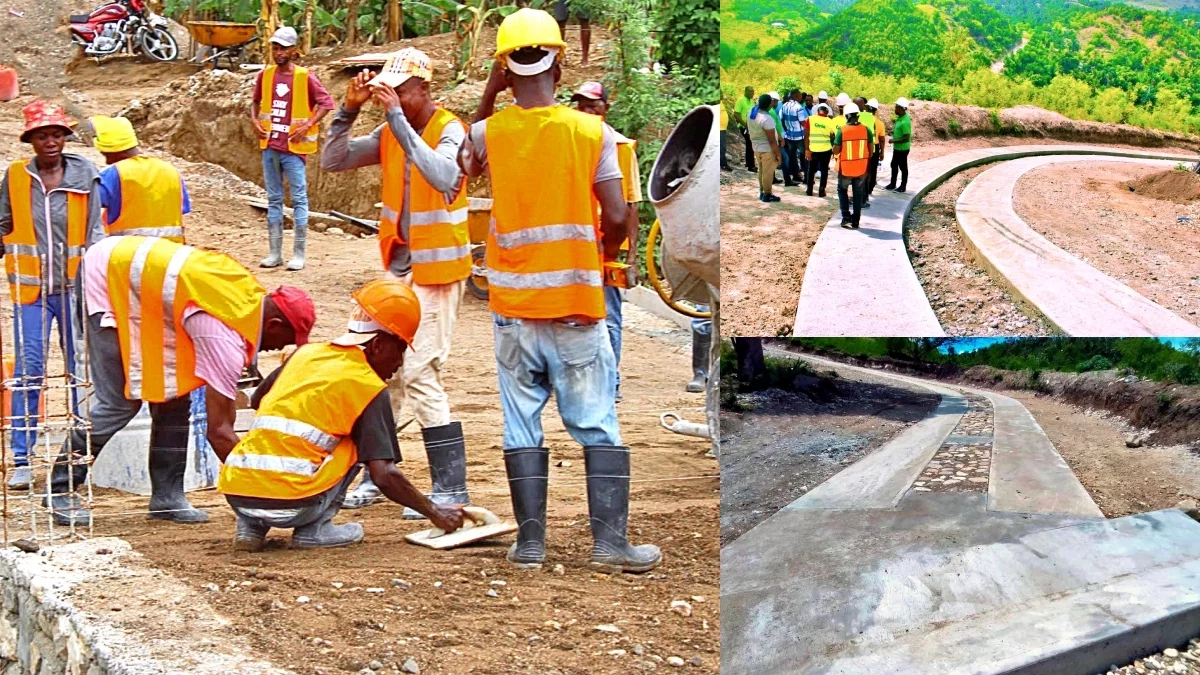
    Haiti’s Ministry of Agriculture, Natural Resources and Rural Development (MARNDR) launched a key rural infrastructure project this week in Rendel, a community within the commune of Chardonnières. Agriculture Minister Marcelin Aubourg presided over the launch ceremony on July 24, confirming the project is funded through the national Resilient Agriculture for Food Security Project (PARSA). Once completed, the new rural access road will connect isolated farming communities to regional markets, cut transportation costs for agricultural producers, and strengthen national food security by removing barriers to getting local crops to consumers.

    For Haiti’s senior men’s national football team, CONCACAF has officially released the full group stage schedule for the 2026-2027 Nations League, where Haiti competes in Group A of League A. All four of Haiti’s group stage matches will be held during the September-October 2026 FIFA international window, with the side currently awaiting the appointment of a new head coach. Haiti will open its campaign against Trinidad and Tobago on September 24, host Costa Rica four days later on September 28, travel to face the Dominican Republic on October 2, and wrap up group play against Costa Rica away on October 6.

    Thirty-nine years after the 1987 Jean-Rabel massacre that left 139 peasant activists dead and more than 200 injured, Haitian peasant organization Tèt Kole Ti Peyizan Ayisyen continues to push for accountability. The massacre occurred on July 23, 1987, and nearly four decades later, the group says the core demands that led peasants to mobilize for land rights in 1987 remain unmet. The organization is calling for formal justice for victims, reparations for surviving families and affected communities, and the implementation of long-promised comprehensive agrarian reform across Haiti.

    In Cap-Haïtien, the city’s municipal administration has begun distributing free paint to homeowners in the city center, as part of a broader urban beautification initiative launched this week. The distribution is limited to areas where the city has already completed street and sidewalk clearing work, and homeowners are required to paint the facade of their properties by the July 31 deadline set by municipal officials.

  • Maritime Scholarships : Call for Applications

    Maritime Scholarships : Call for Applications

    A new educational opportunity has opened up for young Haitians interested in building careers in the maritime industry, after a partnership between Haiti’s National Institute for Vocational Training (INFP) and Martinique’s Maritime and Aquaculture Vocational Training School (EFPMA) created a fully funded scholarship program for eligible candidates.

    The program, which is set to begin coursework at EFPMA’s Martinique campus in October 2026, will train selected participants to earn a Maritime Vocational Aptitude Certificate (CAPM), a recognized professional credential that opens doors to entry-level and mid-level careers in the global maritime sector. INFP, which is coordinating the application process on behalf of the partnership, has officially opened the call for applications, targeting young Haitian residents between the ages of 18 and 30.

    To be considered for the scholarship, candidates must meet three core prerequisites: existing basic navigational skills, professional proficiency in French, and completion of a Baccalaureate II degree or its recognized educational equivalent. Applicants are required to submit a complete application package that includes a detailed curriculum vitae with all relevant supporting educational and professional documents, a personal letter of motivation explaining their career goals in the maritime sector, a valid national tax identification number, and the Haitian National Unique Identification Card (CINU). The only required document that can be submitted after the initial application deadline is the official medical certificate, which must be issued by a licensed physician approved by Haiti’s SEMANAH authority.

    There are two accepted channels for submitting applications: candidates can send their complete package to the official INFP email address infp.alecoute@infp.gouv.ht, or drop off physical copies in person at the INFP Human Resources office, located at 3 rue Saint Surin, Impasse Fremont, Pétion-Ville, along Route de Canapé-Vert in Haiti. All applicants submitting materials via email are required to include the phrase *Application for the EFPMA scholarship* in the subject line of their message to ensure their application is routed correctly for review.

    Following the closing of the application period, INFP and EFPMA program coordinators will review all submitted materials and select a shortlist of candidates for further screening and evaluation. Only shortlisted applicants will be contacted via phone or mail to complete the next steps in the selection process. The firm deadline for all initial application submissions is August 15, 2026. More detailed information about EFPMA, its training programs, and the CAPM credential can be found on the school’s official website at https://www.efpma-martinique.com/.

  • Starnieuws gouddossier 2; Asabina: Regering weet wat misgaat in goudsector, maar grijpt niet in

    Starnieuws gouddossier 2; Asabina: Regering weet wat misgaat in goudsector, maar grijpt niet in

    A senior leader of Suriname’s ruling coalition has exposed deep-rooted systemic failures plaguing the country’s critical gold mining sector, blaming entrenched overlapping political and economic interests for the consistent failure to enforce existing regulations. Ronny Asabina, chairman of the BEP political party, parliamentary faction leader, and a long-time resident of Brokopondo’s Marshallkreek district, made the allegations in an exclusive interview with local outlet Starnieuws, contradicting common narratives that weak regulation stems from insufficient existing laws.

    Asabina emphasized that the national government already holds all necessary legal frameworks, data, and authority to bring order to the gold sector – the only missing element is genuine political will to act. Clear agreements on good governance and sector reform were reached within the ruling coalition when it took office, but tangible progress on the ground remains non-existent, he said. “The government knows exactly who holds every concession. The first step is simple: strictly enforce the terms of every active mining permit,” Asabina argued.

    The BEP leader called out large-scale illegal subletting of mining concessions as one of the sector’s most pressing flaws. Under current permit rules, subletting is explicitly prohibited, yet the practice has become widespread. Many individuals who qualify for concessions do not engage in actual mining operations; instead, they treat the rights as speculative assets, subletting them to third parties or profiting from selling shares in the concession. Asabina noted that some concession holders do not even know the exact location of their own mining claims.

    Alarmingly, this speculative practice extends far beyond professional mining operators, according to Asabina. Professionals from entirely unrelated sectors – including sitting politicians, lawyers, notaries, and even members of the clergy – hold concessions solely to trade them for profit, he claimed.

    A further contributing factor to chaos in gold-producing regions is the systematic withdrawal of state presence from mining areas over recent years, Asabina explained. The mining inspection service, which once enforced regulations and oversaw activity in the country’s interior, has effectively ceased to function. As a result, private mining operators and equipment owners are left to provide their own security for staff, machinery, and gold stockpiles – a vacuum that has been filled by private security firms and armed groups that now exercise de facto control over large swathes of mining territory. “The state no longer provides security. Every operator has to figure out how to protect their own assets,” Asabina said. “That is how armed non-state actors gained so much power on the ground.”

    Fixing the broken sector will require unprecedented political courage, Asabina stressed, pointing to recent public comments from Natural Resources Minister David Abiamofo, who acknowledged during national budget debates that high-profile figures from nearly all major political parties maintain direct ties to gold industry interests. “That tells you just how deep this problem goes,” Asabina said. “The government must be willing to act without fear or favor, regardless of who is involved. We need a firm, no-nonsense policy to cut through the rot.”

    Recent tensions in the Sarakreek gold region serve as a perfect illustration of years of unresolved systemic issues, according to Asabina. He rejected official claims that the unrest stemmed from grassroots discontent among local communities, arguing that far larger political and economic interests were the actual driving force. Ronnie Brunswijk, chairman of coalition partner ABOP and a former vice president, has long been a prominent player in the gold sector, and Asabina says that widespread use of political influence to protect private economic interests has left the government unable to act independently and consistently. This interwoven power structure has eroded legal certainty and led to increasingly frequent violent escalations of concession disputes, he added.

    Despite the sector’s many flaws, Asabina acknowledged that small-scale gold mining is one of the foundational pillars of Suriname’s national economy. Along with supporting connected industries including transport, equipment maintenance, supply, and retail, the sector is the second largest employer in the country – trailing only the public sector – providing livelihoods for thousands of Surinamese workers. However, a large share of gold production operates outside the formal economy, costing the state hundreds of millions in lost tax revenue annually.

    The damage from unregulated mining extends far beyond lost government income, Asabina warned. The lack of effective governance in gold regions has spawned a cascade of interconnected social crises, including widespread environmental pollution, mass fish die-offs in local waterways, rampant illegal weapons possession, expanded sex work, child labor, rising school dropout rates, drug trafficking, and growing incursion by foreign criminal groups into Suriname’s mining interior. He also questioned the capacity of the country’s security services, noting that major drug seizures and enforcement actions almost always rely on intelligence from foreign partners or third-party tips rather than independent domestic investigative work.

    “The problem is not that we don’t know what needs to be fixed – we’ve known for decades,” Asabina concluded. “The problem is that we refuse to do it. We promised the Surinamese people we would reorganize this sector and bring full transparency, and we have not delivered on that promise.”

  • Security : The United States lifts restrictions that limited its cooperation with the FAd’H

    Security : The United States lifts restrictions that limited its cooperation with the FAd’H

    After years of blocked bilateral defense collaboration, the United States has cleared a major hurdle to deeper military engagement with Haiti by lifting longstanding restrictions on cooperation with the Armed Forces of Haiti (FAd’H), a development that paves the way for expanded capacity building and professional training for Haitian military personnel.

  • Unions Absent as GOB’s Procurement Scandals Stir Public Concern

    Unions Absent as GOB’s Procurement Scandals Stir Public Concern

    For nearly a century, organized labor has been the backbone of grassroots opposition and public advocacy in Belize, turning widespread public anger over government mismanagement into tangible, visible action that has reshaped the nation’s political trajectory. From the 1934 strikes led by Antonio Soberanis and the Labor and Unemployed Association against colonial exploitation, to large-scale mobilizations in the 21st century that forced ruling parties to confront public demands, Belize’s unions have long been the go-to voice for citizen discontent. Today, however, as two high-profile government procurement controversies – the Mira Millions affair and a corruption scandal at the Ministry of Defense – stir growing public anxiety over misuse of public funds, that historic activist muscle has gone surprisingly dormant. This sharp departure from longstanding labor tradition has not gone unnoticed by political observers and ordinary Belizeans alike, prompting questions about what has shifted within the country’s labor movement.

    To understand the magnitude of this silence, it is necessary to revisit Belize’s recent history of high-impact union action. In 2005, for example, a proposed national budget that introduced $90 million in new taxes and widespread price hikes brought thousands of unionized workers and citizens into the streets of Belize City. What began as peaceful protest boiled over into mass civil unrest, with tire burnings, clashes with police, and widespread disruption of downtown commerce – a clear demonstration of organized labor’s ability to turn public anger into systemic pressure on the government.

    A little over a decade later, in 2016, the Belize National Teachers’ Union (BNTU) cemented that reputation when it launched an 11-day strike after negotiations over promised salary adjustments collapsed. The walkout shut down classrooms across the country and delivered an unambiguous message to policymakers: organized labor remained a political force that could not be ignored. Speaking at the height of the strike, then-BNTU President Luke Palacio emphasized that the action was about more than worker pay, saying, “We need to stand up for our country. We are seeing so many issues affecting our country. We need to deal with those matters.” Former BNTU General Secretary George Frazer echoed that sentiment, adding, “I am glad we are seeing the thousands of teachers and other groups. We want to save our country before it goes ruin.”

    Most recently, in 2021, Belize’s labor movement pulled off its longest-ever coordinated action: a 13-day joint strike led by a coalition of unions in response to the government’s emergency austerity measures. Facing ballooning public debt, the ruling administration implemented a mandatory 10% pay cut for public sector workers and teachers, alongside a three-year freeze on salary increments, prompting widespread walkouts and traffic blockades that brought parts of the country to a standstill. “We the people need to demand a change in the government, not to change the government. You change monkey and you get black dog. We want the government to change. We don’t want to change the government,” Darrell Spencer, president of the Nurses Association of Belize, said at the time.

    Now, with two separate procurement scandals raising allegations of systemic abuse of government contracting processes, the same labor movement that led those mass actions has yet to organize a single national march or coordinated protest. In interviews with local outlet News Five, multiple union leaders offered explanations for the unexpected silence, pointing to everything from structural gaps to internal organizational delays.

    Dean Flowers, president of the Public Service Union (PSU), framed the lack of mass action as a broader reflection of shifting societal attitudes toward government corruption. “My only response is that it’s a reflection of who we are as a society. It seems that we are indifferent to these things that are affecting us. You are right. Every single other union should be in the media, should be speaking out. But more so every citizen should be calling on the radio wave and flooding Facebook with the demand for more accountability where the Mira scandal is concerned. We are doing our part. We have demanded the removal of Oscar Mira from Cabinet, the permanent removal of Oscar Mira from Cabinet.”

    Flowers did attend the opposition’s recent “Stand Up for Belize” rally at Battlefield Park, but he was the only PSU member present. Only one other union figure, Senator Glenfield Dennison, also joined the event, bringing total union representation at the well-publicized rally to just two people. When reached for comment, the president of the National Trade Union Congress of Belize declined to speak on the record, saying the body’s General Council had not held its July meeting to discuss a collective position.

    BNTU President Nadia Caliz noted that most teachers are currently on summer holiday and traveling, making it impossible to reach a quick internal consensus on how to respond to the scandals. Caliz added that the union is closely monitoring developments and will hold a strategy meeting in August to decide on next steps. Leonora Flowers, president of the Christian Workers Union, similarly said the union must first consult its full membership before taking any public position.

    As public concern over the procurement scandals continues to build, the question hanging over Belize’s political landscape remains: will the nation’s powerful labor movement overcome internal logistical hurdles and find common ground to launch a coordinated national push for accountability? Or will the once-vocal activist wing of Belizean civil society continue its historic silence on one of the most pressing corruption controversies in recent memory?

  • Public Sector Workers Trust Under Review After Audit Findings

    Public Sector Workers Trust Under Review After Audit Findings

    July 24, 2026

    Decades after retired public sector employees fought to secure a fund that holds money they claim the government has long owed them, the Public Sector Workers Trust is now under new scrutiny following a recent independent audit that has raised red flags about specific grant distributions and loans that were ultimately fully written off.

    Dean Flowers, president of the Public Service Union, has pushed back against calls to launch an investigation into the trust’s board of trustees, laying out a clear argument that administrative staff, rather than volunteer or appointed trustees, bear responsibility for the day-to-day financial management of the fund.

    In comments carried over from an evening television news broadcast, Flowers emphasized that the trust has a long-standing track record of publishing independently audited annual financial statements, which are made available to the public. Any public sector worker affected by the 1995 and 1997 salary increment freezes—who form the core group of beneficiaries of the fund—are free to review these documents and raise questions directly with the trust’s leadership, he noted.

    Flowers added that all past independent audits have been formally submitted to the courts for oversight, a process that he says already provides a layer of accountability for the trustees. He also pointed to a clear legal and operational separation of duties within the trust’s structure: trustees do not have access to bank accounts, nor do they have authority to sign checks for fund disbursements. All of these day-to-day financial tasks are handled exclusively by the trust’s administrative team, which includes the fund administrator, finance officer and accountant.

    While Flowers rejects the idea of investigating trustees, he acknowledged that if legitimate questions have been raised about how the fund is managed, scrutiny should be directed at the administrative personnel who hold direct control over financial operations. He also urged beneficiaries to engage actively with the trust, attend public meetings and hold leadership accountable to ensure the fund continues to operate in compliance with the Trust Act and its own governing trust deed.

    This report is a transcript of a televised evening news segment, with all translated text from Creole rendered using a standardized spelling system.