博客

  • OECS Youth and Women in Agriculture Symposium in Grenada

    OECS Youth and Women in Agriculture Symposium in Grenada

    Against a backdrop of growing global economic uncertainty and escalating climate threats, the Organisation of Eastern Caribbean States (OECS) Commission has joined forces with the Government of Grenada to host a landmark regional gathering: the 2nd Youth and Women in Agriculture Symposium. Held between 1 and 3 September 2026 at the Radisson Grenada Beach Resort in St George, the three-day event has emerged as a critical turning point in the Eastern Caribbean’s decades-long fight for food security and self-determination.

    More than 150 stakeholders gathered at the symposium, bringing together passionate young producers, women agricultural leaders, and differently-abled advocates from across all OECS member states. Unlike traditional policy conferences that end with unfulfilled promises, this meeting prioritized turning discussion into binding regional commitments on trade integration and structural agricultural reform. Aligned with its core theme – *Youth and Women Driving Agricultural Transformation: Sowing Resilience, Reaping Prosperity* – the symposium directly confronted the most pressing vulnerabilities holding the region back.

    Currently, the Caribbean imports the vast majority of its food supply, costing the region a staggering US$658 million annually. This economic drain has pushed regional leaders to reframe agricultural self-reliance not as a niche industry goal, but as a non-negotiable pillar of national and regional sovereignty. Opening the symposium with a keynote address, Honourable Lennox J Andrews, Grenada’s Minister for Economic Development, Planning, Cooperatives, Agriculture, Lands and Forestry, the Blue Economy and Marine Affairs, called for a permanent end to the outdated narrative that frames agriculture as a “sector of last resort.”

    Andrews argued for a fundamental shift in how regional societies view youth and women in agriculture, noting they should be recognized not just as manual laborers, but as skilled, innovative leaders of agricultural technology and agribusiness. “The agriculture of today goes far beyond planting and harvesting,” Andrews said. “It is about agribusiness, technology, protected agriculture, precision drones, artificial intelligence, and digital marketing. It is about turning a farm into a business and a business into a sustainable enterprise. When we invest in a young farmer, we are not simply helping one individual. We are investing in a household. We are investing in rural communities. We are investing in food security. And ultimately, we are investing in the future of our nation.”

    Andrews also highlighted the tangible policy progress Grenada has already made, including the Youth Enterprise in Agriculture pilot project developed in partnership with the Caricom Development Fund, and the national Land Bank Project, which secures agricultural land via long-term lease arrangements for young and aspiring new farmers.

    In his keynote address, OECS Commission Director General H E Dr Didacus Jules framed the symposium’s urgency within the context of cascading global and regional shocks: ongoing post-pandemic global supply chain disruptions, skyrocketing international shipping costs, and repeated climate disasters such as Hurricanes Ivan and Beryl that have repeatedly devastated regional crop production. Jules challenged regional governments to move beyond performative inclusion of marginalized groups and implement concrete structural changes, particularly in three key areas: land tenure security, access to affordable credit, and cross-border market integration.

    “In a fracturing world, the capacity to feed ourselves is the most concrete expression of sovereignty available to a small state,” Jules said. “A sector does not renew itself; it is renewed by people who choose it. When more than 100 young people volunteered to spend three days discussing agriculture, the question of whether our youth are interested in farming was answered; they were simply waiting to be asked. When we put our young people in a room together, they do not merely network; they trade, and that shows commitment and seriousness.”

    The event highlighted the critical financial and strategic support provided by international partners, most notably the European Union, whose 11th European Development Fund RIGHT (Regional Integration through Growth Harmonisation and Technology) programme has funded the bulk of the OECS’s ongoing agricultural development work across the region. Addressing delegates virtually, Chiara Tardivo, Team Leader for Global Gateway Climate and Energy Investments at the EU Delegation to Barbados, the Eastern Caribbean, and the OECS, reaffirmed the bloc’s long-term commitment to regional agricultural transformation.

    “We believe that with climate resilience innovations in agriculture, we can help overcome the high food import bills and better address environmental challenges,” Tardivo said. “We would like to reaffirm our commitment to working with the OECS and Caribbean islands, placing young people, women and youth at the centre of the transformation process.”

    Welcoming attendees to the opening of the symposium, Natalie Williams, Permanent Secretary in Grenada’s Ministry of Agriculture, Lands and Forestry, centered the often-overlooked historical contributions of women to Caribbean food systems. “The question is, who will carry this world forward?” Williams said. “As the farming population ages, we must look to women and youth to lead the next generation.”

    By the close of the symposium, delegates and leaders agreed on a clear, action-oriented mandate centered on four core strategic priorities. First, participants committed to the formal institutionalization of the OECS Agriculture Forum for Youth and Women, establishing a permanent active governance structure and clear policy mandate to guide ongoing work. Second, delegates agreed to launch a co-managed OECS-IICA information portal that will provide centralized, accessible data on land markets, available grant funding, and technical guidance for small producers across the region.

    Third, participating ministers agreed to prioritize addressing systemic barriers to land access, committing to offer crown lands via transparent, long-term lease arrangements that can be recognized as collateral by commercial lending institutions. Fourth, leaders committed to advancing structural inclusion, requiring that all future agricultural training programs, funding instruments, and new technologies are proactively designed to accommodate and include persons with disabilities.

    This article was originally published by NOW Grenada, which notes that it is not responsible for the opinions, statements or media content presented by external contributors. Readers may click through to report abusive content per the outlet’s community policies.

  • All Police Stations in Antigua and Barbuda Ordered to Operate 24 Hours

    All Police Stations in Antigua and Barbuda Ordered to Operate 24 Hours

    In a decisive move to ramp up the country’s crime response framework and expand public access to critical law enforcement resources, the government of Antigua and Barbuda has ordered all police stations across both islands to begin round-the-clock operations effective immediately. This sweeping policy change comes as part of a broader government initiative to strengthen national policing capacity, spurred by growing public and official concern over the rise in serious offenses, particularly crimes linked to illegal firearms. Under the new directive, the national Commissioner of Police has been formally instructed to guarantee adequate staffing and full operational functionality at every police facility 24 hours a day, seven days a week. For residents across every community in Antigua and Barbuda, the order guarantees consistent, around-the-clock access to emergency and routine police services, eliminating gaps in coverage that previously left some areas underserved outside of standard operating hours. Beyond the shift to full-time station operations, national security authorities are already implementing complementary crime-fighting measures. These include stepped-up foot and vehicle patrols across high-risk areas, expanded surveillance networks in both urban and rural communities, and active progress on a number of ongoing criminal investigations. Law enforcement officials confirmed that additional arrests are on the horizon as investigators follow up on emerging leads linked to recent high-profile cases, signaling a sustained push to curb violent crime across the nation.

  • Bajans stock up on water tanks as outages persist

    Bajans stock up on water tanks as outages persist

    Across multiple parishes of Barbados, chronic water service disruptions and persistently low water pressure are pushing more residents to invest in private water storage tanks as a safeguard against unexpected supply interruptions. Complaints of extended outages have surged in parishes including St George, St John, St Philip, St James, St Andrew and St Thomas, prompting households to take personal responsibility for securing their own access to potable water.

    In response to growing public pressure around water insecurity, the Barbadian government introduced targeted tax relief to encourage residential water storage investment. First announced in the 2024 March Budget, the policy eliminated value-added tax (VAT) on the sale and installation of water tanks, septic tanks, electric pumps and pressure tanks for residential properties, effective April 1 2024 for an initial two-year period. Just one year later, in the 2025 March Budget, officials extended the concession, expanding it to include customs duty waivers alongside existing VAT exemptions, with the policy now set to remain in place through March 31, 2028.

    Local industry leaders report a clear uptick in consumer interest, even as immediate sales growth remains moderate. Leon Layne, operations and sales manager at Rotoplastics Barbados Limited — the island’s leading manufacturer of water storage solutions — told local outlet Barbados TODAY that inquiries about residential water storage systems have climbed steadily in recent months. Layne attributed this rising interest to two key factors: growing frustration with more frequent widespread outages, and increasing preparation ahead of the annual Atlantic hurricane season, when reliable water access becomes especially critical.

    “We have not seen any dramatic change in uptake of water tanks year on year or the water pumps that go with them; however, we have seen an increase in inquiries about these water storage systems, and it might be attributed to increases in outages or people being conscious that they need to have a secure source of potable water at their home,” Layne explained. “I wouldn’t be able to tell you now whether it is one group over the other, but people inquire because they want to shore up their property in terms of secured potable water storage; people inquire because they have just experienced an outage and would not like to experience it any further; and people inquire because it is hurricane season.”

    Layne added that public awareness of water vulnerability spikes sharply whenever a new outage hits a community: “Generally around this time, the thought is more in the public mind that you need to secure water for the hurricane season. Once there’s an outage in one area, people become conscious of their vulnerability of not having a water storage system at home, and they start to inquire about what it would take to have that water system in place.”

    Rotoplastics currently offers six tank sizes ranging from 200 gallons up to 1,200 gallons to fit varying household needs. According to Layne, the 650-gallon and 1,000-gallon models are the most popular among consumers, while the 450-gallon option is a close third, favored by smaller households of two to three people. While some customers opt to purchase only a tank to cut costs, Layne noted that a standalone tank cannot deliver consistent access to water at home taps. The company advises customers to invest in a full system that includes a pump, filtration, valves and connecting PVC piping to ensure functionality.

    “People generally stress on the water storage tank, but that alone would not satisfy because you need to get the water delivered from the tank to the tap,” Layne said. “That also requires a pump, filters and the necessary connecting pipes to make it function properly, because you want the customer to turn the tap in the home and receive water from the tank, and the only way that can happen with any consistency is if they have a pumping system.”

    The trend of growing interest is echoed by major local hardware retailers. Michael Cummins, hardware manager at ACE H&B Hardware in Warrens, confirmed that both inquiries and sales of water storage tanks have seen steady growth at his location. Like at Rotoplastics, the 650-gallon tank is the best-selling option for customers, who typically select models that fit their budget. Unlike manufacturers, ACE H&B does not provide in-house installation services, so customers arrange for independent plumbers to complete setup.

    “Bajans are starting to prepare a little better now, so people are not waiting until something happens to get their tanks, and it’s better to equip yourself now,” Cummins said. “It doesn’t make sense to wait until something happens to find yourself scrambling, and since we have a reduction in the VAT on tanks, it would make sense to take them now.”

    Beyond tax concessions to encourage private investment, the government has also launched a broader public support initiative to boost household water resilience. As part of the 2025 Budget, officials unveiled the Household Water Resilience Programme, which will fund the installation of 600-gallon water storage tanks and all associated infrastructure for low-income qualifying households. The initiative draws financing from the national Resilience and Regeneration Fund, which supports long-term infrastructure and preparedness projects across the island.

  • Climbing Creek – de stille ramp (1)

    Climbing Creek – de stille ramp (1)

    There are some landscapes that embed themselves in your memory the moment you set foot on them. Climbing Creek, a freshwater swamp in Nickerie, Suriname, is one such place — but it is slowly being poisoned by saltwater, a catastrophe caused not by natural climate shift, but by an unregulated man-made canal dug three years ago. I joined a small team of military personnel on a journey into the heart of the swamp to document the damage and meet the team working to undo what has been broken. I’m writing this story not because it is pretty, but because it demands to be told.

    It was early morning when our group gathered at Wageningen’s irrigation canal, the only access point to Climbing Creek. We knew this would not be an ordinary trip, but nothing could prepare us for what we would witness. Fifteen minutes after we arrived, the rumble of an outboard motor cut through the morning air — our boat had arrived. Stowing our backpacks, packed full of water, fruit and sweet buns, we climbed aboard, ready for the journey ahead. Even in these early hours, the tropical sun beat down heavily as our small aluminum craft cut through the canal’s waters.

    The opening stretch of the trip was deceptively beautiful: dense greenery lined both banks, tall drought-stressed trees stood along the water’s edge, and coastal shorebirds foraged for their first meal of the day. Occasionally, fish jumped into our boat by accident, which we gently released back into the water. With four people on board including the skipper, the 15-horsepower engine wove carefully through dense vegetation, the captain working tirelessly to avoid reeds, roots, driftwood and abandoned fishing nets from catching in the propeller — a task that required considerable skill.

    Three bends into the canal, we reached the small dam that normally requires our boat to be hauled across by hand. But the water level in Climbing Creek was far too low to allow through passage. We had no choice but to wait for a second boat to be sent from deeper inside the swamp to pick us up. As we stood on the dam, the full scope of the disaster unfolded before our eyes. As far as 100 meters out, the swamp was exposed, cracked mud stretching to the horizon. Only one small pool of water remained among the reeds, and the surface was literally churning with fish gasping and fighting for survival. In the mud nearby, I watched a silver-grey fish make its last weak tail flicker before succumbing to the conditions.

    The air was thick with the acrid stench of rotting fish and decomposing mud. It was only at that moment that I understood the meaning of those tall, brown dead trees I had seen at the start of our journey. They had not died from drought — they had been poisoned by saltwater.

    Three years ago, a private entrepreneur proposed digging a canal cutting straight through the swamp to connect it to the ocean. The plan was approved by the then-minister of Agriculture, Livestock and Fisheries, but the real motives for the canal remain unclear. What is undeniable is the catastrophic aftermath: freshwater from the swamp drains out to sea, while salty ocean water flows inland into the wetland. The result has been mass die-offs of freshwater wetland fish, and the widespread death of native vegetation that cannot tolerate high salt levels. What I witnessed on the dam was just a fraction of the full-scale destruction.

    After an hour waiting on the dam, we heard singing drifting across the mudflats. We spotted two soldiers working to bring a small boat to us: one sat in the craft, singing encouragement to the second, who waded through mud up to his thighs, hauling the boat forward over unstable ground as he searched for firmer footing. Eventually, the singing soldier jumped into the mud too, as the final hundred meters to reach us proved nearly impossible. The tide had already begun to recede back to the ocean, and water levels never reached the dam as initially predicted.

    With the help of a third soldier who had joined our group, the two men finally pulled the boat up to the dam, sparing us from having to wade through the thick muck. Immediately, the three soldiers jumped into the irrigation canal to wash off the sticky mud, taking a quick, refreshing break. But the water they bathed in is not ordinary water — it is the water that bears witness to this quiet, unfolding ecological disaster, and I have seen it with my own eyes.

    We loaded our minimal gear and a cooler onto the smaller boat and continued our journey deeper into Climbing Creek. With the boat heavier, the three men pushed it through thick mud, the scorching sun amplifying the rotten stench that hung in the air. Nowhere along the canal was the water more than a meter deep. Reeds hung over the banks, and loose dead vegetation floated freely across the surface. The skipper maneuvered carefully between reed beds, searching for the deepest channels, and often had to lift the propeller to clear debris or avoid collision with sunken logs. We inched forward meter by meter, until the engine suddenly overheated: sediment had clogged the cooling line, and the team could not clear the blockage. The engine cut out, leaving only the rustle of reeds, the gurgle of slow-moving water, and the calls of birds hanging in the air.

    Notably, the area remains remarkably clean, free of plastic pollution and aluminum cans; the only trace of outside human activity so far had been the stray fishing net that caught in our propeller. The stench of rotting fish faded as we moved deeper, and we saw far fewer dead fish floating on the surface. On the muddy bank, the soldiers spotted jaguar tracks — they had seen other big cat signs in the reeds earlier in the day. We transferred to a small rescue dinghy while the team worked to swap out the disabled engine, and after several attempts we managed to get a weak enough cell signal to call our destination camp on the coast and share our location to request assistance. We tied our disabled boat across the canal to take shelter in the shade of two remaining trees on opposite banks, broke out our snacks, and shared water, bananas and sweet buns while we waited. Before long, the backup team arrived in a larger boat carrying a replacement engine, we transferred to the rescue craft, and continued on to the coastal camp.

    Nestled among reeds, dead trees and surviving vegetation, a small basic camp has been set up on an elevated patch of ground in the blazing sun. For 18 days, a handful of military personnel have lived and worked here, on a mission to plant 12,000 mangrove seedlings to begin repairing the damage the entrepreneur’s unregulated canal caused. The saplings, donated by multinational energy firm Total Energies, traveled hundreds of kilometers from the Coronie region to reach the swamp: first by container to the dam, then along the same difficult route we had taken, transported in small batches because the low water levels limit what a single boat can carry, slowing progress to a crawl.

    Seedlings are transported along the irrigation canal to the dam, where they are reloaded onto smaller craft for the final trip into Climbing Creek. Even at the dam, we saw hundreds of already dried-out dead saplings. Poor preparation and poor soil quality for the initial staging killed the young plants before they could even be planted. The soldiers, who have experience with similar mangrove restoration projects and detailed knowledge of mangrove ecology, were able to clearly explain what went wrong, and which remaining saplings still have a chance of survival. They note that better inter-agency communication could have prevented this waste of money, resources and effort. It remains a tragedy that hundreds of dead seedlings are now buried at the mouth of the canal.

    The coastal plain is the final destination for the surviving seedlings; the team hopes a full mangrove forest will establish itself here within a few years, helping to slow saltwater intrusion and restore the wetland ecosystem. The camp is extremely basic, covered by a single tarpaulin divided into sleeping and cooking areas. Drinking water is scarce, because low water levels make resupply runs difficult. Soldiers bathe and do laundry using the brackish canal water. From the camp, the trip to the coastal planting site is even more difficult. For days on end, the men haul saplings to the planting sites, a physically grueling task that relies on primitive wooden sleds to carry small batches of seedlings over dry, exposed ground. Water levels have receded so far that the trip cannot be done by boat, but mangrove roots cannot tolerate being waterlogged during the early planting phase, so the dry, muddy ground is actually the ideal condition for young saplings to take root.

    *Indra Toelsie
    (Conclusion to be published tomorrow)*

  • Dwayne Edwards Appointed to Social Security Board

    Dwayne Edwards Appointed to Social Security Board

    A key leadership appointment has been confirmed for Antigua and Barbuda’s social protection framework, with Dwayne Edwards stepping into the role of government representative on the Board of Directors of the Antigua and Barbuda Social Security Scheme. The appointment went into effect immediately upon announcement, marking the final step in assembling the full governing body that oversees the country’s critical social safety net program.

    With Edwards’ placement finalized, the board now holds its full complement of appointed members, who are collectively tasked with supervising the operations of the Social Security Scheme and setting strategic policy direction to guide its work supporting residents of the dual-island nation.

    The board is led by Chairperson Joy Dublin-Baptiste, and brings together representatives from key stakeholder groups across the local economy. Sherri-Ann Brazier fills the seat representing the Antigua and Barbuda Employers’ Federation, while Martin Cave serves as the nominee of the Antigua and Barbuda Chamber of Commerce and Industry. Alrick Daniel takes on the role of employee representative, appointed by the Antigua Trades and Labour Union to advocate for worker interests on the governing body.

    Completing the current lineup of board members is David Mathias, the director of the Social Security Scheme itself, who holds an ex-officio position on the board. In addition to his board responsibilities, Mathias oversees the day-to-day administrative operations that keep the scheme running smoothly for beneficiaries.

    As the board moves forward with its full membership, two key positions on the governing body remain unfilled: the role of deputy chairperson and the position of board secretary, both of which are still awaiting appointment.

  • Antigua and Barbuda Among 17 Countries Eligible for Canada eTA

    Antigua and Barbuda Among 17 Countries Eligible for Canada eTA

    In a policy shift designed to ease cross-border air travel, Canadian immigration authorities have rolled out an expanded Electronic Travel Authorization (eTA) program, opening visa-free air access to eligible citizens from 17 countries that previously required full visitor visas for entry. The new framework sets clear, strict eligibility criteria that applicants must satisfy to qualify for the streamlined travel authorization, marking one of the most significant updates to Canada’s visitor entry rules in recent years.

    To be considered for an eTA instead of a traditional visitor visa, applicants must check three key boxes: first, they must hold citizenship from one of the 17 designated nations. Second, they must either have held a valid Canadian visitor visa at any point within the last decade, or currently possess an active non-immigrant visa for the United States. Third, travel must be for a temporary stay, capped at the standard maximum of six months, and must be conducted via air, whether arriving directly at a Canadian airport or transiting through Canadian airspace. Any citizen who fails to meet all three requirements will still need to complete the full traditional visitor visa application process.

    The full list of eligible countries includes Antigua and Barbuda, Argentina, Brazil, Costa Rica, Indonesia, Malaysia, Mexico, Morocco, Panama, Philippines, St Kitts and Nevis, St Lucia, St Vincent and the Grenadines, Seychelles, Thailand, Trinidad and Tobago, and Uruguay. Notably, Indonesia and Malaysia are the most recent countries added to the roster, expanding the program’s reach to two major Southeast Asian nations.

    A critical detail that all eligible travelers must note is that the eTA waiver applies exclusively to air travel. Any visitor planning to enter Canada via land – including private car, bus, or train – or by sea, such as a cruise ship, even when entering from the United States, will still be required to hold a valid traditional visitor visa, regardless of their eligibility for the eTA program.

    For travelers who already hold an active Canadian visitor visa, no changes to their travel plans are needed. The existing visa remains valid for air travel until its expiration date, and no separate eTA application is required. Canadian authorities have also outlined key documentation rules for successful eTA applicants: travelers must enter the country using the exact same passport they used to apply for their eTA. If an applicant obtains a new passport after receiving their eTA approval, they must submit a new eTA application tied to the updated travel document. Officials also advise travelers to carry old passports that contain expired Canadian visitor visas or the valid U.S. non-immigrant visa used for their eTA application. While the U.S. visa must have been active at the time of eTA application, it does not need to remain valid on the date of travel to Canada.

    The program excludes two key groups entirely: Canadian citizens, including those with dual citizenship, and Canadian permanent residents are not eligible for eTA. Dual citizens must travel to Canada by air using a valid Canadian passport, while permanent residents must carry a valid permanent resident card or permanent resident travel document for entry.

  • Brazil Appoints New Non-Resident Ambassador to Antigua and Barbuda

    Brazil Appoints New Non-Resident Ambassador to Antigua and Barbuda

    In a move designed to deepen bilateral diplomatic collaboration between South America’s largest nation and the Caribbean twin-island state, Brazil has named veteran diplomat Marcia Abreu as its new Non-Resident Ambassador to Antigua and Barbuda. This appointment marks a renewed commitment to nurturing the 42-year diplomatic relationship between the two countries.

    Unlike full-resident postings, Abreu will carry out her duties from Brazil’s existing embassy headquarters in Bridgetown, the capital of neighboring Barbados. This week, she formally completed the credential acceptance process, presenting her official papers to Sir Clare Roberts, Deputy to Antigua and Barbuda’s Governor General, during a ceremony held at the nation’s Government House.

    Speaking at the event, Sir Roberts reflected on the steady growth of bilateral ties since diplomatic relations were first formally established between the two countries back in February 1982. Over the decades, he noted, cooperation has expanded across a diverse array of high-priority sectors, ranging from agriculture, public health, and food security to national defense and professional diplomatic training.

    Sir Roberts also highlighted Brazil’s long-standing leadership in advancing global South-South cooperation initiatives, which have been instrumental in supporting development goals across developing nations. He further recalled Brazil’s diplomatic history in Antigua and Barbuda, noting that the country maintained a full operational embassy in St. John’s, the capital of Antigua and Barbuda, starting in 2009, before the mission was eventually closed for administrative restructuring.

    Today, the two nations continue to coordinate and collaborate through key regional multilateral bodies, including the Organization of American States (OAS) and the Community of Latin American and Caribbean States (CELAC), creating consistent channels for dialogue and joint action.

    Looking ahead to future collaboration, Sir Roberts pointed to Antigua and Barbuda’s planned participation in the upcoming Brazil-Caribbean Summit, scheduled to take place in Brasília in June 2025. He framed the summit as a critical, timely opportunity to not only expand bilateral ties but also deepen strategic partnerships between Brazil and the broader Caribbean community.

    Abreu takes over the post from former Ambassador Vera Lucia dos Santos Caminha Campetti, who has completed her regional diplomatic assignment and returned to Brazil to take on her next posting.

  • SPB introduceert voordeelprogramma voor leden

    SPB introduceert voordeelprogramma voor leden

    Paramaribo, Suriname – September 11, 2026 – The Suriname Police Bond (SPB) has announced a sweeping set of new initiatives for its members, including an exclusive discount and installment payment program with local businesses, alongside a full brand refresh that replaces the union’s century-old symbolic rooster with a new lighthouse emblem. The plans were unveiled by SPB Chair Revelino Eijk this Wednesday, as his leadership board officially began its new five-year term of office.

    Multiple key projects for the union and its membership are already in their final completion phases, Eijk confirmed. These include the rollout of updated membership cards, the launch of the new branding, and the implementation of the long-awaited SPB Member Benefit Program. The chair stressed that the exclusive perks are only available to registered SPB members, and do not extend to all staff of the Suriname Police Corps.

    The benefit program delivers substantial savings on everyday and large purchases for union members. Most notably, participants will save up to 60 Surinamese cents per liter on fuel purchases at participating gas stations. Beyond fuel discounts, the union has secured agreements with local retailers and service providers that allow members to purchase electronics, household appliances, and vehicle tires, as well as cover the cost of personal vehicle maintenance and repairs, without upfront payment. All incurred costs will be automatically deducted in incremental installments directly from members’ monthly salaries, eliminating the need for third-party lending and streamlining the repayment process.

    Alongside the new member benefits, the SPB is marking a new era with a complete update to its visual identity, replacing the rooster that has served as the union’s symbolic emblem since its founding in 1919. Eijk explained that while the rooster was long chosen to represent the value of alertness in law enforcement, the bird does occasionally sleep – a gap the new lighthouse emblem is designed to fill. The lighthouse, Eijk noted, stands for unwavering resolve and constant vigilance: it acts as a permanent beacon whose light never stops working, aligning more closely with the core mission of the police union.

    The updated branding will accompany the rollout of new, modernized membership cards for all SPB members. Looking ahead to the full five-year term, Eijk’s leadership board has laid out an ambitious agenda beyond member benefits and branding. A top priority is the development of a national security framework for the Surinamese police force, which will outline formal requirements for safe working environments for officers, establish standardized protocols for emergency and crisis response, and set clear guidelines for the storage of seized evidence and goods. The board also aims to repair and strengthen public trust in the Surinamese police force through targeted image improvement initiatives.

    Additional capital projects on the board’s agenda include the construction of a small flag plaza at the SPB union headquarters, and the renovation of the existing memorial at the Police Training Center. The memorial honors police officers who lost their lives in the line of duty, and the upgrades will ensure their service and sacrifice are properly recognized and remembered by future generations.

  • Star weeps after PDO revoked

    Star weeps after PDO revoked

    After nearly four months of restricted detention, 69-year-old cheese maker Star Sabga has regained her personal freedom after Trinidad and Tobago’s Homeland Security Minister Roger Alexander formally revoked the Preventive Detention Order (PDO) that targeted her. Her attorney Faris Al-Rawi told reporters that when the revocation notice was delivered by Trinidad and Tobago Police Service (TTPS) officers at 10:15 a.m. yesterday, Sabga broke into tears, overwhelmed by a tangled mix of relief, disbelief and raw emotion after the long period of confinement.

    Sabga’s detention timeline stretches back to June 26, when she was first taken into custody under the PDO. After several weeks held in a prison facility, she was transferred to home confinement at her Regents Towers apartment in Westmoorings starting July 23, a restriction that remained in place until the order was lifted yesterday. Throughout her house arrest, Al-Rawi explained, Sabga was only permitted two 15-minute visits from family members, was barred from leaving her apartment at all, and was completely unable to generate income from her cheese making business. Even now, following her release, Al-Rawi noted that the trauma of the detention will take time to fade: Sabga is still adjusting to the simple freedoms most people take for granted, like being able to lock her doors without unannounced midnight or early-morning checks from authorities while she sleeps. When family members were finally able to gather in her living room freely after the revocation, Sabga was completely overcome by the moment, Al-Rawi added.

    Addressing the controversial remarks that formed the core of the state’s case against Sabga, Al-Rawi clarified the context of the intercepted private conversation at the center of the detention proceedings. Speaking on an affidavit Sabga filed regarding a recorded discussion with her niece Genevieve Hadeed, Al-Rawi said Sabga believed the conversation was completely private. She was only venting personal frustration about the country’s political direction, referencing historical events from 1970 and 1990, and never intended to threaten or cause harm to anyone, including government officials. Sabga has publicly expressed regret for using a racial slur during the discussion, and has firmly stated she has never and would never threaten violence against any person or member of the government.

    While the revocation of the PDO has restored Sabga’s personal freedom, it has not closed the book on the broader legal proceedings that involve Sabga, Genevieve Hadeed and Dominic Hadeed. Two major High Court cases are still pending: one for judicial review of the state’s actions, and a constitutional claim that challenges the issuance of warrants, the PDOs themselves, the interception of private communications, and alleged breaches of core constitutional rights including the right to liberty, equal treatment under the law, and the right to private life. The proceedings also seek formal court declarations of wrongdoing and financial damages. Al-Rawi noted that a state appeal against a prior ruling allowing Sabga to serve her detention at home is now effectively moot after the PDO’s revocation, but all underlying legal questions remain to be decided by the courts — and could ultimately go all the way to the Privy Council, the highest appellate body for the country.

    The case raises far broader questions than the circumstances of the three individuals involved, Al-Rawi emphasized. In particular, the legal team is challenging Section 6(2)(b) of Trinidad and Tobago’s Interception of Communications Act, which permits the Commissioner of Police, Chief of Defence Staff, and head of the Strategic Services Agency to request communication interception without first obtaining a judicial warrant. The defense argues this provision is unconstitutional, because it lacks the safeguards built into other sections of the law that require a judge to approve a warrant before surveillance can proceed.

    Al-Rawi also pointed to critical discrepancies in the state’s evidence: the state has confirmed the interception at the center of the case happened on June 11, but the warrant approving the interception was not requested or granted until between June 18 and June 24, days after the surveillance was already completed. Of the 13 audio clips the state has submitted to the court, the defense disputes how the state has attributed statements to Sabga and the Hadeeds. Al-Rawi stressed that the June 11 conversation between Sabga and her niece is the foundation of the detention orders, but many of the statements the state attributed to Dominic and Genevieve Hadeed “simply never happened,” and Sabga’s remarks were made in a completely different context than the state has presented. These discrepancies will be a core part of the ongoing constitutional and judicial review challenges.

    Despite the ongoing legal fight, Al-Rawi emphasized that Sabga and her co-defendants have no interest in escalating conflict with the government or the TTPS. “They don’t want a war with Government. They don’t want a war with the TTPS. They want their good names restored,” he said.

  • That’s not diplomacy

    That’s not diplomacy

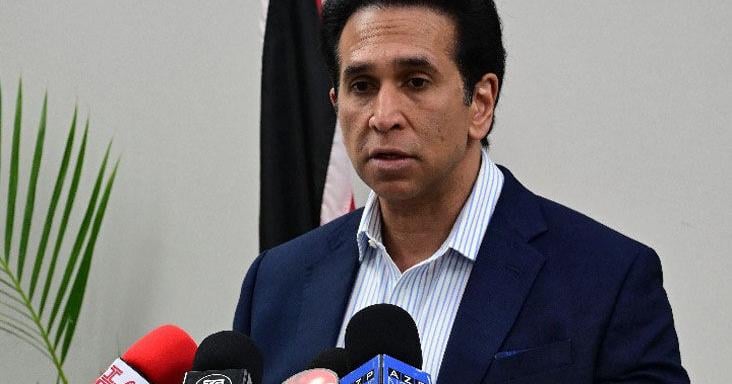
    A major diplomatic row has erupted in Trinidad and Tobago this week, as former foreign affairs minister and opposition figure Dr. Amery Browne has publicly rejected Prime Minister Kamla Persad-Bissessar’s recent public expression of affection for Venezuela’s interim President Delcy Rodríguez, dismissing the comment as a disingenuous political pivot that does not fix already damaged bilateral ties.

    Persad-Bissessar first made headlines with her remarks earlier this week, when she spoke to reporters on the steps of Port of Spain’s Hall of Justice during the annual ceremonial opening of the new law term. Alongside sharing her statement of “love” for Rodríguez, the Prime Minister confirmed she is planning to hold a bilateral meeting with the Venezuelan interim leader on the sidelines of the upcoming United Nations General Assembly, scheduled to take place later this month in New York.

    Speaking from the Office of the Leader of the Opposition in Port of Spain one day after Persad-Bissessar’s announcement, Browne argued that the current administration is only now attempting to repair a bilateral relationship that its own leadership actively undermined during its time in office. The opposition leader also pointed out that Trinidad and Tobago’s government has yet to issue a formal apology to the Venezuelan government for past critical comments Persad-Bissessar made about Rodríguez.

    Browne emphasized that warm personal remarks do not amount to substantive, principled diplomacy, noting that the ruling United National Congress (UNC) administration led by Persad-Bissessar bears full responsibility for the current frayed ties between the two neighboring nations. He recalled that just years prior, the Prime Minister publicly backed harsh international sanctions targeting Rodríguez, framing her sudden embrace of the Venezuelan leader as a move driven purely by political convenience rather than genuine change in policy.

    He also pushed back on Persad-Bissessar’s reference to her own family ties to Venezuela – the Prime Minister has noted her mother-in-law is Venezuelan – arguing that personal connections to the country have no bearing on official state-to-state relations between neighboring countries. “One is anticipated to demonstrate principle. One is anticipated to demonstrate dignity. And one is anticipated and called upon to demonstrate consistency,” Browne said, adding that Persad-Bissessar has failed on all three counts.

    Browne called for a full review of the Prime Minister’s long record on Venezuela policy, rather than only focusing on her recent remarks. “When the Prime Minister says to tell Delcy Rodríguez that I love her, we need to examine not just the words of today or yesterday, but also the actions and statements of the Prime Minister and the Government of Trinidad and Tobago, going back years since her appointment and even during her time as leader of the Opposition,” he explained.

    Over years of inconsistent stances, Browne claimed, Persad-Bissessar has come to be seen internationally as an unreliable, unprincipled actor on regional diplomacy. “Previous statements by Persad-Bissessar have led to a view and those actions have led to a view, that this Prime Minister is being viewed as a pawn, as a vassal, as someone who is inconsistent and shifty,” Browne said.

    The opposition leader rejected the framing of Persad-Bissessar’s comments as a genuine new chapter in bilateral relations, arguing that past actions cannot be erased with warm words. “When you spend years verbally abusing a neighbouring state, its people, its government, its positions, you cannot now cast that as love,” he added.

    Browne also leveled a separate accusation that the Prime Minister lied to the Trinidad and Tobago public about the country’s role in efforts to remove former Venezuelan President Nicolás Maduro from power. He noted that before the UNC took office, bilateral relations between Trinidad and Tobago and Venezuela were at a strong, positive point, with no need for any diplomatic reset. “Relations were at an optimal level, and it is this Prime Minister, deliberately, against all warnings and good advice, who damaged those relationships,” he said.

    In a final striking point, Browne reminded the public that the Prime Minister still holds persona non grata status in Venezuela, a restriction that has not been lifted even with her new public expressions of goodwill toward Rodríguez and the Venezuelan government.