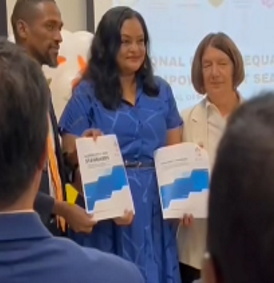
In a groundbreaking move, Guyana has introduced the National Gender Equality and Empowerment Seal, becoming the first Caribbean nation to implement such an initiative. This program is designed to foster safe, inclusive, and equitable work environments across both public and private sectors.
博客
-
Legal Affairs Ministry needs to do better
A recent visit to the Ministry of Legal Affairs’ office on Leotaud Street in San Fernando has sparked outrage over the deplorable state of the facilities and the inefficient processes faced by the public. Jenieve Alexander, who visited the office in October to process a death certificate, described the experience as deeply distressing. The public toilet facilities were in a shocking state of disrepair, with a rotted and hollow door that could not hold a lock or handle. The toilet itself was dirty, unstable, and lacked basic amenities like tissue paper, while a strong odor of urine permeated the area. The process of obtaining the death certificate was equally frustrating. Individuals were required to shuttle back and forth between the San Fernando Teaching Hospital and the Leotaud Street office. At the hospital, clients were forced to share children’s tables with the Medical Social Work Department, often being told they could not wait or sit in certain areas. Staff members intermittently distributed forms and provided guidance, but the wait times averaged 45 minutes to an hour. The behavior of the ministry’s staff was described as appalling, with names of the deceased being shouted from the office door and staff members displaying rude and dismissive attitudes. After completing the hospital process, individuals had to return to the Leotaud Street office to finalize the transaction, pay, and collect the death certificate. Alexander questioned whether such an inefficient and inconsiderate process was acceptable for grieving families. She expressed disappointment in the discourteous behavior of public officers and raised concerns about the negative impact on the ministry’s public image. Alexander called for immediate action to address the infrastructural, behavioral, and procedural issues at the ministry to better serve the citizens.
-

Why China’s social media policy will never work in Trinidad and Tobago
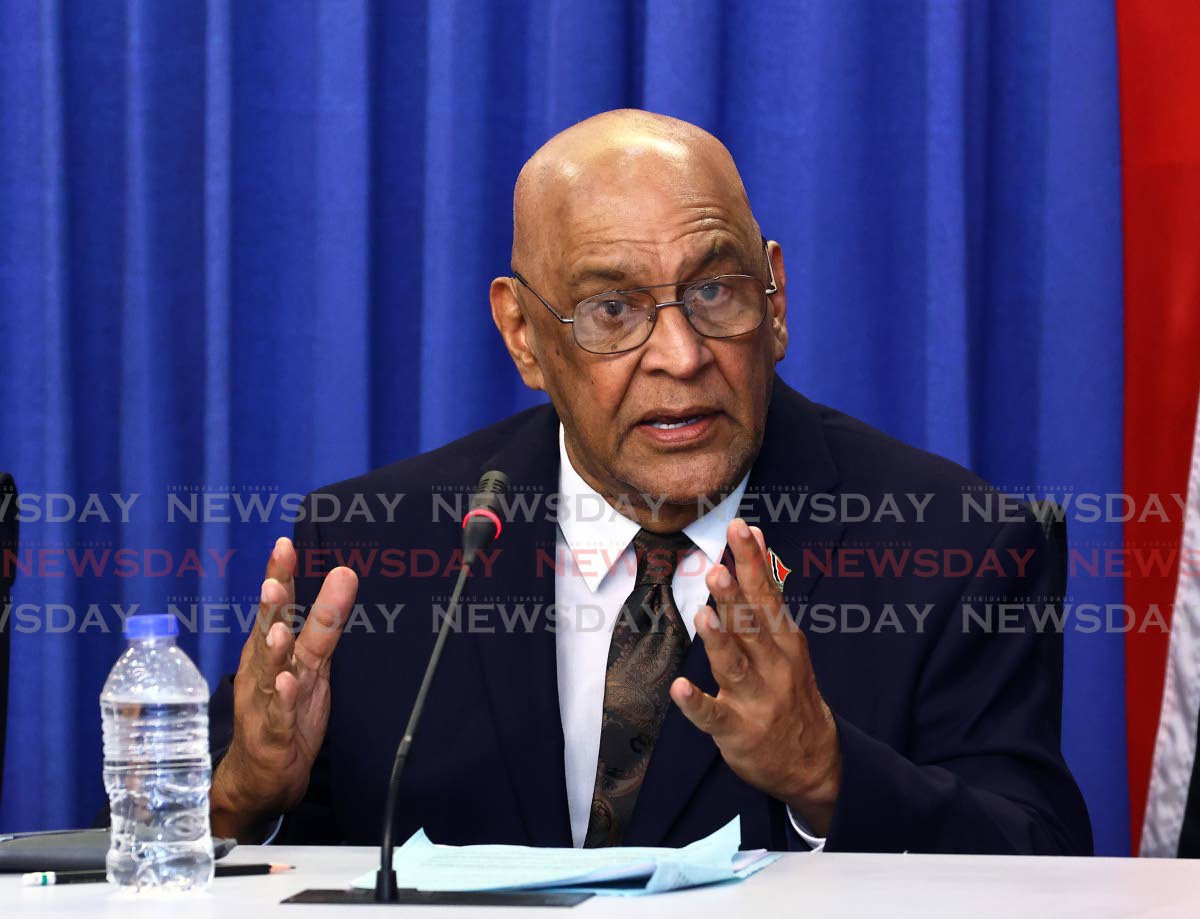
In a recent statement, Trinidad and Tobago’s Minister of Homeland Security, Roger Alexander, suggested that the country should consider adopting China’s social media policies. This proposal highlights two critical points: first, the recognition of the growing dangers in the online space, and second, a fundamental misunderstanding of China’s digital governance system. As someone based in Asia, it is clear that China’s model is unique and cannot be replicated by Western nations, Caribbean countries, or Trinidad and Tobago. To understand why, it is essential to examine the pillars of China’s digital architecture and the cultural and political context that makes it effective. China’s digital system is not merely a set of policies but a comprehensive framework built over two decades. It includes the Great Firewall, which blocks foreign platforms and monitors traffic; mandatory real-name digital identity, ensuring anonymity is nonexistent; domestic platforms like WeChat and Alipay, which are fully regulated by the state; data localization, keeping all citizen data within China; and a robust enforcement system overseen by the Cyberspace Administration of China. This model thrives in China due to its collectivist society, high trust in the central government, one-party political structure, and a population large enough to sustain its own tech ecosystem. However, Trinidad and Tobago lacks the resources, technical capacity, political structure, and cultural acceptance to implement such a system. The country faces significant challenges in its online space, including toxic behavior, misinformation, and threats to public safety. Instead of looking to China, Trinidad and Tobago should consider Singapore’s balanced approach, which includes the Protection from Online Falsehoods and Manipulation Act (POFMA). This legislation allows for correction notices to be added to false posts without censorship, protecting free speech while limiting harm. Moving forward, Trinidad and Tobago needs updated cybercrime laws, a clear distinction between protected speech and criminal threats, and improved digital literacy. Adopting a model aligned with its culture, constitution, and realities, such as Singapore’s, is the practical solution.
-
Stop car ownership double standards
In a recent letter to the editor, Lyndon De Gannes addresses the ongoing debate surrounding affordable cars and public transportation. He critiques the elitist notion that ordinary citizens must choose between owning a vehicle and relying on public transit. This perspective, he argues, is both absurd and counterproductive. De Gannes highlights the recent measures introduced by Ministers Satyakama Maharaj and Eli Zakour to make vehicles more affordable, a policy long championed by the UNC. Instead of welcoming this relief for middle- and lower-income families, critics have raised objections, often from the comfort of their luxury vehicles. De Gannes emphasizes that affordable cars and efficient public transport are not mutually exclusive. In fact, many developed countries successfully integrate both systems, allowing citizens to enjoy the benefits of personal mobility and mass transit. He points out that under the previous PNM government, citizens faced a lose-lose situation: vehicles became more expensive, and public transportation deteriorated. De Gannes argues that owning a car provides essential freedom and dignity, enabling families to transport elderly parents, children, and groceries with ease. It also empowers small entrepreneurs who rely on mobility for their livelihoods. He calls for an end to the elitist treatment of affordable cars and supports Prime Minister Kamla Persad-Bissessar’s efforts to create a win-win system that improves the quality of life for all citizens.
-

Cher-Mere makes Guyana debut at GuyExpo 2025
The renowned Caribbean beauty brand, Cher-Mere, marked its debut in Guyana at the prestigious Guyana Expo 2025 (GuyExpo), held from November 13-17 in Georgetown. The event, Guyana’s longest-standing trade exposition, attracted over 270 exhibitors from across the Caribbean and globally, alongside more than 100,000 visitors. Cher-Mere showcased its signature natural beauty and hair care products, including its premium hair oils such as Organic Black Castor Oil, Pure Batana Oil, and a blend of Batana, Rosemary, and Tea Tree Oil, all crafted by The Herbarium Ltd. in Trinidad and Tobago. The brand also featured Bigen Hair Care products, distributed through Merle’s Hairdressing Supplies Ltd. The Cher-Mere team, led by promotions manager Janelle Wiltshire, spa operations manager Khadine Knights-Benjamin, and retail manager Khadine Hinds, engaged visitors with product demonstrations, giveaways, and educational sessions on their wellness-focused offerings. Cheryl Bowles, biochemist and founder of Cher-Mere, expressed her enthusiasm for entering Guyana’s dynamic market, emphasizing the brand’s alignment with consumer demand for sustainable, authentic, and science-based beauty products. Founded over 40 years ago in Trinidad and Tobago, Cher-Mere has evolved from a local hair-care brand to an internationally recognized name in natural beauty and self-care. The company’s participation in GuyExpo 2025 underscores its strategic expansion into the Caribbean region, aiming to forge partnerships with distributors, salons, and wellness retailers while connecting directly with consumers. Notable visitors to the Cher-Mere booth included Guyana’s Minister of Tourism, Industry and Commerce, Susan Rodrigues, and Trinidad and Tobago’s High Commissioner to Guyana, Candice Shade, among other dignitaries.
-

8 steps to sustainable investment
In anticipation of the COP 30 summit earlier this month, the Association of Chartered Certified Accountants (ACCA) introduced a groundbreaking unified framework for responsible investment. This innovative approach seamlessly integrates sustainability considerations into strategic decision-making processes. Developed in collaboration with the universities of Witwatersrand and Leeds, the framework, titled ‘Understanding Responsible Investment,’ provides a comprehensive yet concise guide linking environmental and social issues to capital allocation and investment decisions. The framework outlines eight essential steps that organizations can follow to align their financial success with environmental and social responsibilities. Sharon Machado, ACCA’s head of sustainable business, emphasized the significance of this development, stating, ‘Despite the growing urgency to address climate change and social inequity, a unified approach to responsible investment has been lacking. Our collaborative effort has now filled this gap, offering a model that systematically incorporates all risks and opportunities into investment analysis.’ The framework includes key components such as ESG integration, sustainability frameworks, screening methods, investor proactivity, strategic purpose, investment options selection, regulatory requirements, and outcome measurement. Dannielle Cerbone, an associate professor at the University of Witwatersrand, praised the report for its academic rigor and practical relevance in an increasingly complex investment landscape. The report also highlights the evolving nature of sustainability reporting and the need for investees to balance financial, ecological, and social value creation to better access responsible finance. Machado expressed hope that the report would serve as a practical tool for investors and companies, particularly in assessing the impact of sustainability-related factors on organizational valuation—a task that remains challenging.
-

How Canada helped BWIA to take flight
In the 1960s, Air Canada and the Canadian government played a pivotal role in bolstering British West Indian Airways (BWIA) to become the Caribbean’s regional carrier. By 1967, the Trinidad and Tobago (TT) government had advanced $15,255,816 to sustain BWIA’s operations, recognizing the urgent need for fleet expansion and financial restructuring. However, BWIA faced more than just financial challenges. A 1966 memorandum from BWIA’s chairman highlighted critical deficiencies in top management, engineering, planning, and accounting expertise, as well as a severe shortage of experienced pilots. The chairman concluded that BWIA needed a financially strong partner with the ability to provide managerial and staffing support. Acting on this advice, the TT government sought suitable partners, leading to a proposal from Canada on May 23, 1967. The Canadian government, after reviewing BWIA’s situation, proposed a comprehensive corporate association between Air Canada and BWIA. Key elements of the proposal included designating BWIA as the regional carrier for the Commonwealth Caribbean, allowing Canada to acquire up to 49% of BWIA shares, appointing a majority of BWIA’s board of directors, and negotiating multilateral air agreements. The TT government, optimistic about BWIA’s potential, had envisioned it as a regional carrier since 1961, when it salvaged the airline. Despite initial efforts to persuade other West Indian territories to join BWIA, the airline’s transformation into a regional carrier was a complex and collaborative endeavor involving multiple governments and stakeholders.
-

Could AI be Trinidad and Tobago’s new ‘oil and gas’ frontier?
Trinidad and Tobago is making significant strides in embracing artificial intelligence (AI) as part of its national development strategy. Under the leadership of Dominic Smith, Minister of Public Administration and AI, the country has launched a National AI Assessment in collaboration with the United Nations Development Programme (UNDP) and UNESCO. This initiative aims to evaluate the nation’s readiness to adopt AI technologies and ensure ethical and inclusive implementation. The assessment employs two key tools: UNDP’s Artificial Intelligence Landscape Assessment (AILA) methodology and UNESCO’s Readiness Assessment Methodology (RAM). These tools will identify institutional and regulatory gaps while fostering an ethical AI ecosystem. The launch event, held on November 26 at the Government Campus Plaza in Port of Spain, brought together public and private stakeholders, civil society, and international representatives. Smith emphasized the transformative potential of AI, stating that it could modernize public services, enhance productivity, and create high-value jobs. However, he acknowledged challenges such as skills gaps, cybersecurity, and public trust. The government plans to roll out training initiatives to upskill citizens and position Trinidad and Tobago as a leading AI-driven island state. The findings of the assessment are expected to be publicly released in March/April 2026, marking a pivotal step in the country’s digital transformation journey.
-

Sammy’s comment misses the mark
Darren Sammy, the former West Indies cricket captain, has sparked controversy with his recent comments dismissing critics of the regional cricket team. In a heated statement, Sammy remarked, ‘People who don’t know an iota of cricket are criticising us.’ While Sammy is known for his passion, his sweeping dismissal of public opinion has been labeled as not only misplaced but also deeply insulting. Critics argue that Sammy has overlooked a fundamental truth: West Indies cricket was built not just by legendary players but also by generations of devoted fans across the Caribbean. From farmers in St Vincent to schoolboys in Laventille, every supporter has a vested interest in the team’s success. The right to critique a team’s performance, especially during repeated failures, is not contingent on personal cricketing expertise. Representing the West Indies is about embodying pride, culture, and resilience. When the team consistently underperforms, it’s natural for fans, who contribute through viewership, merchandise, and unwavering support, to demand better. Critics are not attempting to coach the players but are highlighting issues like lack of hunger, weak leadership, and a growing disconnect between the team and its supporters. The West Indies cricket team has not only been losing matches but also the hearts of its fans. Instead of reflecting on these concerns, Sammy’s response appears defensive, shielding mediocrity rather than addressing the root problems. The call is clear: rather than silencing the fans, the team should engage with them, listen to their concerns, and work towards rebuilding what’s broken.
-

Priorities and Prospects: Driving Tobago’s economic development
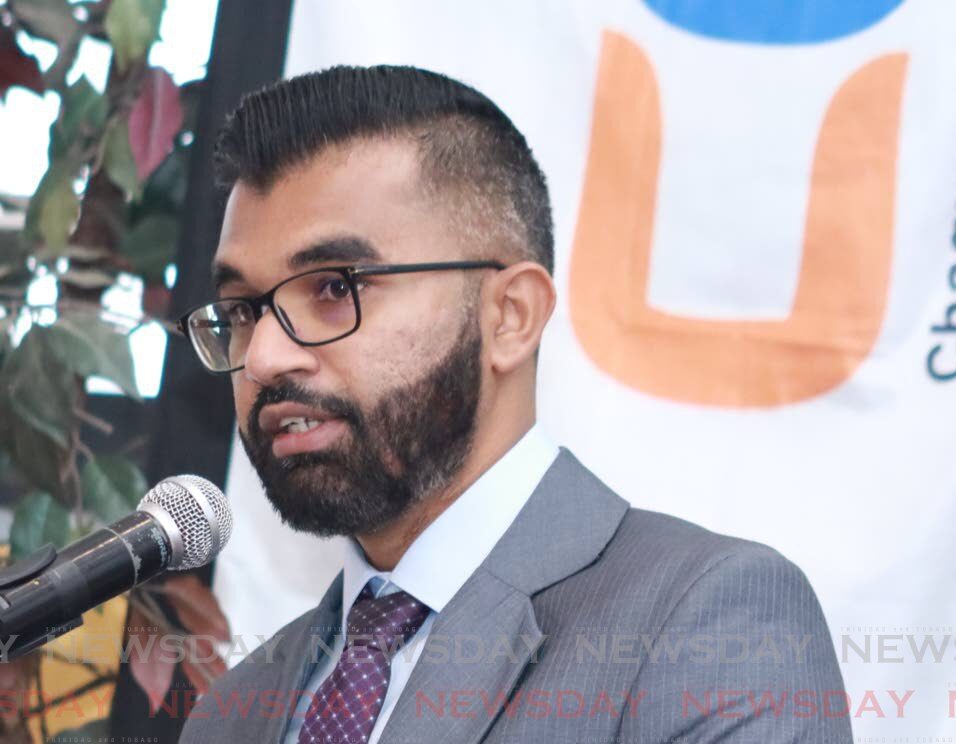
The Tobago Division of the TT Chamber of Industry and Commerce is gearing up for a revitalized economy in 2026, driven by a combination of strategic policies and collaborative efforts. As the primary advocate for sustainable business growth on the island, the division is actively promoting projects that stimulate economic activity and bolster investor confidence. Key initiatives include addressing public infrastructure needs, enhancing government service efficiency, and fostering closer collaboration with the central government. These efforts aim to position Tobago to seize emerging opportunities in a rapidly evolving economic landscape. Tourism remains the cornerstone of Tobago’s economy, contributing nearly 14% of the island’s GDP and employing around 16,000 people. The sector’s potential is further amplified by the completion of the airport expansion project, which triples passenger capacity and opens up new investment opportunities in high-end accommodations and logistics. Additionally, the development of a modern commercial port, including a cruise ship terminal and marina, is expected to boost international trade, tourism, and marine activities while creating long-term employment and attracting foreign exchange. The chamber emphasizes the importance of aligning these projects with Tobago’s sustainable tourism strategy and environmental goals. Beyond tourism, the division is exploring diversification in export markets, particularly through the Caricom Single Market and Economy (CSME), which offers new avenues for local businesses to expand their reach. Challenges such as foreign exchange shortages persist, but the chamber remains committed to finding solutions in collaboration with relevant stakeholders. Opportunities abound in agriculture, renewable energy, manufacturing, and the digital economy, positioning Tobago as a hub for innovation and investment. The chamber’s optimism for the island’s economic future is unwavering, as it continues to foster an environment that supports both local and international enterprises, ensuring inclusive growth for all stakeholders.