博客

  • Column: Mentale gezondheidszorg nú prioriteit nummer één

    Column: Mentale gezondheidszorg nú prioriteit nummer één

    Suriname is confronting a severe mental health emergency that demands immediate policy action, with child protection emerging as the most critical priority. This urgent call transcends mere political intention or future policy notes—it requires immediate implementation with the UN Convention on the Rights of the Child serving as the foundational framework rather than just a symbolic endorsement. This represents both a political and societal obligation that cannot be deferred until after tragedies occur.

    Recent devastating incidents in Commewijne and Abrabroki’s Calcuttastraat have reignited public discourse, but these events are not isolated occurrences. They represent painful manifestations of a deeply entrenched structural problem that has been documented for years yet consistently ignored. Beyond the immediate emotional responses, these tragedies reveal how mentally unhealthy environments in Suriname have perpetuated cycles of violence, neglect, trauma, and ultimately fatal escalations, with children emerging as the primary and most vulnerable victims.

    Comprehensive data from both national and international sources paints a disturbing picture. UNICEF reports, research from the Institute for Graduate Studies and Research (IGSR), and parliamentary investigations leave little room for interpretation. The ‘Violence Against Children in Suriname’ report confirms alarmingly high levels of violence against minors. According to MICS data, 86% of children aged 2-14 have experienced at least one form of mental or physical punishment from household members, while six out of ten children endure corporal punishment.

    These statistics represent real children growing up in environments characterized by fear, stress, and normalized violence. Many eventually become stuck in destructive patterns—as victims, but sometimes as perpetrators themselves. Mental and spiritual health challenges thus perpetuate across generations, creating intergenerational trauma.

    The same pattern emerges in violence against women and girls, and among men trapped in a society that punishes vulnerability and views seeking help as weakness. Domestic violence, relational conflicts, and psychological dysregulation affect all societal segments regardless of ethnicity, political affiliation, region, education, or social class.

    Addressing this crisis requires avoiding the pitfalls of partisan politics or seeking quick blame. Multiple administrations have failed to establish a professional, effective, and cohesive mental healthcare system encompassing prevention, shelter, guidance, aftercare, legislation, and institutional safeguards. Existing facilities often function minimally or not at all, with helplines frequently inaccessible, shelter services fragmented, and prevention strategies underdeveloped.

    Effective mental healthcare requires institutions offering low-threshold, 24/7 accessibility, safe shelters for women and girls, and robust protection for children currently suffering violence behind closed doors. It also necessitates guidance for perpetrators and individuals with severe psychological issues before violence escalates. Prevention constitutes not a luxury but an absolute necessity.

    Society cannot continue treating mental healthcare as only urgent post-tragedy. Without sustained action, current discourse will fade within days until the next disaster occurs. A review of mental and spiritual violence cases over the past 5-10 years reveals how quickly attention dissipates after each incident.

    Genuine transformation demands political courage, policy discipline, and societal maturity. The question is not whether Suriname can afford to act, but how long it can afford inaction. Today’s National Day of Mourning must catalyze lasting change—otherwise, it risks becoming another empty gesture in a long history of unfulfilled promises.

  • Oecumenische rouwdienst sluit nationale rouwdag af

    Oecumenische rouwdienst sluit nationale rouwdag af

    Suriname will formally conclude its national day of mourning on Friday evening with an ecumenical memorial service at the Cathedral Basilica, honoring the victims of the devastating Commewijne tragedy that claimed nine lives, including five children. The service, organized as a collective response to the nation’s deepest grief, will center on prayer, hymns, and moments of silence.

    Bishop Karel Choennie of Paramaribo explained to Starnieuws that the interfaith approach was chosen to provide spiritual solace to a society grappling with unprecedented violence. “When a community faces a tragedy of this magnitude, people need rituals to process grief and sorrow,” stated Choennie. “This is especially true when an entire nation is in shock and words fail us.

    The service will feature participation from religious leaders representing the Christian Committee of Churches (CCK) and the Interreligious Council in Suriname (IRIS). Together with attendees, they will pray for the eternal rest of the deceased, comfort for the bereaved families, and healing for the broader society.

    Bishop Choennie emphasized that the Commewijne violence must be recognized as a national disaster. “This is something that has never occurred before in Suriname,” he noted. “It has left profound scars on our society and even gained international news coverage reaching as far as Australia. Precisely for this reason, it is crucial for us to come together as a nation.”

    The memorial will follow a solemn and restrained format, incorporating prayer and hymns similar to traditional Surinamese rituals like dede oso or aiti dey. “These forms are deeply embedded in our culture,” the bishop emphasized, “and help people collectively bear and conclude their grief.”

    The Cabinet of the President has committed to providing transportation services, deploying buses to enable family members and community residents to attend the service. This initiative aims to enhance accessibility to the gathering and create space for collective mourning.

    The ecumenical service, scheduled from 7:00 PM to 8:00 PM, officially concludes the national day of mourning, offering hope that this shared moment of reflection will contribute to healing, solidarity, and mutual care within Surinamese society.

  • Nobel Laureate Festival returns January 6 under theme of legacy and future impact

    Nobel Laureate Festival returns January 6 under theme of legacy and future impact

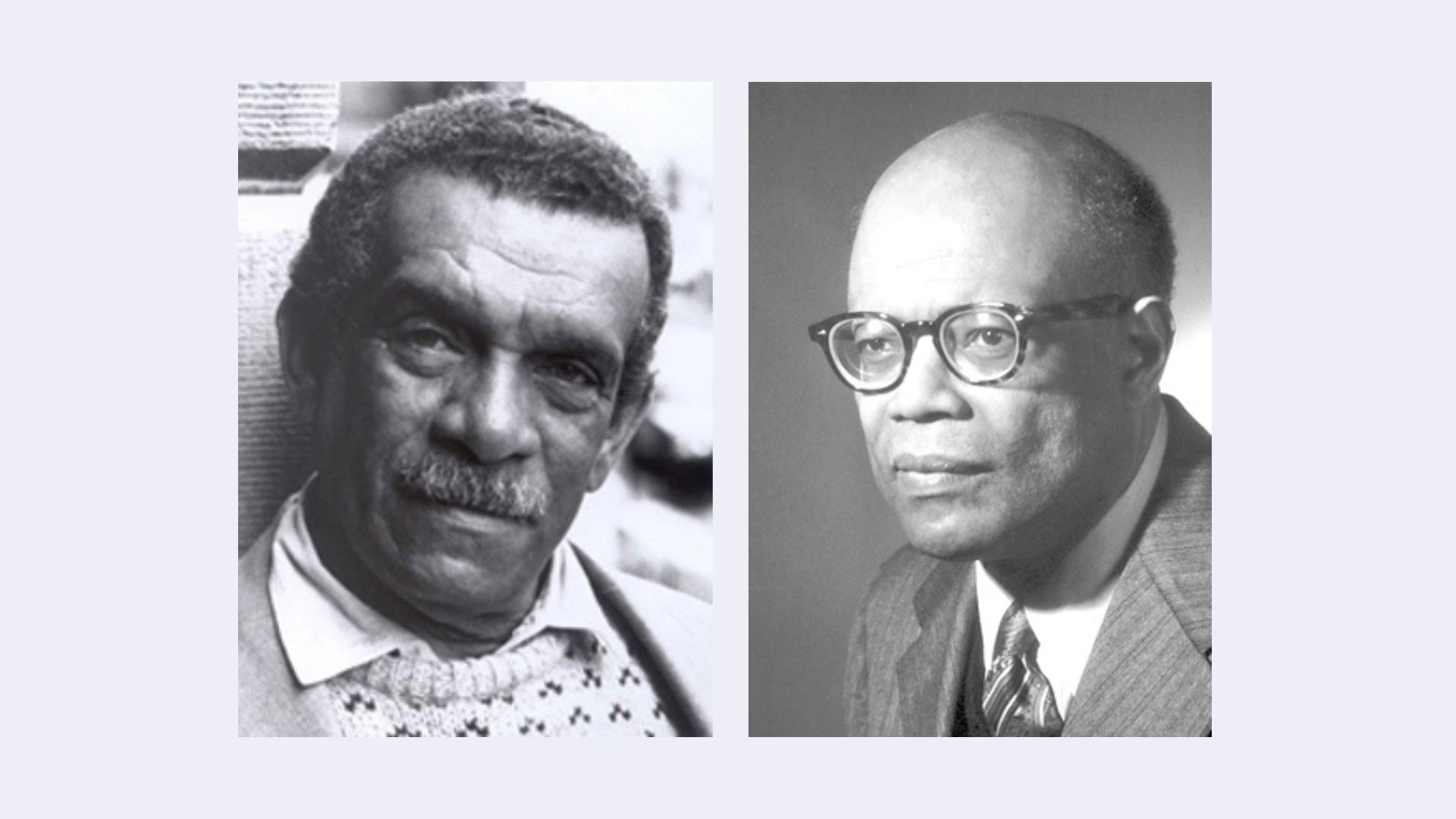
    Saint Lucia is poised to host its prestigious 33rd annual Nobel Laureate Festival, a month-long celebration running from January 6 to February 4 dedicated to honoring the island nation’s extraordinary intellectual legacy. The festival pays tribute to two of the Caribbean’s most distinguished minds: Sir Arthur Lewis, awarded the 1979 Nobel Prize in Economic Sciences for his groundbreaking work in development economics, and Sir Derek Walcott, who received the 1992 Nobel Prize in Literature for his poetic achievements.

    Under the resonant theme “Celebrating Excellence: Honoring our Legacy, Shaping our Tomorrow,” this year’s iteration seeks to bridge historical achievement with contemporary inspiration. Festival organizers emphasize the continuing relevance of both laureates’ contributions and the imperative for current generations to build upon their foundational work.

    At the festival’s official launch, Chairperson and Governor General Emerita H.E. Dame Pearlette Louisy addressed potential skeptics directly: “Some may have dismissed our laureates’ achievements as historical artifacts with diminishing contemporary relevance. However, we must recognize that the trees whose shade we now enjoy were planted by those who preceded us—visionaries who often never lived to witness the full fruition of their labor.”

    Delia Dolor, Public Relations Coordinator and Committee Member, highlighted Saint Lucia’s remarkable distinction of having one of the world’s highest per capita rates of Nobel Prize winners. “This festival not only commemorates past brilliance,” Dolor stated, “but also embraces our responsibility to ignite future innovation and cultivate a more prosperous future for our nation and the global community.”

    The festival’s diverse programming spans multiple venues across Saint Lucia, blending established traditions with innovative new events. Highlights include two memorial lectures: The Sir Derek Walcott Memorial Lecture, titled “An Listwa Manmay San Liv” and delivered by acclaimed Saint Lucian-Canadian author Professor Canisia Lubrin (January 20), and The Sir Arthur Lewis Memorial Lecture on “Economic Principles for the 21st Century” presented by Professor Sir Timothy Besley of the London School of Economics (January 22).

    Additional featured events encompass a comprehensive Celebrating Excellence Video Series with distinguished guests, the inauguration of the History House in Soufrière with a specialized exhibition, creative forums, literary awards, theatrical tributes, educational workshops, and ceremonial wreath-laying at the laureates’ resting places. The festival culminates with the Sagicor Schools’ Choir Competition, showcasing young musical talent inspired by the nation’s intellectual heroes.

    Complete scheduling information and regular updates are available through the official Event Programme on the Festival’s Facebook presence (@nobellaureatefestivalsaintlucia) or via direct inquiry at (758) 284-2111 and info@ddmediarelations.com.

  • Authorities intensify search for missing 3-year-old Girl in Puerto Plata

    Authorities intensify search for missing 3-year-old Girl in Puerto Plata

    PUERTO PLATA, DOMINICAN REPUBLIC – A large-scale, multi-agency search operation is intensifying in Puerto Plata’s Imbert municipality for three-year-old Brianna Genao Rosario, who vanished on New Year’s Eve. The child was reported missing around 5:00 p.m. on December 31 from the community of Barrero, last seen wearing a pink dress.

    The search effort represents a significant coordination of national resources, bringing together the National Police, Imbert Civil Defense, specialized Search and Rescue (SAR) units from the Dominican Republic Air Force, the volunteer organization Amber Rescue, and technical teams from the 911 National Emergency and Security System.

    In a strategic escalation of the operation, authorities have deployed advanced technological assets, including high-precision surveillance drones. These unmanned aerial vehicles are conducting systematic scans of challenging terrain, including dense rural woodlands and the banks of a nearby river system, to capture imagery that might reveal critical clues.

    The investigation took a potentially crucial turn when rescue personnel discovered a single flip-flop sandal on the bank of a tributary. Authorities have preliminarily identified the footwear as belonging to the missing child, making it a pivotal piece of evidence that is currently focusing the search efforts in specific areas.

  • Government clarifies eligibility for low-emission vehicle tax concessions

    Government clarifies eligibility for low-emission vehicle tax concessions

    The Energy Division of Saint Lucia’s Ministry of Infrastructure, Ports, and Energy has issued definitive clarifications regarding its concessionary tax policy for low-emission vehicles, establishing clear technical distinctions between qualifying and non-qualifying hybrid technologies.

    According to an official statement disseminated through the National Competitiveness and Productivity Council, the policy framework specifically defines eligible hybrid vehicles as those employing “two or more distinct forms of onboard energy, each of which can propel the vehicle.” This technical specification effectively excludes so-called ‘mild hybrid’ vehicles that lack full electric propulsion capability, regardless of their marketing descriptions.

    The regulatory basis for these concessions is formally outlined in Statutory Instrument Number 222 of 2025, which references the Customs Duties (Amendment of Schedule 4) (No. 4) Order, 2025. This legislative instrument specifies that the reduced customs duty rates will take effect on December 1, 2025, and remain valid through November 30, 2026.

    Government authorities emphasized the critical technological differentiation between true hybrid vehicles and mild hybrid systems. The latter incorporate limited electrical components that support fuel efficiency functions such as engine assistance or start-stop mechanisms but cannot achieve propulsion exclusively through electric power. Since propulsion remains dependent entirely on internal combustion engines (whether gasoline or diesel), these systems produce “no meaningful reduction in tailpipe emissions” and consequently fail to meet the legal requirements for tax concessions.

    The current policy initiative builds upon previous import duty waivers and tax concessions for low-emission vehicles that were implemented during the government’s first term. These earlier concessions, subsequently extended from December 1, 2023, to August 30, 2024, established the foundation for the current regulatory framework.

    Acknowledging previous administrative practices where mild hybrid vehicles inadvertently received fee waivers, the government has instituted a transitional adjustment period. All such vehicles ordered before January 1, 2026, will still receive tax concessions to accommodate this regulatory transition.

    The ministry articulated that the policy’s fundamental objective is to enhance affordability for consumers transitioning to electric vehicles while encouraging movement away from traditional internal combustion engine vehicles reliant exclusively on fossil fuels. This hybrid vehicle tax concession strategy serves as an interim measure bridging conventional and fully electric transportation, with the ultimate goal of achieving complete sector electrification.

    Stakeholders seeking additional information are directed to review Statutory Instrument Number 222 of 2025, or contact the Energy Division directly at telephone number 1(758)468-6363 or via email at cepuo@govt.lc.

  • Politic : Haiti moves towards elections while Women’s participation remains limited

    Politic : Haiti moves towards elections while Women’s participation remains limited

    Haiti’s political transition, initiated in July 2021, is advancing toward scheduled 2026 elections under a newly established electoral calendar. While this marks procedural progress, the nation continues to grapple with significant gender disparities in political representation.

    Current data reveals substantial underrepresentation of women across Haiti’s governance structures. Female participation remains notably below the constitutional mandate of 30%, with women occupying merely 22.22% of government positions and a minimal 11.11% within the Presidential Transitional Council (CPT), where they hold observer status without voting rights. At departmental and municipal electoral levels (BED/BEC), representation marginally improves to 27%, still falling short of constitutional requirements.

    Despite the suspension of constitutional review processes by transitional authorities, advocacy efforts led by the Ministry of Women’s Affairs and UN Women have yielded significant provisions in the draft electoral decree. Article 138 mandates rejection of any electoral list containing fewer than 30% women candidates, while Article 138.1 establishes additional funding incentives for political parties that exceed 50% female representation.

    In response to these developments, the Provisional Electoral Council (CEP) and UN Women jointly launched a comprehensive national campaign based in Port-au-Prince. The initiative gathered approximately 150 participants from all ten Haitian departments, including 63 women from regions outside the capital. This campaign aims to mobilize female political participation while raising awareness among political parties and the general public about women’s transformative potential in governance.

    Supplementing these efforts, government-supported departmental consultations and the National Conference on Women’s Political Participation have facilitated strategic dialogue. A pivotal outcome emerged through the adoption of the Declaration of Haitian Women for Active and Effective Participation, which embodies women’s commitment to shaping Haiti’s democratic future and asserts their right to decisive political involvement.

  • 222nd anniversary of Independence : Vibrant speech by the Ambassador of Haiti to the Dominican Rep.

    222nd anniversary of Independence : Vibrant speech by the Ambassador of Haiti to the Dominican Rep.

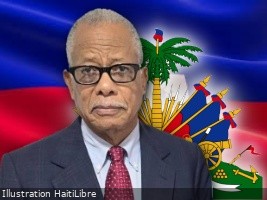
    In a profound address marking Haiti’s 222nd independence anniversary, Ambassador Emmanuel Fritz Longchamp delivered a stirring critique of the nation’s historical trajectory while calling for radical political transformation. The Haitian envoy to the Dominican Republic spoke on January 1st, 2026, commemorating the 1804 revolution that established the world’s first black republic.

    Longchamp characterized Haiti’s independence as both a glorious legacy and an ongoing political challenge, noting that the revolution represented not merely military victory but an anthropological and philosophical breakthrough that challenged fundamental concepts of human dignity. He quoted founding father Jean-Jacques Dessalines’ historic proclamation: ‘Let’s swear to renounce France forever and to die rather than live under its domination.’

    The ambassador presented a stark assessment of Haiti’s contemporary reality, describing the current institutional collapse as the product of ‘chronic misgovernance, systematic social exclusion, and a profound rupture between the state and society.’ He framed mass migration to the Dominican Republic not as cultural preference but as a survival strategy for people deprived of prospects in their homeland.

    Longchamp proposed a biopolitical approach to rebuilding the Haitian state—one prioritizing security, dignity, health, education, and the value of human life as central to public action. He emphasized that true independence requires moving beyond ‘sterile divisions and narrow calculations’ toward collective awakening and national solidarity.

    The ambassador concluded with tributes to Haitian officials and diplomatic staff while praising the resilience of the Haitian people, expressing hope that 2026 would bring ‘peace, stability, and renewal’ to the nation founded on revolutionary ideals of freedom and human dignity.

  • Nieuwe Caricom-voorzitter: Regionale eenheid is geen keuze, maar noodzaak

    Nieuwe Caricom-voorzitter: Regionale eenheid is geen keuze, maar noodzaak

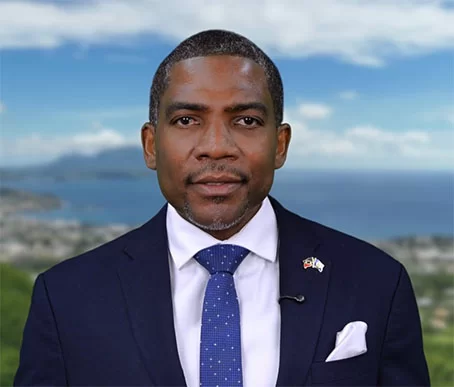
    In his inaugural New Year’s message as the new Chairman of the Caribbean Community (Caricom), St. Kitts and Nevis Prime Minister Terrance Drew delivered a compelling appeal for regional unity, solidarity, and self-sufficiency. Assuming the rotating Caricom leadership until June 30, 2026, Drew addressed Caribbean citizens both within the region and throughout the diaspora.

    Drew expressed profound gratitude for the developmental progress achieved across member states while emphasizing the critical importance of hope and collective determination amid growing global uncertainties. He specifically acknowledged the exemplary leadership of his predecessor, Jamaican Prime Minister Andrew Holness, who successfully navigated Caricom through turbulent times. Drew also extended appreciation to fellow government leaders, the Caricom Secretariat, and citizens of member nations for their sustained collaborative efforts toward regional advancement.

    Reflecting on Caricom’s foundational principles established through the 1973 Treaty of Chaguaramas, Drew reiterated that the organization emerged from the recognition that small, vulnerable states must collectively respond to global challenges. He identified four essential pillars for continued success: economic integration, coordinated foreign policy, functional cooperation, and maintaining a strong unified international voice.

    The Caricom chair highlighted tangible benefits of regional collaboration, including expanded markets, free movement of labor and skills, enhanced healthcare systems, improved disaster response capabilities, educational advancements, security cooperation, and climate diplomacy. Drew asserted that regional integration has transitioned from optional strategy to absolute necessity.

    Special attention was directed toward Haiti’s ongoing crisis, with Drew underscoring the imperative of sustained regional engagement to support stability and reconstruction efforts. This commitment aligns with preparations for planned 2026 elections and implementation of UN Security Council Resolution 2793.

    Drew celebrated the Caribbean’s extraordinary historical and cultural contributions to global literature, sports, music, political thought, and cultural heritage—achievements he attributed to regional resilience, discipline, and deeply ingrained self-belief.

    However, the chairman issued a sobering warning regarding recent geopolitical tensions and external policies affecting Caribbean citizens, emphasizing that the region must primarily rely on itself. “Nobody will come to save us; we must save ourselves,” he declared.

    While acknowledging that differences of opinion among member states may occasionally surface, Drew advocated for careful dialogue, mutual respect, and strengthened regional responsibility. He emphasized that Caricom serves precisely as the platform for internally and constructively addressing disagreements.

    Concluding his address, Drew announced that St. Kitts and Nevis will host the 50th Regular Meeting of the Conference of Heads of Government from February 24-27, 2026, inviting fellow leaders to actively participate in discussions concerning priority issues and regional welfare.

  • National Day : Official ceremony for the 222nd anniversary of independence (video)

    National Day : Official ceremony for the 222nd anniversary of independence (video)

    Port-au-Prince, Haiti – The nation commemorated its 222nd independence anniversary on January 1st, 2026, with a solemn ceremony at Villa d’Accueil that brought together Haiti’s highest leadership. Prime Minister Alix Didier Fils-Aimé presided over the event alongside Laurent Saint Cyr, the acting President and Coordinator of the Transitional Council (CPT), signaling a unified front during a period of significant political transition.

    The gathering represented a powerful convergence of Haiti’s governing institutions, with attendance from cabinet members, military leadership led by Lieutenant General Derby Guerrier, police command under Acting Director General Vladimir Paraison, judicial authorities headed by Court of Cassation President Jean-Joseph Lebrun, and diplomatic representatives.

    Prime Minister Fils-Aimé delivered an emotionally charged address reflecting on Haiti’s historic achievement as the first nation to successfully overthrow slavery. ‘On this day in 1804, our ancestors achieved an unprecedented victory against oppression, establishing forever the dignity and freedom of an oppressed people,’ he stated. ‘Their courage remains a universal symbol of resilience that continues to inspire our nation.’

    The Prime Minister framed contemporary challenges through the lens of historical legacy, emphasizing that ‘security, peace, stability, and democratic elections constitute our essential pathways toward a better future.’ He called for national solidarity, urging citizens to transcend divisions and embrace collective responsibility. Fils-Aimé specifically invoked the nation’s founding principles – ‘liberty, unity, security, stability, and hope’ – as guiding values for all Haitians both domestically and abroad.

    Laurent Saint Cyr echoed these themes while paying particular tribute to Jean-Jacques Dessalines, Haiti’s founding father, and other independence heroes. The transitional leader issued a solemn appeal for dialogue and responsibility from all sectors of society, noting that political discourse serves as an accountability mechanism. His remarks carried particular significance given the approaching February 7, 2026 deadline marking the expiration of the CPT’s mandate, a moment that could determine Haiti’s political trajectory.

    The ceremony ultimately served as both a historical remembrance and a contemporary call to action, emphasizing that the same courage that secured independence must now be channeled toward overcoming modern challenges through unity and democratic renewal.

  • Dominican film industry strengthens in 2025 with job creation and international projection

    Dominican film industry strengthens in 2025 with job creation and international projection

    SANTO DOMINGO – The Dominican Republic’s film industry experienced a transformative year in 2025, establishing itself as both a cultural powerhouse and significant economic contributor. Official data from the General Directorate of Cinema (Dgcine) reveals unprecedented growth across multiple sectors of the audiovisual landscape.

    Economic indicators demonstrated remarkable performance, with 103 approved audiovisual projects generating 2,206 direct employment opportunities. The industry’s substantial economic footprint included over 21,000 hotel night bookings and tax revenue contributions exceeding RD$297 million through Income Tax and ITBIS payments, highlighting cinema’s evolving role in national economic development.

    International recognition reached new heights as Dominican productions secured nine world premieres at prestigious global film festivals. Domestic audience engagement simultaneously surged, with theater attendance for local productions increasing 18.7% above the five-year average, indicating strengthened cultural resonance with Dominican viewers.

    The industry’s global integration advanced through the Minority Co-production initiative, which attracted six international partnership applications from Spain, Chile, Uruguay, Honduras, Peru, and Brazil. This program significantly enhanced the country’s participation in worldwide co-production networks.

    Workforce development emerged as a cornerstone of industry growth, with 2,387 participants benefiting from specialized Dgcine training programs. The innovative ‘My First Job’ initiative successfully placed 94 interns across 39 audiovisual projects, creating crucial entry points for emerging talent.

    Institutional reforms focused on equity, sustainability, and talent development further solidified the framework for continued growth. These comprehensive advancements demonstrate the successful implementation of a strategic vision establishing a robust, inclusive, and sustainable film industry that simultaneously drives cultural prestige and economic prosperity for the Dominican Republic.