博客

  • Ten Caribbean Journalists Awarded First CETRI Reporting Grants

    Ten Caribbean Journalists Awarded First CETRI Reporting Grants

    In a significant advancement for regional journalism, ten Caribbean journalists have been chosen as the inaugural recipients of reporting grants from the Caribbean Energy Transition Reporting Initiative (CETRI). This strategic program aims to enhance media coverage of clean energy developments and climate resilience efforts throughout the region.

    The selected cohort represents a diverse mix of seasoned reporters and promising emerging journalists who will develop human-centered narratives documenting the transition toward low-carbon economic development. These grants build upon CETRI’s expanded 2025 training curriculum, which recently featured both virtual learning sessions and the initiative’s first physical workshop held in Dominica under the thematic banner ‘Science Meets Storytelling.’

    Established specifically to strengthen regional capabilities in energy journalism, CETRI maintains a core mission of providing Caribbean communities with trustworthy, research-driven information concerning renewable energy alternatives, climate adaptation strategies, and technological innovation. The initiative functions as a critical bridge between scientific expertise and public understanding.

    Project Coordinator Alison Kentish characterized the grant awards as representing ‘a milestone for regional journalism,’ noting that they directly respond to increasing demands for more profound and community-focused energy reporting. With Caribbean interest in climate resilience intensifying, CETRI has outlined ambitious plans to further extend its training programs, expert networks, and reporting support mechanisms through 2026.

    This sustained effort seeks to guarantee that the Caribbean’s ongoing energy transition is chronicled with journalistic precision, substantive depth, and consistent attention to human consequences, ensuring local narratives remain at the forefront of the global climate dialogue.

  • Major survey finds most women suffered intimate partner violence

    Major survey finds most women suffered intimate partner violence

    A groundbreaking national survey in Barbados has uncovered alarming rates of gender-based violence, revealing that nearly two-thirds of women have suffered intimate partner abuse. The comprehensive study, conducted by DB Research Services and commissioned by advocacy group Jabez House with European Union funding, exposes what officials are calling a “national emergency” requiring immediate coordinated action.

    The National Intimate Partner Violence Survey, which interviewed 515 individuals across diverse demographics, found emotional abuse to be the most prevalent form at 37%. Social isolation followed at 25%, with physical violence affecting 22% of respondents. Most disturbingly, 46% of survivors reported experiencing multiple categories of abuse simultaneously, indicating that violence typically manifests as interconnected behavioral patterns rather than isolated incidents.

    The data release coincided with Barbados’ launch of the Red Shoes Project and local observances of the 16 Days of Activism Against Gender-Based Violence. EU Ambassador Fiona Ramsay emphasized that the findings “demand not just empathy but action,” noting the particular concern of rising digital violence in online spaces. She called for enhanced protections, improved reporting systems, and greater accountability from technology companies to ensure digital platforms become tools for safety rather than endangerment.

    Permanent Secretary Wayne Marshall of the Ministry of People Empowerment and Elder Affairs declared the situation “no longer a private tragedy but rather, a national emergency.” He stressed the urgent need for collaborative efforts between government agencies, NGOs, and international partners to provide survivors with comprehensive support systems including justice mechanisms, psychological services, and safe spaces. Marshall emphasized that addressing this crisis requires both legislative reform and profound cultural transformation.

  • Dodental bij overstromingen in Thailand, Indonesië en Maleisië stijgt tot meer dan 300

    Dodental bij overstromingen in Thailand, Indonesië en Maleisië stijgt tot meer dan 300

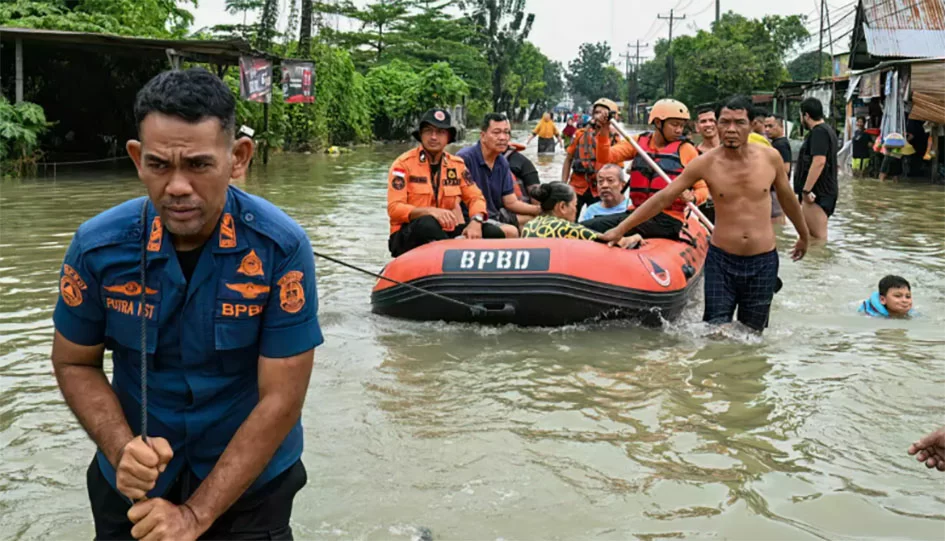
    Southeast Asia is grappling with a devastating humanitarian crisis as floodwaters continue to ravage the region, with the confirmed death toll surpassing 300 across Indonesia, Thailand, and Malaysia. Authorities reported Friday that relentless monsoon rains compounded by a tropical weather system have created catastrophic conditions, submerging entire communities and isolating thousands of residents.

    In Indonesia’s Sumatra island, the disaster has claimed at least 174 lives with nearly 100 individuals still missing. Rescue operations face tremendous challenges reaching the hardest-hit areas where floodwaters and subsequent landslides have destroyed infrastructure and communication networks. In Aceh province, receding waters revealed vehicles nearly completely buried in mud, while abandoned trucks stood as silent witnesses to the storm’s destructive power.

    South Thailand emerges as another severely affected zone, recording 145 fatalities with Songkhla province bearing the brunt of the devastation. Hospitals in the region have been pushed beyond capacity, forcing medical facilities to utilize refrigerated trucks for body storage as morgues overflow. The crisis has sparked public criticism over relief efforts, resulting in the suspension of two local officials allegedly negligent in their response duties.

    Personal accounts underscore the human tragedy unfolding across the region. Misniati, 53, from West Sumatra, described her desperate struggle through chest-deep waters to reach her husband after returning from morning prayers. “We didn’t sleep all night, just watching the water levels,” she recounted, illustrating the terror faced by countless families. In Hat Yai, Thailand, 67-year-old Kamban Wongpanya abandoned her flooded shop to save her life, rescued by boat as waters rose rapidly.

    Meteorological experts attribute the unprecedented severity of this year’s monsoon season to climate change impacts. Warmer atmospheric conditions hold increased moisture, generating more intense rainfall and powerful wind patterns. Warmer ocean temperatures further amplify storm systems, creating a dangerous feedback loop.

    “Climate scientists have consistently warned that extreme weather events would escalate alongside rising global temperatures,” stated Renard Siew, climate advisor at Malaysia’s Centre for Governance and Political Studies. “The current catastrophe demonstrates precisely these predictions materializing.” Additional rainfall is forecasted for Sumatra, though expected to diminish in intensity, while affected nations continue coordinated rescue and recovery operations.

  • Govt, Light & Power sign licences to unlock $500m in renewable projects

    Govt, Light & Power sign licences to unlock $500m in renewable projects

    In a transformative move for its energy future, Barbados has successfully averted potential grid collapse and secured long-term electricity stability through newly ratified licensing agreements with the Barbados Light and Power Company (BLPC). The landmark signing ceremony at Warrens Office Complex, presided over by Energy Minister Senator Lisa Cummins, clears the path for over $500 million in renewable energy investments while extending operational frameworks beyond the previous 2028 expiration deadline.

    Minister Cummins characterized the previous energy infrastructure as being in ‘gridlock’ due to insufficient storage capacity, emphasizing that these newly negotiated licenses fundamentally restructure the nation’s power procurement ecosystem. The comprehensive agreement establishes a modernized framework for power purchase agreements between independent renewable energy producers and BLPC as the primary off-taker, effectively democratizing energy generation while ensuring grid reliability.

    The licensing breakthrough enables financial institutions, notably Scotiabank as represented at the signing, to release previously frozen capital for massive renewable infrastructure development. This financial unlocking addresses what energy officials described as a critical investment bottleneck that had hampered Barbados’ transition to sustainable energy sources.

    BLPC Managing Director Roger Blackman hailed the 30-year licensing arrangement as ‘an important milestone’ that creates unprecedented operational certainty. The new structure separates generation/storage operations from transmission/distribution activities, establishing distinct regulatory frameworks for each sector while ensuring coordinated grid management. This bifurcated approach allows for streamlined integration of independent power producers while maintaining BLPC’s oversight of grid stability.

    The minister highlighted the legislative evolution from the outdated Electric Light and Power Act to the contemporary Electricity Supply Act, requiring meticulous alignment between existing operations and new regulatory standards. The transition eliminates a potential regulatory vacuum that could have emerged after 2028, ensuring continuous investment in grid modernization and preventing infrastructure deterioration that might have led to blackouts.

    This strategic energy sector overhaul coincides with Barbados’ Energy Month celebrations, marking the culmination of what Minister Cummins described as ‘a genuinely aggressive period’ of behind-the-scenes restructuring. The new licenses take immediate effect upon revocation of previous orders, creating seamless regulatory continuity that promises to transform Barbados’ energy landscape for generations to come.

  • Celebrating Barbados’ Independence in a changing world

    Celebrating Barbados’ Independence in a changing world

    As Barbados commemorates another year of sovereignty, the nation reflects on its journey as a small island demonstrating extraordinary fortitude amid global challenges. This annual celebration reinforces the enduring truth of Barbados’ significant spirit despite its geographical size.

    The historical narrative of Barbados is marked by numerous instances where citizens united to advance and prosper against formidable odds. In the current climate of worldwide uncertainty—characterized by economic pressures, environmental threats, and international instability—the significance of Barbadian independence resonates with profound meaning.

    This commemoration serves not merely as a reminder of historical origins but as a testament to the persistent strength exhibited by the nation. Recent years have presented Barbados with substantial challenges: escalating living costs impacting households island-wide, global economic disruptions affecting nations of all sizes, and altered weather patterns manifesting through intensified rainfall and more powerful storms that threaten environmental stability.

    Like all nations, Barbados navigates complex global trade dynamics as major powers vie for dominance, while technological advancements like artificial intelligence present both opportunities and risks. Despite these multifaceted challenges, the country has achieved notable successes that underscore its capabilities and character.

    Economic recovery and expansion represent particularly significant accomplishments. Despite inflationary pressures and high global prices, Barbados has gained international recognition for responsible fiscal management and concerted efforts to stabilize and reconstruct its economy. Through collaboration with international partners, strengthened industries, and focus on long-term resilience, the nation demonstrates refusal to let adversity dictate its future.

    In climate leadership, Barbados maintains a prominent global presence. Prime Minister Mia Mottley has emerged as an influential advocate for small island states, compelling international communities to address climate action seriously and support nations facing environmental dangers disproportionately.

    The tourism sector, vital to the economy, has shown remarkable recovery. Visitors continue choosing Barbados for its people, culture, and reputation as a secure, hospitable destination amidst evolving global travel patterns and increased competition—a credit to workers and all who sustain the tourism industry.

    Digital transformation represents another area of progress, with Barbados making consistent advances in modernizing services, enhancing technological infrastructure, and promoting digital literacy among youth through National Transformation Initiative programs. This shift positions the country for new opportunities in banking, government services, education, and entrepreneurship, helping to create equitable playing fields.

    Perhaps most profound is the less visible yet powerful quality of resilience. Barbadians consistently demonstrate strength and patience through challenges, finding ways to mutually support those in need.

    Amid these achievements, honest assessment reveals pressing threats affecting daily life and long-term prospects. The rising cost of living remains particularly urgent, with global price increases, elevated fuel costs, and supply chain issues making essential goods more expensive for many households, especially those already financially vulnerable.

    As the nation celebrates another independence anniversary, it recognizes that sovereignty represents not merely a day of rest but an ongoing commitment to protect national achievements, uplift citizens, and persistently pursue a better future. Though geographically compact, Barbados possesses mighty character, with accomplishments demonstrating capacity to thrive amid global uncertainty, while challenges reinforce that collective unity yields greatest strength.

  • Belastingopbrengsten kelderen: oliecontract kost Guyana US$ 2.3 miljard aan vrijstellingen

    Belastingopbrengsten kelderen: oliecontract kost Guyana US$ 2.3 miljard aan vrijstellingen

    The Guyana Revenue Authority (GRA) has reported a significant 4.9% decline in income tax revenue during the first half of 2025, collecting 123.4 billion Guyanese dollars compared to the same period in 2024. This downturn occurs against the backdrop of substantial tax exemptions granted to major oil corporations operating in the country’s lucrative Stabroek Block under a contentious Production Sharing Agreement (PSA).

    Financial documents reveal that Guyana effectively waived approximately GYD 493 billion (equivalent to USD 2.3 billion) in income taxes for the three primary operators—ExxonMobil Guyana Limited, Hess Guyana Exploration Ltd., and China’s CNOOC—during 2024 alone. The contractual framework requires the Guyanese government to pay these corporations’ taxes from its own profit share, creating a paradoxical situation where recorded tax revenues never actually enter state coffers.

    The PSA structure allocates 75% of oil production to cost recovery, with the remaining 25% designated as profit oil—split equally between Guyana and the consortium. While companies pay a mere 2% royalty on their share, the government must subsequently cover their tax obligations from its 12.5% portion. This arrangement has drawn widespread international and domestic criticism for effectively granting tax immunity to energy giants.

    Despite President Irfaan Ali’s administration defending the agreement’s sanctity, specific clauses explicitly exempt ExxonMobil and its subsidiaries from various taxes related to petroleum activities. Article 15.4 further mandates that the petroleum minister pays amounts equivalent to due taxes to GRA, with ExxonMobil even receiving tax certificates to avoid double taxation in the United States.

    Paradoxically, overall government revenue streams—excluding funds from the Natural Resource Fund and carbon credit sales—increased by 3.6% to GYD 235.4 billion, driven by a 2.3% rise in total tax collections to GYD 221 billion. This growth was supported by favorable economic fundamentals in both non-oil and oil sectors, though income tax declines were primarily attributed to reduced personal income taxes (down 14.8% to GYD 33.6 billion) and sharp decreases in withholding taxes (falling 21.7% to GYD 30.8 billion). Notably, taxes from private enterprises surged 17.1% to GYD 57.1 billion, partially offsetting declines from state-owned enterprises, which dropped 12.4% to GYD 1.8 billion.

  • Larimar City & Resort promotes the country’s first “Smart City”

    Larimar City & Resort promotes the country’s first “Smart City”

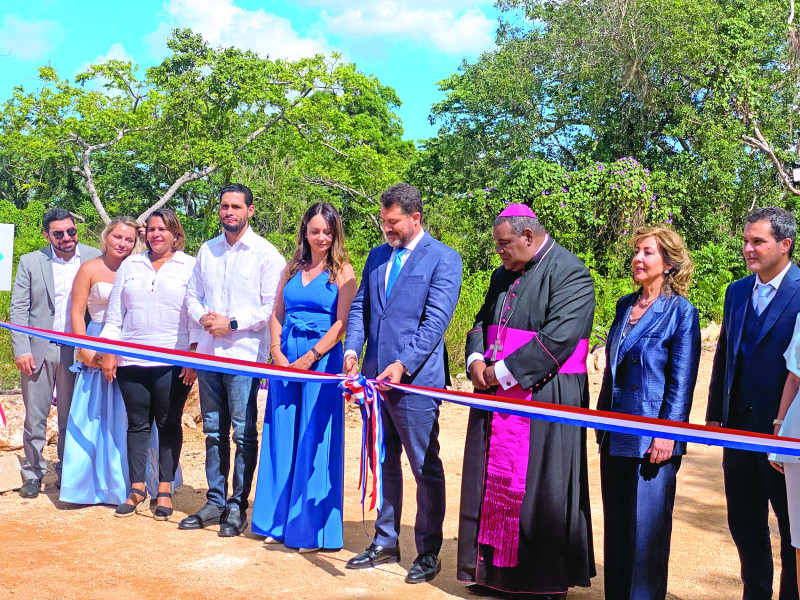
    Spanish infrastructure firm CLERHP has officially inaugurated the initial phase of Larimar City & Resort, marking the Dominican Republic’s inaugural Smart City development. The landmark ceremony, attended by over 300 distinguished guests including government officials, business leaders, and international investors, coincided with National Larimar Day celebrations honoring the country’s unique precious stone.

    Located in La Otra Banda sector of Punta Cana, this groundbreaking urban development spans 3.6 million square meters with an initial investment commitment of €600 million. The project enjoys formal endorsement from the Dominican government and holds placement within ProDominicana’s official investment portfolio.

    Juan Andrés Romero, CEO of Larimar City & Resort and President of CLERHP, emphasized the project’s transformative vision: “Larimar represents a paradigm shift in urban conception—merging innovation, sustainability, and strategic foresight. This initiative demonstrates our capacity to lead globally significant urban developments after more than a decade of dedicated research and planning.”

    The inauguration ceremony featured traditional ribbon-cutting protocols and included a philanthropic component where the Funeyca Foundation received corporate donations supporting youth cultural programs in the Punta Cana region. The event concluded with a sunset reception at Farallón de Punta Cana, attended by Spanish Embassy representative Pilar Serret Murga and local mayor Alexander Rodríguez, with ceremonial blessings provided by Bishop Jesús Castro Marte.

    Dubbed “The Jewel of the Caribbean,” Larimar City & Resort incorporates sustainable mobility systems, intelligent resource management, and extensive green spaces covering 700,000 square meters. The development will feature Mediterranean-inspired architecture, three kilometers of waterfront promenades, artificial beach areas with lakes and pools, and diverse residential options across six planned phases.

    Construction commenced in January 2025 with foundational work on Prime Towers, with Phase One completion anticipated for 2026-27. The project is projected to generate approximately 1,500 direct and indirect employment opportunities, signaling substantial economic and social impact for the La Altagracia province.

  • 61-Year-Old Belize City Vendor Shot Dead

    61-Year-Old Belize City Vendor Shot Dead

    BELIZE CITY – The local community is reeling from the tragic shooting death of 61-year-old Wayne Myles, affectionately known throughout the city as ‘Pie Bwai,’ who was killed in his residence on Friday evening. The incident has sent shockwaves through the neighborhood where the popular street vendor was a familiar and cherished figure.

    According to official police reports, authorities responded to a distress call at approximately 8:00 p.m. on November 28, 2025, arriving at the victim’s residence located at #9 11th Street. Officers discovered Myles unconscious in his apartment, suffering from a critical gunshot wound to the upper left torso. Despite emergency medical efforts, the victim was pronounced dead at the scene.

    Floyd Myles, the victim’s brother and key witness, provided investigators with crucial testimony indicating he heard approximately three distinct gunshots in the vicinity. He further reported observing a silver-colored vehicle fleeing the area at high speed immediately following the auditory evidence of violence.

    Belize City Police Department representatives have confirmed that the investigation remains in its preliminary stages, with no established motive or suspects identified at this time. The case has been prioritized as a homicide investigation, with law enforcement appealing to the public for any additional information that might assist in identifying potential perpetrators.

    The sudden violence has left residents and fellow vendors expressing both grief and concern regarding community safety. Myles had become a neighborhood institution through his long-standing presence as a street merchant, known for his friendly demeanor and popular food offerings that earned him his distinctive nickname.

  • Carlo Jadnanansing viert zijn 80e verjaardag

    Carlo Jadnanansing viert zijn 80e verjaardag

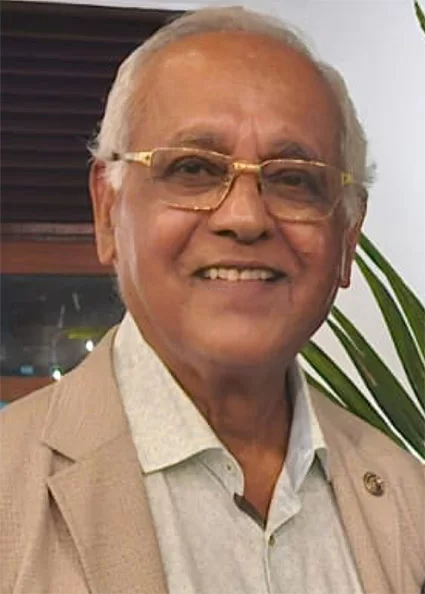
    PARAMARIBO – As Suriname’s legal community honors one of its most distinguished figures, Mr. Dr. Carlo Randjit Jadnanansing marks his 80th birthday with a legacy that has fundamentally shaped the nation’s judicial landscape. Born November 29, 1945, Jadnanansing’s multifaceted career spans jurisprudence, education, philosophy, and public service, establishing him as both an intellectual force and cultural icon.

    Jadnanansing’s academic journey began at Amsterdam Middle School in Paramaribo before advancing to Leiden University in the Netherlands, where he earned doctoral degrees in Notarial Law (1970) and Dutch Law (1972). His interdisciplinary studies incorporated criminology, forensic psychiatry, and criminalistics – foreshadowing the breadth of his future contributions.

    Returning to Suriname after practicing as a notarial candidate in The Hague, Jadnanansing developed a specialization in criminal cases before being appointed Notary in 1978, a position he maintained with unwavering dedication for 32 years. His practice became synonymous with integrity, precision, and profound expertise, establishing industry standards that endure today.

    Beyond his legal practice, Jadnanansing shaped generations of Surinamese lawyers through his academic roles. He served as lecturer at the University of Suriname and AdeKUS, teaching criminology, inheritance law, and related disciplines. His institutional contributions include chairing the Surinamese Lawyers Association (2004-2017), serving as editorial chair of the Surinamese Lawyers Journal (2002-2013), and continuing as editorial advisor thereafter.

    His scholarly output remains unprecedented: 60 articles for the Surinamese Lawyers Journal (the most in publication history) and 250 articles for Starnieuws. This intellectual leadership earned him an Honorary Doctorate (AdeKUS) in 2019, with his inaugural lecture, ‘Return to the Bosom of the State,’ recognized as a milestone in constitutional thought.

    Jadnanansing’s authoritative publications include ‘Main Lines of Surinamese Inheritance Law’ (1998) and ‘Handbook of Surinamese Inheritance Law’ (2017, co-authored with Dr. C.A. Kraan), both essential reading for legal studies. His broader literary oeuvre encompasses thirteen books blending legal analysis with philosophical insight and social commentary, including ‘With Right About Law’ (2015), ‘Right for All’ (2019), and ‘Just’ (2023).

    His service extended beyond the courtroom and classroom. As chairman of the Surinamese Tennis Association, he restored its international status. His Rotary International recognition as a Paul Harris Fellow complemented extensive board memberships across cultural, educational, and supervisory organizations, including the Conservatorium Suriname and Jnan Adhin Fund.

    Jadnanansing’s societal contributions have been recognized with Suriname’s highest honors: Officer in the Honorary Order of the Palm (2005), Commander in the Honorary Order of the Yellow Star (2021), and Grand Officer in the Honorary Order of the Palm (2024). Most recently, on November 21, 2025, he received the SuRo pin and award from Satya Dharma Ned/Sur representative Keshopersad Gangaram-Panday.

    Colleagues and students describe a Renaissance man who approaches complex inheritance cases with the same enthusiasm he brings to wordplay, gourmet cuisine, dancing, or social gatherings. Fluent in ten languages including Dutch, English, Sranan, Sarnami, Hindi, Sanskrit, and Latin, Jadnanansing combines Vedantic philosophy with joyful engagement in human experience.

    As contributor Ragini Dhanes notes: ‘In Carlo Jadnanansing’s thinking, actions, and being, one recognizes a TRUE GURU!’ His legacy represents not merely a chapter in legal history, but a foundational pillar of Suriname’s constitutional state.

  • China and the Dominican Republic: an alliance that drives trade, investment and technology

    China and the Dominican Republic: an alliance that drives trade, investment and technology

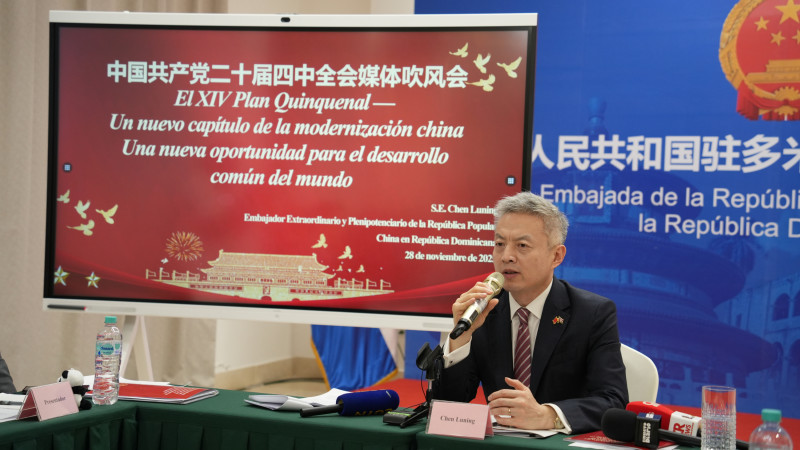
    SANTO DOMINGO – Chinese Ambassador Chen Luning articulated a vision of strengthened bilateral cooperation during a reception for Dominican journalists at the Chinese Embassy last Friday. Framing the relationship as a cornerstone of China’s regional strategy, the ambassador detailed significant advancements across trade, investment, and agriculture since diplomatic relations were formalized seven years ago.

    Ambassador Luning emphasized that the Dominican Republic is viewed in Beijing as both a trusted friend and a pivotal partner for expanding China’s presence in the Caribbean and Central America. He reported that mutual political trust has consistently deepened, creating a stable foundation for collaboration guided by the principles of “mutual respect, equal treatment, and mutually beneficial cooperation.”

    Economically, China firmly holds its position as the Dominican Republic’s second-largest trading partner, with bilateral trade surpassing $5 billion. Notably, trade volume saw a 2.3% increase in just the first three quarters of 2025. This growth is propelled by heightened interest from Chinese manufacturers, with several companies establishing operations in free trade zones in Santiago, San Pedro de Macorís, and Las Américas. The ambassador cited the nation’s political stability and investment-friendly policies as key drivers.

    Agricultural cooperation represents another strategic pillar. A flagship project with Bioarroz in Bonao, where Chinese technicians are introducing hybrid rice seeds and advanced cultivation techniques in collaboration with the Dominican Ministry of Agriculture, has yielded “good results” over its four-year duration. Opportunities for further collaboration in fruit, coffee, and cocoa production, alongside the introduction of Chinese agricultural machinery, were also highlighted.

    Beyond commerce, China’s contributions to Dominican public welfare were underscored, most visibly through the donation of 120 ambulances that have “effectively strengthened emergency response capabilities” across the country.

    Concluding his remarks, Ambassador Luning positioned this bilateral alliance within China’s broader global economic framework. He outlined China’s monumental growth, noting its $20 trillion GDP and its role as the top exporter of automobiles, lithium batteries, and renewable energy components. He also highlighted the Belt and Road Initiative’s impact in Latin America, having generated over one million jobs through 200 infrastructure projects, with regional trade ballooning to $500 billion.