博客

  • Third Antiguan Baker Nominated for 2026 Caribbean Baking Awards

    Third Antiguan Baker Nominated for 2026 Caribbean Baking Awards

    The culinary landscape of Antigua and Barbuda is experiencing a remarkable ascent as the islands celebrate their third baking professional securing a coveted spot in the 2026 Caribbean Baking Awards shortlist. This triple recognition significantly amplifies the nation’s standing within the regional gastronomic competition circuit.

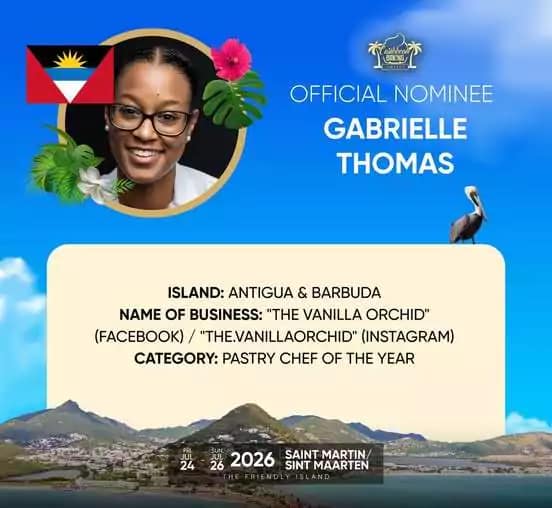
    Gabrielle Thomas has emerged as a contender for the distinguished Pastry Chef of the Year honor. Expressing profound appreciation for the accolade, Thomas remarked, ‘I am deeply grateful for this recognition,’ while extending heartfelt thanks to her family, friends, and community for their unwavering support throughout her culinary journey.

    Thomas now joins compatriots Timoy Titus and Lana Williams in this year’s prestigious nominee circle. Titus, the creative force behind Teez Delights, has achieved his third consecutive nomination for Best Cake Designer—a testament to his consistent excellence. Simultaneously, Williams, founder of The Purple Rose Batter, has garnered recognition in the Innovative Baker of the Year category, highlighting the diverse talent emerging from the twin-island nation.

    The prestigious awards ceremony is scheduled to take place in Saint Martin from July 24-26, 2026. The nomination process will conclude on February 1st, followed by the commencement of public voting on April 7th, allowing baking enthusiasts across the Caribbean to participate in celebrating regional culinary excellence.
  • STATEMENT: A new dawn in St. Vincent – Dominica Freedom Party hails NDP’s landmark win

    STATEMENT: A new dawn in St. Vincent – Dominica Freedom Party hails NDP’s landmark win

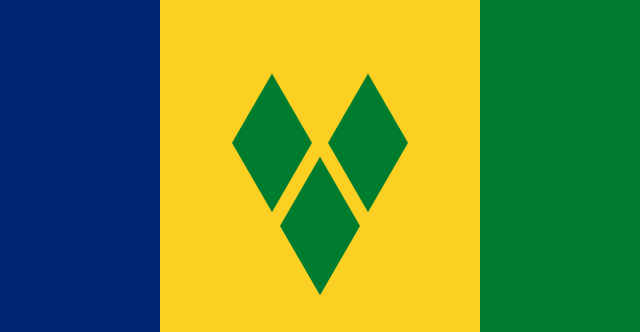
    In a landmark political transformation, the New Democratic Party (NDP) has achieved a decisive electoral victory in St. Vincent and the Grenadines, ending nearly a quarter-century in opposition. The December 2, 2025 general elections resulted in a resounding mandate for Prime Minister Dr. Godwin Friday’s leadership, signaling a profound public desire for national redirection.

    The Dominica Freedom Party (DFP) has extended formal congratulations to the victorious NDP, recognizing the election as demonstrating robust democratic engagement. The DFP particularly highlighted the exemplary conduct of the electoral process, noting its transparency, fairness, and adherence to democratic standards that regional political movements should emulate.

    This political transition represents more than a routine power transfer—it embodies the collective aspiration of Vincentians for substantive change and renewed governance approaches. The NDP’s return to government after 25 years provides a clear five-year mandate to implement its national vision.

    Of particular significance was the notable participation of youth voters, whose active engagement in the democratic process drew specific commendation from the DFP. The party expressed hope that this civic involvement would inspire younger generations throughout the Caribbean region.

    The DFP anticipates strengthened collaboration with the NDP through the Caribbean Democrat Union (CDU), focusing on reinforcing democratic institutions and advancing governance models centered on accountability and public service. The statement concluded with an appeal for national unity as St. Vincent and the Grenadines embarks on its new developmental trajectory.

  • Magnitude 3.7 Earthquake Felt Near Antigua and Barbuda

    Magnitude 3.7 Earthquake Felt Near Antigua and Barbuda

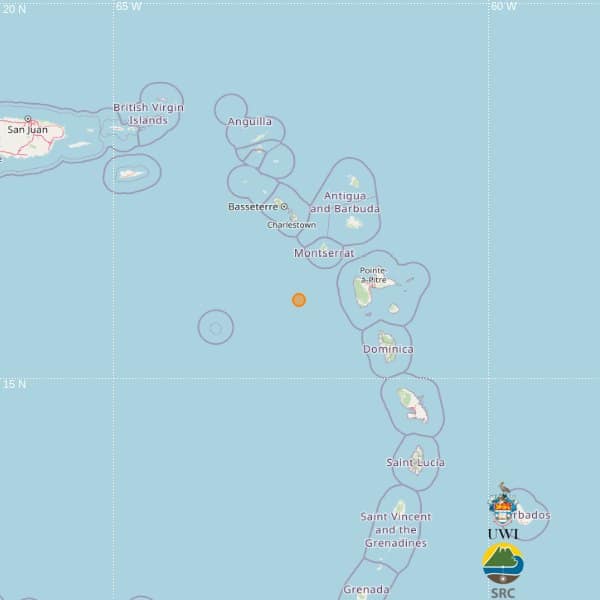
    A minor seismic event registering 3.7 magnitude occurred in the Eastern Caribbean basin on Monday afternoon, as detected by the automated monitoring systems of the University of the West Indies Seismic Research Centre (UWI-SRC). The tremor was recorded at precisely 12:32 local time (16:32 GMT), with its seismic epicenter positioned at geographical coordinates 16.05°N latitude and 62.51°W longitude. The quake originated at an intermediate depth of 53 kilometers beneath the Caribbean Sea floor. According to seismic mapping data, the epicentral region was located approximately 88 kilometers southwest of Brades, Montserrat; 110 kilometers west-southwest of Point-à-Pitre, Guadeloupe; and 138 kilometers southwest of St. John’s, Antigua and Barbuda. Initial assessments indicate no immediate reports of structural damage, injuries, or tsunami alerts following the event. The UWI-SRC emphasized that their preliminary report was automatically generated by their seismic monitoring network and remains subject to potential revision once seismologists conduct comprehensive manual analysis. The Eastern Caribbean region resides within an active seismic zone characterized by complex tectonic interactions between the Caribbean and North American plates, making such minor tremors relatively frequent geological occurrences.

  • Miss Dominica 2026 contestants revealed

    Miss Dominica 2026 contestants revealed

    Dominica has officially introduced the six contenders who will vie for the prestigious Miss Dominica crown in 2026. The announcement came during the vibrant launch ceremony of Mas Domnik 2026 over the weekend, setting the stage for the highly anticipated pageant scheduled for February 12, 2026, at Windsor Park Sports Stadium.

    The diverse group of contestants represents various communities across the island, each bringing unique advocacy platforms. The delegation includes 22-year-old Ardel Laurent from Mahaut, championing ‘Embracing confidence through sustainable style,’ and 24-year-old Dainisha Eusebe of Grandbay, advocating for ‘Animal Welfare: Humane treatment of animals.’

    Daina Graneau, 23, representing Atkinson/Kalinago Territory, focuses on ‘The hidden victims: Protecting children in violent homes,’ while 21-year-old Darna Eugene, also from Grandbay, promotes ‘From silence to strength: Empowering lives, inspiring hope.’ The contingent includes 24-year-old Sheraine Mills of Jimmit and St Joseph, addressing ‘Breaking the stigma, empowering women to confidently confront PCOS,’ and 19-year-old Sanchia Tyson from Crayfish River in Kalinago Territory, emphasizing ‘Roots and Radiance—Empowering both Kalinago and Dominican women through cultural identity.’

    Charlene White-Christian, Chairperson of the Queen Show Organizing Committee, revealed this year’s theme as ‘Bouyon Bloom’—a celebration honoring Dominica’s distinctive bouyon music genre and the artists who perpetuate this cultural tradition. ‘Bouyon is more than music,’ White-Christian declared. ‘It is the heartbeat of our island, a rhythm that tells our stories, celebrates our culture and connects Dominicans across generations.’

    The thematic framework aims to inspire contestants while paying tribute to the creativity and spirit of bouyon artists. According to organizers, the candidates have already commenced intensive training programs featuring transformative workshops in stage presence, professional walking techniques, speech communication, personal development, and cultural refinement.

    White-Christian expressed confidence in the contestants’ preparation, noting their demonstrated ‘passion, discipline and drive’ that promise to deliver a spectacular showcase on pageant night. The months leading to the February event will see these ambassadors undergo comprehensive development, blending cultural preservation with contemporary pageantry standards.

  • Nederlandse koning: Wij komen om de relatie te verdiepen als gelijkwaardige partners

    Nederlandse koning: Wij komen om de relatie te verdiepen als gelijkwaardige partners

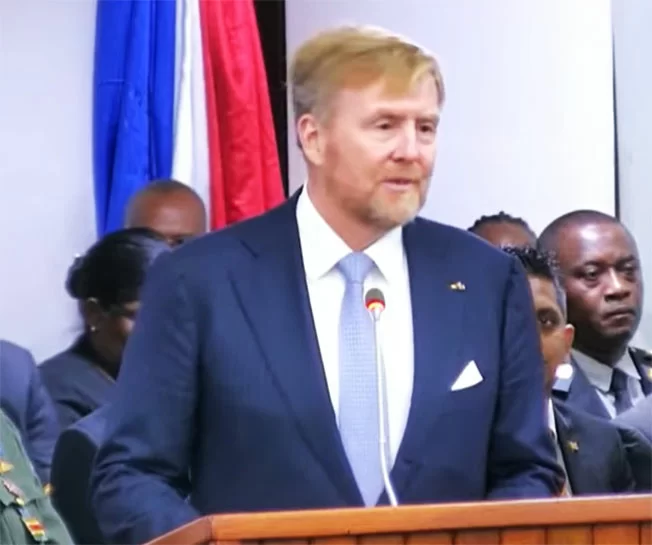
    In a landmark address to Suriname’s National Assembly on December 1st, King Willem-Alexander of the Netherlands delivered a powerful speech acknowledging the complex shared history between the two nations while advocating for strengthened cooperation as ‘equal partners.’

    The monarch, speaking from the parliamentary chamber in Paramaribo, emphasized the extraordinary nature of addressing lawmakers ‘7,500 kilometers from home’ in a shared language. He clarified the unique composition of the Kingdom of the Netherlands, noting that while geographically distant, it remains ‘partly European and partly Caribbean,’ making the nations ‘good neighbors in this region.’

    The King praised Suriname’s democratic institutions for their remarkable achievement in unifying an ethnically and culturally diverse population within a single democratic framework. ‘It inspires admiration how you manage to unite so many different population groups within one democratic system in this country,’ he stated, describing Suriname—which celebrated 50 years of independence this year—as ‘an inspiring example’ of successful integration.

    With deliberate candor, the Dutch head of state addressed the painful legacy of four centuries of colonial rule, slavery, and contract labor that characterized much of the bilateral history. ‘The stories of your ancestors are of essential significance to you, and also to us,’ he declared. ‘They must never be forgotten.’ He emphasized that listening to these intergenerationally transmitted narratives remains fundamental to deepening mutual understanding.

    Against the backdrop of global challenges to democracy, rule of law, and security, King Willem-Alexander identified opportunities for enhanced cooperation. ‘We want to work with you on resilience, also in social and economic terms,’ he proposed, outlining the visit’s objectives as listening, learning, and renewing bilateral ties.

    Concluding his address, the King expressed appreciation for Assembly members’ service to Suriname and their mission to guide the nation toward a strong future. ‘Know that the Kingdom of the Netherlands gladly continues to walk together with you and all Surinamese on the path that lies ahead,’ he affirmed, ending with the heartfelt Sranan Tongo expression: ‘Grantangi!’ (Thank you).

  • UDP’s German Tillet: “We’re Not Worried About Jose Mai, the Horse, or PUP”

    UDP’s German Tillet: “We’re Not Worried About Jose Mai, the Horse, or PUP”

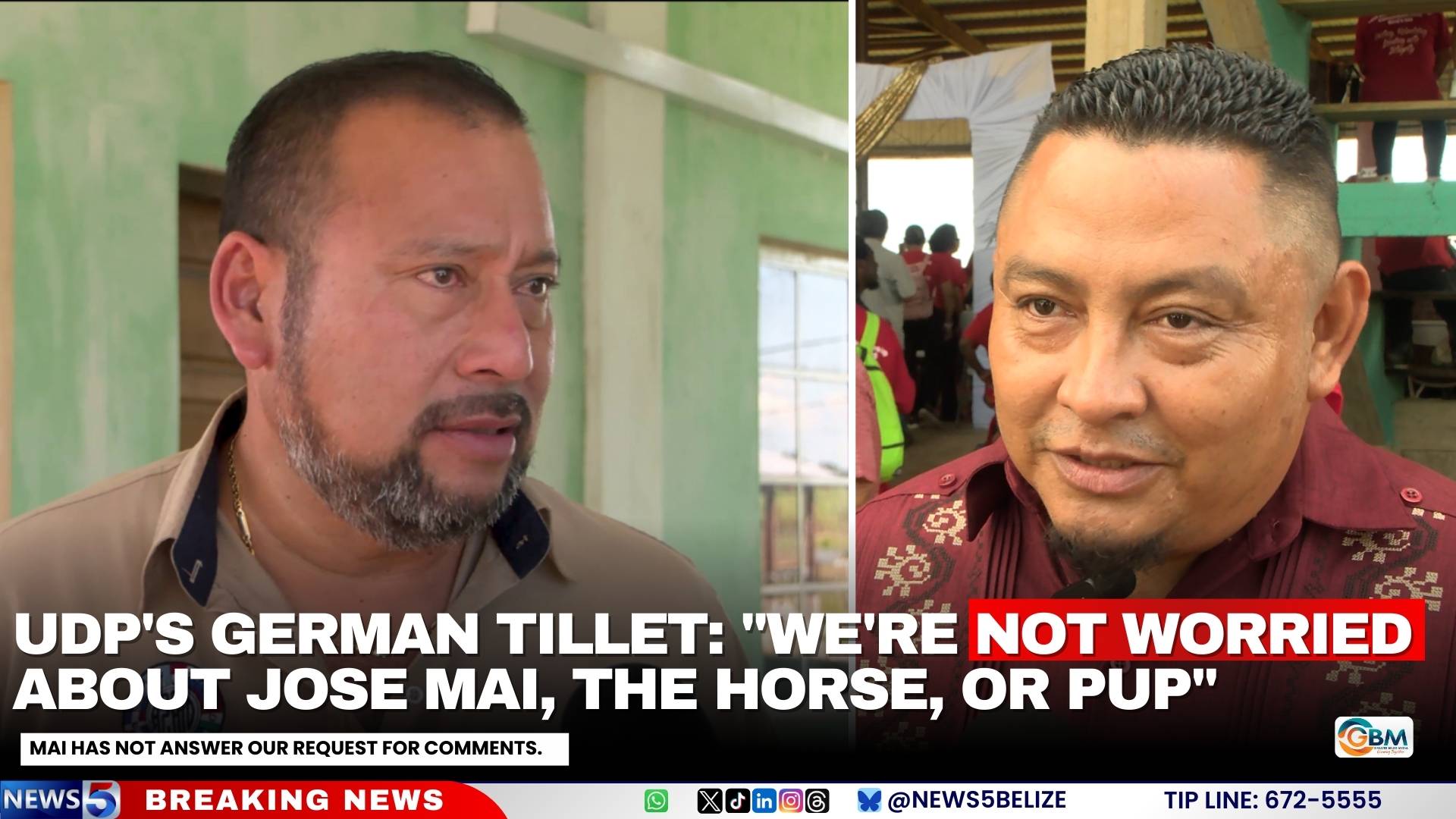
    In a striking display of political composure, United Democratic Party representative German Tillett has publicly dismissed concerns regarding his political rival’s controversial cabinet departure. The Orange Walk South constituency representative maintains unwavering focus on his parliamentary duties despite mounting speculation surrounding People’s United Party counterpart Jose Abelardo Mai’s November resignation from Cabinet.

    The political landscape shifted dramatically when Mai, who secured victory against Tillett in March’s general election, unexpectedly vacated his ministerial position. While Prime Minister John Briceño attributes the resignation to health complications stemming from equestrian injuries requiring surgical intervention, the departure coincides with serious allegations involving cartel connections and questionable procurement of bulletproof vests during Mai’s tenure at the Ministry of Agriculture.

    Tillett, participating in UDP’s National Convention, articulated his position with notable candor: “My commitment remains exclusively with serving UDP constituents. The electoral process demonstrated the people’s will, and I continue to earn their trust through tangible work. The internal decisions of PUP regarding Minister Mai represent their organizational matter alone.” The UDP representative extended professional courtesy by wishing Mai recovery while simultaneously emphasizing his detachment from the controversy.

    The political vacuum created by Mai’s absence raises significant questions about constituency leadership stability. Tillett’s calculated response suggests strategic positioning for potential future electoral opportunities, should the situation develop further. Notably, Mai has maintained silence regarding multiple requests for commentary, adding another layer of uncertainty to the developing political narrative.

  • Junior Emmanuel Charged for stealing fanny pack with UK passport and cash

    Junior Emmanuel Charged for stealing fanny pack with UK passport and cash

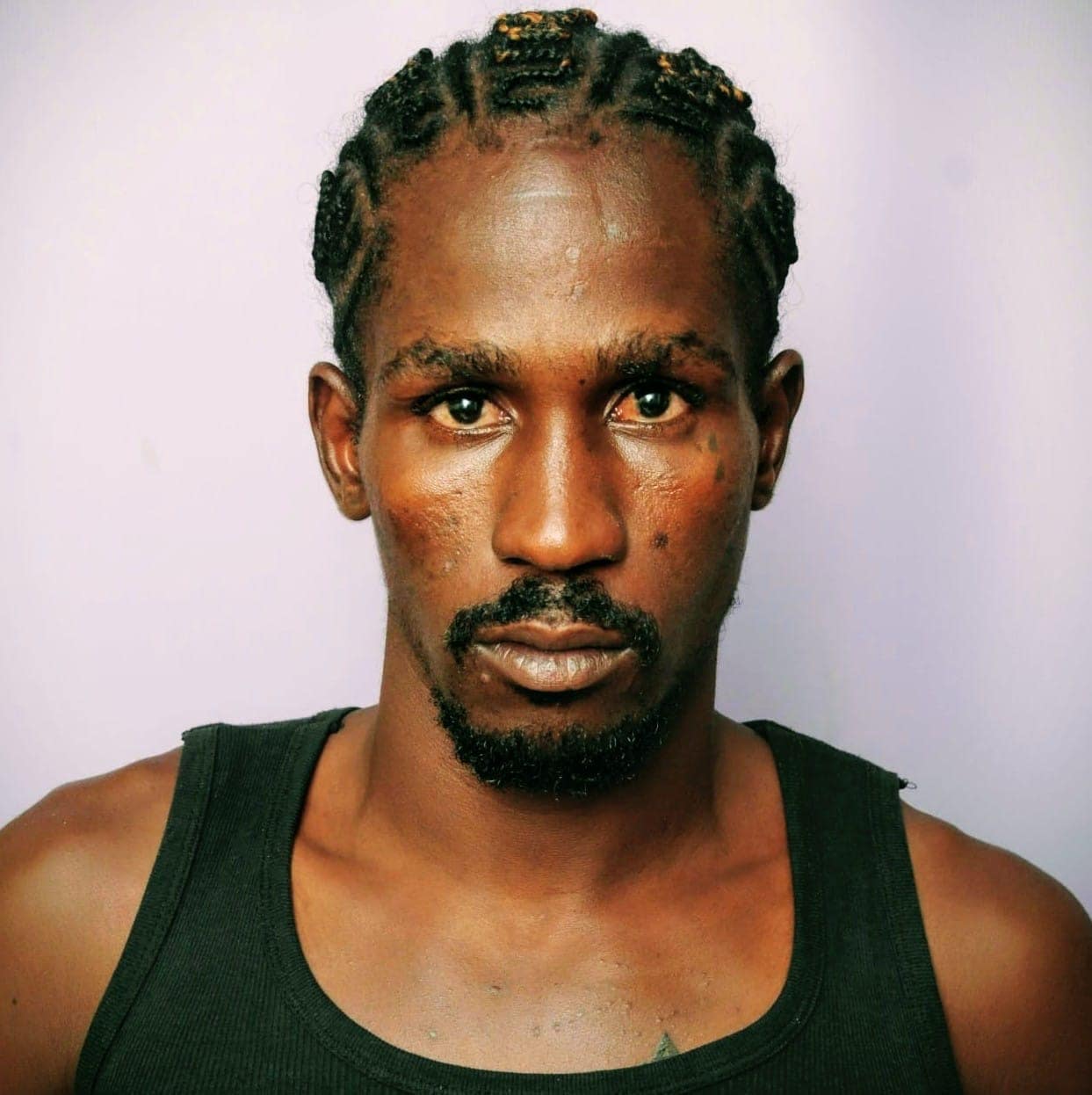
    A resident of Grays Farm, Antigua and Barbuda, has been formally charged by the Royal Police Force in connection with the theft of a tourist’s personal items. Junior Emmanuel, whose address was confirmed as Federation Road, is alleged to have committed the act of larceny on the afternoon of Saturday, November 29, 2025, along Charles Henry Street.

    The criminal complaint details that the stolen property consisted of a single fanny pack containing multiple high-value items. Among these were an official United Kingdom Passport, a Samsung A30 model cellular phone, and an unspecified amount of cash in United States currency. The items were confirmed to be the property of an international visitor to the twin-island nation.

    Following an investigation into the reported incident, law enforcement officials took Emmanuel into custody. He has since been charged under the relevant larceny statutes. The judicial process is now moving forward, with the accused scheduled for an imminent arraignment before a magistrate. The court appearance will mark the next phase in the legal proceedings, where the evidence will be presented and the charge formally addressed.

  • President:  Als we het verleden durven aankijken, kunnen we samen een betere toekomst bouwen

    President: Als we het verleden durven aankijken, kunnen we samen een betere toekomst bouwen

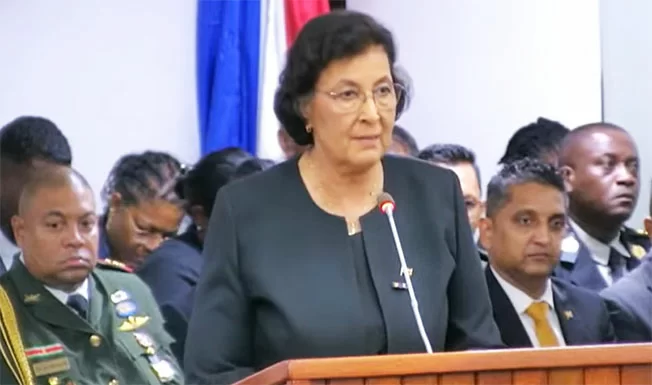
    In a landmark address to the National Assembly during the state visit of King Willem-Alexander and Queen Máxima, President Jennifer Simons declared that Suriname and the Netherlands stand at a pivotal historical juncture to rebuild and deepen their bilateral relationship. The President emphasized that this royal visit presents a unique opportunity to transform a connection long characterized by colonial imbalance into a modern partnership grounded in mutual respect and shared values.

    President Simons articulated that the foundation for this renewed relationship must begin with acknowledging their complex shared history while simultaneously working toward reconciliation. “The future can be improved not only through recognition of what lies in the past,” she stated, “but also through collaborative efforts in the restoration process.” She affirmed Suriname’s readiness to shape its own destiny while recognizing the necessity of continued cooperation with the Netherlands as both country of origin and former colonial power.

    The framework for this reinvented relationship, according to President Simons, must be built upon principles of equality, pragmatism, mutual trust, and friendship. Both nations have demonstrated willingness to take this significant step forward, recognizing their numerous commonalities that provide a solid foundation for complementary cooperation across economic, cultural, and governance spheres. The shared legal system and language offer particular advantages for deepened collaboration.

    President Simons highlighted the profound social interconnectedness between the two nations, noting that substantial portions of both populations reside in each other’s countries. “This is literally our family,” she remarked, emphasizing that cooperation must extend beyond government levels to include private sector entities, youth organizations, businesses, and communities on both sides of the Atlantic.

    Addressing global uncertainties, the President stressed that regional peace and security require strengthened cooperation. She called for joint focus on processing historical wounds from both colonial and post-colonial periods, stating that both nations must “learn from history, look each other directly in the eye, process that history, and together create a better future.” Specific opportunities for collaboration exist in trade, economic development, energy, governance, and social advancement.

    Concluding with a powerful message, President Simons urged all Surinamese citizens to recognize that “we have a future together if we dare to face the past.” This state visit, she affirmed, provides a rare chance for both societies to collectively build a prosperous future for their people.

  • Column: Vruchtbare bodem

    Column: Vruchtbare bodem

    Recent confirmation of King Willem-Alexander’s long-anticipated state visit to Suriname has unveiled fascinating historical dimensions of the Dutch royal family’s relationship with the former colony. During the official opening of the Suriname Museum in Amsterdam, the monarch expressed his profound enthusiasm for the upcoming visit with Queen Máxima, noting he had “very much wanted to do this much earlier.

    The King’s remarks during his annual press conference in June revealed more than diplomatic protocol. When questioned about potential travel plans coinciding with Suriname’s 50th anniversary of independence (Srefidensi), he initially provided a formal response about requiring official invitations. However, he subsequently disclosed his deep curiosity about the nation and his hope to experience it similarly to how his mother had.

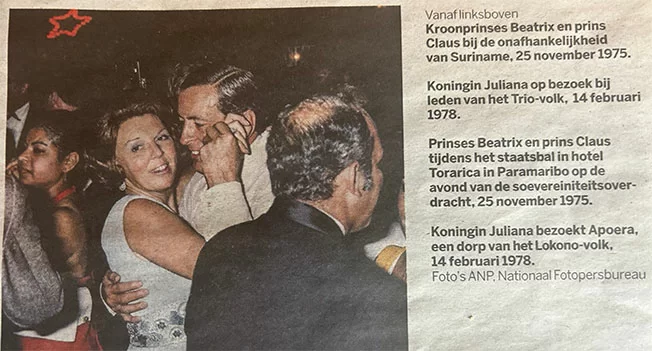
    This seemingly casual comment prompted historical investigation into Princess Beatrix’s numerous visits to Suriname during her pre-reign years. Archival research reveals multiple informal trips beyond official duties, facilitated by the warm relationship between the Orange and Ferrier families. While most remember the celebratory images of Beatrix cheering and dancing during the sovereignty transfer ceremonies, earlier visits tell a more personal story.

    Notably, Beatrix and Prince Claus visited Suriname during their 1966 honeymoon, traveling by traditional korjal boats along the Marowijne River, enjoying local fruits like Groningen markoesa, and demonstrating genuine relaxation far from royal formalities. Historical records confirm a second, less documented July 1966 visit, where the royal couple appeared thoroughly immersed in local culture—dancing, smiling, and completely at ease.

    The King’s reference to his mother describing Suriname as “the most beautiful country she had ever visited” gains deeper context through these historical connections. These personal experiences beyond diplomatic engagements reveal a genuine affection that transcends political relationships, suggesting the upcoming state visit carries emotional significance beyond mere protocol.

  • Trump Had a Phone Call With Maduro, Told Him to Resign Immediately

    Trump Had a Phone Call With Maduro, Told Him to Resign Immediately

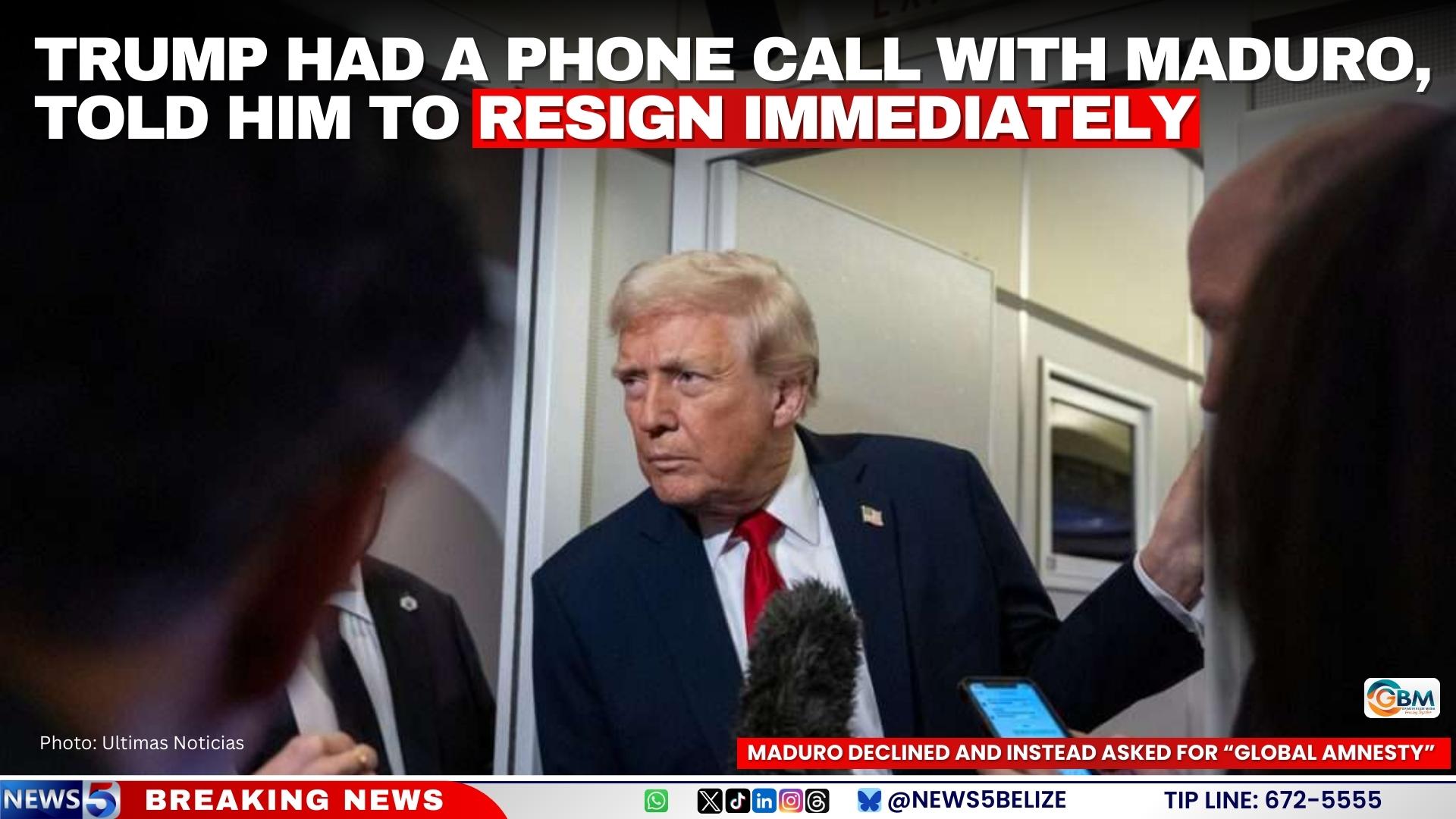
    In a dramatic escalation of tensions between the United States and Venezuela, President Donald Trump engaged in a direct telephone conversation with Venezuelan leader Nicolás Maduro on November 21, delivering an uncompromising demand for his immediate resignation. According to sources familiar with the exchange, Trump offered safe passage for Maduro and his family in return for stepping down from power.

    The Venezuelan president reportedly rejected the ultimatum, countering with a request for comprehensive ‘global amnesty’ protections for himself and key political allies. The Miami Herald first broke details of the high-stakes diplomatic encounter, which Trump later confirmed to reporters while remaining characteristically ambiguous about the conversation’s outcome, stating merely that he ‘wouldn’t say it went well or badly.’

    This diplomatic confrontation occurs against a backdrop of intensifying bilateral friction. Since September, U.S. military forces have conducted lethal strikes against vessels suspected of narcotics trafficking in Venezuelan territorial waters. Additionally, Washington has formally designated Venezuela’s alleged ‘Cartel de los Soles’ as a foreign terrorist organization—a characterization Venezuelan authorities dismiss as politically motivated fabrication.

    The situation further deteriorated when Trump announced via Truth Social that Venezuelan airspace should be considered ‘closed in its entirety.’ Caracas responded with an official communiqué accusing the United States of violating national sovereignty and attempting to illegally control its aviation territory. The Venezuelan government characterized recent U.S. suspension of repatriation flights for Venezuelan migrants as an act of aggression, noting that 75 previous flights had successfully returned nearly 14,000 citizens. The statement concluded with a firm declaration that Venezuela ‘will not accept orders, threats, or interference from any foreign power.’