A widespread mass fish die-off in Suriname’s Saramacca River has been linked to suspected chemical pollution in early investigative findings, according to Minister of Oil, Gas and Environment Patrick Brunings. The minister announced that the leading working hypothesis attributes the environmental disaster to heavy rainfall overflowing a chemical storage facility or containment pond, with toxic contaminants flowing through the Moeroekreek tributary before entering the main Saramacca River. Suriname’s government expects to identify the likely source of the pollution within two weeks, as final analysis of collected samples is still pending. Minister Brunings emphasized that no definitive conclusions can be drawn at this stage, with full test results from examined fish samples scheduled to be released on August 10.
博客
-

In augustus voor het eerst nationale Heritage Month
This August, Suriname will make national history with its first ever month-long celebration of the country’s shared cultural and historical heritage. Running from August 1 to 31, the debut edition of Heritage Month centers on the unifying theme: “However we came here together, this is how we move forward together.” Organized by a presidential working group, the initiative is designed to grow into an annual national tradition that gives space to every population group and their unique ancestral stories.
The full event program was officially unveiled to media during a press conference held earlier this week. All activities scheduled throughout the month are framed around three core goals: preserving Suriname’s diverse cultural heritage, fostering public appreciation for the country’s pluralistic history, and passing this shared legacy on to future generations. For organizers, the 2025 launch is not just a one-off celebration — it marks the starting point of a long-term process intended to deepen public knowledge, strengthen cross-community understanding, and build greater connection between Suriname’s many distinct population groups.
Rachel Pinas, chair of the presidential working group, emphasized that Heritage Month will create space for both the uplifting and painful chapters of Suriname’s collective past. “Moving forward together does not mean we forget our history,” Pinas explained during the press conference. “It means we learn about our past, acknowledge it, and use that understanding to build greater empathy and respect for one another.” Pinas stressed that the initiative is not limited to a single community, organization, or government ministry: “This is a national journey where every community that helped shape Suriname deserves to be seen. The stories of smaller, less widely recognized groups also deserve full, equal attention.”
The debut edition of Heritage Month is structured around four core pillars: knowledge and awareness, education and intergenerational transfer, participation and connection, and policy and long-term sustainability. These themes will be brought to life through a diverse lineup of events, including heritage storytelling days at primary and secondary schools across the country, a mini academic conference hosted by Anton de Kom University of Suriname, youth-focused activities, the One Heritage Policy Symposium, an interactive Heritage Village experience, and multi-platform public media and awareness campaigns.
Organizers acknowledge that a single 31-day month is not enough to fully capture the depth and breadth of Suriname’s full history and cultural richness. That is why the working group has laid out plans for the event to become an annual, evolving celebration that grows in scope and community support each year. The first two weeks of this year’s inaugural event will focus primarily on knowledge sharing and academic exploration, before shifting to inclusive public programming. The third weekend of August will feature a large-scale cultural gathering in Suriname’s historic inner city, paired with a national culinary festival highlighting food traditions from across the country’s diverse communities.
International partners have also been invited to contribute to the program. Embassies from nations including India, China, and Indonesia have collaborated with organizers on programming for the month, and will participate with their own cultural presentations and performances, highlighting the global roots of Suriname’s modern national identity.
-

Haiti : A high-level American parliamentary delegation at the National Palace
In a high-stakes diplomatic meeting held on Monday, Haiti’s Prime Minister Alix Didier Fils-Aimé, alongside senior members of his cabinet, welcomed a cross-party delegation from the U.S. House of Representatives Foreign Affairs Committee at the National Palace in Port-au-Prince. The delegation included sitting members of Congress and top parliamentary leaders from both the Democratic and Republican parties, marking a display of unified bipartisan engagement with Haiti’s transitional leadership amid the country’s ongoing political and security crisis.
The closed-door discussions proceeded in an atmosphere of open frankness, reciprocal respect, and shared commitment to collaborative partnership, covering a broad spectrum of pressing strategic priorities for Haiti. Key topics on the agenda included the urgent task of restoring widespread national security, laying the groundwork for upcoming general elections, strengthening fragile democratic state institutions, improving public sector governance, expanding mutually beneficial bilateral cooperation between the two nations, addressing irregular migration flows, and mapping pathways to long-term inclusive economic recovery.
During the talks, Haitian government leaders used the opportunity to call for a unified, coordinated international commitment to Haiti, emphasizing that any global support must be rooted in strict respect for Haiti’s national sovereignty and collaborative solidarity between international partners. The delegation was told that Haiti needs robust backing to overcome its current urgent challenges, specifically requesting support for the Haitian authorities’ ongoing work to rebuild national stability, entrench the rule of law across the country, and create the necessary conditions for holding free, credible, and inclusive elections that reflect the will of the Haitian people.
For their part, the visiting U.S. congressional representatives commended the productive quality of the dialogue, noting that both parties had aligned on core shared goals. The delegation reaffirmed that the U.S. Congress maintains broad bipartisan interest in deepening a close working partnership with Haiti, with the ultimate aim of supporting progress on security, democratic governance, sustainable economic prosperity, and improved quality of life for the Haitian population.
-

Gonsalves-led legal team secures bail for murder accused
A prominent Caribbean political figure is now at the center of a sharp public contradiction, after his legal team successfully secured bail for a teenage murder defendant – a stark reversal of the scathing criticism he leveled at judiciary officials just three years ago for granting bail to people charged with the same crime.
Ralph Gonsalves, current Opposition Leader of St. Vincent and the Grenadines and former Prime Minister, made international headlines in May 2023 when he launched a blistering attack on judicial officers across the CARICOM region. Speaking at a regional crime symposium amid a nationwide surge in homicides that pushed the country’s annual murder count to a record-breaking 55, Gonsalves questioned the judgment of magistrates who approved bail for murder accused.
Going further, he publicly implied unequal treatment in bail decisions based on the standing of the defense lawyer, before delivering his memorable rebuke: “How could you go and give somebody who is charged with murder bail? Let’s get serious!… where do these judges live? On Mars?”
Now, three years later, Gonsalves himself has led a defense team alongside his son Camillo Gonsalves – the country’s former finance minister – to win bail for a 16-year-old female defendant charged with murder. The legal team also included prominent attorneys Ronald “Ronny” Marks and Graham Bollers.
The case dates back to April of this year, when the teenager was charged following the death of 65-year-old Winston McMillan. Prosecutors allege the teen struck McMillan in the head during a physical altercation. Initially, while McMillan was hospitalized and declared brain-dead, the teen was charged with attempted murder. The charge was upgraded after his death.
As a constituent from Gonsalves’ North Central Windward electoral district, the teen first applied for bail in May through Gonsalves, but a lower court magistrate denied the request. On Monday, however, High Court Justice Gertel Thom granted bail set at Eastern Caribbean $25,000, requiring two sureties for the defendant’s release.
Court officials issued stop orders to prevent the teen from leaving the country, but waived the requirement to surrender her expired passport. As a condition of bail, she has been ordered to check in three times weekly at the Colonarie police station. The case has sparked public debate over consistency in political rhetoric and legal practice, with many noting the stark contrast between Gonsalves’ past criticism of bail for murder accused and his current work to secure that very outcome for his constituent.
-

Opposition MPs’ disrupt parliamentary sitting over MV Barima tragedy, but govt proceeds with agenda
On Monday, July 27 2026, Guyana’s National Assembly descended into chaotic disruption as a unified bloc of opposition lawmakers staged a mass protest to demand bipartisan concessions for an independent public inquiry into the sinking of the MV Barima ferry, a disaster that has left an estimated 100 people dead off the country’s Essequibo Coast.
The July 18 sinking, which claimed the lives of scores of people—including more than 20 children, a majority of whom were Indigenous Amerindians—has sparked escalating anger at the ruling government over what critics call systemic neglect and a lack of accountability. The tragedy has put senior cabinet members under intense pressure to step down to make way for an unobstructed investigation.
Led by the three main opposition groups—We Invest in Nationhood (WIN), A Partnership for National Unity (APNU) and Forward Guyana Movement (FGM)—all opposition parliamentarians boycotted scheduled government business, including consideration of a GY$54.89 billion supplementary budget request and debate on the Guyana Development Bank Bill. When Speaker Manzoor Nadir called on opposition legislators to submit pre-scheduled questions to cabinet ministers, the lawmakers refused to respond.
Opposition Leader Azruddin Mohamed rejected the Speaker’s offer of a five-minute address to the 65-seat chamber over the tragedy, telling reporters ahead of the sitting that the opposition would not stand by and allow what he called “wicked, deceitful and treacherous” conduct to violate the rights of affected Guyanese citizens. “We’ve had the biggest tragedy in Guyana, and no one should expect that business must go on as usual,” explained APNU parliamentary leader Dr. Terrence Campbell, confirming the opposition was acting as a unified bloc to force the government to abandon its routine agenda and prioritize the inquiry. “We are signalling to the government that it cannot be business as usual,” he added.
Protesting lawmakers chanted demands for the resignations of two senior cabinet members: Public Works Minister Juan Edghill and Deodat Indar, the minister responsible for Guyana’s Maritime Administration (MARAD). The demonstrators banged on parliamentary tables and advanced toward the lectern where Attorney General Anil Nandlall was delivering a statement on the government’s response to the sinking on behalf of President Irfaan Ali and Prime Minister Mark Phillips, who was also present to outline the official timeline of events following the initial distress call.
Nadir twice suspended the parliamentary sitting to open dialogue with the opposition, but the demonstrators refused to end their disruption. Each time the sitting resumed, opposition lawmakers closed in on government leaders at the lectern, forcing ruling party parliamentarians to form a protective shield around Nandlall and Phillips. Parliament’s Sergeant-at-Arms and two assistants were eventually called in to establish a buffer between the protesting opposition and the prime minister. Opposition legislators also occupied seating reserved for cabinet ministers during the budget consideration process, forcing the Speaker to reassign the ministers to alternate seats, while ruling party lawmakers positioned themselves around the chamber to anticipate further direct action from protesters.
When Edghill left the Arthur Chung Conference Centre, which hosts the National Assembly sittings, he told reporters he would address calls for his resignation “at the appropriate time” as a small group of female supporters stood with him to offer comfort.
The unrest was not limited to the parliamentary chamber. Outside the conference centre in Liliendaal, a small group of civilian protesters gathered to picket in solidarity with the opposition’s demands. Among them were Annette Ferguson, a former APNU+Alliance For Change parliamentarian, and prominent Indigenous Amerindian rights activist Laura George. George extended the opposition’s resignation calls to two Indigenous Amerindian cabinet ministers, Sarah Brown and Pauline Sukhai, noting that the majority of the ferry sinking victims were Indigenous people.
“We lost more than 23 Guyanese children whose futures were taken away,” George told Demerara Waves, adding that the two Indigenous ministers cannot claim exemption from accountability for the tragedy. “As part of cabinet, we have Indigenous ministers. They also must be held accountable so I don’t want them to feel they are protected and insulated from this call for accountability. They are as culpable for this neglect of Indigenous Peoples—also as Indigenous women and mothers—so the call is for them to resign.” George also pointed to a striking lack of government action ahead of the disaster, noting that cabinet has met more than 300 times since 2020, yet the approval to launch the ferry for commercial service was never brought up for public discussion or scrutiny.
Despite the widespread opposition protest and external public pressure, the ruling government has pushed forward with its scheduled legislative agenda, refusing to concede to demands for a bipartisan agreement on the terms of reference for the public inquiry before continuing other parliamentary business.
-

Police Reveal Possible Motive in Unitedville Murder
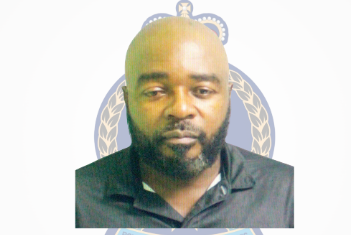
On July 27, 2026, law enforcement officials in Unitedville announced a confirmed motive for a fatal weekend shooting that left one man dead and another seriously injured, bringing a key new development to an ongoing violent crime investigation. Twenty-year-old Kevon Anthony Alford, a local Unitedville resident, has been arraigned on four separate criminal charges connected to the attack: first-degree murder for the death of 25-year-old Denvoy Bartley, attempted murder for the shooting of Albert Bennett, and unlawful wounding and use of deadly force against Denvoy’s identical twin brother, Delroy Bartley.
The shooting unfolded around 8:34 p.m. on Saturday, as the two Bartley brothers traveled into Unitedville to help arrange final preparations for their mother’s upcoming birthday celebration. As the group gathered at the location, an armed gunman stepped out of dense, overgrown bushes nearby and immediately opened fire on the group, catching everyone off guard.
In an official press briefing, Assistant Superintendent of Police Stacy Smith outlined that ongoing investigative work has traced the attack back to a long-running conflict tied to the region’s illicit drug trade. Smith confirmed that in response to the high-profile shooting and rising community tensions, the department has boosted uniformed patrols across the neighborhood where the attack occurred and deployed a specialized tactical unit to prevent further outbreaks of violence and aid in the ongoing investigation.
A local neighbor and close friend of the Bartley family shared her harrowing account of the incident, recalling how she heard the rapid string of gunshots from her own home, with no idea at the time that people she considered close to her own family were the targets. “I heard the first shot go off, up toward the top of the yard,” she described in an interview. “Then it was just pop, pop, pop, one after another. After that, people were saying the gunman stood over one of the young men and fired again.”
Court records also show that Denvoy Bartley had previously been charged with the 2023 murder of 24-year-old Lionel Lee Budna, but the case against him was ultimately dismissed after prosecutors entered a nolle prosequi, leading to his full acquittal in that prior case.