博客

  • Maritime industry turns to data for climate policy shift

    Maritime industry turns to data for climate policy shift

    Barbados is pioneering a data-driven transformation of its maritime sector to address escalating climate vulnerabilities and trade disruptions. Government officials and statistical experts convened this week for a strategic national workshop focused on integrating artificial intelligence and advanced data analytics into national policy-making frameworks.

    The initiative, titled “Evidence-based Climate Action through Artificial Intelligence and Data Innovation for Caribbean SIDS,” represents a significant step in modernizing the island nation’s approach to complex environmental and economic challenges. The two-day conference at UN House brought together stakeholders committed to revolutionizing how Barbados navigates its maritime future.

    Janelle Scantlebury-Mounsey, Senior Statistician at the Barbados Statistical Service, emphasized the critical intersection of data science and maritime governance. “Our region confronts intensifying climate vulnerabilities, increasing competition for marine resources, and unprecedented pressures on global supply chains,” she stated. “The growing international interest in Caribbean maritime space makes high-quality statistical intelligence more valuable than ever before.”

    The workshop highlighted innovative methodologies combining satellite-derived Automatic Identification System data with traditional information sources. This integration enables real-time vessel tracking and creates new frameworks for measuring greenhouse gas emissions with unprecedented accuracy. Scantlebury-Mounsey stressed that such approaches must adhere to international standards to ensure data integrity throughout its lifecycle.

    Participants were urged to embrace three fundamental principles: quality assurance for reliable and timely data, inter-agency collaboration for seamless information sharing, and sustainable investment in statistical infrastructure for future generations. This comprehensive approach positions Barbados to make evidence-based decisions in international negotiations, climate resilience planning, and maritime policy development.

    The workshop represents a paradigm shift from assumption-based governance to precision policy-making, potentially establishing Barbados as a leader in data-driven climate adaptation among small island developing states.


  • Fisheries officials call for better data to drive energy transition

    Fisheries officials call for better data to drive energy transition

    Barbados is confronting the environmental and economic vulnerabilities of its marine industry’s fossil fuel dependence through enhanced data-driven strategies. At a pivotal two-day workshop hosted at UN House, national and international experts gathered to launch the National Enhanced Statistics for Evidence-Based Climate Action in Maritime Trade, Transport and Fisheries initiative.

    Chief Fisheries Officer Shelly-Ann Cox revealed startling data indicating substantial diesel consumption within the sector. Analysis from a single diesel pump at the Bridgetown Fisheries complex demonstrated an estimated annual usage of one million liters over a 12-year period. This quantification, while significant, represents only a fraction of total consumption as vessel operators frequently purchase gasoline from regular stations, creating substantial data collection gaps.

    Post-Hurricane Beryl assessments identified 217 active fishing boats, yet comprehensive energy usage tracking remains challenging. Despite these obstacles, the documented fuel demand provides compelling justification for exploring alternative energy sources to facilitate an equitable transition for Barbados’ fishing fleet.

    The fisheries policy framework already incorporates renewable energy incentives, including tax exemptions for green fishing projects and provisions within the Sustainable Fisheries Management and Development Act for energy efficiency certification. However, significant barriers persist, including biodiesel supply chain vulnerabilities, high infrastructure costs for charging stations at landing sites, and substantial capital investment requirements.

    Technological progress offers promising solutions, with 101 vessel monitoring systems now installed to gather critical operational data. Barbados has witnessed successful adoption of solar-powered battery chargers and growing interest in hybrid and electric marine engines among fishers. Emerging innovations in renewable ocean energy systems present additional opportunities for reducing fossil fuel dependence.

    Cox emphasized the necessity for policy development to scale alternative energy operations to meet the fishing fleet’s substantial diesel requirements. The workshop, organized by UNCTAD, provided a crucial platform for addressing these challenges and developing actionable recommendations to accelerate Barbados’ just energy transition.

  • The Islamic Development Bank Institute (IsDBI) and Arab Monetary Fund (AMF) Deliver Training on Using Artificial Intelligence to Foster the Islamic Financial Industry

    The Islamic Development Bank Institute (IsDBI) and Arab Monetary Fund (AMF) Deliver Training on Using Artificial Intelligence to Foster the Islamic Financial Industry

    ABU DHABI, UAE – In a pioneering move to modernize Islamic finance, the Islamic Development Bank Institute (IsDBI) and the Arab Monetary Fund (AMF) have successfully concluded a groundbreaking training program focused on integrating artificial intelligence into the sector. Held from November 24-28, 2025, at the AMF headquarters in Abu Dhabi, the specialized workshop marked the region’s first comprehensive initiative bridging AI technology with Shari’ah-compliant financial principles.

    The collaborative program, designed for professionals from central banks and financial institutions across 22 member nations, brought together 32 specialists for an intensive curriculum. Led by IsDBI experts Dr. Hilal Houssain and Dr. Mohammed Ayyash, the training delved into both theoretical foundations and practical applications of AI technologies including machine learning, neural networks, and big data analytics.

    Curriculum highlights included practical implementations for Islamic banking operations such as enhanced risk assessment models, automated financing application evaluation systems, and advanced fraud detection mechanisms – all developed with strict adherence to Islamic financial principles and governance requirements. Participants gained hands-on experience through interactive sessions where they designed six virtual financial service companies, later integrated into two strategic ecosystems for testing AI-driven solutions.

    A significant focus was placed on the ethical dimensions of AI adoption, linking technological ethics to the higher objectives of Shari’ah (Maqasid al-Shari’ah). The program addressed critical challenges including data quality assurance, algorithmic bias mitigation, and ensuring transparency in AI-driven decision making.

    The training also showcased outcomes from IsDBI’s inaugural AI Hackathon in Islamic Finance, which aimed to transform AAOIFI accounting standards into smart digital solutions for enhanced Shari’ah compliance and accounting transparency. The program concluded with participants developing strategic roadmaps for AI implementation in regulatory institutions and financial entities, emphasizing responsible innovation that aligns with both regulatory standards and Islamic principles. All attendees received certificates of completion, marking a significant step toward building AI capacity within the Islamic financial industry.

  • Gov’t to Pursue Aggressive Tax Compliance Drive in 2026, PM Announces

    Gov’t to Pursue Aggressive Tax Compliance Drive in 2026, PM Announces

    Prime Minister Gaston Browne unveiled a comprehensive tax enforcement strategy on Thursday during his presentation of Antigua and Barbuda’s 2026 national budget, signaling a major shift in the nation’s fiscal policy approach. The government will implement an aggressive compliance campaign aimed at strengthening public finances and addressing significant revenue shortfalls.

    Despite acknowledging the country’s strong economic performance and sustained growth, Browne revealed that Antigua and Barbuda maintains the lowest tax revenue-to-GDP ratio within the Organization of Eastern Caribbean States (OECS). This position, he emphasized, has become unacceptable for a developing nation requiring substantial funding for expanding social programs and critical infrastructure projects.

    The Prime Minister outlined a multi-faceted approach to revenue enhancement that includes modernizing tax administration systems, implementing rotation strategies within customs and tax departments to prevent collusion, and conducting regular spot checks targeting businesses and individuals suspected of non-compliance. Browne issued a stern warning to potential tax evaders, stating that ‘those who get caught robbing the revenue will pay heavily.’

    These fiscal reforms are positioned as essential for maintaining the country’s improved fiscal position, which has seen budget surpluses and reduced public debt. The additional revenue generated is expected to fund priority areas including housing development, education initiatives, healthcare services, and climate resilience programs.

    With recurrent revenue projections of $1.49 billion for 2026, the government aims to close the gap between Antigua’s current tax performance and regional benchmarks. The campaign targets reaching the Eastern Caribbean Currency Union average of 20 percent tax-to-GDP ratio and ultimately aligning with the broader regional standard of 25 percent.

    The budget debate is scheduled to continue next week, where further details of the tax compliance measures are expected to be discussed.

  • PM Drew encourages new police, Constables and Wardens ahead of Christmas deployment

    PM Drew encourages new police, Constables and Wardens ahead of Christmas deployment

    BASSETERRE, Saint Kitts and Nevis – Prime Minister Dr. Terrance Drew, serving concurrently as National Security Minister, conducted an inspection and address of newly trained security personnel on Friday, December 5th, 2025, at the Police Training Complex in Ponds Pasture. The event marked the final preparatory phase before their deployment during the heightened security demands of the Christmas and Carnival season.

    The cohort comprised four fully trained Island Constables and nine Traffic Wardens, alongside twenty-six police recruits who are scheduled to commence formal training in early 2026. Dr. Drew’s address focused on the foundational principles of effective law enforcement, emphasizing the critical balance between authority and community respect.

    “Your role within our national security architecture is of paramount importance,” stated Prime Minister Drew, outlining his vision for professional conduct. He underscored essential values including unwavering professionalism, diligent attention to duty, and consistent respect for the institution both on and off duty. The Prime Minister further encouraged the personnel to actively engage with and contribute to their communities, affirming that their perspectives hold significant value.

    Highlighting the necessity for equitable law enforcement, Dr. Drew commended specific exemplars of conduct: Corporal Allison Rouse and Woman Police Constable Donaly Liburd-Chiverton. Both officers were praised for achieving public respect through their firm yet professionally courteous approach to duty.

    With the festive period known for increased public gatherings and traffic, the Prime Minister articulated public expectations. “Citizens desire order and consistent application of the law,” he remarked, “but they equally expect this to be executed with utmost professionalism.” He charged the new personnel to execute their responsibilities with dignity, fairness, and justice, adhering strictly to their training protocols.

    The Prime Minister concluded with personal well-wishes and expressed anticipation for their formal graduation ceremonies and the commencement of the Police Training Course 47 in the coming year.

  • Major aviation milestone with first maintenance certification

    Major aviation milestone with first maintenance certification

    Barbados has entered a new era in aviation capabilities with the historic certification of its first Approved Maintenance Organisation (AMO), positioning the island nation for enhanced technical capacity and global competitiveness in air transport.

    The Barbados Civil Aviation Authority (BCAA) granted full certification to Aviation Technical Services of Barbados Inc (ATSB), marking the first AMO establishment at Grantley Adams International Airport. BCAA Director General Tracey Forde-Bailey characterized this development as “an exceptional milestone” that carries significant responsibility for maintaining international aviation standards.

    The certification process, which typically requires 8-12 months for completion, was finalized ahead of schedule in 2024. Forde-Bailey emphasized that the five-phase approval procedure demanded strict adherence to International Civil Aviation Organisation standards alongside Barbados’ technical regulations, describing it as “an ambitious undertaking.”

    Beyond technical advancements, the AMO certification generates substantial national benefits. It establishes career pathways for emerging aviation professionals, stimulates future investment opportunities, and enhances Barbados’ commercial enterprise development. The achievement particularly strengthens Barbados’ strategic position as a Caribbean aviation hub, given its geographic advantage between North America, South America, and Africa.

    Industry experts highlighted the certification’s multifaceted impact. Dr. Kareem Yarde, Education Officer with the Barbados Aircraft and Aviation Services Company, praised ATSB’s “extensive and strenuous efforts” in achieving this milestone. Gerston Blenman, ATSB’s Director of Maintenance, noted the certification validates Barbados’ compliance with International Air Transport Association regulations, creating opportunities for job expansion into higher maintenance operations.

    The development also promises educational benefits, potentially attracting young talent from technical institutes like the Samuel Jackman Prescod Institute of Technology into aviation maintenance careers. As a certified line maintenance operator, ATSB can now perform transit checks for international carriers, leveraging Barbados’ strategic location as a transit point between major continents.

  • Germany, ITC support Antigua-based SIDS Centre of Excellence with trade intelligence, investment support

    Germany, ITC support Antigua-based SIDS Centre of Excellence with trade intelligence, investment support

    In a significant move to bolster sustainable economic development for vulnerable island nations, Germany has formally committed $100,000 to the Small Island Developing States (SIDS) Centre of Excellence. The contribution was formalized at a signing ceremony at the International Trade Centre (ITC) headquarters in Geneva, featuring German Ambassador to the UN Antje Leendertse and ITC Executive Director Pamela Coke-Hamilton. The initiative, championed by Antigua and Barbuda’s UN Ambassador Aubrey Webson, aims to strengthen the Centre’s operational capacity in promoting trade-led growth.

    Small Island Developing States represent a coalition of 57 distinct economies spanning the Caribbean, Pacific, and the Atlantic, Indian Ocean, and South China Sea regions. These nations confront a unique constellation of challenges—geographic isolation inflates trade costs, limited resource bases create external market dependencies, and environmental vulnerabilities threaten economic stability. Achieving sustainable and inclusive socioeconomic development for SIDS hinges critically on their ability to access new international markets for priority goods and services.

    The German funding will directly enhance the Centre’s ability to deliver tailored support. A cornerstone of this effort involves deploying a SIDS-specific version of ITC’s Export Potential Map, a digital tool designed to identify and capitalize on untapped export opportunities. Furthermore, the contribution will enable comprehensive planning and programmatic support for the inaugural Island Investment Forum scheduled for 2026. This Forum is envisioned as a pivotal platform for forging strategic partnerships and attracting sustainable, mutually beneficial investments across SIDS economies.

    Hosted in Antigua and Barbuda, the SIDS Centre of Excellence operates as a flagship initiative under the Antigua and Barbuda Agenda for SIDS (ABAS). Its structure is built upon four core pillars: the SIDS Global Data Hub, an Innovation and Technology Mechanism, the Island Investment Forum, and a Debt Sustainability Support Service. The institution is steadily advancing towards full activation, with its brand identity recently unveiled and preparations intensifying at its Antiguan headquarters. Established as a key outcome of the Fourth International Conference on SIDS (SIDS4) in May 2024, the Centre is designed to be a practical mechanism for driving collaboration, innovation, and data-informed policymaking to fulfill the ABAS commitments for resilient prosperity.

  • By The Rivers Of Babylon

    By The Rivers Of Babylon

    In Antigua and Barbuda, a profound mental health crisis is unfolding that transcends clinical diagnoses and penetrates the national psyche. Drawing from personal experience with maternal mental illness, a medical professional reveals how the country’s deep political divisions have created a collective madness that stifles honest public discourse.

    The nation faces an paradoxical situation where citizens recognize the root cause of their societal illness yet persistently avoid confronting its consequences. This avoidance mechanism has created a dangerous dichotomy in the national consciousness, particularly evident in two critical areas: healthcare and cultural expression.

    Regarding healthcare management, the country struggles with noncommunicable diseases (NCDs) including cardiovascular conditions, diabetes, cancers, and mental health disorders. The World Health Organization identifies these as stemming from genetic, physiological, environmental, and behavioral factors. However, the author presents a compelling argument that behavioral changes required for health improvement cannot coexist with the suppression of political discourse. This psychological splitting creates a schizophrenic approach to national wellbeing.

    Similarly, in the cultural realm, the nation’s musical expression remains constrained by lyrical content and conventional structures. The absence of instrumental or symphonic compositions reflects a broader limitation in creative and intellectual freedom. Just as the healthcare dilemma demonstrates cognitive dissonance, the artistic landscape reveals an inability to transcend traditional boundaries when political expression remains suppressed.

    The article concludes with a poignant metaphor referencing the Babylonian exile, questioning how the nation might find its authentic voice while navigating this self-imposed psychological captivity. The central thesis maintains that until Antigua and Barbuda addresses its political divisions openly, the national madness will continue to manifest in both public health outcomes and cultural expression.

  • Pensioners Association Thanks the Department of Environment for Initiatives Which Benefited Pensioners Across Antigua and Barbuda

    Pensioners Association Thanks the Department of Environment for Initiatives Which Benefited Pensioners Across Antigua and Barbuda

    The Department of Environment in Antigua and Barbuda has received formal recognition from the nation’s Pensioners Association for implementing critical climate-resilience programs that have substantially improved living conditions for elderly citizens. During a recent high-level meeting, Association representatives Winston Benett and Clement Hughes personally thanked Director Diann Black-Layne for the Department’s instrumental role in securing and administering international funding through the SIRF Fund mechanism. This partnership addresses a significant structural challenge: many NGOs lack the rigorous fiduciary standards required to directly access international climate financing, leaving vulnerable populations underserved. The Department has effectively bridged this gap by acting as both fund administrator and project implementer, ensuring stringent oversight and accountability measures throughout program execution. Among the most impactful initiatives are a solar-powered reverse osmosis system that has revolutionized water security at the Association’s farm, a Hurricane Shutters Programme that has dramatically improved storm safety for elderly residents, and an Air Conditioning Programme that has enhanced comfort in community centers frequented by pensioners. These comprehensive interventions have not only strengthened physical infrastructure but also fostered greater community engagement among pensioners nationwide. The Association has formally encouraged the government to continue these successful programs, citing their transformative effect on senior citizens’ quality of life. Director Black-Layne accepted the gratitude while praising the Association’s dedication to serving the nation’s elderly population.

  • Nevis Appropriation (2026) Bill, 2025, Passed

    Nevis Appropriation (2026) Bill, 2025, Passed

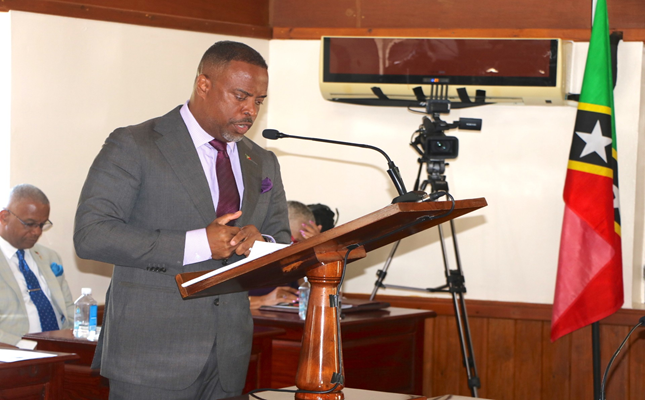
    CHARLESTOWN, NEVIS – In a demonstration of cross-party consensus, the Nevis Island Assembly has formally ratified the Nevis Appropriation (2026) Bill, 2025, establishing the financial blueprint for the upcoming fiscal year. The legislative package, which includes accompanying financial resolutions, received unanimous endorsement on December 04, 2025, following extensive deliberations spanning two days.

    Premier the Honourable Mark Brantley, who serves as Minister of Finance within the Nevis Island Administration (NIA), initially presented the budget proposal to the Assembly on December 02. The subsequent debate featured substantive contributions from parliamentarians representing both government and opposition factions, ultimately culminating in rare bipartisan approval.

    Under the thematic banner “A Purpose Driven Agenda: Building our Sustainable Future,” the approved budget allocates $284.4 million in expenditures against projected revenues of $215.6 million. Premier Brantley characterized the financial plan as embodying his administration’s dedication to responsible governance and meticulous fiscal stewardship, emphasizing its dual purpose of synchronizing government policies with private sector initiatives to catalyze economic expansion.

    The Premier provided explicit assurances regarding the administration’s commitment to fiscal prudence, noting that implementation velocity would be directly contingent upon funding availability. “We will not be reckless,” Brantley asserted, “and will only seek to undertake projects if funding is available or accessible at low cost in accordance with our debt management strategy.” He further indicated that projects lacking concessionary financing would be deferred to the 2027 fiscal period rather than pursued through expensive borrowing mechanisms.

    The comprehensive budget framework outlines strategic priorities across multiple domains including economic diversification, employment generation, crime reduction, debt consolidation, and infrastructure modernization. Premier Brantley expressed confidence that these interconnected policies would collectively stimulate transformative economic development while empowering citizens to realize their full potential.