博客

  • Guarantee set for three teachers in Stephora Anne-Mircie Joseph case

    Guarantee set for three teachers in Stephora Anne-Mircie Joseph case

    A Santiago court has imposed judicial control measures on three educators connected to the tragic death of 11-year-old Stephora Anne-Mircie Joseph during a school excursion. Judge Yerixa Cabral mandated a cash guarantee of RD$500,000 (approximately USD $8,500) through an insurance provider and required regular court check-ins for defendants Yris del Carmen Reyes Adames, Francisca Josefina Tavárez Vélez, and Vilma Altagracia Vargas Morel.

    In a contrasting decision, the court granted unconditional release to Gisela González, director of Leonardo Da Vinci Institute, citing absence of direct evidentiary connection to the incident. Legal representative María del Pilar Zuleta affirmed her client’s physical absence during the occurrence, characterizing the judicial determination as “aligned with principles of justice.”

    The Public Prosecutor’s Office, operating through PEPCA (Specialized Prosecutor’s Office for Administrative Corruption), has declared its intention to file an immediate appeal against the ruling. Prosecutor Olga Dina Llaverías publicly criticized the preventive measures as disproportionately lenient relative to case severity, confirming formal challenge proceedings upon official notification.

    Defense counsel for the accused teachers, led by attorney Lorenzo Fermín, committed to full compliance with judicial requirements while acknowledging the profound emotional dimensions of the case. Legal representatives extended sympathies to the grieving family while maintaining their clients’ dedication to judicial transparency and factual clarification throughout investigative proceedings.

  • Dominican Army seizes 44,800 smuggled cigarettes at Montecristi checkpoint

    Dominican Army seizes 44,800 smuggled cigarettes at Montecristi checkpoint

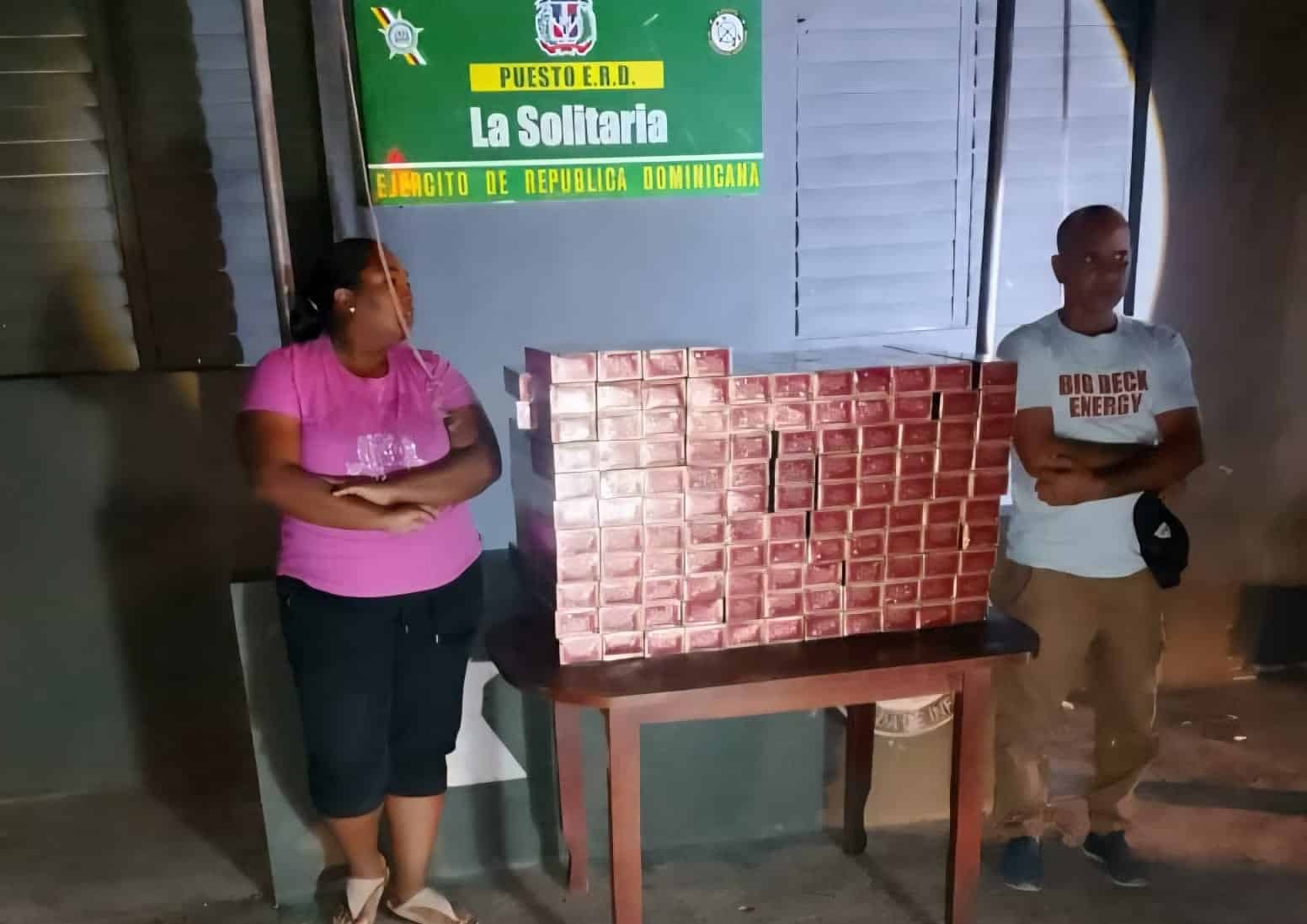
    MONTE CRISTI, Dominican Republic – In a significant border security operation, Dominican military forces successfully intercepted a major cigarette smuggling attempt on Wednesday. The incident occurred at the La Solitaria security checkpoint where authorities apprehended a white Daihatsu Hijet minibus attempting to evade inspection.

    The operation resulted in the detention of driver Modesto Ogando and passenger Johanny Portorreal Guzmán, who were transporting contraband identified as Capital brand cigarettes of foreign origin. Military inspections revealed the vehicle contained over 44,000 illegally smuggled cigarettes concealed within its structure.

    This interception forms part of an intensified campaign by Dominican defense and customs authorities to combat cross-border smuggling networks, particularly in border provinces like Monte Cristi. The region has witnessed multiple sophisticated smuggling attempts, including concealment within vehicle chassis and rural stockpiles, indicating established trafficking operations.

    The confiscated contraband has been transferred to Fortaleza San Fernando under Dominican Army custody while judicial proceedings advance against the suspects. This seizure represents both a tactical victory and strategic demonstration of the government’s commitment to strengthening border integrity.

    Defense officials emphasize that such operations are critical for protecting national revenue streams from tax evasion while disrupting organized crime financing. The consistent pattern of interceptions along the border region highlights ongoing challenges in securing the nation’s frontiers against illicit trade activities that undermine legitimate commerce and economic stability.

  • Landvreugd nieuwe voorzitter Onderhandelingsorgaan Overheid

    Landvreugd nieuwe voorzitter Onderhandelingsorgaan Overheid

    Suriname’s President Jennifer Simons has orchestrated a comprehensive overhaul of the Government Negotiating Body (OO), appointing former minister Delano Landvreugd as its new chairman. This strategic move completely replaces the team originally appointed in 2022, signaling a fresh approach to public sector labor negotiations.

    The OO serves as the government’s primary entity for negotiating both primary and secondary employment conditions with civil service trade unions. Its fundamental mission involves bridging the gap between union demands and the state’s financial and organizational capacities, ensuring balanced outcomes that serve both public servants and national interests.

    In a formal ceremony, President Simons alongside Interior Minister Marinus Bee expressed gratitude to the departing team for their dedicated service while extending best wishes to the incoming members. The leadership transition marks a significant shift in Suriname’s approach to public sector labor relations.

    Landvreugd emphasized to the Communication Service Suriname that the revitalized body will prioritize maintaining the nation’s economic and financial stability throughout negotiation processes. He characterized the new team as a strategic blend of young professionals and seasoned experts possessing extensive knowledge of public administration.

    “With this composition,” Landvreugd stated, “we anticipate that the OO can deliver solid results for the government through combined strengths.” The restructured organization is expected to bring innovative solutions to longstanding challenges in public sector labor negotiations while safeguarding national economic interests.

  • Dominican Congress approves 2026 budget report without salary adjustment

    Dominican Congress approves 2026 budget report without salary adjustment

    SANTO DOMINGO – After five days of intensive deliberations, a bicameral congressional commission has greenlit the 2026 budget framework, notably excluding the historically mandated salary indexing mechanism that adjusts wages for inflation. This controversial decision has ignited immediate backlash from opposition leaders who contend it erodes worker purchasing power and violates established fiscal regulations.

    The commission’s president, Francisco Javier Paulino, verified that the current budget proposal contains a specific clause suspending obligatory discussions on wage adjustments. Vice-Chair Senator Pedro Tineo elaborated that despite considerable public discourse, no political bloc formally presented a motion addressing salary indexing during committee sessions, leading to the report’s approval through majority consensus.

    Opposition legislators mounted swift resistance to the omission. PLD representative Charlie Mariotti declared intentions to contest the decision during upcoming full chamber debates and threatened constitutional litigation against the budget legislation. Mariotti asserted that eliminating salary indexing constitutes both a violation of worker rights and a breach of the nation’s tax code, which has mandated inflation-adjusted wages since 1992.

    Senator Edward Espiritusanto of Fuerza del Pueblo simultaneously criticized the budget’s disproportionate emphasis on operational expenditures, characterizing its investment allocations as fundamentally inadequate. His party has pledged to oppose final ratification.

    The proposed budget, amounting to RD$1.744 trillion (approximately 20.1% of GDP), now advances to both legislative chambers for decisive voting. This exclusion of inflation-based salary adjustments is poised to trigger extensive debates regarding economic equity and statutory compliance, potentially reshaping public confidence in the nation’s fiscal governance structures.

  • NDMD to Conduct Island-Wide CERT Simulation Exercise Friday, 12 December 2025

    NDMD to Conduct Island-Wide CERT Simulation Exercise Friday, 12 December 2025

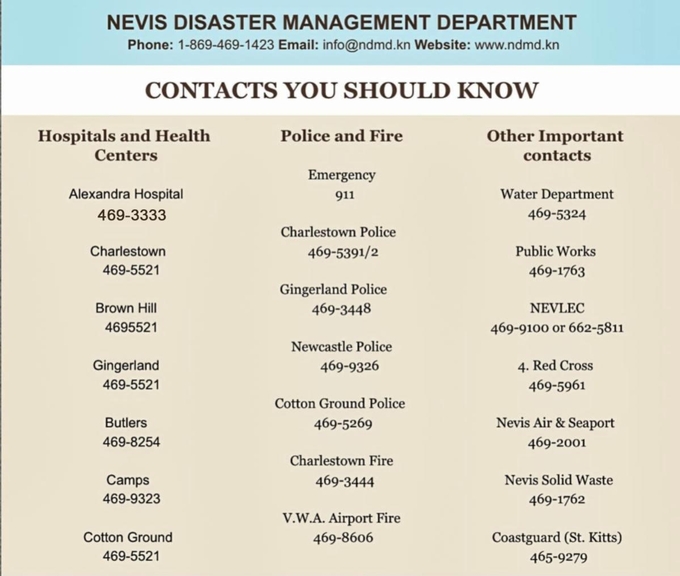
    The Nevis Disaster Management Department (NDMD) is poised to execute a comprehensive emergency simulation exercise across all five parishes this Friday, December 12, 2025. This coordinated effort involves multiple emergency response agencies and trained Community Emergency Response Team (CERT) volunteers.

    The large-scale drill is designed to rigorously evaluate critical disaster management capabilities including emergency coordination protocols, search and rescue operations, medical triage procedures, and inter-agency communication systems. The simulation will create realistic emergency scenarios to assess response effectiveness under controlled conditions.

    Residents throughout Nevis should anticipate observing increased emergency vehicle movement, volunteers simulating injury scenarios, drone operations in airspace, and responders wearing full safety equipment. NDMD officials have emphasized that these activities represent planned training operations rather than actual emergencies, with normal emergency services remaining fully operational throughout the exercise.

    The department has requested public cooperation during the drill, urging citizens to maintain calm, comply with instructions from exercise coordinators managing traffic and crowds, and facilitate unobstructed movement of emergency vehicles. Data collected during this simulation will provide valuable insights for enhancing the island’s disaster preparedness strategies and strengthening overall community resilience.

  • Edesur unveils RD$155 million grid expansion to power Dominican growth

    Edesur unveils RD$155 million grid expansion to power Dominican growth

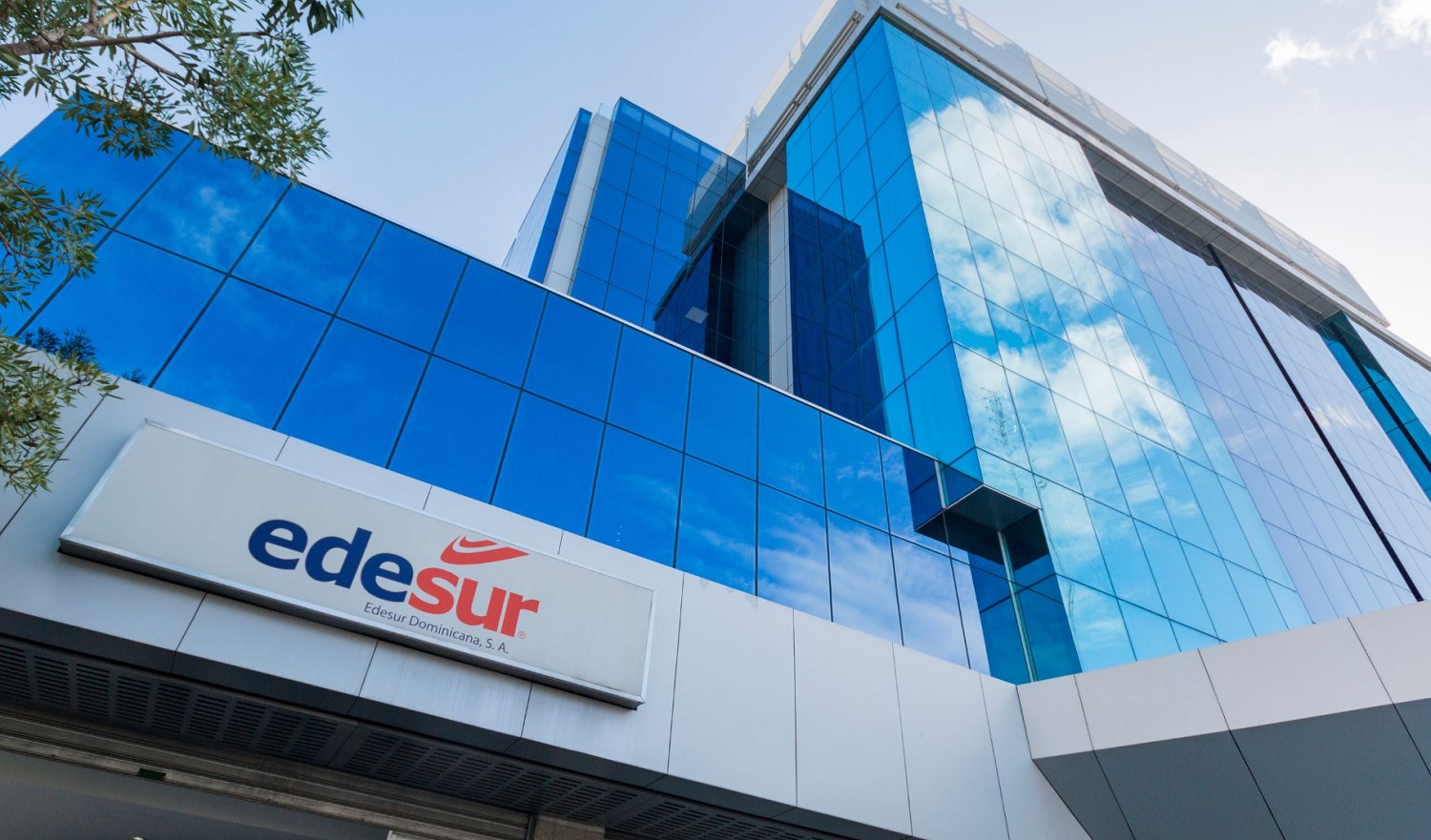
    Santo Domingo’s primary electricity distributor, Edesur Dominicana, has initiated a comprehensive RD$155 million (approximately US$2.6 million) modernization project to significantly enhance its power infrastructure. This strategic investment targets critical upgrades across ten major substations—including Paraíso, UASD 138 kV, Herrera, and Bayona—while deploying new distribution lines to manage escalating electricity consumption during high-demand periods.

    The initiative specifically aims to reduce technical energy losses, which currently range between 10% and 17% in affected circuits. Key engineering enhancements involve installing additional transformers, establishing new medium-voltage transmission lines, and substantially increasing substation capacities. Notable technical improvements include a 10-14 MVA transformer at Herrera’s operational hub and a new 40 MVA Alfa substation designed to redistribute approximately 25.9 MVA of electrical load from overburdened network segments.

    Approximately 400,000 customers across 70 communities in Santo Domingo and the National District will benefit from these infrastructure improvements. The project focuses on enhancing distribution stability and reducing prolonged outage risks, particularly during the upcoming summer months when cooling demand peaks.

    This substantial investment marks a strategic shift from reactive maintenance to proactive infrastructure development. By modernizing its grid architecture, Edesur not only addresses immediate service reliability concerns but also establishes a scalable foundation for future energy demands aligned with the country’s urban expansion and economic growth trajectory.

  • Guyana, Belize to satisfy CARICOM’s refined sugar demand

    Guyana, Belize to satisfy CARICOM’s refined sugar demand

    In a significant development for regional food security and economic integration, two major sugar refineries currently under construction in Guyana and Belize are positioned to fully satisfy the Caribbean Community’s (CARICOM) refined sugar requirements. This strategic initiative, led by U.S.-based SUCRO in partnership with local private sector entities, represents a transformative shift in the Caribbean’s agricultural landscape.

    According to official statements released Tuesday, these facilities will collectively address CARICOM’s annual demand of 200,000 tonnes of refined cane sugar, valued at approximately US$180 million. Finance Minister Dr. Ashni Singh confirmed the projects’ capacity to achieve regional self-sufficiency in refined sugar production upon completion.

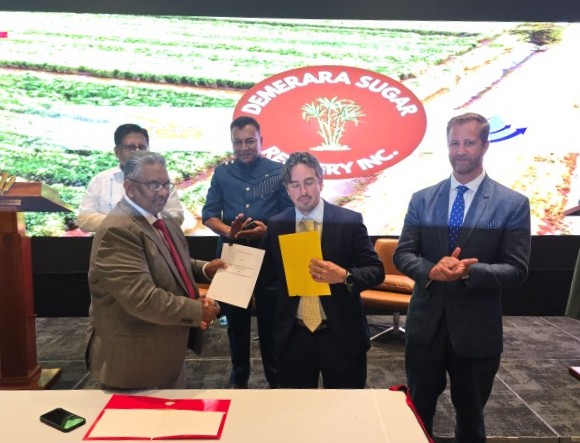
    The Guyana operation, Demerara Sugar Refinery Inc., emerges as a joint venture between SUCRO and local investors, with construction scheduled to commence next year at Wales, West Bank Demerara. This development follows a similar September agreement between SUCRO and Belize’s Santander Sugar Limited, establishing Caribbean Sugar Refinery Limited (CSR).

    Komal Singh, Director of Demerara Sugar Refinery, emphasized the project’s potential to revitalize Guyana’s struggling sugar industry. “We’re collaborating closely with GUYSUCO to enhance their productivity while adding value to surplus sugar that enjoys substantial global market demand,” Singh stated. GUYSUCO CEO Paul Cheong endorsed the partnership as beneficial for the industry’s recovery, noting that 40% of state-owned operations have already been mechanized.

    SUCRO Vice President Oliver Hire outlined the operational strategy, explaining that raw sugar will be transported to refineries before distribution across CARICOM nations through a Trinidad-based hub. “We’re leveraging Guyana’s geographical advantage to ensure comprehensive regional coverage,” Hire remarked.

    The initiative promises substantial economic and environmental benefits. The Guyana refinery will utilize rice husk for electricity generation, significantly reducing dust pollution while creating sustainable energy solutions. Hire further highlighted that the operation will support GUYSUCO’s 8,000 workers and generate profits that directly incentivize production, reducing dependence on volatile global brown sugar markets.

  • SEOB: Inflatie loopt verder op en begroting 2026 blijft kwetsbaar

    SEOB: Inflatie loopt verder op en begroting 2026 blijft kwetsbaar

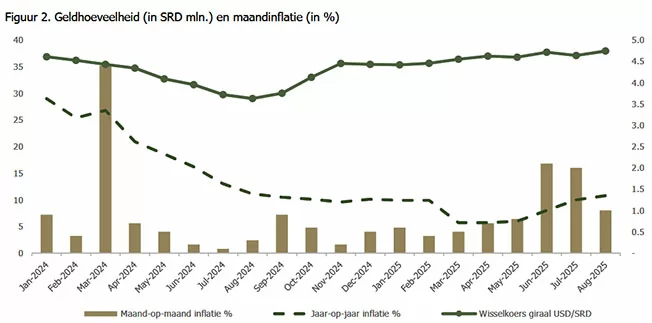
    Suriname’s economic landscape is confronting significant challenges in 2025, according to the latest bulletin from the Suriname Economic Oversight Board (SEOB). The nation’s inflation rate climbed to 10.8% in August, primarily driven by the depreciation of the Surinamese dollar and an expanding money supply. The exchange rate continued its upward trajectory through September, reaching approximately SRD 38.4 per US dollar, further exacerbating market uncertainty and price pressures.

    Despite maintaining robust international reserves of approximately $1.55 billion—covering 7.2 months of imports and well exceeding the three-month benchmark—the SEOB warns that macroeconomic stability remains vulnerable due to escalating government deficits. The 2026 budget reveals a deficit of SRD 6.3 billion, representing about 3.5% of GDP. Should this shortfall be financed domestically, it could further increase money supply, intensifying both inflationary trends and exchange rate pressures.

    The national debt continues to substantially exceed statutory limits, standing at 88.3% of GDP according to international definitions, compared to the legal ceiling of 60%. In response, the SEOB advocates for proactive debt management strategies and divestment from loss-making state enterprises that require substantial subsidies.

    Suriname’s banking sector presents a mixed performance picture. While capital adequacy remains strong at 22.3%, non-performing loans have risen to 6.6%, indicating growing repayment difficulties among borrowers. High lending rates of 14.5% continue to discourage investment activity.

    The oversight board notes that the 2026 budget largely aligns with policy guidelines outlined in the annual address, particularly for ministries of Finance, Economic Affairs, Justice and Police, and Oil, Gas and Environment. However, weaker coherence is observed in sectors including Health, Land Policy, and Public Works.

    Key recommendations from the SEOB include:
    – Implementing stronger fiscal discipline and enhanced budget transparency
    – Establishing a modern investment framework modeled after Argentina’s RIGI system
    – Promoting export growth and economic diversification beyond the mining sector
    – Strengthening risk management protocols within the banking industry
    – Enhancing operational capacity of the Tax Administration, Customs, and ministerial departments
    – Improving coordination between monetary and fiscal policies to stabilize exchange rates

    The board concludes that Suriname’s economic recovery remains fragile, emphasizing that consistent policy implementation and clear communication are essential to maintain market confidence.

  • Senasa scandal: Public Prosecutor brands health scheme betrayal most “cruel and sinister”

    Senasa scandal: Public Prosecutor brands health scheme betrayal most “cruel and sinister”

    SANTO DOMINGO – A massive corruption scandal involving the embezzlement of billions from the Dominican Republic’s national health insurance fund has triggered severe condemnation from top judicial officials, who describe it as an unprecedented assault on public welfare.

    Deputy Prosecutor Wilson Camacho, in a grave public statement, characterized the unfolding Senasa case as “the most sinister and cruel” ever prosecuted by the nation’s Public Prosecutor’s Office. He asserted that the systematic plunder of resources directly targeted a healthcare system vital to over eight million citizens, deliberately stripping medical aid from the most impoverished and vulnerable populations.

    Investigative authorities, under the banner of “Operation Cobra,” currently estimate that approximately RD$15 billion (Dominican pesos) has been misappropriated from the National Health Insurance (Senasa). Law enforcement officials anticipate both the financial scale and the number of suspects to increase significantly as the probe expands. Key figures implicated include former Senasa director Santiago Hazim and at least nine other individuals, now facing a comprehensive slate of charges encompassing corruption, large-scale embezzlement, document forgery, and organized money laundering.

    The high-priority investigation is being spearheaded by the Specialized Prosecutor’s Office for Administrative Corruption (PEPCA), highlighting the state’s focused intent on eradicating deeply embedded institutional fraud.

    Prosecutor Camacho underscored the profound human tragedy underlying the financial figures, stating that this elaborate corrupt network operationally denied life-saving medicines to ailing citizens, effectively sentencing the poor to suffer without care. He conveyed profound indignation that organizations established as guardians of public health were perverted into instruments for orchestrating widespread deceit.

    With preventive detention hearings now in process and additional arrests considered imminent, the judicial proceedings are poised to set a new benchmark for accountability within the nation’s health governance. Legal experts suggest that if convictions are secured, the Senasa scandal could emerge as a definitive watershed moment, catalyzing sweeping anti-corruption reforms and serving as a stark testament to the catastrophic societal impact of breaching public trust.

  • Paramount’s Dominican connection: how a film empire anchored in the Caribbean

    Paramount’s Dominican connection: how a film empire anchored in the Caribbean

    Long before the Dominican Republic became a hotspot for international film productions, a pivotal Hollywood acquisition set the stage for this cinematic transformation. In 1966, industrial magnate Charles Bluhdorn, through his conglomerate Gulf+Western, acquired Paramount Pictures. Bluhdorn, who maintained profound personal and business connections to the Dominican Republic, leveraged his dual passions to create an unexpected bridge between Hollywood and the Caribbean nation.

    Bluhdorn’s vision extended far beyond corporate boardrooms. Under his leadership, Paramount strategically utilized the Dominican Republic’s diverse landscapes as production locations. Most notably, the country served as a stand-in for 1950s Havana in Francis Ford Coppola’s masterpiece, ‘The Godfather Part II’ (1974). This decision proved transformative, demonstrating the island’s cinematic potential to the world while simultaneously injecting vital capital, creating employment opportunities, and transferring technical filmmaking expertise to the local economy.

    This foundational investment has yielded a remarkable long-term legacy. Today, the Dominican Republic stands as a premier destination for international co-productions and major studio shoots, boasting advanced infrastructure and a thriving community of local creative talent. The country’s film industry, catalyzed by Bluhdorn’s early initiatives, now attracts significant global partnerships and continues to expand its footprint on the world cinematic stage.

    The relationship between Paramount and the Dominican Republic transcends mere historical anecdote. It represents a powerful case study in cultural exchange and sustainable economic development driven by the film industry. From hosting iconic scenes of cinematic history to nurturing a homegrown production sector, this unique partnership illustrates how Hollywood’s influence can catalyze industry growth and shape cultural identity across international borders.