博客

  • Syrian Restaurant Owner Shot During Robbery in Pares

    Syrian Restaurant Owner Shot During Robbery in Pares

    A Syrian national, proprietor of Habile Restaurant located on Pares Main Road, is currently receiving medical treatment at Sir Lester Bird Medical Centre after sustaining gunshot wounds during an armed robbery at his establishment on Thursday evening. The violent incident occurred during late-night hours at the business premises in Pares Village, though specific details regarding the circumstances remain limited as law enforcement continues their investigation.

    Emergency response teams promptly arrived at the scene following the attack and transported the wounded restaurateur to medical facilities. Hospital authorities have maintained the victim’s condition confidential, providing no updates regarding the severity of his injuries or his current prognosis. The victim remains under professional medical supervision as he receives necessary treatment.

    Local police have initiated a comprehensive investigation into the armed robbery but have not yet made any arrests in connection with the case. Law enforcement officials have declined to disclose whether monetary assets or other valuables were stolen during the criminal act. The investigation remains active with authorities pursuing multiple leads to identify and apprehend the perpetrators responsible for this violent assault on a local business owner.

  • Antigua and Barbuda Wants More UN Agencies Based In St. John

    Antigua and Barbuda Wants More UN Agencies Based In St. John

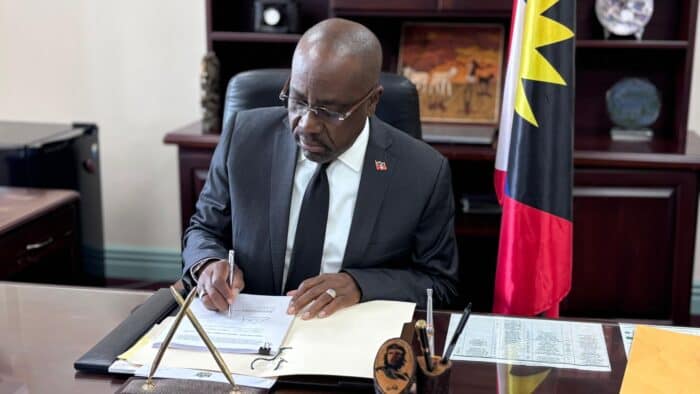
    Foreign Affairs Minister EP Chet Greene has announced Antigua and Barbuda’s strategic initiative to enhance its international diplomatic standing by expanding the United Nations’ institutional footprint within the nation. During Friday’s parliamentary session addressing the 2026 Budget Debate, Minister Greene revealed that the country currently hosts five UN agencies operating from St. John’s, with active efforts underway to attract additional UN entities.

    The established UN agencies include the United Nations Development Programme (UNDP), UNESCO, UN Women, the Pan American Health Organization (PAHO), and the United Nations Resident Coordinator’s Office (UNRCO). Minister Greene characterized this multilateral presence as a transformative development for the twin-island nation, emphasizing how these organizations substantially contribute to both national and regional advancement across critical sectors including sustainable development, public health initiatives, gender equality programs, and educational enhancement.

    Minister Greene has formally directed UN Resident Coordinator Andrea Andrews to actively pursue the establishment of additional UN agencies within Antigua and Barbuda’s jurisdiction. “I have given explicit instructions to the Resident Coordinator to attract more UN agencies to Antigua and Barbuda,” Greene stated during his parliamentary address.

    The minister articulated that broadening the UN’s operational presence would significantly elevate Antigua and Barbuda’s global profile while solidifying its position as a central hub for multilateral diplomacy within the Caribbean region. This strategic move aligns with the government’s broader foreign policy objectives of enhancing international cooperation and strengthening the nation’s role in global governance structures.

  • New Zealand wrap up three-day victory over Windies

    New Zealand wrap up three-day victory over Windies

    New Zealand secured a commanding nine-wicket triumph against the West Indies on Friday’s third day of the second Test at Basin Reserve, propelled by fast bowler Jacob Duffy’s spectacular second-innings performance. The visitors collapsed to a meager 128 runs in their second innings—marking their sixth-lowest Test total against New Zealand—after trailing by 73 runs from the first innings.

    Duffy achieved his second consecutive five-wicket haul in the series, finishing with impressive figures of 5-38, while Michael Rae contributed significantly with 3-45. The West Indies, resuming at 32-2, initially showed resilience through overnight batsmen Brandon King and Kavem Hodge. However, a disastrous run-out of King triggered a catastrophic batting collapse. King was caught short of his crease following a miscommunication with Hodge and an accurate throw from Michael Bracewell.

    The dismissal sparked a rapid unraveling of the West Indies’ lineup. Shai Hope fell five balls later, offering a simple return catch to Rae. Captain Roston Chase continued his poor form, gloving a sharp delivery from Duffy to the wicketkeeper after scoring just two runs. Hodge’s departure for a team-high 35—caught brilliantly by substitute fielder Will Young—effectively ended the contest at 88-6.

    Though Justin Greaves (25) and Tevin Imlach provided brief resistance, Duffy’s post-lunch breakthrough, dismissing Greaves lbw via review, swiftly curtailed their efforts. Imlach fell soon after, caught at second slip off Duffy’s bowling. The tailenders offered little resistance, with Rae clean bowling Jayden Seales and Duffy claiming the final wicket of Ojay Shields.

    Chasing a modest target of 56 runs, New Zealand suffered an early setback with captain Tom Latham falling for nine to Anderson Phillip. However, Devon Conway’s explosive unbeaten 28 off 22 balls (including six boundaries) and Kane Williamson’s composed 16 not out guided the hosts to victory in just ten overs, securing a 1-0 series lead after the first Test ended in a draw.

  • COMMENTARY: Dominica, Land of Such Beauty – The genesis & evolution of a special song

    COMMENTARY: Dominica, Land of Such Beauty – The genesis & evolution of a special song

    In an extraordinary display of cultural longevity, a song composed in 1969 continues to resonate across generations in the Caribbean nation of Dominica. The heartwarming encounter between composer Bob Maguire and two young girls in a Roseau suburb illustrates the enduring power of musical heritage in shaping national identity.

    During a November 2025 visit to Pottersville, Maguire experienced an unexpected moment of recognition when eight-year-old NillyDahlia Ambrose and her three-year-old cousin spontaneously performed his composition ‘Dominica, Land of Such Beauty.’ The children had learned the piece through their Newtown Primary School teacher, Miss Laurant, who incorporated it into Independence Day celebrations for its cultural significance and melodic appeal.

    This incident represents just one manifestation of how Maguire’s creation has evolved into what many Dominicans consider their unofficial national song. The work’s journey began during Maguire’s Peace Corps service in 1969, when he was tasked with developing the island’s first social studies curriculum. Despite his limited initial knowledge of Dominican culture, Maguire immersed himself in the island’s traditions, history, and musical expressions.

    The composition emerged during an evening on his Pottersville veranda, surrounded by the sounds of domino games and community gatherings. Drawing inspiration from Dominica’s stunning natural landscapes, transitional governance toward independence, and vibrant musical scene—including calypso, Jing Ping bands, and La Peau Cabrit drummers—Maguire crafted a five-verse ballad that incorporated both English and Kreyòl patois.

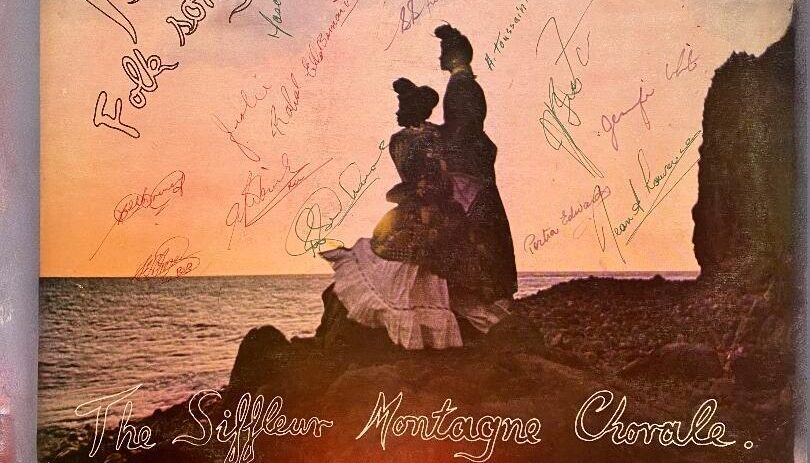
    The song found its perfect interpreters through the Siffleur Montagne Chorale, a folk ensemble led by Jean Lawrence that specialized in preserving and performing traditional Dominican music. Lawrence’s arrangement transformed Maguire’s composition into a choral masterpiece that was subsequently recorded on the 1971 album ‘Island Magic: Folk Songs of Dominica.’ This collection became an instant classic both domestically and regionally, particularly in Kreyòl-speaking territories like St. Lucia.

    The song’s legacy was further cemented through performances at significant cultural events, including the inaugural CARIFESTA regional arts festival in Guyana in 1972. More than half a century after its creation, the work continues to be taught in schools and performed at national celebrations, serving as a timeless bridge between generations and a testament to music’s power in forging national identity.

  • Caribbean unity: Built from below

    Caribbean unity: Built from below

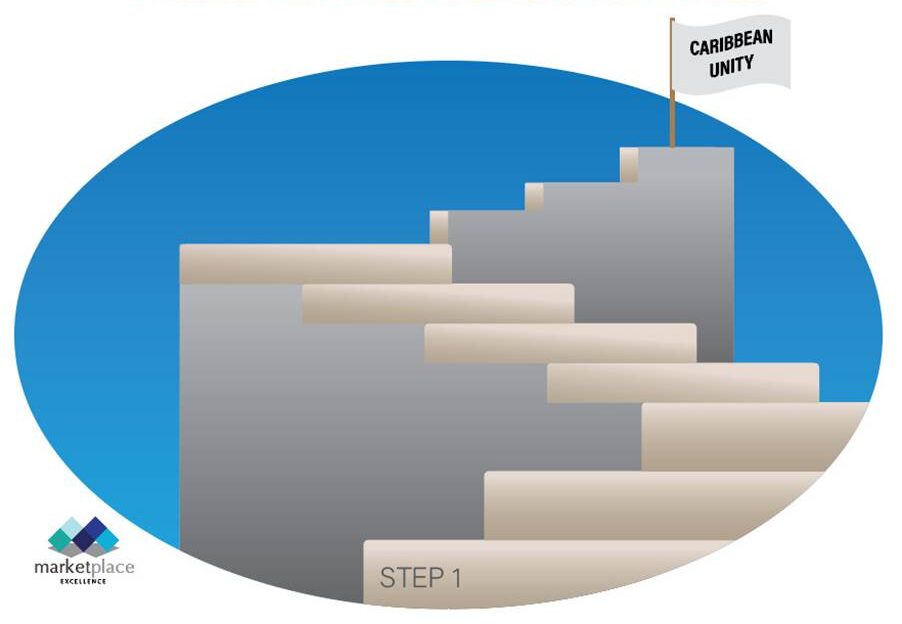
    A profound lesson in construction, nature, and regional history is being applied to the modern pursuit of Caribbean integration. The principle is universal: enduring structures are never built from the top down. Just as a house requires a solid foundation before walls or a roof can be added, any lasting union must be carefully and deliberately assembled, with each new layer dependent on the stability of the one beneath it.

    This philosophy is vividly illustrated in the natural world by the bachac leaf-cutting ant, a species native to the Caribbean. These insects construct immense, resilient underground colonies through a meticulous process of accumulation. Each individual leaf fragment is insignificant, but through continuous feedback and incremental addition, a complex and robust network of galleries and chambers emerges. The nest’s strength is derived not from a single grand act, but from the intelligence gained at each small step.

    History provides a stark warning against ignoring this gradualist approach. The failure of the West Indies Federation serves as a regional case study. This ambitious political union of ten territories collapsed in 1962 precisely because it lacked a tested, stable foundation. As famously noted by Dr. Eric Williams, the withdrawal of a single member, Jamaica, caused the entire edifice to crumble, proving that ‘one from ten leaves zero.’

    In response to these lessons, a new framework called the Sequential Evolutionary Approach (SEA) is being advocated. This strategy posits that true, functional unity is best achieved organically. It would begin with a core partnership between two or three nations, allowing trust and shared systems to be proven and strengthened. Only then would the union expand, inviting additional members one by one, with each step informed by the practical intelligence gained from the previous one.

    The central insight is that systems thrive when they are allowed to evolve naturally rather than being forced into existence. For the Caribbean, the path to the strength found in unity is not through a sudden leap to a fully-formed coalition. It is through a patient, collective climb, building resilience and trust with each secure step forward, ensuring the final structure is built to last.

  • Former House Speaker and Attorney General Sir Gerald Watt Dies at 86

    Former House Speaker and Attorney General Sir Gerald Watt Dies at 86

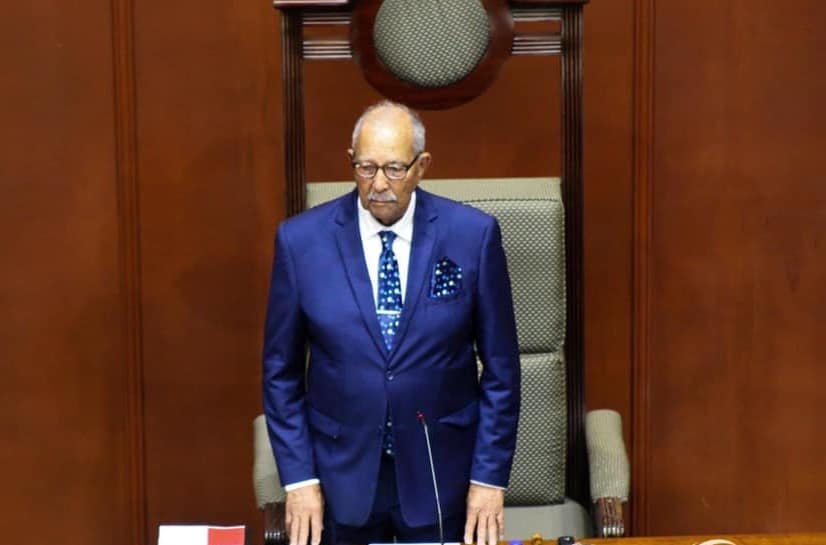
    The Caribbean nation of Antigua and Barbuda is in mourning following the passing of one of its most esteemed legal and political figures, Sir Gerald Watt, KCN, KC. The former Attorney General and Speaker of the House of Representatives died on Saturday at the age of 86 while under medical care.

    Sir Gerald’s illustrious career spanned decades, marked by an unwavering commitment to public service and the legal profession. His significant contributions to the nation’s governance included serving as the Chairman of the Antigua and Barbuda Electoral Commission and President of the Antigua and Barbuda Bar Association. His decade-long tenure as Speaker of the House of Representatives concluded with his resignation earlier this year.

    Widely recognized as a King’s Counsel, Sir Gerald was celebrated as one of the nation’s most distinguished attorneys. He founded and led the prominent law firm Watt, Dorsett, Hewlett Law. His partner, Dr. David Dorsett, paid heartfelt tribute, characterizing the late statesman as ‘one of a kind’—a testament to his unique legacy and profound impact on Antigua and Barbuda’s legal landscape.

    Born on December 19, 1937, Sir Gerald was merely weeks away from celebrating his 87th birthday. His passing leaves a significant void in the nation’s judicial and political spheres, commemorating the end of an era for Antiguan public service.

  • Officiële erkenning inheemse volken als wet ingediend bij DNA

    Officiële erkenning inheemse volken als wet ingediend bij DNA

    Lawmakers from Suriname’s governing coalition have introduced landmark legislation to formally recognize indigenous communities as the nation’s original inhabitants through constitutional amendment. The proposed bill, submitted to the National Assembly, establishes that the presence and profound connection of indigenous peoples with the land constitute an inseparable component of Suriname’s national identity and historical narrative.

    According to the explanatory memorandum accompanying the legislation, this recognition transcends symbolic significance, serving as a constitutional anchor for protecting and promoting indigenous rights. These encompass territorial claims, linguistic preservation, cultural heritage, and self-determination principles that have previously lacked explicit constitutional foundation.

    The initiative addresses a decades-long legal and societal void wherein Suriname’s Constitution contained no specific provisions regarding the status of indigenous populations, despite their historically undisputed presence and role in nation-building. The proposed constitutional modification aligns with international treaties and standards binding to Suriname, including the International Covenant on Civil and Political Rights, the Universal Declaration of Human Rights, the American Convention on Human Rights, and the UN Declaration on the Rights of Indigenous Peoples.

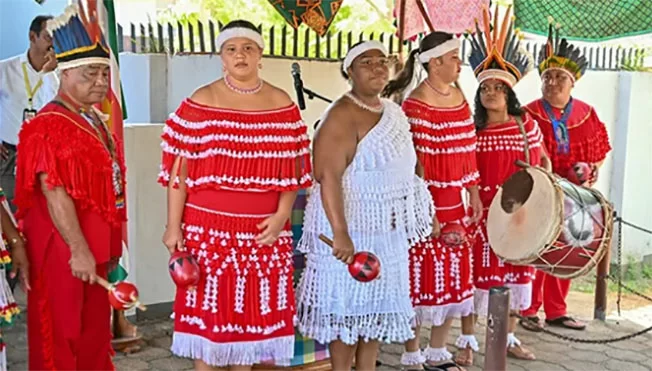
    This constitutional recognition will provide directional guidance for future legislation, policy development, and judicial interpretations across multiple domains: land rights protocols, consultation mechanisms for major development projects, native-language education systems, and cultural preservation frameworks. The government acknowledges that Suriname has been inhabited since time immemorial by Kalina, Lokono, Trio, Wayana, Akurio, and Warao peoples, whose cultural traditions, community structures, and spiritual relationships with natural environments form essential elements of national identity, despite their continued marginalization.

    By embedding this recognition within the Constitution’s preamble, the measure establishes a robust legal foundation for subsequent reforms, including potential legislation governing collective land rights—a longstanding unresolved issue. Legislators characterize the initiative as both a necessary and equitable step that delivers historical validation while harmonizing domestic legal frameworks with international obligations. The proposal further establishes groundwork for a more inclusive society and contributes to national reconciliation within a post-colonial context.

  • Staatsolie brengt petroleumkennis Suriname samen in nieuwe GeoAtlas

    Staatsolie brengt petroleumkennis Suriname samen in nieuwe GeoAtlas

    Suriname’s state-owned energy company Staatsolie has unveiled a comprehensive geological publication that consolidates decades of petroleum research into a single authoritative reference. The GeoAtlas of Suriname represents a monumental achievement in documenting the nation’s oil and gas potential, offering stakeholders an integrated overview of the country’s petroleum geology.

    During a ceremonial presentation on Friday, President Jennifer Simons received the first printed copy of the groundbreaking publication. In a symbolic gesture, the president then presented an edition to Sirahmpersad Eduard ‘Eddie’ Jharap, the founding director and visionary behind Staatsolie, to whom the atlas is dedicated.

    The GeoAtlas stands as a tribute to Jharap’s pioneering work as both geologist and industry architect. Under his leadership from Staatsolie’s establishment on December 13, 1980, until his retirement in 2005, the company evolved from an ambitious concept into an integrated national oil enterprise with international partnerships. His guiding philosophy of ‘Confidence in One’s Own Abilities’ continues to shape the company’s operational ethos.

    This comprehensive geological compilation resulted from the collaborative efforts of multiple generations of earth scientists inspired by Jharap’s vision. The research team synthesized over a century of exploration data to create detailed descriptions of Suriname’s subsurface structures and their development. The publication presents cutting-edge insights into the presence and potential of both onshore and offshore oil and gas reserves.

    According to Staatsolie officials, the GeoAtlas delivers both scientific significance and practical utility. Investors gain access to a clear, integrated perspective on Suriname’s petroleum geology within a single document, while the accessible language makes it suitable for broader audiences interested in the nation’s natural resources.

    The digital version of the GeoAtlas of Suriname is now available free of charge through Staatsolie’s official website, democratizing access to this valuable geological knowledge.

  • Rosebel Community Fund ondersteunt 15 sociale instellingen met kerstgiften

    Rosebel Community Fund ondersteunt 15 sociale instellingen met kerstgiften

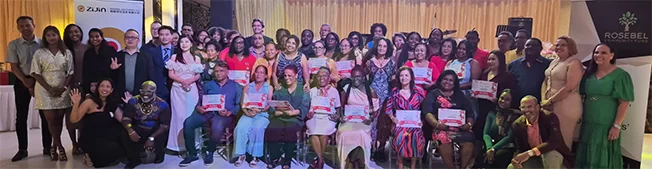
    In a significant holiday philanthropic initiative, the Rosebel Community Fund (RCF), established by Zijin Rosebel Gold Mines, has extended financial support to fifteen social institutions across multiple districts in Suriname. Each organization received a Christmas grant of US$2,500 during a ceremonial event held Thursday at the Ballroom Prince venue.

    RCF Chairman Soetjipto Verkuijl emphasized the fund’s commitment to recognizing organizations operating under challenging circumstances. “These groups perform essential work that deserves both recognition and support,” Verkuijl stated. “Providing encouragement during the holiday season represents our commitment to standing with those who serve our communities.”

    The annual Christmas Event, maintained since 2022, serves multiple purposes: acknowledging social institutions, appreciating their dedication, and offering participants a moment of respite from their demanding responsibilities.

    Beneficiary organizations span various social services, including children’s homes (Johanna, Elim van de Heer, and Sukh-Dhaam), the Mr. Huber Foundation, the National Foundation for the Blind and Visually Impaired, and institutions serving physically and mentally disabled individuals. Additional recipients include the Kennedy Foundation, Mytylschool, Lotjeshuis, Huize Tyltyl, and several girls’ hostels including Balingsoela, Siswa Tama, Wisma Karijawatie, and Soender Singh, along with the Elizabethshof Student House.

    The RCF primarily focuses on community development around the Brokopondo district gold mining operations. Verkuijl revealed that the fund has invested over US$2 million in socio-community projects throughout the past year, spanning healthcare, education, and small business development support.

    Among notable ongoing initiatives is the development of an educational complex with accompanying dormitory facilities, representing the fund’s commitment to sustainable improvement of educational infrastructure in the region.

  • Minister Pokie: Georganiseerd patroon misstanden rond Moni Karta

    Minister Pokie: Georganiseerd patroon misstanden rond Moni Karta

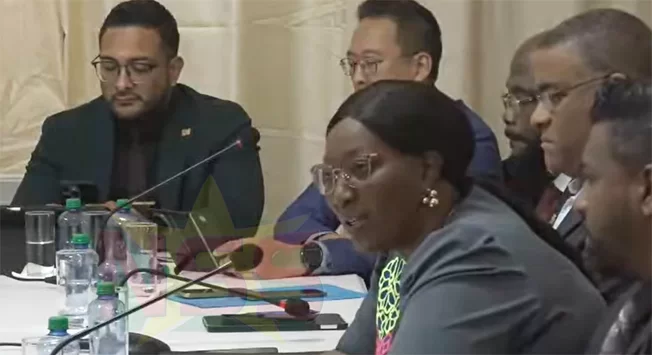
    Suriname’s Minister of Social Affairs and Housing Diana Pokie has revealed extensive and organized corruption within the Moni Karta program, the government’s flagship anti-poverty initiative. During a high-level government briefing, Pokie disclosed that both ministry officials and employees of the Surinamese Postal Savings Bank (SPSB) are implicated in what she described as a deeply rooted pattern of systematic misconduct.

    The minister confirmed that disciplinary measures, including terminations, have already been implemented at the banking institution following the detection of irregularities. While exact numbers of implicated individuals remain undisclosed pending official documentation from SPSB, Pokie emphasized the complexity of the scheme that cannot be resolved within months.

    Multiple investigations are currently underway, with several formal complaints already filed with authorities. In a significant operational shift, employees directly involved with matters under investigation will be placed on mandatory leave starting January 2nd, effectively suspending an entire department and potentially disrupting service continuity.

    Pokie asserted that all necessary evidence exists to prosecute offenders once investigations conclude. The coordinated response involves multiple government agencies working to address the corruption while preventing further harm to vulnerable citizens who depend on the financial assistance program.

    The minister stressed that restoring public trust in the welfare system remains the highest priority, with protection of legitimate beneficiaries guiding all subsequent actions. The government faces the dual challenge of rooting out corruption while maintaining essential services for Suriname’s most economically disadvantaged populations.