博客

  • Daybreak’s @10

    Daybreak’s @10

    The upcoming Daybreak breakfast party at Sabina Park this Sunday, December 21, will serve a dual purpose of celebration and humanitarian aid following Hurricane Melissa’s devastating impact on Jamaica. Event organizers announced a significant portion of proceeds will be directed toward hurricane relief efforts after several team members and community partners experienced direct effects from the natural disaster.

    Jywanza Hall, a director of the Daybreak event, emphasized the gathering’s fundamental community ethos in statements to the Jamaica Observer’s Splash. “Daybreak has always been about community, not just celebration. After the hurricane we knew many of our patrons, partners, and wider Jamaican family were directly affected. Giving back wasn’t an add-on, it was a responsibility,” Hall explained, framing the initiative as an organic response to national need rather than detached philanthropy.

    The event will feature an elite musical lineup including Coppershot Sound with DJ Cutty and Kitt, DJ Franco and Brush1, DJ Jigga, A-Team, Nico Lee and DJ Insaneo. These performers will guide attendees through a sonic journey from nostalgic classics to contemporary anthems, maintaining the event’s signature high-energy yet sophisticated atmosphere.

    This special staging marks Daybreak’s 10th anniversary with elevated production elements including premium culinary experiences, immersive décor, and carefully curated sensory moments. Hall noted the intentional design of “surprise ‘wow’ moments throughout the event” aimed at providing attendees with temporary respite and emotional uplift amid recovery efforts.

    The transformation of this celebration into a relief mechanism represents what Hall describes as “support coming from within the same shared experience”—a demonstration of community solidarity following natural disaster.


  • TITANS COLLIDE!

    TITANS COLLIDE!

    The National Stadium prepares for an epic confrontation as Jamaica College (JC) and Excelsior High face off in the ISSA Manning Cup final, determining the ultimate champion of urban schoolboy football. This championship match represents not just athletic competition but a clash of institutional legacies and aspirations.

    Symbolically, the final embodies a mythological battle between JC’s Griffin—a legendary creature combining lion’s body with eagle’s head and wings—and Excelsior’s conventional eagle. While mythology might favor the hybrid beast, victory will ultimately be decided on the pitch through skill, strategy, and determination.

    Jamaica College, established in 1795, stands as the tournament’s most decorated institution with 28 Manning Cup titles. Their quest for a record-extending 29th championship traces back to the competition’s 1914 inception. Historical records indicate JC’s early dominance, having secured the Sydney Olivier Inter Scholastic Challenge Trophy in 1909, 1910, and 1913 before the Manning Cup era began.

    The current JC squad represents a footballing juggernaut, characterized by exceptional balance and coordination. Key players including Jabarie Howell (considered among schoolboy football’s elite), Donald Stewart (a defensive stalwart following his father’s legacy), and Devonte Allen form what appears an impregnable unit. Despite earlier second-round inconsistencies with draws against Mona High and Eltham High, JC demonstrated overwhelming dominance in knockout stages with decisive victories over Charlie Smith High (4-0), Hydel High (5-0), and St Andrew Technical (4-0).

    Head Coach Raymond ‘Stampy’ Watson emphasizes psychological preparedness: ‘We’re not thinking about the opponents. Let them think about us… We just believe in what we are doing.’ Watson acknowledges their previous 2-1 quarter-final victory against Excelsior holds no significance in the final context: ‘This is now where something is on the line… We know what they can do.’

    Excelsior High seeks to break a 21-year championship drought, pursuing their eighth Manning Cup since first winning in 1953. Under Head Coach Keon Broderick, the Mountain View Avenue institution reaches its first final in 19 years. Their squad features talented players hardened by recent disappointments—including losses in the 2024 Walker Cup and Under-16 finals—creating a determined group craving redemption.

    Offensive prowess centers around prolific scorer Kimarly Scott (19 goals), supported by Terrence Williams, Damarly Williams, and Kivann Salmon. Coach Broderick emphasizes strategic flexibility: ‘It’s for us to be very flexible within the game… We want to capitalize on goalscoring opportunities and limit JC’s chances.’

    The anticipated final promises compelling individual duels and tactical sophistication, representing one of the most eagerly awaited schoolboy football championships in recent memory. While Jamaica College enters as statistical favorite, Excelsior’s hunger and preparation could produce a historic upset when the whistle blows at the National Stadium.

  • The police fear of mosquitoes

    The police fear of mosquitoes

    A scathing public letter has condemned Trinidad and Tobago Police Commissioner Allister Guevarro for what the author terms the ‘dengue defense’—the official explanation that a critical operation against a $171 million narcotics empire was aborted over officers’ fears of mosquito-borne illness. The editorial, penned by Hugo Maynard and published in Newsday, lambasts this justification as a new low in law enforcement logic that has made the nation an international laughingstock.

    The piece contrasts the TTPS’s (Trinidad and Tobago Police Service) retreat with the resolve of global agencies like the US DEA, UK’s Scotland Yard, and Colombian anti-narcotics units, which would not abandon missions due to insects or humidity. The author argues this incident reveals a profound institutional failure: the force is equipped with military-grade technology and resources yet refuses to engage in the ‘gritty, itchy, uncomfortable work of actual policing.’

    Maynard’s core criticism focuses on the strategic failure of seizing drugs while allowing the criminal architects to escape. This approach, he asserts, acts merely as a ‘tax collector for the underworld,’ writing off inventory while leaving the destructive infrastructure of crime intact. The terrifying question posed is one of preparedness: if mosquitoes deter a stakeout, how will officers respond when bullets fly?

    The letter concludes with a direct address to Commissioner Guevarro, stating his primary duty is to protect the population from the violent drug trade, not officers from dengue. As long as this ‘dengue doctrine’ remains policy, the author warns, major traffickers will operate with impunity, exacerbating the murders, home invasions, and robberies plaguing the country.

  • Taking Christmas to the West

    Taking Christmas to the West

    In an unprecedented move demonstrating national solidarity, the Jamaican Government has officially reallocated funds from cancelled ministerial Christmas celebrations to support communities in Western Jamaica devastated by Hurricane Melissa. The strategic decision emerged from a governmental consensus that all citizens deserve festive cheer despite recent hardships.

    Minister of Labour and Social Security Pearnel Charles Jr. articulated this policy shift during a Jamaica Observer Press Club meeting last Thursday. Government ministries have received mandates to moderate their internal holiday activities and redirect both financial resources and organizational efforts toward community-based Christmas engagements. This initiative establishes formal partnerships between government ministries and specific affected communities, creating structured schedules for targeted outreach.

    The policy originated from an earlier directive canceling all traditional Christmas parties across ministries, state agencies, and departments following the Category 5 hurricane that struck the island on October 28. While small-scale, internal morale-building activities remain permissible, the prohibition on external venue rentals ensures maximum fund diversion to relief efforts.

    Senator Dr. Dana Morris Dixon, Minister of Education, Skills, Youth and Information, previously encouraged ministries to conduct outreach activities targeting staff members residing in affected regions. This has now evolved into a comprehensive governmental strategy extending support beyond government employees to the general population.

    Minister Charles Jr. emphasized the humanitarian aspect of the initiative, noting that many children, parents, and elderly residents face unimaginable loss during what should be a celebratory season. The approach transcends material assistance, focusing on emotional support through personal engagement and meaningful conversations. The government is actively collaborating with religious institutions and welcoming participation from private entities and civilian volunteers.

    The minister highlighted critical needs at the Petersfield shelter in Westmoreland—currently the nation’s largest shelter—which houses 42 children and 10 newborns. He specifically encouraged mothers to connect with those caring for infants in shelter conditions, framing the initiative as a national call to action that values time and emotional support as highly as financial contributions.

  • Cautious optimism greets US shift on marijuana

    Cautious optimism greets US shift on marijuana

    Jamaica has responded with measured optimism to U.S. President Donald Trump’s executive order initiating the reclassification of marijuana from Schedule I to Schedule III under U.S. federal drug laws. While acknowledging this move stops short of full federal legalization, Jamaican officials described it as a substantial step toward broader liberalization at the federal level.

    Minister of State in the Ministry of Industry, Investment and Commerce, Delano Seiveright, issued a statement following the Oval Office signing ceremony, noting that the ultimate implications for banking access, cross-border investment, research collaboration, and market engagement would depend on implementation specifics and international compliance responses.

    President Trump announced the executive action surrounded by medical professionals, stating, “Today I’m pleased to announce that I will be signing an executive order to reschedule marijuana from a Schedule I to a Schedule III controlled substance, with legitimate medical uses.” He emphasized receiving overwhelming public support for the action, particularly from patients experiencing severe pain and debilitating conditions.

    The order directs the Attorney General to complete the rule-making process expediently. This shift moves marijuana from the DEA’s most restrictive category—which includes substances like heroin and LSD deemed to have “no currently accepted medical use and a high potential for abuse”—to Schedule III, which recognizes medical utility and includes drugs such as ketamine and codeine-containing medications.

    While the rescheduling represents the most significant drug policy reform in decades, it maintains federal prohibition of recreational use. However, it potentially facilitates expanded medical research, reduces tax burdens for state-licensed dispensaries by allowing tax deductions previously barred under Schedule I, and reflects the evolving landscape where 24 states permit recreational use and approximately 40 allow medical use.

    Minister Seiveright highlighted that the change would substantially ease barriers to medical and scientific research while expanding clinical study opportunities. Jamaica’s Cannabis Licensing Authority will carefully monitor developments, engage stakeholders, and assess knock-on effects in the international cannabis market.

  • 150 children benefit from health fair

    150 children benefit from health fair

    In a significant humanitarian initiative, approximately 150 young students at Laura’s Basic School in Duhaney Park, St Andrew, received comprehensive medical attention during a health fair organized this Tuesday. The event represented a collaborative effort between the Indian High Commission in Jamaica, the Kiwanis Club of West St Andrew, and the healthcare organization Global Health Care.

    Dr. Nagamalleswara Rao Chandolu, head of Global Health Care and the recent recipient of the Order of Distinction for his medical contributions in Jamaica, revealed the health fair was conceived by India’s High Commissioner, Mayank Joshi. The initiative provided a wide array of services, including sugar tests, haemoglobin analyses, urine tests, and crucial de-worming medication, which Dr. Chandolu personally sponsored. He emphasized the critical importance of de-worming, explaining that parasitic infections are a common precursor to anaemia, weakened immune systems, and recurring illnesses like coughs and colds in children.

    Ten Indian pharmaceutical companies contributed medications to the cause. The fair also featured optometric services provided by a Cuban optometrist through Global Health Care, resulting in free frames and lenses for approximately 20 individuals diagnosed with vision problems. Free dental check-ups and necessary medications were also administered.

    This event marked the 50th health fair hosted by Global Health in Jamaica since 2020. Sherrell Wilson, president-elect of the Kiwanis Club of West St Andrew, expressed profound gratitude for the partnership, aligning perfectly with the Kiwanis International mission—celebrating its 110th anniversary this year—particularly its ‘Young Children Priority One’ arm focused on early childhood health and educational assessment.

    The success of the day brought immense satisfaction to Laura’s Basic School Vice-Principal Michelle Dixon, who described it as a beacon of hope that lifted spirits still dampened by the recent Hurricane Melissa. She praised the demonstration of care from corporate Jamaica and international partners for the early childhood sector.

    High Commissioner Joshi stated the fair was part of a joint outreach initiative under the theme ‘Serving the Unserved; Reaching the Unreached; Touching the Untouched.’ He highlighted that such initiatives reinforce the deep-rooted historical, cultural, and people-centric relations between India and Jamaica, grounded in shared democratic values and Commonwealth ties.

  • Black River begins to breath again

    Black River begins to breath again

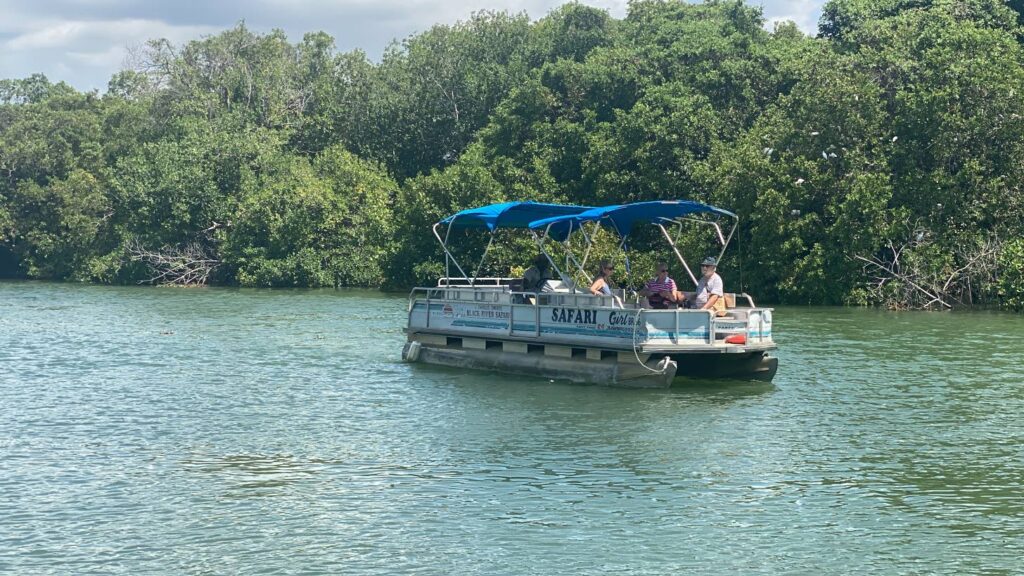
    BLACK RIVER, St Elizabeth — In a significant milestone for hurricane recovery efforts, Black River Safari Tours prepares to reopen today despite sustaining extensive damage from Hurricane Melissa’s devastating passage in late October. The Category 5 storm brought catastrophic winds, torrential rains, and unprecedented storm surges that crippled infrastructure throughout this heritage-rich Jamaican town.

    Managing Director Joseph Ryan Swaby, a second-generation safari operator, confirmed the partial reopening while acknowledging the substantial challenges that remain. His operation symbolizes the determined spirit of local businesses fighting to restore normalcy after the natural disaster. “The rebirth of Black River will mainly be driven by the reopening of businesses,” Swaby emphasized, noting that meaningful employment remains crucial for community recovery beyond external aid.

    The safari will operate at reduced capacity with only two of its six tour boats currently operational after extensive cleanup and rebuilding efforts. Significant flooding damage has temporarily closed the crocodile nursery facility, though wildlife monitoring indicates displaced crocodiles are gradually returning to their natural habitats along the Black River and its tributaries.

    Staffing reductions reflect the scaled-back operations, with employment dropping from 13 to approximately 6-8 employees, many of whom suffered personal property damage during the storm. Remarkably, no staff members sustained injuries despite several complete home losses.

    Meanwhile, on the opposite riverbank, St Elizabeth Safari Crocodile Tour remains closed indefinitely after losing six of seven boats to the hurricane’s 13-foot storm surge. Proprietor Dr. Donovan Bennett described the challenging recovery process, with damaged vessels scattered throughout wetlands requiring specialized equipment for retrieval. Bennett estimates replacement costs for engines alone could reach $20 million Jamaican dollars.

    Both operators acknowledge January as a potential timeline for fuller restoration, with Bennett advocating for government-led redevelopment that reimagines Black River’s infrastructure with improved resilience and visitor amenities. “In every disaster there is an opportunity,” Bennett noted, expressing hope that reconstruction would create “a town that is more attractive than it has been, that will be friendlier to visitors.”

  • Rush to get fishers back to the sea

    Rush to get fishers back to the sea

    The Jamaican government has initiated a comprehensive rehabilitation strategy for its hurricane-battered fisheries sector, combining immediate emergency aid with strategic long-term investments. Agriculture and Fisheries Minister Floyd Green unveiled the multi-faceted approach during a Jamaica Observer Press Club meeting, detailing both current relief distributions and future reconstruction plans.

    Immediate response efforts have already delivered critical supplies to fishing communities across multiple parishes including Portland, St Mary, and St Thomas. The government has allocated approximately $30 million Jamaican dollars worth of wiring materials to repair damaged fishing equipment alongside providing generators to fuel stations, enabling fishers to resume operations more quickly.

    The catastrophic impact of Hurricane Melissa, which struck the island on October 28, has been quantified through preliminary assessments by the National Fisheries Authority (NFA). CEO Dr. Gavin Bellamy reported billions of dollars in losses across fishing communities, aquaculture enterprises, and essential infrastructure. Particularly devastating was the damage in southwestern regions, where some communities experienced complete destruction of fishing vessels alongside severe losses of engines, gear storage facilities, and processing sites.

    Minister Green emphasized the priority of redistributing boats and engines, particularly through a youth-focused program targeting fishers under 35 years old. The existing boat and engine program, which began before the hurricane, will continue with approximately 14 additional boats scheduled for distribution alongside engine replacement grants.

    The recovery strategy extends beyond equipment replacement to include significant infrastructure rebuilding. Green announced plans for beach reconstruction and the development of enhanced regional hubs, citing Black River in St. Elizabeth as one location where destroyed fuel stations and offices will be rebuilt to higher standards.

    Collaboration with the Ministry of Environment and Climate Change is underway to direct loss and damage funds specifically toward fisheries recovery. The minister highlighted the importance of maintaining strategic reserves of emergency supplies for future crises, noting that rapid response capability is crucial for the fishing and farming sectors where operational delays directly translate to financial losses.

    The government’s approach prioritizes building back with improved resilience rather than implementing temporary fixes, aiming to create a more robust foundation for Jamaica’s fishing communities whose livelihoods were severely disrupted by the natural disaster.

  • Legal light at last!

    Legal light at last!

    In a landmark development for urban infrastructure, the Riverton Meadows community in St Andrew Western witnessed a transformative conclusion to its electricity regularization project on Thursday. The Jamaica Public Service Company (JPS), in collaboration with the Jamaica Social Investment Fund (JSIF), successfully integrated over 200 households into the formal power grid through the Riverton Meadows Electricity Access Project.

    The $150-million initiative targeted rampant electricity theft that had plagued the community for decades, causing significant revenue losses and safety hazards. JPS reported experiencing approximately 90% revenue loss in the area prior to intervention, according to Marilyn McDonald, manager of JPS’s Community Renewal Department.

    Resident Rushelle Dubidad expressed profound relief, describing how illegal connections previously destroyed appliances and created financial burdens. “We lost televisions, fridges, you name it. As soon as somebody boosted the power, everything in your house would chip out,” she recounted, noting residents previously paid approximately $30,000 for unauthorized repairs.

    The comprehensive project involved substantial infrastructure upgrades including pole installations, transformer enhancements, and service line improvements totaling $58 million. An additional $37 million was allocated for social intervention programs, while the JPS Foundation contributed $55 million, bringing total investment to $153 million.

    Beyond technical improvements, the initiative included community education on electricity safety, energy conservation, and payment practices. Through partnership with JSIF and the Government of Jamaica, new prepaid customers received over $4,000 monthly electricity credits for six months, totaling $4.8 million in support.

    Anthony Hylton, Member of Parliament for St Andrew Western, acknowledged the extensive lobbying required to demonstrate the community’s need. Pia Baker, JPS senior vice-president of customer and commercial services, emphasized that electricity access represents “opportunity” – enabling children to study safely, preserving food and medicines, and supporting legitimate small businesses.

    The closing ceremony at Riverton Meadows Baptist Church, which included a Christmas treat for children, marked a new chapter of legal connectivity and economic integration for the community.

  • On the right PATH

    On the right PATH

    In a significant response to Hurricane Melissa’s devastation, the Jamaican Government has reaffirmed its commitment to maintaining uninterrupted social welfare payments while deploying enhanced financial support for the nation’s most vulnerable populations. The Programme of Advancement Through Health and Education (PATH), Jamaica’s flagship social protection initiative, continues its December disbursements without disruption despite widespread infrastructure damage from the October 28 storm.

    The Ministry of Labour and Social Security, in partnership with UNICEF, is deploying an additional J$187.2 million in targeted assistance ahead of the Christmas season. This emergency allocation includes J$151 million dedicated to 40,000 children enrolled in PATH and substantial support for 1,500 children with disabilities—providing critical relief to families grappling with the hurricane’s aftermath.

    Portfolio Minister Pearnel Charles Jr., addressing the Jamaica Observer Press Club on Thursday, emphasized the deliberate measures implemented to ensure continuity of payments. “Melissa did not determine its path based on your vulnerability. Everybody gets hit,” Charles Jr. noted, explaining that the ministry recognized how the disaster amplified existing challenges for PATH beneficiaries.

    The government has implemented innovative solutions to overcome access barriers created by damaged infrastructure. Where traditional payment collection points became inaccessible, alternative locations were established through post offices and remittance agencies. The ministry simultaneously commenced December payments while reissuing uncollected cheques from October and November.

    Audrey Deer-Williams, Chief Technical Director for the Social Security Division, confirmed temporary waivers of program compliance requirements. Beneficiaries unable to meet school attendance or other conditions due to hurricane-related disruptions will still receive full entitlements—a compassionate adjustment acknowledging extraordinary circumstances.

    Beyond financial assistance, the ministry’s comprehensive response includes material support and psychosocial care. Social workers have distributed emergency packages, mattresses, and other essentials to pensioners, persons with disabilities, and PATH beneficiaries who suffered property or livelihood losses. Minister Charles Jr. highlighted the psychological dimension of recovery, explaining that assessments intentionally accommodate trauma processing: “People need us not just to provide them with a package, but as a sort of conduit for them to release and ventilate a lot of the trauma.”

    The multilayered approach demonstrates Jamaica’s commitment to both immediate relief and sustainable recovery, ensuring that social protection systems remain resilient during natural disasters while addressing both physical and emotional needs of affected communities.