博客

  • Chaplain sets out to break cycle of crime

    Chaplain sets out to break cycle of crime

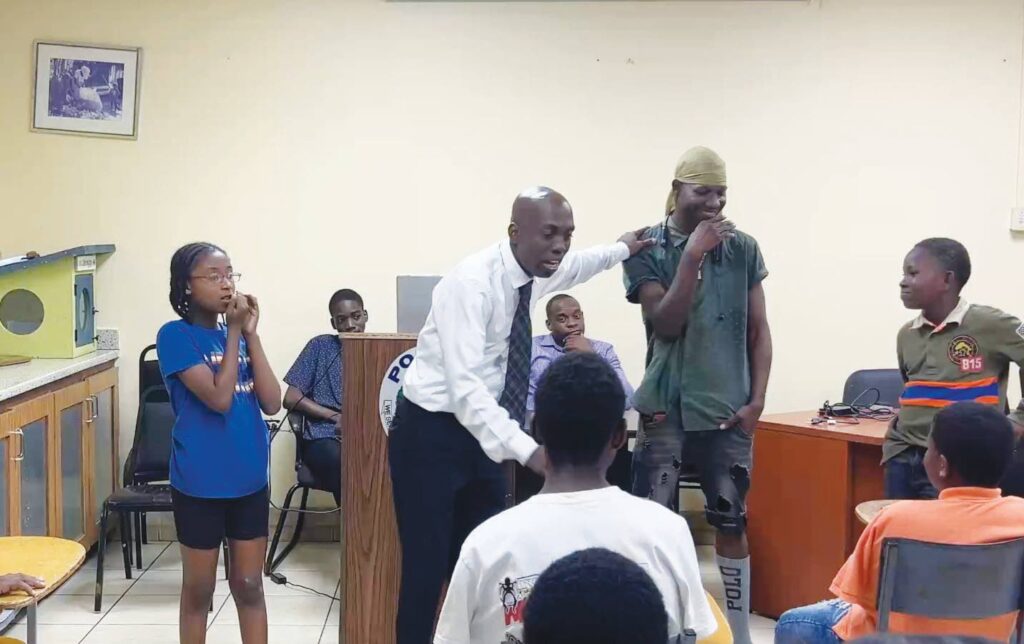
    A Jamaican correctional chaplain, drawing from his profound experiences with inmate remorse, has launched a groundbreaking initiative to address the alarming surge in student violence following the resumption of in-person learning post-pandemic. Dwayne Nelson, 44, an ordained minister, educator, and justice of the peace, founded ‘Generational Impact’ to serve as a human barrier between at-risk youth and the prison system. The program operates under the mantra ‘Stop, Think, Then Act,’ aiming to fundamentally reconstruct maladaptive thought patterns among students.

    Nelson’s unique perspective stems from his role conducting life skills sessions within the Department of Correctional Services, where he has witnessed firsthand the devastating consequences of criminal choices. This experience fueled his determination to break the cycle of crime by addressing its root causes in educational settings, particularly in low-performing schools where family dysfunction and negative influences often prevail.

    The initiative employs a comprehensive behavior modification program targeting eight known criminogenic needs—factors that increase crime risk—including substance abuse, antisocial attitudes, and association with criminal peers. Nelson has assembled a resource team of professionals and incorporates powerful testimonies from ex-inmates to demonstrate the harsh realities of prison life.

    In an innovative approach, the program has integrated chess as a strategic mental exercise to enhance emotional regulation, improve academic performance, and foster cognitive, emotional, and social development. Research indicates chess effectively builds self-confidence and character—qualities often lacking in misbehaving children.

    Currently self-funded and operating in five Corporate Area schools, Nelson balances this mission with his ministry and family responsibilities, utilizing leave time and weekends to deliver his message. The ultimate vision involves institutionalizing the program within Jamaica’s educational curriculum from primary to secondary levels, creating a foundational platform for developing positive thinkers with healthy self-esteem and self-control.

    The initiative’s core messaging inspires youth to recognize their inherent worth and latent greatness, encouraging them to reject negative influences and criminal trajectories. Nelson’s firsthand knowledge of inmate regret provides compelling authenticity to his warning: continued destructive choices lead to places where freedom is lost and remorse prevails.


  • Steering Trinidad and Tobago to subservience?

    Steering Trinidad and Tobago to subservience?

    Prime Minister Kamla Persad-Bissessar is facing mounting criticism over her administration’s foreign policy approach toward the United States, with concerns emerging about potential compromises to national sovereignty. During a private Christmas Supper event at the Diplomatic Centre on December 18, the Prime Minister made controversial statements suggesting that the United States represents the sole nation capable of protecting and defending Trinidad and Tobago.

    The remarks, delivered not in Parliament but at a partisan gathering, have raised questions about transparency and diplomatic strategy. The Prime Minister’s comments included explicit warnings to supporters regarding the maintenance of their US visas, implying that approximately 350,000 Trinidadian nationals with American visas could face revocation without careful navigation of bilateral relations.

    This diplomatic positioning follows earlier controversies surrounding the installation of military-grade radar at Crown Point in Tobago, which was initially misrepresented as road construction work. Subsequent claims that this equipment facilitated a major drug seizure worth $171 million were subsequently disputed by the manufacturer, Northrop Grumman.

    When confronted with investigative reporting from the New York Times, Persad-Bissessar dismissed the publication as a ‘foreign newspaper’ and discounted their verification from the manufacturer as anonymous sourcing. The Prime Minister has similarly distanced herself from regional issues, including the blockade of oil tankers involving Venezuela, characterizing such matters as exclusive concerns of the Trump administration.

    Analysts note that while respectful acknowledgment of US military presence is pragmatic for Caribbean nations, the apparent wholesale dismissal of cross-border relations with Venezuela represents a significant departure from decades of regional cooperation within Caricom. The administration’s cheering of aggressive counter-narcotics operations resulting in numerous fatalities has further alarmed diplomatic observers.

    The current approach marks a dramatic shift from Trinidad and Tobago’s historical foreign policy, which successfully maintained defense cooperation with the United States while preserving relationships with Caricom partners and other trading nations including China. Critics argue that the nation should engage with global partners as a sovereign equal rather than subordinate to American hegemony.

  • Karate journey kick-starts after 50-year break for 72-year-old Chaguanas man

    Karate journey kick-starts after 50-year break for 72-year-old Chaguanas man

    In an extraordinary demonstration of lifelong dedication and resilience, 72-year-old Clifford Mendez from Chaguanas has triumphantly returned to martial arts after a five-decade hiatus, recently achieving his brown belt in karate with aspirations toward black belt mastery.

    The Shotokan Karate do International Federation (SKIF TT) formally presented Mendez with his brown belt and certification during a December 20 ceremony at La Joya Complex in St Joseph. This prestigious Japanese-affiliated organization recognized Mendez’s remarkable journey that originated in his teenage years, paused abruptly at age 22, and found its courageous resurgence exactly fifty years later.

    “This achievement represents half a century of contemplation,” Mendez revealed. “Not a single year passed without me considering a return to practice. With advancing age often comes regret for unrealized ambitions – this was mine, and I’m actualizing it now.”

    Mendez’s recommitment to karate began just over four months ago following an extensive search for suitable training accommodations. After encountering logistical challenges with other organizations, he persistently sought instructors willing to conduct home sessions that would restore his technical proficiency. His pursuit culminated with Sensei Ian Sammy, chief instructor and president of SKIF TT, who arranged specialized home training to rebuild Mendez’s capabilities.

    The initial training proved profoundly challenging. “I contemplated immediate withdrawal,” Mendez admitted. “The intensity exceeded expectations, and the trainer maintained rigorous standards. I specifically requested no age-related concessions – I desired genuine achievement, not ceremonial recognition.”

    Following four months of intensive home preparation, Mendez transitioned to the La Joya dojo, where he discovered both technical competence and communal belonging. “I experienced immediate comfort and acceptance within the dojo community,” he noted. “I recognized that my skills matched established standards and that I belonged among practicing members.”

    His rapid progression qualified him for December 17’s brown belt examination, which he successfully passed, subsequently joining training sessions alongside black belt practitioners.

    Beyond the dojo, Mendez’s life reflects consistent service and intellectual pursuit. A father of ten children, he studied print technology at Canada’s George Brown College, served on the John Donaldson College advisory board (precursor to the University of Trinidad and Tobago), and formerly acted as Public Relations Officer for the Caribbean Students Association.

    Martial arts tradition permeates his family lineage, with his sister Claudia Mendez having earned recognition as a brown belt “kata queen” through another karate organization. While pandemic considerations temporarily delayed Mendez’s return to training, his 2024 commitment manifested through three to four weekly sessions persevering through physical discomfort.

    “Sensei Sammy consistently advises measured progression at my own pace,” Mendez explained. “His philosophical guidance provides essential motivation. With institutional support and SKIF’s familial environment, black belt achievement becomes an attainable reality.”

    Training alongside significantly younger practitioners presents psychological challenges, but Mendez emphasizes mental fortitude: “One must transcend psychological barriers through direct engagement. Simply act.” He further stresses karate’s non-aggressive philosophy, recalling how his youthful training enabled conflict avoidance rather than confrontation.

    SKIF TT’s inclusive programming accommodates practitioners from ages 4 to 94, with Sammy identifying Mendez among their most senior members. A 62-year-old student currently prepares for black belt testing next year, challenging misconceptions about age limitations in martial arts.

    “Mendez’s determination is exceptional for his age cohort,” Sammy observed. “While karate historically developed for adults, contemporary programming adapts training methodologies across ages and capabilities.”

    The organization emphasizes self-protection, discipline, and respect alongside physical conditioning. Regarding Mendez’s ambitions, Sammy confirmed: “His black belt goal is achievable. We accommodate age-related limitations through progressive training. Two additional brown belt levels precede black belt qualification, potentially attainable within one year.”

    Advanced rank progression requires sustained commitment, with first-degree black belts necessitating two additional years’ training for second-degree examination. Mendez’s presence inspires fellow students as a mentoring figure demonstrating that lifelong passions remain achievable regardless of temporal interruption.

  • Sky’s the limit for Suri – 11-year-old juggles academics, sport and volunteer work

    Sky’s the limit for Suri – 11-year-old juggles academics, sport and volunteer work

    In an extraordinary display of versatility and determination, 11-year-old Suri Gosine from Princes Town is redefining what young scholars can achieve. The TML Libertville Primary School student embodies Olympic champion Jackie Joyner-Kersee’s philosophy that “Age is no barrier. It’s a limitation you put on your mind” through her remarkable balance of academic rigor, athletic prowess, artistic expression, and community engagement.

    Gosine maintains an impressive portfolio of activities that would overwhelm most adults, yet she approaches her commitments with strategic prioritization and genuine enjoyment. Her weekly schedule includes gymnastics, swimming, steelpan performance, and participation in seven distinct clubs spanning from 4H and Cub Scouts to Red Cross, scrabble, choir, environmental, and literature organizations. Remarkably, she is simultaneously undertaking aviation classes at Professional Airline Training Solutions.

    Her trophy case reflects this diverse involvement, with national first-place victories in WASA’s River Speak programme, Schools’ Oratory Spoken Word competitions, and the TTUTA Look-Alike Competition. She has accumulated additional medals and trophies in poetry, storytelling, athletics, and environmental writing.

    Despite these extracurricular accomplishments, Gosine maintains sharp focus on her academic goals, particularly her upcoming Secondary Entrance Assessment (SEA) examination. “I feel confident and excited about my preparations for SEA exams as I believe my teachers would have given me a solid foundation,” she stated.

    The young scholar demonstrates particular aptitude in Mathematics while acknowledging creative writing as her most challenging subject. She overcomes this hurdle through imaginative expansion and vocabulary development, noting that reading extensively helps build creativity.

    Her passion for performance arts emerged through her school’s environmental club. “I enjoy both poetry and spoken word because I become someone other than Suri,” Gosine explained. “I take on a different personality and can add my own touch to bring life to my role.” She particularly admires storyteller Paul Keens-Douglas for his humorous depictions of West Indian life.

    Gosine’s swimming journey began at age three as therapy to overcome aquaphobia, which subsequently enhanced her physical strength for gymnastics. She acknowledges frog kicks remain her most challenging technique.

    The prodigy credits her success to a robust support system including entrepreneur parents who serve as “biggest cheerleaders and fans,” along with teachers and family members who encourage balanced rest periods. She cherishes the wisdom of her late grandfather, former schoolteacher Freddie Sukur Ali: “Sacrifice is only for a time.”

    When mental fatigue sets in, Gosine rejuvenates by watching inspirational Dhar Mann videos. Looking toward her future, she aspires to become a neurologist, fascinated by the brain’s disproportionate control over the human body.

    She draws inspiration from cousin Vishesh Ramoutar, a 21-year-old US Navy Seal whose dedication demonstrates what passion and commitment can achieve. For 2026, her primary objectives include SEA success and confident pursuit of new opportunities, including preparation for a national 4H competition.

    Gosine’s advice to peers emphasizes pursuing genuine interests with fair play and camaraderie. “It helps stimulate the brain, forges friendships, builds great discipline and creates a space where you can thrive,” she affirmed. For those facing exam anxiety, she counsels: “Your only competition is yourself. Work towards being better than you were yesterday.” Her ultimate wisdom reflects her lived experience: “The only limit is what you set for yourself.”

  • Jerusha Osborne captures Miss Brash & Sassy title

    Jerusha Osborne captures Miss Brash & Sassy title

    The Union Claxton Bay Multipurpose Hall witnessed a remarkable celebration of youth and talent on December 13 as seven-year-old Jerusha Osborne claimed the coveted Little Miss Claxton Bay title. The event, hosted by First Impression Brash and Sassy, marked the triumphant return of the competition after an eight-year hiatus caused by pandemic restrictions and economic challenges.

    Jerusha’s captivating performance throughout multiple segments secured her victory. Her interpretation of Martha from biblical scriptures, a futuristic paper-made ensemble in the special fashion segment, and her heartfelt delivery of ‘The Hat I Got for Christmas is Too Big’ demonstrated exceptional versatility. Her final parade in an elegant green and red evening gown cemented her status as the winner.

    The competition, operating under the theme ‘Jesus Is King, Women of the Bible,’ required participants to embody notable biblical figures including Mary of Nazareth, Pharaoh’s daughter, Esther, Hannah, and Martha. According to coordinator Norma Bramble-Joseph, this criterion was designed to foster spiritual guidance and humility among the young competitors.

    Heaven Rouse emerged as another standout performer, earning multiple accolades including best delegate, best evening gown, and best hairstyle. Her mother, La Donna Rouse, received recognition as the best designer.

    The event featured substantial rewards for participants, with over $6,000 in prizes, Christmas hampers, crowns, sashes, and sponsored goodies across various categories. Zaharah Williams received best talent honors for her sterling rendition of ‘O’ Holy Night,’ while Zendaya Pierre was named Miss Photogenic, most improved, and people’s choice delegate.

    Jerusha, a standard one pupil at San Fernando Girls’ Anglican School, represented the vibrant future of community events in Claxton Bay, signaling a successful revival of cultural traditions after years of interruption.

  • PM hits Caricom as ‘unreliable partner’ – Thin mask of unity

    PM hits Caricom as ‘unreliable partner’ – Thin mask of unity

    In an extraordinary diplomatic rupture, Trinidad and Tobago’s Prime Minister Kamla Persad-Bissessar has launched a severe condemnation of the Caribbean Community (CARICOM), labeling the regional bloc as an “unreliable partner” and accusing it of operating in a “dysfunctional and self-destructive manner.” The remarks represent the strongest criticism to date from a sitting leader of one of CARICOM’s founding members.

    The Prime Minister’s statement came in direct response to CARICOM’s Bureau of Heads of Government criticizing recent U.S. immigration restrictions imposed on several Caribbean nations. Rather than joining regional counterparts in their concerns, Persad-Bissessar positioned Trinidad and Tobago separately from the collective stance, asserting that “CARICOM will not determine our future; only the citizens of our country will choose our path.”

    Persad-Bissessar detailed what she characterized as systemic failures within the organization, citing “poor management, lax accountability, factional divisions, destabilizing policies, private conflicts between regional leaders and political parties, and the inappropriate meddling in the domestic politics of member states.” She called for CARICOM to address internal “rot” with “transparency and honesty,” warning that without reform, the organization faces potential “implosion” due to “many widening fissures.”

    The context for this extraordinary rebuke stems from recent U.S. policy changes that imposed entry restrictions on nationals from 15 countries, including Caribbean nations Haiti, Antigua and Barbuda, and Dominica. The U.S. government stated these measures were necessary due to insufficient information to assess immigration risks and to advance national security objectives.

    While CARICOM’s Bureau expressed concern about the lack of prior consultation and potential adverse effects on legitimate travel and economic well-being, Persad-Bissessar distanced Trinidad and Tobago from this position. She instead defended the United States as “our greatest ally” and criticized CARICOM for what she characterized as supporting Venezuela’s “narco-government headed by a dictator” over maintaining relations with the U.S.

    The Prime Minister’s stance has drawn sharp criticism domestically and regionally. Former Foreign and CARICOM Affairs Minister Amery Browne condemned what he called an “anti-CARICOM rant” that was “erratic, inflammatory, full of baseless rhetoric.” Browne accused the Prime Minister of deliberately undermining fundamental CARICOM principles and attempting to “divide and destroy” the regional organization.

    Antigua and Barbuda Prime Minister Gaston Browne, while not naming Persad-Bissessar directly, challenged the assertions that Caribbean leaders had been “cursing the US administration,” calling for factual evidence to support such claims. Despite acknowledging challenges within CARICOM, Browne reaffirmed his commitment to regional integration.

    The escalating diplomatic tension highlights significant fractures within the Caribbean community at a time when coordinated regional responses to external policy changes are increasingly important for small island developing states.

  • JPS says it moved to prevent rate hike being six times higher

    JPS says it moved to prevent rate hike being six times higher

    Jamaica’s sole electricity distributor, Jamaica Public Service Company (JPS), finds itself at the center of a brewing storm as it defends a recently approved 7% rate increase amidst public outcry. The Office of Utilities Regulation (OUR) sanctioned the hike, which will impact December bills covering November consumption, but JPS contends this represents a fraction of what could have been implemented without their proposed cost-spreading measures.

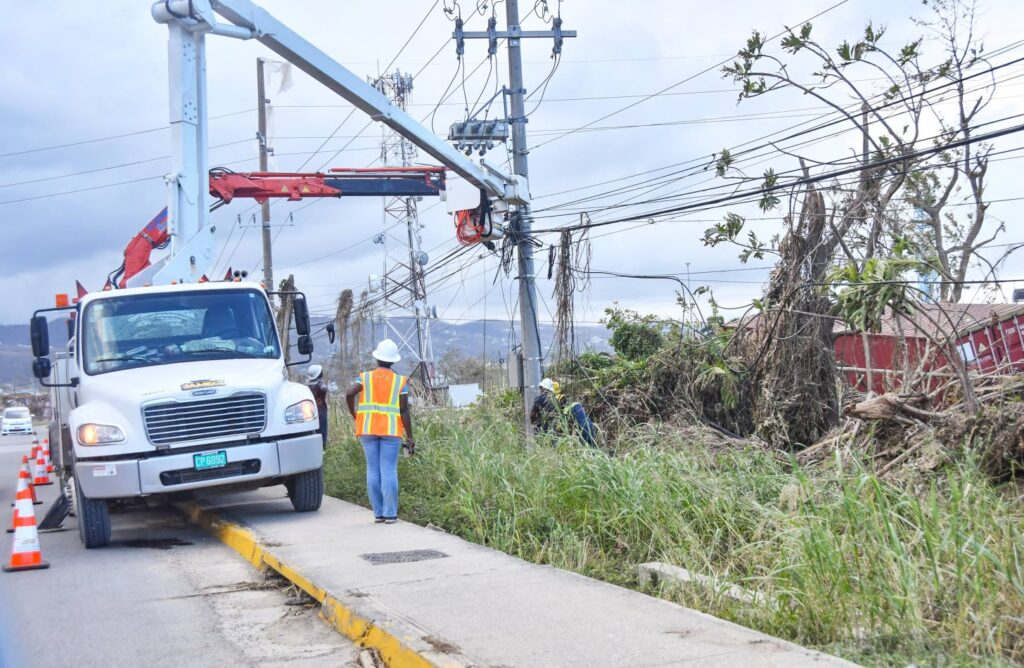
    The root cause traces back to Hurricane Melissa’s October 28 landfall, which severely disrupted Jamaica’s energy infrastructure. The tempest damaged supply lines for lower-cost fuels, forcing JPS to temporarily utilize more expensive alternatives while simultaneously reducing renewable energy availability. Compounding the problem, overall electricity sales plummeted by approximately 30% due to widespread power outages, creating a perfect storm of financial pressures.

    JPS explained the economic mechanics in simple terms: “Think of the power plant as a bus rented for $10,000. This fixed cost gets divided among all passengers. With fewer riders after the hurricane, each remaining customer bears a larger portion of the burden.” This analogy illustrates how fixed costs for fuel suppliers and Independent Power Producers (IPPs) must be distributed across diminished consumption, inevitably driving rates upward.

    The company emphasized that fuel and generation charges are strictly regulated to reflect actual costs, with payments flowing directly to suppliers including Petrojam and Excelerate Energy rather than being retained by JPS. Without the approved deferral strategy, customers would have faced an immediate 50% increase rather than the implemented 7% rise, which will see remaining costs distributed over subsequent months.

    Energy Minister Daryl Vaz acknowledged the difficult situation while criticizing JPS’s operational framework. He characterized the current licence agreement as fundamentally flawed, stating it fails to protect consumer interests and leaves regulators with insufficient intervention authority. Minister Vaz insisted that licence reform must become a priority, noting that while the current increase is smaller than July’s 16% hike following Hurricane Beryl, the pattern of storm-related rate spikes demands systemic change.

    JPS revealed it has proposed a fuel rate stabilization mechanism to the OUR that would mitigate such dramatic bill fluctuations, creating more predictable pricing while honoring obligations to suppliers. However, the company notes it cannot implement such measures without formal regulatory approval, despite receiving informal signals of agreement.

  • Funeral grants available for Melissa victims

    Funeral grants available for Melissa victims

    The Jamaican government has activated its social protection mechanisms to assist families grappling with funeral expenses for relatives lost to Hurricane Melissa. Minister of Labour and Social Security Pearnel Charles Jr has confirmed that affected citizens can apply for financial support through the ministry’s longstanding Rehabilitation Programme.

    While the program operates year-round to assist vulnerable populations, Minister Charles Jr acknowledged a significant surge in applications directly linked to the hurricane’s devastation. The ministry has consequently secured supplementary funding to meet the anticipated increase in demand, as the standard annual allocation for rehabilitation grants has already been depleted.

    The funeral grant scheme, established by a Cabinet decision in 1972, provides an average payout of $80,000 JMD per approved case. Eligibility and the level of support are determined through a detailed assessment process. The criteria differ based on the deceased’s status as a contributor to the National Insurance Scheme (NIS). For NIS contributors, the grant amount is influenced by their specific contribution category and history. However, Minister Charles Jr emphasized that non-contributors are not automatically disqualified and may still receive assistance following a compassionate evaluation of their circumstances.

    To apply, individuals must visit a parish office of the ministry or access forms online via www.mlss.gov.jm. The application requires substantial documentation, including an official proof of death (such as a death certificate or burial order), the undertaker’s invoice, and proof of any pension payments received after the date of death, which must be returned. For claims based on a spouse’s contributions, a marriage certificate or proof of a common-law relationship is also mandatory.

    The program’s scale is considerable; official data from a 2024 presentation revealed that in 2023 alone, the initiative distributed 3,729 grants valued at over $207.76 million JMD, underscoring its critical role in Jamaica’s social safety net.

  • Digging deep

    Digging deep

    In the aftermath of Hurricane Melissa’s catastrophic passage through western Jamaica, funeral home operators are demonstrating extraordinary compassion despite facing severe financial strain and operational challenges. These businesses, themselves victims of the Category 5 storm that claimed 45 lives in late October, are digging deep into diminished profit margins to ensure grieving families can provide dignified burials for their loved ones.

    Earl Scott of Scott and Sons Funeral Home in Westmoreland exemplifies this spirit of generosity. Despite sustaining significant roof damage from Melissa’s 185 mph winds, his establishment has offered discounted funeral packages to struggling families. In one remarkable case, Scott covered the entire burial cost for a man who lost his only surviving relative to the hurricane and pledged assistance in rebuilding the survivor’s destroyed home.

    The challenges facing funeral directors are substantial. Paul Patmore of Patmore’s Funeral Home in Trelawny disclosed accumulating over $600,000 in expenses since the hurricane, primarily due to running generators 24/7 in the absence of grid electricity. His daily fuel costs have tripled to $12,000, creating what he describes as ‘a big leak’ in finances. Despite this, Patmore has slashed all funeral package prices by half until January 2026 and established credit plans for affected families.

    In St. James, Melvin Honeyghan of Honeyghan’s Funeral Home reported receiving requests for storage extensions for approximately 50 bodies from families unable to afford immediate burials. He has willingly accommodated these requests while also reducing service costs, acknowledging that some families may not be able to bury their loved ones until April next year, despite receiving 50% discounts.

    Calvin Lyn, president of the Jamaica Association of Certified Embalmers and Funeral Directors, has commended these efforts and urged industry colleagues in affected areas to provide support where possible. He specifically highlighted the extreme difficulties facing Westmoreland residents and suggested funeral directors assess individual situations to determine appropriate assistance.

    The widespread devastation has prompted practical considerations about future preparedness. Patmore is now strongly advocating for solar energy adoption across the funeral industry, noting that Jamaica’s abundant sunshine represents a more sustainable alternative to costly generator dependence during infrastructure failures.

    These funeral directors emphasize that their actions stem from a profound sense of national solidarity rather than business calculation. As Honeyghan stated, ‘At the end of the day, all of us are Jamaicans… We have to take care of one another.’ Their commitment to compassionate service continues even as many struggle with damaged facilities and employees who have lost their own homes to the hurricane.

  • Trinidad and Tobago U-17s end Jewels of the Caribbean without a win

    Trinidad and Tobago U-17s end Jewels of the Caribbean without a win

    Trinidad and Tobago’s under-17 women’s football team concluded their DecembHER – Jewels of the Caribbean tournament campaign with a disappointing 1-0 defeat against the Secondary Schools Football League (SSFL) Future Stars XI on December 19 at Ato Boldon Stadium in Couva. The loss marked their third consecutive setback in the week-long invitational competition.

    The decisive moment arrived in the 74th minute when Pleasantville Secondary’s Mikaiah Guerero capitalized on a poorly defended set piece, slotting home from close range after Kyra Yee Loy’s dangerous left-side corner delivery. The national squad’s defensive vulnerability proved costly despite several opportunities to equalize.

    Earlier in the tournament, the TT U-17 squad suffered a crushing 4-0 defeat against US-based Indy Premier SC on December 15 at Hasely Crawford Stadium, followed by a narrow 2-1 loss to Jamaica two days later at Sangre Grande Recreation Ground. The team’s performance throughout the competition yielded zero points, placing them at the bottom of their group.

    Meanwhile, Indy Premier SC demonstrated remarkable dominance, concluding the group stage with a spectacular 5-0 victory over Jamaica in the Couva double-header. Five different players—Kori Brown, Olivia Jones, Isabella Moreno, Skylar Mueller, and Karringtyn Wilder—found the net, bringing Indy’s goal tally to 17 without conceding any throughout the tournament. This impressive performance secured their place in the December 21 final against Jamaica.

    The SSFL Future Stars XI, despite previous heavy losses to Jamaica (5-2) and Indy Premier (8-0), managed to finish third in the group with three points. Their victory against the national team provided some consolation after challenging earlier matches.

    Coach Ayana Russell’s squad now faces urgent reassessment as they prepare for the Concacaf qualifying round for the 2026 FIFA Under-17 Women’s World Cup, scheduled to begin January 24. Trinidad and Tobago has been drawn in Group F alongside Barbados, Curacao, El Salvador, and Guadeloupe, with the group winner advancing automatically to the final round. The two best second-place teams from the six qualifying groups will also progress to the next stage.