博客

  • Celebrating Our Farmers on National Farmers Day

    Celebrating Our Farmers on National Farmers Day

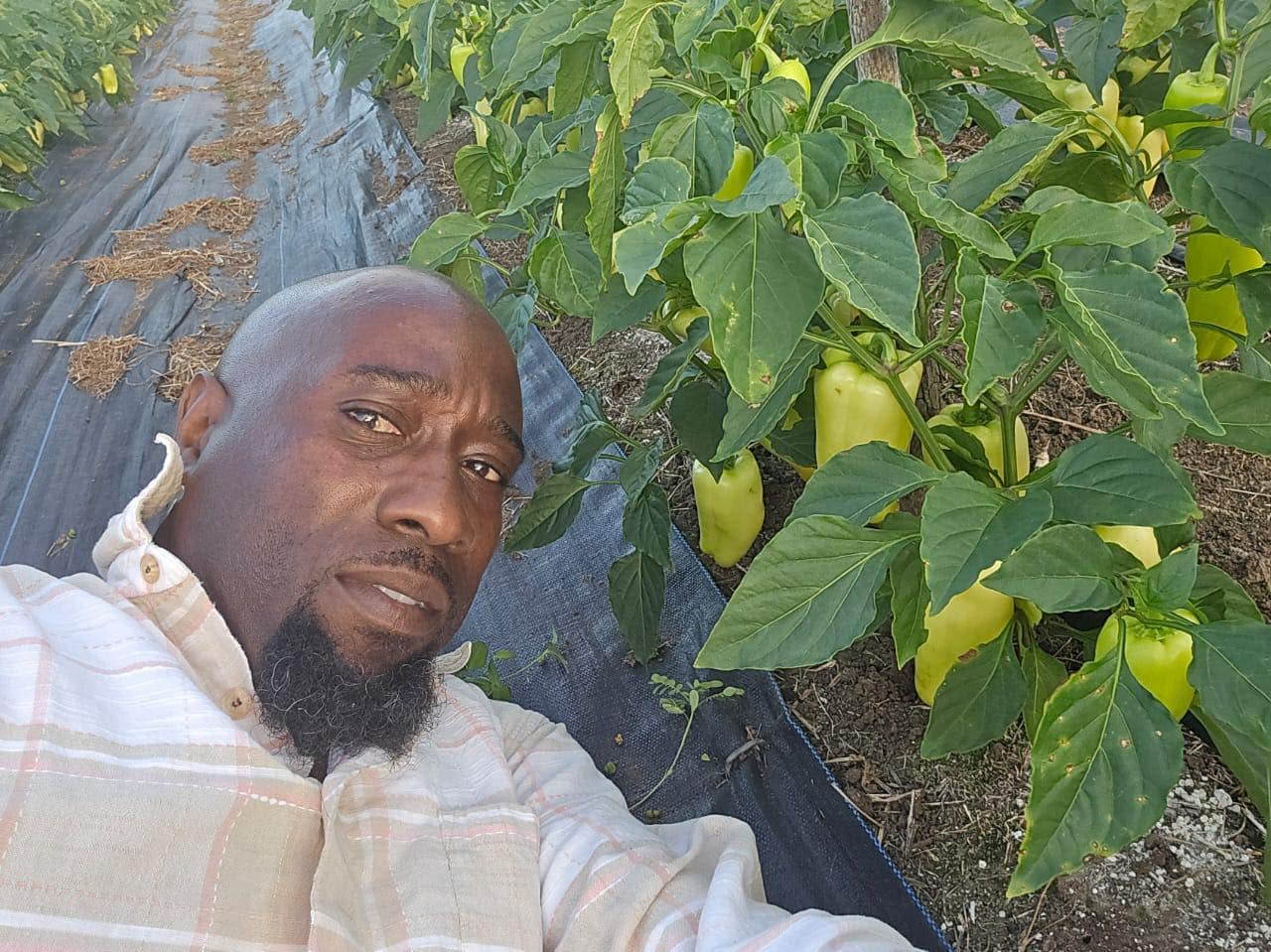
    Antigua and Barbuda commemorated National Farmers Day on December 23rd with profound appreciation for the agricultural workforce that sustains the nation’s food security and economic stability. The Ministry of Agriculture, Lands, Fisheries and The Blue Economy led tributes to farmers and agro-processors, recognizing their dual role as economic contributors and environmental stewards.

    The agricultural sector demonstrates remarkable resilience despite confronting multiple challenges including climatic volatility, praedial larceny, financial constraints, and market fluctuations. Producers have increasingly adopted technological solutions and sustainable methodologies to enhance productivity while maintaining environmental balance.

    The COVID-19 pandemic served as a critical stress test for local food systems, during which domestic producers maintained consistent supply chains despite global disruptions. This performance highlighted the strategic importance of localized food production and the sector’s adaptive capabilities.

    Government initiatives now focus on synergistic development combining technological innovation with traditional knowledge. Investment priorities include training programs, infrastructure modernization, and sustainable practices that promote biodiversity while increasing yields.

    Consumer participation remains vital to agricultural viability. Public support through conscious purchasing of local produce directly contributes to sectoral growth and national food sovereignty. Each agricultural purchase represents an investment in community resilience and economic circulation.

    The ministry’s acknowledgment extended beyond economic contributions, recognizing farmers as innovators, environmental custodians, and foundational pillars of national identity. Their continuous efforts ensure both present nourishment and future sustainability for Antigua and Barbuda.

  • Werkgroep moet koers uitzetten voor grondenrechten en decentralisatiebeleid

    Werkgroep moet koers uitzetten voor grondenrechten en decentralisatiebeleid

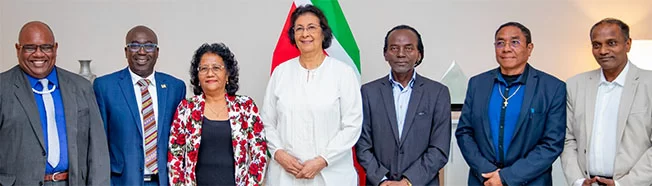
    President Jennifer Simons of Suriname has established a specialized six-member working group to tackle the nation’s complex and long-standing challenges regarding land rights and decentralization policies. The presidential initiative aims to develop sustainable solutions through comprehensive inventory assessments and policy proposals developed in close consultation with indigenous and tribal communities.

    The task force, serving as direct operational arm of the head of state, includes presidential advisor on land rights and decentralization Edgar Dikan, along with members Armand Jurel, Theresia Cirino, Mike Nerkust, Martin Misiedjan, and Sarwan Ramai. Their mandate encompasses systematic mapping of legal, administrative, and societal aspects relevant to land rights issues, while considering existing documentation including the FPIC document from the Association of Indigenous Village Chiefs in Suriname.

    Presidential spokesperson Roberto Lindveld emphasized the administration’s dual awareness of both the necessity for resolution and the complexity requiring careful, time-consuming processes. Monthly progress meetings will be held with the president to meticulously monitor the initiative’s advancement.

    The working group’s methodology will focus on three core pillars: comprehensive inventory, thorough evaluation, and extensive consultation with all relevant stakeholders. This approach aims to build consensus and ownership for future policy decisions. Dikan stressed that collaboration with affected communities remains fundamental to the mission’s success, noting that only through joint efforts can tangible progress be achieved and visible results demonstrated in the coming years.

  • Government launches Preventive Cell Phone Inspection Center to combat stolen devices

    Government launches Preventive Cell Phone Inspection Center to combat stolen devices

    Santo Domingo has become the site of a groundbreaking public safety initiative with the inauguration of the Preventive Cell Phone Inspection Center. This multi-agency collaboration brings together the Ministry of the Interior and Police, National Police, INDOTEL, and the Attorney General’s Office in a concerted effort to disrupt the illicit mobile device market.

    The innovative facility provides Dominican citizens with a crucial service: the ability to authenticate the legal status of any mobile phone prior to purchase or transaction completion. This preventive mechanism addresses growing concerns about devices circulating through informal markets that may carry hidden legal entanglements, including stolen status, network blocking, or association with criminal activities.

    Strategically positioned on the second level of Plaza Central along 27 de Febrero Avenue, the center represents a significant component of the government’s comprehensive strategy to enhance public security measures. By targeting the underground economy surrounding mobile devices, authorities aim to simultaneously protect consumers from unintended legal consequences and reduce incentive for phone theft through market disruption.

    Officials are actively encouraging public utilization of this verification service, emphasizing that a simple pre-purchase check can shield buyers from potential technical and legal complications while contributing to broader crime reduction efforts across the nation.

  • Venezuela stapelt olievoorraden op in eigen wateren door Amerikaanse blokkade

    Venezuela stapelt olievoorraden op in eigen wateren door Amerikaanse blokkade

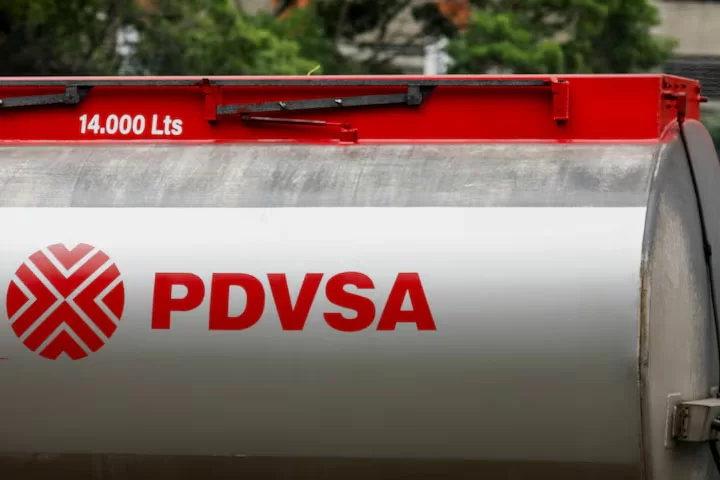
    Venezuela’s state-owned oil company PDVSA has initiated an emergency strategy of using tankers as floating storage units in its territorial waters following a series of crude oil seizures by United States authorities. According to internal company documents and shipping data, this unprecedented measure comes as direct response to US Coast Guard interceptions of Venezuelan oil shipments in the Caribbean Sea.

    This month witnessed the seizure of two fully-loaded crude carriers, the Skipper and Centuries, with a third empty vessel currently being monitored approaching Venezuelan waters. These developments are part of Washington’s intensified enforcement actions against what it terms a ‘shadow fleet’ transporting sanctioned oil. Former President Donald Trump’s administration had announced a comprehensive blockade against all vessels falling under US sanctions, creating significant deterrence among shipowners and leaving more than a dozen oil tankers stranded within Venezuelan maritime boundaries.

    With PDVSA maintaining daily production of approximately 1.1 million barrels, storage facilities on land are rapidly approaching capacity—particularly at the Jose terminal which handles heavy crude from the Orinoco belt, Venezuela’s primary oil-producing region. To avoid production cuts, the company began emergency transfer operations over the weekend, pumping surplus oil onto vessels now serving as temporary storage solutions.

    Interestingly, Chevron—PDVSA’s joint venture partner—has maintained uninterrupted export operations despite the escalating situation. The US oil major continues to produce roughly one quarter of Orinoco basin output, while PDVSA handles the remaining three quarters, primarily destined for Chinese markets. China has emerged as the destination for approximately 80% of Venezuela’s oil exports this year.

    Storage levels at the Jose terminal had previously declined from a peak of 14 million barrels earlier this year to between 9-11 million barrels since September. Current figures show inventories have rebounded to 12.6 million barrels, bringing Venezuela’s total oil stockpile to 22 million barrels—the highest level since August.

    PDVSA faces mounting challenges in convincing customers to continue accepting deliveries after this weekend’s additional US seizures. The floating storage solution has become necessary while the company negotiates price reductions and contract modifications with reluctant buyers, some of whom are considering returning shipments to Venezuelan terminals.

    Last week, PDVSA contemplated declaring force majeure for certain exports but ultimately decided against the measure to avoid disrupting ongoing client negotiations. The legal concept of force majeure would allow the seller to be released from delivery obligations under extraordinary circumstances.

    In a televised address, President Nicolás Maduro emphasized that oil exports to Chevron would continue ‘rain, thunder or lightning’ despite pressure from Washington. ‘We are serious and honest people who honor our contracts,’ Maduro declared. Chevron confirmed its Venezuelan operations continue unchanged and in compliance with applicable laws and regulations.

    In a significant legislative development, Venezuela’s Maduro-controlled parliament passed a law imposing prison sentences of up to 20 years for anyone promoting or financing piracy or blockades of oil exports, signaling Caracas’s determination to counter US sanctions through legal means.

  • Bush Hall residents speak out after fatal stabbing

    Bush Hall residents speak out after fatal stabbing

    The tranquil neighborhood of Bush Hall, St Michael has been thrust into mourning following the brutal killing of 50-year-old Timothy Trotman, an incident locals are condemning as a completely avoidable tragedy. This fatal stabbing represents the island nation’s 46th homicide this year, occurring merely days after another similar attack in the nearby Station Hill area.

    According to police reports, the victim was seated near a roadside when he was confronted by several young men. What began as a verbal altercation rapidly escalated into physical violence, culminating in Trotman sustaining a fatal stab wound. Emergency services pronounced him deceased at the scene, sending shockwaves through the close-knit community.

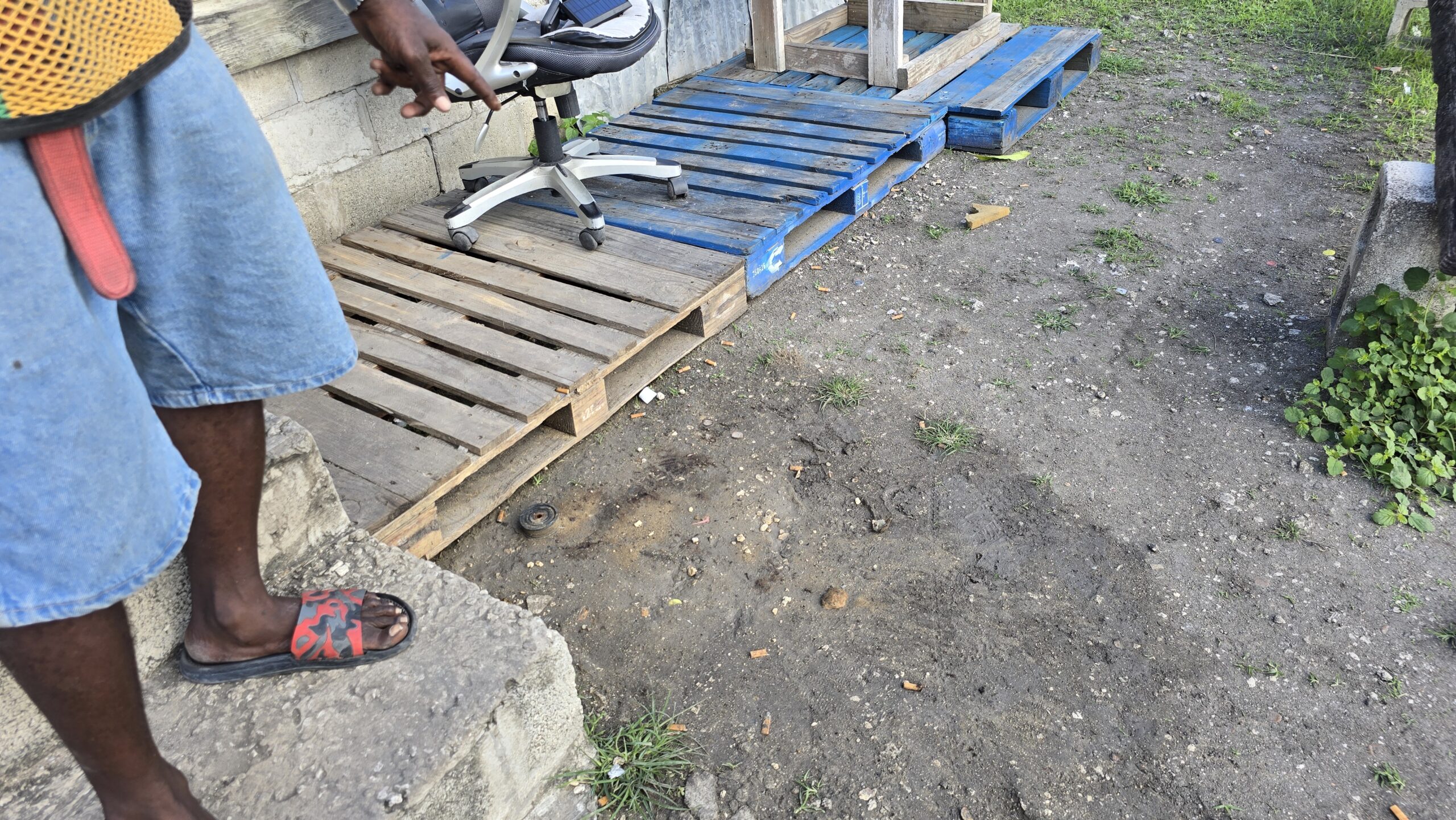
    Eyewitness Eliott Husbands provided a harrowing account of the incident, revealing he witnessed the entire episode unfold mere feet from his property. “He was sitting right there on that sidewalk,” Husbands recounted. “They asked him a question and he said he didn’t know anything about that. We told them just disperse, leave it alone, but they didn’t listen.”

    The community response has been characterized by profound grief and frustration. Residents described Trotman as a familiar neighborhood presence who, while sometimes perceived as a vagrant, was never considered violent or threatening. Multiple community members emphasized that the tragedy should never have reached this lethal conclusion.

    Husbands expressed particular disappointment with the perpetrators, noting he recognized some personally. “I know their grandmother, I know their fathers, and I know their fathers tried to put them on a decent level,” he stated, highlighting the generational disappointment surrounding the incident.

    The stabbing has ignited broader concerns about youth violence across Barbados. “A lot of these youngsters doing craziness in Barbados. We are killing one another in Barbados, simple,” Husbands commented, capturing the community’s exasperation with the escalating violence.

    As investigations continue, the Bush Hall community grapples with the psychological aftermath of witnessing such brutality in their ordinarily peaceful neighborhood. The incident has left residents questioning societal values and calling for greater intervention to prevent similar tragedies.

  • Beachside chat: Holetowners mull what could be lost, gained from development

    Beachside chat: Holetowners mull what could be lost, gained from development

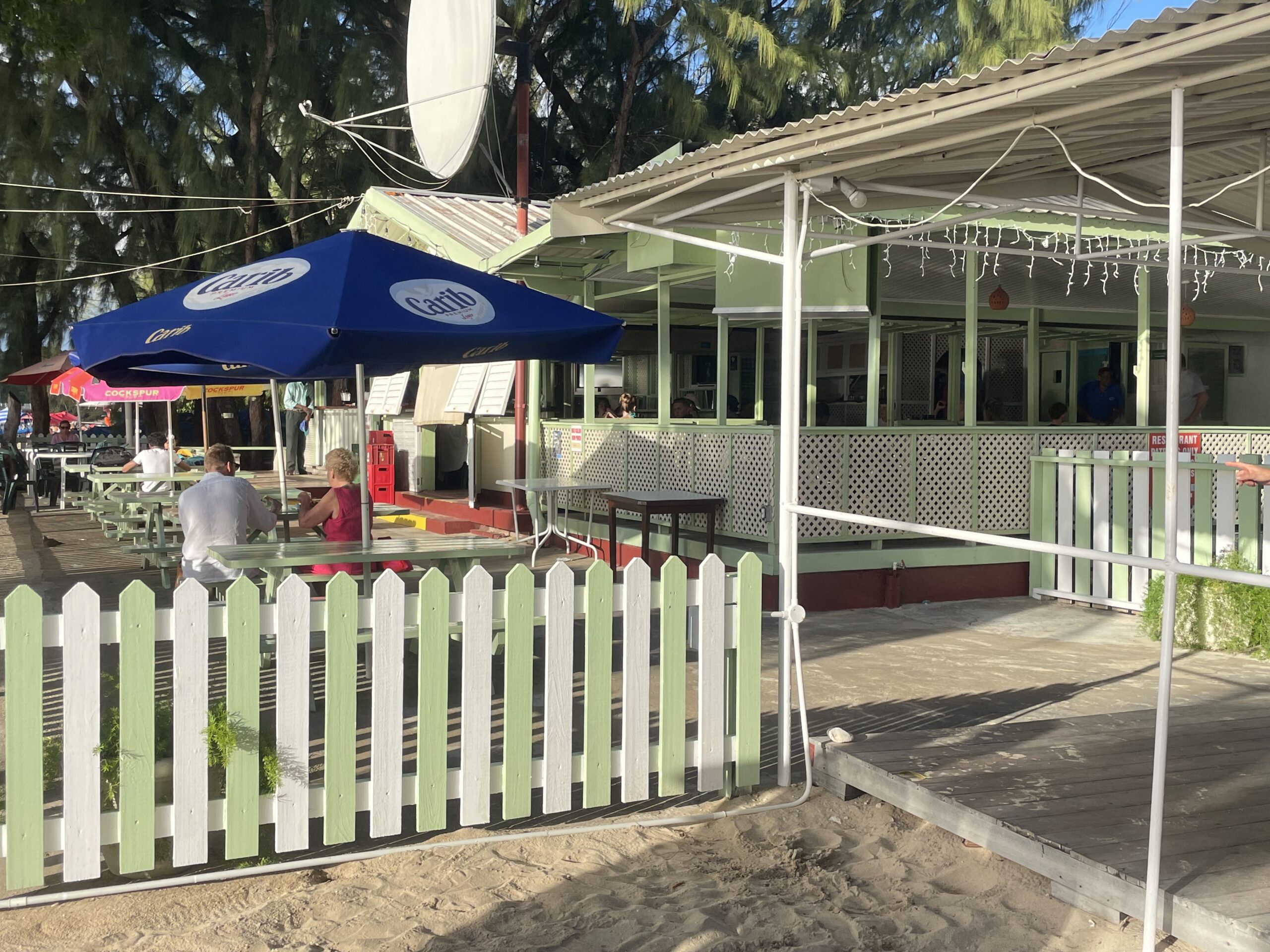
    Amid growing concerns over tourism-driven development transforming Barbados’ iconic west coast, community members and frequent visitors convened at Holetown Beach for an unconventional dialogue about the island’s future. The Tuesday evening gathering, orchestrated by the nascent civic organization Preserve Barbados, sought to bridge perspectives between Barbadians and international guests during the peak Christmas season.

    Founder Susan Cole characterized the initiative as a non-political effort to document shared values between locals and repeat visitors. “Our organization aims to collect insights from both residents and tourists to understand what truly matters to those who cherish this island,” Cole explained. Early discussions revealed striking alignment in priorities, particularly regarding coastal preservation and sustainable development.

    The beachside setting was deliberately informal to foster genuine conversation beyond traditional consultation formats. Cole emphasized the importance of creating spaces where organic interactions could flourish, noting that many visitors specifically cite the warmth of everyday Barbadian interactions as their primary reason for returning.

    Holetown’s selection as the venue was strategic, described by Cole as “the tourist capital of Barbados” due to its continuous foot traffic, beach access, and central role in west coast tourism. This location enabled direct engagement with tourists who might otherwise be inaccessible through conventional outreach methods.

    Social activist Victor Lewis amplified the discussion’s significance, framing it within broader national development concerns. “We must consider tourists as stakeholders in determining Barbados’ developmental trajectory,” Lewis asserted. “Our approach cannot be purely economic—we are building a society, not just an economy.”

    Lewis cautioned against development strategies prioritizing financial returns over cultural and social preservation, referencing Barbados’ historical transition from agriculture to tourism dominance. “Our development must serve both residents and those who choose to visit, ensuring Barbados remains welcoming to the world while protecting what makes it uniquely Barbadian,” he concluded.

  • Prijzen blijven stijgen: inflatie in november 2025 op 11,6 procent

    Prijzen blijven stijgen: inflatie in november 2025 op 11,6 procent

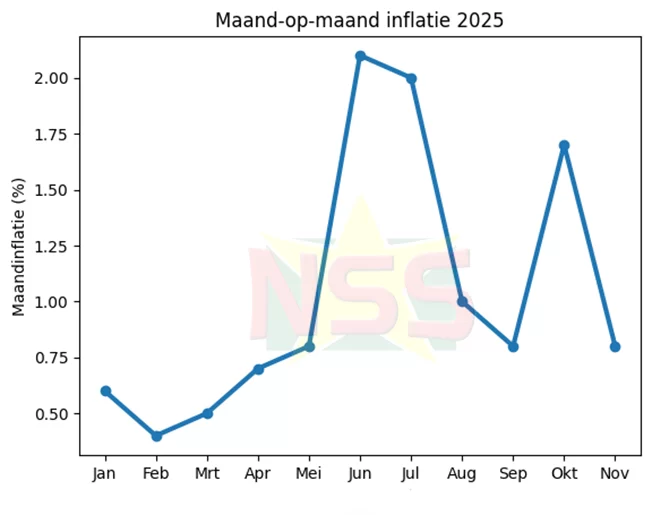
    Suriname’s economy continues to grapple with persistent inflationary pressures, as recent data from the General Bureau of Statistics (ABS) reveals a 0.8% month-over-month price increase in November 2025. The year-on-year comparison shows even more striking figures, with consumer prices surging by 11.6% compared to November 2024 levels.

    While the pace of inflation has moderated compared to previous years, the upward trajectory remains unmistakable. The sustained price pressure continues to burden households, particularly affecting essential expenditure categories. Behind the average inflation rate lies significant variation across product categories, with individual items experiencing price fluctuations ranging from a 54% decrease to an astonishing 600% increase in November alone.

    Over the extended period from December 2023 through November 2025, these disparities widened further, spanning from -67% to +600%. The most substantial price hikes continue to manifest in sectors directly impacting daily life, including healthcare, housing and utilities, food supplies, transportation, and dining expenses outside the home.

    The inflation metrics derive from the Consumer Price Index, compiled using a basket of 316 distinct goods and services. Price observations occur across approximately 630 measurement points throughout Paramaribo, Wanica, Nickerie, Coronie, Saramacca, Commewijne, and Para regions.

    Despite the less extreme price surges compared to earlier years, inflation remains structurally elevated, with many consumers continuing to experience its consequences in their daily economic activities. The data indicates that while the rate of increase has slowed, the cumulative effect of sustained inflation continues to challenge purchasing power and economic stability.

  • Police chief urges renewed fight against gun crime

    Police chief urges renewed fight against gun crime

    During the annual awards ceremony of The Barbados Police Service (TBPS), Commissioner Richard Boyce delivered a dual message of commendation and urgent call to action. Held at the Barbados Police Service Band headquarters on Tuesday, the event recognized officers for their exemplary service while simultaneously addressing the island’s persistent struggle with firearm-related crimes.

    Commissioner Boyce extended congratulations to all award recipients and emphasized that every officer’s contributions remained valued and acknowledged within the organization. He articulated a broader vision of policing that transcends conventional crime-fighting, characterizing the service as fundamentally “service-oriented” with responsibilities extending to community care and public assistance.

    “Our mandate encompasses not only criminal interventions but also the softer aspects of societal support,” Boyce explained. “This includes assisting citizens with crossing roads and addressing neighborhood nuisances such as nocturnal disturbances from animals. Essentially, we must respond comprehensively to all forms of public complaints.”

    Despite this holistic approach, the Commissioner identified gun violence as a particularly entrenched challenge, describing it as a “perennial problem” that continues to plague the nation. He acknowledged the cyclical nature of firearm policing, at times resembling a “revolving door,” but highlighted strategic reorganizations that have yielded significant operational successes.

    “Through concerted energy and collaborative strategy implementation, we have achieved considerable progress,” Boyce stated, citing consistent arrests in serious criminal cases including homicides and armed robberies. He specifically praised specialized units tasked with combating violent crime for consistently “coming out on top.”

    The Commissioner conveyed appreciation from both senior police leadership and government officials, including the Attorney General, recognizing the force’s exceptional performance. However, he stressed that current achievements represent not an endpoint but a foundation for intensified efforts.

    Boyce issued a compelling appeal for officers to deepen community engagement across commercial and residential districts, emphasizing that strengthened police-public partnerships are essential for addressing national security challenges. “Now is the time for every member to immerse themselves in communities,” he urged, calling for sustained excellence in service as police and citizens “join hands” to confront gun crime and other pressing societal issues.

  • Policeman unleashes blows on vagrant

    Policeman unleashes blows on vagrant

    A disturbing incident of police brutality unfolded on the streets of Georgetown, Guyana, on Tuesday, December 23, 2025, when a uniformed officer was captured violently assaulting an unarmed homeless man. The altercation occurred at the intersection of Main and Church Streets in broad daylight, witnessed by numerous pedestrians and documented by Demerara Waves journalists.

    The confrontation began when the law enforcement officer, utilizing a thick electrical wire as an improvised weapon, repeatedly struck the street dweller who was lying defenseless on his back. The violent episode continued until the officer became aware that his actions were being recorded, at which point he permitted the victim to leave the scene.

    Shockingly, when journalists confronted accompanying officers about the clear human rights violation, one officer responded with dismissive sarcasm, repeatedly muttering “human rights? human rights?” in apparent contempt. Another individual in civilian clothing attempted to interfere with the documentation process, demanding that journalists cease video recording the incident.

    Following the realization that the assault was being documented, multiple officers quickly dispersed from the area, some retreating through nearby market stalls in what appeared to be an effort to avoid further scrutiny. The incident has raised serious concerns about police conduct and accountability mechanisms within Guyana’s law enforcement system.

  • Steel houses

    Steel houses

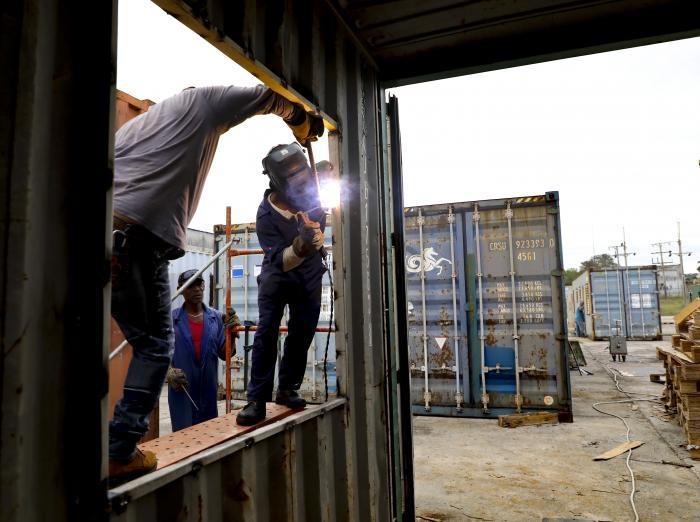
    In an ambitious response to Cuba’s persistent housing challenges, a groundbreaking initiative is transforming decommissioned shipping containers into functional modular homes. At the Metal Productions Business Unit in Guanabacoa, workers labor intensively to convert 29-square-meter steel boxes into habitable spaces, complete with living areas, bedrooms, compact kitchen-dining spaces, and bathrooms.

    The project utilizes approximately 3,500 used containers that originally arrived in Cuba carrying renewable energy equipment. Under the direction of Delilah Díaz Fernández, Housing Program director at the Ministry of Construction, these conversions represent a strategic approach to addressing the nation’s housing deficit, high construction costs, and material shortages.

    Each container home features seven windows and two doors to ensure adequate ventilation, along with interior veneer structures to mitigate Cuba’s intense heat. The units are lined with plywood and include basic electrical systems, though final power connections must be completed on-site. Anti-corrosive painting is incorporated into the finishing process to enhance durability.

    Financed through the State Budget, these homes are distinguished by their rapid construction timeline and relatively low cost compared to traditional building methods. The initiative specifically targets several beneficiary groups: workers from photovoltaic solar parks, victims of weather-related home collapses, and individuals in vulnerable socioeconomic circumstances awaiting housing solutions.

    Prospective homeowners must pay a bank-determined amount that varies based on materials and finishes used in each unit. Subsequent maintenance responsibilities fall to the owners once properties are transferred.

    The program faces operational challenges including intermittent power outages and fuel shortages that occasionally halt production. Despite these obstacles, the container conversion project continues advancing as part of Cuba’s broader strategy to develop sustainable urban housing models that effectively address shelter needs.