博客

  • $91.5m swat contract signed before tender

    $91.5m swat contract signed before tender

    A major public procurement scandal has erupted at Trinidad and Tobago’s North West Regional Health Authority (NWRHA), with an internal investigation underway into claims that former chief executive officer Anthony Blake signed an unauthorized $91.5 million security services contract with private firm SWAT Estate Police Co Ltd months before the official competitive bidding process even launched.

    The controversial document, dated December 19, 2025, bears what investigators confirm is Blake’s signature alongside a witness signature from a sitting NWRHA employee, according to materials obtained exclusively by the Sunday Express. Critical red flags have already emerged: the signed agreement dates nearly two full months before the NWRHA published its official public tender notice for organization-wide security services in February 2026. The open bidding process, labeled Tender No. 2026-20, closed on March 4 that year, with no award finalized to date.

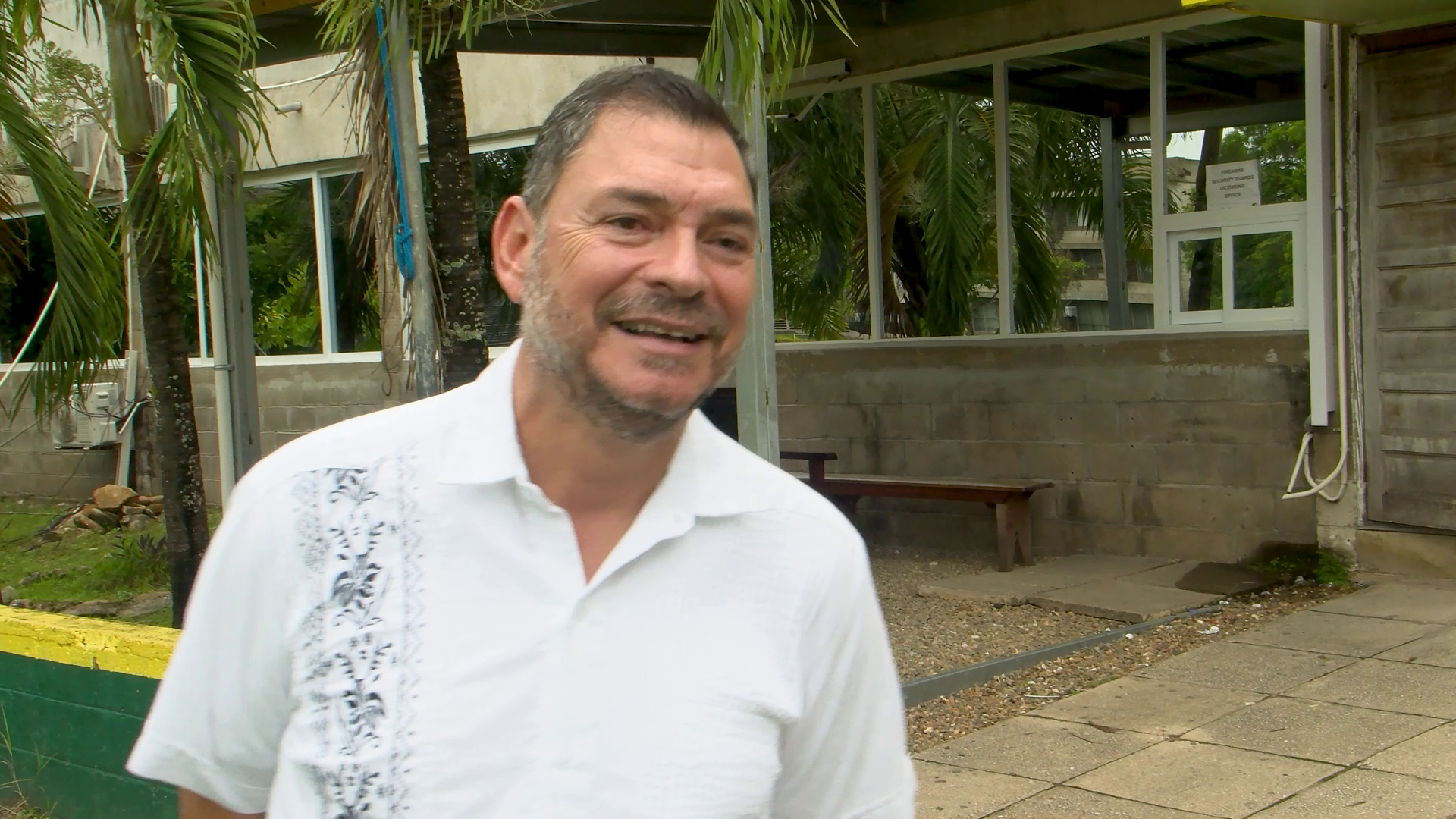
    Blake, who is currently on extended leave from the authority, has forcefully pushed back against all allegations of misconduct, framing the entire controversy as a misrepresentation of disjointed administrative documents pulled out of context. In an interview with the Sunday Express, Blake claimed the only document he signed connected to SWAT was a small, fully compliant interim contract worth just $717,342.75, awarded after the original security contractor for seven NWRHA-run health centers abruptly pulled out of its obligations in October 2025.

    Per Blake’s account, the interim award followed standard internal procurement protocols that required collecting quotes from the authority’s pre-vetted existing security providers, with SWAT selected as the temporary replacement. He further explained that the $91.5 million figure cited by accusers is nothing more than a multi-year estimated budget projection for a planned organization-wide security overhaul, compiled for internal funding verification purposes rather than a binding contract. He added that the full project was designed to award contracts to multiple providers, matching the NWRHA’s long-standing operational model, and the 2026 public tender remains under review by the national Procurement Disposal Advisory Committee with no final decision made.

    But acting NWRHA CEO Judith Balliram has outright rejected Blake’s account, confirming the controversy stemmed from a formal whistleblower complaint submitted to the NWRHA board several months prior. Balliram emphasized that the signed agreement in question explicitly names SWAT as the sole recipient of the $91.5 million two-year contract for all NWRHA facilities, with no planned inclusion of additional providers. She noted that even the formal funding request for the project was not submitted until January 9, 2026, three weeks after Blake allegedly signed the binding contract, and the agreement never received the mandatory approval from the NWRHA board required for contracts of that size. Under national public procurement law, Balliram stressed, the executed contract is unlawful on its face.

    Adding another layer to the scandal, Balliram confirmed that after the whistleblower brought the contract to light, NWRHA officials launched an internal search for the original document — only to discover it has gone missing. She alleged the contract may have been destroyed by a senior NWRHA employee in an effort to cover up the unauthorized action. A senior anonymous source within the authority further corroborated the whistleblower’s claims to the Sunday Express, confirming the signed agreement was structured as a full, organization-wide security contract exclusively for SWAT, and that preliminary banking documentation for the contract had already been completed before the discrepancy was uncovered.

    The NWRHA’s internal investigation is currently ongoing, with authorities reviewing all related administrative and financial records to determine what action, if any, will be taken once the probe is complete.

  • …Psychologist says recognising our triggers can help

    …Psychologist says recognising our triggers can help

    The recent brutal fatal stabbing of 25-year-old Shayanna Ruiz has sparked urgent conversations about emotional management and deep-rooted societal violence in Chaguanas, where the incident unfolded. Ruiz was killed Wednesday in a confrontation over a $4,500 debt with her ex-boyfriend’s current girlfriend, prompting mental health experts and security analysts to sound the alarm about gaps in how modern society handles conflict and intense emotion.

    Clinical and counselling psychologist Nidhi Kirpalani shared her insights with the *Sunday Express* in the wake of the killing, arguing that the core skills of recognizing emotional triggers and regulating intense feelings could prevent impulsive, destructive acts during moments of anger or distress. Contrary to common misconceptions, Kirpalani emphasized that anger is not an emotion to be suppressed or avoided entirely — it is a normal, functional human response that signals hurt, perceived unfairness, or threat, and acts as a warning of internal imbalance.

    “Emotional intelligence is not just about staying perpetually calm or never feeling angry,” Kirpalani explained. “The first critical step to building this intelligence is cultivating awareness of what situations spark our strongest emotional reactions. Even just identifying your triggers is a meaningful victory; it gives you deeper self-knowledge that you did not have before.”

    Kirpalani noted that simply noticing recurring emotional patterns is an active step toward change, as it helps people connect their reactions to unwanted outcomes. Managing anger does not mean pushing the feeling down, she clarified — it means preventing anger from taking full control of one’s actions. When people pause before reacting, they activate the region of the brain responsible for empathy, sound judgment, and understanding consequences, rather than slipping into the involuntary survival mode that intense anger triggers.

    “When anger becomes overwhelming, our brain and nervous system shift into fight, flight or freeze mode,” Kirpalani said. “Our heart rate spikes, our thinking rigidifies, and we focus only on reacting instead of weighing what will happen after we act. Slowing down, taking deep breaths, and grounding yourself in the present moment gives you space to evaluate different responses and their outcomes.”

    She added that anger often acts as a surface-level mask for deeper unresolved emotions, including sadness, feelings of rejection, or fear of abandonment. Unaddressed childhood trauma and lingering core insecurities can also amplify current emotional reactions, she said, meaning people must examine whether their response stems from the present situation or old unhealed wounds. Critically, emotional regulation does not require people to accept unfair treatment or ignore their legitimate grievances — instead, it creates space to respond intentionally rather than react impulsively, protecting both personal well-being and, in extreme cases, personal freedom.

    Building emotional awareness is a gradual, lifelong practice, Kirpalani noted, but it empowers people to respond thoughtfully rather than letting intense emotion dictate their choices. Her advice for anyone feeling anger rising is simple: step back for a moment, notice your physical and emotional state, and assess your options before acting.

    Beyond individual emotional skills, regional security consultant Dr. Garvin Heerah argues that Ruiz’s death exposes a far deeper, more disturbing societal trend that has taken root across parts of the population: the normalization of aggression as a legitimate tool to resolve conflict. Heerah told the *Sunday Express* that this trend is visible across all layers of society, from common road rage outbursts and rising school violence to the hateful, divisive, vengeance-focused language that permeates public discourse and even political spaces. He added that persistent, underrecognized racial tension also fuels this culture of aggression, beneath the surface of perceived social harmony.

    From a security perspective, Heerah said one of the most alarming shifts in recent years is the growing link between violent crime and psychopathology. Offenders increasingly demonstrate extreme brutality, a total lack of empathy, and a willingness to kill over trivial disputes that could be resolved through calm discussion. Violent acts are growing more excessive and personal, signaling a dangerous shift in public behavior that cannot be solved by policing alone, he argued.

    “This is not solely a law enforcement issue — it is a national crisis of social resilience that demands a whole-of-society response,” Heerah said. “Families, schools, communities, faith groups, mental health professionals, and the justice system all have a role to play. If we do not address the cultural and psychological drivers of violence, we will raise a new generation that sees violence as an acceptable way to solve conflict.”

    Heerah warned that if society continues to become desensitized to brutal violence, it could become a permanent, damaging part of the nation’s collective character. “The greatest threat to a nation is not just the criminal holding a weapon — it is a society that slowly stops seeing violence as abnormal,” he said. “This is a trend we must reverse before it becomes permanently embedded in our national identity.”

  • T&T, Israel eye cyber partnership

    T&T, Israel eye cyber partnership

    In a landmark diplomatic milestone, Trinidad and Tobago (T&T) recently hosted its first-ever visit from the head of Israel’s International Development Cooperation Agency (MASHAV), kicking off formal bilateral discussions on a range of targeted development projects spanning cybersecurity, smart city infrastructure, sustainable agriculture, and public healthcare.

    The visit, which took place across two days of high-level meetings with T&T government ministers and senior officials, marked a renewed commitment between the two nations to deepen their long-standing diplomatic and development ties. Ambassador Eynat Shlein, Director General of MASHAV, confirmed after the talks that T&T has been identified as a critical strategic partner for regional development efforts, particularly for Small Island Developing States (SIDS) that face disproportionate climate and food security challenges.

    Addressing widespread public speculation about the scope of the discussions, Shlein emphasized that all proposed cooperation frameworks are rooted in the United Nations Sustainable Development Goals (SDGs), a multilateral agreement that T&T has formally joined. Meetings covered cooperation in 10 core priority areas: national security, development planning, digital technology, public healthcare, foreign affairs, infrastructure, education, agriculture, climate resilience, and food security.

    A core focus of the talks centered on addressing shared global challenges that hit SIDS particularly hard: local and regional security stability, long-term food security, and climate change adaptation. Shlein noted that Israel’s global reputation as a global innovation and startup hub remains intact decades after it earned that title, and the country aims to leverage that innovative ecosystem to build collaborative government platforms that drive inclusive growth across T&T.

    Following the visit, MASHAV will initiate follow-up engagements with T&T authorities to assess specific partnership opportunities, working within the agency’s existing mandate to design flexible, tailored cooperation frameworks. Shlein highlighted that MASHAV’s core approach centers on capacity building: to date, more than 350,000 professionals from across the globe, including a number of participants from T&T, have completed MASHAV training programs across multiple development sectors.

    Shlein stressed that the overarching purpose of her historic visit was to listen first to T&T’s top policy priorities and development objectives, rather than pushing pre-determined projects. “This is not aid, but partnership,” she clarified in a post-meeting telephone interview, adding that both nations stand to gain valuable insights from working together. “We’re always interested in hearing from the Government what their priorities are, and then we offer various partnerships in this regard.”

    The MASHAV delegation’s mission also prioritizes inclusive sustainable development, including strengthening marginalized vulnerable groups and expanding women’s participation as a foundation of resilient, self-sustaining communities. To ensure proposed partnerships align with local needs, the team held meetings with dozens of T&T state agencies to gain on-the-ground insight into the needs of the country’s population.

    Shlein pointed to food and water security as two particularly high-potential areas for expanded cooperation, noting that the Covid-19 pandemic and ongoing global geopolitical conflicts have exposed critical supply chain vulnerabilities across the Caribbean and Latin America, a region already marked by high economic and climate vulnerability.

    As a UN member state with decades of specialized experience in arid-region sustainable development, Israel has proven expertise to share with the region, Shlein said. She emphasized that long-term water security requires urgent, sustained action across the Caribbean, including expanded domestic rainwater harvesting and widespread wastewater recycling for agricultural use.

    On climate resilience, Shlein noted that climate change-driven extreme weather, from catastrophic flooding that destroys staple crops to prolonged drought, has already severely disrupted regional food production, requiring coordinated action at both the community and national government levels. For decades, Israel has led global innovation in food security, from cutting-edge research and development in grain and livestock production to high-yield intensive cropping systems.

    “We’re here to share the things that we know,” Shlein said, adding that Israel’s development model prioritizes collaborative partnerships with host governments, local communities, and non-governmental organizations to ensure projects deliver tangible, long-term benefits to local populations.

  • UTT under fire for Emancipation Day Indian acts

    UTT under fire for Emancipation Day Indian acts

    A public firestorm has broken out in Trinidad and Tobago after the University of Trinidad and Tobago (UTT) included East Indian music and dance performances in its official Emancipation Day commemoration, with opposition politicians and community leaders accusing the institution of deliberately disrespecting the historical significance of the occasion honoring African emancipation from chattel slavery.

    The event, branded “Uhuru: Celebrating Freedom”, was held last Wednesday at Port of Spain’s National Academy for the Performing Arts (NAPA). Alongside scheduled performances from African heritage artists including Patrice Inglesbirth, the Onilu Brothers, Dr Edward Cumberbatch and Nkosi Waldron, UTT added segments from the Shiv Sangeet School of Music and dancer Susan Mohip, the programming choice that triggered widespread criticism.

    In a viral video circulated to social media this Friday, Opposition Member of Parliament Dr Nyan Gadsby-Dolly condemned UTT’s decision as outright disrespectful and deeply disappointing. She argued that culturally specific commemorative days are meant to center distinct histories, rather than blending community experiences. “African Emancipation Day is literally and simply about African emancipation. Indian Arrival Day is literally and simply about the arrival of the East Indians in Trinidad and Tobago. And you know what, we are big enough as people to celebrate them both separately,” Gadsby-Dolly stated.

    She further pushed back against growing narratives that equate the history of African chattel slavery with the system of East Indian indentureship, drawing a clear line between the two experiences. “African slavery was a totally different thing; totally different experience, and we noticing more and more that it’s being equated, like on some level it’s similar. No, no, and we’re drawing a line in the sand today. Stop doing that. UTT you should have known better,” she said.

    Speaking to local outlet TV6 on Sunday following a street renaming ceremony honoring activist Kwame Ture, Gadsby-Dolly doubled down on her criticism. She reiterated that Emancipation Day is not the appropriate venue to frame a shared cross-community struggle, emphasizing the fundamental difference between the two historical systems: “The enslaved Africans—their experience can never be compared to indentureship. The East Indians came here, they chose to come and those conditions were not ideal. It was still a choice. It was not a choice for the Africans who are here and their ancestors. They didn’t choose to come, and the conditions they endured coming here and being here should not ever be compared to indentureship. And the attempt to do that is disrespecting the struggle of our ancestors and we will not stand for it.”

    Pennelope Beckles, political leader of the opposition People’s National Movement (PNM), also weighed in, noting the outsized contribution of Afro-Trinidadian communities to every sector of the nation’s development. “Whether it’s the energy sector, whether it’s in the housing sector, any particular sector that you mention, African people have played a very critical role in making what Trinidad and Tobago is today. And I want to remind us there’s every reason to be proud about your heritage, about the work that you have done, what you have contributed to make Trinidad and Tobago what it is today,” she said.

    Another PNM opposition MP, Kareem Marcelle, argued that the incident is part of a growing pattern of eroding respect for Emancipation Day commemorations. He said that well-meaning pushes for cultural unity often come at the expense of downplaying the unique trauma and significance of African history in the country. “Can we just be allowed to celebrate our ancestors? Can we just be allowed to remember our painful history? Can we just be allowed to teach our children about our rich history pre- and post-slavery?” Marcelle asked, questioning repeated efforts to dilute the focus of the annual observance.

    Prime Minister Kamla Persad-Bissessar, the leader of the ruling government, hit back at PNM critics, accusing the party of irrational and inconsistent hostility toward her participation in African cultural events. “If the PNM MPs and their supporters don’t want East Indians to participate in Emancipation events, that’s their democratic choice. Maybe next year the PNM could lobby UTT to invite Star Sabga and Jenna Hadeed for a spoken word performance instead,” Persad-Bissessar said. She went on to complain that she faces criticism no matter how she engages with Emancipation events: “When I wear African clothing, they curse me; if I don’t wear it, they curse me. When I participate in African cultural activities, they curse me; when I don’t participate, they curse me. When I speak to praise the contributions of Afro-Trinidadians, they curse me; if I don’t speak to praise, they curse me. I don’t know what the PNM MPs and their supporters want. They appear consumed with irrational hatred that is sending them deranged.”

    Commentator Paolo Kernahan also criticized UTT’s decision in a viral social media post, arguing that the misstep reveals a disconnect between formal education and cultural awareness. “The fact that people at a university couldn’t appreciate how wildly inappropriate it was to shoehorn an East Indian cultural presentation into what was meant to be an Emancipation Day event shows the massive difference between education and intelligence,” Kernahan wrote.

    UTT has defended the programming choice in an official media statement, saying the event was designed to honor Emancipation while reflecting the country’s diverse cultural heritage. “UHURU: Celebrating Freedom reflects UTT’s ongoing commitment to preserving and promoting the history, culture and the diverse heritage of Trinidad and Tobago. Through initiatives such as this, the university continues to foster cultural awareness, strengthen national pride and inspire a deeper appreciation of the values, traditions and shared experiences which shape our nation,” the statement read.

    The university added that the event, held in partnership with the Ministry of Tertiary Education and Skills Training, the Ministry of Culture and Community Development and NAPA, was intended to honor the enduring legacy of emancipation and celebrate the fundamental role of African heritage in the nation’s social, cultural and artistic development. Named for the Kiswahili word for freedom, the event featured theatrical readings, dance and music that paid tribute to the courage of freedom fighters and reflected on how emancipation shaped Trinidad and Tobago’s national identity, the release said. At the event, UTT executive chairman Prof Selwyn Cudjoe noted that one of the university core responsibilities is to help build national identity and foster national pride by integrating arts and culture into education. When contacted for comment on the controversy Sunday, Cudjoe declined to speak immediately, saying he would issue a response at a later date.

  • Ambassadeur Panka en PSD bespreken grotere rol diaspora bij ontwikkeling Suriname

    Ambassadeur Panka en PSD bespreken grotere rol diaspora bij ontwikkeling Suriname

    The Surinamese Embassy based in the Netherlands and the Platform Surinamese Diaspora Foundation (PSD), one of the oldest umbrella organizations for Surinamese communities living abroad, have agreed to ramp up collaborative engagement with the global Surinamese diaspora to drive national development back home. The landmark meeting, held in The Hague, centered on advancing the structured diaspora dialogue initiative, with discussions covering priority areas including cross-border knowledge sharing, targeted foreign investment, inclusive economic growth, and the unique role overseas Surinamese can play in shaping their country’s future.

    Founded in 2013 by three established Suriname-Netherlands community organizations — the Knowledge Circle Netherlands-Suriname Foundation, the Suriname Consultation Body, and the Association of Surinamese Dutch — PSD has expanded steadily over the past decade. More than 20 additional diaspora groups have joined its network, including representatives of Suriname’s Indigenous and Maroon communities as well as a range of civil society organizations. Today, the broader ecosystem of Surinamese diaspora organizations connected to PSD has grown to over 40 groups, all aligned around a shared mission: to leverage the multicultural network’s collective resources to advance Suriname’s development and strengthen the cultural, social and economic bonds between the homeland and its global diaspora.

    The bilateral talks took place in advance of Suriname’s annual Heritage Month, held throughout August, which celebrates the South American nation’s rich cultural, historical and natural heritage. Both the Surinamese Embassy and PSD will organize and promote dedicated events throughout the month to highlight this legacy.

    Suriname’s Ambassador to the Netherlands Ricardo Panka, who led the embassy’s delegation alongside members of the ambassadorial council and secretariat staff, reaffirmed the embassy’s commitment to maintaining an open, active dialogue with diaspora groups. Beyond core discussions of knowledge exchange and investment, the meeting also explored new economic opportunities emerging from Suriname’s growing oil and gas sector, including spin-off benefits for tourism, hospitality, and education sectors. Additional topics touched on during the talks included public commemoration of Suriname’s history of slavery, access to microcredit for local entrepreneurs, and addressing gaps in old-age pension benefits for diaspora members.

    Following the discussions, Panka described the meeting as constructive and candid, emphasizing that strong collaboration between the Surinamese government and its diaspora is a cornerstone of long-term national progress. Representing PSD at the meeting were chair Robby Makka, secretary Roy Ashruf, treasurer Ram Rambharatsing, board member Diana Vlet, and advisor Iwan Starke. Looking ahead, PSD announced plans to strengthen its governing board and advisory council in the coming months, and reiterated that the organization remains open to new partnerships with other Surinamese diaspora organizations to expand its impact.

  • CARICOM Chair: Emancipation must continue through economic empowerment and opportunity

    CARICOM Chair: Emancipation must continue through economic empowerment and opportunity

    As Caribbean nations prepare to mark Emancipation Day 2026, pausing to honor the generations of enslaved ancestors who fought and sacrificed for freedom, the Chairman of the Caribbean Community (CARICOM) and Prime Minister of St. Lucia has delivered a powerful call to action, arguing that the region’s centuries-long fight for full emancipation remains unfinished until widespread economic empowerment is achieved for all Caribbean people.

    Across the bloc, countries celebrated the annual commemoration over a long holiday weekend, and in a keynote address from Basseterre, St. Kitts, Pierre emphasized that true freedom extends far beyond the hard-won political independence many Caribbean nations secured in the 20th century. For emancipation to be meaningful, he argued, Caribbean communities must gain equitable access to wealth creation pathways, asset ownership, and inclusive economic opportunity. “They deserve opportunity. They deserve ownership. They deserve prosperity,” Pierre stated. “We must build economies where Caribbean people are creating wealth, not merely consuming it. Where our young people see opportunity at home. Where our entrepreneurs can succeed. Where our farmers, fishers and manufacturers are valued. Where hard work is rewarded with dignity. That is the Caribbean we must build.”

    A central pillar of Pierre’s vision centers on prioritizing youth in all regional development strategies. He stressed that the next generation must be equipped with the cutting-edge skills needed to lead innovation and drive sustainable growth across the bloc. “Every child deserves the chance to dream. Every young person deserves the chance to achieve,” Pierre said. He called on regional education systems to refocus curricula to prepare young people “to innovate, to lead, to build businesses, to master technology, to transform our societies,” while encouraging young Caribbean people to leverage their unique talents and perspectives to strengthen both their home nations and the broader CARICOM community.

    Beyond youth development, Pierre identified two critical infrastructure priorities as foundational to genuine regional independence: food security and energy security. Addressing food security first, he warned that no Caribbean nation can claim true sovereign security if it remains unable to feed its own population. Against a backdrop of persistent global economic uncertainty, skyrocketing commodity costs, and shifting international trade frameworks, Pierre urged regional governments to accelerate investments in local agricultural, fishing, and food production sectors. “Every acre cultivated, every farmer supported, every fisher encouraged, every Caribbean product placed on our supermarket shelves brings us one step closer to genuine independence,” he noted. Currently, the Caribbean collectively carries a massive food import bill, leaving most small island developing states in the region dangerously exposed to external shocks, from global supply chain disruptions to sudden shifts in global trade policy.

    Turning to energy security, Pierre framed the transition to affordable, reliable, cleaner energy as both an economic and environmental imperative for the region. “Our future depends upon affordable, reliable and cleaner sources of energy,” he said. “Not only because it protects our environment, but because it strengthens our economy, creates jobs and lowers the cost of living for our people.” For Pierre, both food and energy sovereignty are not just routine development goals—they are core components of the “unfinished journey of emancipation” that began with the abolition of chattel slavery.

    Pierre also addressed the Caribbean’s longstanding collective campaign for reparatory justice for the transatlantic slave trade and centuries of chattel slavery, clarifying that the regional call for reparations is rooted in demands for truth and historical accountability, not blame or retaliation. “The pursuit of reparations for slavery is not about blame, not about revenge. It is about the truth and justice for the human suffering of slavery,” Pierre explained. He reflected on the resilience of the millions of enslaved African people who retained their dignity, hope, and resistance across generations of systemic dehumanization. “Today, we remember the women, men and children whose bodies were enslaved, but whose spirits could never be conquered,” he said. “Because they endured, because they resisted, because they believed, we stand here today as a free people.”

    Pierre emphasized that Emancipation Day is far more than a historical commemoration: it is a persistent reminder of the struggles past generations overcame, and the uncompleted responsibilities that rest on current Caribbean leadership and communities. “Freedom was never handed to our ancestors. Freedom was demanded. Freedom was fought for. Freedom was paid for with sacrifice, with courage and with an unbreakable faith,” he said. He added that while the abolition of slavery marked a pivotal turning point in the region’s history, it did not erase systemic inequality or deliver full, inclusive freedom overnight.

    Reflecting on the Caribbean’s complex and often traumatic history—including Indigenous dispossession, African chattel slavery, indentured labor systems, and centuries of colonial rule—Pierre highlighted the extraordinary resilience and achievements of Caribbean people that emerged from that trauma. “Out of pain our people created beauty. Out of struggle our people created strength. Out of oppression our people created hope,” he said. “We built nations. We built communities. We built democracies.” He pointed to the region’s globally celebrated contributions to music, literature, art, and culture, reminding Caribbean citizens that they have every right to be proud of their shared identity and collective progress. “We are Caribbean people. We are a proud people. We are a resilient people. And we have every reason to believe in our future.”

    In closing, Pierre urged all Caribbean residents to frame freedom as both an inherited privilege and an intergenerational responsibility. “Every generation inherits more than freedom; it inherits a responsibility,” he said. “Our responsibility is to honour the sacrifices of those who came before us by building a society that is more just, more united and more prosperous than the one they entrusted to us.” He closed with a call to build a unified CARICOM where emancipation is not only marked by annual celebrations, but reflected in the equal access to opportunity and prosperity that shapes the daily lives of all Caribbean people.

  • Rodney Deekman grote winnaar van Suripop 2026 met ‘Konsensi’

    Rodney Deekman grote winnaar van Suripop 2026 met ‘Konsensi’

    Suriname’s most prestigious annual songwriting competition, Suripop 2026, concluded on Saturday evening with a historic victory for homegrown composer Rodney Deekman, who took home three of the event’s top awards in a night of groundbreaking changes to the competition format.

    Deekman’s original composition *Konsensi*, which he performed himself, was named the best song of the entire festival by the event’s panel of nine independent industry judges. He also walked away with two additional major honors: Best Performance and Best Video, cementing his status as the undisputed standout of this year’s competition.

    The podium was rounded out by composer Sjachnaz Pengel, who secured second place with his entry *No Syi Mi Trafasi*, while Damian Jihntoe took third position with *Lib’ en So*.

    A defining and unprecedented shift marked the 20026 edition of Suripop: for the first time in the competition’s decades-long history, participating composers were given the opportunity to perform their own compositions directly, rather than assigning the performance to a separate vocalist. Only two competitors, Deekman and Rafiël ‘Raff Chanko’, chose to take advantage of this new rule—and for Deekman, the decision paid off dramatically, paving the way for his multi-award sweep.

    The nine-member expert jury, led by chair Patrick Brunings and completed by members Earnie Eenig, Irfaan Gajadhar, Nita Ramcharan, Jurmic Partodongso, Thirza Perk, Peter Waterberg, Fanisha Salamat, and Melvin Groenveld, evaluated all 12 finalist entries based on four strict core criteria: pop appeal, catchy chorus or verse, narrative engagement, and harmonic composition. Each juror scored entries individually with no group deliberation to alter final results, awarding up to 10 points per criterion for a maximum total score of 40 points per entry from each judge. Separate individual scoring was also conducted to determine winners of specialty awards including Best Performance.

    With his 2026 victory, Deekman now joins the prestigious roster of acclaimed composers who have claimed the top title at Suripop, an event that has served as Suriname’s premier platform for emerging and established songwriting talent for decades. The emotional evening ended with Deekman as the celebrated star of the night, marking a historic milestone for both the competition and his career.

  • Zapping Haiti of August 2nd, 2026

    Zapping Haiti of August 2nd, 2026

    On August 2, 2026, a series of interconnected updates emerged from Haiti and neighboring countries with significant Haitian diaspora communities, spanning law enforcement, consular support, sports, judiciary administration, education reform, and municipal public order initiatives.

  • Trump Administration Makes Visa Bond Programme Permanent; Two Caribbean Nations Included

    Trump Administration Makes Visa Bond Programme Permanent; Two Caribbean Nations Included

    WASHINGTON, D.C. – Building on a year-long trial that program leaders frame as a proven success, the second Trump administration announced Friday it will convert its temporary Visa Bond Pilot Program into a permanent immigration policy, with the new permanent rule taking effect Monday, August 3, 2026.

    First launched earlier this year as a temporary measure targeting temporary visitor overstays, the framework gives U.S. consular officials the authority to require select B-1/B-2 visitor visa applicants – which cover travel for business and leisure purposes – to put down a refundable financial deposit before their visa is approved. Under the permanent rules, the bond amount ranges from $5,000 to $20,000, with individual consular officers adjusting the sum based on each applicant’s specific circumstances.

    The core policy goal of the program is to incentivize compliance with nonimmigrant visa terms, ensuring that temporary visitors exit the U.S. before their authorized period of stay expires. The administration’s formal announcement was published in the Federal Register, where officials laid out their case that the 12-month pilot generated enough data to confirm visa bonds are an effective tool for boosting temporary visitor compliance with immigration rules.

    The interagency evaluation conducted during the pilot, which included input from the U.S. Department of State, Department of Homeland Security, and Department of the Treasury, concluded that the bond system is both operationally feasible and effective at cutting rates of visa overstays, one of the most common sources of unlawful residual presence in the U.S.

    While the majority of nations on the program’s designated country list are African countries, the roster also includes two Caribbean Community (CARICOM) member states: Antigua and Barbuda, and Dominica.

    This permanent codification of the visa bond program aligns with the broader hardline immigration agenda the Trump administration has advanced since returning to office in 2025. Over the past year, the administration has rolled out a suite of policies targeting both unauthorized and legal immigration, including stricter visa screening protocols, expanded interior immigration enforcement raids, and increased deportation numbers.

    Administration officials have repeatedly emphasized that visa overstays account for a large share of people who remain in the U.S. in violation of immigration law. By tying compliance to a refundable financial deposit, officials argue the program creates a direct financial incentive for visitors to abide by their visa terms and depart on schedule. The pilot was initially rolled out for dozens of countries earlier this year, with the designated country list expanded in a May 2026 update ahead of the permanent transition.

    In addition to the visa bond program, the administration has advanced another controversial immigration policy change affecting international students and foreign journalists: replacing the longstanding “Duration of Status” rule, which allows authorized stay for the duration of an individual’s academic program or journalistic assignment, with fixed maximum periods of authorized stay. That proposal has sparked sharp pushback from student advocacy groups and media organizations, which warn the change will introduce unnecessary uncertainty for people legally residing, studying, and working in the United States.

    According to the Federal Register notice, the permanent visa bond program is being implemented to fulfill the mandates of Executive Order 14159, titled “Protecting the American People Against Invasion,” which directs all federal immigration agencies to strengthen enforcement measures and improve overall compliance with U.S. immigration law.

  • Korpschef Pinas peilt zorgen bewoners: meer surveillance en snellere politiehulp gevraagd

    Korpschef Pinas peilt zorgen bewoners: meer surveillance en snellere politiehulp gevraagd

    On a recent Saturday, Suriname Police Chief Melvin Pinas led a community walkthrough in the De Nieuwe Grond neighborhood, cutting through bureaucratic layers to hear directly from residents about their experiences with and expectations for local law enforcement. The outreach initiative forms a core part of Pinas’ long-stated goal to bridge the growing gap between police forces and the communities they serve.

    Since taking office, the chief has emphasized that sustained, close engagement between police and the public is non-negotiable for effective public safety. Sitting behind a desk only gives leadership secondhand accounts from officers, Pinas explained during the walk, noting that on-the-ground conversations offer unfiltered insight into how community members actually experience policing.

    While many residents reported that their neighborhood currently remains relatively calm and expressed a desire to preserve that stability, almost all shared key priorities for improving local police services. The most commonly cited demands included faster processing of police reports, more decisive action against criminal activity, clearer, visible outcomes following police interventions, and an increase in regular neighborhood patrols to deter crime. Even residents satisfied with overall local safety pushed for more consistent, visible police presence to maintain current low crime rates.

    Other residents voiced more specific frustrations with systemic delays in police work. Multiple attendees called out the months-long wait for accident reports required for insurance claims, a burden that leaves crash victims waiting extended periods for compensation they are owed. Complaints also included the complete lack of follow-up updates provided to victims of crimes such as robbery, even when surveillance footage clearly identifies potential suspects. Many residents also shared a widespread perception that preferential treatment is common, claiming that connections within the police force are required to get cases processed in a timely manner.

    Following the walkthrough, Pinas hosted a follow-up community meeting at the Penny and Jon School to continue the conversation. While turnout for the meeting was lower than expected, attendees raised a broad range of additional public safety concerns that require police attention. These issues included reckless driving by e-bike users and bus drivers particularly during peak commuting hours, groups of people loitering outside retail establishments late into the night, repeated vandalism of critical fiber optic infrastructure, excessive noise from overnight neighborhood parties, suspicious unfamiliar individuals loitering in residential areas, and vehicles with heavily tinted windows parked for extended periods in neighborhood streets, which residents view as a potential security risk.

    Throughout both the walk and the subsequent meeting, Pinas shared his personal contact number with all attendees and gave a formal commitment that the police service would prioritize addressing every complaint and tip received during the outreach. In a major policy announcement tied to the engagement push, Pinas revealed that the national police is developing a dedicated mobile application that will allow residents to submit anonymous tips, and upload photos or other evidence related to suspicious activity or crimes. Pinas noted that the app is designed to remove barriers to reporting and enable faster, more effective responses to criminal offenses across communities.

    Reflecting on the day’s outreach, Pinas said he viewed the initiative as a success, but acknowledged that future events need more proactive publicity to draw a larger, more representative cross-section of neighborhood residents. Similar face-to-face community engagement sessions are already scheduled for the coming months in other Surinamese communities including Para, Galibi, and Tamanredjo, as the police force continues its push to build closer, more trust-based ties with the public.