博客

  • Venezuela thanks international solidarity from the Culture sector

    Venezuela thanks international solidarity from the Culture sector

    The international literary community has rallied behind Venezuela following what prominent writers describe as an unlawful U.S. intervention resulting in the abduction of President Nicolás Maduro and First Lady Cilia Flores. A powerful declaration endorsed by Venezuelan intellectuals condemns the operation that precipitated significant human casualties and material devastation.

    This coordinated statement, backed by the World Poetry Movement, emphasizes the global poetry community’s firsthand experience with Venezuela’s peaceful and democratic character. The document celebrates Venezuela’s participatory democracy framework, anchored by a constitution ratified through overwhelming popular mandate in 1999. It highlights the nation’s robust electoral systems and recently revitalized community participation mechanisms as evidence of its democratic legitimacy.

    The author categorically refutes ideological justifications for foreign aggression, identifying economic motives—specifically Venezuela’s substantial natural resource wealth—as the true driver behind international stigmatization. The statement contextualizes current hostilities within a historical pattern of external interference affecting Venezuelan leaders across the political spectrum.

    Despite ongoing threats to national sovereignty, the writer affirms the constitutional continuity of the Venezuelan state through the establishment of an interim presidency, presenting this as a testament to the nation’s resilience against external pressures.


  • Fingerprint and Facial Scanners Arrive in Belize

    Fingerprint and Facial Scanners Arrive in Belize

    Belize has entered a new era of border security with the formal inauguration of an advanced biometric screening system at its airports and key border checkpoints. This strategic initiative, developed in collaboration with the United States, represents a significant technological upgrade to the nation’s immigration infrastructure.

    The newly deployed Biometric Data Sharing Programme incorporates state-of-the-art fingerprint scanners and facial recognition technology to enhance border protection mechanisms. The system is designed to simultaneously strengthen national security protocols while streamlining the travel experience for both Belizean citizens and international visitors.

    Home Affairs Minister Oscar Mira emphasized the dual benefits of the program during the launch ceremony. “These advanced technological tools will empower our law enforcement agencies to identify potential threats with unprecedented efficiency,” Minister Mira stated. “We are creating an environment where those with malicious intent find diminishing opportunities to exploit our systems.”

    The minister further highlighted that the initiative reflects the mutual commitment of both nations to principles of transparency, accountability, and legal governance. The program also signifies the deepening partnership between Belize and the United States in matters of security and technological advancement.

    Implementation of the sophisticated biometric system will be managed by the Department of Border Management and Immigration Services in coordination with the Ministry of Immigration, Governance and Labour. Officials anticipate that the professionalism of these agencies will ensure the technology operates at optimal effectiveness while maintaining civil liberties.

    This technological deployment positions Belize among the growing number of nations adopting biometric solutions for enhanced border security and more efficient migration management systems.

  • Mexico on alert for adverse weather conditions

    Mexico on alert for adverse weather conditions

    Mexican authorities have escalated emergency preparedness measures as two formidable winter systems converge to create severe weather conditions across multiple regions. The National Meteorological Service confirms Cold Front 27 has established stationary positioning over the Yucatan Peninsula and southeastern territories, triggering intense precipitation patterns with isolated torrential downpours particularly impacting Veracruz’s Los Tuxtlas and Olmeca regions.

    Simultaneously, an associated polar air mass continues to drive temperatures to frigid levels throughout central, eastern, and southeastern Mexico. This atmospheric combination has generated powerful ‘Norte’ wind events along the Gulf of Mexico coastline and through the Isthmus and Gulf of Tehuantepec, with wind intensities ranging from strong to severe.

    Compounding the situation, the season’s second winter storm—active since the weekend—continues to batter northern Mexico with freezing temperatures, gale-force winds, and sustained precipitation. Meteorological experts warn of probable snow and sleet accumulation across Chihuahua, Durango, Sinaloa’s mountainous terrain, Coahuila, Nuevo Leon, and Zacatecas. Additionally, dangerous freezing rain events are anticipated in Chihuahua, Durango, Zacatecas, and Nuevo Leon.

    Civil protection agencies have issued urgent advisories regarding potential river swelling and flash flooding in vulnerable watersheds. The compounded risks include heightened landslide susceptibility, urban waterlogging in low-lying areas, and wind-related hazards including tree uprooting and structural damage to signage and infrastructure. Officials emphasize continuous monitoring of official channels for emergency updates.

  • Aantal verkeersdoden in 2025 fors gedaald, jonge weggebruikers grootste risicogroep

    Aantal verkeersdoden in 2025 fors gedaald, jonge weggebruikers grootste risicogroep

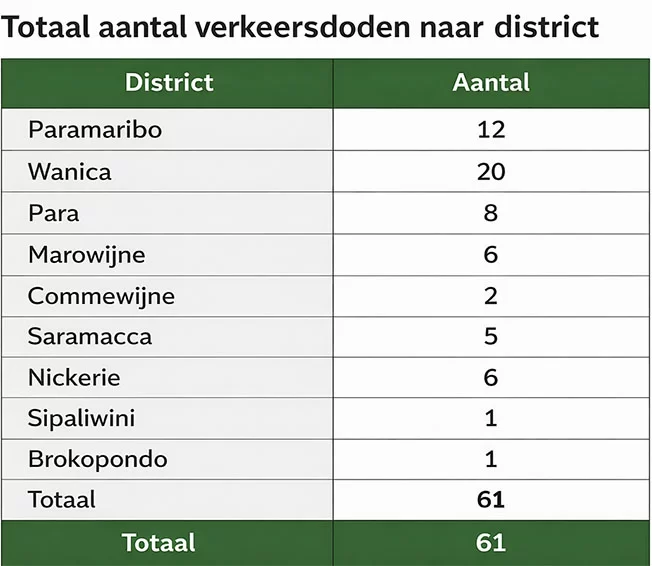
    Suriname has witnessed a significant reduction in traffic-related fatalities during 2025, with official statistics revealing a 22% decrease compared to the previous year. According to data released by Purcy Landveld, Deputy Director of the Traffic Safety Institute (VVI), the nation recorded 61 traffic deaths versus 78 in 2024.

    Despite this positive trend, road safety remains a critical concern, particularly for vulnerable commuters. Motorcyclists continue to represent the highest-risk demographic, accounting for 19 of the total fatalities. Other casualties included 12 car drivers, 1 bus operator, 3 truck drivers, 6 passengers, 13 pedestrians, 1 cyclist, 4 motorcyclists, 1 ATV rider, and 1 tractor operator.

    A disturbing pattern emerged in age distribution, with economically active adults between 21 and 40 years bearing the brunt of fatalities. The 21-30 age group suffered 16 deaths, while 31-40 year-olds accounted for 15 fatalities. Eight young people aged 11-20 also lost their lives in traffic incidents.

    Geographical shifts in accident hotspots were noted, with Wanica district reporting the highest fatalities (20), followed by Paramaribo (12) and Para (8). This represents a notable change from 2024, when Paramaribo led with 28 deaths.

    The healthcare system continues to shoulder substantial burden from traffic accidents, with the Academic Hospital Paramaribo’s emergency department treating 3,491 traffic victims—averaging 8-9 daily cases. This constant influx strains medical resources, elongates waiting times, and diverts significant healthcare budgets from other critical needs.

    In response to 39 fatalities occurring in the first half of 2025, authorities implemented stringent traffic measures including enhanced police surveillance, stricter speed and alcohol controls, and targeted awareness campaigns. These interventions yielded dramatic results, with only 8 deaths recorded in the second half—particularly remarkable during traditionally high-risk holiday periods.

    The VVI emphasizes that sustained enforcement combined with improved infrastructure, specialized education for young riders and drivers, and continuous data analysis are essential for maintaining this progress toward safer roads.

  • Venezuelans in Antigua Condemn Article Portraying Narco-Dictator Maduro Positively

    Venezuelans in Antigua Condemn Article Portraying Narco-Dictator Maduro Positively

    Venezuelan nationals residing in Antigua and Barbuda have launched a formal condemnation against a recently published article which they allege presents a grossly distorted and favorable image of President Nicolás Maduro’s administration. In a publicly circulated statement, the expatriate community expressed profound dismay at the characterization of Maduro as a ‘good man’ portrayed through an anti-imperialist lens and as a victim of circumstance—a narrative they assert starkly contradicts the actual suffering endured by millions of Venezuelans both domestically and internationally.

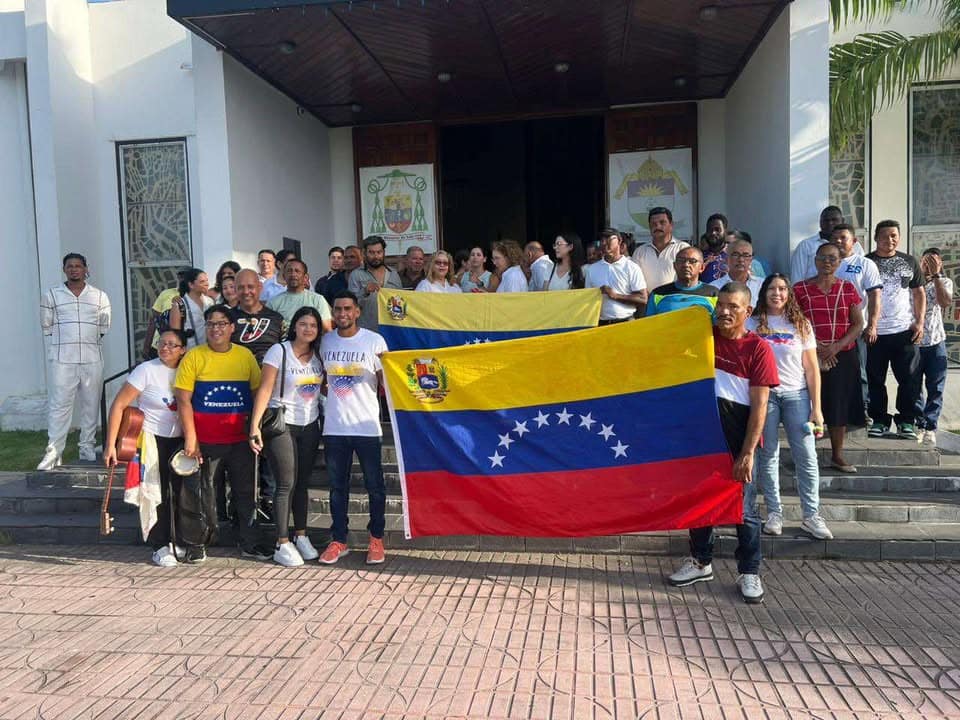
    The group emphasized that credible journalism must be rooted in truth, stating unequivocally that the article’s perspective ‘does not represent us as Venezuelans.’ They referenced the widespread protests that erupted across Venezuela mere months ago, where citizens demanded international assistance to overthrow what they label a dictatorial and repressive regime. Similar gatherings of despair were observed in Antigua, with Venezuelans congregating in local churches to pray for the removal of their leader.

    Furthermore, the statement challenged the article’s credibility by citing extensively documented human rights abuses under Maduro’s government. These include the systematic imprisonment of dissidents, the operation of notorious detention and torture facilities like El Helicoide, and the catastrophic failure of public infrastructure and essential services. The authors highlighted the tragic exodus of over nine million Venezuelans fleeing economic collapse and political persecution, questioning how such well-established evidence could be overlooked.

    Written from a position of exile, the communique described the original article as ‘deeply painful’ and accused it of whitewashing a regime responsible for widespread persecution, forced displacement, and the dismantling of democratic frameworks. The group concluded by dismissing the piece as not journalism, but rather outright disinformation.

  • A quarter of Cuba’s inhabitants are over 60 years old

    A quarter of Cuba’s inhabitants are over 60 years old

    Cuba is experiencing a profound demographic transformation, establishing itself as one of the world’s most rapidly aging societies. Recent data from the National Office of Statistics and Information (ONEI) reveals that the Caribbean nation now demonstrates higher aging rates than several European countries traditionally associated with elderly populations, including Italy (24.1%), Bulgaria (23.8%), Finland (23.4%), Greece (23.3%), and Croatia (23.0%).

    The report, titled “Population Aging, Cuba and its Territories 2024,” employs a comprehensive methodology that calculates the effective population. This approach incorporates all individuals born within the country during a calendar year, plus permanent residents who have accumulated 180 days or more of stay in Cuba within the past 365 days, excluding those who have died.

    Significant regional disparities exist across the island. Villa Clara province in central Cuba records the highest aging rate at 29.1 percent, followed closely by the capital Havana at 28.1 percent. In contrast, Guantánamo province in eastern Cuba maintains the lowest rate at 22.5 percent.

    At the municipal level, Plaza de la Revolución in Havana emerges as the area with the oldest demographic profile at 36.8 percent, while Yateras in Guantánamo province maintains the youngest population structure at 17.1 percent.

    A particularly telling metric reveals the scale of Cuba’s demographic inversion: the ratio of population aged 60 and over to those under 15 reached 1,625 older adults for every 1,000 children and young people aged 0-14 by the end of 2024. This ratio has increased by 247 points compared to the previous year, highlighting the accelerating pace of Cuba’s population aging.

  • Top Mexican and US diplomats meet

    Top Mexican and US diplomats meet

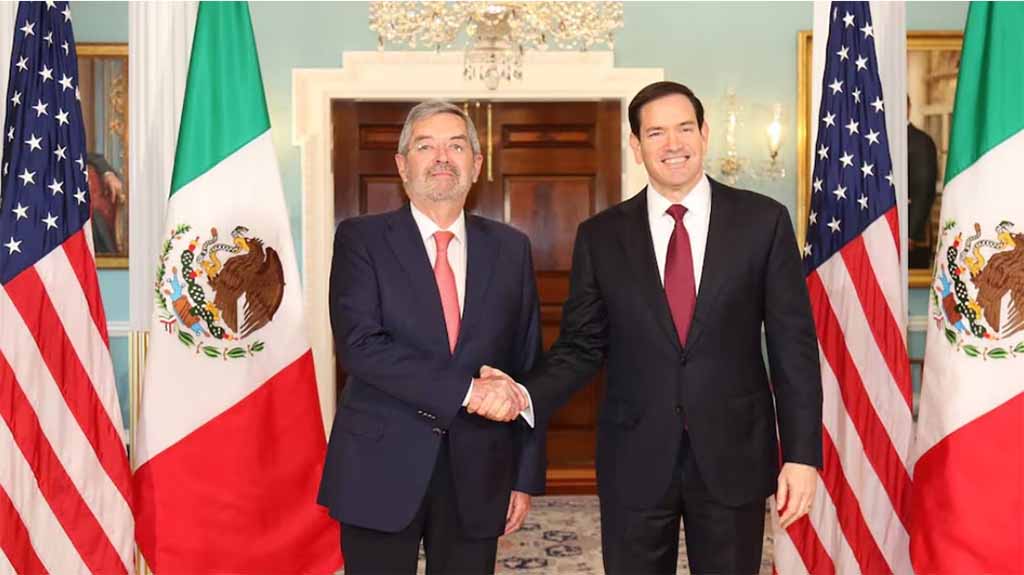
    In a strategic diplomatic move, Mexican Foreign Minister Juan Ramon de la Fuente has engaged in high-level discussions with U.S. Secretary of State Marco Rubio, following direct instructions from President Claudia Sheinbaum. The dialogue, confirmed through official communications from Mexico’s Secretariat of Foreign Affairs via social media platform X, represents a concerted effort to navigate escalating tensions regarding cross-border security cooperation.

    The conversation specifically addressed the Border Security and Law Enforcement Cooperation Program, with Mexican officials emphasizing that all collaboration must operate under strict adherence to fundamental principles including unconditional respect for national sovereignty, territorial integrity, and a framework of shared responsibility. The Mexican government further underscored the importance of mutual trust and collaborative engagement without subordination as non-negotiable components of any bilateral agreement.

    This diplomatic outreach comes as a direct response to recent statements from former U.S. President Donald Trump suggesting potential ground operations against Mexican drug cartels. President Sheinbaum has affirmed Mexico’s commitment to strengthening communication channels with United States officials while maintaining the nation’s sovereign rights. When questioned about Trump’s comments, Sheinbaum indicated openness to potential dialogue with the Republican figure to enhance coordination within established diplomatic frameworks.

    The political context surrounding these developments includes recent aggressive actions by Washington against Venezuela, where President Nicolás Maduro and First Lady Cilia Flores were reportedly apprehended and transported to U.S. territory to face narcoterrorism allegations. This incident has heightened sensitivities throughout Latin America regarding cross-border military and law enforcement operations, making Mexico’s firm stance on sovereignty particularly significant in current geopolitical dynamics.

  • European agreement with Mercosur in the spotlight

    European agreement with Mercosur in the spotlight

    In a landmark decision concluding over a quarter-century of negotiations, the European Union has formally approved a comprehensive trade agreement with the Southern Common Market (Mercosur). The Council of the European Union secured the necessary majority from its 27 member states, overcoming vocal opposition from several nations including France, Poland, and Ireland.

    The breakthrough follows intensive negotiations that incorporated specific clauses to address European agricultural concerns, a primary sticking point throughout the lengthy discussions. European Commission President Ursula von der Leyen is now set to travel to Paraguay to formally sign the accord with Mercosur leadership.

    This agreement establishes the framework for what will become the world’s most extensive free trade zone upon full implementation. However, the process requires one additional ratification step: following the signing ceremony, the pact must return to Europe for approval by the European Parliament, with a vote anticipated in the coming weeks.

  • Billboard Thefts Raise Safety Concerns Across Antigua and Barbuda

    Billboard Thefts Raise Safety Concerns Across Antigua and Barbuda

    A concerning pattern of structural vandalism targeting commercial billboards has emerged across Antigua and Barbuda, triggering alarms over public safety risks along major transportation routes. The most recent incident occurred along the strategically important Queen Elizabeth Highway, where critical supporting braces were forcibly removed from an Antigua.news advertising structure.

    Multiple billboard sites have subsequently been found with identical damage, indicating coordinated theft rather than isolated acts. These specialized metal components serve as fundamental stabilization mechanisms for large-scale outdoor advertising installations, engineered specifically to withstand severe weather conditions including tropical storms and high-velocity winds.

    Their deliberate removal creates substantial hazards for all highway users, with compromised structures potentially collapsing onto roadways, endangering motorists, pedestrians and adjacent properties. Billboard operators are confronting unplanned financial burdens as they implement emergency safety protocols including comprehensive structural assessments, immediate repairs and preventive dismantling of vulnerable installations.

    Industry sources suggest the stolen structural elements are likely being diverted to unauthorized construction projects, representing a secondary illegal market. The situation has escalated to warrant official governmental attention, with law enforcement expected to intensify monitoring of advertising infrastructure. Citizens are being urged to report any suspicious activities near billboard locations to prevent potential tragedies.

  • The AU Committee of Permanent Representatives will meet in Ethiopia

    The AU Committee of Permanent Representatives will meet in Ethiopia

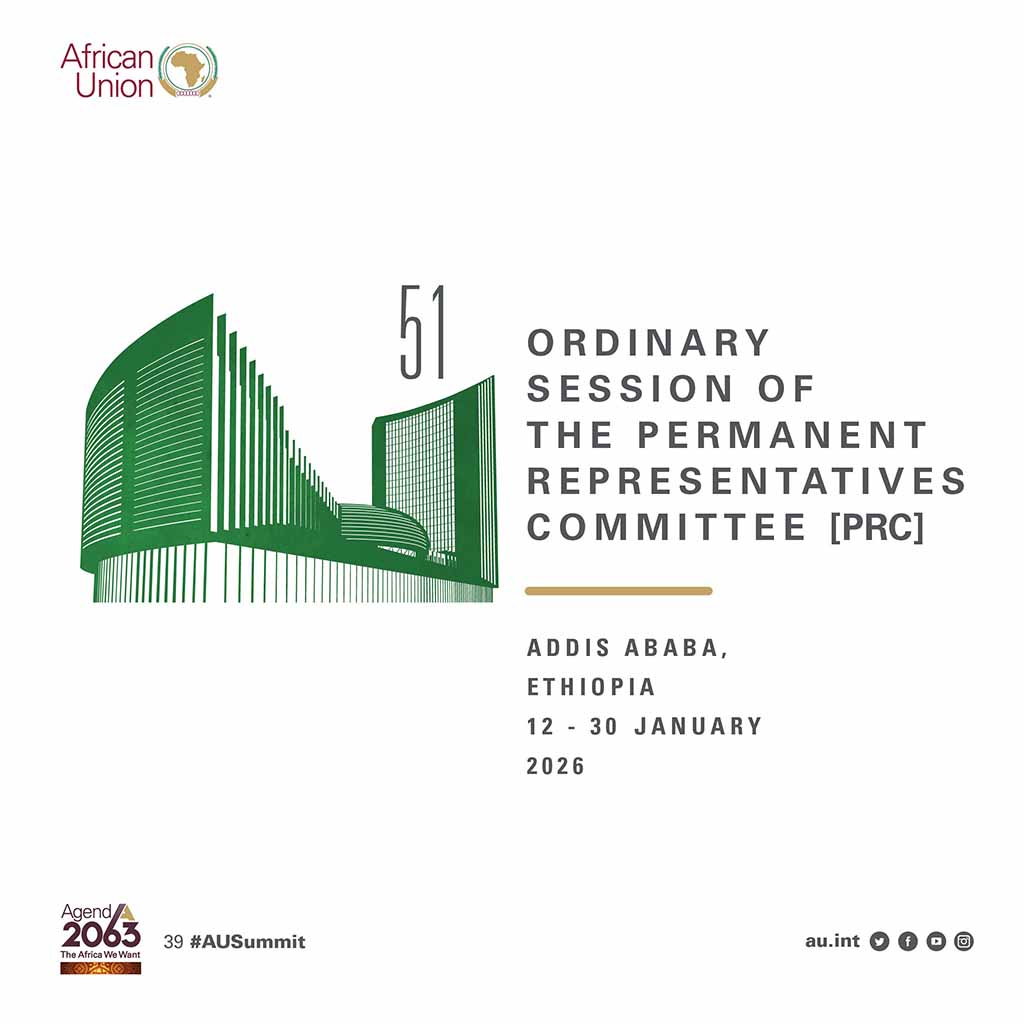
    The African Union has commenced a crucial series of preparatory meetings in Addis Ababa, marking the beginning of intensive diplomatic engagements leading to the 39th Ordinary Session of the Assembly of Heads of State and Government. The Committee of Permanent Representatives, comprising ambassadors from all member states accredited to the AU, alongside senior officials from the Commission and various continental bodies, convened on January 30 to deliberate on an extensive agenda of pan-African significance.

    Central to their discussions are comprehensive evaluations of the implementation progress regarding last year’s thematic focus on reparatory justice for Africans and people of African descent. The assembly will also examine strategic roadmaps for achieving sustainable water security and safe sanitation infrastructure across the continent by 2026, addressing critical development challenges.

    The diplomatic agenda further encompasses multifaceted issues including continental humanitarian response mechanisms, the advancement of free movement protocols for African citizens, and operational reviews of specialized technical committees. Particular attention will be given to the activities of the China Subcommittees, reflecting the AU’s strategic international partnerships, along with performance assessments of the AU Commission and its specialized agencies.

    This preliminary meeting establishes the foundational framework for the subsequent Executive Council’s 48th Ordinary Session scheduled for February 11-12, where African foreign ministers and designated officials will convene to refine policy recommendations and oversee implementation mechanisms. These ministerial deliberations will directly inform the final agenda and decision-making processes for the heads of state summit on February 14-15, where continental policies receive ultimate ratification and strategic direction for the coming year.