博客

  • Prime Minister: Wealth Management Must Empower Ordinary Citizens, Not Only the Affluent

    Prime Minister: Wealth Management Must Empower Ordinary Citizens, Not Only the Affluent

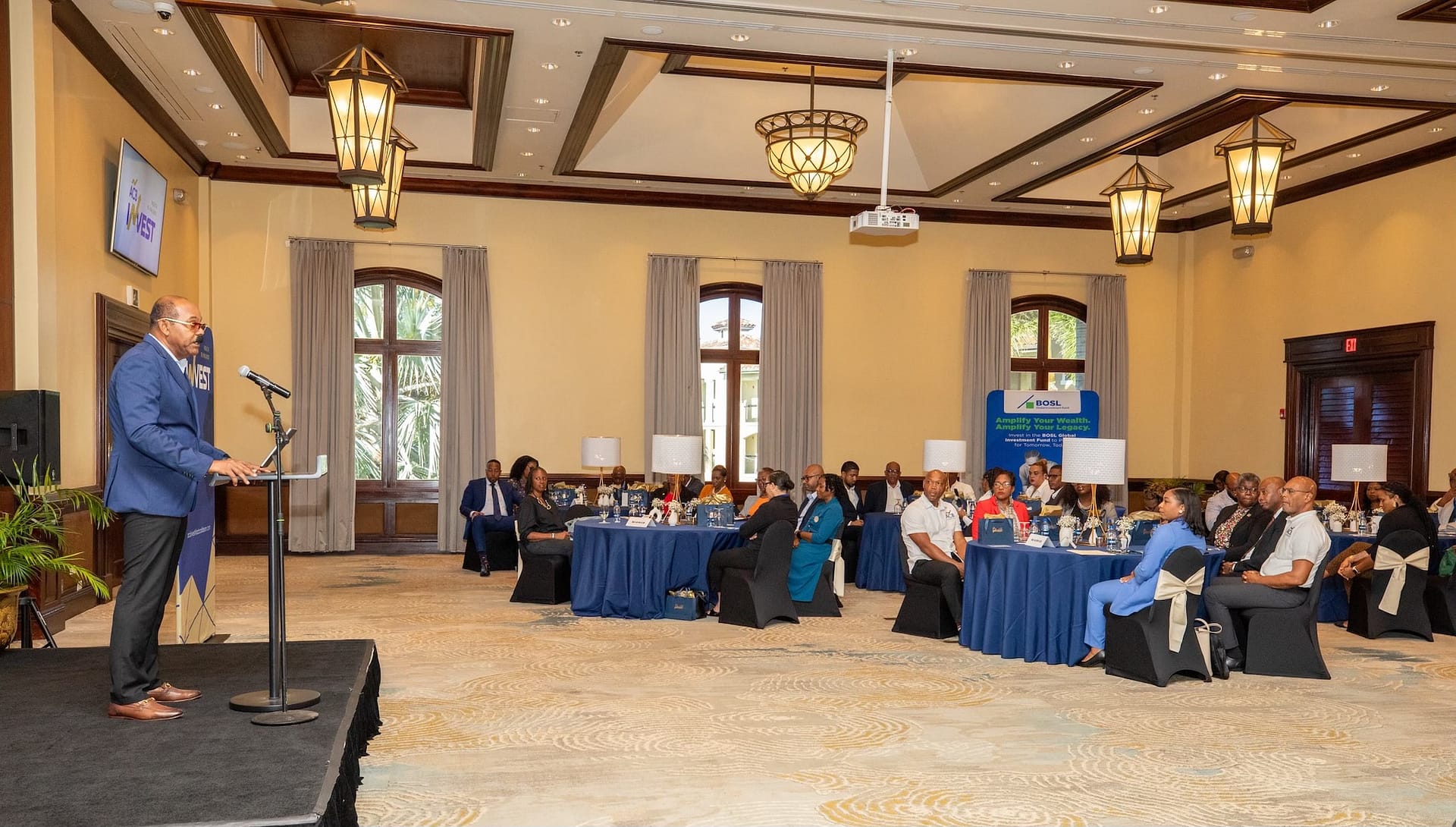
    Prime Minister Gaston Browne has articulated a transformative vision for wealth management, positioning it not as an exclusive service for affluent individuals but as a critical tool for national economic empowerment. Speaking at the launch of a strategic financial initiative, Browne emphasized that true financial planning enables ordinary citizens to protect earnings, build economic security, and develop resilience against unforeseen economic disruptions.

    The Prime Minister challenged conventional perceptions by framing personal financial decisions as fundamental contributions to national progress. He argued that when citizens transition from passive observers to active participants in economic growth through informed investing, they simultaneously strengthen both individual prosperity and collective national development.

    A central theme of Browne’s address focused on intergenerational responsibility. He asserted that authentic national advancement requires current generations to build sustainable systems that provide future citizens with opportunities rather than burdens. The Prime Minister characterized strategic investments—whether in financial markets, entrepreneurial endeavors, or personal assets—as essential components of a long-term vision for enduring family legacies marked by stability and prosperity.

    Browne specifically endorsed the ACB Invest Programme, developed by Antigua Commercial Bank, as a strategic alignment with government efforts to broaden economic participation. He expressed confidence that this initiative would enable more citizens to transform savings into investments, convert investments into sustainable growth, and ultimately translate that growth into widely shared prosperity across Antigua and Barbuda.

  • EU en Mercosur tekenen handelsakkoord na 25 jaar onderhandelingen

    EU en Mercosur tekenen handelsakkoord na 25 jaar onderhandelingen

    In a landmark development for global trade, European Union and Mercosur bloc officials finalized a comprehensive free trade agreement on Saturday in Paraguay, concluding negotiations spanning more than a quarter-century. This monumental pact represents the most extensive trade deal ever negotiated by the EU, though it still requires ratification by the European Parliament and national legislatures of Mercosur member nations Argentina, Brazil, Paraguay, and Uruguay.

    The agreement aims to dismantle longstanding trade barriers between the economic blocs, promising unprecedented opportunities for cross-continental commerce and investment. However, the accord faces significant opposition within Europe due to environmental concerns, agricultural competition worries, and labor rights considerations.

    Simultaneously, international tensions escalated as U.S. President Donald Trump intensified his campaign to acquire Greenland, announcing substantial tariff increases on eight European nations via his Truth Social platform. Effective February 1st, a 10% tariff will be imposed on goods from Denmark, Finland, France, Germany, Norway, Sweden, Netherlands, and the United Kingdom, with plans to increase to 25% by June 1st. Trump declared these punitive measures would remain until the United States secures an agreement for Greenland’s purchase.

    European governments have yet to formally respond to these economic threats, while thousands of Danish citizens took to the streets in protest. Copenhagen witnessed demonstrators waving national and city flags while chanting “Kalaallit Nunaat” – Greenland’s indigenous name – in rejection of American expansionism.

    These public demonstrations occurred shortly after a bipartisan U.S. congressional delegation reaffirmed American support for Denmark and Greenland during meetings in Copenhagen. Senator Chris Coons expressed hope that Denmark would maintain confidence in the American people while emphasizing respect for Danish sovereignty and NATO alliances.

    Since taking office, President Trump has repeatedly asserted that Greenland should fall under American control, recently declaring any alternative outcome “unacceptable.” This stance contradicts overwhelming Greenlandic public opinion, with a January poll revealing 85% opposition to U.S. annexation and only 6% in favor.

    Both Greenlandic and Danish authorities have consistently rejected American ownership proposals, with recent diplomatic efforts by foreign ministers from both governments failing to alter the U.S. position during Washington meetings. Danish Foreign Minister Lars Løkke Rasmussen characterized Trump’s approach as attempting to “conquer” Greenland rather than negotiate.

    These parallel developments highlight the intricate interplay between trade diplomacy and geopolitical ambitions in contemporary international relations, where economic agreements and territorial aspirations create complex global dynamics.

  • Today is the deadline to renew your vehicle registration sticker digitally.

    Today is the deadline to renew your vehicle registration sticker digitally.

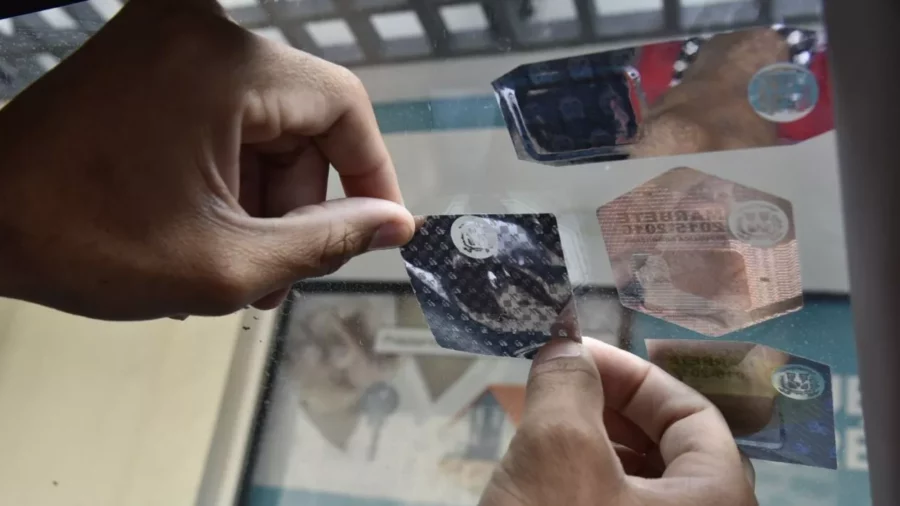
    Santo Domingo – The Dominican Republic’s General Directorate of Internal Taxes (DGII) has implemented a dual deadline system for vehicle circulation tax renewals, creating distinct timelines for online versus in-person processing. Digital renewals through the DGII 360 platform must be completed by Sunday, January 18, while physical renewals at authorized locations remain available until January 31, 2026.

    The agency has streamlined the digital process, requiring only national identification numbers (RNC) and vehicle plate information through either the official DGII mobile application or the website www.dgii.gov.do. This convenience comes with a delivery trade-off: online applicants receive their physical stickers within approximately four business days in the capital region and eight days elsewhere, while in-person renewals provide immediate issuance.

    Current compliance statistics reveal significant collection numbers alongside substantial outstanding renewals. As of last Friday, approximately 800,000 vehicle owners had yet to renew their permits, despite collections already exceeding 2 billion pesos from compliant citizens. Digital adoption has been notable with over 150,000 vehicles processed online.

    The 2025-2026 fiscal period sees expanded eligibility with 2,086,756 vehicles requiring renewal—an increase of 193,732 units from the previous cycle. The DGII projects total collections will reach RD$3,433,806,000 during this annual mobilization of vehicle owners nationwide.

    Fee structures remain unchanged from the previous period: RD$1,500 for vehicles manufactured through 2020 and RD$3,000 for those from 2021 onward. Renewal services are available at 47 financial institutions with 856 branches nationwide, plus DGII offices in Montecristi and Samaná.

    The agency has established a graduated penalty system for non-compliance: RD$2,000 for missing the January 31, 2026 deadline; RD$2,100 for those who also missed the 2024-2025 period; and RD$3,100 for vehicles outstanding since 2023-2024 or earlier, incorporating administrative fees atop base penalties.

  • The vulgarity of urban music worries churches

    The vulgarity of urban music worries churches

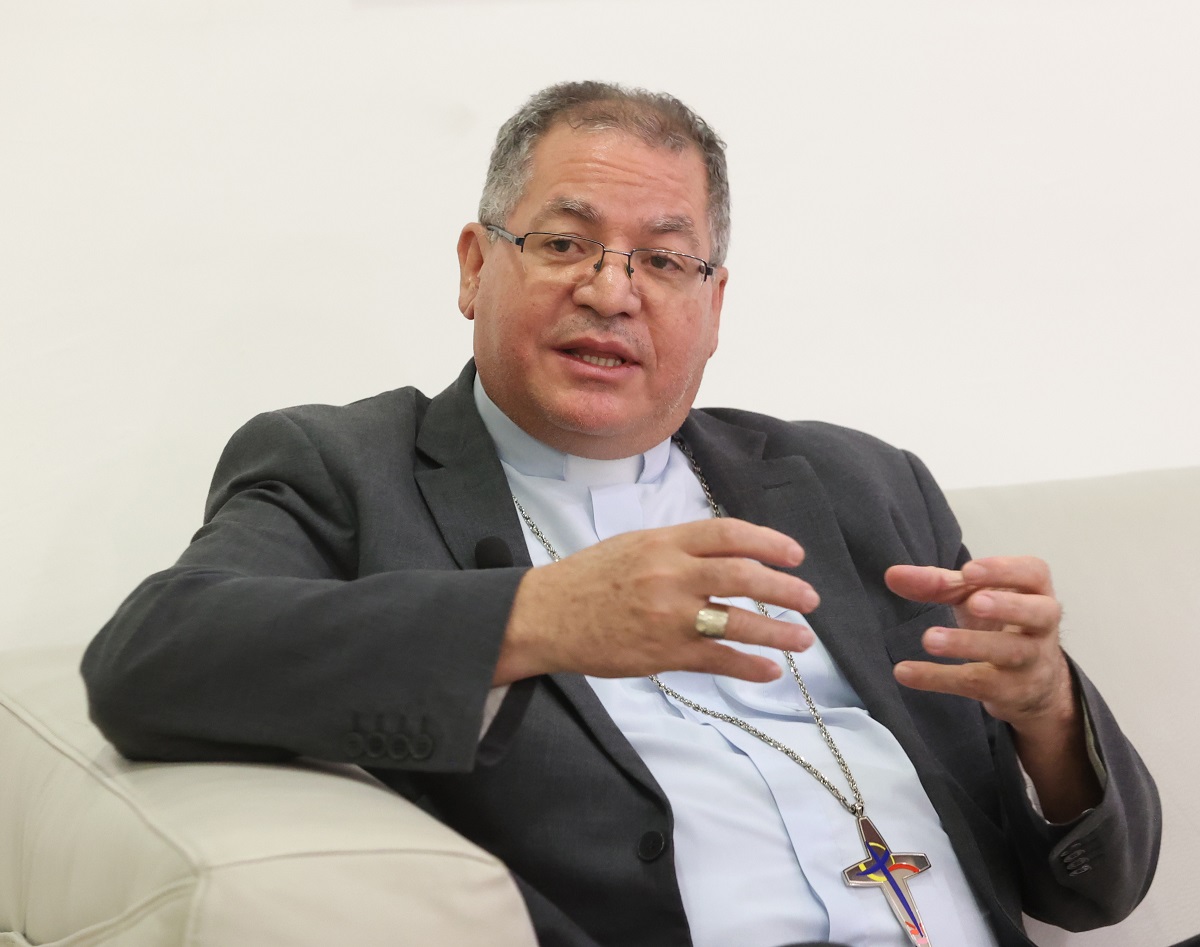
    Religious leaders and mental health experts in the Dominican Republic are raising urgent concerns about the deteriorating moral landscape in digital content and its profound effects on younger generations. The Catholic Church, represented by Monsignor José Amable Durán and Father José Luis Cruz, identifies the normalization of explicit lyrics in urban music and unfiltered vulgar content on social platforms as a primary catalyst for behavioral and emotional disorders among children and adolescents.

    Monsignor Durán, auxiliary bishop of Santo Domingo, emphasized that this issue transcends religious doctrine, touching upon fundamental aspects of social morality. He articulated that music and language were originally conceived for positive expression but are now being weaponized to promote moral disorder, irresponsible behavior, and explicit sexuality. The prelate directly linked the current epidemic of teenage pregnancies to early exposure to morally damaging musical content consumed even within family environments.

    The debate extends beyond mere content criticism to address the technological paradigm shift that has enabled this crisis. Father Cruz, rector of the Catholic University of Santo Domingo, highlighted the contrast with previous decades when regulatory mechanisms in traditional media prevented mass dissemination of harmful content. The internet’s borderless nature has created an essentially ungovernable digital ecosystem where children access explicit material without restrictions.

    Psychological perspectives from family therapist Yesmín Meyer corroborate these concerns, noting that negative role models from urban music and influencers promote violence, sexism, and damaging gender stereotypes. These influences fundamentally shape the behavioral patterns and social roles that young people adopt during their formative years.

    All experts converge on the irreplaceable role of parental guidance and digital literacy rather than advocating for absolute censorship. They stress that parents must implement conscious content filters and foster critical thinking skills, acknowledging that social media is permanently embedded in modern life. The solution requires a multifaceted approach combining responsible parenting, ethical content creation, platform accountability, and educated consumption.

  • SEOB waarschuwt: economische stabiliteit kwetsbaar ondanks sterke reserves

    SEOB waarschuwt: economische stabiliteit kwetsbaar ondanks sterke reserves

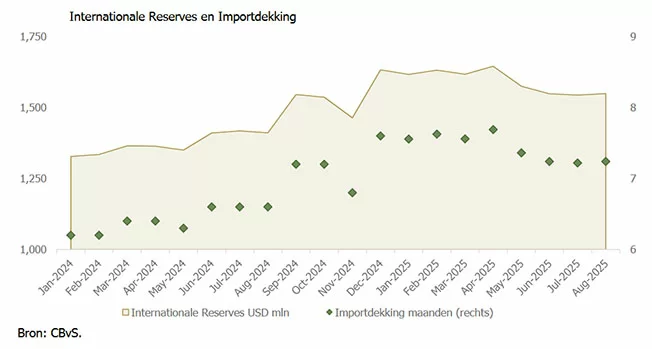
    Suriname faces a complex economic landscape characterized by contrasting strengths and vulnerabilities, according to the latest assessment from the Suriname Economic Oversight Board (SEOB). While the nation maintains robust international reserves reaching $1.6 billion—providing approximately 7.5 months of import coverage—this financial buffer exists alongside concerning macroeconomic challenges that threaten long-term stability.

    The economy demonstrated concerning stagnation in June 2025, with the Monthly Economic Activity Index showing zero growth. This performance primarily resulted from a sharp contraction in gold production and exports, affecting both large-scale and small-scale mining operations. Reduced processing capacity and inferior ore quality contributed to the sector’s decline, which overshadowed positive developments in trade, insurance, hospitality, and restaurant services.

    Inflation continues to present significant headwinds, reaching 11.9% year-over-year in October 2025. Concurrently, the Surinamese dollar depreciated by 0.5% against the US dollar and 0.4% against the euro during the same period, further escalating import costs and diminishing purchasing power for citizens.

    Most alarmingly, government debt has surged to 88.8% of GDP, substantially exceeding the statutory benchmark of 60%. To address immediate liquidity constraints, authorities issued international bonds worth $1.6 billion in the fourth quarter of 2025, carrying interest rates between 8.0% and 8.5%. This debt management strategy extends maturities on existing obligations and postpones principal repayments until after 2028, when oil revenues are anticipated to materialize.

    The SEOB warns that this approach carries substantial risks. The economy remains highly susceptible to fluctuations in oil and gold prices, inflationary pressures, and exchange rate volatility. Additionally, the absence of a fully operational Savings and Stabilization Fund increases vulnerability to potential Dutch Disease effects, where future oil revenues could inadvertently crowd out other critical sectors including agriculture and manufacturing.

    Transparency concerns have emerged regarding the allocation of the newly acquired debt, with no detailed expenditure plan presented to stakeholders. The oversight board emphasizes that clear communication regarding interest and repayment obligations is essential for maintaining confidence among both citizens and international investors.

    The SEOB recommends implementing strict fiscal discipline, enhancing anti-corruption mechanisms, and operationalizing crucial institutions including the Savings and Stabilization Fund. Additionally, the board advocates for a comprehensive five-year government financial plan featuring expenditure ceilings and debt sustainability targets.

    Economic diversification beyond extractive industries represents another critical recommendation, with emphasis on developing agriculture, fisheries, agro-processing, services, and eco-tourism sectors to foster sustainable growth and export diversification. Only through consistent policy implementation, transparency, and institutional strengthening can Suriname responsibly leverage anticipated oil revenues and secure lasting economic stability.

  • Toros defeat Gigantes in their fight to advance to the Final

    Toros defeat Gigantes in their fight to advance to the Final

    In a dramatic display of offensive prowess, Sergio Alcántara delivered a career-defining performance to secure a crucial 6-5 victory for Toros del Este against Gigantes del Cibao during Day 18 of the Dominican Winter League’s Round Robin stage. The electrifying matchup at Julián Javier Stadium culminated in an eighth-inning breakthrough that solidified the Toros’ championship aspirations.

    Alcántara’s remarkable night featured two crucial doubles and three RBIs, including the game-winning hit that broke a 5-5 deadlock in the final frames. His clutch performance elevated his Round Robin hit total to 10, surpassing his regular season output of nine hits and establishing him as the tournament’s offensive catalyst.

    The Toros’ victory was a collective effort featuring multiple standout performances. Eric Filia contributed significantly with a two-run double, maintaining his impressive on-base presence in five of his six appearances. Meanwhile, designated hitter Eloy Jiménez etched his name in league history by matching the all-time Round Robin record of nine doubles, a benchmark previously set by Jerry Brooks during the 1994-95 season with Azucareros del Este.

    From the bullpen, reliever Yaramil Hiraldo (2-1, 1.29 ERA) earned the victory after dominating with a scoreless inning and two strikeouts. Closer Joe Corbett secured his seventh save of the season, while Christopher Molina (0-3, 3.86 ERA) absorbed the defeat for Gigantes del Cibao.

    The triumph maintains Toros del Este (11-7) in second place within the Round Robin standings, their position contingent upon the postponed matchup between Águilas Cibaeñas and Leones del Escogido. A potential Escogido victory on Sunday would guarantee the Toros their seventh appearance in the Championship Final Series, adding strategic importance to the postponed contest.

    The game unfolded as an offensive spectacle with both teams exchanging leads throughout the evening. Jiménez initiated scoring with a first-inning double, immediately countered by Ricardo Cespedes’ infield single. Alcántara’s two-run double in the second inning established an early 3-1 advantage, subsequently extended to 5-1 by Filia’s fourth-inning double.

    Gigantes del Cibao mounted a formidable comeback through David Bañuelos’ two-run homer in the fourth inning and strategic small-ball execution in the fifth, narrowing the deficit to 5-4. Jorge Bonifacio completed the resurgence with a solo shot in the sixth that temporarily leveled the score at 5-5, setting the stage for Alcántara’s eighth-inning heroics.

  • Shaw is first Vincy in prestigious communication fellowship in US

    Shaw is first Vincy in prestigious communication fellowship in US

    In a historic achievement for Caribbean media, Ari Shaw has become the first journalist from St. Vincent and the Grenadines to secure placement in the International Center for Journalists’ Professional Fellows Program in the United States. This competitive selection process drew media professionals from 25 nations across Latin America, the Caribbean, and the United States.

    Shaw brings a decade of extensive media experience to the program, having served as a radio announcer and host at WE FM, reporter at Searchlight newspaper, news editor at IKTV & BOOM FM, and host of the “Off The Record” podcast. Currently, he serves as communications officer for the Government of St. Vincent and the Grenadines’ Volcanic Eruption Emergency Project and Beryl Emergency Resilient Recovery Project.

    The fellowship, which commenced this Wednesday and continues through February 19, offers participants immersive professional development opportunities. Fellows will collaborate directly with U.S. media organizations, develop entrepreneurial initiatives, and enhance their technical capabilities in investigative journalism, fact-checking, and podcast production. The program additionally focuses on building sustainable business models for media enterprises.

    According to the U.S. Embassy in Barbados, the initiative facilitates professional exchanges that strengthen mutual understanding and cooperation between the United States and partner regions. Shaw’s participation is anticipated to significantly advance his expertise while contributing to the enhancement of innovative broadcasting and media practices within St. Vincent and the Grenadines.

    Expressing his enthusiasm, Shaw noted: “I’m both honored and grateful to be the first Vincentian accepted into this program. I perceive this as a valuable opportunity to refine my skills while engaging with international journalism professionals. I eagerly anticipate meaningful contributions to SVG’s media landscape and the broader region.” Shaw received his media training in Taiwan, adding international perspective to his professional background.

  • 87 cursisten behalen SAO-certificaat na afronding vaktrainingen

    87 cursisten behalen SAO-certificaat na afronding vaktrainingen

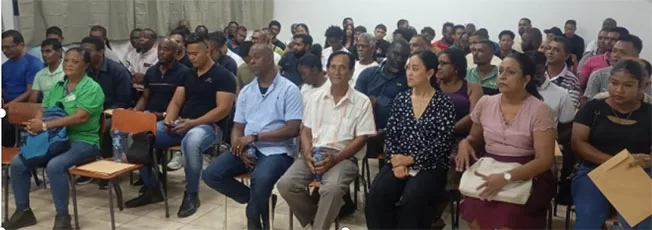
    PARAMARIBO – In a significant demonstration of personal initiative and educational commitment, 87 students received vocational certification on January 15, 2026, after successfully completing self-financed training programs. The ceremony, organized by the Foundation for Labor Mobilization and Development (SAO), highlighted courses in Basic Refrigeration Technology, Electrical House Installation, Water Sanitation (GaWaSa), and Printed Circuit Board Repair.

    The graduation event witnessed notable attendance from Deputy Minister of Health, Welfare, and Labor Raj Jadnanansing, SAO Director Joyce Lapar, and Izaak Hill, representing the Board of Directors. Originally commencing with 103 participants, the program achieved an impressive 84% completion rate, with all graduates personally covering their training expenses without corporate sponsorship.

    Deputy Minister Jadnanansing praised the graduates’ perseverance and conscious investment in their professional capabilities. He emphasized Suriname’s impending need for skilled labor, particularly driven by expansion in the oil and gas sectors. “Suriname must prepare proactively to prevent future labor market shortages,” he stated, advocating for a shift in perception regarding vocational trainees—from ‘drop-outs’ to ‘drop-ins’ who strategically choose alternative educational pathways.

    SAO Director Lapar highlighted the distinctive character of this cohort, noting the participation of motivated youth, including two 16-year-olds, as a strong indicator of responsibility and forward-thinking. She underscored the necessity of lifelong learning in adapting to rapidly evolving job markets.

    Board representative Hill echoed these sentiments, urging graduates to embrace entrepreneurial thinking and collaborative ventures. All speakers emphasized the critical importance of applying acquired skills to foster confidence and sustainable career growth.

    The government reaffirmed its commitment to supporting funded, subsidized, and partially subsidized vocational training, aligning with broader strategies to enhance workforce readiness and economic resilience.

  • Education : 2nd Day of the National Conference on the Refounding of the Haitian Education System

    Education : 2nd Day of the National Conference on the Refounding of the Haitian Education System

    The Northeast Department of Haiti hosted the conclusive session of the National Conference on Educational Refounding on January 16, 2026, marking a significant milestone in the nation’s efforts to transform its education landscape. Convened under the leadership of the Departmental Directorate of Education, the gathering united diverse stakeholders in a collaborative endeavor to address systemic challenges.

    Presided over by Luckner Mompremier, the Departmental Director of Education, the conference featured robust participation from civil society representatives, educators, school administrators, and students. Technical expertise was provided by Ministry of Education assistants Jean-Rouzier Claircidor and Amos Simon, who contributed substantially to the policy dialogue.

    Conference deliberations centered on two critical pillars: enhancing educational effectiveness and improving quality standards. Participants engaged in comprehensive analysis of existing institutional shortcomings while proposing pragmatic solutions. The consensus emphasized that quality education serves as the fundamental catalyst for youth development and national progress.

    Stakeholders articulated concrete recommendations for curriculum modernization, teacher training enhancement, and infrastructure development. The dialogue consistently highlighted the interconnection between educational excellence and Haiti’s broader socioeconomic advancement.

    In his closing remarks, Director Mompremier acknowledged the constructive contributions of all participants and emphasized the imperative of translating discussions into actionable policies. The conference concluded with a shared commitment to establishing an education system that effectively meets student needs and national development requirements.

  • Guyana pushes to become Caribbean’s sustainable tourism leader

    Guyana pushes to become Caribbean’s sustainable tourism leader

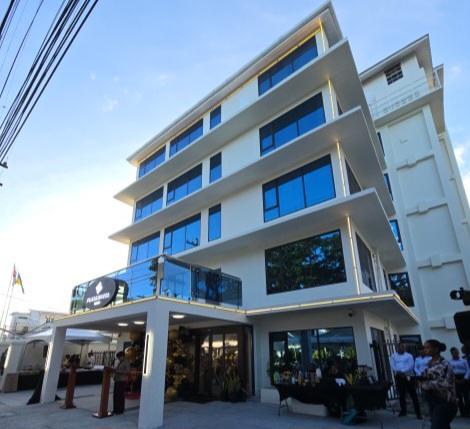
    Guyana is executing an ambitious infrastructure development strategy to establish itself as the Caribbean’s foremost sustainable tourism destination, according to high-level government announcements made during the inauguration of Georgetown’s new Plaza Hotel.

    President Irfaan Ali revealed plans to solicit expressions of interest for constructing over 35 hinterland airstrips in the coming days, marking a significant advancement in the nation’s connectivity agenda. This initiative complements ongoing coastal hotel developments with parallel investments in eco-lodges and enhanced air accessibility.

    “Tourism materializes through tangible infrastructure—runways, ports, hotels, and prepared communities—not merely through promotional materials,” President Ali emphasized, underscoring Guyana’s commitment to decisive investments in both physical and social infrastructure.

    The government has already allocated GY$2.5 billion in the previous national budget for rehabilitating critical hinterland airstrips at Apoteri, Aishalton, Chenapou, Jawalla, Sand Creek, and Paramakatoi. This investment has prompted two domestic airlines to reduce fares to these destinations, improving affordability and access.

    Additional infrastructure projects include expanding the Cheddi Jagan International Airport with a new terminal, bridging several major rivers, and constructing the strategic road connection to Lethem near the Brazilian border.

    Tourism Minister Susan Rodrigues outlined Guyana’s distinctive approach to sustainable tourism, emphasizing conservation partnerships, community-led tourism initiatives, and ecosystem protection. “This strategic focus supports livelihoods in hinterland communities, safeguards natural assets, and aligns with global demand for authentic, responsible travel experiences,” she stated.

    The nation’s tourism sector has demonstrated remarkable growth, with visitor arrivals surging 22% to 453,489 in 2025 compared to 2024 figures. The United States remains the primary source market, contributing approximately 40% of arrivals, followed by Caribbean neighbors at 33%, with Canada, the UK, and other international markets comprising the remainder.

    Hotel development has kept pace with this growth, adding over 1,000 rooms through nine major properties in the past five years. Seven additional branded hotels with more than 1,300 rooms are currently in the development pipeline.

    The Guyana Tourism Authority attributes this success to expanded airline connectivity, competitive fares, robust diaspora demand, successful cultural and sports tourism events, and enhanced digital monitoring systems. Projections indicate visitor arrivals could reach 550,000 by the end of 2026, reinforcing tourism’s role as a key economic driver creating jobs, business opportunities, and sustained confidence in Destination Guyana.